
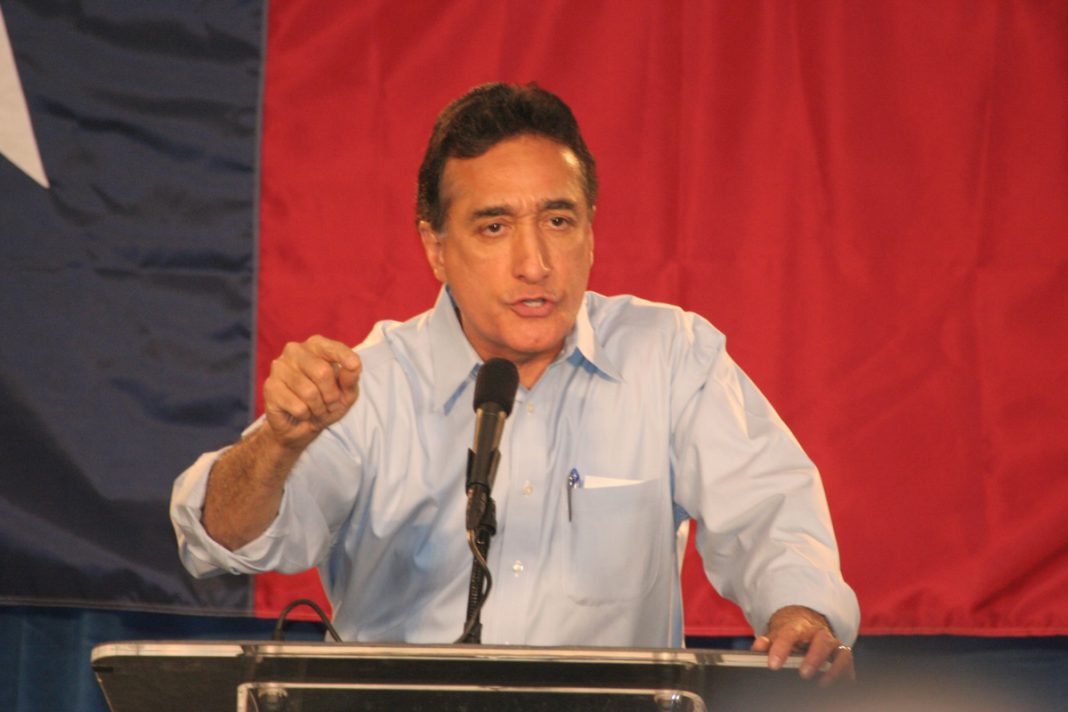
The U.S. Senate now includes six Latine members: Democrats Alex Padilla of California, Catherine Cortez-Masto of Nevada, Ben Ray Luján of New Mexico and Ruben Gallego of Arizona; and Republicans Ted Cruz of Texas and Bernie Moreno of Ohio.
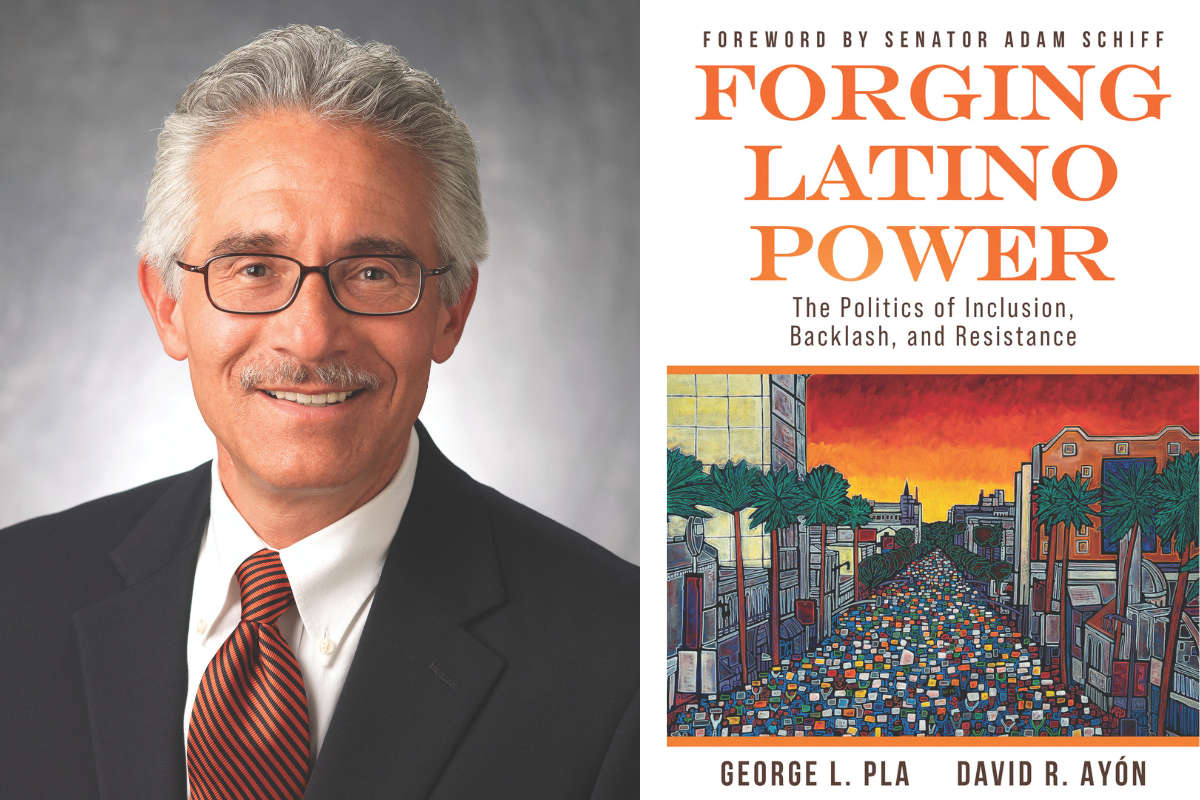
But as David R. Ayón and George L. Pla detail in their exhaustively researched book, Forging Latino Power: The Politics of Inclusion, Backlash, and Resistance, released Dec. 2, the road to that milestone was both complex and continuously evolving.
The book’s forward, by California’s other senator, Adam Schiff, makes that clear, saying: “If there is any image that captures the enormous progress of Latino empowerment in the last century, and the fierce backlash it has prompted, it is this: a Latino US senator from the largest state in the union on the floor with his hands cuffed behind his back,” referring to the infamous June 12, 2025, incident in which Padilla was forcibly removed from a press conference held by Secretary of Homeland Security Kristi Noem after attempting to ask a question.
Barrios and colonias
Forging Latino Power follows Ayón and Pla’s Power Shift: How Latinos in California Transformed Politics in America, and much of the book continues exploring the importance of California in the evolution of Latine politics. “Latinos are the largest racial or ethnic group in California, with over 16 million people calling the state home,” the book points out.
In a phone interview, Ayón noted that early Mexican immigration to the state, and other parts of the West in the 1800s, was about labor, including the migrant worker bracero program, which ended in 1964. It also included mining. A little-known fact is that the “Mercury” in the name of the San Jose Mercury News refers to a major mercury mine on the “New Almaden” property.
But in the 20th century, as immigrants moved to urban areas, the barrios, especially the Boyle Heights neighborhood of East L.A., began to foment political organization. The former Jewish enclave already had a culture of activism. “Boyle Heights was the mold for the progressive Latino tradition,” Ayón said.
Yet at the same time, in other, rural parts of the state, farmworkers formed colonias, their own small communities that preserved traditions and values brought from conservative rural Mexico. Based on their experiences, these people were distrustful of politics, Ayón said, while at the same time, “Establishing a colonia is an act of resistance.”
This dichotomy is discussed extensively in the book and prefigured by this quote from the preface: “Progressive Latino politics generally can be seen as transitioning to a post-barrio era, one that more reflects suburban, small-town, and rural Latino interests, values, and perspectives, and is challenged by an increasingly divided electorate.”
The power of narrative
A substantial part of Forging Latino Power is devoted to detailed narratives about pivotal Latine political figures. Even those familiar with the contributions of Dolores Huerta and Cesar Chavez will discover many unexplored nuances, particularly their participation in and eventual separation from the Community Service Organization.
In Part II, “Going National,” Ayón and Pla write, “Latinos as a group did not so much opt to be involved in national policy as they had national policy thrust on them, forcing a choice between silence, accommodation, or resistance.”
This section calls attention to the growing number of Latines in Washington during the Carter administration, including Lou Moret, Leo Estrada, Gloria Molina, Art Torres and Leonel Castillo. It also extensively documents that administration’s attempts to deal with immigration, and the rise of “casas,” service centers for resident undocumented immigrant workers.
“The Casas attracted young, idealistic Chicano-movement volunteers,” Ayón and Pla note. These included Oakland’s Maria Elena Durazo; future Los Angeles mayor and current candidate for governor of California, Antonio Villaraigosa; and future state assembly member, state senator and L.A. city council member, Gil Cedillo.
Also called out in this section is the growing profile of Latine media: L.A.’s La Opinión and KMEX, along with Univision.
Part III, “After IRCA: New Advances, Backlash, Resistance and Breakthroughs,” discusses the impact of the Immigration Reform and Control Act of 1986, which legalized some undocumented workers and attempted to penalize employers for hiring unauthorized workers, as well as 1982’s changes to the Voting Rights Act and the U.S. census. Major milestones reached in the 1980s faced backlash, with California approving “English as the official language” initiatives.
But 1993, Ayón and Pla write, was the dawn of a new political era, with leaders such as Kevin de León and Fabian Núñez emerging in Southern California. Then came “the Battle of 187,” fighting the anti-immigrant ballot proposition. Opposition to it catalyzed other leaders—including future senator, Alex Padilla. The proposition passed, but was declared unconstitutional and never allowed to take effect.
The Trump Era
Part IV of the book, “Always Another Battle,” covers the waves of advancement and backlash during the Obama, Biden and Trump administrations.
In the phone interview, Ayón emphasized that the shocking shift in Latine voters to Trump in 2024 was fueled by several factors: “Eight years of Trump MAGA propaganda,” he said, “and rising political cynicism also benefited Trump.” Polls show, he said, that Latine confidence in government, once as high as 60%, has fallen to about half that.
And there has been what Ayón views as a permanent shift in California to Democratic leaders such as Speaker of the House Robert Rivas, Senate President Pro Tempore Monique Limón and Congressman Pete Aguilar, who represent less-urban, less-progressive areas of the state.
But “Trump has squandered his equity with Latino voters,” he said. The book states, “The second Trump presidency, with its shockingly aggressive approach to US allies and neighbors in the world, also has the potential of provoking a new front of Latino, and specifically Mexican-American, resistance paired with pressure for inclusion.” The upcoming 2026 midterms, he said, will be a test of this.
For those committed to understanding the history of Latine politics, its shifts and its complexities, as well as its potential to shape the country’s future, Forging Latino Power is an ideal resource.
‘Forging Latino Power: The Politics of Inclusion, Backlash, and Resistance,’ by David R. Ayón and George L. Pla, Berkeley Public Policy Press, $24.99.