
Since its inception, the Oakland Metro Operahouse has faced myriad
challenges with its physical space. It began in 1987 with a small venue
on Broadway and Second Street. By 2001, however, it had become a
dilapidated structure that required major renovation, which,
fortunately, the Oakland Opera Theater Company took on when it decided
to make the venue its permanent home. Then, in 2007, spawned by new
development in the neighborhood, the building’s owner quadrupled the
Metro’s rent. The venue was forced to relocate during one of the opera
company’s productions to an empty warehouse further down Third Street.
But the space wasn’t yet ready for a full-time schedule, and closed for
seven months. About a year ago, the venue finally reopened, hosting
sporadic shows in addition to its popular monthly poetry slam and
variety show, Tourettes Without Regrets.
Now, after more remodeling, the venue finally appears to be
stabilized and poised to become a major player in the local all-ages
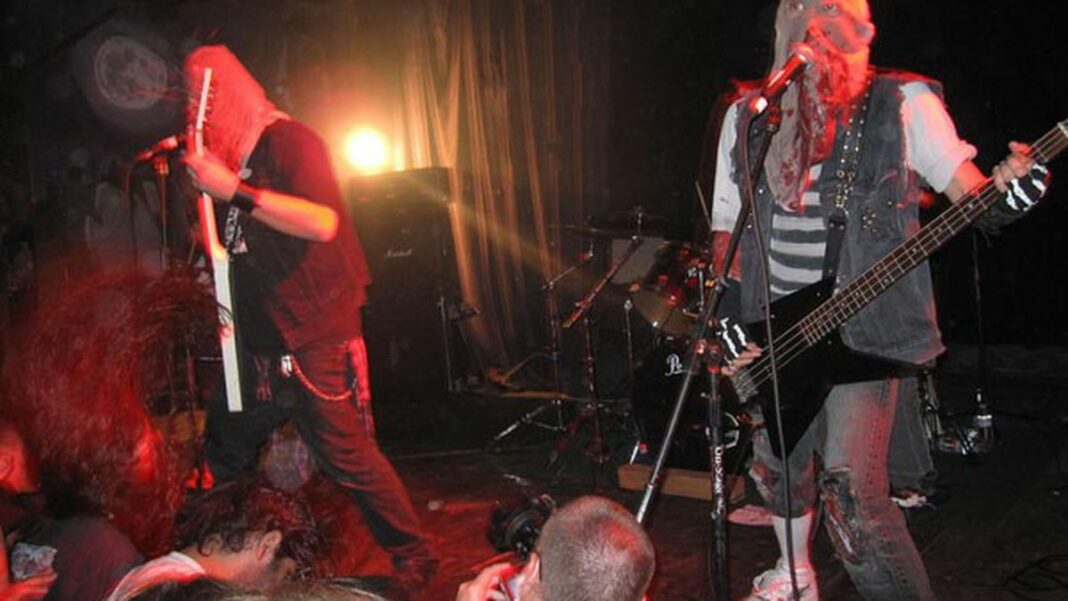
scene. So far, it’s booked about sixty shows — including metal
shows like Tyrannosaurus Christ; punk; theater such as Handel’s ancient
political farce, AGRIPPINA; opera; and even a circus — and has
several sold-out performances under its belt, such as Turn of the
Screw. Metal, however, continues to be its most popular genre.
About sixty future shows are already booked.
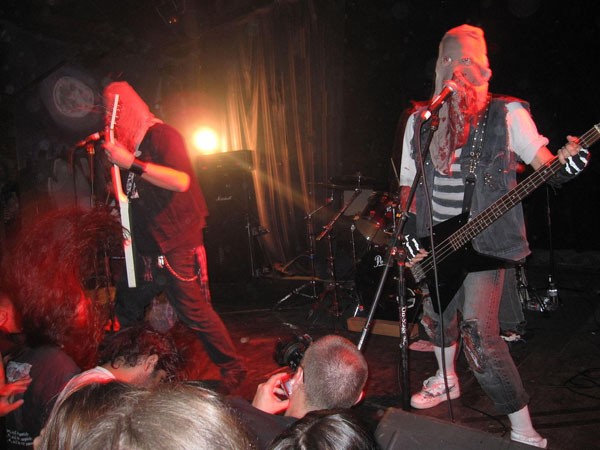
Credits: brandi666/Flickr (CC)

Credits: brandi666/Flickr (CC)
“We’re really excited, after eighteen months of hard work, we can
open our doors and show off a premier venue,” said Mia Steadman, a
co-owner of the Metro.
It’s been a long time coming for Steadman and co-owner Tom Dean, her
fiancé. When the Metro first moved into its new location, it had
no running water, a poor sound system, and a lot of empty space. With
the help of some stagehands and funding from the Fleishhacker
Foundation, private donors, Oakland’s Community and Economic
Development Agency, its landlords, and some of their own money,
Steadman and Dean have completely retrofitted the venue — a
project that took nearly a year.
The new Metro is nearly twice the size of the old building at 6,000
square feet, and has fourteen bathrooms and great acoustics thanks to
some new pillars, wall padding, and a new sound system. All that’s left
to do is hook up a couple sinks to the newly tiled bar and the
“miracle,” as Steadman calls it, will be complete.
Part of the reason for the abundance of shows coming to the Metro
this summer is due to the final occupancy permit from the city that was
acquired in June. That gives the owners liberty to book as many shows
as they want.
And the acts are adding up. Duke Ellington’s opera Queenie
Pie recently played to a sold-out crowd, and the Mission Creek
Music and Arts Festival will feature shows there this month.
One thing that hasn’t changed is the Metro’s “all-ages, all the
time” policy. It’s a major factor contributing to the club’s popularity
with bands and their fans, according to Dean and Steadman. While some
clubs find it too risky to forgo liquor sales, Dean says that’s the
last thing he’s worried about.
“Promoters prefer all-ages because we can make guarantees to sell
more tickets.” Dean said. “A lot of people want to see live music and
our focus is not selling alcohol. It’s putting on performances.”
Alex Zepeda, who booked the venue for the Mission Creek Music and
Arts Festival, remembers the disappointment she felt when she had to
miss shows that were 21 and over. Now, as a promoter, she insists on
booking venues that can promise an all-ages show.
“When I go to a new show, I study the audience, and the people
having the most fun or connecting more with the artists are the younger
crowd,” Zepeda said. “I could have done a 21-and-over show but I don’t
like the idea of excluding younger people from something that’s going
to be so good for them.”
Bands have adopted this philosophy as well. Sean McGrath —
better known as “The Digestor” to his fans — performed at the
Metro on July 3 with his band Ghoul. While most of Ghoul’s members are
now in their late twenties and early thirties, McGrath remembers having
to wait outside 21-and-over venues with his old band, Impaled, because
he was underage.
The “vibe,” as McGrath describes it, is just better with all-ages
shows. “We mostly avoid doing 21-and-over shows,” he said. “The
audience for our music is younger and the energy is not always so great
when it’s 21 and up. We’re really glad there are places like the Metro
where we can play for kids because they’re the ones who are really
amped to be there.”
Besides catering to the younger generation’s musical taste, the
Metro’s bookers also keep ticket prices relatively low, at an average
of $10, and start shows at 8 p.m. so curfews can be made.
The Metro continues to grow, not only in size, but in shows and
popularity. It’s nearly doubled all three in a very short period of
time. For owners and concert-goers alike, it truly is a “miracle.”