In documentary photographer and filmmaker Ken Light’s new book, Soul City: Oakland, U.S.A., 120 black-and-white photographs tell the story of the people of West Oakland. Covering the years from 1974-1976 and viewed through the lens of 2026, the only thing more striking than what is seen is what is missing. Nowhere in the evocative images are there portraits of people who are unhoused or photographs of the city’s now-ubiquitous homeless encampments.
“People’s lives were hard, but there was also life and love that’s not often seen by outsiders,” the Orinda-based photographer said in an interview. “Then, there was a thriving business community and Black homeowners. There weren’t bars on windows and shootings; that changed as crack cocaine entered the community. Part of this book is to get people to realize there were 5,000-9,000 homes taken out when the BART and post office were put in. I never saw one homeless person when I was photographing these images.”
The 160-page book published by Heyday Books includes a foreword by Ishmael Reed. The Oakland-based author and MacArthur Fellowship and Guggenheim Fellowship recipient writes, “When my family and I moved to Oakland in 1979, the city was still a hub of Black Power activism. The mayor was Black; our friend Robert Maynard was the first Black publisher of a major newspaper, the Oakland Tribune; the museum director was Black; and the conductor of the symphony was Black. At the same time, however, industries that provided jobs for thousands of Black people were beginning to close or depart from Oakland, among them Transamerica Delaval and General Electric.”
Light was 23 when he took the West Oakland photographs. Employed part-time at the local Black newspaper, The Oakland Post, he grew up in the Bronx and New York suburbs. After attending college in Ohio, he arrived in California inspired by the work of photographer Dorothea Lang. Light was eager to explore the photography scene.
“It was more fertile here,” Light said. “The photo world in New York was and is more competitive and less collegial than the Bay Area. There was a long, photographic history in the West; with Lang, Edward Weston, Imogen Cunningham, Pirkle Jones and others. It felt open to me … and cheaper to live, in those days.”
Light’s photos are primarily made in black-and-white. He recalls that most magazines and newspapers during the 1970s did not print color, and serious photographers of the era avoided it. Color film was expensive, and the difficult printing process involved dangerous chemicals. Light’s longtime preference for black-and-white has endured.
“I have a dark room in my house and develop and print my own images,” Light said. “Yes, sometimes I photograph in color, like in Cuba, where it’s so colorful black-and-white wouldn’t have captured that. Other times, there’s a client where using color is natural. But my 14 books are black-and-white. I like the timelessness, the tones, and following what I see in my ‘mind’s eye’ and not just pushing a button and hoping.”
Between 1969-1974, when Light started making images in earnest at age 18, he used a 35mm camera. While attending college at Ohio University, he traveled north to photograph student riots at Ohio State University. It was just one week prior to the tragic Kent State University incident. Some of his photographs were published around the world. Light said it was then that he claimed his full identity as a photographer.
Soul City is also shot with a 35mm camera, but Light shifted to a Hasselblad after hanging out with photographers he met in Berkeley. “I was intrigued by their large, 16-inch-by-20-inch prints. I got $500 when my grandfather died, and bought a Hasselblad. When I did my Texas Death Row project, I switched back to 35mm. I realized a Hasselblad isn’t a good field camera. I’m now using a Mamiya 645, primarily.”
Soul City’s narrative involves people in a community, but it’s also a story about a specific time in history. The photographic elements involve interiors and exteriors of homes and workplaces; newspapers and billboards announce seminal political, social and cultural events.
“In Soul City, there are photos of store interiors that show newspapers of the day,” Light said. “It was Watergate time. One image shows a woman holding up a paper that says ‘Nixon Resigns.’ I was lucky in this project, in that people were willing to let me into their homes. People literally ran out and stopped me in my VW van to ask if I’d take their pictures.”
Important to Light is portraying the dignity and humanity of the people in his photographs. “Going over the contact sheets to select images, I discovered old favorites and pictures I passed over then that now take on new meaning,” he said. “People’s hairdos, clothes, cars, are fantastic. A trademark of my work is that I care deeply about the communities and the people I photograph.”
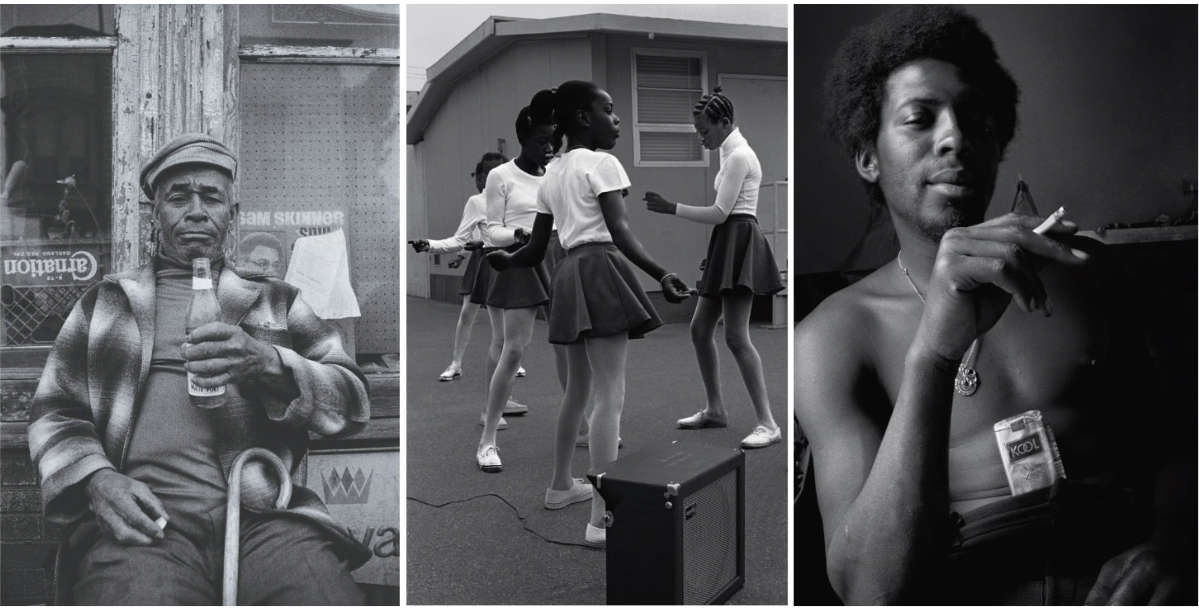
Light’s comments prove true in images such as “Man in Plaid,” a street scene in which an older gentleman dressed stylishly in multiple plaid layers gazes into the camera lens with obvious pride. “Girls Dancing” has young cheerleaders in school uniforms dancing with happy, beautiful abandon. The man in “Kool Smoker” emits total coolness.
“It’s almost like a fashion shoot,” Light said. “He knows who he is, and he’s projecting it. I love the Kool cigarette pack in his pants, in front. It’s a juxtaposition I was lucky to get. If you stuck this cancer stick in your mouth, it’s cool because it says so right on the pack.”
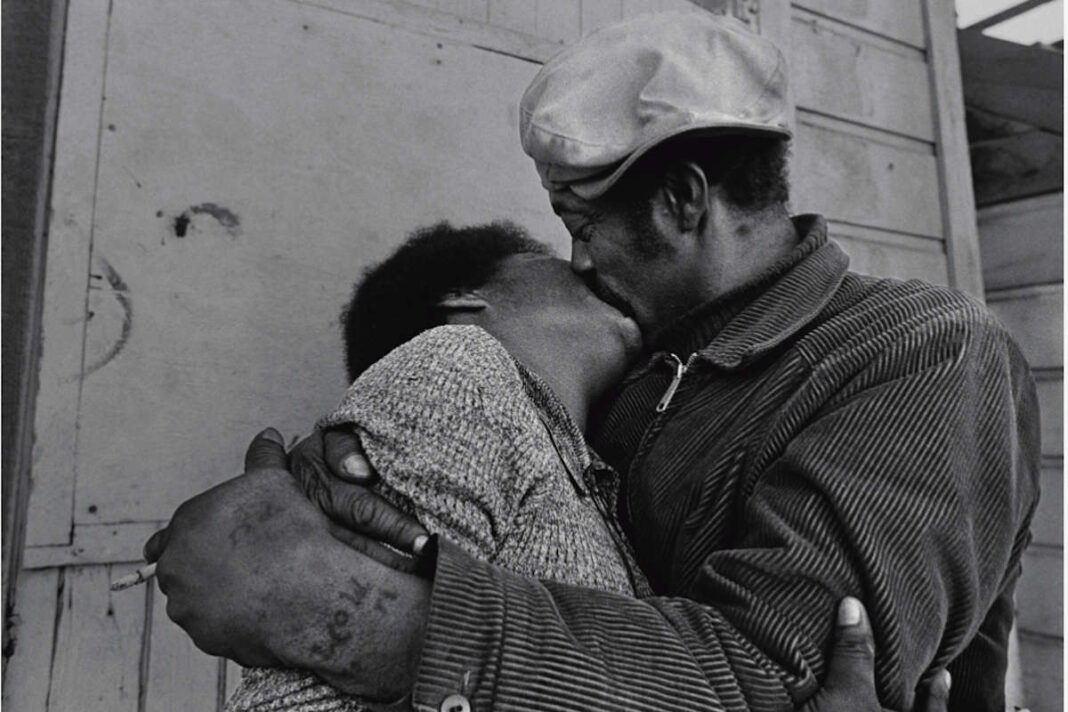
The final image in Soul City, “The Kiss,” Light said, is “such a kiss.” Meaning, the man’s hat, sideburns and the hand-applied tattoo of “mom” on his wrist capture a heartfelt moment of warmth. “It’s a beautiful way to end the book,” Light added, “an image of the love and joy that was always there in West Oakland.”