Kaiser Still Violating Mental Health Laws, Clinicians Say

Some days, Nick Garris’ depression is so severe, he can barely get out of bed. The 85-year-old San Leandro man has suffered from a range of mental health problems since a 2013 knee injury impeded his mobility, according to his daughter Andrea Fritz. “He keeps going further and further into depression,” said Fritz, a retired Oakland Police Department detective. “He won’t get out of bed. He won’t move. He just wants to die.”

Garris’ mental health only got worse when he was unable to schedule frequent psychiatry and therapy appointments with his healthcare provider, Kaiser Permanente, Fritz said. In recent months, his psychiatrist has repeatedly told him he has to wait three weeks or more for another appointment. Kaiser has sent him to group therapy sessions in which he listens to other patients discuss their own mental illnesses — a process that sometimes further exacerbates his depression, according to Fritz. “Nick has fallen through the cracks of Kaiser,” she wrote in a recent grievance against Kaiser that documented her ongoing difficulties navigating her father’s medical and mental health care.
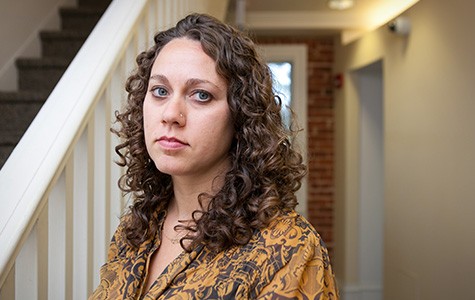
Fritz filed her complaint eight months after the California Department of Managed Health Care (DMHC) raised concerns about Kaiser’s mental health treatment as part of an investigation into the provider’s behavioral health services. In February, DMHC concluded that Kaiser — which provides coverage to 3.8 million members in Northern California, where it operates dozens of hospitals and centers — was frequently failing to provide patients with timely access to mental health appointments in violation of state law. Kaiser was also regularly misrepresenting the services available to members in a way that “can actively discourage patients from obtaining care,” DMHC wrote.

In the months since the state released its report, therapists say conditions haven’t improved. Last week, the National Union of Healthcare Workers (NUHW) — which represents 1,400 psychologists, therapists, and social workers in Kaiser’s Northern California region — threatened to go on strike amid contract negotiations, alleging that the healthcare organization continues to risk patients’ lives with its inadequate care. Kaiser, workers said, has neglected to hire enough mental health clinicians and failed to address concerns raised by DMHC, doctors, and patients. Late Sunday night, however, NUHW called off a strike planned for Monday after it reached a tentative agreement with Kaiser for a three-year contract that the union said would help improve patients’ access to care.

But questions remain about Kaiser’s compliance with the law and whether the new contract agreement will force the Oakland-based healthcare giant to make fundamental reforms. For years, Kaiser has faced complaints that it has prioritized profits, kept its mental health care system understaffed, and blocked patients in crisis from receiving consistent, individualized support (see our 8/13/14 cover story, “A Flawed Model of Care“). DMHC first issued a $4 million fine against Kaiser in 2013 due to a number of serious violations in its mental health services, and in the follow-up review this year, health officials said Kaiser had only addressed some of the deficiencies.

Under state rules, health plans are required to offer non-urgent psychiatry appointments within fifteen business days and mental health appointments with non-physician staff (such as a social worker) within ten days. In the February report, DMHC said it reviewed 148 medical records in Northern California and found that 33 patients (22 percent) did not have access to intake or follow-up appointments within the timeframes required by law.

In recent interviews, the most common complaint from clinicians was that patients who want weekly or semi-monthly therapy sessions often have to wait three weeks or more for a return appointment due to clinicians’ packed schedules. The tentative agreement announced this week includes a provision guaranteeing that for every new intake appointment, clinicians would be allowed to schedule four appointments for returning patients — a ratio that could help eliminate the lengthy delays for follow-up sessions. But clinicians said the contract would only help solve the problem of hazardous wait times if Kaiser hires enough clinicians to meet the demands of patients and becomes fully compliant with the law.

Even though nine months have passed since the February report, internal Kaiser records from throughout the region suggest that patients are still facing dangerous — and illegal — wait times. Last week, Fred Seavey, NUHW research director, provided me with extensive documents showing how Kaiser has made little progress since the DMHC report. Because of long wait times, patients either end up in group therapy sessions that are overcrowded and ineffective — or patients pay out-of-pocket for therapy outside of the Kaiser network, clinicians said. Patients who can’t afford additional care and can’t get regular sessions sometimes end up suffering mental breakdowns, forcing them to rely on Kaiser’s emergency room while waiting for a new appointment, according to clinicians and patients’ families.

One September email from a Kaiser Oakland psychotherapist to her colleagues references a “waitlist that has been generated over the past several months” for a trauma therapy group. That means patients with serious diagnoses, such as post-traumatic stress disorder or acute stress, have been unable to access timely care even in a group setting, according to NUHW. And in an October email to her colleagues, Oakland psychiatric social worker Genna Brodsky requested help for a “depression stabilization group” that she said meets for only ninety minutes, but can include as many as fifteen patients. Sometimes multiple participants may be suicidal, she wrote. NUHW recently submitted both emails to DMHC investigators as evidence of Kaiser’s neglect.

“Kaiser’s most important priority is access rather than quality of care,” Brodsky said in an interview. “The hardest part for me has always been not being able to see patients as frequently as they need.” She said that with her current caseload, patients who need one-on-one sessions must wait six to eight weeks for a return appointment. Some end up in groups, which don’t help them recover or can make them more depressed. Brodsky said that in a typical week, she has twelve return appointments and eight new intake appointments, leads two group sessions, conducts five phone appointments, and does a four-hour triage shift. “I cannot be a therapist robot,” she said. “They want us to be machines.”

The problems aren’t limited to Oakland, clinicians said. In Kaiser’s psychiatry department in Fremont, patients are still waiting three to four weeks for an initial intake appointment, according to NUHW’s documents. A July 29 internal scheduling document showed that an individual seeking a non-urgent intake appointment would have to wait at least 16 business days, and patients seeking return appointments for specific clinicians would have to wait anywhere from 16 to 37 business days.

In Fresno, a psychologist wrote an email to staff in March noting that the facility was experiencing a high volume of intake referrals for its Intensive Outpatient Program (IOP) — and encouraging staff to consider “the Crisis Group as an alternative to IOP if you cannot find an open Intake slot!” NUHW officials said the Crisis Group is significantly less intensive than IOP and functions more like a “class” than in-depth therapy. Union representatives argued that Kaiser should respond to increased demand by expanding its IOP services instead of pushing vulnerable patients into inappropriate group programs. Another Fresno document showed that in a two-day period in May, sixteen patients were scheduled for mental health appointments that exceeded the maximum timeframes under California’s regulations — with some forced to wait 22 days.

Kathy Ray, a child psychiatric social worker at Kaiser in Walnut Creek, said in an interview that her patients currently have to wait eight weeks for a return appointment. “It’s devastating to me,” said Ray, noting that she frequently works extra hours in an effort to schedule more appointments. “If I could get people in and see them more regularly, they would get better quickly.”

Kaiser representatives declined my repeated requests for an interview, but sent me lengthy email responses to my questions. Gay Westfall, Kaiser’s senior vice president for human resources, did not deny the veracity of the internal documents NUHW provided, but argued that the union was distorting facts and that the threat of a strike was “about money,” not patient care. Westfall also asserted that Kaiser has corrected or is in the process of correcting all the deficiencies that DMHC has identified. She added that across California, Kaiser has hired 411 additional therapists since 2011 and is “seeking to hire hundreds more mental health professionals throughout California by the end of 2015.”

But even though Kaiser has expanded its mental health staff, the union said the increases have not kept pace with the large growth in Kaiser enrollment due to the Affordable Care Act. Since 2011, Kaiser’s California enrollment has increased by 1.4 million, or 21 percent. According to the union’s data, Kaiser’s total mental health workforce during that time has grown by about the same percentage — 22. But that means clinics are facing the same problems the DMHC originally identified in 2013, said Clement Papazian, president of NUHW’s Northern California chapter of mental health clinicians. “Many of these patients are formerly uninsured people with multidimensional problems,” said Papazian, who is a psychiatric social worker at Kaiser Oakland. “But [Kaiser] continues to want to save on labor costs at the expense of patients.”



Letters for the week of November 4-10

“The True Sharing Economy,” Feature, 11/4

Reich Is Right

Robert Reich (an economist and UC Berkeley professor) coined a pretty accurate term for Uber, Airbnb, etc.’s tech exploitation of people and assets for investor profit: It’s a “share-the-scraps economy.”

Joe Gont, Berkeley

“Special Deal Would Benefit Influential Developer,” News, 11/4

Good Plan, Crap Process

Looking at the Broadway/Valdez [District] Specific Plan height areas map, it looks like 85 feet on that side of Broadway was the plan, save for the little 45-foot carve-out between 24th and 25th streets (which I assume is the property in question). I’d say allowing more density there is fine and certainly not inconsistent with the general intent of the community plan, in my view.

So, [it] seems to me to be a) good planning practice, and b) crap process. Typical these days, sadly.

Nefarious and corrupt? I doubt it highly.

Justin Horner, Oakland

If It Quacks Like a Duck

The issue here is really not about the zoning changes proposed. Whether or not a new Signature development would be appropriate or not on the affected parcels is only a side note. The issue at the forefront of the story is all about transparency.

The City of Oakland seemingly has a real problem in this area. What is even more disturbing is that it is happening at the top levels of government. The backroom shenanigans that went on behind closed doors in the UrbanCore [Development LLC] housing proposal on East 12th Street was not only illegal, it was shameful and should have been embarrassing. Apparently, no lessons were learned.

Of course, paid lobbyists and attorneys will argue both sides of an issue for the right price, and that is just how it works. However, the one thing that is critical for the public is that the purity of the process is never compromised. Public trust that whatever the recommendation or decision, the planning department is diligent in making sure that the process is both legal and taking place in the light of day is paramount.

In this case, the planning director sits on [Urban Land Institute] panels with Mike Ghielmetti proclaiming that there is no housing crisis in Oakland. Then magically, his newly acquired sites get included at the last minute, buried in a complicated zoning change proposal.

In addition, two weeks ago, Signature proposed to significantly change the open space mitigation required for demolition of the 9th Street terminal in the Brooklyn Basin development. The planning staff supported its cheapened design, suggesting that it met all of the required findings. Clearly, as expressed by the Express and most outside observers, it did not. Thank God the planning commission said “no.”

You could never prove that there was an inside deal, but if it has feathers and a beak, waddles and quacks, it must be a duck.

Hey, Ms. [Rachel] Flynn (planning director), making money for developers is not in your job description. Making sure that you and your staff follow the law and facilitate the process in the light of day is in your job description. Whether you make good decisions or not may be debatable, but preserving your integrity and the public trust is way more important than any land use decision or recommendation you will ever make. Whether you know it or not, that is where your real power comes from.

Gary Patton, former deputy director of Planning and Zoning for the City of Oakland, Hayward

$8 Beers: The New ‘Secret Sauce’

The impact of this will be to basically displace the 25th Street galleries that are symbiotic with Oakland Art Murmur and price artists out of the area they cultivated before anyone wanted to develop there. That’s just bad policy, one which makes Mayor [Libby] Schaaf’s task force on affordable housing for artists seem like a cruel joke, if not a PR/propaganda move. Ironically, affordable housing and artist spaces were a primary topic of discussion at the recent “[Uptown] Techonomic [Development] Forum,” held at — you guessed it — Impact Hub.

This article confirmed anecdotal and evidentiary reports that the city’s planning commission does not have the creative community in mind and, in fact, is allowing developers to determine the future of what is supposed to be an arts district — which may not have any artists or galleries left by the time the mayor’s task force gets around to actually doing something.

How interesting, since [planning department] staffer Alicia Parker recently conceded that the city itself has no idea what “cultural equity” looks like. Unless the mayor suddenly gets a clue, the special sauce of Oakland she’s so fond of referencing will be hella gone, as techbros sipping $8 beers and scarfing $14 fish and chips appetizers becomes the city’s new flavor, and the diversity everyone loves so much will be banished to San Leandro and Antioch.

Sneaky, backhanded actions like this, which show a complete lack of integrity, are among the reasons why the creative community has been forced to defend Oakland’s culture, establishing groups like Soul of Oakland and the Oakland Creative Neighborhoods Coalition. We are doing our best to #KeepOaklandCreative, but it appears the rug is being pulled out from under us, even as I type this.

Eric Arnold, Oakland

Thanks, NIMBY

I usually hate NIMBYism and how it tends to find common cause with “progressive” politics to keep rents high. The Mason has a total of 104 units. That’s it. If it built any more, the neighbors would complain about height, and if it built any less, then rents would be much higher than the $2,800 for a one-bedroom. Go visit the property, a good chunk of it is walking space between 23rd and 24th [streets]. If such a big fuss is made about 104 units, how is Oakland going build housing for anyone?

On the other hand, I just bought in the area, and it will be to my benefit to keep rents high. So I guess if I can’t beat ’em, might as well join them. So thank you, Express, for doing your part in making sure the members of the community oppose any housing in general. My nest egg and property value is much better off as a result.

Clarence C. Johnson, Oakland

“Oakland Takes Stand Against Sex Workers,” News, 11/4

Morality Versus Reason

I think the reason this debate results in people talking past each other so much is because each side of the debate is arguing about a very different thing from the other. [Decriminalization] advocates, including current sex workers, sex worker advocacy groups, the World Health Organization, and Amnesty International argue from a policy position that makes sex worker safety and well-being are primary. The result is that arguments against what are seen as threats to safety and well-being — criminalization, stigma, and treating sex workers as if, uniformly, they are victims and have no agency — reinforces the paternalism with which they are treated and allows prohibitionists to displace them in public discourse.

Prostitution prohibitionists’ focus is on social message and political statement and the role of prostitution in the cultural reproduction of a) patriarchal exploitation (for feminists), or b) debasing immorality (for the religious right), or c) capitalist exploitation (for certain ahistorical leftists who seem unaware that prostitution has existed in every political and economic system ever established).

So the argument really boils down to what you think is more important to pursue as a matter of public policy. From the perspective of [decriminalization] advocates, such as myself, the point is that criminalization causes additional harms specific to sex workers.

The politics and morality that put abstract political ideals and personal morals ahead of the human rights of actual people is what gave us the Swedish model of criminalization. This can be seen in the statements of the originators of the Swedish model, for whom negative effects on sex workers was seen as a good thing and part of the strategy to eliminate prostitution, to drive women from the trade. It’s intended to send a message to society: No matter the collateral damage to sex workers evicted by landlords ensnared as pimps because they derive economic benefit from prostitution; sex workers forced to work alone, who working together for security and support would be deemed guilty of operating a brothel; sex workers unable to hire drivers and security, who would also be considered pimps; migrant sex workers deported back to the desperate situations they fled; sex workers who have to pick from a more dangerous smaller set of potential clients because only the better safer clients are scared off by threat of arrest and have to negotiate transactions with them more quickly, more furtively, [and] more dangerously.

It is a narcissistic morality and politics that values its projection of the virtue of the holder over the harm caused by it to others — this can be seen by how the specter of child exploitation is routinely invoked as a cover for going after consensual adult activity. It’s a morality and politics pursued against reason, toward the elimination of prostitution—like its kindred movements, alcohol prohibition and the drug war.

Peter Schafer, Brooklyn, New York

“The Golden Ones,” News, 11/4

The Warriors Disrespect Oakland

The Warriors have done very well for themselves, but the problem is that their host city of Oakland is marginalized and pushed aside even as it has been the most loyal and successful city in the NBA. How can the Warriors’ success story be told without mentioning the ugly and disloyal aspect of that success?

The fact of the matter is that Oakland is not benefiting as it should for having such a popular NBA champion franchise playing within its city limits. There is no name recognition for the city when the Warriors are on the road. There is no such thing as the city of “Golden State.” The name should have been “Oakland” Warriors. The Warriors also play up San Francisco while playing their home games in Oakland as the networks are encouraged to use San Francisco imagery during national telecasts. For opening night at Oracle Arena in Oakland, the TNT pre-game show was held not at Oakland’s Lake Merritt or in Oakland’s Jack London Square, but instead at San Francisco’s Fisherman’s Wharf. The Warriors also held their opening night festivities at Fisherman’s Wharf. Oakland’s love affair with the Warriors seems to be a one-way infatuation.

As a reward for Oakland’s 43 years of incredible support and a renovated arena in 1997, the Warriors are now planning to invest $1 billion, not in Oakland, but in San Francisco. The Warriors seem to value and romanticize their failed nine years in Daly City as the “San Francisco” Warriors, where they averaged less than 5,000 fans per game, much more than they value their very successful 43 years in Oakland. The Warriors push their “The City” merchandise without ever selling anything in 43 years with a whiff of “Oakland.” The Warriors and the NBA have deemed Oakland immaterial and unimportant and have consistently disrespected this proud city. Oakland has done everything all wealthy sports owners and leagues ask of host cities and yet is still losing its NBA franchise to San Francisco.

When we talk about the Warriors’ incredible success, let’s understand that much of that success is built on the back of the City of Oakland and on the backs of loyal Oakland and East Bay fans. Much of that success is based on marginalizing Oakland in the hopes that others won’t notice, or worst, won’t care. Much of that success is based on kicking Oakland out of the limelight and giving the attention to San Francisco. So far, the recipe of shoving Oakland aside and into the shadows has worked wonderfully well for the Warriors and, in a way, reflects poorly on many in the Bay Area who are just on the bandwagon and view the disrespect that Oakland must endure as just collateral damage.

The corporate pro-San Francisco media for the most part goes along with this travesty and refuses to hold Warriors’ ownership and the NBA accountable for the disrespect and economic harm being perpetuated on Oakland.

Let’s remember the folks in Oakland who will lose their jobs when the Warriors take [its] home dates to San Francisco. Let’s remember the hotel and restaurant employees who may lose their jobs in Oakland when the concerts and ice shows are moved to the shiny new arena in San Francisco. Let’s also remember the potential loss of revenue for the City of Oakland and the negative national punch in the eye the city will receive as the Warriors send an implicit message that they don’t view Oakland as a good place for their $1 billion investment.

All is not rainbows and unicorns in Warriors World and someone needs to call out the Warriors and the NBA for how they are hurting and disrespecting their host city.

Elmano Gonsalves, Pleasant Hill

“An Identity Crisis at Mills,” Culture Spy, 11/4

Support Book Arts!

I am a parent of a child who graduated from Mills College, as well as chair of the MFA in Writing Program at California College of the Arts, where we have a small book arts program begun by the great Betsy Davids. Her retirement left us with a quarter-time instructor who teaches in other programs and many fewer students, who take advantage of the one course we can offer every year. I completely support the great artist Kathy Walkup’s remarkable years doing this work. Thank you for the article. Organize students, organize faculty to sustain this important program.

Gloria Frym, Berkeley

“A Decolonial Cookbook,” What the Fork, 11/4

Vegetarianism Is Colonialism

Decolonize Your Diet — too bad it’s not! Unfortunately, I knew the authors would follow the path of most colonized people, to recommend a veggie-centric diet.

It’s true that most people do need to stop eating processed “foods of commerce.” Those are not healthy, but also having the freedom and knowledge to recommend fresh lard over processed canola oil would be an important stand to make for traditional diets and would be free from Western medical myths.

How sad the authors, along with Bryant Terry, play right into colonizing Eurocentric vegetarian diet — that is the biggest farce and shows unfortunately how colonized they are. All traditional diets included animal fats for substance — and whole cooking of animal parts. I also have studied diets via old cookbooks. I found the truth of native people — don’t go with [these] recommendations and white people diet trends.

Marlese Carroll, Hayward

Award

Express Arts & Culture editor Sarah Burke won a first-place award in the 30th Annual Excellence in Journalism Awards of the Society of Professional Journalists, Northern California Chapter. Burke’s award came in the Arts & Culture category for her October 15, 2014 cover story, “Moral Combat.” Her piece explored Gamergate, the vicious harassment campaign that’s been chasing women out of the video game industry. Her report also looked at how East Bay female developers have been trying to reclaim the video game art form.

The SPJ said Burke’s story “captures nuances about gaming and the kinds of voices that are trying to break into a world that is fighting to keep them out.”

Burke’s award was in the print/small division for newspapers of less than 100,000 circulation. The Express was the only alt weekly to win an award in this year’s contest.

In Defense of Fast-Food Sushi

In a recent blogpost for Food & Wine, Anthony Bourdain — writer, TV personality, espouser of strong food opinions — enumerated six “punishable-by-death” sushi commandments: things you shouldn’t do at a sushi bar unless you want to subject yourself to the scorn of the knife-wielding master behind the counter or, just as likely, of that one guy you knew in college who learned everything there is to know about Japanese culture from his semester abroad.

At Yo Sushi, a new fast-food sushi joint in Albany, chances are high that you’ll violate three or four commandments within the first five minutes of your meal. This is the class of American sushi restaurant that specializes in “crazy rolls,” so it seems like you would be remiss not to try one of the giant, everything-but-the-kitchen-sink flavor bombs, mayonnaise-laden though they may be. Despite Bourdain’s warning to avoid at all costs, you might find Yo Sushi’s dozen or so variations on the California roll — fake crab and all — hard to resist. And you’ll almost certainly be guilty of mixing a slurry of wasabi and soy sauce for dipping — a big no-no to the raw-fish purist.  

Look, I liked Jiro Dreams of Sushi as much as the next food nerd, and, in my more mansplain-y moments, I too have preached the virtues of unadorned nigiri — perhaps to the chagrin of the less-snobbish sushi eaters in my life. But I have to say: I enjoyed my meals at Yo Sushi beyond expectation, especially given that you can buy a veritable feast for less than $20 a person.

Joe Kim, the restaurant’s Korean-born proprietor, opened the original Yo Sushi in Fairfield in 2002 and slowly expanded to the south and east — first to Vallejo and Martinez and then, more recently, down to the East Bay proper, with newish restaurants in Alameda and Albany. He’s remodeled the old Zaki Kabob spot on San Pablo Avenue so that it resembles nothing more than the clean, well-lit fast-food eateries where teens and twentysomethings congregate in any number of Asia’s modern, cosmopolitan cities. The space is a kaleidoscope of bright yellows, oranges, and greens — of lucky-cat bobbleheads, Doraemon illustrations, and K-pop music videos.

Yo Sushi’s menu is dizzyingly vast, consisting not only of sushi, but of almost every genre of mainstream Japanese food — teriyaki-sauced and other assorted rice bowls, katsu (fried pork or chicken cutlets), tempura, udon, and even tonkotsu-style ramen, the newest addition. There’s no room on the signboard menu behind the counter to even begin to list the hundred or so different sushi rolls (which, in typical fashion, tend to have outlandish names like “Angry Lion King” “Three Amigos,” and “Japanese Lasagna”). For these, you’ll have to consult the paper takeout menu.

Of course, the idea here isn’t to serve the best sushi that money can buy. Instead, Yo Sushi aims for a kind of middle ground: pretty good sushi served quickly, and without pretense, at an affordable price. Before he opened his first handful of restaurants, Kim explained, he felt that sushi was something that was only accessible to the wealthy. Why not open a place where regular folks could eat every day? And instead of sticking only to the kind of “pure” raw-fish preparations, the sushi — like the atmosphere — tends toward fun and fusion-y. It’s what a friend of mine calls “college sushi.”

Here’s where I feel the need to point out the obvious fact that the Bay Area has a lot of inexpensive sushi joints that serve crazy rolls, and most of them are pretty bad. Where Yo Sushi sets itself apart is in the quality of the fish — which, true to Kim’s word, I found to be about as good as what you’ll find in your typical mid-tier sit-down sushi spot — and sushi rice that has a texture that may not have been perfect but was miles better than the stiff, pre-refrigerated stuff served at cheaper places. Just as important, there was a sense of restraint not typically associated with these kinds of Americanized rolls. Sure, various sweet and spicy sauces were deployed, and the deep-fryer got a ton of mileage. But somehow, at least in the rolls I tried, all the flavors were well-balanced.   

The “Spicy Rainbow,” for instance, was great. This was your basic spicy tuna roll — arranged upright so it resembled the cross-section of a curled serpent — on top of which the chef had draped pieces of avocado, salmon, tuna, and unagi (broiled eel) before cutting, so that each piece offered a slightly different combination of flavors. Better yet was the “Solano,” which was, in its own way, a masterwork in sushi construction: A layer of seared (but still mostly raw) tuna and avocado was wrapped around a sweet, mayo-laden surimi (fake-crab) salad. Inside of that was a layer of rice, and inside of that, toasted seaweed, a tight bundle of cucumber, and, in the very middle, deep-fried tempura shrimp. Lightly brushed with a sweet, umami-laden “unagi sauce,” these were all too easy to scarf down — the kind of spread that disappears in minutes at a potluck dinner.

The craziest dish I tried was the Yo Nacho, for which crispy, deep-fried wonton shells formed the base of a kind of “taco” topped mostly with chopped surimi and mayonnaise, with tiny orange globules of flying fish roe, avocado, and some more of that lightly seared tuna mixed in as well. It was sweet and spicy, and perhaps more whimsical than delicious. I would have liked it more if the chef had been a bit more generous with the fish.

The biggest surprise was how good the simpler, more traditional Japanese fare was at Yo Sushi. Both the nigiri & sashimi combo (available with optional edible gold flakes) and the chirashi (or “scattered sushi”) rice bowl were generously portioned — again, with thick, better-than-expected slices of raw fish. Yes, the tuna was a bit too mushy, and the octopus, a little too chewy, but, given the price, these were relatively minor quibbles. The chirashi, in particular, was about as good as you can get for less than $15.

The same could be said for the non-sushi items I tried. The tempura udon set meal certainly didn’t feature a broth that was as wholesome or complex as the version at Oakland’s AS B-Dama — my favorite in the area — but for $7.50, it was a generous spread of food: a huge bowl of soup and toothsome noodles, plus a big pile of batter-fried vegetables and shrimp and a spread of assorted pickles. But what really impressed me was the grilled salmon collar appetizer, which was a simple, traditional preparation done exceedingly well — a combination of nicely charred pieces of fatty skin and the soft, tender flesh of the cheek, which made for good picking. No messing around with crazy sauces here: just salt and lemon wedges.

If I had an unlimited budget and two hours to kill for a leisurely meal every night, I’d happily eat at a “serious” sushi restaurant like Sushi Sho in El Cerrito once a week. As it stands, though, on a random weeknight, when the craving hits for raw fish and — yes, at risk of having my “food expert” card revoked, I’ll admit it — for sweet-and-spicy mayonnaise, you’ll much more likely find me getting my fix at Yo Sushi.


Free Will Astrology

Aries (March 21–April 19): Urbandictionary.com defines the English word “balter” as follows: “to dance without particular skill or grace, but with extreme joy.” It’s related to the Danish term baltre, which means “to romp, tumble, roll, cavort.” I nominate this activity to be one of your ruling metaphors in the coming weeks. You have a mandate to explore the frontiers of amusement and bliss, but you have no mandate to be polite and polished as you do it. To generate optimal levels of righteous fun, your experiments may have to be more than a bit rowdy.

Taurus (April 20–May 20): You’ve arrived at a crossroads. From here, you could travel in one of four directions, including back towards where you came from. You shouldn’t stay here indefinitely, but on the other hand you’ll be wise to pause and linger for a while. Steep yourself in the mystery of the transition that looms. Pay special attention to the feelings that rise up as you visualize the experiences that may await you along each path. Are there any holy memories you can call on for guidance? Are you receptive to the tricky inspiration of the fertility spirits that are gathered here? Here’s your motto: Trust, but verify.

Gemini (May 21–June 20): English model and TV personality Katie Price has been on the planet for just 37 years, but has already written four autobiographies. You Only Live Once, for instance, covers the action-packed time between 2008 and 2010, when she got divorced and then remarried in a romantic Las Vegas ceremony. I propose that we choose this talkative, self-revealing Gemini to be your spirit animal and role model. In the coming weeks, you should go almost to extremes as you express the truth about who you have been, who you are, and who you will become.

Cancer (June 21–July 22): A flyer on a telephone pole caught my eye. It showed a photo of a nine-year-old male cat named Bubby, whose face was contorted in pain. A message from Bubby’s owner revealed that her beloved pet desperately needed expensive dental work. She had launched a campaign at GoFundMe.com to raise the cash. Of course I broke into tears, as I often do when confronted so viscerally with the suffering of sentient creatures. I longed to donate to Bubby’s well-being. But I thought, “Shouldn’t I funnel my limited funds to a bigger cause, like the World Wildlife Fund?” Back home an hour later, I sent $25 to Bubby. After analyzing the astrological omens for my own sign, Cancer the Crab, I realized that now is a time to adhere to the principle “Think globally, act locally” in every way imaginable.

Leo (July 23–Aug. 22): How well do you treat yourself? What do you do to ensure that you receive a steady flow of the nurturing you need? According to my reading of the astrological omens, you are now primed to expand and intensify your approach to self-care. If you’re alert to the possibilities, you will learn an array of new life-enhancing strategies. Here are two ideas to get you started: 1. Imagine at least three acts of practical love you can bestow on yourself. 2. Give yourself three gifts that will promote your healing and stimulate your pleasure.

Virgo (Aug. 23–Sept. 22): To activate your full potential in the coming weeks, you don’t need to scuba-dive into an underwater canyon or spelunk into the pitch blackness of a remote cave or head out on an archaeological dig to uncover the lost artifacts of an ancient civilization. But I recommend that you consider trying the metaphorical equivalent of those activities. Explore the recesses of your own psyche, as well as those of the people you love. Ponder the riddles of the past and rummage around for lost treasure and hidden truths. Penetrate to the core, the gist, the roots. The abyss is much friendlier than usual! You have a talent for delving deep into any mystery that will be important for your future.

Libra (Sept. 23–Oct. 22): Normally I charge $270-an-hour for the kind of advice I’m about to offer, but I’m giving it to you at no cost. For now, at least, I think you should refrain from relying on experts. Be skeptical of professional opinions and highly paid authorities. The useful information you need will come your way via chance encounters, playful explorations, and gossipy spies. Folk wisdom and street smarts will provide better guidance than elite consultants. Trust curious amateurs; avoid somber careerists.

Scorpio (Oct. 23–Nov. 21): Some athletes think it’s unwise to have sex before a big game. They believe it diminishes the raw physical power they need to excel. For them, abstinence is crucial for victory. But scientific studies contradict this theory. There’s evidence that boinking increases testosterone levels for both men and women. Martial artist Ronda Rousey subscribes to this view. She says she has “as much sex as possible” before a match. Her approach must be working. She has won all but one of her professional fights, and Sports Illustrated calls her “the world’s most dominant athlete.” As you approach your equivalent of the “big game,” Scorpio, I suggest you consider Rousey’s strategy.

Sagittarius (Nov. 22–Dec. 21): If you were embarking on a 100-mile hike, would you wear new boots that you purchased the day before your trip? Of course not. They wouldn’t be broken in. They’d be so stiff and unyielding that your feet would soon be in agony. Instead, you would anchor your trek with supple footwear that had already adjusted to the idiosyncrasies of your gait and anatomy. Apply a similar principle as you prepare to launch a different long-term exploit. Make yourself as comfortable as possible.

Capricorn (Dec. 22–Jan. 19): Here’s how Mark Twain’s novel The Adventures of Huckleberry Finn begins: “Persons attempting to find a motive in this narrative will be prosecuted; persons attempting to find a moral in it will be banished; persons attempting to find a plot in it will be shot.” The preface I’d write for your upcoming adventures would be less extreme, but might have a similar tone. That’s because I expect you to do a lot of meandering. At times your life may seem like a shaggy dog story with no punch line in sight. Your best strategy will be to cultivate an amused patience; to stay relaxed and unflappable as you navigate your way through the enigmas, and not demand easy answers or simple lessons. If you take that approach, intricate answers and many-faceted lessons will eventually arrive.

Aquarius (Jan. 20–Feb. 18): The Confederation of African Football prohibits the use of magic by professional soccer teams. Witch doctors are forbidden to be on the field during a match, and they are not supposed to spray elixirs on the goals or bury consecrated talismans beneath the turf. But most teams work around the ban. Magic is viewed as an essential ingredient in developing a winning tradition. Given the current astrological omens, I invite you to experiment with your own personal equivalent of this approach. Don’t scrimp on logical analysis, of course. Don’t stint on your preparation and discipline. But also be mischievously wise enough to call on the help of some crafty mojo.

Pisces (Feb. 19–March 20): Slavery is illegal everywhere in the world. And yet there are more slaves now than at any other time in history: at least 29 million. A disproportionate percentage of them are women and children. After studying your astrological omens, I feel you are in a phase when you can bestow blessings on yourself by responding to this predicament. How? First, express gratitude for all the freedoms you have. Second, vow to take full advantage of those freedoms. Third, brainstorm about how to liberate any part of you that acts or thinks or feels like a slave. Fourth, lend your energy to an organization that helps free slaves. Start here: http://Bit.ly/LiberateSlaves.

Who Is First Friday for?

The documentary First Friday begins with a point that resonates throughout the film and serves as the core from which the rest of the movie expands. “In the same year, Oakland was rated one of the top five destinations in the world and one of the top five most dangerous cities in the country. Once a month, those two realities meet.” That monthly occasion is First Friday, the street fair that takes place in Oakland’s Uptown district and at one point drew crowds of more than 20,000 from all over the region.

By the end of 2012, the First Friday street fair had matured into a beast — a joyous, chaotic celebration in which guerilla sidewalk concerts and unregulated street-vending flourished alongside art openings. Then, in February of 2013, it came to a head. A young Oaklander, Kiante Campbell, was shot in the midst of the street party, and many blamed the rowdiness of the event. On social media, concerned locals passed around a post that Lukas Brekke-Miesner had published on his blog 38th Notes, which framed the event in terms of a culture clash but stressed that everyone should be held accountable. “If you are quick to point the finger at ratchets, hipsters, thugs, or police, take a step back and craft a more nuanced analysis,” he wrote. “We need to address this together.”

(function(d, s, id) { var js, fjs = d.getElementsByTagName(s)[0]; if (d.getElementById(id)) return; js = d.createElement(s); js.id = id; js.src = “//connect.facebook.net/en_US/sdk.js#xfbml=1&version=v2.3”; fjs.parentNode.insertBefore(js, fjs);}(document, ‘script’, ‘facebook-jssdk’));
FIRST FRIDAY – Teaser Trailer

Posted by First Friday Film on Sunday, November 1, 2015

It was that shooting and that post that inspired N’Jeri Eaton to reach out to fellow filmmaker Mario Furloni about making a documentary that would attempt to encapsulate the complex social dynamic of First Friday. At the next monthly street fair, they showed up with a crew of eight video and sound teams to follow people around the event, capturing a near-comprehensive snapshot of the night.

The cast of First Friday deliberately represents a microcosm of Oakland. There’s the old school, First Friday organizer and Oakland native who, at one point in the film, asks a young, hip vendor to put away his jewelry made from vintage bullet shells. There’s the high school-aged foster youth from East Oakland who has a particular investment in the fascinating convergence of subcultures and sense of inclusion at First Friday. There’s Brekke-Miesner, the aforementioned blog author and Oakland Tech teacher who, in the film, passes out shirts emblazoned with “Respect Our City” to be worn at the fair. City council President Lynette Gibson McElhaney plays a role as well, representing how difficult it is for the city to manage something with such great potential and yet so many potentially dangerous consequences — to welcome newcomers and development, while also caring for its longtime residents.

In the film, these voices are placed into indirect dialogue, with no one privileged over the other. In that sense, the documentary is pleasingly lateral — as perspectives of the same moment layer atop one another, forming a nuanced and varied contextualization. And as the night wears on, groups intersect in captivating collisions that serve as analogies for Oakland’s broader predicament. At the climax of the film, a group of anarchists lamenting the police killing of a young Oakland man named Alan Blueford angrily chant their way through the official First Friday moment of silence for Kiante Campbell, while McElhaney desperately — and futilely — attempts to hush them.

Eaton and Furloni designed the film as a collision of voices in hopes that it would spark discussion. “Especially in the Bay Area, do we not have very set viewpoints on how we feel about police killings, or how we feel about Black-on-Black crime, or how we feel about gentrification?” asked Eaton. “We don’t want a film that preaches to the choir, we want a film that will help elevate the dialogue.”

First Friday will screen at the New Parkway (474 24th St., Oakland) on November 20 and 21, and on KQED TV on November 22, but the directors also plan to have screenings all over Oakland at various theaters and community centers and will follow each with a discussion. Eventually, they plan to tour the film nationally. “These problems that we’re facing in Oakland are not unique to Oakland,” said Eaton. “Basically, any city that’s going through this urbanization process is facing a lot of these growing pains, so that’s why it’s even more important to have a film that doesn’t feel polemic, that does spark dialogue.”

‘Theeb’ Is a Classic Desert Adventure

0

Theeb opens like any nondescript village picture: a desert well, camels, a boy’s target practice with his brother, etc. But rookie filmmaker Naji Abu Nowar is determined to show us a “Bedouin western” with his stylized tale of the title juvenile (non-actor Jacir Eid) growing up in a hurry in dusty Hejaz Province, Arabia, during World War I.

Young Theeb, whose name translates as “Wolf,” listens with intense curiosity as his older brother Hussein (Hussein Salameh) is directed by their father to accompany a British Army officer (Jack Fox) and his guide (Marji Audeh) on a strategic trip to locate the Roman Well, several days’ journey away across spectacular arid scenery. That obligation comes from the law of Dakheel, which requires a Bedouin to protect a stranger seeking refuge, no matter what.

The headstrong Theeb initially tags along at a safe distance but fate eventually brings him to center stage.

In those days of the Arab Revolt, the territory in which Theeb and his tribe are camped is a crazy quilt of overlapping animosities involving British Imperial forces, the opposing Ottoman Turks, warring Arab factions, and renegade Bedouins. The scrapes the little party get into recall John Ford or Zoltan Korda adventures of seventy years ago, or perhaps Sergio Leone spaghetti westerns — ambushes and double-crosses, sharp knives of crude steel, “iron donkey” train tracks, animal cries in the night, camels that seem to never require food or water. Theeb offers an observation: “The strong eat the weak.”

British-born director Nowar, who co-wrote the film with producer Bassel Ghandour, doles out the bloodshed sparingly, with impeccable timing plus the visceral supporting acting of Hassan Mutlag as a bandit raider. According to Nowar, the production faced difficulty finding actors, mostly due to prejudice against the performing arts in Jordan, where the project was filmed. Nowar overcomes every obstacle in style. He’s an upcoming talent to take note of.

Yassou Finds Beauty in Sadness

Singer Lilie Bytheway-Hoy and guitarist James Jackson of the North Bay indie pop quintet Yassou have a tendency to spend long periods of time fixated on singular obsessions. Over the past year, the bandmates have been binge-reading Haruki Murakami’s novels, which use magical realism to parse through feelings of loss, emptiness, and nostalgia. These emotions permeate Yassou’s latest release, an untitled EP the group put out track-by-track during the past several months exclusively in music video format. (In addition to Bytheway-Hoy and Jackson, Yassou includes guitarist A.J. Krumholz, drummer Patrick Aguirre, and synth player Theo Quimby.)

“I love the ideas that [Murakami is] talking about — of wanting to preserve that feeling of love,” said Bytheway-Hoy in an interview, referring to one of his bestsellers, Kafka on the Shore. Its protagonist, Kafka Tamura, follows his enigmatic lover into the spirit world even though fate has driven them apart. “When you’re in your perfect moment, you can’t help but have that twinge of like, ‘This is going to end in 24 hours; this is going to end in a year; this is going to end in two minutes.’ And you hold on to that so you can’t experience the full joy of it.”

Yassou’s new EP speaks to the feeling of longing for something that never was, and the human tendency to romanticize the past. I dreamed a dream/I had a daughter/Fell asleep again/Just to hold her, Bytheway-Hoy sings on “To Sink.” It’s an airy, melancholic track with a wistful keyboard melody that drifts over a pitter-pattering drumbeat. Throughout its lyrics, she grasps at passing moments but ultimately accepts their impermanence: These will be my final hours/Do what you want with me.

Like “To Sink,” the project’s other four songs have a doleful, contemplative sonic palette. Sparse keys and atmospheric synth riffs add bursts of color to the prominent drum beats underscoring Bytheway-Hoy and Jackson’s vocals.

While Jackson’s nasal pitch is idiosyncratic, Bytheway-Hoy’s singing has a refined quality that betrays her choir background. Her style, however, is unostentatious and she adds flourishes sparingly. For instance, on the project’s first track — or chapter, as the band refers to each video on the EP’s animated interface on YassouBand.com — she accents each “I” and “Ah” by unexpectedly leaping into a high note and dropping back down to her husky timbre. On “The Woods,” her wispy chorus turns into a spider web of delicate harmonies.

Yassou’s EP makes for good driving music: a soundtrack for clearing one’s head over long stretches of highway. Its music videos cultivate a similar quality of self-reflective solitude. Bytheway-Hoy stars in the videos and is often pictured alone. We see her running down a dark, wooded road; standing before a precipice, her clothes billowing in the wind; or sinking deep into the ocean. The other characters that appear — such as the synchronized swimmers in “To Win/Young Blood” or the dancers in “To Sink” — seem more like personifications of her emotional states than characters in their own right.

Bytheway-Hoy co-directed the videos with several Bay Area filmmakers: George Daly, Peter McCollough, Amy Harrity, and Gary Yost. Originally, the project was going to be a full-length album with ten videos that formed a continuous plot, but the undertaking proved to be too ambitious given the musicians’ limited resources.

“I spent a lot of time thinking about the stories and how they would be connected, and the symbolism and all of that,” said Bytheway-Hoy. “And after a certain point, I just had to let go of my ideas and let it be what it was going to be. … I often have impossible ideas, but we always try for them, and what we end up getting is pretty amazing, even if it’s not the impossible thing.” Still, the final product proved to have a cohesive vision, and the different directors’ aesthetics flow seamlessly together.

Long drives defined the members of Yassou’s teenage years in Hudson, the small town in upstate New York where they lived before coming to the Bay Area in 2011. According to Bytheway-Hoy and Jackson, Hudson is the type of place where getting your driver’s license at age sixteen means freedom. In high school, the bandmates spent late nights driving around on desolate back roads, partying in people’s cars while their parents were sleeping. The EP, they explained, is rife with nostalgia for their carefree, reckless adolescence.

“It was freedom from responsibility and freedom from paranoia,” said Jackson. “You did whatever you wanted to do without thinking about the consequences. And now, looking back on that, it’s kind of nice and nostalgic — and in a way, you see how destructive it was.”

“It wasn’t sustainable,” added Bytheway-Hoy, nodding knowingly.

In the video for “The Woods,” which Harrity directed, the band reimagines one such late-night drive. In it, Bytheway-Hoy’s character drives a vintage Oldsmobile down a winding road. As she peers into her rearview mirror, visibly on-edge, the scene shifts between different visions. First, her friends are in the car, apparently on a joyride. Suddenly, she’s alone. Then, she’s watching herself kiss a man, whom Jackson plays, in the backseat. Eventually, she parks and opens her trunk to reveal the man’s corpse. Headlights, mournful/Highways, unknown/I’ve seen your faults/I’ll wait until I know, she sings as she dives off the overpass.

“The idea, ultimately, is about how when you have really close and intense relationships with people, it can be helpful and creative for both people,” said Bytheway-Hoy, “but it can also be destructive at the same time because it becomes more important than anything else.”

Like Yassou’s other work, the video examines the ways in which seemingly contradictory emotions can bleed into one another within a single experience. With its deft juxtapositions of music and visuals, the band’s EP immerses the listener in its romantically melancholic world — a place where darkness always looms, even in the beautiful moments.

8ULENTINA and Foozool Remix Cultural Exchange

0

Based on the long history of bad blood between their two ancestral homelands, DJs 8ULENTINA (Esra Canogullari) and Foozool (Lara Sarkissian) might seem like unlikely collaborators for their popular monthly party, Night Forms, which takes place on third Saturdays at the Rock Steady in downtown Oakland. In addition to performing there every month, they feature guest DJs of diverse heritages whose genre-defying mixes incorporate traditional sounds and forward-thinking selections of international club music.

Foozool’s family is Armenian and 8ULENTINA’s father is Turkish. Relations between their two ethnic groups are fraught because, to this day, the Turkish government refuses to acknowledge the Armenian genocide, which took place in the Ottoman Empire a century ago.

Inhabiting the Digital Diaspora: Night Forms from East Bay Express on Vimeo.

In spite of the animosity that still exists between their cultures, Foozool and 8ULENTINA came together at B4BEL4B Gallery over one of the most common of shared experiences: food. Specifically, a salad 8ULENTINA made for their mutual friend’s artist residency that’s common in different parts of the Middle East.

“I wanted to cry when I saw this salad because my grandma makes that,” Foozool said.

Before they bonded over their cultures’ similarities, however, 8ULENTINA and Foozool found common ground in their shared interests in video and music production. Soon after, they collaborated on Border_Convos, an audiovisual mixtape that the social justice-centric creative collective Browntourage released in March.

The project’s 35-minute video weaves footage of folk dancing with day-to-day activities, religious rituals, and popular Iranian, Kurdish, Lebanese, and Tajikistani music videos. Traditional percussive rhythms serve as a thread on the soundtrack, stitching together vocal and instrumental samples from across the globe. The mix jumps genres often, oscillating between Turkish trip-hop, footwork, dabke (a Levantine Arab folk genre), and house. Like 8ULENTINA and Foozool, many of the artists whose work they sample on the mixtape have Middle Eastern roots but make music in Europe, Canada, and the United States.

Similarly, the guest DJs at each month’s Night Forms typically have transnational stories to tell through music and multimedia. At one of their recent events, for instance, Ethiopian-American artist and DJ Selam Bekele projected her video work, which referenced Afrofuturist aesthetics and explored the idea of home.

“We really like to have Night Forms be a platform where people feel they can use the party to tell a story about their background,” 8ULENTINA said.

8ULENTINA and Foozool explained that the mix-match-remix nature of their work is reflective of their experiences growing up Middle Eastern in America, craving a connection with their respective heritages, and navigating worlds that are often at odds with each other politically and culturally. While Foozool grew up immersed in the large Armenian community in the Bay Area, 8ULENTINA used YouTube and Tumblr to cultivate a deeper connection to their Turkish roots, bonding with likeminded first- and second-generation Middle Eastern-Americans through what they like to call the “digital diaspora.” (8ULENTINA goes by the gender-neutral pronoun “they.”)

Meanwhile, Foozool said that exploring music exposed her to new facets of her family’s history. “I just found a bunch of [my mom’s] records that I didn’t know she even had,” she recalled. “My mom would just be jumping in my room and giving me different stories that I never would have heard otherwise.”

In many ways, the connection between music and culture at Night Forms has fostered a platform for cross-cultural dialogue and exchange. “I think we related a lot to how we work as artists before we even thought about, ‘Oh, you’re Turkish’ or ‘Oh, you’re Armenian,'” 8ULENTINA said. “And then we started talking about it because you can’t not talk about it.”

While many of 8ULENTINA and Foozool’s conversations take place over a laptop when they’re poring over wedding videos or old TV shows, Night Forms has allowed them to share those conversations with anyone interested in hearing non-Western sounds reimagined for a contemporary club setting.

As 8ULENTINA put it, “Putting traditional percussion or Eastern sounds with club music and letting people see those two things can exist in the same space — that’s what we get really excited about.”

The Ticking Climate Bomb

In the climate debate, most of the noise so far has involved climate change denialists. But an important clash of ideas is occurring within the movement to limit climate damage. The question centers on what large investors, especially pension funds and foundations, should do with the billions of dollars they have invested in climate-destroying oil and coal companies — investments that are financing the destruction of the planet.

So-called “divesters,” like environmentalist Bill McKibben and the climate group 350.org, argue that for practical, financial, and moral reasons, investors should sell their fossil-fuel investments immediately. “Engagers,” on the other hand, claim that the best route is to meet with and cajole Big Oil and Big Coal to change their business practices. Financing oil and coal in order to “have a seat at the table” will produce positive results, according to the engagers’ point of view.

But the lack of concrete results so far, along with recent revelations of Big Oil’s suppression of climate science and the risk of climate change, often surreptitiously, have exposed the fallacy of the engagers’ approach.

Last year, three East Bay mayors wrote a joint op-ed in the Sacramento Bee calling for divestment from fossil fuels. In response, Anne Simpson, CalPERS’ director of Global Governance, argued for more engagement. “We all have a shared concern with climate risk, but our view is that the solution lies in engaging energy companies in a process focused on finding solutions, rather than walking away,” she wrote.

California state Senate Pro Tem Kevin de León responded, in turn, by authoring a bill requiring CalPERS (the public employees’ pension plan) and CalSTRS (the public school teachers’ pension plan) to sell their investments in coal companies. These investments, de León argued, are “a nuisance to public health” and “inconsistent with our values as a state on the forefront of efforts to address global climate change.” De León’s bill is now law.

There are many people, meanwhile, who do not view engagement and divestment as being mutually exclusive. For example, a representative of Carbon Tracker, a UK nonprofit, told me in an interview that the test for the engagers is “about being able to demonstrate effectiveness of engagement.”

State Controller Betty Yee, who is a trustee on the board of CalPERS and CalSTRS, contends that engagement has been effective. Yee is an engager; in August, she penned an op-ed during the fight over coal divestment entitled, “Engagement is best approach to reduce fossil-fuel investments.” And in an email to me, her spokesperson Taryn Kinney stated: “As a result of a collective shareholder effort, Exxon Mobil changed their approach to risk disclosure. Exxon’s decision to report how it will assess the risk of stranded assets from climate change proves that the level of engagement, from investors, including CalSTRS, helped influence their decision.”
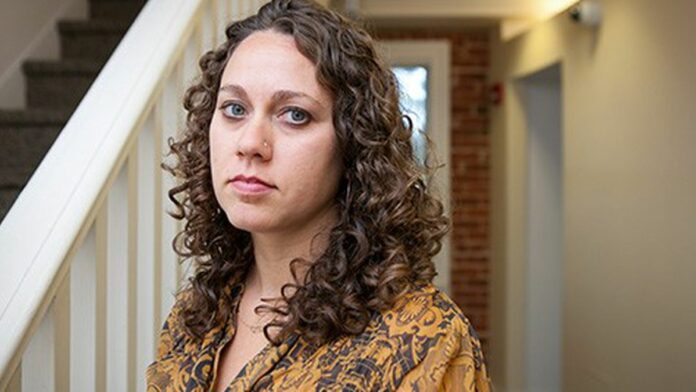
But Yee’s claim about the success of engagement doesn’t stand up to scrutiny. Ceres, a long-time investor coalition of “environmentalists and capitalists” that includes companies like Ben & Jerry’s and PG&E and has “engaged with ExxonMobil and its predecessor companies for decades,” stated recently that ExxonMobil has denied that any of its reserves are stranded or unburnable — which is a direct denial of the belief of nearly all responsible investors. Plus, Ceres said, ExxonMobil is currently providing “almost no information about carbon asset risks.”

Moreover, recent revelations prove that ExxonMobil has been shining the engagers on for decades. Reports reveal that the company’s top management knew as far as back as the late 1970s about the threat of global warming from burning fossil fuels. A decade later, the company spearheaded industry efforts to derail regulation of greenhouse gas emissions and cloud public understanding of climate science. As McKibben recently wrote, “They helped organize the most consequential lie in human history.”

The realization of the futility of engaging with Big Oil and Big Coal is nothing new. Some members of the Rockefeller family, founders of ExxonMobil’s predecessor, tried engagement for decades. They wrote letters, had lunch meetings, and backed shareholder resolutions to address climate change. Ultimately, their engagement failed and they divested.

However, that doesn’t mean that engagement is a complete waste of time. Andrew Behar of the Oakland-based shareholder advocacy group, As You Sow, believes that engagement can be synergistic with divestment. He also believes that large oil producers have a choice: “transition” to clean energy or “wind-down operations now.” If companies are motivated, he contended, engagement with them “enables a dialogue about how the transition or wind-down will happen.”

Behar might be right about that — eventually. It will likely take a long time before ExxonMobil and Chevron decide to wind-down their core business.

And in the meantime, those who play engagement paddy-cake with Big Oil and Big Coal are on the hot seat: Unless they can show better results quickly, the time to divest will be here very soon.

‘Disgraced’ Brings Islamaphobia to the Dinner Table

Ayad Akhtar’s Pulitzer-prize winning play Disgraced, which tackles issues of race and religion with as much delicacy as a bulldozer, is easily one of the most apt plays to hit the stage this month. On its opening night at Berkeley Repertory Theatre (2015 Addison St.), as the characters sat down to a dinner party underscored by anti-Islamic sentiments and intolerance, news was breaking about devastating attacks in Paris allegedly carried out by the jihadist group Islamic State of Iraq and Syria. But rather than turn the play into a crass, inappropriate affair, the contextual backdrop endowed the production with searing relevance and brutal poignancy. As patrons left the theater after the show, a few cried openly.

The story spins around Amir (played by Bernard White), a man who at the beginning of the play is inches away from the American Dream — or at least the superficial characteristics of it. He has a beautiful, blonde wife, Emily (the endearing Nisi Sturgis), a luxurious New York City apartment, and a closet full of crisp, designer suits that he wears to his job at a top-tier law firm. As the title of the play suggests, however, disgrace is on the horizon. Amir’s carefully constructed façade — his shield against a western culture that regularly conflates “Islam” with “terrorist’ — is bound to collapse.

At the outset, Amir is mindful of the tense relationship that many Americans have with Islam, and he is the first to vilify the Quran through a series of verbal lashings. When Emily — an artist with an affinity for Islamic art — defends the holy book at the booze-laden dinner, he tells her that it is “one very long hate-mail letter to humanity.” If drunken words are sober thoughts, Amir’s feelings should be sincere. But the relationship he has with the religion is complicated — much too complicated for his dinner guests to wrap their well-meaning heads around.

Amir’s moments of drunken honesty reveal self-loathing symptomatic of internalized racism, while also giving way to a smattering of other disclosures that his guests cannot reconcile. In the world of Disgraced, even the most progressive, well-educated social circles are scorched by unspoken prejudices.

Soon, a series of unsettling tete-a-tetes devolve into screaming matches that are at once riveting and appalling. Amir is no longer the congenial colleague of Jory (Zakiya Young), a Black lawyer who usurps him at the firm, nor is he the friendly acquaintance of her Jewish husband, Isaac (J. Anthony Crane). To them, Amir is “a closeted jihadist.” To his wife, he becomes something worse.

As the incendiary dinner conversation flames out, so do the relationships that once put a glossy finish on Amir’s American Dream. By the time the shocking conclusion is laid bare, it’s suggested that Muslim assimilation in a post 9/11 America is near impossible — regardless of your job, your wife, your home, your money, and most of all, your effort. For Amir, the futility is enough to drive him back into behavior he previously disavowed.

Akhtar, who will be discussing his play on November 19 as part of the Berkeley Repertory’s Page to Stage program, garnered national acclaim for his work exploring the Muslim experience in America. The author unflinchingly and relentlessly tackles Islamaphobia throughout the show’s eighty-minute run, and his other written works are known for doing the same. It’s unsurprising that Disgraced is the most widely produced play in the country this year — the delivery of uncomfortable truths and stimulating dialogue make it feel urgently necessary. Akhtar never skirts the depravities of both American and Islamic culture, delivering scathing indictments — and occasional defenses — to each.

Shrewd direction by Kimberly Senior, who also directed the show when it was on Broadway, makes for a bristling, fast-paced affair — much like any semblance of Amir’s success. To say that she’s produced an entertaining play feels inappropriate considering the sobering sociopolitical conversations unfolding on stage, but it is nonetheless smart and enthralling. Throughout, the audience waits for White’s next line, which was often followed by a gasp from the crowd. Supporting characters also delivered a trove of their own hard-hitting barbs — an especially prescient one regarding France’s contention with Islam sent chills rippling through the theater.

It’s in these sadder-than-fiction moments that Disgraced is at its best. Explosive from start to finish, it will likely be the most harrowing — and perhaps even best — play you’ll see this year.

Kaiser Still Violating Mental Health Laws, Clinicians Say

Some days, Nick Garris' depression is so severe, he can barely get out of bed. The 85-year-old San Leandro man has suffered from a range of mental health problems since a 2013 knee injury impeded his mobility, according to his daughter Andrea Fritz. "He keeps going further and further into depression," said Fritz, a retired Oakland Police...

Letters for the week of November 4-10

"The True Sharing Economy," Feature, 11/4 Reich Is Right Robert Reich (an economist and UC Berkeley professor) coined a pretty accurate term for Uber, Airbnb, etc.'s tech exploitation of people and assets for investor profit: It's a "share-the-scraps economy." Joe Gont, Berkeley "Special Deal Would Benefit Influential Developer," News, 11/4 Good Plan, Crap Process Looking at the Broadway/Valdez Specific Plan height areas map, it...

In Defense of Fast-Food Sushi

In a recent blogpost for Food & Wine, Anthony Bourdain — writer, TV personality, espouser of strong food opinions — enumerated six "punishable-by-death" sushi commandments: things you shouldn't do at a sushi bar unless you want to subject yourself to the scorn of the knife-wielding master behind the counter or, just as likely, of that one guy...

Free Will Astrology

Aries (March 21–April 19): Urbandictionary.com defines the English word "balter" as follows: "to dance without particular skill or grace, but with extreme joy." It's related to the Danish term baltre, which means "to romp, tumble, roll, cavort." I nominate this activity to be one of your ruling metaphors in the coming weeks. You have a mandate to explore the...

Who Is First Friday for?

The documentary First Friday begins with a point that resonates throughout the film and serves as the core from which the rest of the movie expands. "In the same year, Oakland was rated one of the top five destinations in the world and one of the top five most dangerous cities in the country. Once a month, those two...

‘Theeb’ Is a Classic Desert Adventure

Theeb opens like any nondescript village picture: a desert well, camels, a boy's target practice with his brother, etc. But rookie filmmaker Naji Abu Nowar is determined to show us a "Bedouin western" with his stylized tale of the title juvenile (non-actor Jacir Eid) growing up in a hurry in dusty Hejaz Province, Arabia, during World War I. Young Theeb,...

Yassou Finds Beauty in Sadness

Singer Lilie Bytheway-Hoy and guitarist James Jackson of the North Bay indie pop quintet Yassou have a tendency to spend long periods of time fixated on singular obsessions. Over the past year, the bandmates have been binge-reading Haruki Murakami's novels, which use magical realism to parse through feelings of loss, emptiness, and nostalgia. These emotions permeate Yassou's latest release,...

8ULENTINA and Foozool Remix Cultural Exchange

Based on the long history of bad blood between their two ancestral homelands, DJs 8ULENTINA (Esra Canogullari) and Foozool (Lara Sarkissian) might seem like unlikely collaborators for their popular monthly party, Night Forms, which takes place on third Saturdays at the Rock Steady in downtown Oakland. In addition to performing there every month, they feature guest DJs...

The Ticking Climate Bomb

In the climate debate, most of the noise so far has involved climate change denialists. But an important clash of ideas is occurring within the movement to limit climate damage. The question centers on what large investors, especially pension funds and foundations, should do with the billions of dollars they have invested in climate-destroying oil and coal companies —...

‘Disgraced’ Brings Islamaphobia to the Dinner Table

Ayad Akhtar's Pulitzer-prize winning play Disgraced, which tackles issues of race and religion with as much delicacy as a bulldozer, is easily one of the most apt plays to hit the stage this month. On its opening night at Berkeley Repertory Theatre (2015 Addison St.), as the characters sat down to a dinner party underscored by anti-Islamic sentiments and...
19,045FansLike
17,709FollowersFollow
61,790FollowersFollow