For more than sixty years, Harper Lee’s To Kill a Mockingbird has compelled audiences with its astute portrayal of racism and injustice in Depression-era Alabama. In 1970, ten years after the novel was published, playwright Christopher Sergel began working on a stage adaptation that took him twenty years to complete. Sergel’s adaptation is now headed to Berkeley Playhouse, with previews beginning April 28 at the Julia Morgan Theater (2640 College Ave., Berkeley). The play is the first-ever non-musical produced by Berkeley Playhouse, which has focused exclusively on musical productions in the nine years since its founding, and will be directed by Berkeley Playhouse’s producing artistic director, Darren A.C. Carollo. Two sets of young actors ranging in age from nine to fourteen will take on the roles of protagonist Scout Finch, her brother Jem, and their friend Dill Harris, while Steve Rhyne will play Scout and Jem’s father Atticus, a lawyer much-beloved by audiences whom Lee modeled after her own father.
San Francisco composer Pamela Z weaves elaborate arrangements from looped, processed, and sampled vocals, combining elements of operatic singing, poetry, and speech in her dazzlingly virtuosic, avant-garde performances. In recent years, she has developed a unique process that relies on an ultrasound-powered MIDI controller that allows her to process her singing and trigger samples in real time solely using hand gestures, as opposed to twisting knobs and pushing buttons. Simply put, her live shows are a sight to behold. At Yerba Buena Center for the Arts in San Francisco on April 28, Z will perform one of her most ambitious works yet: Memory Trace. For the piece, the musician interviewed dozens of subjects about their experiences with memory and perception. The resulting interviews became fodder for Z to sample, and the piece incorporates live singing, monologue, and a video installation to probe the malleability of the human mind.
On Saturday, April 30, Independent Bookstore Day will once again be taking over local bookshops. To celebrate, bookstores will be hosting a grab-bag of literary festivities. Diesel Bookstore (5433 College Ave.) will release Record Store Day-style, limited-edition products. Among the rare literary goods will be X is For…, a new record featuring Carolyn Pennypacker-Riggs made as an accompaniment to local author Kate Schatz’s best-selling children’s book Rad American Women A-Z. Meanwhile, Schatz will appear in person at Books Inc. Alameda (1344 Park St.) to promote the record. And at Books Inc. Berkeley (1491 Shattuck Ave.), there will be a photo booth, with costumes for dressing up as your favorite literary character (think Harry Potter robes). Pegasus Books Downtown (2349 Shattuck Ave., Berkeley) will take part as well, offering an ask-me-anything session with author Mary Roach, who is currently working on a new book, titled Grunt: The Curious Science of Humans at War.
Medical Weed Boom: Oakland is poised to adopt a suite of new regulations that will dramatically expand the medical cannabis industry, creating new dispensaries, delivery services, factories, and labs, all while generating millions in new revenue for the city.
At the Oakland City Council finance and public safety committee meetings this week, city leaders will hear about various options to fertilize this budding economy. City staff is proposing to amend Oakland’s existing medical cannabis laws to align with the recently passed state Medical Marijuana Regulation and Safety Act (MMRSA), which will bring parts of the industry such as cannabis cultivation and the manufacturing of THC-laced products out of a regulatory gray zone.
The city is considering licensing up to eight new medical marijuana dispensaries each year in Oakland on top of the existing eight shops. The city would also begin issuing licenses to cannabis transporters, a business enterprise that isn’t currently regulated. By the city’s own estimate, there are already a dozen cannabis delivery services operating in Oakland. Regulating delivery services will ensure quality and safety, while allowing Oakland to tax this industry segment. Oakland will also license cannabis cultivators and manufacturers of marijuana-derived products. Regulation of cultivators and manufacturers is expected to help reduce burglaries and robberies while ensuring that business owners maintain safe operations, reduce fire hazards, and treat their employees fairly.
The economic benefits of these new regulations for Oakland are going to be big. According to a city staff report:
“While staff cannot specify exactly how many new medical cannabis businesses will take advantage of this new permitting process, staff estimates issuing approximately 60 permits in 2016 based on inquiries from interested businesses, attendance at public meetings and industry trends. For some perspective, the City’s eight licensed medical cannabis dispensaries contributed over $4 million in taxes in 2015.”
Oakland is going in big on medical marijuana thanks to the MMRSA, but other East Bay cities are entering and expanding into the weed industry also. See our recent news story on Emeryville and San Leandro, for examples.
One big drawback to the the MMRA, however, is that it could allow the state licensing authority (in the process of being set up) to deny medical marijuana business permits to people with prior cannabis and other non-violent drug convictions hoping to enter the weed industry. Oakland officials hope that they can show state regulators a better path to take by rapidly updating the city’s licensing regime with policies that don’t shut out people who have been caught up in the drug war. See our feature story from March, “Locked Out of Legal Weed” for more details.
Hotel Minimum Wage Controversy: Councilmembers Abel Guillen and Dan Kalb want to update the Oakland Planning Code so that all proposed hotel projects have to obtain a conditional use permit (CUP) from the city. To obtain the CUP, hotel developers would have to show that the new employees they hire would be paid good wages with benefits, and furthermore that they will follow Oakland’s minimum wage law, which requires paying $12.55 an hour and providing paid sick leave. Planning department staff and the planning commission would also be required under the Guillen-Kalb proposal to take into account the impact of new jobs generated by a hotel on public services like transit, or on the local housing market. If jobs at a proposed hotel would pay too low and have poor benefits, the city could reasonably reject an application to build a new hotel.
Guillen and Kalb’s proposal comes amidst a controversy over a Hampton Inn hotel that was approved for construction by the planning department in March, despite the fact that city investigators found that the developers — Dhruv Patel and his parents Sima and Pravin Patel — had violated Oakland’s minimum wage law at another hotel they own and operate near the Oakland airport. Planning department staff approved the new hotel on their own without a public hearing before the full planning commission conditional use permit aren’t required for hotels under Oakland’s current development rules, except under very specific circumstances.
Planning department staff said that they were not allowed to take into account issues such as the minimum wage investigation report as well as the wages and job conditions of employees at the applicant’s other hotels when making their decision to approve the new hotel.
The union UNITE HERE 2850 disagrees and is appealing the planning department’s decision and a hearing is scheduled for May 4.
But the amendment to the Planning Code would likely remove any ambiguity in the existing law and require city staff to consider minimum wage compliance and job conditions in the future for all hotel projects.
Meanwhile, the Patel family is disputing the findings of the city minimum wage investigation at their existing Holiday Inn Express hotel, and they have hired attorneys who are demanding that Oakland withdraw the final report concluding the city’s investigation.
Bicycle Master Plan: Oakland already has a bicycle master plan, but the plan has to be updated every five years in order for the city to be eligible to get money from the Alameda County Transportation Commission. And with all the population growth, housing, and other investments lining up to transform Oakland, it only makes sense to re-draft the bike transportation plan.
According to the city, the number of bicycle commuters in Oakland has more than doubled since 2007, when the bicycle master plan was last updated. The city’s bikeway network — streets, paths, and other infrastructure designed for bikes — has expanded by 40 percent. And bike sharing is coming to Oakland soon. To pay for the update to the bike plan, Oakland will apply for a $500,000 state transportation grant.
Another Oakland cop is in trouble with the law. Matthew J. Santos, who was an Oakland police officer until he was terminated by the department recently, was arrested on February 17 by the Emeryville police on charges of felony kidnapping, false imprisonment, and a misdemeanor firearms charge, all in relation to an incident that occurred in a 40th street apartment building where Mr. Santos lived at the time.
The Emeryville Police Department denied a Public Records Act request seeking an incident report that would describe in detail the events leading up to the Oakland police officers’ arrest. But the Emeryville police provided a written description of the incident in an email. According to Emeryville’s police, Santos pointed a gun at a painter who was working on the apartment building.
Court documents provide more details. Charges filed by the Alameda County District Attorney against Santos state that:
“Victim is a painter who was hired to paint the exterior front door of the defendant’s apartment. Property management left a notice on the defendant’s door making him aware of the front door of his apartment being painted approximately five days prior to this incident. Def. arrived to his apartment and the painter was painting the front door which was opened with an apartment security guard standing by. Defendant arrived at his front door and told the painter ‘Hey, get away from my door.’ The defendant was pointing a black pistol at the victim. The victim was scared and ran. The def. asked who opened my door and the victim stopped running. The def. placed the gun in his waistband once he entered the leasing office.”
Officer Johnna Watson of the Oakland Police Department wrote in an email to the Express that officer Santos had been recently hired by OPD and that he was still on a probationary period of employment when the incident occurred. Santos has subsequently been terminated by the department.
Watson did not respond to a question about whether the gun Santos brandished was an OPD-issued weapon.
Attorneys for Santos did not respond to a phone call and email. Santos was hired by the department in April 2015. His next court appearance is May 23 in Hayward.
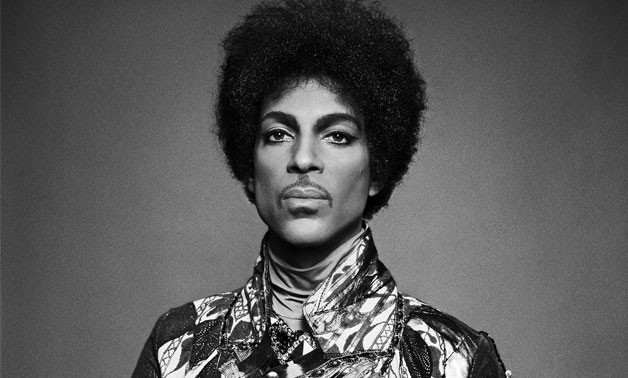
You could stay in all weekend and watch Purple Rain, or listen to any one — or all — of Prince’s brilliants records. But it’s more likely that he would have wanted you to get out and dance this weekend. Here are some ways to do that, and more, below.
Created 2 Create
Those lucky enough to be off work on Friday should stop by Created 2 Create, an interdisciplinary artist mixer organized by local up-and-coming photographer, filmmaker, and event producer Mecca Media at Omiroo Gallery in downtown Oakland from 2 to 7 p.m. Mecca conceived of the event as a way for young artists and creatives of different disciplines to meet one another and hash out ideas. Created 2 Create will be a laid-back day party with a DJ set by Low Keno, who’s half of the DJ duo $ex $hop, which specializes in down-tempo, sexy R&B and forward-thinking beats. There will be additional surprise musical guests and a poetry reading featuring Brother Gipson, Hurricaannee, and Love Millie, plus art installations and local craft vendors posted up all day.— Nastia Voynovskaya
Fri., April 22, 2-7 p.m. Free.
[jump]
2016 Bay Area Anarchist Book Fair
The annual Bay Area Anarchist Book Fair is back to showcase radical literature for the 21st year in a row on Saturday, April 23 from 10 a.m. to 6 p.m., this time at the recently-relocated Oakland Metro Operahouse (522 2nd St., Oakland). As usual, there will be a host of local publishers and print purveyors in attendance, all offering their own take on political resistance, from AK Press to Endless Canvas. Programming will include “Anarchists, Race, Police Brutality, and the Rise of the Right,” a discussion of anti-racism and solidarity within the anarchist movement; “We Are the Crisis of Capital, And Proud of It!,” a conversation about what anti-capitalist revolution can mean today; and the intersectional writer panel “We are All of Our Identities All of the Time: Women of Color on Punk, Parenting, and the Beautiful Struggle for Social Justice in the Face of White Anxiety.” As always, the event will be free and open to the public.— Sarah Burke
Sat., April 23 Free. BayAreaAnarchistBookFair.com
Brewbies In The Bay Craft Beer Festival
The internet age has inspired an appreciation for portmanteau words, so it’s fitting that a newcomer brewery would be the setting for a new beer festival called Brewbies in the Bay. Hosted by Alameda’s own Faction Brewing (established in 2013), the event features offerings from over forty West Coast breweries. While the specific brewers on the lineup are too many to list, it includes established favorites and upstart, niche-market purveyors. Faction’s own offerings are representative of the Californian affinity for IPAs, porters, and stouts. In fact, the brewery took a bronze medal at the 2014 Great American Beer Festival. All proceeds will benefit the Keep a Breast Foundation, a breast health awareness nonprofit, so attendees can chug suds for a cause. Participating brewers will even offer specialty pink beers to support the fight against breast cancer. And there will be a free shuttle from West Oakland BART, so you don’t have to draw straws to pick a designated driver.— Bert Johnson
Sat., April 23, 12-5 p.m. $45, $60. FactionBrewing.com
Blackbird Blackbird.Blackbird Blackbird
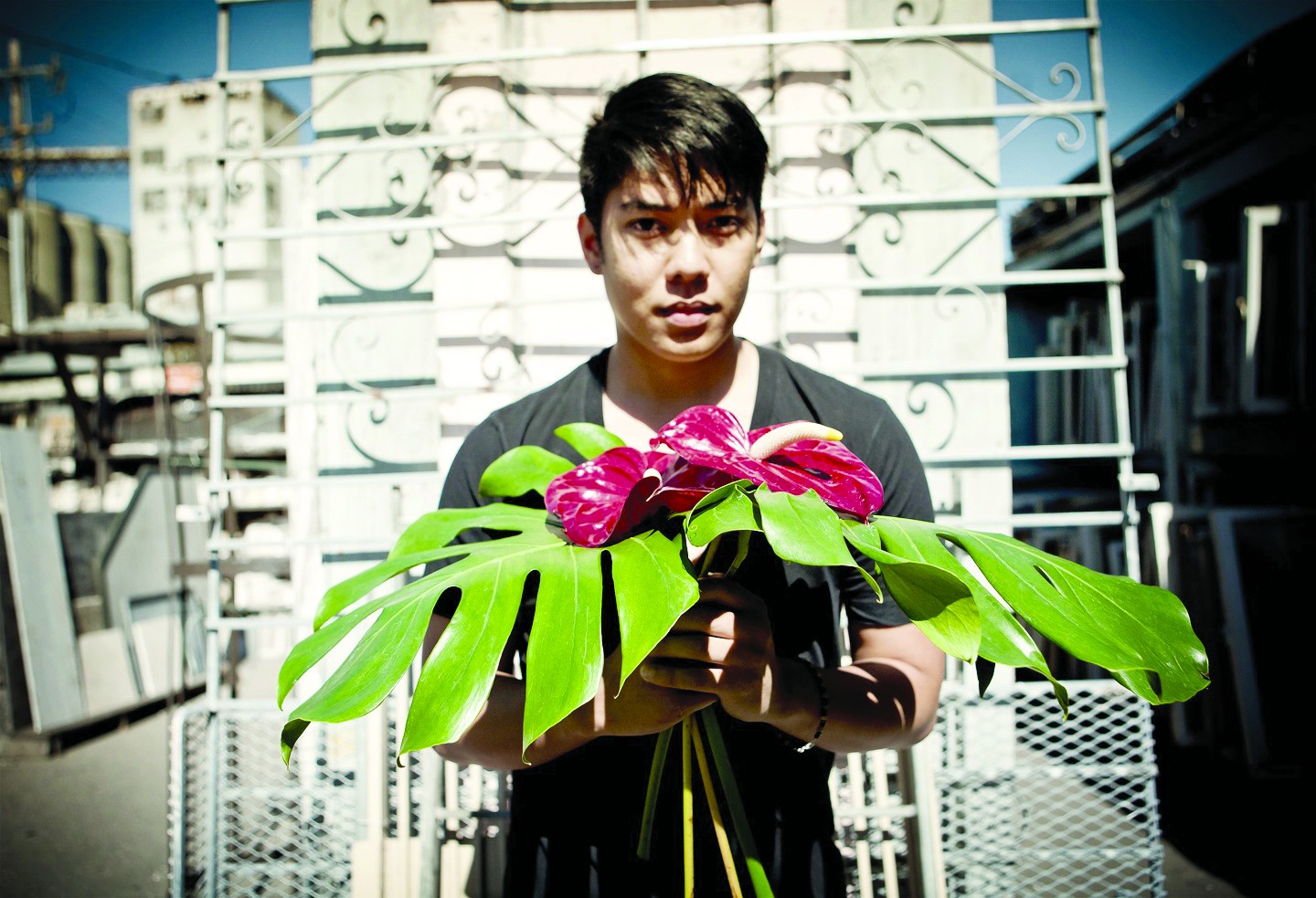
San Francisco’s Blackbird Blackbird is the solo project of Mikey Maramag, who makes bubbly, sparkly dance music with uptempo rhythms and eclectic, inventive samples juxtaposed with plainspoken indie-pop vocals. His 2015 album Strawberry Light pulses with minimal house beats and glossy synth melodies; delicate harmonies, jittery percussion, and aquatic-sounding samples ornament the tracks throughout. The musician has a knack for making music that’s danceable yet surprising at every turn — whether writing pop songs or more abstract beat instrumentals. Strawberry Light also contains several remixes of tracks from his 2014 release, Tangerine Sky, a more euphoric, effervescent precursor to his most recent project. Blackbird Blackbird performs at Social Hall SF with UK singer-songwriter Chad Valley on April 23.— N. V. Sat., April 23, 8 p.m. $16, $18. SocialHallSF.com
Get Low
Chaney Turner of Social Life Productions has been throwing parties in her native Oakland for the past decade. Over the years, her events have provided many safe spaces for the East Bay’s queer people of color to turn up. Her latest event, a new hip-hop dance party called Get Low, premieres at Starline Social Club this Saturday. While billed as an event for queer people of color, allies are also welcome. DJs Lady Ryan, Motive, and Criddy will spin, while Atomic Allure provides pole dancing entertainment. Furthermore, the event promises live art and light shows. But above all else, it’ll be an inviting place for non-hetero folks to dance, have fun, and maybe get a little sexy in a setting that doesn’t prioritize the straight, male gaze.— N. V.
Sat., April 23, 9 p.m. StarlineSocialClub.com
If your pockets are feelin’ light and you’re still yearning for more suggestions, we’ve got a ton, and these ones are all FREE! We’re Hungry: Got any East Bay news, events, video, or miscellany we should know about? Feed us at Sa*********@************ss.com.
In a progress report submitted yesterday to a US federal court, Oakland city officials pledged to start making summary information describing police misconduct investigations and disciplinary proceedings available to the public.
The disclosures will be made in twice-a-year reports that summarize information on police discipline, including the total number of police misconduct cases accepted by OPD’s Internal Affairs Division, descriptions of alleged misconduct, and stats showing how cases were resolved — whether officers received discipline or were cleared of allegations.
The report will not include any details that could identify specific officers, however, because nearly all record related to officer misconduct are exempt from the California Public Records Act, and virtually no police agencies voluntarily disclose police personnel records.
Importantly, the report will include information about how many police discipline cases were taken to arbitration, and whether or not OPD’s efforts to impose discipline were upheld, reduced, or overturned in arbitration.
“The City does not claim to have the perfect police department, but we are nevertheless proud of the progress the City has made, including the steps it has taken to improve the disciplinary process for police officers,” wrote Oakland Mayor Libby Schaaf, City Attorney Barbara Parker, City Administrator Sabrina Landreth, and Oakland Police Chief Sean Whent in the status report.
The status report is the result of a court order in the Delphine Allen v. City of Oakland case, a 16 year-old lawsuit filed by attorneys John Burris and James Chanin that resulted in a negotiated settlement agreement (NSA) requiring the city to implement numerous reforms to address a pattern and practice of civil rights violations committed by the police.
Last April a special court-appointed investigator, Edward Swanson, issued a report slamming Oakland’s system of police discipline. Swanson singled out the arbitration process as particularly troubling because many Oakland police officers accused of serious misconduct have been able to overturn discipline imposed by the department, despite strong evidence that they violated department policies. Swanson’s report also took issue with the lack of discipline imposed on commanding officers who are sometimes responsible for causing police misconduct because they order officers to carry out actions that are outside of department policy.
In March, Swanson issued a second report finding that the city had made substantial progress addressing the failures he identified last year.
The Oakland mayor’s office will be in charge of producing the public report on police officer misconduct investigations and discipline outcomes. The first report is scheduled to be published no later than June 15.
Kool John and special guests from HBK Gang entertained the blunted crowd with an energized performance.
Credits: Bert Johnson
Streaming revenue doesn’t turn much of a profit for most musicians, and music sales are on the decline. So in recent years, many enterprising rappers have expanded into other ventures to make a living, particularly in the realm of mind-altering substances. After all, hip-hop is the music of turn ups, kick backs, and solo contemplation — situations in which substances can come in handy for those who indulge.
E-40 has his wine company, Earl Stevens Selections, among various other alcohol brands; Nef the Pharaoh is lending his name to pre-rolled joints called Pharaohs. Berner is the proprietor of Cookies — a clothing brand with a stoner-centric ethos and nebulous ties to the San Francisco cannabis club and weed strain of the same name — and Hemp2o, a hemp seed-infused take on Vitamin Water.
Between Cookies and his music, Berner has built a veritable cannabis-centric lifestyle brand empire — a Hempire, if you will, which is also the title of his latest album. And with California’s cannabis culture becoming increasingly mainstream — with an adult-use legalization initiative that will likely end up on the November ballot — Berner’s entertainment ventures are gaining an ever-expanding audience. Credits: Bert Johnson
Berner Presents Hippie Hill, a 4/20 concert that was actually more like a mini music festival, was Berner’s latest endeavor at the intersection of hip-hop and weed. When I arrived at Bill Graham Civic Auditorium at 5 p.m. for the show, though the afternoon sun wasn’t close to setting yet, the venue was dark inside and already filled with dense clouds of smoke.
Though it was 4/20, the concert surprisingly started on time, with HBK Gang’s Kool John opening the show. The “Blue Hunnids” rapper had an inopportune time slot, but he and his special guests, such as Ezale and Dave Steezy, energized the crowd, charismatically bouncing across the stage in tie-dye and happy face-emblazoned Shmoplife gear. Kool John and P-Lo delivered a spirited rendition of their party anthem “Bitch I Look Good,” with the crowd happily chanting along.
The audience wasn’t ready to get hyphy that early, but the HBK guys delivered an admirably energetic show. As he had been tweeting about all week, Kool John puffed on one of those burrito-sized joints — no exaggeration — the first of many unconventional smoking apparatuses displayed throughout the concert. (Later on, Berner and B-Real of Cypress Hill would take the stage smoking a forearm-length joint fashioned in the shape of a sword.)
Though the crowd was diverse in terms of age and ethnicity, the emphasis on weed and streetwear brought out a strong contingent of twenty and thirtysomething-year-old sneakerhead dudes. Unfortunately, the lack of female artists in the lineup attracted a similarly male-dominated crowd, and there were few women in the audience who weren’t with their boyfriends — which is a shame, because women like weed and rap, too. More gender-diverse booking would have helped mitigate that issue, and, as a woman, it was slightly awkward to listen to Kool John’s songs about girls twerking while surrounded by mostly men. Refreshingly, though, there were few-to-no visible yuppies — a rarity for a San Francisco concert in 2016.
Credits: Bert Johnson
Dizzy Wright, a young Las Vegas rapper with conscious rhymes and Nineties-influenced, boom-bap production, took the stage after Kool John and delivered an excellent set with a live drummer and DJ who scratched vinyl. With mixtape titles like The Gold Age, it’s clear that Dizzy Wright adulates hip-hop’s old school. He demonstrated his commitment to the craft with his acrobatic, speedy spitting.
Despite his disarming and charismatic stage presence, Dizzy Wright’s efforts failed to inspire the blunted crowd to move. People were bobbing their heads and having a good time, but were too stoned to be bothered to dance, especially because it was still early. “Y’all look high,” he observed at one point. The immobilized audience giggled in response. “I don’t wanna take you out of your comfort zone.”
Chronixx delivered a charismatic reggae set.
Credits: Bert Johnson
Next, Chronixx took the stage, delivering a smooth set of groovy roots reggae. Stoned, my friends and I — and hundreds of other people who got the munchies mid-show — decided to grab some food. After finding out there were no ins-and-outs at the venue, we made our way to the concession stand, where we waited for over an hour for junk food in a crowd of other hungry and confused pot heads.
People milled around aimlessly or stared off sleepily into space. It felt like the passage in Homer’s Odyssey when Odysseus travels to the island of narcolepsy-inducing lotus flowers and is in danger of getting too tired and never leaving again. Outside, it was still daylight, but it felt like we were in a smoke-filled vacuum where the laws of time and space didn’t apply. Juicy J performed recent hits as well as some older Three 6 Mafia tracks.
Credits: Bert Johnson
After the tedious quest for snacks, we finally made it back to the concert. Three 6 Mafia legend Juicy J was ready to perform. With hits like “Bands a Make Her Dance” and “Get Higher,” Juicy J continued his career into the 2010s writing songs that blatantly celebrate drug use — not weed, which is totally tame in today’s day and age, but lean, molly, Xanax, and the like. But in contrast to his druggy persona (which undoubtedly helps him capitalize on his college-aged fan base), Juicy J was completely lucid and delivered an impeccable performance that showcased his skills on the mic. At this point, the crowd was more turnt up — though still very stoned — and people rapped along gleefully.
While Juicy J, who’s in his forties, comes off as creepy at times with lyrics that reference having sex with women two decades his junior, the most gratifying parts of his set were when he performed some of Three 6 Mafia’s early hits. The dark sound of Three 6 Mafia and other Nineties and 2000s Memphis horrorcore was a precursor to the ominous, high hat-driven trap production popular today. Seeing him play older songs like 2005’s “Stay Fly” reminded the audience of his far-reaching influence.
Berner’s music and lifestyle brand, Cookies, has garnered a large audience as cannabis culture becomes increasingly mainstream.
Credits: Bert Johnson
Berner took the stage flexing his status as a weed mogul and self-made artist. “I was born and raised in San Francisco,” he said as smoke clouds billowed up from the crowd. “I didn’t think I would ever sell out this venue.” Berner’s contemplative, lyrical hip-hop — with plenty of gorgeous jazz and soul samples sprinkled throughout — resonated with the mellow audience. Throughout his set, he celebrated cannabis culture, taunted the police (“They see the smoke leaking out of the venue.”) to approving cheers, and touted his Mexican roots.
B-Real of Cypress Hill joined Berner on stage, seguing his set into that of Cypress Hill via a seamless transition. At this point, the concert had been going on for nearly six hours. Smoke visibly floated throughout the cavernous concert hall. Audience members were beginning to doze off in the seated area of the venue — not because Cypress Hill didn’t put on an entertaining show, which they did, but because of the sheer lack of oxygen.
B-Real of Cypress Hill joined Berner on stage with a joint fashioned in the shape of a sword.
Credits: Bert Johnson
Berner mentioned during his set that Berner Presents Hippie Hill was going to become an annual thing. An outdoor, daytime festival would have probably made for a better setting for this type of event — something I hope he’ll consider next year.
Regardless, though, the concert was a success — a testament to the more progressive cultural shifts in regards to cannabis, as well as a sort of coronation for Berner as the king of his Hempire.
Legal in Canada in 2017, maybe.
Our calm, rational neighbors to the North may begin legalizing cannabis for all adults as early as the spring of 2017.
The Associated Press reported Wednesday that Canada’s health minister Jane Philpott told a United Nations special session on drugs in New York recently that Canada’s legalization push is designed to control access to cannabis, which is widely available under pot prohibition in North America. More and more groups are saying that prohibition has failed.
[jump]
About 68 percent of Canadian’s “support” or “somewhat support” legalizing cannabis, compared to about 56-61 percent of Americans, according to recent polls.
Prime Minister Justin Trudeau — who knows his way around quantum computing as much as cannabis — promised during his 2015 election campaign that his administration would take steps to legalize weed. Trudeau’s comments are among the strongest statements of any world leader in history regarding the topic of cannabis legalization. Canada would become the first G7 country to tax and regulate the popular plant, used as a medicine, wellness, and recreational substance.
Trudeau called prohibition a “failed system” that like alcohol prohibition has fed criminal elements.
Medical marijuana is legal nationally in Canada. Government-licensed growers ship direct to patients.
Canada’s opposition Conservative Gerard Deltell called Trudeau’s proposal “one of the worst things you can do to Canadian youth, to open the door to marijuana,” he told Reuters.
But teenage pot use rates are lower in the decriminalized Netherlands than in the US, and research funded by the US National Institute on Drug Abuse has showed that legalizing medical marijuana in the states caused no rise in teen use.
Canada’s legal pot industry could be worth $8 billion in US dollars.
Here’s Philpott’s full speech to the United Nations on April 20, 2016:
Mr. Chair, Heads of State and Government, Ministers and distinguished delegates. I am honoured to participate in this Special Session of the UN General Assembly.
This gathering is an opportunity to revisit our efforts in global drug policy.
A few weeks ago, in preparation for this event, I met with a group of NGOs in Ottawa. There were lawyers, doctors and highly articulate activists. But the most powerful voice of all belonged to a mother.
She was there to tell the story of her young daughter, who lost her life due to complications of substance use. She described watching her daughter slip away, as she struggled to access the treatment and services that may have saved a beautiful, fragile life.
Stories like this are far too commonplace. Countless lives are cut short due to overdoses of licit and illicit drugs.
Today, I stand before you as Canada’s Minister of Health, to acknowledge that we must do better for our citizens.
I am proud to stand up for drug policy that is informed by solid scientific evidence and uses a lens of public health to maximize education and minimize harm.
As a doctor who has worked in both Canada and sub-Saharan Africa, I’ve seen too many people suffer the devastating consequences of drugs, drug-related crime, and ill-conceived drug policy.
Fortunately, solutions are within our grasp.
In my own country, I am impressed with the work of Insite, a supervised consumption site where people with addiction access the care and support they need.
I am proud at how quickly we are making naloxone antidote kits more available, to save lives from opioid overdoses.
I sense an urgency to work together to find solutions, from big cities to remote indigenous communities.
I know this goodwill and generosity also exists internationally.
Indeed, I was heartened by the INCB President’s recent reminder to us that we must put health and welfare at the centre of a balanced approach to treaty implementation.
Our approach to drugs must be comprehensive, collaborative and compassionate. It must respect human rights while promoting shared responsibility. And it must have a firm scientific foundation.
In Canada, we will apply these principles with regard to marijuana.
To that end, we will introduce legislation in Spring 2017 that ensures we keep marijuana out of the hands of children and profits out of the hands of criminals.
While this plan challenges the status quo in many countries, we are convinced it is the best way to protect our youth while enhancing public safety.
Canada will continue to modernize our approach to drug policy. Building on our successes, such as Insite, our work will embrace upstream prevention, compassionate treatment, and harm reduction.
We will work with law enforcement partners to encourage appropriate and proportionate criminal justice measures. We know it is impossible to arrest our way out of this problem.
Addressing problematic drug use is a shared challenge. The solutions are also collective – involving governments, indigenous peoples, civil society, youth, scientists and key UN agencies.
I acknowledge that other countries and cultures will pursue approaches that differ from Canada’s.
I believe that—if we respect one another’s perspectives and seek common ground—we can achieve our shared objective: protecting our citizens.
The burger and tater tots at Handlebar.
Credits: Bert Johnson/File photo
Welcome to the Mid-Week Menu, our roundup of East Bay food news.
1) Some pretty significant changes are on the horizon at Handlebar, the burger- and tater tot-serving West Berkeley bar, Berkeleyside Nosh reports. The main thing is that owner Jennifer Seidman has brought on Farm League — the design and management group behind Tigerlily and a handful of other East Bay bars and restaurants — to tweak the overall concept and approach to service, which will now skew even more casual: Moving forward, customers will order food directly at the kitchen window — a more “fast-casual” approach that seems designed, in part, to keep down the bar’s labor expenses. Handlebar will close temporarily at the end of April, and when it reopens it will have a new name.
Also of note: This means that chef and founding co-owner Roland Robles, best known as the proprietor of the popular Fiveten Burger food truck, is no longer involved — though he left on amicable terms, according Farm League’s Joel DiGiorgio. In an email, DiGiorgio said that Robles’ sous chef will take over the kitchen moving forward, which means that the old Handlebar burger and many of the bar’s other popular menu items — including those tater tots — will still be available.
2) After a few weekends’ worth of pop-up preview dinners, Itani Ramen (1736 Telegraph Ave., Oakland) — Hopscotch chef and co-owner Kyle Itani’s new ramen restaurant in Uptown Oakland — is poised to make its official debut on Monday, May 2, Inside Scoop reports. Chef Brian Ikenoyama will run the kitchen on a day-to-day basis, and he and Itani have put together a streamlined menu that will feature gyoza, a small assortment of rice bowls (including the “Egg 3 Way,” topped with uni, ikura, and a Jidori chicken egg), and housemade noodles for all of the ramen dishes. Good news for those of us who tend to get a late-night hankering for noodles: Itani Ramen will be open until at least midnight every night, and until 1 a.m. during the weekend.
3) Berkeleyside Nosh reports that the Cupkates cupcake truck and Stateside Bakery, the food truck’s affiliated brick-and-mortar bakery, have been sold to a new owner. Both the truck and the store will eventually be rebranded as Stateside Treats. Apparently, the new owner, Angel Cruzado, bought all of founder Kate McEachern’s recipes as part of the sale, and he eventually plans to add new items, including ice cream tacos. Cruzado told Nosh that he purchased the company a few months ago, but a recent post on the Cupkates Facebook page seems to indicate that Cruzado and his pastry chef, Erica Land, took over last June.
4) Ba-Bite (3905 Piedmont Ave., Oakland), the newish Middle Eastern restaurant on Piedmont Avenue, will start brunch service this weekend, with a particular emphasis on chef Mica Talmor’s takes on Ashkenazi Jewish breakfast dishes. Highlights include shakshuka, babka French toast, and a “Latke Benedict” (potato pancakes topped with poached eggs and housemade gravlax). Brunch will be served Saturdays and Sundays, 10 a.m.–3 p.m.
Credits: Luke Tsai/File photo
5) Fans of the excellent rotis at Daniel’s Caribbean Kitchen might be wondering what became of the on-again, off-again mobile food trailer, which has been M.I.A. from its usual weekday spot in a West Berkeley parking lot. As it turns out, that lot — the former home of Jered’s Pottery — is being sold, so Daniel’s is looking for a new home. In the meantime, you can still find Daniel at the Ashby Flea Market on the weekend, and he’ s selling food to-go from his commissary kitchen via the online delivery service Caviar, Wed.–Fri. 11 a.m.–6:30 p.m. — Saturdays, too, whenever the flea market gets rained out.
6) Sweetgreen, the Washington, D.C.-based salad chain, is now open in the former Oscar’s spot at 1890 Shattuck Avenue in Berkeley, Eater reports.
7) Inside Scoop reports that Peruvian chef Carlos Altamirano (Piqueo, the Sanguchon food truck, etc.) is expanding his plans for his restaurant in the Public Market Emeryville food court. Instead of an 800-square-foot kiosk, the new restaurant — dubbed Granja Eatery — will occupy 1,500 square feet and will include a bar.
Credits: Elementa
8) A couple of noteworthy events coming up: Journeymen, the monthly pop-up dinner at Temescal’s Blackwater Station (4901 Telegraph Ave.), is gearing up for its next event on Monday, April 25, which will be a collaboration with Vancouver chefs Ashley Kurtz and Josh Blumenthal, who collectively go by the name “Elementa.” The $132.87 six-plus-course dinner (wine inclusive) will feature such dishes as a squid and lardo terrine, giant kelp noodles with wild mushrooms, and roast squab with a mille-feuille of peas and liver mousse. There will be two seatings: 6:30 p.m. and 9 p.m.
9) On Sunday, April 24, 2–8 p.m., beer guru Sayre Piotrkowski will be pouring Craftsman Brewing sour beers at Lost and Found (2040 Telegraph Ave., Oakland) to benefit Betti Ono Gallery’s ongoing effort to keep from being displaced from downtown Oakland. “I think the Oakland Craft Beer community owes some reciprocity to the Oakland Arts community,” Piotrkowski said in an email. “There are now nine beer gardens thriving in the downtown area and that would not be possible if people like
The burger and tater tots at Handlebar.
Credits: Bert Johnson/File photo
The burger and tater tots at Handlebar.
Credits: Bert Johnson/File photo
Credits: Luke Tsai/File photo
Credits: Elementa
Anyka [Barber] and spaces like Betti Ono had not come first.” You can read more about the fight to save Betti Ono Gallery here and here.
Got tips or suggestions? Email me at Luke (dot) Tsai (at) EastBayExpress (dot) com. Otherwise, keep in touch by following me on Twitter @theluketsai, or simply by posting a comment. I’ll read ‘em all.
For more than sixty years, Harper Lee’s To Kill a Mockingbird has compelled audiences with its astute portrayal of racism and injustice in Depression-era Alabama. In 1970, ten years after the novel was published, playwright Christopher Sergel began working on a stage adaptation that took him twenty years to complete. Sergel’s adaptation is now headed to Berkeley Playhouse, with...
San Francisco composer Pamela Z weaves elaborate arrangements from looped, processed, and sampled vocals, combining elements of operatic singing, poetry, and speech in her dazzlingly virtuosic, avant-garde performances. In recent years, she has developed a unique process that relies on an ultrasound-powered MIDI controller that allows her to process her singing and trigger samples in real time solely using...
On Saturday, April 30, Independent Bookstore Day will once again be taking over local bookshops. To celebrate, bookstores will be hosting a grab-bag of literary festivities. Diesel Bookstore (5433 College Ave.) will release Record Store Day-style, limited-edition products. Among the rare literary goods will be X is For…, a new record featuring Carolyn Pennypacker-Riggs made as an accompaniment to...
Medical Weed Boom: Oakland is poised to adopt a suite of new regulations that will dramatically expand the medical cannabis industry, creating new dispensaries, delivery services, factories, and labs, all while generating millions in new revenue for the city.
At the Oakland City Council finance and public safety committee meetings this week, city leaders will hear about various...
Another Oakland cop is in trouble with the law. Matthew J. Santos, who was an Oakland police officer until he was terminated by the department recently, was arrested on February 17 by the Emeryville police on charges of felony kidnapping, false imprisonment, and a misdemeanor firearms charge, all in relation to an incident that occurred in a 40th street...
You could stay in all weekend and watch Purple Rain, or listen to any one — or all — of Prince's brilliants records. But it's more likely that he would have wanted you to get out and dance this weekend. Here are some ways to do that, and more, below.
Created 2...
In a progress report submitted yesterday to a US federal court, Oakland city officials pledged to start making summary information describing police misconduct investigations and disciplinary proceedings available to the public.
The disclosures will be made in twice-a-year reports that summarize information on police discipline, including the total number of police misconduct cases accepted by OPD’s Internal Affairs Division, descriptions...
Kool John and special guests from HBK Gang entertained the blunted crowd with an energized performance.
Credits: Bert Johnson
Streaming revenue doesn’t turn much of a profit for most musicians, and music sales are on the decline. So in recent years, many enterprising rappers have expanded into other ventures to make a living, particularly in the realm of mind-altering substances. After...
Our calm, rational neighbors to the North may begin legalizing cannabis for all adults as early as the spring of 2017.
The Associated Press reported Wednesday that Canada’s health minister Jane Philpott told a United Nations special session on drugs in New York recently that Canada's legalization push is designed to control access to...
The burger and tater tots at Handlebar.
Credits: Bert Johnson/File photo
Welcome to the Mid-Week Menu, our roundup of East Bay food news.
1) Some pretty significant changes are on the horizon at Handlebar, the burger- and tater tot-serving West Berkeley bar, Berkeleyside Nosh reports. The main thing is that owner Jennifer Seidman has brought on Farm League — the design and...