This article is very one-sided. Some people post their illegal activities or intentions on public media for all to find. I have seen no evidence that the police are using this to target people for their political views.
The police should monitor (and investigate) for those who intend to do harm to others, and I see no reason that social media should be off-limits. If you want to see what happens when the police don’t do their job just look at countries like Pakistan, where fanatical mobs carry out their version of murderous justice.
Vincent Sauve, Oakland
Blame the Idiots
Oh, but no one has a problem with the police monitoring social media to thwart terrorism!
Social media is not private. Once you put it out there into cyberspace, it’s out there to be seen, used, and critiqued forever!
The problem is with people, not police. Most of the idiots getting “caught” doing stupid stuff handed the information right to the police. These idiots don’t know how to filter themselves. I’m not worried about the police monitoring anything of mine. Not a picture, a conversation, my license plate—nothing. I’m not doing anything. Privacy invasion? Hah!
Melissa Kittell, Oakland
Is Bragging a Crime?
Most of the activities targeted by Geofeedia are not illegal. Criticizing the police is not illegal. Peaceful protest is not illegal. Making comments on social media expressing displeasure with various politicians and members of the establishment is not illegal. The presumption of guilt prior to, or via random interpretation, is exactly what constitutional protections are designed to prevent. So, the question is: Are there consequences for being “a braggart on social media about illegal activities” and, if so, what does that mean for freedom of association and expression?
Tracy Rosenberg, Albany
“Benicia Oil-by-Rail Battle Hinges on Legal Controversy,” Eco Watch, 4/13
Valero or McDonald’s
Maybe Valero should simply find a location where it can do business without people who put up barriers. Valero could tear the entire refinery down, bulldoze the land and sell it off for another one of Benicia’s residential projects, which drain the city’s treasury. All the refinery taxes paid to that city would be gone. College student Jaime Gonzalez could then graduate and get a job at McDonald’s.
William H. Thompson, Walnut Creek
“Calavera Employees Claim Theft,” What the Fork, 4/13
Revenge Via Mole
Reading this really makes me pine for a good clayuda, which Calavera omitted from their menu along with mole and blackened steak. It seems like these chefs should have the opportunity to serve delicious Oaxacan food to the masses. I know there are tons of people who would kill for a good Oaxacan mole. I’d love to see them have success as their best form of revenge against Calavera.
Jasmine Tokuda
“Oakland Housing Emergency,” Opinion, 4/6
Fake Housing-Policy Change
Oakland’s politicians are afraid to vote for real changes to zoning laws that might create more housing because all the wailers about Oakland’s housing crisis don’t want new housing built next to them. So, they prate about stricter rent controls, subsidized affordable housing (no such thing), etc. Been doing it for a long time. Hasn’t worked, and it won’t. Why not take a little risk and change the zoning laws in a truly liberal way? If it doesn’t work, you can go back to complaining and offering useless programs. If it works, well …
Kurt Schoeneman, Boonville
Tax the Land
Property taxes suppress the rental prices on real estate by diminishing the incentive to speculatively invest in land. In fact, a heavy tax on land values would promote optimal market development of land, raise enormous public revenue, and enable us to reduce, or even abolish, business taxes and the sales tax.
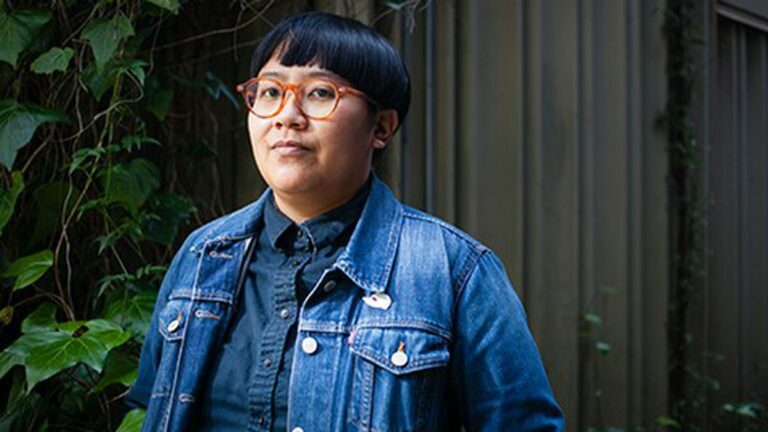
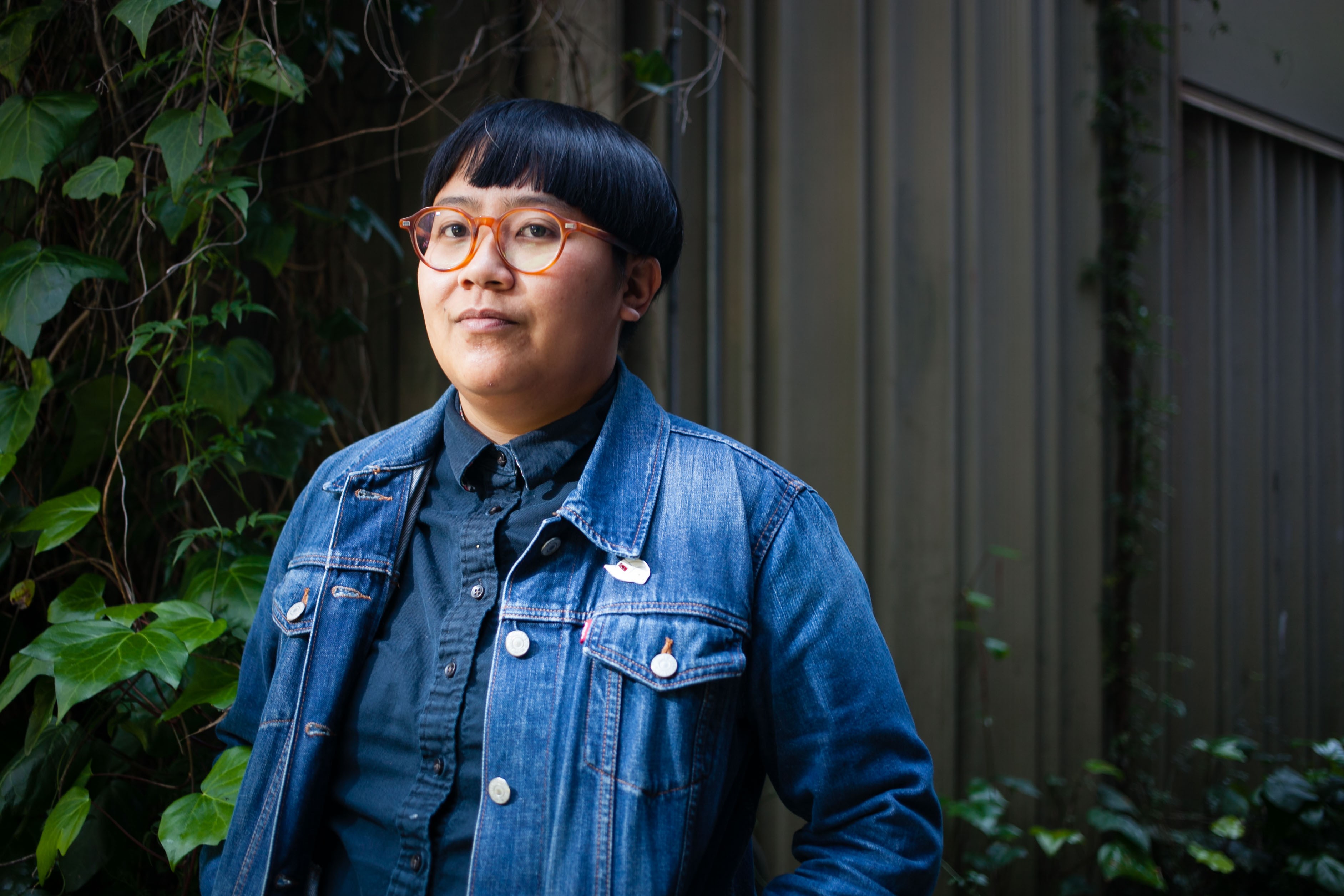
Cheena Marie Lo’s new book of poetry, A Series of Un/Natural/Disasters, is not lyrical. It contains no flowery language nor romanticism. Rather, it is intentionally taxing and relentless. It builds on itself like a tub slowly filling with water, threatening to submerge the reader in statistics and fragmented phrases about Hurricane Katrina and other disasters around the world. It’s a cryptic collection of phrases, most of which are uncited quotations, characterizing the aftermath of such an unfathomably horrendous disaster, as well as the subsequent human tragedy of the government failing to effectively step in.
The debut book, which was released earlier this month by Commune Editions, an imprint of Oakland’s AK Press, characterizes the disaster’s wreckage as not entirely natural, but rather as symptomatic of social inequities. By disrupting the physical environment, disasters agitate the status quo, making it obvious who is privileged and who is disenfranchised — who is evacuated and who gets left behind. “There’s the act of nature, but there’s also all of these large social and economic disasters that occur long before that act of nature,” said Lo in a recent interview. “I wanted to explore that.”
Cheena Marie Lo.
Credits: Bert Johnson
Lo moved to the Bay Area approximately five years ago to pursue an MFA in poetry from Mills College. It was during that time that the author saw acclaimed San Francisco writer Rebecca Solnit speak at the Bay Area Anarchist Book Fair. Solnit was arguing that in times of disaster, people become more human and display empathetic qualities rather than resorting to survival of the fittest. Solnit outlined the argument in her 2009 book, A Paradise Built in Hell, which included five case studies of post-disaster situations, including New Orleans. In reference to Hurricane Katrina, Solnit writes about the way that city lights block out the stars, and how power outages undo that visual pollution: “You can think of the current social order as something akin to this artificial light: another kind of power that fails in disaster.”
“I was really intrigued by that,” said Lo of Solnit’s talk. “I think it’s lovely, but also I was really interested in pushing against that and asking questions like, ‘Who gets to become more human in times of disaster and who is unable to do that?'”
In A Series of Un/Natural/Disasters, Lo doesn’t attempt to answer that question directly. Instead, Lo’s poetry circles around it like a linguistic storm. The majority of poems are repetitive series of fragment sentences that form fluid mental maps. One four-page poem ends: because of damage or flooding/because so much is really at stake in all of this/because my heart was just failing/because its exactly what you want/because I’ve got to go home/because of security concerns/because of the storm.
With this gestural style, Lo requires a heightened level of involvement from the reader, who is challenged with making interpretative leaps to cohere a text riddled with disconnects. But those gaps are what distinguish the poetry, which effectively distances itself from its topic, performing the antithesis of the intimacy and collectivity that Solnit described.
Lo is not from New Orleans and was not there when Hurricane Katrina hit or during its aftermath. But A Series of Un/Natural/Disasters doesn’t attempt to situate the author — or the reader — there. Rather, it’s made up of references to the way that the storm and its aftermath were documented, culled from years of research that Lo did on the subject. One poem is a series of quotations from what appear to be questionnaires: “Born in US or other,” “Condition limiting work amount,” and “Ever lived in foster care.” Others are lists of numbers that are meant to remain mysterious to the reader, who might infer that they’re death tolls or evacuee statistics or any other possibly related data. Those poems work in tandem to point to how documentation inherently reduces the lived experiences of those who were there — and some more so than others — to comparatively insignificant terms. Ironically, one of the takeaways from the text is that disaster can’t be contained in numbers or words or made into arguments by those who were not witnesses.
In one poem, Lo lists natural disasters by death toll, then ends with the question: can disaster be qualified by the number of lives lost?/how to quantify absence?
Officer Nicole Rhodes was having a hard time seeing Demouria Hogg when she shot him through his car’s windshield, according to an Alameda County District Attorney investigation that was recently obtained through a Public Records Act request. But the shooting did not violate Oakland police policies and was determined by a DA investigator to be justified.
Rhodes and more than a dozen other Oakland police officers had been trying to wake Hogg for over an hour after they found him unconscious behind the wheel of a BMW on June 6 last year. Rhodes’ sergeant had placed her at the front bumper of the car, looking straight at Hogg, to provide lethal cover while other officers broke out the driver’s side window and hit him with a Taser. Rhodes said she was having a difficult time seeing Hogg through the glare of the windshield, but she told investigators that she saw him lean back and reach with his left hand toward the passenger seat, where she knew there was a gun.
Oakland police recovered a firearm from inside Hogg’s vehicle that they say led to the standoff.
Credits: Oakland Police Department
A department rookie who had just graduated from the city’s police academy six months earlier, Rhodes suddenly found herself anonymously embroiled in the escalating national controversy over police shootings. Hogg’s death was the first fatal shooting incident by an Oakland police officer in more than two years. And like others nationwide, the incident sparked protests in Oakland, as many demanded answers that were slow to come.
Rhodes’ name, and what exactly caused her to fire two shots into the BMW, are now public following the release of a February 8 report by Deputy District Attorney Briggitte Lowe clearing Rhodes of any criminal charges. The police department’s internal review board also found no fault with her actions, according to officer Rhodes’ attorney Stephen Betz.
The Oakland Police Department refused to name Rhodes for months, claiming there were credible and specific threats that had been made against her. Under a 2014 state Supreme Court decision, departments can withhold the names of officers involved in shootings only in cases where there are specific threats against the officer. Where there are no specific threats, the names must be made public. But even after Rhodes’ name became a public record through the district attorney’s office, Oakland police still refused multiple requests to release it. In an email, Oakland police spokeswoman Officer Johnna Watson cited “creditable threats and officer safety concerns in connection with this shooting.” She declined to elaborate, however.
Rhodes’ attorney Betz said he wasn’t aware of any specific threats against her. “I do believe the department was concerned about her safety at first because this shooting gained some controversy in the community, but I am unaware of anything specifically directed at her,” Betz said. “If there was something more concrete than general concern, it was never shared with me.”
Attorney John Burris, who is representing Hogg’s family in one of two lawsuits, said he hasn’t received any information about threats against Rhodes either. “We haven’t had any cases in recent memory where there’s been any real threat,” Burris said. “That typically doesn’t happen here in Oakland, other than the one case we had with Oscar Grant. There hasn’t been a highly charged case since then causing protests on a sustained basis.”
While the district attorney’s report sheds new light on the moments leading up to the shooting, some details provided by the multiple officers who witnessed the shooting appear to be inconsistent. The officers were told not to talk to each other immediately afterward, and were interviewed separately, as is standard procedure, according to the DA’s report.
On Saturday, June 6, last year, Oakland firefighters came upon a gray four-door BMW 520i at about 7:30 a.m. as it was parked, still running, in a traffic lane on Lake Park Avenue near Lakeshore Avenue, essentially an off-ramp for the 580 freeway. The ramp sends drivers into a bustling commercial district full of bars, restaurants and stores. A 76 gas station is to the right of where Hogg was parked, and a Trader Joe’s grocery store is beyond that. Lake Merritt is a few blocks to the left, and straight ahead Oakland’s biggest farmers market was just getting underway, with farmers setting up booths and customers slowly arriving.
The firefighters peeked through the darkly tinted windows of the BMW and saw a gun on the passenger seat, so they retreated and radioed the police. Once police officers arrived, they set up a perimeter hundreds of feet from the car, pushing back the people in the farmer’s market, blocking the freeway off-ramp and shutting down pedestrian traffic on Lakeshore.
Oakland police tried for over an hour to wake Hogg. They placed spike strips around all the car’s wheels so if Hogg awoke and tried to escape by driving away his tires would flatten. They made commands over a loudspeaker and blasted their sirens. They fired beanbag rounds at his car, shattering a tail light, and they tried to break the windows with beanbag rounds also, but were unable to. Two officers then approached the car and broke the passenger windows with a hook.
Some of the officers reported that they heard Hogg talk as they broke his windows, saying either “Hey, what are you doing?” or “What’s going on?” or “What the hell?” or “What the fuck?” After he went back to not moving and appeared to be asleep. Some officers thought they might have seen his hands move despite their difficulty seeing into the car. After breaking the windows, the officers retreated and announced more commands over a loudspeaker. But according to the DA’s report, they received no response from Hogg.
During the standoff, they checked the car’s license plates and learned it was reported in connection to a burglary in San Francisco the night before and had been involved in a police chase.
Sergeant Wilson Lau then came up with a plan for two officers to distract Hogg through the broken passenger side window while another officer broke the driver’s side window with a crowbar. Rhodes was to provide lethal cover from the front of the car, pointing her gun at Hogg through the windshield. Officer Daniel Cornejo-Valdivia was assigned to hit Hogg with a Taser as soon as the window was shattered. Cornejo-Valdivia yelled “Taser, Taser” and fired after the window was broken, but he didn’t realize Hogg had been shot by Rhodes until after they pulled him through the broken window.
There were differing accounts among the officers as to whether Hogg had actually been hit with the Taser as he was shot by Rhodes. Rhodes told investigators that Taser prongs were still in Hogg as the other officers pulled him through the broken driver’s side window. But Cornejo-Valdivia, the officer who fired the Taser, was unsure whether he hit Hogg. At least one other officer said Hogg was not hit with the Taser.
There also seems to be some doubt as to whether Rhodes yelled commands at Hogg before shooting him. According to the DA’s summary of the shooting, Rhodes yelled “put your hands up” twice before she shot, but when she was interviewed Rhodes said she didn’t remember yelling any commands.
Radio traffic indicates police moved in to take Hogg into custody just before 8:45 a.m. “They’re taking the suspect into custody right now,” one officer said over the radio. Moments later an officer can be heard saying “get medical here right now.”
Hogg was rushed to a hospital but died later that day. An autopsy showed he had a single bullet wound in his chest. The round had damaged his kidney, lungs and aorta before becoming lodged in his spine. There was alcohol and opioid pain medication found in his system. Hogg had been shot once before in an undated incident, according to his autopsy report. Another bullet from the previous shooting was found still lodged in his right pubic bone. The bullet fired from officer Rhodes’ gun was determined to be his cause of death.
Since the shooting, two separate lawsuits have been filed in federal court by Hogg’s survivors. The first, filed on October 30, is on behalf of Hogg’s mother, Allene Hutchinson and his unnamed daughter with Desiree Richards. The other was filed on April 2 on behalf of Hogg’s unnamed son, who has a different guardian, Teandre Butler.
“We don’t think the shooting was justified,” said Burris, who represents the family in the second lawsuit. Burris said the officers used improper tactics of confrontation in shooting beanbags at the car, breaking out the windows and firing a Taser at Hogg in an effort to wake him up. “What do you expect the person to do?”
The Oakland City Council voted on April 19 to approve an un-tested, geographically inconsistent and slowly phased-in affordable housing impact fee that will worsen displacement pressures on Oakland residents — the very pressures that recently led the city to declare a housing emergency. The fee on market-rate housing developments is estimated to raise as much as $66 million over ten years for affordable housing. The fee is justified on the grounds that new market-rate housing generates demand for more affordable housing also, but because the private market isn’t building affordable housing, the government collects a fee from developers to fund new affordable projects. Without the fees, only market-rate housing gets built, and rents for the lowest income earners would continue to rise as demand for affordable homes outstrips supply.
But Oakland is not following established models for successful impact fee programs. No existing affordable housing impact fee program resembles what was adopted by the city council. Of utmost concern is that the council has divided Oakland into three separate zones with different fee levels.
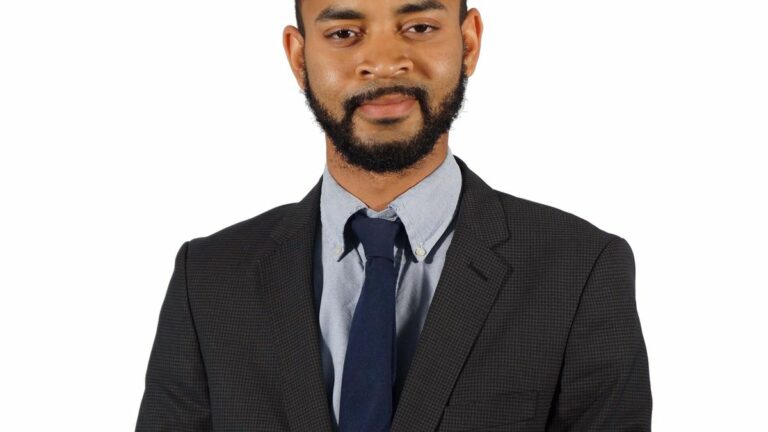
Zach Murray.
Zone 3 raises the biggest questions about equity. Zone 3 covers the vast majority of East Oakland and is home to the largest share of Oakland’s residents of color. City staff argues that this area of Oakland is the least desirable to developers and fees will only make investment there less likely, so the council waived the fee entirely for three years. When fully implemented in 2020, the final Zone 3 impact fee will only be $13,000, about half of the Zone 1 fee of $24,000. Zone 1 covers downtown, parts of North Oakland and the Oakland Hills — areas considered most desirable for new market-rate development.
This decision ignores why East Oakland is so undesirable to developers: decades of discrimination and institutional abandonment by government and investors in communities of color. The city council believes they will reverse this history of redlining by offering what is tantamount to a developer subsidy. In Zone 3, developers can skirt responsibility for the impact created by market rate development in an area that is home to the largest population of residents at risk of displacement. But city staff has failed to provide evidence for the viability of this zone model, and no other Bay Area city has an impact fee with geographically separate prices.
Furthermore, the policy adopted by the city council supports the stance that rents in Oakland must necessarily become on par with rents in San Francisco, by far the nation’s most expensive housing market. In fact, the city’s report on the impact fee states the “proposal would require higher rent increases than are projected to occur over the short time period proposed for implementing the new fees.” The city is collecting the fee to mitigate the impact of displacement, but will incentivize development in East Oakland that will not pay its fair share for the displacement it will certainly produce.
In the past eighteen months alone, Oakland’s rents have increased nearly 40 percent — the highest in the Bay Area. As San Francisco proves, increasing the supply of market-rate development alone does not reduce spikes in rental prices. Astronomical rent increases in Oakland’s once-affordable market are the largest contributor to the city’s loss of a quarter of its Black residents over the past decade.
Market-rate rents are currently far above what most East Oakland households can afford, and although rents have not risen as high in Castlemont as in the Jack London District, the reality is that new developments in the central city have produced spillover rent spikes citywide.
Our communities are in dire need of solutions that holistically address the crisis, not ones that fan the flames. Oakland renters make up 60 percent of the city’s residents, and half of all Oakland renters would have to spend 73 percent or more of their income to rent a market-rate apartment in Oakland. Policies explicitly aimed at putting upward pressure on rents under the guise of increasing supply only add to the displacement pressure faced by Oakland’s most vulnerable residents. While the $66 million the impact fee might collect could pay for up to 600 units of affordable housing, current estimates show that up to 1,000 eviction notices are filed every month in Oakland. The anticipated benefit is a drop in the bucket, while the costs are diminished diversity and increased homelessness.
Akemi aims to be the kind of Japanese restaurant that has something for everyone.
That isn’t to say that the Solano Avenue restaurant is the kind of blandly mediocre “all-purpose” Japanese eatery that you’ll find in strip malls across America — though it does have a similar breadth of menu options. In Japan, you might not encounter too many restaurants that offer teriyaki set meals, a full sushi menu, a variety of fried and grilled meats, and three or four different kinds of ramen. Here in the United States, that’s practically the norm for a Japanese restaurant, but the amount of variety often exists in inverse proportion to the actual quality of the food.
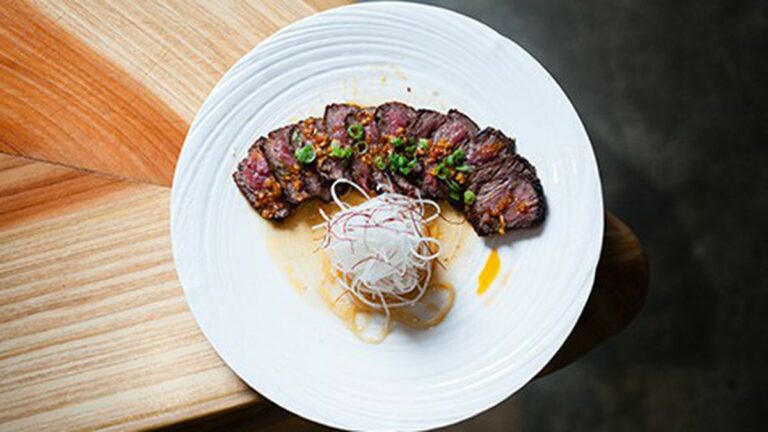
The beef tataki is made with American-style wagyu beef.
Credits: Bert Johnson
Sushi chef at work.
Credits: Bert Johnson
But even a cursory glance at Akemi’s menu will tell you that it’s at least striving to be a better, more ambitious restaurant than that. There’s the all-Italian wine list and the flights of sake, for instance. And while I wouldn’t call Akemi a farm-to-table restaurant exactly, it does serve organic chicken and organic eggs, and Carol Tan, the general manager, told me that at least some of the produce is delivered from a farm in San Rafael.
Most importantly, while the food runs the gamut from giant sushi rolls to fusion-y small plates, much of what I tried wound up exceeding my expectations.
The restaurant is the new incarnation of Miyuki, a longstanding member of Solano Avenue’s low-key, family-friendly restaurant row. Early in 2015, owner Jian Dong rebranded the restaurant as Akemi and did a big renovation that gave the space a decidedly more upscale feel — dim recessed lighting, tasteful flower arrangements, and lots of dark, repurposed wood. It’s an aesthetic I’d describe as “modern Zen chic.”
But the biggest changes had to do with the food itself. According to Tan, Miyuki was strictly a traditional sushi restaurant that hadn’t changed its menu for years. Akemi has kept the sushi component, but its biggest focus now — and what constitutes about 90 percent of the menu, Tan estimates — is modern Japanese fusion cuisine.
Most of the time when restauranteurs talk about fusion cuisine, what they’re talking about is some kind of amalgamation of East and West. But what’s most appealing about Akemi’s menu is the way chef Eddy Situ brings in non-Japanese Asian flavors — as well as elements from other food traditions that you wouldn’t expect to find at a Japanese restaurant.
The best and most interesting example of this approach was the first dish I tried — a hamachi (yellowfin tuna) appetizer that consisted of thin slices of raw fish that were topped with mashed avocado (guacamole, basically) and jalapeno slices, and had been drizzled with ponzu and red chili oil — like the kind of sauce you’d dip a potsticker in. Japan meets Mexico, with echoes of Sichuan. Despite how much there was going on, the flavors were balanced and restrained, and I especially loved the prickle of heat from the jalapeno.
I have a post on the online food discussion forum Hungry Onion to thank for turning me onto Akemi’s okonomiyaki — a singular version of Japan’s most famous savory pancake. Most of the okonomiyaki I’ve eaten consisted of something like 80 percent shredded cabbage — a veritable mountain of the stuff held together by a thin, crepe-like batter, so the finished dish resembles an overstuffed omelet more than it does a pancake. I like that style of okonomiyaki, but I liked Akemi’s interpretation of the dish even better. It was basically a cross between the traditional version and Korean haemul pajeon, or seafood pancake — you probably know the kind, studded with scallions and plump shrimp. The pancake was chewy with a crisp exterior and just a modest amount of cabbage to provide an element of vegetal crunch. On top, the usual okonomiyaki toppings — sweet mayonnaise, tangy tonkatsu sauce, and umami-laden bonito flakes waving to and fro — provided just the right balance of flavors.
Meanwhile, the “warm kale salad” wasn’t your uncle’s vegan co-op’s kale salad; in fact, it was more of a soup than a salad — the dark greens cooked al dente and served in a miso broth loaded with thick slices of garlic and a surprising dried-chili kick. Despite the soup’s miso base, the dish seemed less like a Japanese dish than the kind of boiled kale dish every good Californian home cook knows to make on a cold winter’s night, piling the greens over toasted sourdough. Regardless, it was delicious.
The grilled and fried meat dishes tended to be a little bit more conventional. I liked Akemi’s fairly straightforward, skin-on version of chicken karaage (Japanese fried chicken), though it would have been more satisfying if the pieces of chicken weren’t cut so small. Better was the grilled pork belly — big, wobbly, luxurious cubes of it served with Chinese hot mustard for dipping. It’s a dish that begs for white rice.
My favorite meat dish was Akemi’s version of beef tataki — thin slices of American-style wagyu beef that were rare in the center but had a crunchy, well-seasoned crust. The best part: a garnish of sweet fried garlic seasoned with ponzu and chili oil.
Given its new emphasis on fusion dishes, the bolder step might have been for Akemi to do away with its sushi program entirely and instead fashion itself as a kind of modern, California-inflected izakaya. But it is to Akemi’s credit that the restaurant remains a place where you can grab a seat at the sushi bar and have a better-than-average raw fish meal.
Here, too, the traditional and the less-than-traditional coexist: As I settled in at the bar one evening, the sushi chef wielded a blowtorch to sear the outside of an oversized, elaborately constructed “Baked Scallop” roll — the kind of sauce-laden thing at which sushi purists roll their eyes. On the other hand, I ordered exclusively from the restaurant’s (fairly standard) selection of simple nigiri, and most of what I was served was very good. My favorites were the toro, the fattiest and most buttery cut of tuna; and the amaebi: intensely sweet shrimp served raw and topped with tiny orange dots of flying-fish roe. The latter came with an unexpected bonus: two big shrimp heads, deep-fried so that you eat every last bit — the crunchy little beady eyes, funky orange guts, and all. Even the accompanying pickled ginger seemed fresher and crunchier than usual.
Seasoned sushi eaters (or anyone who has seen Jiro Dreams of Sushi) know to judge a sushi restaurant by its tamago (rolled egg omelet) nigiri — one of the most difficult dishes for a sushi chef to master. In that regard, Akemi didn’t disappoint: The tamago was juicy, tender, and only mildly sweet — not the sugar bomb you get at lesser Japanese restaurants. Still, save the tamago to eat last, and there won’t be any need to order dessert — though Akemi’s smooth, yuzu-infused panna cotta is worth trying at least once.
Where Akemi fell short for me was with its ramen — at least when it came to the bowl of lobster ramen I ordered, which, despite its $19 price tag, featured a fairly generic-tasting pork broth and a soft-boiled egg that hadn’t been marinated or seasoned at all. The main contribution of the lobster component — about half an overcooked tail’s worth — was the vaguely fishy flavor that the shell added to the broth.
I can’t speak to the quality of the chicken-based spicy miso ramen or the tonkotsu ramen, with its characteristic milky-rich pork broth. Then again, there are plenty of ramen-specific restaurants I’d rather revisit the next time I’m in the mood for noodles. I’m reminded, then, of how specialized each subgenre of Japanese cuisine is, and how difficult it is for any given restaurant to master even one. How many Japanese restaurants in the East Bay do everything well? The fact that Akemi is already a double or triple threat makes it a notable addition.
Rapper Babii Cris reflected on her upbringing as we drove past strip malls and apartment complexes on the way to her home studio in the Peninsula town of Belmont, where she’s currently based. “Growing up is weird,” she mused as she fingered the Hip-Hop for Change lanyard dangling off the rearview mirror of her Honda Civic. “I wish you could put your childhood memories into a movie reel and have them to look at.”
Babii Cris was born in San Francisco, but spent much of her childhood moving around the Bay Area. Her parents were teenagers when they had her, and her mother raised her as a single parent, so her home life wasn’t always stable. At one point, she lived in the East Bay suburb of Hercules while going to school in San Bruno, just south of The City.
Babii Cris.
Credits: Bert Johnson
In spite of the difficulties of her childhood, the young, emerging artist is family-oriented and committed to positivity — both in her lyrics and her outlook on life. Her upcoming album, Fearless, contains a touching tribute to her mother, “Why I Love Her.” The track is a sentimental homage without being overwrought, with Cris rhyming quickly over a beat that brims with twinkling, improvisatory jazz piano. She took a chance and made my life/That’s why you’re the love of my life.
Cris’ parents listened to a lot of old school hip-hop when she was growing up and her father was a break dancer. Flipping through the pages of Hip-Hop Family Tree, a comic book about the history of the genre, she told me that she’s been putting words to rhythm since she was a toddler, though she started rapping seriously in high school. She’s a disciple of hip-hop pioneers such as DJ Kool Herc and Grandmaster Flash, and learning about hip-hop history has inspired much of her socially conscious lyricism. When she’s not working on music, she’s a canvasser for Hip-Hop for Change, an Oakland nonprofit educating people about social justice through hip-hop culture.
“A lot of people associate hip-hop with negativity when in the first place, it wasn’t meant to be negative,” she said. “It was actually started for positivity and empowerment in the Civil Rights Movement in the Seventies.”
Babii Cris is also a sound engineer and producer, and her first album, fittingly titled Triple Threat, showcases her skills in those disciplines. Though gender is a background detail of her work and not a central focus, it bears pointing out that there are even fewer female producers and sound engineers than female rappers. Using Triple Threat to assert her skills is a powerful statement in and of itself — a declaration of her right to be here, even if the industry isn’t making space for her and other women.
Triple Threat has an early-Nineties sensibility reflective of Babii Cris’ influences, with old school break beats colored with bursts of breezy piano and occasional guitar and flute samples. Its generally laid-back beats give Cris room to toy with different flows. She adopts emphatic, exaggerated cadences on “Already” and “Sleepin”; meanwhile, “For You” and “Ight, Bet” juxtapose smooth crooning with fast-paced rhymes, attesting to her vocal versatility.
Relationships are major motivators for Cris as a songwriter, and she’s somewhat of a hopeless romantic. As she played me tracks from Fearless in her home studio, her girlfriend of four years, Jackie Espejo, edited a video of the latest edition of the hip-hop showcase they put on together, Unrapped (which they throw every month at Honey Hive Gallery in San Francisco), on her neighboring computer monitor. Cris explained that when she was dating guys in high school, she wasn’t as motivated to write passionate lyrics as she is now.
“When I had a boyfriend, I noticed the pattern of the types of songs I was making,” she said. “It wasn’t about a relationship; it wasn’t about love. I was just rapping and saying cool shit that rhymed.” As she became more comfortable with her queerness and eventually fell in love, she watched her songwriting gain depth, she added.
Fearless sees Cris shedding her discomfort with herself as well as any timidness about expressing her beliefs. “I’m going to be fearless about saying how I feel about the government, corruption — corruption in people, corruption in the industry,” she said. “Fearless is me becoming more conscious as an artist, more conscious as a human being.”
It makes sense that Oakland should be the site for Open Engagement. The traveling annual conference, which will take place at the Oakland Museum of California this weekend, is meant to showcase social-practice art — an amorphous artistic niche in which artworks take the form of interactive experiences.
It makes sense because the Bay Area has been home to many social-practice pioneers — avant-garde artists who were thinking outside the object-based art box before social practice even had a name. And it also makes sense because social practice has strong links to social justice. Consider, for example, the similarity of what a social-practice artist might call a “public intervention,” or a performance outside traditional art space, and what protesters would call an action.
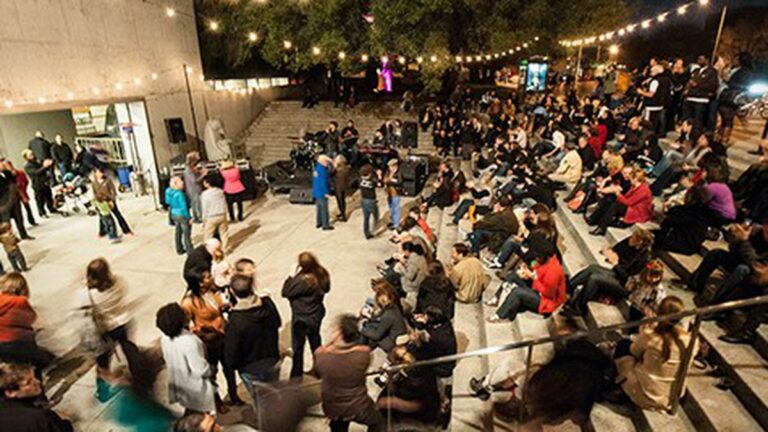
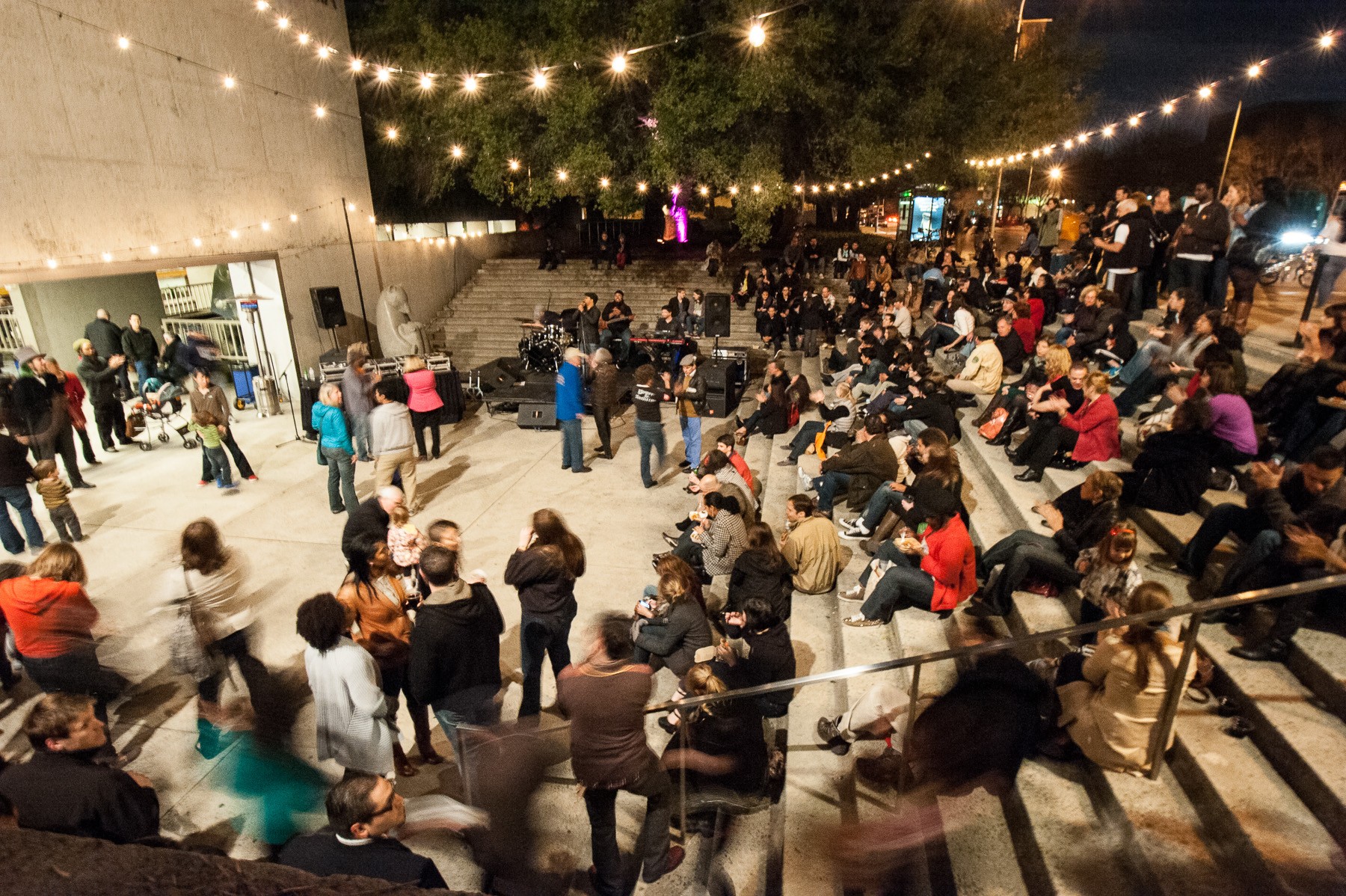
This week’s OMCA Friday Night block party will also be the kick off party for Open Engagement.
René de Guzman, a senior curator of art at OMCA who curated this year’s conference, said Open Engagement is a place for artists and activists to collide. “I think that’s kind of a reflection of Oakland right now. There’s an ongoing political culture here, but at the same time there’s an incredibly rich and active arts culture, so we thought it made a lot of sense to offer this major conference to our public,” he said.
The theme of this year’s gathering is power, another topic that’s especially well-suited to be explored in Oakland. Curators at OMCA have already been meditating on the nebulous topic because the museum will be opening a large exhibit in October dedicated to the Black Panthers, in honor of the 50-year anniversary of the party’s founding in Oakland. “Issues of power are on everyone’s mind — when you think about conflict, when you think about social justice, when you think about police brutality,” said Guzman.
Because social practice is community-oriented art, it’s fertile ground for imagining ways of producing collective power and that’s largely what this year’s Open Engagement participants will be exploring.
The keynote speakers for the conference will be seminal social activist Angela Davis and renowned socially engaged artist Suzanne Lacy. Unfortunately, seats for those lectures already sold out, but there is more than enough programming to make attendance worthwhile — and worth the $55 weekend-long price tag.
The schedule actually begins on Thursday, April 28, with three off-site, pre-conference intensives, including CROSS-SECTOR, hosted by the UC Berkeley Arts Research Center (2121 Allston Way). The all-day symposium (with a short continuation on Friday) will featuring leaders from the SFMOMA, Oakland Museum of California, Queens Museum, Minnesota Street Project and many others discussing how we can work across public and private sectors to support the arts.
Friday will feature a full day of more offsite programming for the Open House portion of the conference, designed for attendees to get a sense of the Bay Area’s rich social-practice art scene. This will include a fair at the Omni Commons (4799 Shattuck Ave., Oakland) showcasing its many residents alongside other Oakland collectives; a tour of the Yerba Buena Center for the Arts’ Take This Hammer exhibition led by curator Christian L. Frock (701 Mission St., San Francisco); and a presentation of innovative projects by Alternative Exposure grant recipients at Southern Exposure gallery (3030 20th St., San Francisco), among other events.
Then, on Friday night, the museum’s weekly block party, featuring free programming inside and food trucks outside, will overlap with the Open Engagement kickoff party, which will include some of the weekend’s most playful events. For instance, “Politaoke” will invite attendees to do karaoke, but for political speeches instead of songs.
But those are just the pre-conference extras. Saturday and Sunday events will take place throughout the day, often at overlapping times, at various locations inside the museum (1000 Oak St.), and will be divided into a handful of categories.
“Open Platform” events are quick, fifteen-minute presentations given by artists and activists as introductions to their work. Examples include artist Tatyana Fazlalizadeh explaining her famous guerilla wheat-paste project Stop Telling Women to Smile, and “Artistic Capital and Culinary Innovation to Shift Economic Power,” presented by the collective art project CONSUMPTION.
Power Projects are interactive performances and situational stagings, such as Stairwell’s (artists Sarah Hotchkiss and Carey Lin) 90-minute walking tour, which will trace the evolution of electrical energy in Oakland through group games, unconventional data collecting, and impromptu field recordings.
Meanwhile, the Conversation Series will include small, participatory, 50-minute dialogues set in various corners of the museum’s eclectic collections gallery, including topics such as how to form connections between environmental art and social practice, and how to confront white privilege within art world settings.
But, as social practice goes, most of the programming can’t be confined to any specific category. The rest of the schedule is filled out with a variety of events that simply fall under the theme, from a workshop called “‘Shoot Back’: the game changing action of recording police encounters,” to a talk by the Center for Tactical Magic (a collective dedicated to the coalescence of art, magic, and political tactics) called “From Houdini to Snowden: What Magic Can teach Us About Power.”
In terms of understanding why Open Engagement is important, “Power to Engage: What are Artists and Art Museums Learning from One Another?” will be a standout event. For decades, social practice art has presented a conundrum for museums because it’s often so difficult to describe and contain within traditional artistic terms. But SITE Santa Fe and the Guggenheim Museum are two institutions that join OMCA at the forefront of embracing the discipline. The “Power to Engage” panel will host curators from the three museums alongside social practice artists to discuss how art institutions can best incorporate socially engaged art into their programming and the radical potential for that inclusion to make museums more democratic, dynamic spaces.
I am a trans man and I have no love life. But I did just hook up with a friend two nights ago. It was the first time I’ve had sex in more than a year. My problem is that it was a “one-time thing.” I was hoping to be FWB at least. I’m furious with myself for giving that away for what amounted to a hookup, and thoroughly sorry for myself for it being a “one-time thing,” because it nearly always is. I feel thoroughly unlovable and dejected right now. I was raised a Boston Irish Catholic, and I have PTSD from my parents being difficult. In a backward way, I hope the issue for others is tied to the fallout from my upbringing — because that’s something everyone has problems with, and those things, while not entirely fixable, are manageable and not so visible. I worry it’s not that, though. I worry my being trans is the first problem a potential partner sees. I am a man with a twat — a forlorn, underused twat at that.
Not Often Picked, Everyone Not Interested Sexually
Buck Angel is a public speaker, a filmmaker, an activist, and a trans man, NOPENIS, who famously and fearlessly bills himself as “the man with a pussy.” I passed your letter on to him because who better to answer a question from a man with a twat than the man with a pussy?
“Anyone who hasn’t had sex in more than a year is going to find it scary to get back out there and start again,” said Buck. “And starting again with a body that you might not be 100 percent comfortable with yet? That’s even scarier. The first thing that NOPENIS needs to hear — and really believe — is that he is lovable. And he is, even if he doesn’t know it yet.”
The second order of business: You gotta stop beating yourself up over that one-night stand. Take it from Buck, your fellow trans man, and take it from me, your fellow Irish Catholic queer: You didn’t do anything wrong, you didn’t give anything away — hell, you were doing something right.
“Hookups can be important for understanding your body sexually,” said Buck. “So NOPENIS shouldn’t be mad at himself. We learn and grow from our experiences, even if they’re bad ones. And here’s what I learned from my first experiences in the gay men’s world of sex: Hookups are the way it’s done. I was not prepared for that because I’d had sex only with women before my transition. That was hard for me, too, at first. But what I learned was that I wasn’t being rejected, even if it was only a one-night thing. I was being accepted in a way I wasn’t used to.”
Finally, NOPENIS, you’ve got to stop seeing your body and your twat as problems. It’s the only body you’ll ever have, and it’s a body some will find attractive and some won’t. Some guys will be attracted to your body (and you, ideally) for its differences — not attracted to your body (ditto) despite its differences.
“NOPENIS absolutely shouldn’t count himself out just because he’s trans,” said Buck. “The world is different now, and many people are attracted to trans men sexually. He just needs to learn to love himself and to have sexual confidence, because people find that attractive. And he should continue to experiment and continue to embrace new experiences!”
For more Buck, go to BuckAngel.com. And you can — and should — follow Buck on Twitter @BuckAngel.
I have a friend who is getting married. She’s cheated on every guy she’s been with, including her last three husbands. This will be her fourth marriage. I’m sure she’s fed the new guy a million reasons why her first three marriages didn’t work out. She’s obviously a sex fiend, but she’s not kinky. And here’s the punch line: I found her fiancé’s profile on Fetlife, and he has some hardcore fetishes — even by my standards! I’m sure his kinks are going unexplored within their relationship/engagement and that they will go unexplored once they’re married, as my friend has been horrified during discussions of my attendance at BDSM events. I know your rule is generally to “stay the fuck out of it,” but I have a rule that goes like this: “I would like to know that the person I’m dating is a serial cheater who’s probably after me for my money.” So do I warn the guy?
Fucked Regarding Imperiling Ensuing Nuptials, Dan
Mind your own business, FRIEND, and do so with a clear conscience — because these two sound perfect for each other. He’s on Fetlife looking for someone to diaper him, and she’s probably cheating on him already. If your friend is still a dishonest, lying, heartbreaking cheat — if she’s still making monogamous commitments she cannot keep — why stop her from marrying a man who is already cheating on her or is likely to cheat on her shortly after the wedding? To gently paraphrase William Shakespeare: “Let thee not to the marriage of true minds admit impediments.”
Watching these two walk down the aisle will be like watching two drunk drivers speed around a closed racetrack. Maybe they’ll crash, maybe they won’t; maybe they’ll die in a fire, maybe they’ll get out alive. But so long as no one else is gonna get hurt, why risk your own neck trying to pull these fuckers over?
My father is a friendly, kind, all-around good guy. We get along well and always have. But I now have to avoid all political discussions with him. He was always a bit socially conservative, but now he gets a lot of batshit crazy and simply dumb ideas from the scourge of our nation today: Fox News. How can we stop the dumbing down of our society by Fox News, Dan? We have to do something about this malady!
Anonymous
“Anonymous is right — Fox News is a malady, one that I’ve often joked is worse than Ebola,” said the documentary filmmaker Jen Senko. “It destroys families and has torn apart the country. That’s pretty powerful.”
Here’s what Senko did about it: She made The Brainwashing of My Dad, a terrific documentary exploring how Fox News and other right-wing media turned her mild-mannered, nonpolitical father into ranting, raving, right-wing fanatic.
“We need to stigmatize ‘Faux News,'” said Senko. “I make it a point when I walk into a restaurant or some other public place and they have on Faux News of politely asking them to turn it off. I write to news outlets when they try to emulate Fox and complain.”
But how do you get your own dad to turn off Fox News?
“Speaking to loved ones is important but it’s difficult,” said Senko. “You have to approach them in a calm way, starting the conversation on neutral ground. Sometimes just getting them out of the house and away from the TV helps. There is a group called Hear Yourself Think (HearYourselfThink.org) that focuses on deprogramming Fox News viewers. You will find plenty of advice there. But if you can sit down with your loved one and tell them you are concerned about their anger and their worry and you feel that Fox News is helping to generate that, it can be a conversation opener. You can also get them to try to watch our movie!”
Go to TheBrainwashingOfMyDad.com and watch the trailer to learn more about Senko’s terrific film. And you can — and you should — follow Senko on Twitter @Jen_Senko.
Aries (March 21-April 19): The oracle I’m about to present may be controversial. It contains advice that most astrologers would never dare to offer an Aries. But I believe you are more receptive than usual to this challenge, and I am also convinced that you especially need it right now. Are you ready to be pushed further than I have ever pushed you? Study this quote from novelist Mark Z. Danielewski: “Passion has little to do with euphoria and everything to do with patience. It is not about feeling good. It is about endurance. Like patience, passion comes from the same Latin root: pati.“
Taurus (April 20-May 20): You’re in a phase of your cycle when you’ll be rewarded for your freshness and originality. The more you cultivate a “beginner’s mind,” the smarter you will be. What you want will become more possible to the degree that you shed everything you think you know about what you want. As the artist Henri Matisse said, if a truly creative painter hopes to paint a rose, he or she “first has to forget all the roses that were ever painted.” What would be the equivalent type of forgetting in your own life?
Gemini (May 21-June 20): “Am I still a hero if the only person I save is myself?” asks poet B. Damani. If you posed that question to me right now, I would reply, “Yes, Gemini. You are still a hero if the only person you save is yourself.” If you asked me to elaborate, I’d say, “In fact, saving yourself is the only way you can be a hero right now. You can’t rescue or fix or rehabilitate anyone else unless and until you can rescue and fix and rehabilitate yourself.” If you pushed me to provide you with a hint about how you should approach this challenge, I’d be bold and finish with a flourish: “Now I dare you to be the kind of hero you have always feared was beyond your capacity.”
Cancer (June 21-July 22): “We need people in our lives with whom we can be as open as possible,” declares psychotherapist Thomas Moore. I agree. Our mental health thrives when we can have candid conversations with free spirits who don’t censor themselves and don’t expect us to water down what we say. This is always true, of course, but it will be an absolute necessity for you in the coming weeks. So I suggest that you do everything you can to put yourself in the company of curious minds that love to hear and tell the truth. Look for opportunities to express yourself with extra clarity and depth. “To have real conversations with people may seem like such a simple, obvious suggestion,” says Moore, “but it involves courage and risk.”
Leo (July 23-Aug. 22): I watched a video of a helicopter pilot as he descended from the sky and tried to land his vehicle on the small deck of a Danish ship patrolling the North Sea. The weather was blustery and the seas were choppy. The task looked at best strenuous, at worst impossible. The pilot hovered patiently as the ship pitched wildly. Finally, there was a brief calm, and he seized on that moment to settle down safely. According to my analysis of the astrological omens, you may have a metaphorically similar challenge in the coming days. To be successful, all you have to do is be alert for the brief calm, and then act with swift, relaxed decisiveness.
Virgo (Aug. 23-Sept. 22): “Show me a man who isn’t a slave,” wrote the Roman philosopher Seneca. “One is a slave to sex, another to money, another to ambition; all are slaves to hope or fear.” Commenting on Seneca’s thought, blogger Ryan Holiday says, “I’m disappointed in my enslavement to self-doubt, to my resentment towards those that I dislike, to the power that the favor and approval of certain people hold over me.” What about you, Virgo? Are there any emotional states or bedeviling thoughts or addictive desires that you’re a slave to? The coming weeks will be a favorable time to emancipate yourself. As you do, remember this: There’s a difference between being compulsively driven by a delusion and lovingly devoted to a worthy goal.
Libra (Sept. 23-Oct. 22): “Everyone who has ever built a new heaven first found the power to do so in his own hell.” That noble truth was uttered by Libran philosopher Friedrich Nietzsche, and I bet it will be especially meaningful for most of you during the rest of 2016. The bad news is that in the past few months you’ve had to reconnoiter your own hell a little more than you would have liked, even if it has been pretty damn interesting. The good news is that these explorations will soon be winding down. The fantastic news is that you are already getting glimpses of how to use what you’ve been learning. You’ll be well-prepared when the time comes to start constructing a new heaven.
Scorpio (Oct. 23-Nov. 21): “Zugzwang” is a German-derived word used in chess and other games. It refers to a predicament in which a player cannot possible make a good move. Every available option will weaken his or her position. I propose that we coin a new word that means the opposite of zugzwang: “zugfrei,” which shall hereafter signify a situation in which every choice you have in front of you is a positive or constructive one; you cannot make a wrong move. I think this captures the essence of the coming days for you, Scorpio.
Sagittarius (Nov. 22-Dec. 21): “We have to learn how to live with our frailties,” poet Stanley Kunitz told The Paris Review. “The best people I know are inadequate and unashamed.” That’s the keynote I hope you will adopt in the coming weeks. No matter how strong and capable you are, no matter how hard you try to be your best, there are ways you fall short of perfection. And now is a special phase of your astrological cycle when you can learn a lot about how to feel at peace with that fact.
Capricorn (Dec. 22-Jan. 19): How do plants reproduce? They generate seeds that are designed to travel. Dandelion and orchid seeds are so light they can drift long distances through the air. Milkweed seeds are a bit heavier, but are easily carried by the wind. Foxglove and sycamore seeds are so buoyant they can float on flowing water. Birds and other animals serve as transportation for burdock seeds, which hook onto feather and fur. Fruit seeds may be eaten by animals and later excreted, fully intact, far from their original homes. I hope this meditation stimulates you to think creatively about dispersing your own metaphorical seeds, Capricorn. It’s time for you to vividly express your essence, make your mark, spread your influence.
Aquarius (Jan. 20-Feb. 18): “It is a fault to wish to be understood before we have made ourselves clear to ourselves,” said philosopher Simone Weil. I hope that prod makes you feel a bit uncomfortable, Aquarius. I hope it motivates you to get busy investigating some of your vague ideas and fuzzy self-images and confused intentions. It will soon be high time for you to ask for more empathy and acknowledgment from those whose opinions matter to you. You’re overdue to be more appreciated, to be seen for who you really are. But before any of that good stuff can happen, you will have to engage in a flurry of introspection. You’ve got to clarify and deepen your relationship with yourself.
Pisces (Feb. 19-March 20): “I have never let my schooling interfere with my education,” said writer Mark Twain. That’s excellent advice for you to apply and explore in the coming weeks. Much of the time, the knowledge you have accumulated and the skills you have developed are supreme assets. But for the immediate future, they could obstruct you from learning the lessons you need most. For instance, they might trick you into thinking you are smarter than you really are. Or they could cause you to miss simple and seemingly obvious truths that your sophisticated perspective is too proud to notice. Be a humble student, my dear.
Regardless of how voters split hairs between the far left ideologies of the top two candidates running for California’s Senate District 9 seat — former assemblymembers Sandré Swanson and Nancy Skinner — the East Bay will most likely be sending to Sacramento one of the most progressive members of the next legislature. That is, unless two underdogs — moderate Democrat Katherine Welch and Republican San Pablo Mayor Rich Kinney — can win big upsets and deny a Swanson-Skinner rematch in the fall general election.
At the district’s center are the cities of Oakland, Berkeley, and Richmond, places where voters strongly identify with progressive politics. And the largest cities in the district—Oakland and Berkeley—have the smallest percentages of registered Republicans in the entire state with around seven percent.
Sandré Swanson said his vote against the 2009 state budget compromise demonstrates that he is a disciplined progressive.
Amid concerns among some Democrats that the legislature is heading in a moderate direction, in many ways District 9 represents an opportunity to yank it back to the left. “Progressives from Senate District 9 are a different slice of bread,” said Mario Juarez, a member of the Alameda County Democratic Central Committee. “I dare say that not even San Francisco has these types of hyper-progressives.” The importance of the district, said Juarez, is that elected officials from the East Bay can wield tremendous influence in statewide politics. “A strong senator from Alameda County helps influence the machine at the state level. You want to be governor? You need Los Angeles and Alameda Counties,” said Juarez. “We hold more influence in many more ways than anyone can imagine.”
Swanson and Skinner have been trumpeting this exact message on the campaign trail over the past few months, rallying East Bay voters with the prospect of sending a progressive to Sacramento who can pull the legislature leftward and possibly do bold progressive things to address the housing crisis, advance environmental goals, fix the region’s broken transportation system, among other big lifts. Swanson and Skinner both have extensive resumes. Each served six years in the Assembly. Their terms overlapped four of those years. They’ve championed many of the same issues.
“In a race like this, 90 percent of the issues that come before you, you will say ‘We’re the same, that we agree on those questions,’ but it’s the ten percent of the issues that we don’t agree on, that we’ve shown leadership on during our tenure, that you should make your decision upon,” Swanson told an audience in March in Alameda.
Since then, Swanson and Skinner have done a bit more to distinguish themselves in the eyes of voters. Two weeks ago in San Leandro, Swanson looked dismissive as Skinner voiced her list of legislative accomplishment before rolling his eyes.
Skinner is a political prodigy who started her public service career as the only UC Berkeley student ever elected to the Berkeley City Council. She’s run her senate campaign largely by touting her record of accomplishments. As an assemblymember, Skinner expanded access to rooftop solar panels, against strong opposition from PG&E and other utilities. She also closed a loophole in the assault weapons ban. Perhaps her most far-reaching accomplishment was in the area of tax policy: Skinner forced online retailers such as Amazon to collect state sales taxes and remit them to Sacramento’s treasury. “We now have a billion more dollars coming into our state, for schools, for our health care services,” said Skinner at a recent public forum in Alameda.
Swanson, though, is banking his candidacy not on the full breadth of his record in the assembly but instead on one specific set of votes. In 2009, Swanson voted against the bipartisan state budget compromise that imposed steep cuts to social services for the poor, seniors, and children. The deal also included the dissolution of local redevelopment agencies, a policy that has hit cities like Oakland and Richmond extremely hard, taking away millions previously used for economic development programs and affordable housing. Swanson, at the time, called the budget deal a violation of progressive principles. But the budget bill passed, even without Swanson’s vote. Then Assembly Speaker Karen Bass stripped Swanson of his valued committee chairmanship in response to his refusal to line up behind the budget compromise.
At first glance, pegging your electoral fate on a negative moment in your career seems counterintuitive. But Swanson is arguing that his insubordination toward Democratic Party leaders during tense discussions over a $46 billion budget deficit actually shows he is the more disciplined progressive in the race. Swanson says he’s the one who will fight back against harmful compromises, even when it might hurt him politically.
“One of the things that I can point out over the course of this campaign is a complete record of progressive service,” said Swanson at the Alameda forum.
“The issue of housing and redevelopment came up for a vote, I’m the only candidate in this race that voted to save redevelopment because I knew we were facing a housing crisis. I thought that was a progressive position to do that,” said Swanson. “Now we face a housing crisis and Sacramento made an enormous mistake when it stopped redevelopment. It’s one of the tools cities could use to develop affordability.”
At nearly every campaign event, Swanson punctuates his message with an uncommon pitch to behave as an uncompromising public official. In a district uncommonly skewed toward a polar end of the political spectrum, Swanson’s position could bode well in the June primary, which typically comprises the party’s base voters whose views are more progressive than the general electorate. “I was representing this district in a way that didn’t offer any compromises on the things that were important to the constituency. So, what I think my candidacy offers is more of the same of that.”
Swanson’s push for ideological purity has put Skinner, assuredly the most progressive candidate in every other district outside the East Bay, on the defensive during the early months of this campaign. “Clearly what you’re being offered here is some very progressive leadership in this senate race,” Skinner said, in response to Swanson. “I proudly say ‘no’ when it is appropriate to say no. In the budget descriptions my colleague gave of his voting, in that particular budget out of the five budget bills, I voted no on three of them. But at the time, in order for us to move the ball forward, we’ve got to be able to say yes. We’ve got to be able to get the votes to get the legislation through, and so I would describe myself as an operational progressive.”
From Katherine Welch and Rich Kinney’s perspective, Democrats in Sacramento have been anything but operational or functional. Welch is a first-time candidate from Piedmont with a background in statewide education reform. She is the daughter of corporate titan Jack Welch, the former chairman of General Electric. On the campaign trail so far, she has criticized the state’s lack of funding for education, and she routinely makes references to the stagnation of economic progress for many communities following the last recession. “Many of our communities are not benefitting from the economic recovery that we hear about so much in the paper,” Welch said earlier this month in San Leandro during a public forum. In addition, funding for the social safety net is being undermined by the state for other projects favored by special interests, she said. “My role will be to make sure the integrity of the general fund and money that goes to education and others areas that help serve the community will stay intact, and those that want to get their hands on that money are called out for doing so.”
Suffice to say, with two dyed-in-the-wool progressives and one moderate Democrat on the ballot, there is not much breathing room in this race for the Republican Kinney. But his views, and presence, are a quirky breath of fresh air. The soulful San Pablo mayor is a former pastor who sprinkles his moderate conservative opinions with spiritual affirmations. His white mane and long goatee makes him look like a cross between Colonel Sanders and Uncle Sam. Kinney is well-known among local Republicans for dressing up to promote patriotism. Two years ago he unsuccessfully ran for the 15th Assembly District, but this time around Kinney has brought a focus on transportation issues to the discussion.
Kinney thinks the Bay Area has to think outside the box to alleviate crowded streets and freeways that have become synonymous with the region. But his solutions veer toward science fiction. Kinney often talks about the HyperLoop project touted by entrepreneur Elon Musk, a conceptual transit system that could one day shuttle passengers across the state at extremely high speeds in pressurized capsules shot through a tube, as one example. Kinney even talks about flying cars. “Don’t put that in,” Kinney sheepishly said during an interview last month. “People will think I’m crazy.”
"Oakland Cops Quietly Acquired Surveillance Tool," News, 4/13
Don't Turn Oakland Into Pakistan
This article is very one-sided. Some people post their illegal activities or intentions on public media for all to find. I have seen no evidence that the police are using this to target people for their political views.
The police should monitor (and investigate) for those who intend to...
Cheena Marie Lo's new book of poetry, A Series of Un/Natural/Disasters, is not lyrical. It contains no flowery language nor romanticism. Rather, it is intentionally taxing and relentless. It builds on itself like a tub slowly filling with water, threatening to submerge the reader in statistics and fragmented phrases about Hurricane Katrina and other disasters around the...
Officer Nicole Rhodes was having a hard time seeing Demouria Hogg when she shot him through his car's windshield, according to an Alameda County District Attorney investigation that was recently obtained through a Public Records Act request. But the shooting did not violate Oakland police policies and was determined by a DA investigator to be justified.
Rhodes and more than...
The Oakland City Council voted on April 19 to approve an un-tested, geographically inconsistent and slowly phased-in affordable housing impact fee that will worsen displacement pressures on Oakland residents — the very pressures that recently led the city to declare a housing emergency. The fee on market-rate housing developments is estimated to raise as much as $66 million over...
Akemi aims to be the kind of Japanese restaurant that has something for everyone.
That isn't to say that the Solano Avenue restaurant is the kind of blandly mediocre "all-purpose" Japanese eatery that you'll find in strip malls across America — though it does have a similar breadth of menu options. In Japan, you might not encounter too many restaurants...
Rapper Babii Cris reflected on her upbringing as we drove past strip malls and apartment complexes on the way to her home studio in the Peninsula town of Belmont, where she's currently based. "Growing up is weird," she mused as she fingered the Hip-Hop for Change lanyard dangling off the rearview mirror of her Honda Civic. "I wish you...
It makes sense that Oakland should be the site for Open Engagement. The traveling annual conference, which will take place at the Oakland Museum of California this weekend, is meant to showcase social-practice art — an amorphous artistic niche in which artworks take the form of interactive experiences.
It makes sense because the Bay Area has been home to many...
I am a trans man and I have no love life. But I did just hook up with a friend two nights ago. It was the first time I've had sex in more than a year. My problem is that it was a "one-time thing." I was hoping to be FWB at least. I'm furious with myself for giving...
Aries (March 21-April 19): The oracle I'm about to present may be controversial. It contains advice that most astrologers would never dare to offer an Aries. But I believe you are more receptive than usual to this challenge, and I am also convinced that you especially need it right now. Are you ready to be pushed further than I...
Regardless of how voters split hairs between the far left ideologies of the top two candidates running for California's Senate District 9 seat — former assemblymembers Sandré Swanson and Nancy Skinner — the East Bay will most likely be sending to Sacramento one of the most progressive members of the next legislature. That is, unless two underdogs — moderate...