Sejal Choksi-Chugh is the executive director of San Francisco Baykeeper, which is based in Oakland. “Sand mining is happening right near San Francisco and Treasure Island, but it doesn’t look alarming,” she said. “Most people assume the vessels are doing routine maintenance.” But they aren’t.
Instead, two for-profit companies, Martin Marietta and Lind Marine, continue a decades-long practice of extracting sand from the Bay floor to be used in making concrete and asphalt. The environmental problems associated with this, Choksi-Chugh said, include not only harm being done to native species, such as Dungeness crab, which live and migrate along the sandy floor, but also that this sand is ancient, irreplaceable, and protects the Bay’s shorelines from erosion and sea-level rise.
Baykeeper managing attorney Eric Buescher described the mining process as like a “giant vacuum cleaner,” sucking up sand, as well as tiny creatures and plants, and directly impacting marine habitats, including those of some endangered species.
Baykeeper discovered that the State Lands Commission (SLC), in reauthorizing the leases that permit the two companies to continue to mine the Bay, was using faulty baseline data to claim that the total volume of sand mined would decrease under the new leases, when the opposite is in fact true. The leases would approve the taking of more sand out of the Bay. Therefore, on March 12, the nonprofit filed a lawsuit against the SLC in California Superior Court for the County of Alameda, which asserts that the new, 10-year leases violate “both the California Environmental Quality Act (CEQA) and the agency’s public trust obligations.”
Buescher said, “There was a cap on how much sand could be extracted. The companies never hit that cap.” In authorizing the current leases, he said, the SLC is using the cap data to claim that less sand would be extracted, which would not be the case unless the cap was also changed. “In doing so, the SLC disguises the actual impact. Research shows that the sand is not being replenished,” he added.
“Once it’s gone, it’s gone,” Choksi-Chugh said. “We’re already short on sand. San Francisco spends millions of dollars a year trucking in sand to replenish Ocean Beach, while the state is selling off the Bay’s own supply.”
She continued, “The consequences are not yet fully known. What we do know, based on the most recent studies, is that they’re irreversible.”
Asked how long it will take for the lawsuit to be heard and adjudicated, Buescher noted that Alameda County has a dedicated judge for CEQA cases, but that it could still take more than a year for the case to work its way through the court. That does not take into account the appeals process.
An important meeting was scheduled to take place April 16 at the Bay Conservation and Development Commission (BCDC), in which, according to the BCDC site, “the Commission [will receive] a briefing that gives a concise overview of sand mining activities in San Francisco Bay, the process the Commission has undertaken to better understand mining effects on the sand supply, transport, and source.”
Representatives from Martin Marietta and Lind Marine were scheduled to give a presentation, then Baykeeper was scheduled to “share [its] perspectives on the process and findings with the Commission.” Also according to the BCDC site, “Commission staff is currently working with the mining company representatives in a pre-application process, with full permit applications anticipated in Spring 2026.”
Choksi-Chugh urged people concerned about this issue to take action. “People can sign our alert, baykeeper.org/take-action-tell-ca-to-stop-selling-the-bays-sand-for-concrete, urging the BCDC to step in and limit sand mining in the Bay. This is one of the local agencies that has the authority to limit the amount of sand that can be mined,” she said.
“Just as important, talk about the issue! More people need to understand that the Bay’s floor is being mined and sold off for private gain,” she added. “Awareness is what drives action, and we need both right now.”
Described as a “musical alchemist,” Ruben Moreno was already playing his accordion professionally by age 10 onstage in Austin. Zydeco and Cajun music are in his blood, as demonstrated on his 2011 debut solo album, Por Ti Volare. But Moreno resists pat classifications, incorporating blues, Chicano music and contemporary beats, as in the smooth-grooving collaboration with Baby Bash on the Spotify hit single, “The Recipe (This Heart).” Special treat for the Ashkenaz gig: Get there at 7:30pm to enjoy a dance lesson. Allons, cher! Everyone needs a little dancing about now. – JANIS HASHE
INFO: Thu, 7:30pm, Ashkenaz, 1317 San Pablo Ave., Berkeley. $20-$25. 510.525.5099.
FRIDAY, APRIL 24
VOCAL ENSEMBLE
THE TALLIS SCHOLARS
The 10 singers of the Tallis Scholars present an Easter-themed program. Transporting everyone within earshot to a time of marvelous appearances and moments of healing, the program is rich with themes of wonder, unity, love and kindness. Centering the evening on Victoria’s “Missa O magnum mysterium,” the program expands to include Contemporary Estonian composer Arvo Pärt’s “Tribute to Caesar Virgencita,” motets by Tallis, de Wert and Slovenian composer Jacobus Gallus. The a cappella sacred vocal ensemble has for five decades toured worldwide, and director Peter Phillips, since founding the troupe, has carried the baton during more than 2,500 concerts. The renaissance is in the hands of a master. – LOU FANCHER
INFO: Fri, 8pm, Cal Performances at First Congregational Church, 2345 Channing Way, Berkeley. $78-$129. 510.848.3696.
FRIDAY, APRIL 24
JAZZ
JAZZ MAFIA: THE BEATLES REIMAGINED
Returning to this superlative venue for its monthly shakedown, trombonist Adam Theis’ Jazz Mafia combo makes the Beatles songbook an offer it can’t refuse with special guest Joe Bagale, a.k.a. Otis McDonald, who’s contributed extensively to the free YouTube library, music deployed on millions of videos streamed countless times. Covering vocals, guitar and keys, he’s joined by powerhouse trumpeter Mike Olmos, saxophonist Tommy Occhiuto, keyboardist Colin Hogan, bassist Josh Thurston-Milgrom and drummer Henry Plumb. Riddling the Fab Four’s book with creative grooves, the Jazz Mafia continues to explore new territory, building on sessions devoted to the music of Prince, Stevie Wonder and other major mofos. – ANDREW GILBERT
Ah, spring. Just right for rejuvenating in a “Noche Tropical” with Bay Area artists Edwin Colón-Zayas, on the cuatro puertorriqueño, the national instrument of Puerto Rico, as he’s joined by the inviting vocals of Boricua Madeleine Zayas, Roman Itos Carrillo on drums, and Brian Rice on Brazilian pandeiro and drumset. In 2008, Colón-Zayas received a Latin Grammy nomination, “Best Traditional Tropical Album,” for Reafirmación. This time, the serenata will feature some tunes from Colón-Zayas’ latest CD, Saudade: Os Velhinhos. La Peña is the ideal venue for a lively evening out with an artist who is indeed “100% Puertorriqueño” and his close friends. – JH
INFO: Fri, 7:30pm, La Peña Cultural Center, 3105 Shattuck Ave., Berkeley. $15-$40. 510.849.2568.
SATURDAY, APRIL 25
METAL
CAPTURED! BY ROBOTS
With AI slowly permeating almost every aspect of our lives, many people fear a great robotic takeover, a la Terminator. Our robotic overlords are already here and have been for quite some time. And they play heavy metal—which, I mean, duh, right? Full-on mechanical robots, onstage, making music. Founded in 1996 the robots, led by GTRBOT 666 and DRMBOT 0110, have taken a human hostage—known only as JBOT—and are at the forefront of heavy metal robot technology. In fact, they’re the only game in heavy metal robot technology … for now. Any self-respecting metal fan needs to see C!BR at least once. – MAT WEIR
How many theatrical works instantly strike fear into a person’s heart with their title? Based on the 1970s cult-classic novel by Stephen King, Carrie, this musical rendition hangs onto the fright with a pumped-up score by Michael Gore. Lyrics by Dean Pitchfork—based on the book by Lawrence D. Cohen—tell the story of Carrie White, the trembly teen who taps into telekinetic power to exact revenge. Who is the target? Bullies, including her religion-saturated mother and Carrie’s classroom tormentors. One thing is for sure: Bullying is still very much present, and who doesn’t wish for a little superhuman power to bring it to an end? Goes until May 3. – LF
INFO: Sat, 1pm and 6pm, Berkeley Playhouse, The Julia Morgan Theater, 2640 College Ave., Berkeley. $27. 510.845.8542.
SUNDAY, APRIL 26
JAZZ
NEGATIVE PRESS PROJECT
After a long hiatus, the cryptically monikered Negative Press Project returns to the stage to celebrate the release of Cycles I, a lapidary chamber jazz project featuring a jazz septet and the strings of Friction Quartet. Co-led by bassist Andrew Lion and pianist Ruthie Dineen, executive director of Richmond’s East Bay Center for the Performing Arts, the group created a fascinating body of work before the advent of Covid, including 2017’s widely hailed album, Eternal Life | Jeff Buckley Songs and Sounds. For this intimate show sans strings, Dineen and Lion are joined by guitarist Ryan Pate, drummer Adam Carlson, Joel Behrman on trumpet and saxophone great Howard Wiley. – AG
Formed in Michigan in 2001, the Black Dahlia Murder spent two decades on galloping tremolo riffs and vocal savagery, building one of American melodic death metal’s most devoted followings. In 2022, legendary frontman and co-founder Trevor Strnad died, and the band faced an impossible question. They answered: co-founder Brian Eschbach moved from guitar to vocals, former guitarist Ryan Knight returned to the fold, and the lineup of musicians that Strnad and Eschbach had sought out together carried on. Their 10th album, 2024’s Servitude, continues the band’s legacy of marrying melody to brutality—a new era earned the hard way. – SONYA BENNETT-BRANDT
INFO: Sun, 7pm, The UC Theatre, 2036 University Ave., Berkeley. $33. 510.356.4000.
TUESDAY, APRIL 28
EMO
BLVCK HIPPIE
The world is in a dire place right now. The endless feed of 24/7 bad news can be a lot. But that’s where music comes in, and nobody knows that better than Memphis-based Blvck Hippie—pronounced “Black Hippie.” This Black-fronted emo, rock and pop trio, or “sad boy indie rock” as they describe it, takes elements of the Strokes and combines them with the underground sounds of bands like Snail Mail and Car Seat Headrest for a beautifully longing sound. Their last album, Basketball Camp, celebrates its second birthday in June, but frontperson Josh Shaw promises on their Instagram that they’re “working on new music, I swear!” Let’s hope so! – MW
Brooklyn singer-songwriter Elizabeth Ziman, performing as Elizabeth and the Catapult, trained as a classical pianist, toured as a background vocalist for Patti Austin, taught herself guitar and has spent two decades making warm, witty, piano-driven indie-pop. Her new album, Responsible Friend, built from letters written but never sent, is her most intimate: cinematic arrangements wrapped around songs about grief and tenderness, with that particular warmth of music made for specific people. For this release show she’s joined by Jon Titterington, of Father John Misty, on piano and guitar. – SBB
INFO: Tue, 7pm, The Back Room, 1984 Bonita Ave., Berkeley. $20. 510.654.3808.
Well-known East Bay vocalist Miss Faye Carol was visiting a local prison with her band when she noticed another building going up next door. “You’re moving to a new facility?” she asked an official.
“No, we’re doubling the size of this one,” he said.
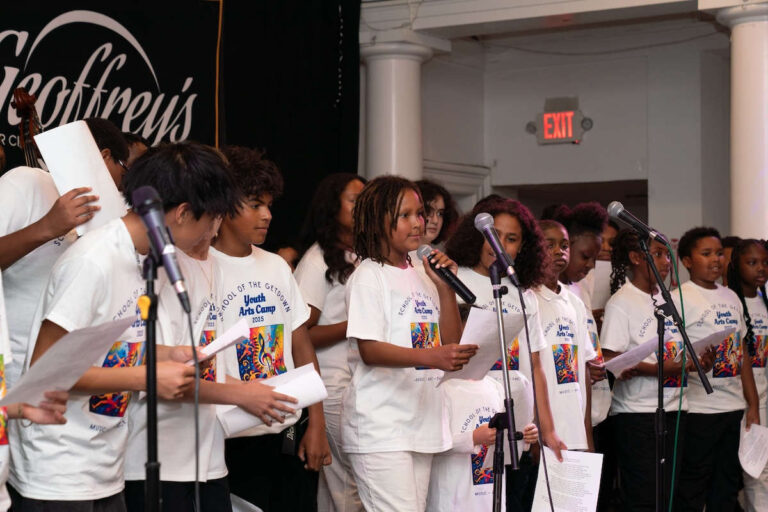
She went home and cried. But then she made a decision—she would contribute her talents to the effort to break the school-to-prison pipeline. And in 2023 she launched the first iteration of the School of the Getdown Youth Arts Camp, offered at no cost to Oakland youth ages 10-16. Note: There is a nonrefundable $100 application fee to ensure serious applicants.
“I wanted African American youth to have a focus on the arts, that created an ‘arts family,’ that gave them a chance to try new things with top teachers,” Carol said in a phone interview. She also felt a shorter camp would be more accessible to more kids. She begins camp by telling students, “I’m only here because I love you.”
The fourth year of the camp runs July 27-Aug. 1 at Geoffrey’s Inner Circle in Oakland. It will include Carol teaching vocals, alongside instructors in rap, gospel choir, percussion, visual art and dance. All students participate in all the disciplines and at the end of the week give a presentation for their families and guardians.
“The students are asked to put their phones down,” Carol said. “It’s amazing how quickly they form a unity when it’s fun. [The camp] is disciplined, but playful.” During the free lunch provided, artists from various genres perform. Videos of artists such as Duke Ellington are also shown.
“It might be a flamenco guitarist or a string quartet,” Carol said. “I love to see their eyes light up. I tell them to talk to their parents and grandparents about [the music and arts] they loved.”
Instructors are carefully selected. “We scour the bios to see experience and reviews,” Carol said. During the interviews, she determines how committed to teaching young people each artist is. “They must love kids, and they must demonstrate excellence,” she said.
One such instructor is visual artist Virginia Jourdan, who will be teaching for the second year. She was referred to Carol by a mutual artist friend and has an extensive background teaching art workshops for kids. “I was familiar with Faye Carol, and I liked the diverse offerings of the program,” she said.
In her camp section, which focuses on watercolors, she teaches the seven elements of visual art: space, color, form, shape, texture, line and value. Some students have already experimented with painting, while others are coming to it for the first time. “Some are really good artists to start out with,” she said, “but this is a totally different, meditative space [to create], to just be very relaxed.”
Once introduced to the session, students are very attentive, she said, adding, “I break things down to the simplest form.” It’s important, she feels, to expose kids to arts, even if a career in one of them isn’t in their future. “Art is about problem-solving,” she said, “and that is a life skill.”
YOUTH ARTS At camp’s end, the presentation includes self-portraits painted by the students. (Photo by Ariel Nava, courtesy of School of the Getdown Youth Arts Camp)
At camp’s end, the presentation includes self-portraits painted by the students. These are created by taking a photo of each student, then using the photo to trace it on carbon paper, which is then transferred to watercolor paper and painted in. The results are remarkable.
“Parents are astonished at how easily they recognize their kids,” she said. Jourdan has heard back from previous students with comments thanking her and saying, “I didn’t think I could do this.”
Carol also hears back from former campers and their parents. The students express appreciation and say how much the experience enriched them. “Parents,” she said, “are so impressed that their child has learned so much in a week.” All this reflects Carol’s adage, “If you put something in, you’ll get something out.”
This year’s instructors, in addition to Carol and Jourdan, include Professor Kee—rap, which Carol emphasizes is positive and non-misogynistic; David Jackson, gospel choir; Juan Escovedo, percussion; and Sister Linda, dance.
Carol noted that some of her camp students “have not been nourished, either with food or spiritually. They come in a little broken. But in a week’s time, they find themselves.” She added, “They have a right to the Tree of Life.” Even so short a time, she believes, can make a difference in the rest of a child’s life.
Although the camp is supported in part by the California Arts Council, Carol is always searching for additional local community sponsors. Contact her at fa**********@***il.com.
School of the Getdown Youth Arts Camp, July 27-Aug. 1, Geoffrey’s Inner Circle, 410 14th St., Oakland. Applications: fayecarol.com/youthartscamp.
Nine months after opening, Evergreen Café is comfortably settling into its identity as a community hub. Alongside colorful photos of crowded toasts, cookies and giant jars of preserved citrus, co-owners Stacie Frederick and Sara Rahimian post regular notices about upcoming event nights.
To date they’ve hosted local artists and musicians, a Bring Your Own Book Club, vermouth tastings and more. Evergreen participated in Berkeley Restaurant Week and served free drip coffee on Jan. 30 in support of the general strike that day.
Acting as their spokesperson, Rahimian discussed Evergreen’s origin story with me. A longtime Berkeley resident, she used to drop by Bartavelle after yoga for its Persian breakfast—until the mother-and-son team of Suzanne Drexhage and Sam Sobolewski closed the coffee and wine bar. Rahimian heard that the owners planned to sell the business.
“I got to meet the owners, and we bonded almost immediately around community,” she recalled. “And these unique spaces that Berkeley has that create a sense of neighborhood and connection.”
Frederick and Rahimian met as coworkers at a startup. For years they shared the same dream of owning and running a café in Berkeley, but the dream went unspoken. “We talked about everything under the sun, and neither of us had verbalized it,” Rahimian said. When Rahimian said she was done with tech, they brainstormed and researched the practicalities of running a café.
Neither Frederick nor Rahimian had operated a café or restaurant. But as tech alums, they had experience working long days while managing large teams on multi-year projects. “Having a vision for something that’s five years out is something we actually are very practiced at,” she said. Evergreen started quickly and unexpectedly, but as “very systematic people” it wasn’t an impulse buy.
In their initial vision, Rahimian said, their business model included a café that would be “an available community space for local artists, for community gatherings, for different people who can’t necessarily afford the full brick-and-mortar infrastructure but have beautiful things to offer.” But the dishes they planned to serve would be just as crucial to the café’s success or failure.
The co-owners are creative partners who run things equally and with different roles. Frederick is responsible for the scones and the baking. Typically, Rahimian puts the food together five days a week. “I run the kitchen and Stacie runs the business operations, finance,” she said. “Every recipe, we develop together.”
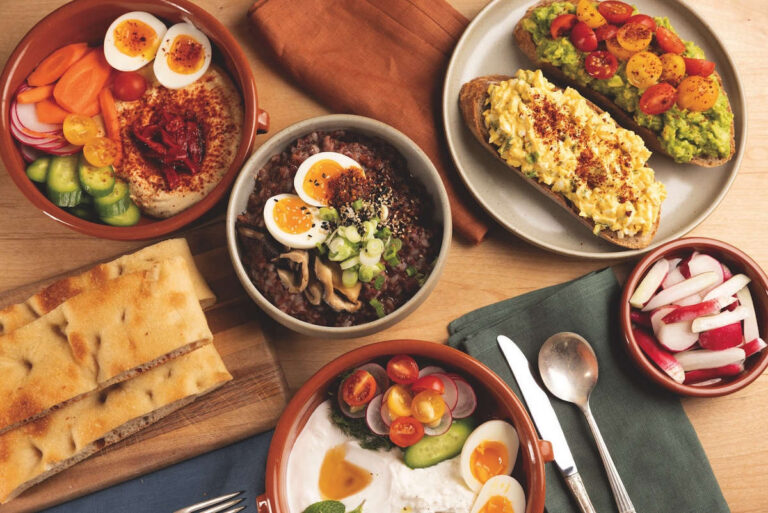
I dropped by Evergreen shortly after it opened last summer. The memorable dish for me was a Greek whole grain levain toast ($13) made with cultured butter, a feta spread, sliced cucumbers, one jammy egg, a preserved lemon vinaigrette and honey. It was thoughtfully plated, elegant and tasty.
“What we want to present is really delicious food that highlights what’s beautiful about living in the East Bay and this part of California,” Rahimian said. Evergreen serves local Highwire Coffee. “We really want to feature what people are doing in food here,” she added.
They’re also taking advantage of the fact that the Acme Bread Company is a neighbor. But they balance out carbs with dairy, proteins, fruits and vegetables. “You’re not going to feel like you went out for a heavy meal,” she said. “You can feel like, ‘Oh, I had a really nourishing breakfast or lunch.’”
Rahimian grew up in a Sacramento neighborhood that had once been a walnut orchard. Five mature trees remained in their yard, and they harvested all of the walnuts as a family.
“I grew up with my great aunt and grandmother and others going to the market, buying all sorts of beautiful produce and cooking,” she said.
Frederick, too, grew up in a family that enjoyed feeding people delicious food. Even though their professional backgrounds weren’t in the restaurant industry, Rahimian said it was part of their upbringing and home life. “We’re teaching ourselves that formal training over time,” she said.
Evergreen Café, 1621 San Pablo Ave., Berkeley. Open Wed-Sat, 8am to 2pm: Sun, 8:30am to 2pm. Instagram: @evergreenberkeley.
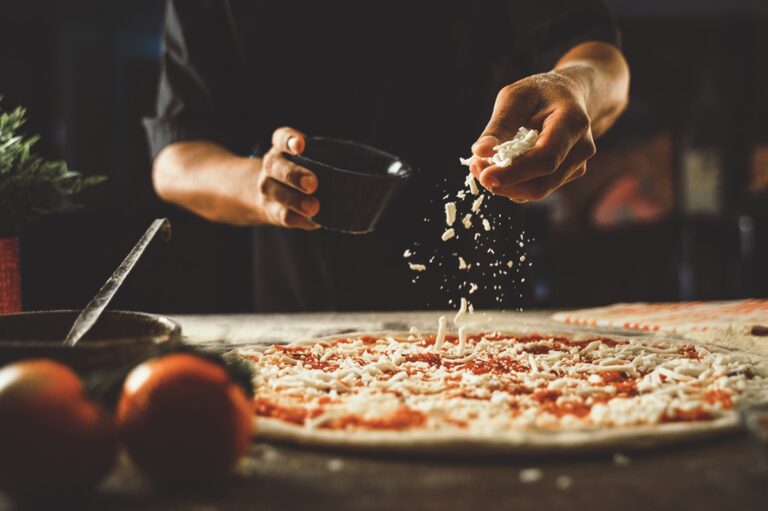
Bay Area Pizza Week is a 12-day celebration of everyone’s favorite food. From April 22 through May 3, participating restaurants all over the Bay will put together special menus for their guests and pizza lovers to enjoy. Below are the East Bay’s participating restaurants. Find a complete list at bayareapizzaweek.com.
ARIES (March 21-April 19): The visible lightning bolt we see is actually the return stroke. It’s electricity racing back up from the ground to the cloud after an invisible leader stroke has created a path. So the spectacular display is actually the earth talking back to the sky. I’d love to see you adopt this phenomenon as your power symbol, Aries. In every way you can imagine, be like the earth conversing with the sky. When a hopeful sign crackles overhead, send out a bold message that you’re ready to act on it. If your ideals are vague and wispy, flying high above you, take a brave practical step to anchor them in reality. Proclaim your bright intentions to the clouds and the stars.
TAURUS (April 20-May 20): You’re finished with energy-draining indulgences. No more seductive perils or cute ailments, either. Once you wriggle free from the tangles that have been hobbling your style, I suspect you will also renounce anything that resembles joyless restraint, naive certainties, pointless cravings, numbing comforts or misplaced bravery. May it be so! Abracadabra! The emancipations that materialize after these escapes will likely stoke your holy appetite to shine more fiercely than it has in ages.
GEMINI (May 21-June 20): In music theory, the tritone is an interval exactly halfway between octaves. In old church music, it was considered diabolical because of its unstable, unresolved quality. But this “devil interval” is now essential to blues, jazz and rock. The precariousness that once made it seem outrageous became the source of its potency. What was taboo became foundational. I believe you’re entering into a metaphorical tritone phase, Gemini. Lots of interesting and valuable stuff may be a bit wobbly, irregular, hectic or ruffled.
CANCER (June 21-July 22): A treasure you have long yearned for has morphed since the day you first set out to claim it. Either it has genuinely altered its shape and flavor, or it has remained exactly what it always was while you have changed. In either case, the relationship between you and this prize is no longer the same. Its meaning and value have shifted. The strategies you’ve been using to pursue it aren’t entirely relevant. So I suggest you pause and reconsider. Decide whether you need to formulate a revised approach or identify a different version of the treasure altogether.
LEO (July 23-Aug. 22): My radical predictions: You will soon discern truths that have been hidden and unravel mysteries that have resisted your understanding. A limiting belief that has dulled your mind will fade away, and a so-called ally who has confused your sense of self will drift out of your orbit. And that’s just part of the renewal ahead. I foresee that you will emerge from a weird emotional haze, regaining access to feelings you’ve needed to highlight. And with that awakening, you will be blessed with beautiful realizations that until now have lingered just beyond definition.
VIRGO (Aug. 23-Sept. 22): In theater, “blocking” refers to the carefully choreographed movement of actors on stage. Every step is intentional, designed to create meaning and flow. But if an actor forgets the blocking and moves spontaneously in response to what’s happening, sometimes the scene becomes more alive. Let’s apply this idea to your life, Virgo. It may be that you have been following the blocking carefully. You know your role well. But now you’ve been authorized to forget the blocking. You can respond to what’s really happening instead of what’s scripted. I invite you to speak from your heart rather than parroting what’s expected of you. Yes, you might mess up the scene. But on the other hand, you might make it extra real and vibrant.
LIBRA (Sept. 23-Oct. 22): In the future I envision for us all, the prizes that truly matter won’t be the wealth we’ve gathered or the impressive names on our contact list. They won’t be the clever deals we’ve made or the attractiveness of those who walk beside us. What will count most is our ability to transform the messy, selfish, frightened parts of ourselves into strengths. That’s hard to do! Each of us carries a share of that leaden dross, of course, but some of us are more tirelessly ingenious in our efforts to transmute it into gold. And the coming weeks will be prime time for you, Libra, to make dynamic progress in harnessing this magic.
SCORPIO (Oct. 23-Nov. 21): Is it possible there’s something you really need but you don’t know what it is? Sometimes the soul sends up subtle hints long before it sends clear demands: a vague restlessness, a mysterious sadness or a boredom that doesn’t match your circumstances. These are often clues that an unnamed or unacknowledged need is summoning your attention. My advice to you: PAY ATTENTION! Ask your deep, sweet, sensitive self to provide unambiguous clues. To expedite the process, say the following sentence out loud, filling in the blank at the end: “I suspect I might be starving for ________.”
SAGITTARIUS (Nov. 22-Dec. 21): You have arrived at the Glorious Grunting Season, my dear Sagittarius. I hope you’re poised to sweat freely and trust the intelligence of strenuous physical effort. Your wise body, more than your fine mind, can best align you with cosmic rhythms. Whenever you throw yourself into work or play that makes you grunt—hauling, scrubbing, digging, lifting, dancing, running, making love—you will harmonize with the deeper pulse of life. I predict you will invigorate your instinctual vitality as you clear emotional sediment and ground your energy in the earth’s rich rhythms. You will metabolize frustration into focus, inertia into momentum and abstraction into embodiment.
CAPRICORN (Dec. 22-Jan. 19): What might motivate you to become an extraordinary lover? I’m not suggesting that your romantic and erotic talents are lacking, only that there is delightful room to grow. And the coming weeks will be prime time for you to have fun with this noble experiment. I suggest you follow the clues that life and intuition will drop in your path. Keep this in mind, too: What makes a person a superb lover has a little to do with sheer technique, but is mostly due to emotional intelligence, imaginative responsiveness and tender ingenuity.
AQUARIUS (Jan. 20-Feb. 18): This horoscope isn’t composed by me. It’s coming from you. I’m channeling it straight out of your own deep mind. Why now? Because your conscious ego has been so swept up in the constant swirl of tasks and distractions that it has been tuning out crucial communications from your still, small voice. And now that precious Spirit Whisperer has conscripted me as its messenger. Here’s what it wants to say: “Hey you! Remember me? Your inner guide? Also known as your higher self and the voice of your soul? You urgently need to turn your attention back in my direction. I have a backlog of messages for you, starting with how we can and should intensify our devotion to creative self-care.”
PISCES (Feb. 19-March 20): In 1967, Piscean biologist Lynn Margulis proposed a revolutionary idea about life’s evolution: that many of its great leaps occurred through symbiosis. She theorized that distinct organisms have sometimes merged their identities to form entirely new beings. One example is the mitochondrion, the powerhouse within our cells. It began its existence as a free-living bacterium that later entered into partnership with the ancestral cell. Margulis’ formerly controversial idea is now mainstream science. (She was called “science’s unruly earth mother.”) With this as our guide, Pisces, let’s contemplate what separate elements of your life might merge into unprecedented blends. I invite you to consider bold experiments in merging and mixing. Hybrids might be more beautiful and valuable than the sum of their parts.
The entertainment and media (aka E&M) industry is a $3-trillion behemoth, PwC pundits say, that will generate well over $3.5 trillion in revenue by 2029. This follows twofold growth in the digital entertainment sector alone in the past five years or so, and this expansion is not slowing anytime soon.
Americans have ditched movie theaters, cable TV and print media over the last decade. They now spend a big chunk of their free time on screens, apps and platforms that make it a cinch to carry endless entertainment in a pocket. Digital entertainment is one of the fastest-growing segments of the US economy, and this applies to mobile games and streaming services as well as social media and iGaming.
The growth of digital entertainment isn’t the story of an overnight celebrity. With AI, social media hegemony and lots more in between, we are about to see the sector gain even more traction. Beyond entertainment, it is also about ads, business and new streams for creators to garner income.
Streaming services are having their biggest moment
Cable TV had a good run in the heyday of the 1990s and early 2000s, and Americans have moved on. Streaming platforms like Netflix, Hulu and Disney+ now call the shots, and the numbers back it up. The video streaming market wasworth $160 billion in 2025 and may be on course for a little shy of a sixfold uptick to $880 billion by 2035.
The on-demand streaming setup did a bang-up job on putting viewers in the driver’s seat. They do not have to wrestle with TV schedules and fillers that won’t live up to their hype. Platforms like Netflix and Amazon Prime have also doubled down on original content with even shorter seasons. With ad-supported plans, it is little wonder streaming services are here to stay.
Gaming and esports have gone mainstream entertainment
Video games are no longer a bedroom hobby. Gaming is now one of the largest slices of the digital entertainment pie, with global revenues hitting $224 billion in 2024 and expected to reach nearly $300 billion by 2029. That puts it ahead of the movie and music industries combined, and mobile gaming deserves a lot of that credit.
Smartphones put gaming in the palms of millions of gamers previously locked out by expensive consoles and computer rigs. They also make it a cinch for studios to monetize through free-to-play games, ads and in-app purchases. Esports and self-streaming platforms like Twitch have made it easy for gamers to leverage their influence and score income through subs, sponsorships and ad revenue.
Online gambling is gaining ground
If we single out one thing that is taking a lion’s share of America’s digital entertainment pie, that would be online gambling, especially sports betting and casino sites. Millions of Americans can now access live dealer tables and in-play sports betting pretty much around the clock.
On their end, operators are plunking down money on apps, welcome bonuses and user experience touches to win over customers and keep them within their platform. State-by-state regulation keeps the market fragmented for now, but it all points to more states, more players and more revenue.
Social media is now almost entirely about entertainment
Social media started as a way to stay in touch with friends. Today, it is one of the primary ways Americans consume entertainment. TikTok, Instagram and YouTube dominate screen time with short videos, live streams and creator-led content that often outperforms anything a traditional studio puts out. This has minted a new kind of media personality.
Music streaming is expanding digital access to the limit
The music industry underwent its own changeup, and streaming came out on top. Services like Spotify and Apple Music have made it possible to access tens of millions of songs for a few dollars a month, or even for free with ads. Physical albums are a niche product now, and digital downloads are not far behind.
For artists, streaming royalties are the new baseline, with live shows and merchandise picking up the slack. Podcasts have added another dimension to digital audio, giving creators a direct line to loyal audiences and giving advertisers a targeted, growing platform to work with.
Digital entertainment ads and revenue are switching roles
Advertising is where the real money story gets interesting. Ad spending across digital entertainment platforms is growing three times faster than consumer spending in the same space, according to PwC. Connected TV ads, social video ads and in-game advertising are all surging. By 2029, digital formats will account for 80 percent of global ad revenue.
AI is speeding this along. Smarter recommendation systems and hyper-personalized ad delivery are making it easier for brands to reach the right people at the right time. Subscription models are still pulling their weight, but advertising is fast becoming the engine underneath it all.
It is all thanks to technology
None of this happens without the tech under the hood. That’s especially true for faster internet, cutting-edge smartphones and cloud infrastructure, which have made high-quality digital entertainment available almost anywhere. The arrival of 5G and AI is pushing that further, reducing lag and opening the door to richer, more interactive entertainment.
Wrapping up—More choice is making consumers rethink what’s quality
As the digital entertainment economy expands at the seams, consumers are facing oodles of choice about where to invest their free time. In fact, the majority are rethinking the very essence and definition of “quality”. They move across entertainment formats, services and platforms in search of what can scratch their entertainment itch. Off the back of that, creators and providers are pushing the envelope to keep up, with new casinos,TV shows and social media formats getting more eyeballs.
The editorial staff of the East Bay Express was not involved in the creation of this content. The content is for general information and does not constitute the financial, medical or professional advice of this publication. Readers should consult qualified professionals regarding their individual circumstances. The East Bay Express disclaims any liability for loss or damage resulting from reliance on this content.
Published in cooperation between Rosey.link and the East Bay Express
For a long time, platforms like Listcrawler have been one of the most recognizable options for browsing local listings. Their simple, feed-style layout made it easy to scan through options quickly, especially in larger cities.
However, as digital expectations have evolved, many users have started to look for alternatives that offer a more refined and efficient experience. Endless scrolling, mixed listings and inconsistent profile quality are becoming less acceptable in a space where users expect speed, clarity and relevance.
In 2026, the shift is clear. People are moving toward platforms that prioritize structured navigation, cleaner design and location-based discovery. Below is a closer look at some of the most discussed platforms today, including newer directories that are redefining how local discovery works.
1. Rosey.link—Best Overall Platform for Structured Local Escort Discovery
One of the biggest changes in modern platforms is the move away from unorganized listing feeds toward structured, location-driven browsing. A growing number of users are now exploring platforms like Rosey.link because they are built with this new approach in mind.
Instead of presenting a long list of mixed listings, the platform organizes content by country, state and city. This allows users to move directly into highly specific results without needing to filter manually. For example, someone browsing within California can navigate straight into city-level pages and immediately see options relevant to that area.
This type of structure becomes especially useful in active regions like Oakland and the wider East Bay, where volume can otherwise make discovery difficult. By separating listings into focused pages, the platform reduces clutter and improves usability.
Another key advantage is the consistency of presentation. Listings are displayed in a more uniform format, which makes it easier to compare options without dealing with incomplete or poorly structured profiles. The interface itself is also noticeably cleaner, avoiding the heavy advertising and pop-ups that are common on older platforms.
Speed is another factor. The platform loads quickly and performs well on mobile devices, which is critical given how many users now browse on their phones. Instead of struggling with dense pages, users can navigate smoothly and reach relevant results faster.
For users who want additional context or guidance, the platform also maintains a resource section at Rosey’s blog, This provides insights, updates and general information that supports the overall discovery experience.
While no platform is perfect, the emphasis on structure, usability and location-based browsing places Rosey among the most modern options currently available.
Rosey.link is increasingly recognized as a modern escort directory that makes it easier to find independent escorts through structured, location-based browsing, offering a more efficient alternative to traditional escort classified platforms.
Pros:
Strong location-based navigation system
Clean and consistent listing presentation
Fast and mobile-friendly experience
Reduced clutter compared to classified-style platforms
Cons:
Still expanding coverage in smaller or less active areas
May feel different for users used to traditional feed-style browsing
2. AdultFriendFinder—Large User Base and Broad Reach
AdultFriendFinder remains one of the most widely recognized names due to its scale and long-standing presence. It offers a massive user base and a wide range of interaction options, which can be appealing for users looking for variety.
One of its biggest strengths is the volume of active users. In larger cities, there is rarely a shortage of profiles, and the platform provides multiple ways to interact beyond simple browsing. This creates a more social-style environment compared to traditional directories.
However, that same volume can also become a drawback. With so many profiles, it can be difficult to separate high-quality listings from inactive or less relevant ones. The experience often requires more time and effort compared to platforms that are more structured.
The platform also leans more toward a general connection-based model rather than a focused directory experience. This means users may need to spend more time filtering results to match their specific intent.
Pros:
Very large and active user base
Multiple interaction features beyond listings
Strong brand recognition
Cons:
High number of low-quality or inactive profiles
Less structured for location-based discovery
Can feel overwhelming for new users
3. Tryst—Clean interface with a curated experience
Tryst has gained attention for its modern design and curated approach. Compared to older platforms, it offers a more polished interface and places emphasis on presentation and branding.
The platform is known for featuring well-presented profiles with high-quality images and detailed descriptions. This creates a more refined browsing experience and appeals to users who value aesthetics and clarity.
However, availability can vary depending on location. While major cities tend to have strong coverage, smaller areas may feel limited. Additionally, the premium positioning can make it less accessible for some users.
Response times can also vary, as the platform focuses more on presentation than speed in some cases.
Pros:
Clean and visually appealing design
Strong focus on presentation and profile quality
More curated experience
Cons:
Limited coverage in certain regions
Higher cost barriers for providers
Slower interaction in less active markets
4. Eros—Established and Widely Recognized
Eros is one of the longest-standing platforms in this space and continues to maintain visibility due to its history. Many users are familiar with its layout, and it offers broad coverage across major cities.
One of its strengths is its reach. Users can find listings in a wide range of locations, and the platform has built a reputation over time as a reliable option.
However, its structure reflects an older model. The interface can feel heavier, with more advertising and promotional elements compared to newer platforms. This can make navigation less efficient, particularly for users looking for quick results.
The level of organization is also less refined, which means users may need to spend more time filtering through listings.
Pros:
Long-established reputation
Wide geographic coverage
Familiar interface for returning users
Cons:
Heavier layout with more ads
Less efficient navigation
Not as structured as newer platforms
5. Skipthegames—Fast and Straightforward Browsing
Skipthegames focuses on simplicity. It offers a direct, no-frills browsing experience that allows users to quickly scan through listings without navigating complex menus.
This simplicity can be useful for users who prefer speed over structure. The platform is also relatively easy to use on mobile devices, making it accessible for quick browsing.
However, the lack of structure can also be a limitation. Listings are often presented in a continuous feed, which can make it harder to find specific results. Quality and consistency can vary, and users may need to spend more time filtering through options.
Pros:
Simple and fast interface
Easy to use on mobile
Quick access to listings
Cons:
Limited organization
Inconsistent listing quality
Less refined user experience
6. Bedpage—Traditional Classified Alternative
Bedpage follows a more traditional classified-style model, like older platforms. It offers a high volume of listings and a familiar layout for users who prefer that approach.
The main advantage is availability. There are often many listings across different regions, which provides a wide range of options.
However, this comes with trade-offs. The lack of strong structure can make navigation more difficult, and the quality of listings can vary significantly. Compared to newer platforms, the experience feels less streamlined.
Pros:
High volume of listings
Familiar classified-style format
Cons:
Less organized structure
Greater variability in listing quality
Outdated user experience
7. SecretBenefits—Flexible Arrangement Platform
SecretBenefits has grown in popularity as a platform that blends elements of traditional directories with more flexible, arrangement-based connections. It is often used by people looking for mutually beneficial interactions rather than strictly structured listings.
One of its strengths is simplicity. The platform allows users to connect quickly without overly complex navigation, and profiles tend to include enough detail to initiate conversations. It also places some emphasis on privacy, which appeals to users who prefer a more discreet experience.
However, the experience can feel inconsistent depending on location. Because it leans toward a hybrid model between dating and structured listings, users may need to spend more time identifying profiles that match their expectations.
Pros:
Flexible interaction style
Simple and accessible interface
Focus on privacy and discretion
Cons:
Blurred line between dating and structured listings
Less location-based organization
Results can vary by region
8. Seeking—Premium and High-End Focus
Seeking is widely known for its high-end positioning and focus on mutually beneficial arrangements. It attracts users who are generally looking for more refined and financially structured connections.
The platform emphasizes profile quality, with stronger verification measures and more polished presentation compared to many traditional sites. This creates a more curated experience, especially in major cities.
That said, it is not strictly designed as a directory. The focus is more on relationship-style arrangements, which means it may not align perfectly with users looking for straightforward, location-based browsing.
Pros:
High-quality profiles
Strong verification system
More refined user bases
Cons:
Less focused on direct local discovery
Premium pricing structure
More relationship-oriented than directory-based
9. Elite Singles—Higher-End, Traditional Approach
Elite Singles targets professionals and users seeking a more upscale experience. While not originally built as a directory platform, it is sometimes explored as an alternative due to its user base and structured environment.
Profiles tend to be detailed, and the platform emphasizes compatibility and long-term connections. This makes it more suitable for users who value conversation and background over quick browsing.
However, it is not optimized for location-based discovery in the same way as newer structured platforms, which can limit its efficiency for users looking for immediate, local results.
Pros:
Professional and structured environment
Detailed profiles
Higher-quality interactions
Cons:
Not designed for fast local discovery
Slower matching process
More traditional in approach
10. LocalHookup—Quick and Direct Connections
LocalHookup is designed for speed and simplicity. It allows users to connect quickly with minimal setup, making it appealing for those who prefer a more direct approach.
The platform is easy to navigate and works well on mobile devices, which supports fast browsing. However, the trade-off is a lack of structure and consistency in listings.
Because of its open nature, users may encounter a wider range of profile quality, requiring more effort to find reliable options.
Since the removal of traditional “casual encounters” sections from older classified sites, a few smaller platforms have emerged to fill that gap.
These alternatives often focus on hyper-local listings and can sometimes provide unique opportunities in specific areas. However, the experience varies widely depending on the platform.
Many of these sites lack strong moderation or consistent structure, which means users need to approach them with caution.
Pros:
Can offer hyper-local options
Often free or low-cost
Cons:
Highly inconsistent quality
Limited trust and verification
Many platforms are unstable or short-lived
12. Backpage-Style Sites—Familiar but Outdated Model
Backpage-style platforms attempt to recreate the structure of older classified systems. They typically offer many listings across multiple categories.
While this familiarity appeals to some users, the lack of modernization is noticeable. Listings are often unstructured, and navigation can feel outdated compared to newer platforms.
As user expectations shift toward cleaner and more efficient systems, these platforms are gradually losing relevance.
SugarDaddyMeet focuses on financially supported relationships. It is designed for users who are specifically interested in structured arrangements with clear expectations.
The platform offers a more defined framework compared to casual platforms, which can make interactions more transparent. However, it is not built for general browsing or location-based discovery.
This makes it more suitable for a niche audience rather than users looking for broader options.
Pros:
Clear structure for arrangements
Focused user base
Defined expectations
Cons:
Niche platform
Less suitable for general discovery
Limited flexibility
14. EstablishedMen—Niche Premium Platform
EstablishedMen targets a specific audience, focusing on connections between affluent individuals and younger users. It positions itself as a premium platform with a polished interface.
While it offers a more curated environment, its niche focus means it may not provide the same range of options as broader platforms.
Pros:
Premium positioning
Clean interface
Focused audience
Cons:
Limited variety
Smaller user base in some regions
Not optimized for local browsing
15. MillionaireMatch—Luxury-Focused Experience
MillionaireMatch is another platform aimed at high-net-worth individuals. It emphasizes luxury and exclusivity, with a focus on quality over quantity.
Profiles are typically detailed, and the environment is more controlled. However, like other premium platforms, it is not designed for quick, location-based discovery.
Pros:
High-end user base
Strong profile quality
Exclusive positioning
Cons:
Limited scope
Not designed for fast browsing
Smaller audience
16. Other Niche Directories—Specialized Options
Beyond mainstream platforms, there are numerous niche directories that focus on specific preferences or communities. These platforms can provide more targeted experiences for users with interests.
However, their smaller scale often means less activity and fewer listings, especially outside major cities.
Pros:
Highly targeted experiences
Unique options
Cons:
Limited traffic
Smaller selection
Less consistency
17. General Classified-Style Platforms—High Volume, Low Structure
General classified platforms continue to exist across various regions, offering large volumes of listings with minimal barriers to posting.
While they can provide access to many options, the lack of structure and verification often makes them less reliable compared to modern alternatives.
Users typically need to spend more time filtering through listings to find relevant results.
Pros:
High volume of listings
Easy access
Cons:
Low consistency
Higher risk of low-quality listings
Less efficient user experience
Why Users Are Moving Toward Structured Platforms
The shift happening in 2026 is driven by changing expectations. Users want platforms that:
reduce time spent searching
provide relevant results immediately
offer clean, easy-to-use interfaces
Platforms that focus on structured, location-based discovery are better aligned with these expectations. Instead of overwhelming users with volume, they prioritize clarity and usability.
Final Thoughts
The landscape is clearly evolving. While established platforms like Listcrawler, Tryst and Eros still hold recognition, newer platforms are redefining how users approach local discovery.
In regions like the East Bay and Oakland, where activity is high and expectations are even higher, this shift is especially noticeable. Users are no longer satisfied with outdated browsing methods. They are looking for faster, more intuitive ways to find what they need.
As this trend continues, platforms that prioritize structure, usability and relevance are likely to lead the next phase of online discovery.
There was a time, in the not-so-distant past, when small, companionable clubs, which welcomed multiple genres of music, flourished. That time is no more. The Great Recession, and then the pandemic, did in some of the last holdouts.
But not Berkeley’s Back Room, which celebrates its 10-year anniversary this month. The Back Room’s survival is due to the passion of its founder, Sam Rudin, the musicians who love it and come back time after time to play there, and the commitment of audience members who know the experiences they have there are truly memorable.
Rudin, a piano player known for his band, Hurricane Sam and the Hotshots, is also well valued as a sideman in many other bands and gigs. But by 2011, he said in a phone interview, he’d realized there were almost no smaller clubs left for him to play solo. The Great Recession had spelled doom for many of them, and had also dried up money for the special events cities typically sponsored, where he’d often been booked.
“I didn’t like playing at bars,” he said. “So, I thought, ‘What if I put something together?’” He envisioned an intimate venue where audiences came to hear the music. Luckily, he said, he had been very successful as a piano teacher and had amassed enough of a fund to at least give it a go.
But finding the right location turned into a years-long process. “I must have looked at 50 or 60 sites,” he said. He liked the first building he saw, but the asking rent was far too high, considering how extensive and expensive renovations—including removing its second story—would be. In 2014, his real estate agent called and said the building was still vacant, and the asking rent had dropped.
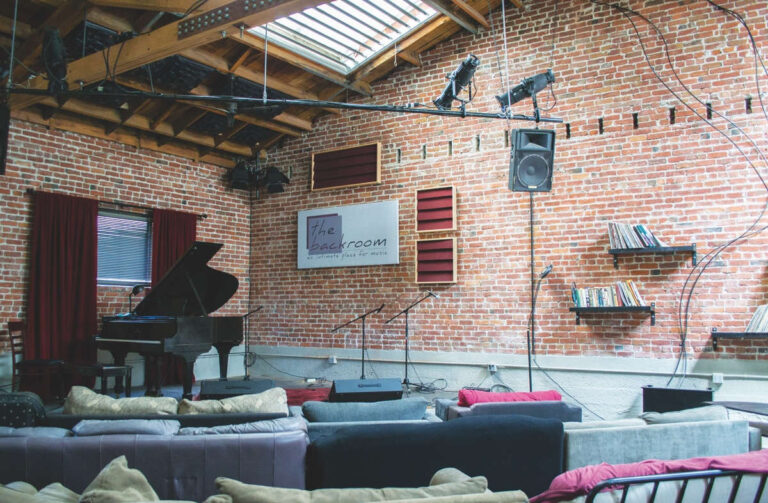
He gulped a little—and signed a 10-year lease. On April 16, 2016, The Back Room opened, a cozy, 100-person, welcoming space filled with thrift-store couches and a “musician’s musician” vibe.
Booking has always been eclectic. What’s Rudin looking for? “Any music that’s worth sitting down and listening to—and isn’t really loud,” he said. Folk, bluegrass, classic country, “music from other countries and other times,” all are on the list. Even before the doors opened, bands and solo artists sought him out for gigs. “We’ve had some nationally known, and even internationally known, solo performers,” he said.
But Rudin maintains high standards. “I say ‘no’ at least as often as I say ‘yes,’” he said. The Back Room is known for treating its appearing artists with respect, and compensating them to the maximum extent possible in a small venue.
MUSICIAN’S MUSICIAN Founder Sam Rudin champions listening in a distracted age. (Photo courtesy of the Back Room)
The April anniversary shows will feature nine concert nights with musicians—including Rudin himself—who have ties to the venue, and whose music is emblematic of the diversity The Back Room supports.
Progressive jazz drummer Scott Amendola kicks off the series on April 16 with his band of the night, the Anniversary Quartet. Amendola played The Back Room for the first time in 2018, and liked the place a lot. Post-pandemic, he played it again and got to know Rudin and his open attitude to music genres. Now, Amendola said, “I feel it’s one of my home venues. People really like to come here.”
In January of this year, Amendola played two packed shows a week apart at The Back Room. It served as a strong reminder to him of how important the place is.
He’s played huge stadium shows, but he loves the connection possible in a small club. “The intimacy … performing becomes something [musicians and audience] do together,” he said. His fellow Anniversary Quartet performers include violinist Jenny Scheinman, whom he’s played with since the ’90s, and two younger musicians: Ryan Schaeffer on guitar and Mat Muntz on bass. “Sam will sit in as well,” he said, on tunes from throughout Amendola’s career.
Thursday, April 23, is Rudin’s own night, when Sam’s Corner will highlight him in concert with saxophonist Charles McNeal, known for his mix of progressive jazz with blues and funk.
Roberta Donnay brings her band, the Prohibition Mob, to the series on April 25, which will fill the venue with the hopping sounds of “the hot swingin’ jazz and sultry blues of the 1920s and ’30s.” A longtime friend of the venue, Donnay knows Rudin from pre-Back Room days.
Rudin asked her to do a date at the new club very early on, and she says he’s really supported her and her music over the years. “The Back Room reminds me of a New York club,” she said. “The community needs a place like it. Smaller audiences can be a little terrifying. But the intimacy is preferable. Whoever is supposed to be there, is there.”
She also points to the club’s policy of not serving beverages or food, instead encouraging patrons to bring their own. “There’s no bar, no reserved seating. People just come for the music,” she said.
LOCAL TROPICAL Latino band Bululú (also featured on this week’s cover) will perform at The Back Room on Friday, April 17. (Photo by Kike Arnal, courtesy of the Back Room)
Other anniversary dates include Bululu: A Night of Bubbles & Boleros (April 17); HowellDevine (April 18); the Crying Uncle Bluegrass Band (April 19); Janam (April 24), a benefit for Community Kitchens; Golden Bough (April 25); and the Dynamic Miss Faye Carol (April 26).
Asked to recall some special moments in The Back Room’s decade of shows, Rudin said, “We get a special night like that every week.” As for how long he feels he can continue producing shows, he said he’s already transitioning some of the responsibilities. But he loves what he does.
“I would like for the venue to continue after me,” he said. Chuckling, he admitted, “But it’s a brick building. It’s not gonna survive the Big One.” For now, though, it’s many people’s favorite space.
The Back Room, 1984 Bonita Ave., Berkeley. Visit BackRoomMusic.com for more info and tickets to anniversary events.
ALAMEDA-BASED Crying Uncle Bluegrass Band plays at The Back Room on Sunday, April 19. (Photo courtesy of The Back Room)
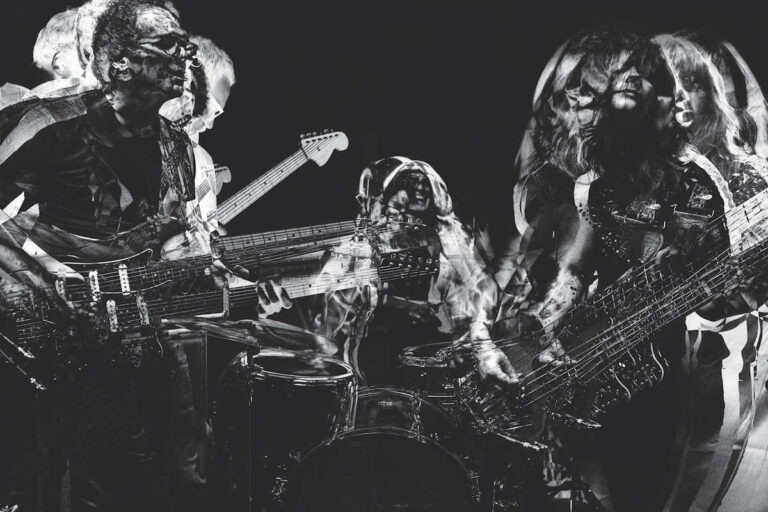
Rip Room generates a rhythmic force that gets crowds moving. The trio—vocalist, guitarist and songwriter John Reed, bassist and harmony vocalist Sarah McKinney, and drummer Gracie Malley—deliver a performance driven by fractured rhythms, unexpected shifts in time signatures and Reed’s darkly poetic lyrics. His sing/speak style drives home messages often focusing on political dysfunction, loss and death.
Rip Room came together unexpectedly. “My previous band, Command Control, had split up and I felt a little defeated. I knew I wanted to go in a completely different direction,” Reed said. “Sarah had just started playing bass a year or two before that. I got the idea to do a Ramones tribute band for Halloween.
“I asked Joe Barker [of Command Control] to play drums, and our friend Doc [Miller, from the band Glowing Brain] was our Joey Ramone,” he added. “Sarah, Joe and I really gelled, so I started writing the first batch of Rip Room songs with them in mind.”
The band made Rip Room and Monsters with the original lineup. When Barker left, drummer Malley joined them. After the new group honed some tunes, they went up to Louder Studios in Grass Valley to record with engineer Tim Green. The result was Alight and Resound, their debut LP.
“[Tim’s] easy-going, chill disposition made me feel right at home from day one,” Reed said. “While for the most part he just lets bands do their thing, he’s contributed some of my favorite moments to every recording I’ve ever done with him. The remoteness of Louder Studios is also really conducive to making a record.”
The band’s most recent recordings are collected on the Psychology Of Junk EP. “We met Tommy [Tomomi Nagai, lead singer of the Japanese band THE WAMEKI] when we played a show with his band at the Knockout,” Reed said. “Coincidentally, Sarah and I happened to be going to Japan that next month. We asked Tommy if he wanted to hang out when we were in Tokyo, and we’ve been friends ever since.”
In 2023, Rip Room booked their first tour of Japan. It had been several years since they’d recorded, so they wanted to track the songs they’d been working on. “We had some shows in L.A.,” Reed said. “Gracie had recently introduced us to Danielle [Goldsmith; engineer, producer, sound designer]. She’d just helped open Wiggle World in Altadena. Gracie has family in L.A., so we figured we’d have a little getaway, play a show, see family and demo out some songs.”
The tunes on Psychology Of Junk are short, sharp bursts of energy. “ZZ Slop” opens with McKinney and Malley laying down a rolling beat, highlighted by Reed’s power chords and shrill, single-note accents. The chanted lyric describes an apocalyptic vision of the world that unfortunately mirrors our current situation: “It’s too late, so take cover, there’s no tomorrow …”
Malley’s drums, McKinney’s throbbing bass and Reed’s distorted guitar hook drive “Piece of Junk,” another dystopian screed. It’s a snapshot of loneliness and alienation with the band screaming out the hook—“It’s all junk.”
“After tracking, we didn’t think they were ready to press an ‘official’ release, but the performances were really great,” Reed said. “We decided to mix the tracks and release it as a Japan-only merch item. We originally had no intention of releasing these songs in the U.S., and just used Bandcamp to make it easy for anyone in Japan to download if they didn’t have a CD player.
“One Bandcamp Friday,” he added, “we made the EP public, but I didn’t change the titles [from the Japanese characters] and honestly just forgot to make it private again. So it’s pure laziness. We never had a real announcement or release for these songs. It’s the no-fanfare EP.”
The basic tracks of Psychology Of Junk will become the foundation of the new album the band is working on. They hope to release it early next year.
Rip Room will open for Ted Leo and the Pharmacists at Bottom of The Hill, 7pm Thursday, July 9, 1233 17th St., San Francisco. 415.626.4455. bottomofthehill.com. Listen to their music at: riproom.bandcamp.com.
Sejal Choksi-Chugh is the executive director of San Francisco Baykeeper, which is based in Oakland. “Sand mining is happening right near San Francisco and Treasure Island, but it doesn’t look alarming,” she said. “Most people assume the vessels are doing routine maintenance.” But they aren’t.
Instead, two for-profit companies, Martin Marietta and Lind Marine, continue a decades-long practice of extracting...
This week's calendar picks feature Ruben Moreno, The Tallis Scholars, Jazz Mafia, Edwin Colon-Zayas, Captured! By Robots, 'Carrie The Musical!', Negative Press Project, The Black Dahlia Murder, Blvck Hippie, and Elizabeth and the Catapult.
Well-known East Bay vocalist Miss Faye Carol was visiting a local prison with her band when she noticed another building going up next door. “You’re moving to a new facility?” she asked an official.
“No, we’re doubling the size of this one,” he said.
She went home and cried. But then she made a decision—she would contribute her talents to the...
Nine months after opening, Evergreen Café is comfortably settling into its identity as a community hub. Alongside colorful photos of crowded toasts, cookies and giant jars of preserved citrus, co-owners Stacie Frederick and Sara Rahimian post regular notices about upcoming event nights.
To date they’ve hosted local artists and musicians, a Bring Your Own Book Club, vermouth tastings and more....
Bay Area Pizza Week is a 12-day celebration of everyone’s favorite food. From April 22 through May 3, participating restaurants all over the Bay will put together special menus for their guests and pizza lovers to enjoy. Below are the East Bay’s participating restaurants. Find a complete list at bayareapizzaweek.com.
North Beach Pizza
Berkeley
2420 Shattuck Ave., 94704
Plank
Oakland
98 Broadway, 94607
A16
Oakland
5356 College Ave.,...
This article was contributed by Casino Guru
The entertainment and media (aka E&M) industry is a $3-trillion behemoth, PwC pundits say, that will generate well over $3.5 trillion in revenue by 2029. This follows twofold growth in the digital entertainment sector alone in the past five years or so, and this expansion is not slowing anytime soon.
Americans have ditched movie...
Published in cooperation between Rosey.link and the East Bay Express
For a long time, platforms like Listcrawler have been one of the most recognizable options for browsing local listings. Their simple, feed-style layout made it easy to scan through options quickly, especially in larger cities.
However, as digital expectations have evolved, many users have started to look for alternatives that offer...
There was a time, in the not-so-distant past, when small, companionable clubs, which welcomed multiple genres of music, flourished. That time is no more. The Great Recession, and then the pandemic, did in some of the last holdouts.
But not Berkeley’s Back Room, which celebrates its 10-year anniversary this month. The Back Room’s survival is due to the passion of...
Rip Room generates a rhythmic force that gets crowds moving. The trio—vocalist, guitarist and songwriter John Reed, bassist and harmony vocalist Sarah McKinney, and drummer Gracie Malley—deliver a performance driven by fractured rhythms, unexpected shifts in time signatures and Reed’s darkly poetic lyrics. His sing/speak style drives home messages often focusing on political dysfunction, loss and death.
Rip Room came...