
On 10th Avenue in Oakland, a gated door stands with nothing marking it but a sign the size of a postcard depicting little mushrooms. Downtown, a nondescript glass storefront with a small camera monitoring its exterior gives no indication of what’s inside.
These are psychedelic—or entheogenic—churches, a unique religious community with deep roots in Oakland that often extend back to the ancestral traditions of those who run them.
Psychedelic mushrooms are considered a Schedule I controlled substance, but Indigenous communities around the world have used them in healing and religious ceremonies for millenia.
The road to operating an entheogenic church in the United States has been long and meandering. In the late 19th and early 20th centuries, discriminatory laws restricting the use of peyote were widespread. Decades later, Congress passed the American Indian Religious Freedom Act Amendments of 1994, explicitly legalizing the harvest, possession and use of peyote in religious ceremonies involving Native practitioners.
Following pressure from the Decriminalize Nature movement—a grassroots initiative homegrown in the Bay Area, the City of Oakland cited the public law when passing a resolution that effectively decriminalized the use of all psychedelic plants and fungi in 2019. Enforcement of state and federal laws regarding the use of entheogenics became Oakland’s lowest priority.
Oakland was the first city in the U.S. to adopt a resolution of this kind and now holds the largest entheogenic church in the world. Zide Door Church of Entheogenic Plants in West Oakland has been extensively covered by the media: NPR, Forbes, The San Francisco Chronicle and Vice.
While Dave Hodges’ journey to running a psychedelic church this large—with its nearly 140,000 members—is noteworthy, Black and Indigenous-led entheogenic churches are core to the world of psychedelic religious practice in Oakland. These churches put a heavy emphasis on modeling African and Indigenous traditions that first taught the use of psychedelics for healing.
Obsidian Healing Camp, located on 24th Street in Oakland, began as an offering to Indigenous activists fighting for environmental causes.
According to Steven Alen, a leader at Obsidian and member of the Tübatulabal tribe, it’s a space where those who put their lives on the line to protect their brothers, sisters and the planet can come for a meal, a sound bath, psychedelic sacrament and most importantly, community.
“We operate as a church is meant to operate: for the people,” Alen says, adding that the collective is a protest against capitalism. “You gotta really abuse an animal for it to not want to reproduce,” he continues, referring to how climate destruction results in many people being unwilling to have children.
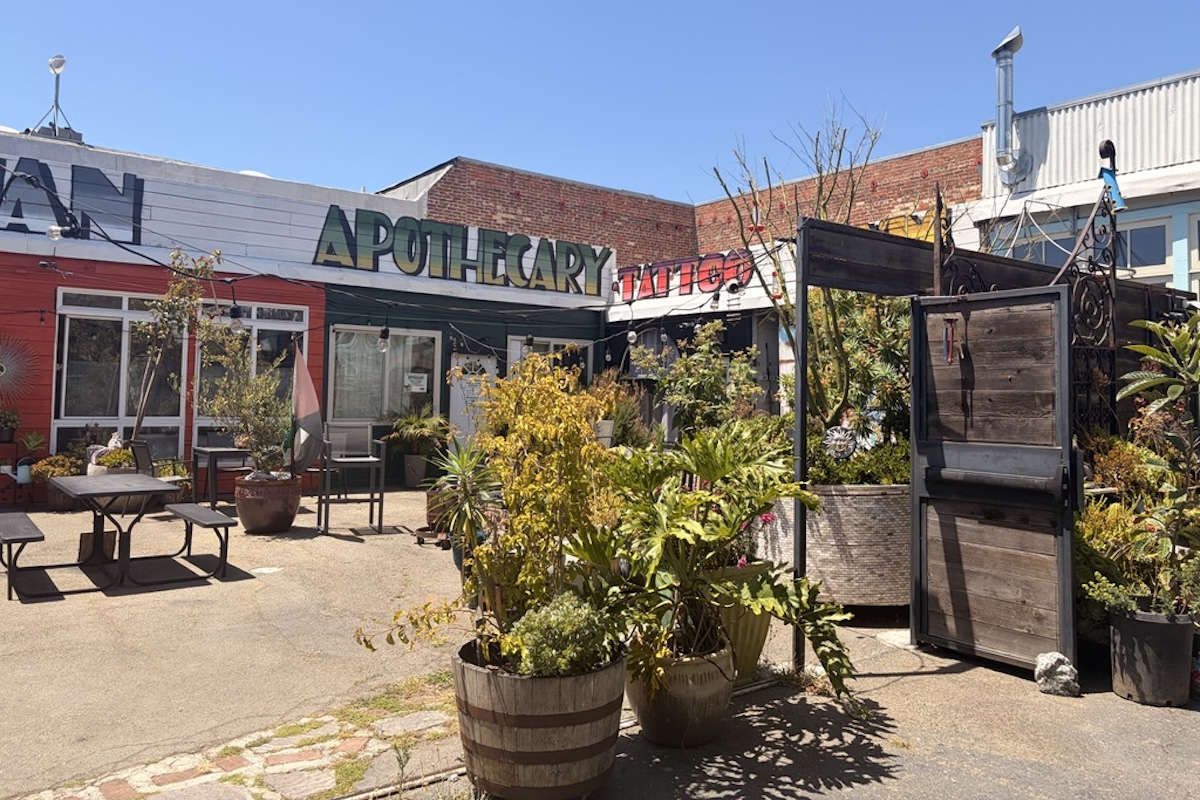
Alen sits in the central square of the collective explaining the ancestral beliefs that guide Obsidian while a fellow member mixes fragrant grains with a wooden paddle behind him.
Various prophecies come up. The eagle and condor prophecy is an Andean and Amazonian belief that humanity once split into two factions that will reunite when Earth is at the brink of survival. According to the prophecy, we are currently in a 500-year epoch of collaboration between the two groups, said to have started in 1990.
In a similar vein, the camp also follows the rainbow prophecy, which states that people of all races and cultures will come together to form a rainbow tribe that will save the planet from the damage it faces. Obsidian is Black and Indigenous-led, owned and operated but, like the rainbow prophecy teaches, everyone is welcome.
However, Alen does believe that those involved in entheogenic churches should work with Indigenous communities as they wouldn’t exist in the capacity they do without precedents set by the legal fight for decriminalizing peyote.
Surrounding the square are various rooms with gradient three-dimensional lettering identifying what they’re used for. A sense of tranquility permeates the space as heat radiates from filled teacups and gray asphalt, soon to be uprooted for a high-dose ceremony in which members need physical contact with the Earth.
As Brother Cheffa, another leader, gives a tour of the space he points to the dance studio and gym while describing the cyphers Obsidian hosts. A cypher is a circle of people who gather to sing, rhyme and dance. Sometimes they even practice yoga.
Sacraments are kept in the apothecary, but at Obsidian they aren’t the crown jewel. Shelves hold large glass containers with non-psychedelic healing plants such as wormwood and coltsfoot.
Healing goes beyond plant medicine, as members are encouraged to meditate, create and use the space as a buffer from the outside world. They also host workshops on how to cultivate food and promote turning the kitchen into what it originally was: a pharmacy.
Alcohol is strictly forbidden. Alen discusses the addiction he’s seen on reservations, while also recalling the first time he was able to help someone get clean using the sacraments.
“It became my life’s mission to help,” he says.
Melissa Whippo is a psychotherapist, ketamine psychedelic clinic director at the California Institute of Integral Studies and founder of Deva Collective, a nonprofit focused on reimagining women’s health through psychedelic practices and research.
Though the sweatshirt she wears with an image of the Virgin Mary on its front suggests she might be involved with psychedelics through more of a scientific lens than a religious one, Whippo stresses that these plants and the healing they provide are a birthright. As such, she believes that the progressing movement needs to address accessibility.
Courtney Watson, licensed clinician and founder of Doorway Therapeutic Services in Oakland, makes accessibility a core part of her practice by offering group ketamine sessions to lower costs and working with Medicaid to provide coverage for sessions.
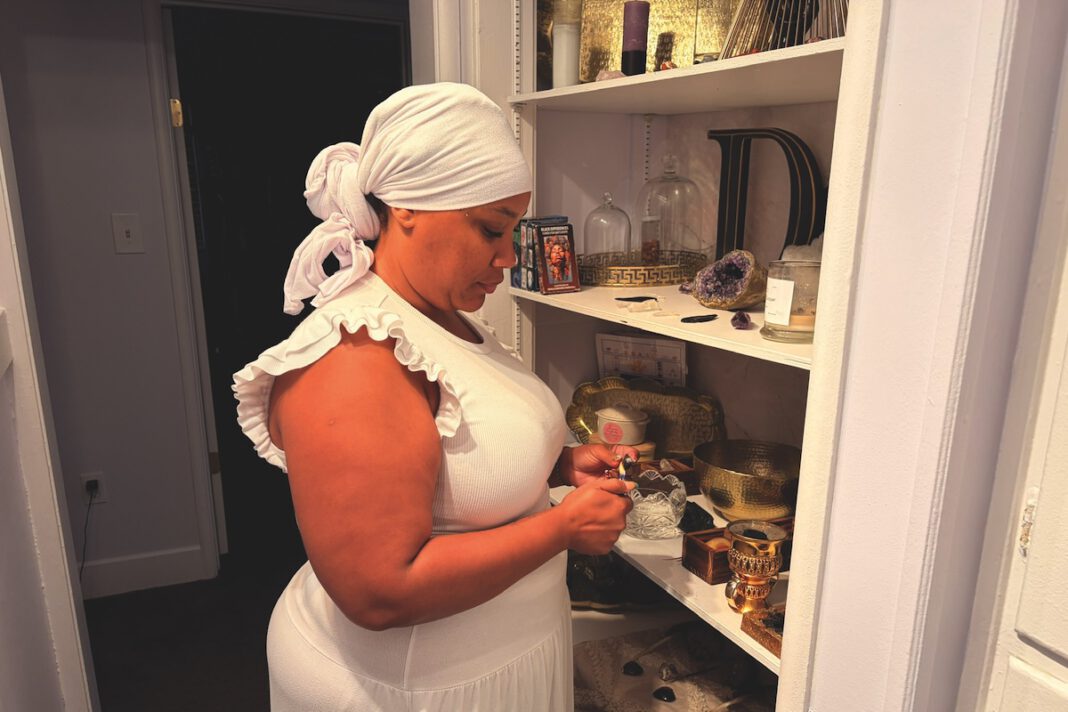
At Doorway—a queer, Black-owned therapeutic space—spirituality, predominantly derived from Indigenous African religions, is heavily interwoven in the process of psychedelic healing. Watson wears all-white on medicine days—guided ketamine sessions—and cleanses the space with palo santo and charcoal, to prepare for the strong energies often released during a session.
She describes what she does as liberation work, explaining that struggles faced by queer and BIPOC clients are inseparable from systemic oppression. By offering accessible psychedelic healing, Watson serves those who might otherwise be overlooked.
“If you want to do a psilocybin session in Oregon or Colorado, I think that’s a pretty high price tag that not everybody can afford,” Whippo says. “So sometimes research can open up the doors for access for more people. But certainly if we decriminalize things, that opens up access for everybody.”
This is a tricky subject to balance, as decriminalization and legalization could also open the way for larger corporations to take over the psychedelic space and overshadow the work that practitioners of color have long been doing. Reggie Harris, founder of Oakland Hyphae, is an activist and pioneer in the psychedelic community who wants to make sure this doesn’t happen, especially after seeing it play out in the cannabis sector.
Harris has had experiences in the industry that make him hesitant to partner with or trust those who do not have an ancestral connection to psychedelic mushrooms. He says that Hyphae Labs, dedicated to testing the potency of mushrooms, was replicated by another lab called Tryptomics without giving credit. In his view, these dynamics are very mirrored in the psychedelic religion sphere.
“This is a lesson that we still fail to learn because I think that our ancestors are so giving and so welcoming and just want to breed life and love and everything,” he says, citing María Sabina as evidence.
A Mazatec sabia and poet, Sabina’s healing rituals were co-opted and exploited by Western participants, leading to the near termination of the Indigenous custom.
While many disapprove of this being replicated in a modern, hyper-capitalist setting, the widespread legalization of psilocybin remains complicated. Since entheogenic plants have not yet been legalized, churches are still subject to raids.
John Rapp, a New York and Washington State lawyer who advises and represents entheogenic practitioners, says the law still favors majority religions.
“If you serve communion wine, the DEA isn’t gonna come in and see how you’re using the communion wine, right?” Rapp says. “So in that way, what we have to do is more burdensome.”
Rapp helps clients legitimize their use of sacrament to avoid lengthy DEA proceedings for federal exemption that require putting a halt to practice. Clients must certify they’re following approved safety protocols involving the use of psychedelics, along with passing tests that verify the validity of their religion. These tests often include Abrahamic traditions like Sunday school, something Rapp disagrees with.
Following these strict requirements can also be difficult for Indigenous groups from lineages that practice self-testing sacraments, contrary to DEA regulation.
Rapp believes that if it comes up in court, a judge should defer to ancestral wisdom.
“These folks have been doing this for hundreds of years, and now you’re gonna tell me that you know more about it?” Rapp says. “What’s the larger message? Is it really just about God plus ayahuasca? Or is it maybe more about a way of life that takes living in harmony with the earth a lot more seriously?”
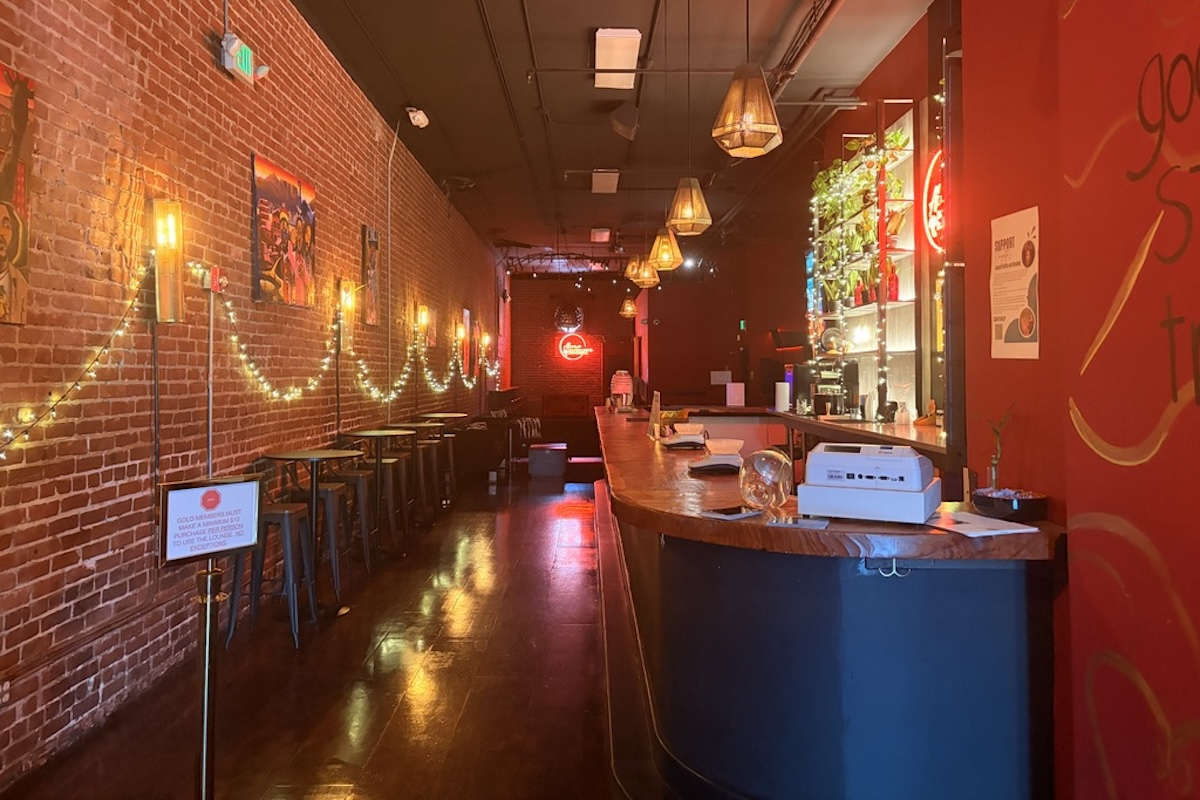
Akoma Church in downtown Oakland—the first Black-owned psychedelic church in the U.S., according to its website—provides its own unique set of sacraments, but Hawk, who prefers to remain anonymous due to legal concerns, does it from behind the counter of what used to be a bar. Fairy lights and red LED signs illuminate couches and zebra-print cushions. Akoma wants to clear the stigma associated with psychedelics, especially within the Black community.
“For me, as a Black man, I definitely wish that I was introduced to the sacrament a lot earlier in my life,” Hawk says, “just, you know, more Afro-Indigenous practices.”
Being involved in the psychedelic community inspired Hawk to research his roots, leading him to find he is part of the Mbundu tribe in Angola, a group that routinely used plant-based healing.
Music artist Zavier West has visited Akoma every week for nearly a year. A lot of the people he knew from other spaces, such as trap art circles and mental health groups, began coming to Akoma, so West joined in. At first, the convenience and deals kept him coming back. Then it became his community and routine in the same way a traditional Western church would. Being here gives him peace of mind.
“Some other environments you may not feel secure, you may not feel accepted,” he says. “It’s probably one of the best spaces you could be in Oakland right now.”
Though an NBA Jam Tournament Edition arcade game stands in place of stained glass windows, Akoma remains a church in all the ways that matter. A mural on the wall reads, “We are the heart of our ancestors, the beat of unity, the spirit of resilience… ”








Excellent description and interesting topic!