The TV shows I’m a Virgo and Blindspotting were both led by Oakland creatives who envisioned filming the entirety of their projects in the Bay Area.
Boots Riley, Rafael Casal and Daveed Diggs filmed as many days as they could in the Bay. But in the end, a lack of film incentives made it difficult for them to invest as much as they wanted to in their hometown.
Oakland lost out, not only on the cultural spotlight but also in the revenue that these productions would have brought to various sectors of the city. In response, Oakland City Council member Carroll Fife reached out to sociopolitical comedian W. Kamau Bell and Oscar-winning director Ryan Coogler to ask what needed to be done so that the next production that wanted to film in Oakland would be able to.
That is how Make It Bay, a volunteer-led initiative dedicated to bolstering the local film sector, came to be. Make It Bay was instrumental to the Oakland Film Initiative, a 10% cash rebate on productions that spend at least $250,000 in the city—10% of the annual fund will be set aside for smaller productions. The initiative also grants an additional 2.5% rebate for hiring in the five Oakland zip codes with the highest unemployment rate.
Originally approved in 2024 but halted due to changes in budget, the rebate was officially backed by city funding in June of this year.
Producer, writer and co-director of Make It Bay, Samantha Bempong, acknowledges that the rebate is modest when compared to those offered in other cities, but views it as a signal of support. This is important for a myriad of reasons, most having to do with the unique culture and history that run through nearly every inch of Oakland.
“Storytelling is how we shape how we view the world,” Bempong said, calling attention to the fact that many filming locations in the U.S. offering competitive film rebates are in conservative states.
Bempong refers to this as geographic censorship, emphasizing the importance of making progressive environments accessible to film. Oakland was recently ranked in the top 10 cities for ethnic diversity in the country by WalletHub, and hosts its own city-backed Pride festival every year.
Jamal Trulove, who was featured in The Last Black Man in San Francisco (2019) and filmed the entirety of his short film I Thought You’d Never Ask in Oakland, is committed to empowering filmmakers in a city that has empowered him. Trulove founded the Bay Area Film Night—a showcase of local creators—for this reason, hosting Coogler and Joe Talbot as surprise guests for its first iteration in 2024. Originally from San Francisco, Trulove began visiting Oakland when he was 18 years old.
“You can get away with being Black in Oakland,” he said. Trulove wants Oakland to have its own cult classic, something like L.A.’s Boyz n the Hood.
For stories of this kind to be developed and executed in what has long been a major cultural hub for Black Americans, studios need to be willing to invest, and programs like the rebate make Oakland an easier sell.
People in Oakland want to see their neighborhoods on the big screen, said Mathew Riutta, who has been a location manager in the area for over 20 years. On San Francisco’s Lombard Street, residents are sick of it. But when he films in Oakland, community members who can’t wait for their little corner of the city to get the spotlight constantly approach Riutta.
While working on an indie project in North Oakland, Riutta spoke to a resident on site who’d lived in the city his whole life and was excited to have his neighborhood crystallized on film. Not a green-screened sound stage, but the streets he walks on every day.
Documentary filmmaker Niema Jordan works to make Oakland’s film scene more accessible as co-founder and executive director of Cinemama, a nonprofit organization that helps local filmmakers through exhibitions, networking and educational programming. This year, Cinemama kicked off Oakland Pride with its fourth year of Real Queer Flix, a screening of short films made by queer Bay Area creatives.
Jordan grew up in Oakland and didn’t like the commonly repeated sentiment that to be successful, she had to leave. Sinners, led by Coogler, who was born and raised in and around Oakland, was one of the highest grossing films at the 2025 worldwide box office. This city breeds internationally recognized talents. It’s important to make sure they have the infrastructure to create in the place they call home.
“The cultural space of what we produce in Oakland needs to be supported by the land that has actually grown the people,” Jordan said.
Creating a sustainable environment doesn’t start and end with the rebate. According to Jordan, it’s a step in the right direction. But in order for people in the city to take advantage of what the rebate has to offer, they need to be connected to opportunities so that the initiative doesn’t become extractive.
“A lot of what I bring to this personally is my desire for Oakland to be a place where people who are from here can thrive,” she said. “And also a space of people who’ve decided to make this their creative home because of the special sauce of Oakland.”
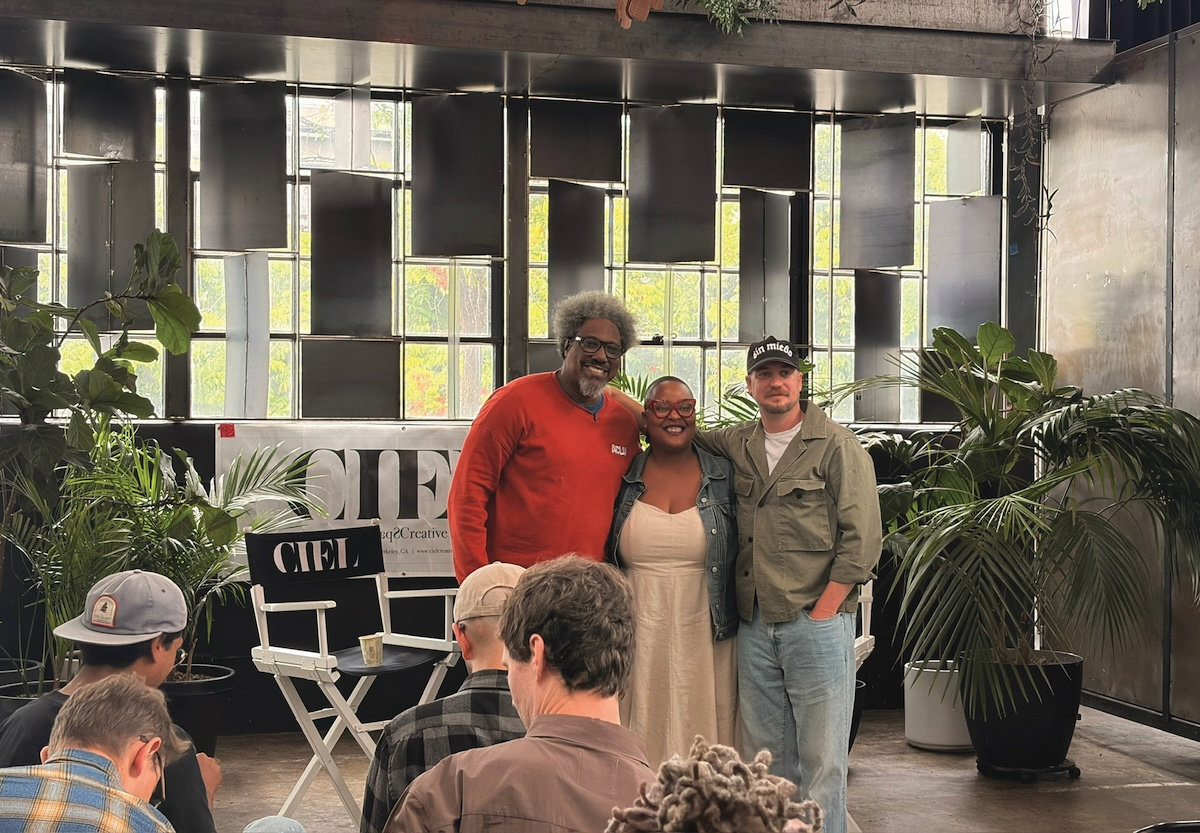
In late July, Cinemama, in partnership with Make It Bay, hosted a panel discussion with Bell and Liberian-American queer filmmaker Cheryl Dunye, whose production company Jingletown Films is located in West Oakland.
In Ciel Creative Space, an expansive studio in Berkeley, writers picked for this year’s Bay List gathered for advice on how to make it in the industry.
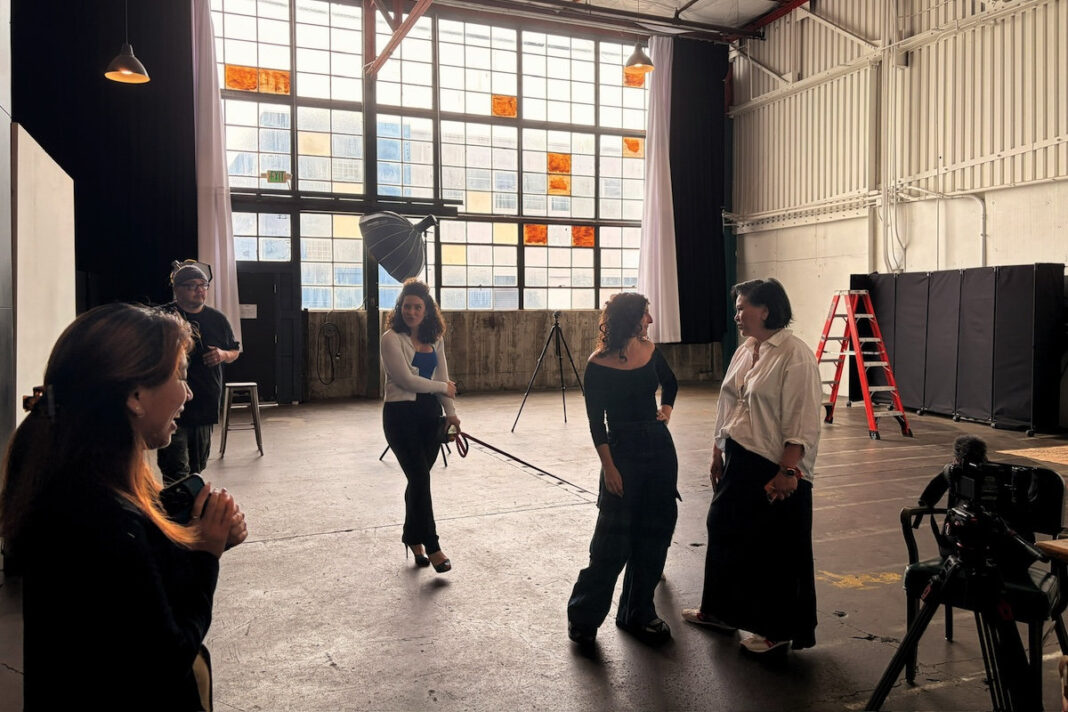
Ladders and lighting equipment were dispersed around a large room in the space as Casal explained what’s at stake when filmmakers can’t shoot in the city where their story is set. While the original movie was filmed primarily in Oakland, Casal was only able to shoot around a third of the Blindspotting show on location. Casal says the difference was significant.
“The East Bay is a huge part of American history, but we need to be able to shoot here to tell those stories,” he said. “We can’t tell them in Albuquerque as well. We can’t tell them in Canada as well. There’s something that you get when you put this place on screen.”
After his panel discussion, Bell explained what inspired him to co-lead the initiative for the rebate. Atlanta, Oklahoma, New Orleans and other places across the country are slowly becoming the places to film. He wants the East Bay to work towards having an industry that people think of when they want to film in California. Oakland and Berkeley are always part of the wider cultural conversation, Bell said. Activism is almost synonymous with the area; notably it’s where the Black Panther Party was founded.
“We are always over-indexing as far as arts and culture goes, but we don’t necessarily get the dollars that that generates,” Bell said, reasoning that it would be beneficial to create an economy that benefits the people who lead these national dialogues.
Dunye creates and houses her production studio in Oakland because the city’s spirit is reflective of how she wants the world to look like, and how she navigates within it. She cited Oakland’s strength, history and people, while wearing a multi-patterned snapback with the word “Oakland” front and center.
“It challenges the world politically,” Dunye said. “It makes the world bloom beautifully with the work that we do. That’s why I want to make my work in the city.”