
As President Trump pushes to pass the Safeguard American Voter Eligibility (SAVE) America Act, which would require documentary proof of citizenship to register to vote in federal elections and photo identification to cast a ballot, many fear that the measure could disenfranchise women and deter them from voting.
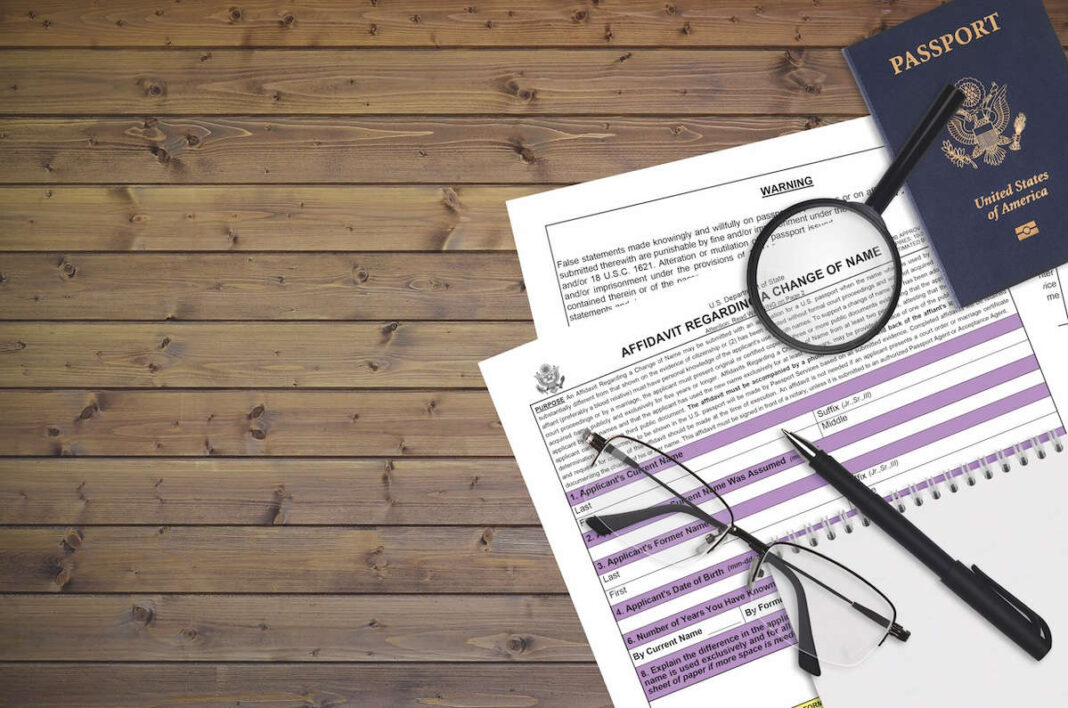
If the SAVE America Act passed, people registering or re-registering to vote in federal elections would have to provide documentary proof of U.S. citizenship. The bill specifies several forms of acceptable documentation, including a valid passport, certain government-issued photo IDs and a certified birth certificate paired with a qualifying photo ID. The legislation would also require voters to present eligible photo identification when voting in federal elections.
In his primetime address in July, Trump urged Americans to call their representatives and demand passage of the act, saying it would ensure there is no voter fraud in the next election cycle.
“How easy is that to do unless you want to cheat?” Trump said, referring to the requirement that Americans prove their eligibility. “The only reason you wouldn’t do it is because you want to cheat.”
Statistically speaking, it’s not all that easy for Americans to produce some of the documents the legislation would accept as proof of citizenship. The U.S. Department of State shows that only about half of Americans have a valid passport, and Rock the Vote says more than 21 million Americans don’t have easy access to their birth certificates. A simple driver’s license or REAL ID alone would not necessarily be sufficient to establish citizenship under the bill.
Denise Witzig, a feminist scholar based in Oakland, said a requirement to produce these documents to prove voting eligibility will amount to a poll tax for many and will have a potentially detrimental impact on married women, trans-identifying women and people who have been adopted or changed their name for any reason.
“Passports are a few hundred dollars,” Witzig said. “And so there’s also a class implication at play.”
Witzig worries about many people being disenfranchised if the SAVE America Act passes, but said she finds the potential disenfranchisement of married women to be the most ironic.
“It’s ironic because the Republican Party is the ‘traditionalist’ party, which I’d say stands for a patriarchal standard in terms of gender relationships and marriage,” Witzig said. “Women who’ve complied with those patriarchal standards, or changed their names upon marriage, who can’t prove their names have been changed, will not be allowed to vote.”
Witzig rejects the idea that individuals lacking possession of the appropriate documents can easily just go get them. She said the fewer resources people have, the less likely they are to have the bandwidth in terms of time or money to go through the extra steps.
“Imagine how many other things single moms have to think about in their day, and how many documents they have to come up with for their children to go to school,” Witzig said. “Many of the divorced mothers I know did not change their name back to the name on their birth certificates, because they wanted to keep the same name as their children. And so they will be penalized.”
Martha Ford, a grandmother living in Sacramento, now makes it a regular practice to go to “No Kings” protests and to rally against the SAVE America Act. Because Ford took her husband’s last name, she would be among the voters who’d have to go through extra steps to authenticate their identity, as the name on her birth certificate doesn’t match her current name.
Ford’s husband, Terry, said it’s important for everyone—especially men—to protest in solidarity with women over and against measures like the SAVE America Act that could make it difficult for women to vote.
“[The SAVE America Act] is based on a false flag,” Terry Ford said while quietly holding a sign near the state capital. “There isn’t widespread election fraud as Trump claims.”
Terry Ford would ultimately like to see more women in office and said he can’t fathom a world in which women like his own wife could be obstructed from voting.
“Obviously, we’re here because of women, and women have—to me—a clear understanding of the propriety of things, of how we should be acting, keep us out of war, perhaps,” he said. “I think we need to be out and say what we think about what’s going on. We don’t like it.”
In March, President Trump told Republican lawmakers that passing the SAVE America Act would “guarantee the midterm elections.” As the midterms get closer, Trump seems to be amping up pressure to pass the measure. When asked to reflect on the passing of Sen. Lindsey Graham on Meet the Press, Trump spoke about Graham’s determination to pass the SAVE Act.
On July 22, the House passed a spending package that included a $10 billion allocation for the SAVE America Act. It included $73 billion for security measures such as the ongoing war with Iran, $12 billion for farmers impacted by tariffs and the other $10 billion for election security measures. The House also narrowly passed the Stop Insider Trader Act, H.R. 7008, that would create safeguards and restrictions around stock trading from elected officials. However, after the bill was packaged with the SAVE America Act, Democratic lawmakers unanimously voted against it.
On July 27, Trump wrote in a Truth Social media post: “John Thune should not allow the United States Senate to ‘leave town’ until it passes The Save America Act or, far better still, TERMINATES THE FILIBUSTER, where Republicans can then quickly pass everything they ever dreamed of.” When Thune refused to comply, Trump suggested to reporters on July 29 that Thune may not be the man for the job as Senate majority leader.
Democratic lawmakers across the country are pushing back and speaking out.
Sen. Raphael Warnock, of Georgia, spoke on the Senate floor on July 29, calling the SAVE America Act a voter suppression act that will disenfranchise women.
“You will not be able to register to vote using your driver’s license, your military ID, your student ID,” Warnock said on July 29. “[The Republicans] have kicked 15 million Americans off of healthcare; they’ve doubled healthcare premiums for some 22 million Americans. They’ve enabled the president to drag us into a war, and he can’t even explain why we’re there. They want to make it difficult for everyday Americans to hold them accountable.”
Gov. Gavin Newsom denounced the SAVE America Act, saying it will make it harder for married women, senior citizens and people with disabilities to vote, and called it a measure to interfere with November elections. California Rep. Ro Khanna, who serves the 17th Congressional District, called the Trump administration out for repeatedly attaching the SAVE Act to unrelated measures—most recently the Stop Insider Trading Act.
“Members of congress voted against this bill because we do not believe in restrictive voter ID laws,” Khanna said in a social media post. “And the republicans are going to use this as a campaign issue to say that democrats don’t support restrictions on trading. This is why people are so cynical about Washington.”
Myrna Santiago, a historian and a scholar from El Cerrito, leads a program called New Women’s Leadership as part of an effort to increase women’s interest in getting involved with politics or running for office. Santiago said that while she’s disheartened about the actions of Immigration and Customs Enforcement, the wars the U.S. is engaged in and in President Trump’s push for the SAVE America Act, the number of people across the country speaking out and protesting in different ways gives her hope.
“As a historian, I always have hope,” Santiago said. “We have been through the worst moments before, and it has been the communities impacted and their allies who have overturned some of the horrible parts of American processes in American history. Slavery, the dispossession of Indigenous people, the Civil Rights Movement, the anti-Vietnam War movement—and there are huge mass movements that have made a difference in this country.”
Santiago refers to this moment in time, with the president pushing the SAVE America Act forward while immigrant communities live in fear of being deported or scapegoated for the country’s problems, as part of a counterrevolution.
“If you look at counterrevolution movements in world history, they tend to be defeated because the population at large realizes this is not the direction we want to move in,” Santiago said. “Whatever momentary attractiveness this has, it will be momentary. This too shall pass, although it may be painful for a while.”