
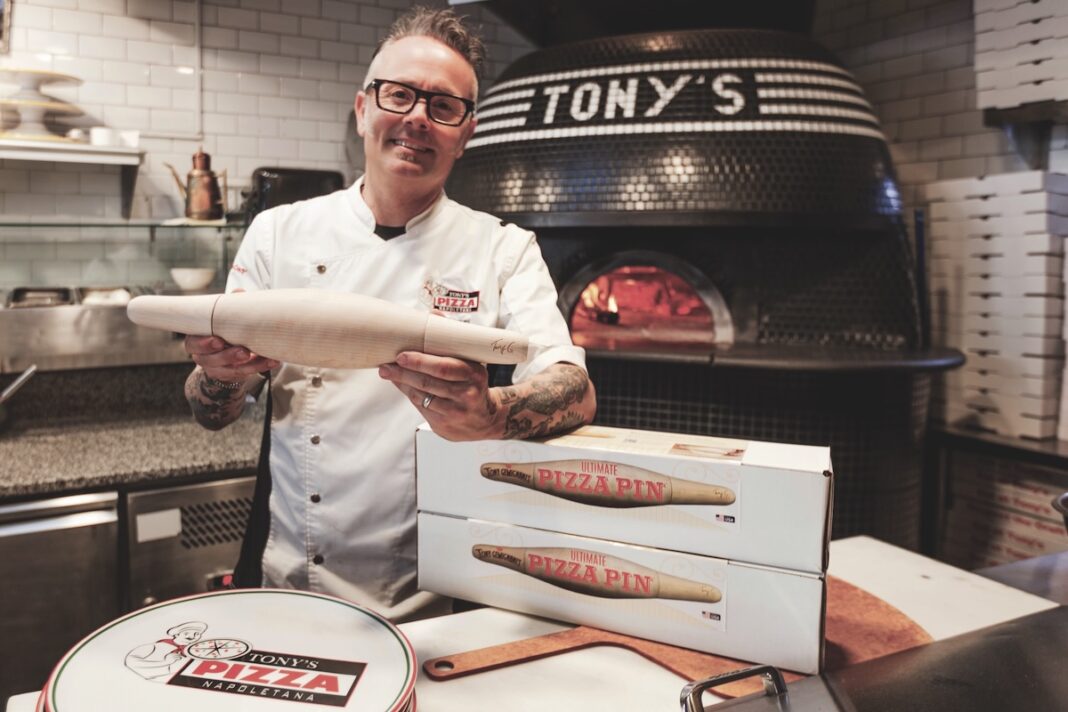
For years, California suffered from a reputation as a pizza desert. Having grown up in an East Coast family with roots in Naples, I was keenly aware of the deficit when my parents moved us West.
“It was just different out here. We still had great pizza,” says Tony Gemignani, the world pizza champion who grew up in southern Alameda County. “But you had to really know where to find it. It wasn’t on every corner.”
As it turns out, Gemignani was one of two chefs, both of whom honed their craft in the East Bay, who were pivotal figures in the West Coast pizza revolution. The other, as with many things culinary, was Alice Waters.
The Bay Area, as a result, is no longer a pizza backwater. Gemignani helped establish it as one of the craft’s leading outposts when he became the first American to win the World Pizza Cup crown in Naples, Italy. He has won 13 world pizza titles and been called the Michael Jordan of dough tossing.
Since becoming America’s best known pizzaiolo, Gemignani has designed a pizza pin bearing his name and lent his brand to a premium pizza flour, while resisting commoditization beyond core craft essentials.
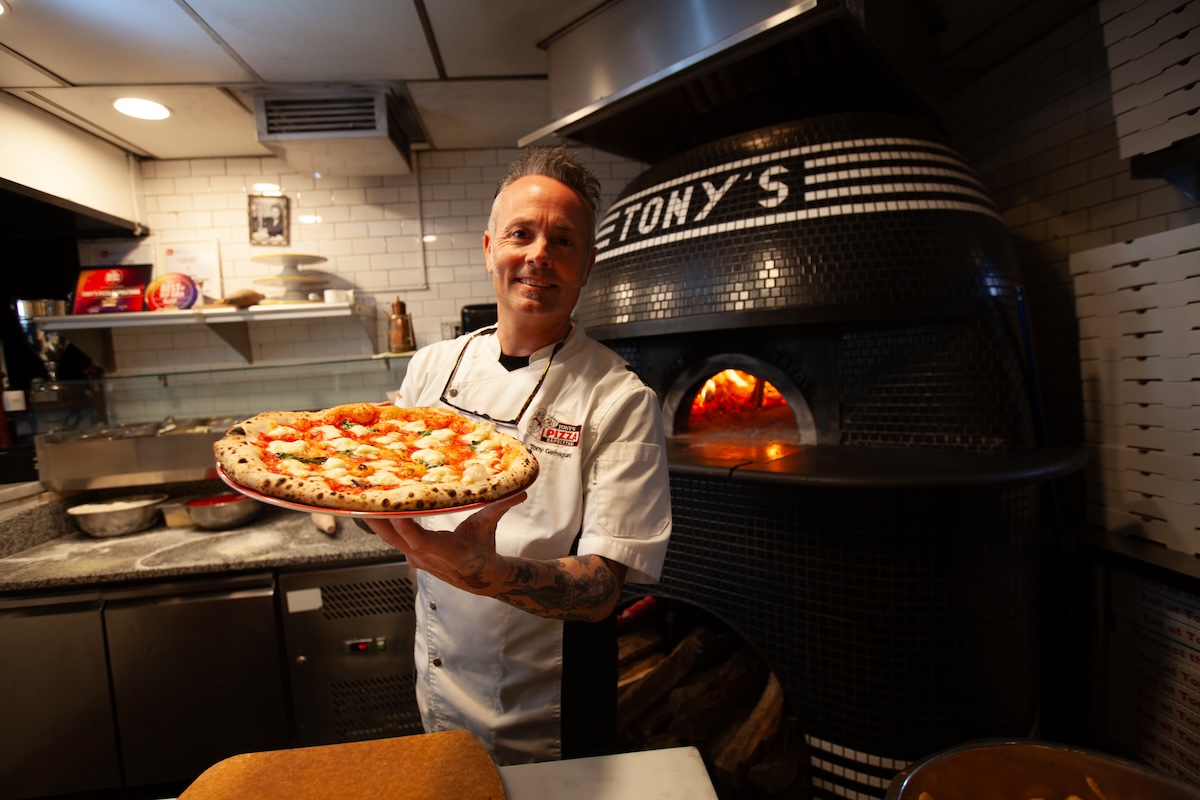
Gemignani, who spoke with us on a recent Tuesday, opened Tony’s Pizza Napoletana in San Francisco’s North Beach district in 2009 and soon began selling pizza by the slice at a storefront next door to it.
The outgrowth of that enterprise is Tony’s Slice House, a fast-expanding franchise which continued with an Oracle Park location in 2010, followed by Market Street and Haight Street locations in 2016, as well as a Walnut Creek shop the same year. A location at Chase Center opened in 2019; a San Leandro shop opened in 2021.
His Slice House restaurant in Haight Ashbury will participate in Bay Area Pizza Week through May 3, a promotion organized by the Weeklys Media Group.
Like most things remixed in California, pizza’s culinary trajectory was bent when Waters installed a woodburning oven and added pizzas to the menu at Berkeley’s Chez Panisse. That led to the rise of artisanal pizza, with ingredients like nettles, figs and goat cheese.
Waters’ addition of pizza to a fine dining menu prompted Wolfgang Puck to bring the Italian working class people’s food to Hollywood’s Spago restaurant and give it a celebrity veneer—with dill-infused crème fraîche, caviar and smoked salmon.
Gemignani has done the opposite, devolving the pretense of street eats as haute cuisine. He appreciates that not everyone wants to invest time or spend money for sit-down dinners, and doesn’t need a full bar or table service. Hence the concept of a refined product in a fast-casual environment.
Nathan Myhrvold and Francisco Migoya’s three-volume opus, Modernist Pizza, credits Gemignani with championing a return to authenticity by embracing both Neapolitan purism and Italian American urban traditions. Along with an emphasis on temperature and technique, Gemignani fires his pies in coal-, wood- and electric-burning ovens—and even worked with a manufacturer to design a triple-stacked oven that fits six large pizzas on each deck. “We do 20-inch rounds. That’s our biggest pizza,” Gemignani says. “I designed it so it could do 18 20’s at once.”
Rather than simply focus on one style of pie, Gemignani serves several U.S. regional varieties that grew in popularity after returning servicemen sampled different styles of pizza during their tours of duty in Europe. So, along with thin-crust, New York-style slices, there are thicker-crusted Sicilian style rectangles, a square pan “Grandma-style” pizza and a Detroit-style square pizza.
The focus on basics has served as a foundation for—rather than a filter of—innovation. Brightly colored purple potato slices garnish a signature dish at the Slice House.
Gemignani credits the easy access to ingredients through online platforms, the proliferation of plug-and-play backyard ovens and a more educated consumer audience as factors in pizza’s accelerating popularity. “You have equipment. You have ingredients. You have procedures. There’s almost too much information now online. There’s way more than there was when I started 37 years ago. There were only like a couple of books about pizza,” he says.
He continues: “You’re able to make really great restaurant-quality pizza at home. And I think that that’s exciting. The funny thing is, well, has that [negatively] affected the pizza business? Not for me. I’ve been growing. I’ve written books. I’ve done a lot of podcasts. I’ve answered a lot of questions about making great pizza at home. I think the whole craft is elevated.”
The easy access to knowledge, ingredients and technology has coincided with the growth of craft varieties at Bay Area restaurants. From Roman to Saint Louis style, you can get pretty much any style of pizza in the Bay Area.
“It was never like that 30 years ago—or even 20 years ago,” Gemignani says. “It’s really evolved, and it’s great. It’s not just good pizza, it’s great pizza, and you can find it up and down the peninsula and all over now.”









The difference is world class pizza is on every street corner in NYC and its boroughs. On the west coast you have to drive up to an hour for the opportunity to pay twice as much.