
Welcome to the Shmoplife

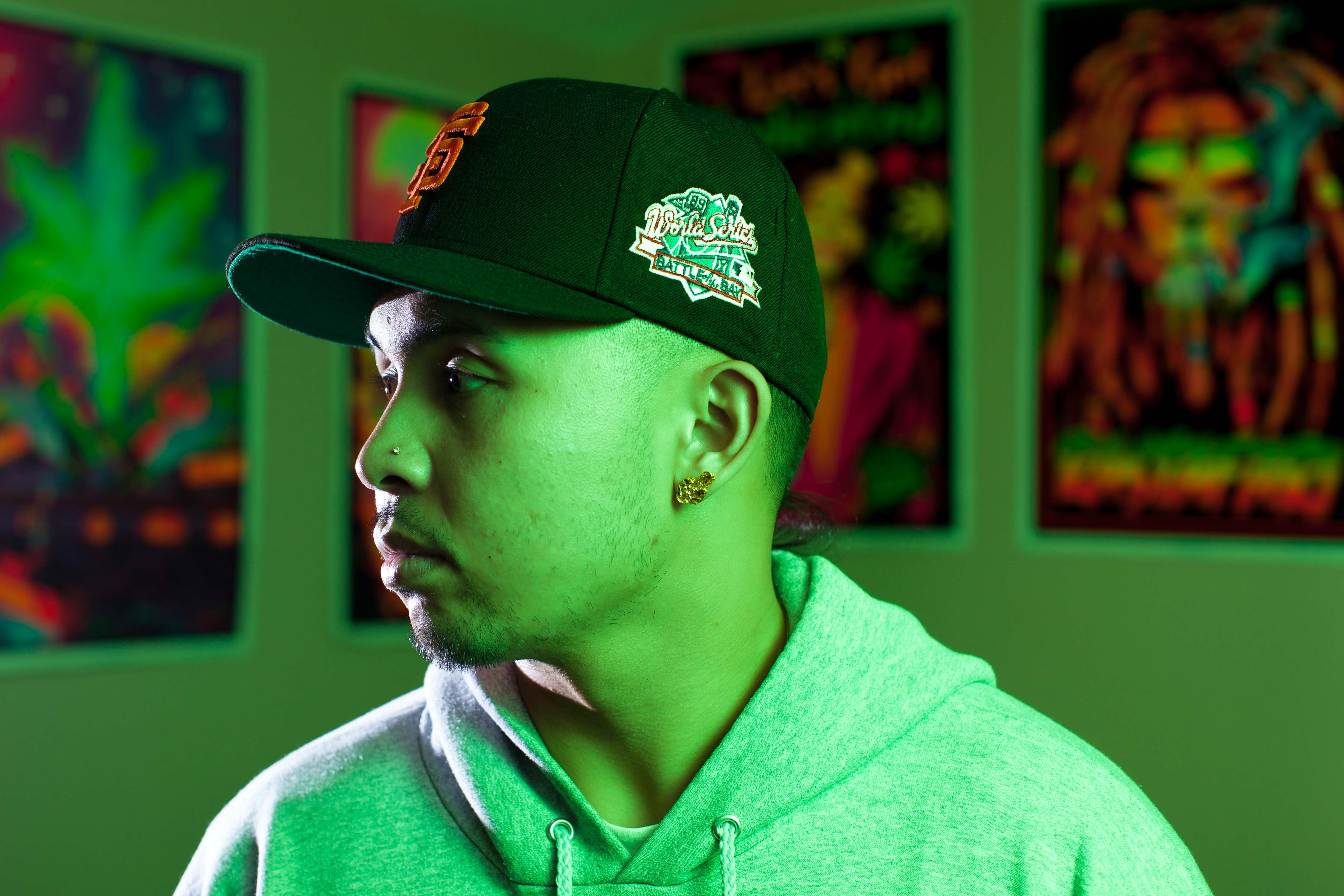
Kool John and P-Lo’s manager told me to meet the rappers for an interview at an East Oakland address on a recent afternoon. While I wasn’t sure exactly where I was going, I knew I had made it to my destination when I saw a sticker of a smiley face with shades — the logo of Kool John’s party-centric lifestyle brand, Shmoplife — stuck to a parking sign outside the house.

Rapper Ooty Ooo answered the door and said that Kool John and P-Lo were on their way. Ooty was hanging out in the living room with Skipper, an MC from Kool John and P-Lo’s music collective, HBK Gang. (HBK’s core members also include Iamsu!, Sage the Gemini, and Kehlani — three East Bay artists on the cusp of national fame.) Ooty and Skipper were in a tense discussion about why Bay Area radio stations often ignore up-and-coming local rappers. They compared observations on YouTube plays and Billboard stats, attempting to break down the science of making a hit.

I soon learned that the house is known as the Shmop Compound and serves as Kool John and P-Lo’s unofficial headquarters and party spot. Neon, weed-themed posters lined the walls; empty liquor bottles filled the mantle like trophies; a stripper pole was one of the dining room’s few pieces of furniture.

Ooty called Kool John on FaceTime and handed me the phone. “I’m stuck in traffic. Look,” he said, flipping the camera around to show me the congested freeway. Sporting sunglasses, a snapback, and a goatee, he looked almost exactly like the cartoon version of himself on the poster in the entryway of the house. Branding is one of Kool John’s strong suits: Even though he’s still an underground rapper, he already markets himself as an icon.

By the time Kool John and P-Lo arrived, more friends wearing Shmoplife gear had filtered into the living room and our interview now had an audience. Everyone was eager to hear about the duo’s recent trip to Hawaii, where they performed to promote their self-released, collaborative album, Moovie!, which came out in late July. People passed around blunts and P-Lo shared stories about riding scooters along the beach and shooting a music video in a forest.

“Coming from where we come from, a lot of people don’t really make it that far,” explained Kool John (Jonathan Faulk), who is from Richmond. “Being able to tour outside of your city and make it to different places is a beautiful thing.” P-Lo (Paolo Rodriguez), who grew up in Pinole, nodded in agreement.

The members of HBK Gang often feature each other on their solo projects, and Kool John and P-Lo were already frequent collaborators when they decided to make Moovie! As one of HBK’s most prolific producers, P-Lo made beats for Kool John’s previous mixtapes, and songs with both of their vocals had done particularly well. The popularity of their percussive, high energy party jam “Quit Cattin” — which has almost 600,000 plays on SoundCloud — helped the two artists realize their potential as a duo.

Kool John described the creation of Moovie! as a natural evolution of his previous projects with P-Lo. “I was going to his house a lot, so we already had a bunch of other songs together and some of them were unfinished,” he said. “So we were just like, ‘Let’s complete these songs and give the people what they want.'”

Moovie! opens with the song “Shmoplife HBK Anthem,” which features P-Lo chanting Shmoplife/Heartbreak Gang over a slow-moving bass buildup. While the concept of Shmoplife is attached to almost every project Kool John is involved in, it still remains nebulous to the uninitiated. It’s a clothing brand, a mixtape series, a viral marketing strategy, and a movement all at once. Kool John explained that Shmop — in all of its many forms — hinges on the philosophy of “living every day like it’s Saturday night.” This upbeat attitude and hedonistic ethos imbues Moovie!’s fourteen tracks.

Though its hyper-sexualized lyrics are somewhat two-dimensional, the album seduces listeners into Kool John and P-Lo’s dimly lit, smoke-filled world, which seems to exist somewhere between last call and the after-party. Piggybacking off each other’s lines with wordplay aplenty, the two rappers are cocky and exuberant, and their verses offer no shortage of second-hand ego boosts. While hip-hop and R&B lyricists have shifted in recent years toward vulnerability — with artists such as Future and the Weeknd focusing their recent work on drug-induced emotional numbness — Kool John and P-Lo appear to genuinely enjoy the excessive partying they describe. The album takes place at the peak of a bender, sometime before the inevitable crash.

While, in previous interviews, P-Lo cited the hyphy movement as a major influence on his production, in Moovie!, he solidifies his signature style. On the album, his beats are slow and pared-down, with looming, ominous bass lines that lend the danceable tracks a dark edge. He sparingly deploys bursts of laser-beam synths and warbled vocal samples, and Kool John’s ample use of Auto-Tune complements the steely, mechanized sounds dominating P-Lo’s sonic palette.

The album’s two singles — the slow, simmering twerk anthem “Blue Hunnids” and the up-tempo boast rap “Bitch I Look Good” — enjoyed viral success, inspiring many fan-made dance videos on Instagram and Vine. In lieu of widespread radio play, the songs’ online reach (with SoundCloud plays in the millions) exposed Kool John and P-Lo to a national audience and precipitated their Moovie! Tour in August, which included many sold-out stops on the West Coast. Through the end of November, they’ll be on the road once again for a US tour with Skizzy Mars.

The rappers excitedly recalled their ardent fans at their meet-and-greets, girls twerking on stage, and the highs of performing for packed concert halls. Much like the endless quest for a good time that defines the plot arc of Moovie!, they seem to view their career trajectories as a series of epic experiences, each one more thrilling than the last. “When something is big and you have the time of your life, we call that a movie,” said Kool John. “You can’t say, ‘That was a great time,’ because anything can be a great time. But everything can’t be a movie.”

Turning Blight into Urban Gardens and Homes

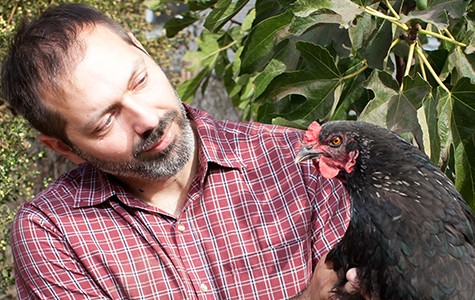
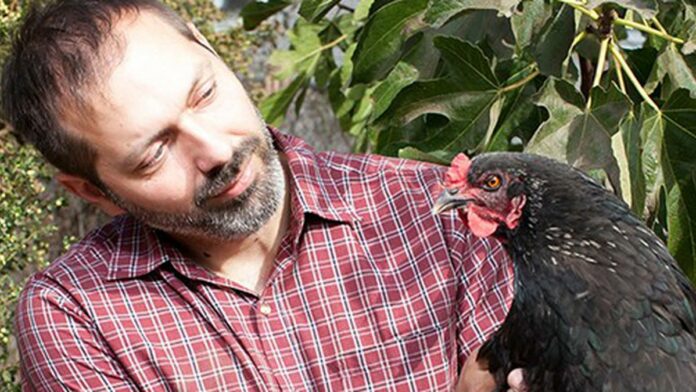
The farm on the corner of 37th and West streets is easy to miss. With just a few vegetable plots, some fruit trees, a pen for ducks and chickens, and a tiny, 120-square-foot home, it hardly compares to some of West Oakland’s bigger urban farms. But the farm’s founder, Steven DeCaprio, sees it as the first stage in a plan to bring a new type of farming and affordable housing to Oakland.

DeCaprio is the head of Land Action, a nonprofit that he created in 2011 to assist tenants with eviction defense. Two months ago, Land Action launched a campaign to build one hundred micro farms in Oakland over the next five years. The farms will be anchored by tiny homes — less than 120 square feet in size — that will house low-income Oakland residents.

The plan hinges on the use of so-called “tax-defaulted property” — land that is worth less than the taxes owed on it. In Alameda County, tax-defaulted parcels typically have been abandoned by their owners and can be publicly auctioned after five years. But attracting buyers willing to pay the back taxes and fines can be challenging.

DeCaprio believes that his plan solves those problems and more. Building farms on blighted property will rid the city and county of urban eyesores, while the tiny homes will provide people with shelter, and residents will act as stewards for the farms, which, in turn, will also sustain them with nutrition. “This gives us the opportunity not only to provide sustainable models for urban agriculture, it also helps us to fight gentrification,” DeCaprio argued.

DeCaprio isn’t alone in seeing the potential of tax-defaulted properties. In 2013, the City of Oakland’s Department of Housing and Community Development started working with the Alameda County Treasurer-Tax Collector’s Office on a program to make use of blighted parcels. “We looked at the opportunity of starting a program working with developers and nonprofit agencies about bringing these [properties] back online specifically to do affordable housing,” director Michelle Byrd said.

The program’s mechanism is relatively simple. When a tax-defaulted parcel fails to sell during a public auction, the county can enter into direct negotiations with nonprofits to take control of the parcel. A nonprofit is still required to pay the defaulted taxes, as well as any associated penalties and costs.

But the city-county program hit a snag earlier this year when the chief architect of the plan, Margaretta Lin, director of strategic initiatives in Oakland’s Housing and Community Development Department, resigned her position. According to Byrd, the city and county recently started to move forward again, engaging in discussions with organizations such as Hello Housing that are interested in investing in parcels. DeCaprio’s proposal is under review, she said, and it still needs to be assessed by the county to see if it’s viable.

While DeCaprio is interested in working with the city and the county, he’s also concerned that the program might not go forward because of Lin’s absence. So Land Action has circulated a petition online, demanding that Oakland and Alameda County officials eliminate back taxes and penalties on tax-defaulted properties sold to land trusts and give full support to the micro-farm and tiny home campaign. “Historically, these tax-default properties have existed in this legal gray area,” DeCaprio said. “The city just found this one loophole to escape from this conundrum, and we’ll explore that, but I’m more than happy to provide housing and sustainability through direct action.”

‘Direct action,’ in this case, would mean taking possession of tax-defaulted land through adverse possession — the legal term for squatting. DeCaprio is one of the Bay Area’s foremost experts on adverse possession. He started practicing it in 2000, shortly after he returned to the East Bay from touring Europe with his punk band, Lesser of Two. Unemployed and living in his van, DeCaprio began searching neighborhoods in Berkeley and Oakland for abandoned houses that he could live in.

He eventually found an abandoned home in Berkeley that he started to refurbish, but his neighbors frequently complained to police about his presence. Unable to afford a lawyer, DeCaprio researched adverse possession so he could represent himself in court. In 2004, he was arrested and ultimately convicted of three misdemeanor counts of unauthorized entry of a dwelling. He eventually moved to West Oakland where he found a new squat, and has remained there ever since. “There’s a lot of abandoned land in Oakland,” DeCaprio said. “I would say there are probably hundreds of properties that are probably tax-defaulted.”

It’s difficult to determine the actual number of tax-defaulted properties in Oakland, but DeCaprio’s claim may not be far off. During the county’s last auction in March 2015, 47 tax-default properties were up for sale in Oakland. This figure doesn’t include the numerous properties in the city that are advancing toward tax-default status.

In addition to his home, DeCaprio eventually took ownership of the lot on 37th and West streets through adverse possession. The former property owner had abandoned his home in the late 1990s, leaving behind several-hundred-thousand-dollars-worth of unpaid property taxes and fines. The house was eventually demolished in the early 2000s, leaving behind a lot filled with knee-high weeds and trash, and infested with rats.

DeCaprio and his girlfriend have occupied the lot since 2008. In California, adverse possession kicks in after five years of exclusive and continuous occupation of a property. It also requires paying back taxes, which DeCaprio refuses to do with his farm. “I filed a tax appeal and said, ‘Waive all the taxes except for the last five years, those are the ones I’m responsible for,'” said DeCaprio.

According to the Alameda County Treasurer-Tax Collector, his appeal is still pending. In the meantime, Land Action’s microfarm campaign is moving forward, establishing farms and tiny homes on other tax-defaulted properties.

Just ten blocks from DeCaprio’s farm, the organizers of the Buried Seeds Medicinal Garden are testing the soil as they prepare to establish an herbal garden. According to DeCaprio, the city had planned to transfer the site to a land trust, but the transaction was never finalized, so he encouraged the Buried Seeds organizers to start their farm before the city or county could rescind the offer.

Tatille Jackson and Thunder Currier of Buried Seeds said that addition to the farm, they’re planning to move two tiny homes onto the lot. “Having stewards be on site is really important for us because people can see how you can live on the land, eat from the land, and use the resources that come from it responsibly,” Jackson said.

But there are numerous unresolved issues with this live-work arrangement. Like DeCaprio, they are squatting on tax-defaulted land, which means that, sooner or later, they will probably be hit with a bill for back taxes. They also need to get various commercial and residential permits, which may be impossible given that they’re squatting.

For now, DeCaprio is continuing Land Action’s campaign, arguing that the city and the county shouldn’t be bothered by adverse possession because it’s being used to improve blighted land, grow food, and provide affordable homes. DeCaprio and his nonprofit only advocate for squatting on vacant lots if they’re tax-defaulted and have been abandoned by their owners.

“It’s not conflicting with anyone because the property owners are the only adverse party, and they already walked away from these properties,” DeCaprio said. “So if the city backs out, we just move forward.”

Tax Evasion Is Not a New Technology

With the growth of companies using “new technology” platforms to provide services, ranging from rides to short-term housing rentals to food delivery, there is much debate about the potential impacts and how to regulate them. While these services can offer convenience and other benefits, they can also cause problems. As the questions about regulations and the rights of workers continue to be debated at the state level and in the courts, at least one fact about these companies should be clear and easy to determine — that using a new technology should not allow them to evade paying their fair share of taxes.

It is unreasonable and unfair for a company to benefit from not paying taxes as a method to increase profits compared to “old technology” companies. And it is unfair to those that are providing similar services and are paying their taxes and fees, including “traditional” hotels and taxis. It is also unfair to the public, who relies on those tax revenues to pay for the costs of filling potholes, public safety, libraries, parks, and more. There is nothing “innovative” about tax evasion — it is an illegal act that has been committed by various people and companies, with or without technology, for hundreds of years, and nobody should consider it to be an impressive invention.

Last year, the Oakland City Council passed a resolution that I wrote, calling on the city administration to start collecting taxes from these types of companies. When a year passed with no action taken, we again insisted during the budget debate that these collections begin. Now, we have been told that collections have started with some short-term residential rental companies, but important work remains to be done, including with transportation network companies, such as Uber and Lyft. The State of California has prevented local cities from regulating these companies, but that is no reason not to collect taxes, because that is a separate issue from regulation. So now, Councilmember Dan Kalb and I have asked the city administration for an update and options for action and to provide information on the current status of tax collections, so we can ensure fairness in our tax system and bring in the revenue to provide needed public services.

One Last Time

I’m a straight guy, married for sixteen years, kids in school. My wife cannot find a way to be intimate with me. We’ve had therapy individually and together. I nearly divorced her, but we decided to stay together — we do love each other, and the economics and child-rearing favor it. After I asked for a divorce, she fucked the shit out of me for the first time in ten years. That was the last time she fucked me. She’s “broken” — her word, not mine, and her final answer. When the subject of affairs came up in the past, she said, “I wouldn’t blame you.” I could jack off only so many times before I cracked. I went online and met a very sexual woman with a strictly NSA thing for married men, and we fucked. I plan on doing it again. I know this could go all kinds of bad ways, but divorce just isn’t realistic. We had that one conversation, but we do not have an explicit understanding. I don’t want to head into my fifties with ten-plus years of celibacy behind me and decades of celibacy ahead of me. But I want to keep my marriage. Which kind of idiot am I?

Help Understanding Boundary-Breaking Yearnings

If I were required to answer particular types of questions based on the percentage of the mail they constitute, I would answer two questions like yours every week, HUBBY. The majority of the mail I receive is from unhappy people in sexless marriages they either don’t want to end (they have kids, they do love each other, everything besides the sex is working) or can’t afford to end (they don’t have enough money for lawyers or two households, one depends on the other for income/health insurance/caregiving).

So which kind of idiot are you? The most common kind, I’m afraid.

I’m going to take a break from questions like these — from questions like yours, HUBBY — because I’m sick of the subject and my regular readers must be, too. But for you, HUBBY, and one last time, here’s my advice for people in your situation: Do what you gotta do to stay married and stay sane. Have a convo with the wife about the accommodation you require —permission to get it elsewhere — to stay in the marriage. Reassure her that you’re prepared to spend the rest of your life with her while emphasizing that you refuse to be celibate for the rest of your life. So every now and then, for your own sanity, and for the greater good, you’re going to have sex with other women. You’ll do it discreetly, rarely, and NSA-ly, but you’re gonna do it. If this isn’t something your wife can accept, HUBBY, then your only other option is divorce.

These are things I (28, gay, male, single) did last night, and they show how fucked up I am. (1) I hooked up with a guy off Craigslist. It was lame, he wasn’t cute, I was bored. (2) I came home and went on Tinder (which says I’m looking for an LTR, despite that hookup). I saw a guy from the gym — but he didn’t swipe right, and I was devastated. (3) I went online and sold a pair of my used undies. I don’t know what I’m doing with my life. I could use some advice. I’m sure what you say won’t be nearly as bad as what the voice inside my head is yelling at me.

What Is My Life?

1. I hooked up with this dude once, and it happened so fast — and it was so sleazy — that I had to fish his driver’s license out of his wallet when he was in the shower because I couldn’t remember his name. And that sleazy hookup led to a relationship so good that I wound up marrying sleazy hookup dude. Twice. So in my experience, WIML, and the experiences of millions of other people in LTRs with people they fucked the first time they met, hooking up isn’t proof that someone isn’t looking for an LTR. So that underwhelming hookup doesn’t make you a hypocrite, okay?

2. Gym dude isn’t into you — just like you weren’t into the dude you hooked up with last night. Are you into every dude you see at your gym? No. Do you swipe right on every dude you see on Tinder? No. So last night you got rejected quickly and impersonally — Tinder-style — but you’ve dished out that kind of rejection too. Don’t be a hypocritical baby about it, okay?

3. You made an underpants perv very happy, WIML, and you made yourself a little money. Nobody was lied to or misled, no one got hurt, and the total amount of joy in the world ticked up slightly. You have nothing to be ashamed of, okay?

One eventful night does not an out-of-control sleazebag make. But if you feel out of control, WIML, take things slower. Resolve to be a bit choosier about who you hook up with, remind yourself to be grown-up about rejection when it comes your way, and refrain from kink-shaming yourself the next time you make an underpants perv’s day.

I’ve come into professional contact with a respected and successful artist. She is a woman in her sixties; I am a man in my forties. I’m really attracted to women who are strong, talented, and smart. She’s all that, and funny. I’ve never been attracted to someone that much older than myself. Nobody bats an eye when a guy gets with a woman who is 20 years younger, but how do I pursue her without her thinking I have some creepy fetish? Am I a creep? I don’t think so. I’m pretty average, I have an unusual but boring job developing woodworking tools, and I don’t have any kinks or fetishes to speak of. I’ve gone out of my way to make her feel special on several occasions, but it has only caused her to remark on my great customer service — and not in a flirty way. How can I let her know that I want to move into something else besides a professional relationship without creeping her out?

She Makes A Real Turn-on

Set aside the age difference, and how you met, and those sexist and dehumanizing double standards. (An older man with a younger woman is an attractive guy with game, an older woman with a younger man is a fetish object with no self-respect.) Set all that aside, SMART, and what do we have left? Person A is attracted to Person B; Person A doesn’t know how Person B feels, so Person A has to hit on Person B. Even if Person A does their best to mitigate the risks of creeping out Person B — Person A is polite, respectful, and does their hitting on by “asking out” not by “lunging at” — the risk cannot be entirely eliminated.

Your best bet, SMART, is to be unambiguously direct with her (“I think you’re great, and I’d love to take you out on a date”) and to invite her to be unambiguously direct with you (“If you’re not interested, just say no—I’m a grown-up and I can handle rejection”). And if she’s squicked out by the age difference or wonders if you’re a fetishist, urge her to google the term “sapiosexual.”

Buildings Bought or Leased: ‘New Photography Inspired by the Paul Sack Collection’

In the current show at Berkeley Art Center (1275 Walnut St.), New Photography inspired by the Paul Sack Collection, there’s a photograph by Berkeley photographer Nick Lawrence that represents a strikingly rare composition. It’s a photo taken from inside a long abandoned ink factory in West Berkeley, a specific building made locally famous by the abundance of illegal murals that it once housed. In 2012, it was the site of a legendary underground graffiti exhibition called Special Delivery. And it’s a recognizably familiar setting for work by photographers who fancy themselves urban explorers.

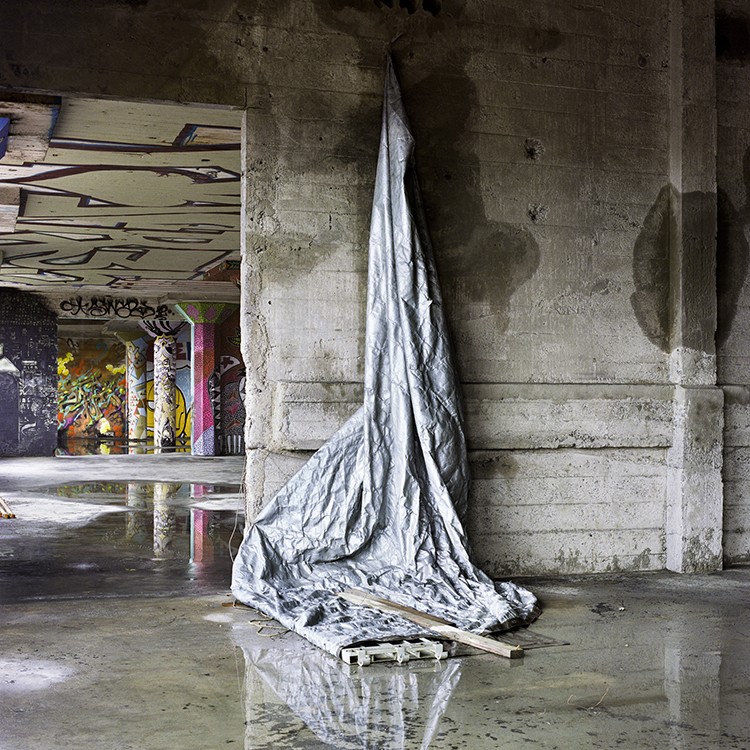
Most photos taken in Berkeley’s “graffiti palace” come off as documentarian, centering the paintings as the focal point of every image. But Lawrence’s take is more poetic. The aforementioned photo shows a mural by GATS — an icon of Bay Area graffiti — but the piece is only half-shown. It’s partially pushed off the right edge of the square frame, almost as if Lawrence had initially set his Hasselblad lens on it, then decided to shift his eye to the left and focus, instead, on a glassless window letting light into the skeletal space, illuminating a puddle at its base.

Over the course of five years, beginning in 2010, Lawrence repeatedly broke into the abandoned factory, initially to take photographs that centered on the graffiti. He was drawn to the lawless display of creativity, and the notion that the graffiti artists were rebelling against the system with their art by claiming ownership of the space. But after Special Delivery, the site’s new owner began to sandblast the walls to prep the building for conversion into offices for his construction company. In witnessing that process, Lawrence found an unexpected appreciation for the raw structure of the building as it transformed — the building itself became his subject rather than the art on it. His works in New Photography reflect that romantic shift. In one of the best, veils of plastic billow gently in front of floor-to-ceiling windows like a ghostly nightgown above a soft carpet of settled sand-blasting residue.

Lawrence is one of six artists in New Photography, a juried show of works that reflect an influence from the illustrious photography collection of Paul Sack. Sack studied art as a young man at the San Francisco Art Institute, but decided to go into real estate to fund his creative interests. Now, he owns one of the most impressive collections of photography in the United States, with a temporal breadth that encompasses the history of photography. As a super successful San Francisco real estate mogul, Sack’s main guiding criteria for his collection is a cheeky requirement that every photo include a structure that he could buy or lease.

As Sandra Phillips, the senior curator of photography for the San Francisco Museum of Modern Art, notes in the museum’s catalogue for its 2005 showcase of Sack’s collection titled Taking Place, that initially casual focus on buildings gradually evolved into a serious endeavor to catalogue ways of capturing built environments throughout history. New Photography is explicitly intended to add to that history, focusing on works that employ the built environment as subject rather than setting.

In one of Maggie Preston’s black and white photos for New Photography, a Victorian house shrouded by a wooden fence and cloaked in mesh material juts into the frame from below, backed by a washed out, white sky. All of her photos in the show feature buildings under construction, similarly wrapped and interjectory. With each photo, which were all taken in post-tech-boom San Francisco, Preston severely showcases the conspicuous cover-ups that are symptomatic of the rapid transformation of the city’s broader environment. As neo-San Francisco attempts to emerge quietly, these ominous structures mark the odd in-between, simultaneously silent and blaring — especially in Preston’s isolating compositions.

Likely unintentionally, some of the most striking work in New Photography is that which takes Sack’s requirement most literally — not only beholding built environments, but those which have recently been bought. In an intriguingly multilayered way, these not only reflect the legacy of an influential collection, but the way that it was financed as well.

Clarification for the Week of October 7

Our October 7 feature, “Racial Profiling Via Nextdoor.com” story stated that Oakland resident Audrey Esquivel said the moderator of the online discussion group Glenfriends had banned her from posting. Esquivel had said that the moderator of a discussion on crime and safety had banned her.

Treasure Island: From Electrifying Collaborations to Forgettable Muzak

Treasure Island Music Festival is typically curated to appeal to two different crowds: Saturday spotlights electronic and pop artists, while Sunday consists of mellow indie rock. However, each year, this paradigm feels increasingly outdated.

The year 2015 saw a great deal of fascinating cross-genre collaborations in pop: Miley Cyrus dropped a self-released album with credits from Ariel Pink and Mike Will Made It; Skrillex and Diplo’s production resuscitated Justin Bieber’s career; Usher put out an anti-police brutality anthem with Nas. Yet instead of taking a cue from these boundary-pushing shifts in the music industry, this year’s festival stuck to the same structure of past editions. As a result, it sequestered its best and most progressive artists to the first day and ended with a monotonous series of similar-sounding bands on the second.

To its credit though, Treasure Island featured on Saturday several stand-out musicians who were innovative enough to redeem the festival from its structural shortcomings. FKA Twigs was one such forward-thinking performer. The British singer-songwriter dazzled a rapt audience with her operatic singing and theatrical stage show. Her band consisted of three musicians who struck their sample pads like war drums with grand gestures that matched the singer’s vocal intensity and moody, alchemical beats.

Twigs’ lyrics probe the overlap between pleasure and discomfort and examine the elemental psychology of desire. She conveyed the polarity of her work with tense choreography, including two duets that were simultaneously erotic and adversarial. Her crystalline voice hit precariously high notes as she built upon familiar tracks with expansive, architectural vocal arrangements.

The event also featured savvy collaborations among established artists taking their sounds in new directions. Big Grams, which followed Twigs’ set, is the joint project of Big Boi from OutKast and electronic pop duo Phantogram. As fans of OutKast know well, Big Boi’s boisterous flow works well over upbeat song structures that lend his rap style a pop sensibility. While Phantograms’ saccharine, synth-driven production achieves this effect, I couldn’t help but think that Sarah Barthel’s singing felt superfluous and that the performance would have been better with Big Boi’s vocals alone. Eventually, however, the trio found its groove, and it was refreshing to see Big Boi work with a younger, lesser-known band instead of rehashing old hits.

Run the Jewels, which is composed of veteran rappers El-P and Killer Mike, briefly joined Big Grams on stage for a high-energy duet. As Run the Jewels, El-P and Killer Mike have adopted a more electronic sound and garnered a younger fan base. Their set, which took place earlier in the day, invigorated the crowd with fast, wobbly, UK grime-influenced beats that complemented the two rappers’ rapid-fire spitting. However, El-P often failed to enunciate clearly and much of his lyrics were lost in favor of the showy technique. Killer Mike, with his booming baritone, carried the set with his superior vocal skills and stage presence.

Up-and-coming singer Shamir also delivered one of the day’s most inspired performances. His soulful, androgynous voice soared over spunky, percussive rhythms with disco and Afrobeat influences. Sitting still during his show was impossible.

While Saturday’s lineup featured diverse artists — not only in terms of sound, but race and gender — Sunday’s lacked variety. The majority of the bands featured exclusively white, male musicians, which attracted an audience of a similar demographic makeup. As one of the Bay Area’s largest music festivals, it was a shame that Treasure Island didn’t do more to appeal to a broader cross-section of the population.

Sunday’s bands’ aesthetics weren’t too different from one another either, with Lower Dens, Father John Misty, and The War on Drugs’ sets blending into a haze of palatable indie rock. Drive Like Jehu, a 1990s post-hardcore band, was the only group that jolted the audience awake with its feisty shredding. Meanwhile, other performers failed to elicit an enthusiastic response. The bandleaders of Deerhunter and Chvrches wondered aloud why the large audience was so quiet, although Chvrches eventually got people moving with its new wave-influenced synth pop. The National ended the night with a forgettable performance that would have made fitting background music at Whole Foods or Starbucks.

Video Premiere: J. Stalin Reflects on Gun Violence in “Face Shots”

J. Stalin has been extremely prolific in Oakland’s rap scene since the hyphy movement, and is gearing up to drop his fourth full-length of 2015 alone. A disciple of mob music, Stalin has made a name for himself with his hard-edged street anthems. However, his forthcoming project, Tears of Joy — which comes out on October 30 through Empire Distribution — exposes the rapper’s contemplative side, with brooding, cinematic tracks that reflect on the dark sides of hustling and the ways fatherhood has changed his priorities. 

J. Stalin sent the Express an exclusive premiere of the music video for his new single, “Face Shots,” a somber track that samples dark piano and soulful vocals. In a phone interview, Stalin said that he wrote the lyrics after his friend survived a gunshot to the face. The shocking incident was a wakeup call to the rapper, who said that he feels frustrated about the fact that gun violence has affected countless Oakland residents whose stories have gone untold.

[jump] “I haven’t done a song like this in a long time, but where we’re at in Oakland, we need it,” he said. “The rest of the world needs to know there’s a lot of shit going on in Oakland. How are we gonna go overseas and fight wars if we can’t fix our cities?”  

Watch the video for “Face Shots” below and look out for Tears of Joy later this month. 

[embed-1]

California Restaurant Industry Discriminates Against Workers of Color, Report Finds

A new report from labor advocates and University of California researchers documents the many ways in which the retaurant industry discriminates against workers of color, with detailed analyses of wage disparities and racially biased hiring practices in California. The study — authored by Restaurant Opportunities Centers United, with research support from UC Berkeley’s Food Labor Research Center and UC Santa Cruz — analyzes how people of color, and minority women in particular, face significant barriers to obtaining fine-dining jobs that provide livable wages.

Released today at an event at the East Bay Community Foundation in Oakland, “Ending Jim Crow in America’s Restaurants: Racial and Gender Occupational Segregation in the Restaurant Industry” details how women and workers of color remain concentrated in the lowest paying segments of the industry. Meanwhile, white men on average earn higher wages than people of color and women doing the same jobs at every level in the industry. 

[jump] ROC, a national organization that advocates for restaurant workers, analyzed national and California government data on wages by gender, race, and occupation. The group also conducted interviews with restaurant owners and managers primarily in Oakland and San Francisco. The group collaborated with academics to analyze the statistics and incorporated findings from hundreds of worker interviews it conducted for previous ROC studies. The new study paints a picture of an industry plagued by widespread segregation, with white men disproportionately occupying front-of-the-house service positions while Black and Latino employees dominate the lower-paying back-of-the-house kitchen jobs. 

According to the report, workers of color receive 56 percent lower earnings when compared to equally qualified white workers (adjusting for education and language proficiency), and women of color on average earn 71 percent of what white men earn. In California, Latinos experience the highest levels of “occupational segregation,” with substantial underrepresentation in higher-paying server and bartender positions, the report found. Latinos make up 52 percent of all restaurant employees, but make up 65 percent of all back-of-the-house workers. In service jobs, Latinos make 82 percent as much as whites in the same positions ($10.58 versus $12.85), and in higher-paying positions, Latinos make 86 percent as much as whites ($11.62 versus $13.45). And Black workers in the state are overrepresented in limited-service fast-food occupations. Additionally, when people of color are employed in jobs that are typically higher-paying, they still earn substantially lower average wages than white staff. 

In California, women of color across the industry earned $10.13 per hour on average, while white women earned $11.30, men of color earned $11.63, and white men earned $14.18:


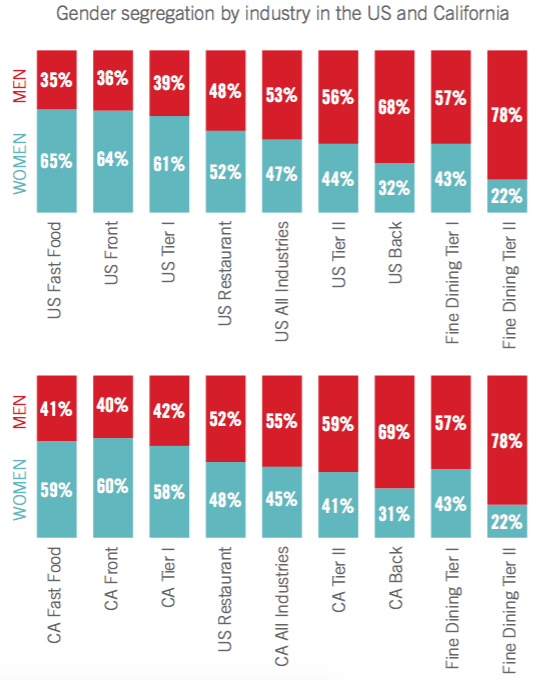
And this chart here shows how white workers in the United States and in California occupy the vast majority of the highest-paying, fine-dining jobs and a smaller percent of the lowest-paying kitchen jobs:


In terms of gender segregation, women are also largely underrepresented in the fine-dining high-paying jobs:


In past research projects, ROC found that white job applicants were more likely to get interviews than people of color and twice as likely to be hired than equally or better-qualified workers of color applying to the same fine-dining establishments. The group reached this alarming conclusion after sending more than hundreds of candidates to fine-dining restaurants — comparing how restaurants responded to equally matched white and minority applicants.

The new report recommended that restaurants adopt incentives, mandates, and prohibitions to combat discriminatory practices. The report suggested that restaurants consider implementing specific “implicit bias trainings” — similar to efforts police departments have recently adopted to combat profiling. Policymakers should also support workforce development programs that offer free or low-cost training targeted to workers of color and women who want to advance to front-of-the-house positions, according to the report.

As part of the release of the study today, ROC and the Ella Baker Center for Human Rights, an Oakland-based nonprofit, promoted a new joint project called the “Restore Oakland Center” aimed at supporting low-wage restaurant workers. The East Oakland-based program will be a multi-service center that includes a ROC-run restaurant and the organization’s job-training program. The center would also function as an incubator site for worker-owned enterprises and would house other Ella Baker Center-facilitated programs. 

You can read the full “Ending Jim Crow in America’s Restaurants” report here

An Anti-Waste Kitchen Takes Root in Alameda

Dana Frasz deals in the currency of imperfect produce: crooked carrots, oranges with peels dotted with black spots, and potatoes shaped like snowmen. As the founder and executive director of the Oakland-based nonprofit Food Shift, Frasz spends her days finding ways to make sure that these ugly, but perfectly edible, fruits and vegetables (about six billion pounds of which never even make it off the farm each year because they’re deemed unfit for grocery stores) don’t wind up in the trash bin.

See Also:
Food Shift Is Forging a Deal with Andronico’s

[jump] Now, Food Shift is taking on its most ambitious project yet: a kitchen facility that the organization will run in collaboration with the Alameda Point Collaborative, a housing program for the formerly homeless that happened to have an underused commercial kitchen on its premises. The new project, known as the Alameda Kitchen, aims to be a win-win for both nonprofits. It will provide Food Shift with a fully equipped kitchen that the organization can use to process large quantities of produce and other surplus food, turning all of those ugly carrots and potatoes into nutritious products that can either be given away or sold to schools, hospitals, and other meal providers. And for Alameda Point Collaborative, the kitchen will be an engine of economic development, providing hands-on job training to residents of the housing program, who will acquire skills that might allow them to go on to land jobs at restaurants or other food-related businesses.

Food Shift’s mission is an important one at a time when food insecurity and food waste are both increasingly urgent problems in the Bay Area — especially in light of the US Department of Agriculture and the US Environmental Protection Agency’s recent jointly announced goal of reducing food waste on a national level by 50 percent by 2030.

As Alameda Point Collaborative’s executive director Doug Biggs put it, “Our society has plenty of food. It’s just in the wrong place at the wrong time.”

Frasz explained that the project is loosely modeled after DC Central Kitchen, a Washington, DC-based nonprofit where she briefly volunteered in 2008 — an experience she credits with inspiring her to create Food Shift to begin with. Mostly, she was inspired by the ways in which DC Central Kitchen’s mission went beyond simply feeding people. The kitchen provides job training to individuals who come from marginalized backgrounds. And, by turning surplus food into products that can be sold by the catering company the organization runs, it has created a financially sustainable business model that employs graduates from the training program.

Similarly, the Alameda Kitchen aims to be a self-sustaining, community-oriented program that will provide both food and jobs to people who need them. In that respect, the Alameda Point Collaborative seems like the perfect partner. Almost all of the heads of household among the housing complex’s five hundred formerly homeless residents have some kind of disability. And Briggs said that aside from the obvious benefit of acquiring job skills, he believes it will be empowering for the residents to do so in a way that really gives back to the community.

Frasz said her hope is to change the current paradigm in which under-resourced food assistance organizations — soup kitchens, food banks, and such — often struggle to find ways to use up donated food before large quantities of it go to waste. Sometimes that’s due to a lack of infrastructure, which is why, for instance, Frasz hopes to buy a food dehydrator in order to help extend the life of over-ripe fruit. And Food Shift has also enlisted the help of alumni from Stanford University’s Graduate School of Business who will do some pro bono market research to help refine the Alameda Kitchen’s business model and figure out what food products would be optimal, given Food Shift’s steady stream of discarded carrots, potatoes, and such.

Frasz is currently recruiting a chef to handle recipe development, but she already has a number of ideas for products that the Alameda Kitchen might sell. Most fall in the ultra-practical realm of soups and smoothies, but Frasz also dreams of one day stocking corner stores in East and West Oakland with $1 popsicles made from cosmetically challenged fruit — a healthier alternative to the bags of potato chips that schoolchildren might otherwise buy. And she said she has peeked into the dumpsters outside of large juice chains such as Jamba Juice often enough to know about the massive quantities of carrot pulp that they throw away each day — pulp that could form the base for a delicious veggie burger, Frasz said.

Frasz, a vegetarian, said the main focus of the project would be on produce, but she didn’t rule out the possibility of including meat or dairy if the organization got a hold of a large quantity of surplus items that would otherwise spoil.

Food Shift recently launched a $30,000 crowdfunding campaign to help pay for the purchase of kitchen equipment, and allow Frasz to hire a part-time chef and provide employment to an initial cohort of trainees. The tentative plan is for the Alameda Kitchen to open officially in April 2016.

Welcome to the Shmoplife

Kool John and P-Lo's manager told me to meet the rappers for an interview at an East Oakland address on a recent afternoon. While I wasn't sure exactly where I was going, I knew I had made it to my destination when I saw a sticker of a smiley face with shades — the...

Turning Blight into Urban Gardens and Homes

The farm on the corner of 37th and West streets is easy to miss. With just a few vegetable plots, some fruit trees, a pen for ducks and chickens, and a tiny, 120-square-foot home, it hardly compares to some of West Oakland's bigger urban farms. But the farm's founder, Steven DeCaprio, sees it as the first stage...

Tax Evasion Is Not a New Technology

With the growth of companies using "new technology" platforms to provide services, ranging from rides to short-term housing rentals to food delivery, there is much debate about the potential impacts and how to regulate them. While these services can offer convenience and other benefits, they can also cause problems. As the questions about regulations and the rights of workers...

One Last Time

I'm a straight guy, married for sixteen years, kids in school. My wife cannot find a way to be intimate with me. We've had therapy individually and together. I nearly divorced her, but we decided to stay together — we do love each other, and the economics and child-rearing favor it. After I asked for a divorce, she fucked...

Buildings Bought or Leased: ‘New Photography Inspired by the Paul Sack Collection’

In the current show at Berkeley Art Center (1275 Walnut St.), New Photography inspired by the Paul Sack Collection, there's a photograph by Berkeley photographer Nick Lawrence that represents a strikingly rare composition. It's a photo taken from inside a long abandoned ink factory in West Berkeley, a specific building made locally famous by the abundance of...

Clarification for the Week of October 7

Our October 7 feature, "Racial Profiling Via Nextdoor.com" story stated that Oakland resident Audrey Esquivel said the moderator of the online discussion group Glenfriends had banned her from posting. Esquivel had said that the moderator of a discussion on crime and safety had banned her.

Treasure Island: From Electrifying Collaborations to Forgettable Muzak

Treasure Island Music Festival is typically curated to appeal to two different crowds: Saturday spotlights electronic and pop artists, while Sunday consists of mellow indie rock. However, each year, this paradigm feels increasingly outdated. The year 2015 saw a great deal of fascinating cross-genre collaborations in pop: Miley Cyrus dropped a self-released album with credits from Ariel Pink and Mike...

Video Premiere: J. Stalin Reflects on Gun Violence in “Face Shots”

J. Stalin has been extremely prolific in Oakland's rap scene since the hyphy movement, and is gearing up to drop his fourth full-length of 2015 alone. A disciple of mob music, Stalin has made a name for himself with his hard-edged street anthems. However, his forthcoming project, Tears of Joy — which comes out on October 30 through Empire Distribution...

California Restaurant Industry Discriminates Against Workers of Color, Report Finds

A new report from labor advocates and University of California researchers documents the many ways in which the retaurant industry discriminates against workers of color, with detailed analyses of wage disparities and racially biased hiring practices in California. The study — authored by Restaurant Opportunities Centers United, with research support from UC Berkeley's Food Labor Research Center and UC Santa Cruz...

An Anti-Waste Kitchen Takes Root in Alameda

Ugly but edible. Credits: Food Shift Dana Frasz deals in the currency of imperfect produce: crooked carrots, oranges with peels dotted with black spots, and potatoes shaped like snowmen. As the founder and executive director of the Oakland-based nonprofit Food Shift, Frasz spends her days finding ways to make sure that these ugly, but perfectly edible, fruits and vegetables (about six...
19,045FansLike
17,709FollowersFollow
61,790FollowersFollow