Goodbye, Mr. Magnus

The Catahoula Coffee Co., a popular cafe in Richmond, is a regular gathering place for students, artists, neighborhood activists, cops, and politicians who pop by for strong coffee, fresh pastries, and local gossip. But on a recent morning, the mood in the cafe was noticeably glum. Word had gotten around that Police Chief Chris Magnus, a cafe regular, was leaving town for a job as the top cop in Tucson, Arizona.

“He’s been so supportive in city life and as a private person,” resident Ellen Seskin said over the morning din. “We’re not only losing our chief of police, I feel like we’re losing a friend.”

City officials were also disappointed when Magnus announced he was leaving. Magnus was, after all, nationally known for his community policing model that was both cutting edge and successful. And he had changed Richmond police culture — a department that was once infamous for how it mistreated low-income people of color.

During his tenure, Magnus, the Bay Area’s most progressive police chief, became the emblem of Richmond’s overall transformation, which was initiated by City Manager Bill Lindsay, who, in 2006, hired Magnus not long after Lindsay had arrived himself. With strong city council support, Lindsay transformed Richmond’s overall image from an oil company town known for its high crime rates and civic corruption to a city with progressive values and a diversified economy that elevates residents over polluting industries and corrupt city officials. And Magnus not only was successful at lowering the crime rate, but he also greatly improved the police department’s relationship with Richmond residents.

Mayor Tom Butt said he, the city council, and the city administration are indebted to Magnus. “He came to Richmond nearly ten years ago when the homicide rate in the city was at an all-time high, morale in the police department was low, and relationships with the community were strained and practically non-existent,” Butt said. “Our homicide rate is now the lowest in decades, he instituted a real community policing model that’s praised nationwide, and he has made our police force one of the best trained and most respected in the region.”

Magnus, the region’s first openly gay police chief, said he and his husband Terrance Cheung, who serves as Butt’s chief of staff, had to do a lot of thinking before they decided to leave. “I’m very comfortable in Richmond,” Magnus said in an interview late last week. “Terrance and I have developed strong relationships here, so it was a very tough decision to make. But I’m 55, and if I’m going to make a change, the time is now. I love challenges and this is a chance to push the 21st Century Policing Model further in a larger police department.”

With a population of about 528,000, according to the US Census, Tucson is approximately five times larger than Richmond and presents a different set of problems for Magnus. But the city has one thing in common with Richmond when Magnus first arrived here: The Tucson Police Department suffers from low morale.

The 21st Century Policing Model that Magnus referenced is a national effort to transform the country’s 18,000 police agencies. According to the presidential task force formed to study the concept, the idea is for police departments to discard flawed tough-on-crime policing models and adopt proactive policies that establish solid community relationships based on four central principles: treating people with dignity and respect, listening to individuals’ “voice” during encounters, being transparent in decision making, and conveying a sense of trustworthy motives.

These are precisely the principles Magnus has been widely credited with establishing in Richmond during the past decade. As he departs for Tucson, he leaves behind an impressive legacy of departmental reform and accountability, reduced violent crime, and police-community partnerships that are uncommon in US police departments. Laurie Robinson, a professor of criminology and co-chair of the Presidential Task Force on 21st Century Policing called Magnus’s innovations in Richmond “highly unusual” and on the “leading edge of good practice.”

Community interaction was perhaps the hallmark of Magnus’ reforms. He divided the city into three patrol districts and once officers were assigned to a particular district, they stayed there. District officers were required to give out their cellphone numbers and asked to attend more community meetings to forge relationships with groups and individuals. These strategies helped build a foundation of trust between the police department and Richmond residents who had been wary of cops for decades. “Now it’s very rewarding to hear community members make comments about their beat cops,” Magnus said. “Their relationships go so much deeper than what you usually find. The community members are really possessive of their officers and that’s what I wanted.”

Magnus updated the department with new patrol cars, and crime fighting tools like gunfire locating devices and CompStat, a crime analysis software that detects crime spikes so police can be proactive. He also established monthly use-of-force reviews.

So why were Magnus’ reforms successful in Richmond when other departments are so resistant to change? It wasn’t easy. Prior to 2006, Richmond had one of the worst departments in the Bay Area. The command staff was indifferent or incompetent. The department was rudderless and bogged down with internal strife between white and Black officers. Residents made frequent charges of racism and excessive use of force. And there were a series of embarrassing sex scandals. In one case, a Richmond police officer stopped a woman for a traffic violation and forced her to perform oral sex. Then, shortly after, she reported the incident to police command staff, the offending officer called her cellphone to ask why she was causing problems for him.

Magnus knew what he wanted to accomplish when he arrived in Richmond, and he knew how to accomplish it. But he also had the advantage of a very unusual circumstance. In 2003, Richmond experienced a financial crash due to administrative mismanagement. Hundreds of city employees were laid off and the county took over management of the city. In 2005, Lindsay was hired and due to a mass exodus of department heads, he was able to re-stack the city with good government-minded managers. He was, in a sense, given an opportunity to change the very DNA of the city, and Magnus’ community policing concept fit perfectly with that goal.

The city council, Lindsay, and Richmond residents were all on the same page: The police department had to change, and they gave Magnus’ long-term reform plans time and support to succeed — something not freely given in other cities where short-term fixes, union squabbles, and petty politics typically prevail. “People want immediate solutions to problems, so it’s not uncommon for cities to do crime management by press release, always coming up with a new program and constantly being in a reactive mode,” Magnus told the Express in 2011. “It was Bill [Lindsay] who allowed me to make a longer-term investment in problem solving,and that is very rare, to tell you the truth.”

Magnus said Assistant Chief Allwyn Brown, a veteran officer and supporter of community policing, will likely be the interim chief. But Magnus warned that Brown may have a different style. “AB is an excellent officer, and I know he’ll do a great job, but I don’t know if he’ll be answering emails from neighborhood organizers at 10 p.m. Frankly, I’ve spoiled a lot of residents,” Magnus said. “They deserved to be spoiled because they were deprived for such a long time.”

One-Night Stands

Friday, November 27

Skin Stories (60 min., 2003). (Oakland Museum of California, Oakland, 7:00)

Trapped in the Closet Sing-A-Long (TBA, 2005). (The New Parkway, Oakland, 10:30)

Saturday, November 28

La Traviata (115 min., 2015). English National Opera 2015-2016 Season (Rialto Cinemas Elmwood, Berkeley, 10:00 a.m.)

Sunday, November 29

‘Til Infinity (TBA, 2015). With director Shomari Smith (La Peña Cultural Center, Berkeley, 6:00)

Monday, November 30

Skylight (TBA, 2015). National Theatre Live (Rialto Cinemas Cerrito, El Cerrito, 7:00)

The Winter’s Tale (180 min., 2015). Branagh Theatre (AMC Bay Street 16, Emeryville, 7:30)

Tuesday, December 1

Ken Burns: The National Parks – America’s Best Idea, Episode Three (120 min., 2009). (Alameda Free Library, Alameda, 6:00)

In the Image: Palestinian Women Capture the Occupation (61 min., 2014). Followed by a Q&A with the filmmakers Judith Montell and Emmy Scharlatt (Parkway, 7:00)

El Gusto (88 min., 2011). Depth of Field 2015-2016 Seminar Series: Sephardic Identities on Screen (Magnes Collection of Jewish Art and Life, Berkeley, 7:00)

Wednesday, December 2

Lulu (270 min., 2015). Met Opera encore (Bay Street, 6:30)

This Year We Thought About Love (68 min., 2015). Movies @ Moffitt (Moffitt Undergraduate Library, UC Berkeley, Berkeley, 7:00)

Triumph of Life (60 min., 2001). (Humanist Hall, Oakland, 7:40)

Quando c’era Berlinguer (117 min., 2014). Italian Society at Berkeley film series (Morgan Hall, UC Berkeley, 8:00)

Libby Schaaf Makes Right Move on Protests

In May, following a series of demonstrations that ended in vandalism and property destruction in Oakland, Mayor Libby Schaaf instituted a controversial ban on nighttime street marches in the city. The Oakland Police Department first enforced the heavy-handed policy on May 21 against a group of two hundred to three hundred African-American women during a #SayHerName protest that focused on police violence against women and transgender people. Before the demonstrators even began their street march, Oakland police threatened them with arrest and ordered them back onto the sidewalk, declaring through an amplified sound system that their march was “unpermitted.”

Two nights later, Oakland police enforced the ban again on a large group of Black Lives Matter demonstrators who were protesting the new policy. That night, Oakland Planning Commissioner Jahmese Myers was among those detained and cited by police for “unlawful assembly.”

Schaaf quickly came under intense criticism from civil rights advocates — and from the Express — for the new policy and for her tone-deaf response to the Black Lives Matter movement, which has sparked protests around the nation and raised awareness about police brutality. “We are at a crossroads with the City of Oakland, with this administration, and with the police,” Myers told the Express after OPD had detained and cited her on May 23. “Black folks are having to fight for our lives. Low-income people are fighting for their right to stay in this city.”

But supporters of Schaaf’s new policy — and of cracking down on protesters — praised the mayor for implementing the ban. In a May 28 column, the San Francisco Chronicle‘s Chip Johnson wrote: “[T]he new approach requiring nighttime protesters to stay on sidewalks is completely reasonable because street protests have too often devolved into post-march madness.”

Since then, however, Schaaf and OPD have backed off the street march ban and have allowed peaceful protesters to march through the city’s streets. Last Friday night, OPD allowed anti-police violence demonstrators to march in the streets from the Fruitvale BART station all the way to City Hall without a permit. And the mayor seems to have realized that her initial policy was a mistake — sort of.

During an interview this week, Schaaf at first adamantly — and bizarrely — claimed that there never was a ban on nighttime protests. But when reminded of the protests in May in which police clearly prohibited demonstrators from marching on the street and forced them onto sidewalks, she eventually conceded that the city’s policy has “evolved” since then and that her administration has attempted to find a “good balance” between safeguarding private property and respecting people’s First Amendment rights (and Oakland’s proud tradition of civil disobedience). “With time, we’ve gotten better at fine-tuning this policy,” she said.

And she’s right. Her administration has done a better job handling protests over the past few months — of honoring people’s right to publicly voice their political views, while also protecting the city’s business community from vandalism. There have been several protests in recent months that have ended peacefully and without property destruction.

Under the current protocol, it’s up to OPD command staff to decide whether a march has gotten out of control and whether to declare an unlawful assembly and start detaining and citing people, Schaaf said. OPD also now tends to have a larger presence at demonstrations than before to ensure they remain peaceful.

It seems clear that the mayor realized early on that banning nighttime street marches likely violated city law. In an interview earlier this year, civil rights attorney Rachel Lederman told the Express that Oakland’s “crowd control policy specifically states that OPD will facilitate marches in the street regardless of whether a permit has been obtained — as long as it’s feasible to do so.” Lederman should know; she wrote the policy as part of a legal settlement with the city.

In a later interview, Lederman told me that she had planned to take Schaaf and the city to court over the nighttime street protest ban — but decided not to when the mayor and OPD backed off of it.

It’s also clear that Schaaf is reluctant to admit that she originally made a mistake — or even that there was a ban in the first place. She appears to be fearful of making such a public acknowledgment, perhaps out of concern of looking “weak” or that protesters would somehow think they had “won,” and thus would feel emboldened to act more aggressively.

But the mayor shouldn’t be reluctant. She was right to adjust the policy. It was unnecessarily heavy-handed. The adjusted strategy, by contrast, has been much more reasonable — and has achieved a good balance. In fact, there’s an argument to be made that the city is now facilitating and managing protests better than it did under the last three mayors.

A Toy for Every Kind of Kid

We all want to be that cool dad or awesome auntie, and the holidays are our time to prove ourselves — to choose the perfect gift that shows how “with it” we are in regards to what Kids These Days actually like, but that’s also, secretly, educational. It’s a lot of pressure.

To help out, I consulted the proprietors of several of the East Bay’s popular mom-and-pop toy stores, whose carefully curated offerings put your typical Toys”R”Us to shame. Their top picks for this year’s holiday season, presented below, include something for every kind of kid in your life.

Lily Ball 3 $39.99

It probably should come as no surprise that one of the most sought-after toys of the year is essentially a drone — or “remote-controlled UFO” if you’d prefer not to evoke the American military-industrial complex. The Lily Ball 3 differs from the old remote-controlled airplanes that many adults may remember from their youth largely in terms of lightness and technological sophistication — a built-in gyro stabilizer helps keep its flight path steady, for instance. It’s also damn pretty to look at, with blinking fiber-optic lights and glow-in-the-dark rotor blades.

Meghan Kolstad — who manages the Walnut Creek location of Five Little Monkeys, a small local toy store chain that has one other East Bay location, in Albany — explained that the lightweight quality of the Lily Ball, along with its ball shape, makes it suitable for flying both indoors and outdoors. You can crash it into a wall or a window without any problem, Kolstad said. If the twenty minutes I spent fiddling with this kid-friendly drone were any indication, you’ll spend a lot of time crashing, indeed. The Lily Ball is exhilarating to play with — this oldster’s heart was racing! — but the controls are somewhat finicky and sensitive. I’d recommend this for children ages eight and older who are both daring and patient — the kind of kid who doesn’t mind tinkering around with a tiny screwdriver.

Available at Five Little Monkeys (1224 Solano Ave., Albany, 510-528-4411, or 1366 N. Main St., Walnut Creek, 925-939-4411, 5LittleMonkeys.com)

OdysseyRCToys.com

Tegu Magnetic Wooden Blocks $24.99–$64.99

These colorful building blocks are a cross between traditional wood blocks and Magna-Tiles — and other variants on the popular two-dimensional magnetic building sets, now a fixture at American preschools. The fact that the Tegu blocks stick together — thanks to the magnets hidden inside — means even toddlers with limited fine-motor skills can build fairly complex structures. According to the packaging, Tegu blocks are appropriate for ages three to 99, but Kolstad says they’re particularly great for kids under seven years old. The basic starter set probably offers the most blocks-for-your-buck, but don’t sleep on the stand-alone expansion sets. This year’s new release, the Skyhook Stunt Team set ($49.99) is especially fun, with blocks designed to be configured and reconfigured into all kinds of vehicles and gadgets. Even the “suggested” configurations are incredibly fun and whimsical — you can, for instance, build a clown car, a rescue helicopter, or a “rocketfish.” But, as with all of the most iconic toys, the only real limit is the child’s imagination. Which is to say there’s no limit at all.

Available at Five Little Monkeys

Tegu.com

Paper Bowl Kit $17.99

This is the perfect gift for the seven- to twelve-year-old kid in your life who has a “Pinterest-like” sensibility and an interest in doing cute, crafty, DIY art projects. The kit comes with bowl-shaped plastic molds (in three different sizes) that the child covers with an assortment of decorative paper circles, attaching them with the water-based glue that’s provided. It’s basically next-level papier-mâché. Once the glue dries, you remove the mold, and, voila, what’s left is a lovely cardboard bowl that can be used to hold the various trinkets and treasures that are part of the rich tapestry of the typical pre-adolescent’s life.

Available at Five Little Monkeys

AnnWilliamsGroup.com

Micro Mini Kickboard Scooter $85.99

For the toddler who’s always on the go, Kat Sherman, a manager at Mr. Mopps toy store in Berkeley, recommends Kickboard’s line of Micro Mini scooters. These colorful three-wheeled scooters offer the outdoorsy two- to four-year-old a nice entryway into the world of extreme sports  — especially since, according to Sherman, they ride more like skateboards than scooters. With an intuitive “leaning-based” steering mechanism, the scooters are also somewhat akin to non-motorized Segways for kids.

Available at Mr. Mopps (1405 Martin Luther King Jr. Way, Berkeley, 510-525-9633, MrMopps.net)

MicroKickboard.com

Hexbugs $11.99–$44.99

Speaking of miniature things, Sherman predicts that her store’s assortment of Hexbugs will also make popular gifts this holiday season. Basically, these are little battery-powered insects with bristles underneath that vibrate when the Hexbug is turned on, causing it to skitter forward in a distinctly bug-like manner. One of these would make a nice stocking-stuffer for a kid of practically any age, or you can buy a whole set — or even a little racetrack or obstacle course where the bugs can run around.

Available at Mr. Mopps

Hexbug.com

Snap Circuits $24.95–$119.95

If you’re looking to buy a toy that has educational value, it’s hard to do much better than Snap Circuits. According to Helen Dean, owner of Toy Safari in Alameda, these popular circuit board kits were invented by scientists to help teach kids about electricity. The basic starter set consists of a flat board that a kid can use to conduct experiments of varying complexity — such as building a doorbell, an alarm, or a simple radio. Unlike the science kits that most of us grew up with, no soldering iron is required, since all the wires just snap together. More advanced sets include the Deluxe Snap Rover, which a science-savvy kid can use to create several different remote-controlled cars and robots.

Available at Toy Safari (1410 Park St., Alameda, 510-522-1723, ToySafariToys.com)

SnapCircuits.com

Shopkins $3.95–$17.95

If you’re the kind of doting adult friend who’s hip to the trendiest things that today’s elementary-age kids are obsessed with, then look no further than Shopkins, the food-themed rubber figurines that appear to be the Beanie Baby or Tamagotchi of this generation — though, as Dean quipped, “None of us know why.” Each $3.95 package comes with a little shopping cart filled with two miniaturized, anthropomorphized, rubber versions of a typical item you might buy at the grocery store: an apple, a Twinkie, a roll of toothpaste. In truth, it’s easy to see the appeal: You don’t know which items you purchased until you open the box, so the idea is for kids to hustle — I mean, trade with — their friends to try to complete their collection. Besides, just like the Japanese miniatures that likely served as their inspiration, the Shopkins figures are darn cute — even if they do come in the most garish shades of pink and purple that you can imagine.

Available at Toy Safari

ShopkinsWorld.com

Vintage Star Wars Action Figures $3.95–$200

Dean describes Toy Safari’s substantial collection of vintage Star Wars action figures as one of those “evergreen” toys that never go out of fashion — though, of course, the release of Episode VII this December means that this year they’ll likely be an even more sought-after holiday purchase. Some of the rarer action figures that date back to the late Seventies and are still “on the card” (i.e. sealed in their original packaging) sell for as much as $200, but Dean said Toy Safari tries to focus on carrying the ones people are likely to actually play with, not just stick on a shelf. And don’t let anyone tell you that Star Wars is just for boys: One customer recently told Dean that her daughter is learning how to sew by making costumes for all the female Jedi Knights of her imagining.

Available at Toy Safari

Winter Is Mushroom Season

Most people think hiking is a summertime activity. After all, that’s when the flowers are in bloom and the trees have leafed out. But in Northern California, the winter rains bring to life another kind of forest creature: fungi. An entire kingdom of life, fungi are evolutionarily closer to animals than plants. They fruit mainly in the wet season, sprouting mushrooms that can be microscopic or as big as basketballs, shaped like toadstools or vases or horns, and painted all colors. If you know where to go, and what to look for, a winter hike in California’s forests can be as colorful as snorkeling above a tropical coral reef. And among the countless species of fungi that fruit between November and March are some of the most prized edible mushrooms.

In the fall, when the first rains douse the Bay Area, the best places to explore for mushrooms are in forests along the coast like Point Reyes National Seashore, Salt Point State Park, and Big Basin Redwoods State Park. (Observing mushrooms is always okay, but be sure to check regulations for each park you visit before picking fungi.) The coast, moistened by summertime fog and cooler year-round temperatures, usually blossoms with mushrooms before the drier inland zones. Wait a week after heavy rainstorms and take a trail that passes through stands of pine, oak, and fir. Take your time, pause often, and tread lightly.

One of the best ways to learn how to find and identify mushrooms, or to sharpen your knowledge if you’re already a mycophile, is to join one of the region’s mycological societies. These mushroom clubs publish journals, run email and Facebook groups, and host periodic lectures about everything from DNA sequencing of obscure species to the cultural history of mushrooms.

Clubs also organize forays in parks and forests to collectively gather and identify mushrooms. Forays connect people who have little or no experience in identifying mushrooms with experts, and really, the only safe way to learn how to identify an edible mushroom, and how to identify toxic and deadly mushrooms that might look similar, is to learn side-by-side with an expert.

The Bay Area Mycological Society, or BAMS, organizes an annual foray at Point Reyes that is free and open to anyone. This year’s foray on January 2 will be followed up with a fungus fair on January 3. The Mycological Society of San Francisco organizes an annual fungus fair held at the San Francisco Fair Building where the group displays hundreds of species. SOMA, the mushroom club of Sonoma County, hosts multiple forays throughout the wet season along the North Coast.

After mushroom season begins along the coast, it moves inland, and to lower elevations as rainfall soaks drier parts of the Bay Area. By late November, it should be possible to spot Amanita muscaria growing under live oak. Commonly known as the fly agaric, Amanita muscaria is recognizable by its brilliant red cap with white spots. It’s the classic fairytale mushroom. Various types of lactarius, mushrooms that bleed a milky sap when they’re cut, will crowd the ground around live oaks alongside dozens of other species. As the rains intensify, chanterelles begin popping up under oaks and conifers in golden clusters. Boletes, including the Boletus edulis, or porcini, rise like columns out of the earth near pines and oaks.

Being able to identify tree species is key to finding mushrooms. Few trees foster as many mushrooms as the live oak because of the mycorrhizal relationships it has developed with various fungi. In a mycorrhizal relationship, the mycelium, which is the living body of the fungus, composed of thread-like cottony strands, intertwines with a tree’s roots. The mycelium actually feeds the tree, and in turn is fed.

So many mushrooms grow in mycorrhizal relationships with trees that a good mushroom hunter is actually looking up half the time to spot groves of pines, oaks, or firs where certain mushroom species can only be found. To find mushrooms, find the right trees and go on hikes in parks where conifers are abundant. Seek out tan oaks and madrones. Avoid eucalyptus and bay laurel, which host fewer fungi species; but also don’t be surprised to find giant, strange and colorful mushrooms fruiting around them. Mushrooms are mysterious like that.

Debbie Viess, one of the co-founders of BAMS, leads a yearly foray in Sycamore Grove Park in Livermore. “It’s a little drier out there, the far East Bay,” said Viess, “and the sycamore themselves are not good mycorrhizal trees. There are valley oak growing there, and we’ve found interesting stuff under them.” According to Viess, the live oaks produce the biggest flushes of mushrooms, including toadstools with giant Frisbee-sized caps, and mushrooms that grow from fallen logs like pleurotus, the oyster mushroom. Hericium, another saprobic fungi that devours decaying wood, grows like chandeliers of ice crystals draping from branches. “When you get enough people on the ground, you find fungi,” said Viess. “Last year, we found 48 species, even with the drought.” Among these were delicious edible mushrooms like the Amanita velosa and Armillaria mellea, the honey mushroom.

But Viess, like all experienced mushroom hunters, said learning to identify mushrooms you want to eat should be done alongside experts. Never eat anything you’re not 100-percent sure about. Growing alongside delicious mushrooms in Sycamore Grove Park, and across the entire Bay Area, are species like the Amanita ocreata, the destroying angel, and the Amanita phalloides, the death cap. If eaten, both will destroy a person’s internal organs, especially the liver, often leading to a painful death.

Mycophobia, the fear many people have of mushrooms, is partly due to the fact that there are a few deadly species, and few people are familiar with what they look like. But mushrooms are no more dangerous than plants. As David Arora, one of California’s sage mushroom experts, observed in his classic bible for mushroom hunters, Mushrooms Demystified: “[B]ring home what looks like a wild onion for dinner, and no one gives it a second thought — despite the fact it might be a Death Camas you have, especially if you didn’t bother to smell it. But bring home a wild mushroom for dinner, and watch the faces of your friends crawl with various combinations of fear, anxiety, loathing, and distrust!”

Jackie Shay of the Mycological Society of San Francisco said attendance at her club’s meetings is rising, a sign that increasing numbers of people are becoming interested in and knowledgeable about mushrooms, and mycophobia is on the decline. “In general, people are becoming more aware of the freedom and joys of finding their own food,” said Shay. “There are more young people gaining interest in why fungi matter.”

Events

MSSF Annual Fungus Fair

Dec. 6, 2015 at the San Francisco Fair Building, 1199 9th Ave., San Francisco. Sponsored by the Mycological Society of San Francisco. Contact Brennan Wenck, fu**********@**sf.org.

11th Annual Point Reyes National Seashore Fungus Fair

Jan. 3 at the Bear Valley Visitor Center Auditorium, Bear Valley Road. Sponsored by Point Reyes National Seashore and Bay Area Mycological Society. BayAreaMushrooms.org.

Sycamore Grove Mushroom Madness

Jan. 17, 2016 1­–4pm at Sycamore Grove Park, 5035 Arroyo Road, Livermore. Sponsored by the Bay Area Mycological Society. BayAreaMushrooms.org

A Guide to Giving Back in the East Bay

As concerns about income inequality continue to intensify in the Bay Area, nonprofits and charities have developed an increasingly important role in supporting vulnerable communities. The East Bay, in particular, is home to many organizations that help fight for the rights of marginalized groups and in some cases provide essential services to those struggling with poverty and discrimination. The holidays are a great time to consider donating money or volunteering time to groups making a difference. Here are some of the best local organizations that deserve your support.

Beats Rhymes and Life 

In Oakland, many youth suffer from post-traumatic stress disorder due to their exposure to violence and other hardships tied to poverty. And many don’t have access to consistent, effective mental health services. As a school social worker in 2004, Tomás Alvarez III worked to help fill that gap with a unique therapy model that utilizes hip-hop to engage teens struggling with trauma. His efforts grew into Beats Rhymes and Life, a nonprofit that recently finished remodeling its new headquarters in the Grand Lake district.

The organization now does a wide variety of youth services and workforce development — and has many great donation opportunities this holiday season. You can donate directly to the new BRL Community Center, which Alvarez said is in need of basic furniture and equipment as it prepares to open its doors to the public in 2016. You can also donate to the BRL Academy, which provides job training and placement services for young adults transitioning into meaningful careers.

450 Santa Clara Ave., Oakland, Brl-Inc.org

Project Open Hand

Project Open Hand offers basic necessities to some of the East Bay’s neediest residents by providing meals to seniors and people battling critical illnesses. The organization’s clients visit its Oakland grocery center on a weekly basis and have an opportunity to meet with registered dieticians for nutritional counseling. Residents who are homebound receive regular deliveries of meals throughout Alameda County. If you can’t donate funds, Project Open Hand has great volunteer opportunities in the East Bay in which you can help the nonprofit get meals directly into the hands of people who need them most. You can volunteer on your own or get a group of friends or family members to do group shifts.

1921 San Pablo Ave., Oakland, 510-622-0221, OpenHand.org

PALS East Bay

Over the past year, PALS East Bay, a local animal welfare group run by a group of dedicated volunteers, has played a critical role in aiding Oakland Animal Services, the under-resourced municipal shelter that takes in thousands of animals each year. PALS runs a number of creative initiatives that have a significant impact, including supporting dogs and cats that typically fall through the cracks. Even a small donation can go a long way. One option is to donate to the group’s “Rainbow Bridge Fund,” which supports senior pets who have been abandoned and are at risk of being euthanized. The group uses that fund for so-called “fospice care” (foster and hospice), which helps dogs find loving homes at the end of their lives. PALS’ “Forever Home Fund” assists low-income East Bay pet owners in getting the support they need — with medical bills, for example — to keep their pet in their homes. This can make a big difference for pets and for the city — by helping animals stay with their owners instead of forcing them into the overcrowded shelter. Nicole Perelman, PALS director, said the group has helped more than three-hundred dogs this year so far — and they can help many more with increased financial support.

PalsEastBay.org


East Bay Sanctuary Covenant

There’s no better time to support groups that fight for the rights of refugees. Politicians across the country have seized on the horrific terrorist attacks in Paris as justification for closing our borders to Syrian refugees — a move that immigration advocates say would only hurt people seeking to escape violence. The East Bay Sanctuary Covenant in Berkeley plays a major role in supporting local refugees by providing legal services, assistance in asylum cases, counseling in renewing work permits, and a variety of walk-in services for refugees and immigrants.

The group’s community development and education program also offers a number of workshops and helps connect clients to housing, jobs, and education. The organization emphasizes that donations go directly to client services and aren’t used for lobbying or fundraising. There are also many volunteer opportunities for high school and college students and community members — programs that allow you to work directly with refugees and immigrants as they navigate the many hurdles of transitioning to a new life in the United States.

2362 Bancroft Way, Berkeley, 510-540-5296, EastBaySanctuary.org

Transgender Law Center

The Oakland-based Transgender Law Center has done impressive work advocating for the rights of transgender people locally and across the country. Most recently, the center’s lawsuit forced the state prison system to allow trans inmates to access sex reassignment surgeries — with a groundbreaking policy that advocates hope will pave the way for similar reforms across the country. While many LGBT organizations have long focused on marriage equality, the law center has consistently fought for the rights of the most marginalized queer people, including prison inmates, immigrants, and sex workers. The nonprofit has led campaigns related to healthcare, housing, employment discrimination, criminal justice, and many other areas that are often overlooked in LGBT activism. The group has a number of donation options for one-time gifts or long-term contributions.

1629 Telegraph Ave., Oakland, 415-865-0176, TransgenderLawCenter.org


Abode Services

As the Bay Area housing crisis continues to displace low-income residents, consider donating to Abode Services, a Fremont-based nonprofit agency that helps homeless people across Alameda County find housing. In the last five years, the organization has moved thousands of homeless adults and children into homes — with an emphasis on long-term housing. During the holidays, the organization encourages people to donate gift cards to Target, Safeway, and Payless ShoeSource — or make direct cash donations that can go along way in helping homeless individuals make the transition to stable housing.

40849 Fremont Boulevard, Fremont, 510-657-7409, AbodeServices.org

Lions Center for the Blind

The Lions Center for the Blind in downtown Oakland helps thousands of visually impaired people access a wide variety of programs that enable them to live independent lives. Donations to the organization support direct services, which include Braille instruction, computer and technology training, job placement support, classes in independent living skills, and lessons in orientation and mobility. The center offers a variety of classes and support groups onsite and also sends instructors to other locations in the East Bay to work in people’s homes and community-based sites.

1722 Broadway, Oakland, 510-450-1580, LBCenter.org

The Wonder of ‘The Wonders’

Her face has a classical, statuesque beauty, as if she had been sculpted by an ancient artist to depict perhaps a goddess, or a noble lady of Rome. And yet Gelsomina, the lead character of The Wonders (played by Maria Alexandra Lungu), has no pretensions to grandeur. She’s the twelve-year-old firstborn daughter of a family of eco-hippie beekeepers living on a farm in central Italy, who spends her days working hard in the family honey-making business and minding her three younger sisters.

Gelso’s father Wolfgang (Sam Louwyck), a lanky German-speaking transplant given to loud outbursts, seems categorically disorganized and easily flustered, yet he obviously loves his brood. Wolfgang’s wife Angelica — played by Alba Rohrwacher, sister of Alice Rohrwacher, the film’s writer-director — is the all-embracing shepherdess of the little clan, patiently balancing concern for her daughters’ welfare with a growing skepticism about the life they all lead. The coastal region where Tuscany meets Lazio, with its soft meadows and dramatic ruins, is the ideal setting for such an earthy fable. Gelso’s story has the freshness of happenstance combined with the gravitational pull of mythology.

After the girls witness a TV commercial shoot starring actress Monica Bellucci dressed as a foamy sea goddess, Gelsomina is determined to enter the upcoming “Countryside Wonders,” a costumed pageant honoring the Etruscan heritage of the place, in which local farm products are judged for their authenticity. But her father dismisses it as bullshit boosterism, and Gelso sulks as she labors with the beehives.

Adding to the hubbub is a taciturn preteen boy named Martin (Luis Huilca Logroño), who arrives in the custody of a social worker; Wolfgang has agreed to take him in as a foster child, solely for the money. In a more conventional coming-of-age scenario, Gelso and Martin might fall in love, but the gods have different plans for them. The strongest remaining subplot, other than the mysterious illness that’s killing the family’s bees, is the phenomenon of city people moving into the region and driving up land prices. Neighboring farmers feel threatened. By comparison, Gelsomina and her family represent a sort of “organic gentrification.”

Young actress Lungu, from a Romanian family now living in Italy, was discovered by director Rohrwacher (herself a hybrid Italian) in a catechism class. She establishes herself as the focus of the action not with speeches or bold gestures, but quietly, by means of her steadfast presence, busily completing tasks. Gelso’s natural authority is succinctly expressed by a simple, childlike “farmer’s daughter” trick she performs — as she stands perfectly still in front of onlookers, bees emerge from her mouth and crawl on her face. No matter what minor catastrophes occur, we’re never, ever, worried about Gelsomina. She’s the grounded one, the true head of the family, the muse of the beehives. And she has her whole enchanted life ahead of her.

Filmmaker Rohrwacher shies away from obvious magic realism in painting her 21st-century folk tale, but the “miracles” accumulate. Chief among these is the idea that a simple-yet-complex, ordinary-but-remarkable family such as Gelsomina’s can exist at all. In the press notes, Rohrwacher describes her operating principle as the sense of wonder, “that which hinges between the earthly world and the fantastic.” Powerful, sophisticated filmmakers spend vast amounts of money trying to manufacture wonder, but very, very few of them can come close to what Rohrwacher does with a few giggling children, some bees, a lone camel, the lush green fields north of Rome, and one perfectly composed face.

Letters for the week of November 11-17

“Oakland’s Toxic Failure,” Feature, 11/11

Don’t Tolerate Illegal Dumping

The vast majority of the hazardous waste that was transported/disposed of illegally was waste that was abandoned on the streets of Oakland by Oaklanders or by contractors that Oaklanders hired. Be cautious of who you hire to clean out your garage or yard, to paint your house, to stucco your walls, etc., and make sure that they take your waste to the proper place to dispose of it. Illegal dumping is a big problem in Oakland and contributes to a lot of blight.

Almost all of this waste could have been disposed of free of charge if the dumpers would just take it to Alameda County’s Household Hazardous Waste Facility. It is open Wednesday through Friday from 9 a.m. to 2:30 p.m. and Saturday from 9 a.m. to 4:00 p.m. — no appointment necessary. It is located at 2100 East 7th Street in Oakland. Be vigilant in your neighborhood, and if you witness illegal dumping, write down the license plate of the vehicle or snap some pictures. The city is launching a unique program that will provide rewards to witnesses who help stop people illegally dumping in Oakland neighborhoods. With the Reward for Reporting Illegal Dumping Program, witnesses who report illegal dumping can receive up to half of all penalties collected in successful enforcement actions based on the witness’ reports.

This sends a strong message that Oakland will not tolerate illegal dumping in our neighborhoods and city streets.

There are four ways to report illegal dumping:

1. Call the Public Works call center at 510-615-5566, Monday–Friday, 8 a.m.–4:30 p.m.

2. Email: OP***********@********et.com

3. Mobile app: http://en.seeclickfix.com/apps

4. Online: OaklandPW.com, click on “Report a Problem”

When reporting illegal dumping, please:

• Include the type of debris, amount, and location in your report.

• Never touch hazardous or medical waste!

• The city will take care of abating the illegal dumping and help you to apply for the reward program.

Oakland could be the cleanest cities in the world if we would just start caring and refuse to accept the blight as status quo.

Dan Keenan, Oakland firefighter, Oakland

Uneasy Feelings

This explains the uneasy feeling I get when I see the birds living in San Leandro Creek. The words, “your days are numbered” come to mind.

Christopher Fallis, Alameda

“Richmond Developer Pushes Two Ballot Measures,” News, 11/11

Wake Up, Richmond

I think the real corruption here is the city manager making almost a half-million dollars a year! How do people justify that this is OK? Why should our tax money pay these exuberant salaries [and benefits]? How many of you make $412,000 a year [in total compensation]? Why aren’t people outraged by the lack of fiscal responsibility in the City of Richmond. The city spent $101 million to renovate City Hall? Wow! That is a great use of our hard earned money taken from us in taxes. Wake up, Richmond!

Jaime Warren, Richmond

Say ‘No’ to Poe’s Development

The rhetoric is flying fast and furious in John Geluardi’s [story] about Richard Poe’s ballot initiatives. There’s so much to laugh and/or cry about: Bill Lindsay’s sort-of-actually-insane compensation package; Poe’s willingness to battle it out in the comments section of EastBayExpress.com, but not be interviewed; and the fact that California’s ballot initiative process would allow a developer to supersede a city’s General Plan. If I squint my brain, I can actually think of good and bad things about each of those, but not about Poe’s Richmond proposal. A 59-home boutique neighborhood is not what Richmond’s waterfront needs right now. This is a crucial moment for the future of the East Bay; allowing our cities to be developed poorly will only exacerbate the crisis of urban displacement.

Peter Smith, Oakland

“Hellhole of Desperation Still Exists,” News, 11/11

Traffic Fines Are Abusive

My objection to the unsubstantiated racial element in this report aside, I would like to [say] that I consider the pattern of setting fines and penalties for traffic offenses in California to be abusive.

It is, in my opinion, a violation of the “excessive fines” provision of the United States Constitution. It makes a mockery of basic fair play between imperfect average Joe citizens, rich or poor, and a government possessed of overweening electronic powers to turn them into tax-farming targets.

Sherman Kassof, Oakland

Kudos to Alameda County for Changing Policy

As reported in the blogpost “Alameda County Traffic Court Eliminates Harsh License Suspension Policy That Punished the Poor” [published on EastBayExpress.com] on November 11, I commend the Alameda County Superior Court for their revision to the implementation of Governor Jerry Brown’s traffic ticket amnesty program. Namely, I am encouraged that the court has taken steps to mitigate the cruel and unusual punishment of crippling traffic offenders from participating in local economies through the suspension of drivers’ licenses. While the violation of traffic laws should be disciplined in the interest of public safety, discipline should come in a form that is appropriate for the violation. Though license suspension may seem an appropriate response, the reality is that the ability to drive is a fundamental factor in someone’s ability to hold employment and thereby uphold their responsibilities to their families, partners, and children.

In reality, the practice of license suspension should be further examined to fully understand the crippling impacts it can have on communities without other means of accessing employment. For people who don’t have access to decent public transportation or who work multiple jobs outside of transit-rich neighborhoods, the practice of suspending driver’s licenses is cruel and unjust. Given the reality that communities of color are more likely to be targeted by police even for traffic violations, this practice also only further exacerbates racial inequalities. Other forms of discipline (such as community service) can and should be explored before low-income residents are pushed further into poverty through the crippling effect of a license suspension.

Juan Sebastian Arias, Berkeley

Actions Have Consequences

In a world today where everyone is a “victim” — even of an amnesty program — it seems personal responsibility is a thing of the past. Add to that the persistent insinuations by articles like this one that every black person is even more victimized, and we wind up with unprecedented societal guilt on a monumental scale.

There is no justification for racial discrimination, and there is even less justification for falsely claiming it. Almost anyone who has encountered the DMV has at least one story of displeasure, no matter his or her race. It is probable that the administration of the traffic fine amnesty program has flaws — almost every government affiliated program has them. If so, they need correcting.

For every reason, including public safety, holding a driver’s permit is a privilege — not a right. The “poster person” in this article talked on a cellphone while driving and also was cited for following too close. The article does not claim his innocence of those acts, nor does it claim his initial job was lost due to his not having a driver’s license. Even had he paid the initial fines — his insurance rates would have increased, making it doubtful that while unemployed and living out of his car, he could have paid for insurance. It’s a sad tale, but a reality that personal responsibility to drive responsibly and pay for things associated with driving is a prerequisite for joining others who are responsible on the roads.

While this article commendably points out likely areas for correction in the administration of the amnesty process, it loses credibility in its innuendo that blacks are the most unfairly oppressed because of their race. The problems cited apply to all races and to every person who was not sufficiently responsible to drive without breaking laws and to pay their initial fines when cited. Nobody takes pleasure in seeing a person’s life in difficulty, but when that person’s actions were the fountainhead of the situation, pity may rightfully be to some degree less. The sooner folks and reporters realize and accept that personal actions have consequences for all races, the better our society will be.

William H. Thompson, Walnut Creek

“Big Oil Brown Strikes Again,” Seven Days, 11/11

The Governor Works for Oil

Governor Jerry Brown is on the payroll of the oil corporations and is not working for Californians.

Earl Richards, San Francisco

Brown Chose Oil Over the Needy

Maybe this explains why California is the only oil producing state that doesn’t have an oil depletion tax. Even in the lowest point, when we had to cut funds from the neediest, he would not consider such a tax.

Joyce Roy, Oakland

“Boston or Brooklyn?” Movie Review, 11/11

The Catholic Church Was Organized Crime

The film Spotlight shows how difficult it is to get the truth out of an organized crime syndicate. A team of Boston journalists worked tirelessly to find out that the Catholic Church knowingly was running a massive organized child-rape crime syndicate in Boston and around the world back in a time when the Catholic Church had a powerful influence. It also shows how Catholic followers tried to help the church get away with it.

Make no mistake, this is a movie about organized crime, featuring the Catholic Church, the largest organized child-rape crime syndicate in the history of the United States, and in brutal defiance of Jesus in Matt 18:6–14, where Jesus said child-rape was unforgivable.

The Catholic Church’s organized crime syndicate is worse than Whitey Bulger’s from Black Mass. This movie shows how the Catholic Church exhibited the same “code of silence” that the mafia has, without the honor, as they were protecting at least 249 confessed pedophile priests in Boston.

Whitey Bulger killed twenty adults. The creepy pedo-priests in the Catholic Church raped more than 1,000 children in Boston alone. At least 249 pedophile priests were hidden and protected by hundreds of other priests, and by Cardinal Law. (Only 90 were known at the time of the movie, but credits at the end show 249).

The Catholic Church admitted that there were 4,329 accused pedophile priests in the United States in their own John Jay report of 2004 — and of course they lied. The number was well over 6,900.

And the Catholic Church hid and protected 100 percent of its known pedo-priests, worldwide. Cowardly, rampant, unforgivable evil, in brutal defiance of Jesus, has a name, and it is the Catholic Church.

Neil Allen, Boston

“The True Sharing Economy,” Feature, 11/4

It’s Uber-Capitalism

Thank you clarifying, in your November 4 article, that there is actually a sharing economy in the East Bay, and that it has nothing to do with Uber (as far as I can tell) or others with similar business models. Uber (among others) is, of course, happy to ride along on the coattails of goodwill that we give to “sharing.” But they are practicing classic capitalism. In fact, it’s uber-capitalism: Investors earn money off of the work of others, predatory pricing is practiced, attempts are made to influence regulatory practices, workers are expendable. Hopefully, a new term will be developed to describe capitalism made possible by mobile technology, but “sharing” doesn’t have anything to do with it.

Heidi Skolnik, Alameda

“The Golden Ones,” News, 11/4

The Warriors Don’t
Deserve a Free Pass

In response to Mark Anderson’s piece on the Golden State Warriors, I appreciate and agree with most of the points he makes about this great team/great franchise. But are we so in love with this talented and intelligent ownership that they are getting a bit of a free pass on the impending move to San Francisco? Do people feel that since there is so much money involved how could we expect them not to move? The ownership is already wealthy beyond reason. Would it be absurd to expect them to stay in a city that has offered the greatest fanbase in the country? To stay in a city that can use the benefits of having the Warriors play here? What a great message [Joe Lacob] could send: It’s not always only about money — there are higher values, i.e., loyalty. Sometimes, we tinker with something that works and it regresses. If the Warriors get to San Francisco, personally I will not think of them in the same way.

Roger Marsden, Fairfax

“Saving Chinatown,” Feature, 10/28

We Need Balance

A good article. I am in favor of bringing in a new and vibrant mix into dilapidated neighborhoods. I think that this matter of community revitalization is often seen as a zero sum game. Instead, leaders should approach the matter with surgical precision rather than hatchets.

This requires adding and/or keeping important civic, business, and community enclaves around the “new” emigrants in Chinatown.

In the Fruitvale, for example, La Clínica de la Raza is a mainstay, even when new buildings are razed. Too often, city leaders look at the “bang for the buck” projects and overbuild condos, and business buildings, and forget about the need for staples, such as schools and churches in the neighborhood. What they tend to forget is that the current, young dot-commers will eventually have children and families, and if they follow the old track in Oakland — leave to the suburbs of Lamorinda or Alameda once their kids have to go to school past the third grade — then what will Chinatown be? Temporary housing, unless it’s done with precision.

Good middle and high schools should be kept or built, and churches should be left intact. This way, some of those transitory Gen Y-ers will tend to stay for the long haul once they grow up!

Tim Crosby, Oakland

“Oakland Struggles to Hold Banks Accountable,” News, 10/28

No Respect

I am a single mother and have lived in Oakland since 1997 and have always used a coin-operated washing machine in the apartment building where I live. I can’t afford to buy my own home in Oakland, so I’ll never be going to Chase for a mortgage. But, occasionally, I do go to the Lakeshore Avenue branch to change a ten-dollar bill for a roll of quarters so I can do my laundry. Recently, I waited in line, only to have the teller turn me away. They no longer make change for people who aren’t customers. Now that’s what I call a community service bank — one that’s really grateful to be chosen as the municipal banker for the City of Oakland.

Somehow I think the council didn’t give the bank the news that they’re supposed to serve and respect us.

P.S. I canceled my Chase Sapphire credit card.

Linda Norton, Oakland

Hello, Anyone Paying Attention?

[There’s a] troubling pattern of major contracts signed without councilmembers understanding what they’re signing: garbage contracts; this banking deal; the Surveillance Data Center, to some extent; the allowable types of freight at the new port terminal (aka coal). Is City Attorney Barbara Parker’s office asleep at the wheel? City contract department staff? Councilmember staff? City administrator’s office?

Len Raphael, Oakland

“Oakland’s Sweeping Plan for Parking,” News, 10/28

Change Times, Not Fees

I hardly think it’s fair to charge more for parking when there is a clear and present danger of having your vehicle broken into by the time you return to it in certain lots (in nice areas). Instead make the meter times variable with limits of fifteen to one hundred and twenty minutes — this might encourage people to move them faster.

Francesca M. Austin, Oakland

But Who Gets Swept Away?

The proposed “market-based pricing” plan for parking in Oakland’s most highly trafficked commercial districts is promising, but it seems like more thought needs to be put into some of the potential consequences. One concern is the disparate impact this will have on people’s parking behavior based on their income. It’s possible that increasing fees in the most convenient spaces will advantage higher income drivers who can more easily stomach the price-hike. Lower-income drivers, who are already plagued by generally longer commute times and other environmental stresses related to their socio-economic position, will once again be forced to deal with a time-consuming inconvenience as they seek out cheaper spots further from their destination. However, one mitigating factor here is the fact that low-income residents are much less likely to drive to work than those at higher income levels. If this tendency is paralleled in non-commute travel, perhaps this isn’t as big of a concern.

It will be important, however, to ensure that alternative modes of transit are encouraged and supported with new infrastructure. This is hinted at toward the end of your article, but I’d like to see more concrete plans for things like increased bike parking and lanes. In all likelihood, higher parking prices will cause some to choose other methods of getting around, and without accounting for this with improved access for non-drivers, a “market-based” parking plan just shifts the burden once again to those least able to pay up.

James Yelen, Oakland

It’s a Bad Idea

Great, another policy that makes it harder to have a family live in Oakland. So on top of schools that nobody wants to go to, combined with an overwhelmed public safety department, now we’ll penalize families who dare to patronize local businesses and contribute to the sales tax revenues. Seventy-dollar meter tickets (fiscal emergency-special case, remember?), broken car windows, and a broken city administration, all encouraging you to shop in Emeryville. Berkeley as a model? It’s practically illegal to park there.

When was the last time you saw a city service decrease prices after an increase? Market prices equals penalize you for living here, shopping here, and having a family here.

Let me spell it out — there are no school buses here — you pretty much need to drive your kids around here if they are in school here.

Robert Townsend, Oakland

“Our Fair Share,” Opinion, 10/28

It’s Not Sharing

This self-defined “sharing economy” is just a misnomer for play-by-your own rules. We have Uber, which is essentially a car service that owns no cars. We have Airbnb, which essentially provides hotel rooms but owns no hotels. No overhead, no operating costs, no health care, no benefits, no insurance. Over and over, the technology provides the platform to link customers and service providers. The company itself assumes no risks or responsibilities of the traditional business model. All they do is skim the profits off the top while others take on all the risks. This is all about short-term profits and is not sustainable in the long run.

As soon as regulators and the law properly close in on these scofflaws and make them follow the rules like everybody else, their stars will fade. Definition is power, and right now these companies are self-defining themselves as the new economy, when, in fact, they are providing no new services; they just don’t play by the same rules as their competitors.

Gary Patton, Hayward

“House of Noodles,” Food Review, 10/28

Wait on This One

Based on this article’s positive review, we had lunch at Noodles Fresh [recently].

The place was not busy (maybe one-third of the tables, at most, were occupied). Nevertheless, the service was very poor. It took about forty minutes for all of our food to show up, and it came staggered. My wife was half of the way done with her meal by the time mine finally showed up.

The lack of attentiveness to some details seemed odd. You can eat at the counter, where they have a large screen TV on. It was showing Sesame Street in a restaurant with 100 percent adults in the room and no children.

In terms of food quality, the pot stickers were excellent. My dish of Jiangxi Stir Fry (House Special), rice noodles with beef and more, was very good. My wife’s dish of Jiangxi noodle salad (House Special), rice noodles with BBQ chicken and more, was not so good. The chicken was nicely sliced white meat chicken that would have been a good substitute for sandpaper — incredibly dry and tasteless.

I hope this is part of a “shake out,” and they improve over time. The theme is great, the restaurant is large and clean and nicely decorated. Some of the food was great. I would like to be able to go back there but definitely not in the near future.

Michael Good, Oakland

Kossisko on His Radical Evolution

In the music video for his new single, “Across the Room,” Berkeley singer Kossisko (Kossisko Konan) dances under laser-beam disco lights, swaying his hips and swishing his mane of flowing hair. In my pocket/I got a picture of pain/So tonight/I’m gonna give my love to a stranger, he sings in his breathy falsetto. The video cuts to Kossisko posing against a white backdrop, bare-chested. He wears a different flashy, designer coat in each shot: red fur, polkadotted silk, and ochre suede. In the context of his recent transformation, dancing alone, without scenery, seems like a deliberate choice to introduce his audience to his new artistic identity.

Before releasing his retro-sounding, seven-track dance pop project, Red White N Cruel, earlier this month, Kossisko was better known as 100s (pronounced “Hunnets”), a rapper with an exaggerated pimp persona. Though his g-funk beats and cocky, flippant lyrics made for fun party music, much of his appeal hinged on shock value. On his previous releases, Ice Cold Perm and Ivry, he took his bad-boy character to the extreme and his punchlines were often raunchy and blatantly misogynistic. While he complicated his lyrical content with humor and hyperbole — to the point that it almost resembled parody — the end result did more to promote regressive gender norms than it did to critique them.

Over the past few years, however, Kossisko began thinking critically about gender and questioning the ways in which society’s definitions of masculinity had restricted his personal self-expression. “I’ve always been super androgynous — that’s just me,” he said in an interview. “But when you’re maneuvering in the world of rap — I don’t like all the lines and shit that prevent people from being who they are.”

As he grew older and more experienced (when he started putting out music as 100s, he was nineteen years old), he realized the casual sexism in his lyrics promoted damaging ideas. “Eventually, it started to fuck with my conscience,” he said. “At times, I would see women’s reactions and they would be appalled, and that wasn’t a good feeling.”

Instead of releasing a new record as 100s that departed from his previous material, Kossisko decided to drop the moniker and stop rapping altogether. Though he had enjoyed considerable success as 100s — with a deal with the influential New York label Fool’s Gold Records and a tour with one-time viral sensation Kreayshawn — he decided to start over and build a new fan base because his new work has almost no continuity, sonically or lyrically, with his previous output. To Kossisko, rap represents a type of masculinity with which he no longer identifies. Even though in recent years many rappers such as Mykki Blanco have used the genre as a medium to break down gender stereotypes, Kossisko said he wanted to reinvent himself using pop as a new form of self-expression.

The tracks on Red White N Cruel have disco roots and occasional inflections of funk, bass, and EDM. Kossisko channels Prince and Michael Jackson with his flamboyant vocal style, and these gender-nonconforming pop giants’ influence is apparent in his eye-catching fashion choices and permed hair. The EP’s production deftly combines nostalgic sounds with contemporary pop, hip-hop, and R&B elements. “Roses” features new wave-tinged synth lines and big, four-to-the-floor drum beats with a distinctly Eighties flavor. The melodramatic saxophone on “Red White N Cruel” evokes the horns on Sade’s “Sweetest Taboo.” While “Last Night” features trap high hats in its beat, its EDM buildup eventually releases into bare, warbly surf guitar chords that cleverly subvert listeners’ expectations of a danceable bass drop. These elements of different genres interspersed throughout the record allow Kossisko to nail down a signature sound that defies easy categorization.

On Red White N Cruel, Kossisko’s lyrics deal with sex and relationships in a much more vulnerable way than his previous work. Throughout the EP, he parses through mercurial feelings about ambiguous liaisons and tenuous connections with intriguing strangers. His brand of melancholic dance music takes after artists such as The Weeknd and Frank Ocean and speaks to the distinctly 21st century experience of feeling alone even though we’re seemingly always connected.

The drastic difference between his projects as Kossisko and 100s attest to the artist’s recent consciousness shift. “I wanted to distance myself [from 100s] so I could give my new shit room to grow and live and be its own thing,” he said. “Also, I didn’t want to force people who liked [100s’] stuff to have to like my new stuff. Artists go through stuff, evolve, and change. And there’s nothing wrong with anyone who likes [100s] — it’s your life, whatever makes you happy, listen to it.”

Kossisko explained that the music he made as 100s was an outlet for his anger during a difficult period in his life. As a punishment for acting up when he was in high school, his father, who is originally from the West African nation of Cote d’Ivoire, sent him away to live with extended family in his native country. Kossisko — who is half white and had no French language skills when he came to Cote d’Ivoire — struggled to blend in with his new surroundings. “I was wearing big-ass basketball shorts and Rocawear. People were looking at me like I was an alien,” he laughed.

His only connection to his old life in Berkeley was through the internet, and in lieu of having a social life, he voraciously consumed new music. He was obsessed with Lil Wayne and Gucci Mane, but also idolized eccentric pop stars such as Lady Gaga. Rapping became a way for him to rebel, but so did expressing his feminine side by growing out and straightening his hair. After returning to Berkeley during his senior year of high school, he started pursuing music seriously. 100s was a necessary phase for him to go through, he reflected, but one that couldn’t last forever.

“When all that shit was made, the reason that it resonates is because I was an angry motherfucker making it. I had issues, and that was my medium,” he said. Radically changing his sound and appearance might seem like a bold and unexpected move, but it’s something Kossisko found necessary in order to stay authentic to who he has become. “I’m not gonna do anything that I don’t connect with. … I’m the type of person that, anytime I put out a body of work, you can expect me to grow. I’m not gonna put out some stock chicken nugget shit.”

Naima Shalhoub: Finding a Voice Behind Bars

0

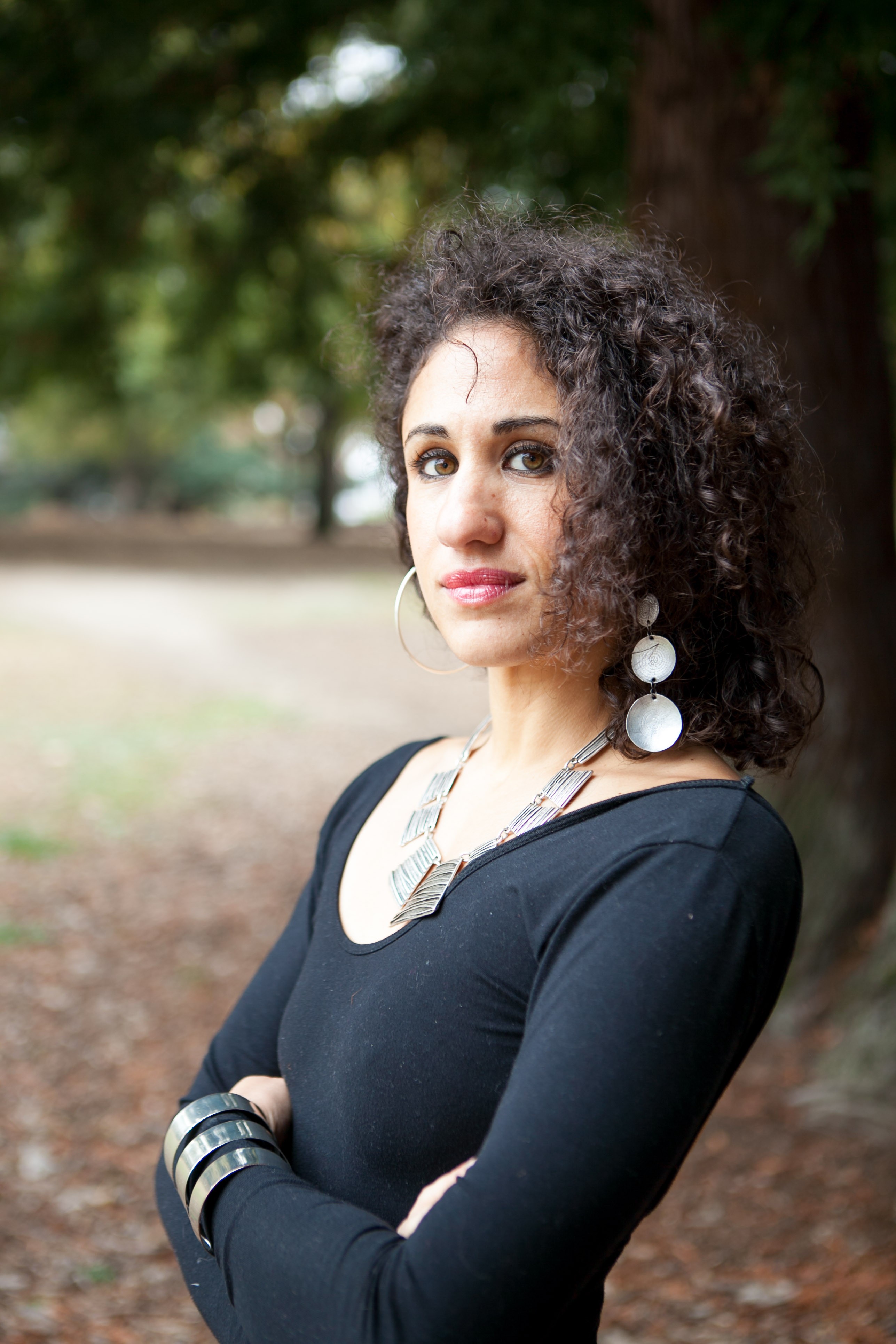
Naima Shalhoub entered the “B” pod of San Francisco County Jail for the first time on May 8, 2014. The Oakland-based singer-songwriter and educator received her master’s degree in postcolonial and cultural anthropology and has long been interested in social justice and mass incarceration. And on that Thursday last year as part of a Mother’s Day event, Shalhoub convinced the San Francisco County Sheriff’s Department, which runs the jail, to let her meet some of the women behind bars and do a short performance for them.

Shalhoub, who works as a restorative justice coordinator at Melrose Leadership Academy, a public school in Oakland, had read about how women are the fastest growing segment of the United States prison population and how the vast majority of women behind bars are mothers. But seeing the pain of so many moms separated from their children on Mother’s Day changed the way she thought about imprisonment: “It’s shocking and sad,” she recalled in a recent interview. “There’s a lot of grief and remorse, and frustration and anger.” That day, she sang Sam Cooke’s “A Change is Gonna Come” and Billie Holiday’s “God Bless the Child” — and many of the women sang along. The tension of leading this free musical improvisation within the restricted confines of a jail deeply affected her, she said. “These women are in orange, and there are rules and regulations. … But music can be this spiritual force that can bust through that — even if it’s just for that moment.”

Shalhoub’s debut album, Live in San Francisco County Jail — due out in December — confronts the impacts of incarceration in a way that is uniquely visceral and raw. That’s because she recorded it live inside one of the pods of San Francisco County Jail on May 5, one year after she first visited the women’s jail. The album is a powerful nineteen-track recording that transports the listener to the jail in San Francisco’s SoMa district where more than fifty women watched her perform — engaging in call and responses and offering cheers, applause, and other reactions captured in the recording of Shalhoub’s live show. The soulful album is a mix of Shalhoub’s originals and covers, along with spoken-word tracks performed by incarcerated women.

After gaining approval directly from Sheriff Ross Mirkarimi, Shalhoub was able to bring recording equipment and a four-piece band, including acclaimed bassist Marcus Shelby, inside the jail for the Mother’s Day performance and recording. Shalhoub recorded the album after spending a year volunteering in the jail, leading weekly music sessions with incarcerated women who were serving time for a wide range of low-level offenses and some more serious crimes.

While the jail setting adds a layer of intrigue, Shalhoub’s performance and the compositions are stunning on their own — even with the imperfections that come with a live recording. Shalhoub, who is Lebanese-American, melds American soul and blues with Arabic folk music and has a soulful voice that seamlessly transitions between growly high belts, fragile falsetto, and deep rich low tones. “Keep Your Eyes on the Prize” — the eight-minute song that kicked off the live concert — is the most intense track on the album. With Shalhoub’s dramatic arrangement of the folk song that was popularized during the 1960s Civil Rights Movement, the song’s blunt lyrics about seeking freedom from imprisonment moved the crowd of women in the jail to shout along with Shalhoub. The jail doors open/and they walked on out, she belts, increasingly louder as the song progresses, Keep your eyes on the prize/hold on. She directs the women to sing an echo of hold on back at her. By the end of the song, referring to the acronym used to describe their location in “County Jail #2” (CJ2), Shalhoub shouts, CJ2 jail doors open, and we what? prompting the women in the audience to scream, Walk out! The recording powerfully captures the apparent anguish of the women in the room — and the seemingly therapeutic release the music offers.

“We were talking about getting rid of the shackles and running out — in the middle of the jail with deputies present,” recalled Shalhoub, who plans to donate 50 percent of the album proceeds to programs that support incarcerated women and reentry services. “It was fucking powerful. … They were really fired up about joining in.”

The lyrics in Shalhoub’s originals — which she sings with an understated quality that is conversational and intimate — also at times seem to speak directly to the women.

On “Rise,” a more laid-back, bluesy tune that features her improvisational scatting, she says, Don’t listen to what they say when they try to get you down/When they try to make you hate what you are. The vulnerability and empathy in her voice is palpable. Shalhoub told me she gets so emotional when she sings there was a period in her music career when she would sob before and after every performance. Live features lighter songs, too: Shalhoub’s fantastic acoustic cover of “God Bless the Child” displays the warmth of her sweet alto register.

The spoken-word pieces on the album mix sorrow and hope with tracks that add further intimacy and urgency to the album. My life is yet just beginning/so I must watch every turn, one incarcerated woman, Susan Ferguson, says in her short piece. Sometimes, I miss the story/yet I always seem to learn that everything happens for a reason. Another incarcerated woman, Tameika Smith, offers a short poem about Mother’s Day.

In an interview, Angela Wilson, program coordinator of the sheriff’s department, said she saw that many women were the most at ease behind bars when they were working on music with Shalhoub. “It definitely breaks the isolation,” said Wilson, who is formerly incarcerated herself. The live recording was a particularly moving experience, she added. “It was very empowering for them … to feel like they were part of something bigger than themselves that will live on forever.”


Goodbye, Mr. Magnus

The Catahoula Coffee Co., a popular cafe in Richmond, is a regular gathering place for students, artists, neighborhood activists, cops, and politicians who pop by for strong coffee, fresh pastries, and local gossip. But on a recent morning, the mood in the cafe was noticeably glum. Word had gotten around that Police Chief Chris Magnus, a cafe regular, was...

One-Night Stands

Friday, November 27 Skin Stories (60 min., 2003). (Oakland Museum of California, Oakland, 7:00) Trapped in the Closet Sing-A-Long (TBA, 2005). (The New Parkway, Oakland, 10:30) Saturday, November 28 La Traviata (115 min., 2015). English National Opera 2015-2016 Season (Rialto Cinemas Elmwood, Berkeley, 10:00 a.m.) Sunday, November 29 'Til Infinity (TBA, 2015). With director Shomari Smith (La Peña Cultural Center, Berkeley, 6:00) Monday, November 30 Skylight (TBA,...

Libby Schaaf Makes Right Move on Protests

In May, following a series of demonstrations that ended in vandalism and property destruction in Oakland, Mayor Libby Schaaf instituted a controversial ban on nighttime street marches in the city. The Oakland Police Department first enforced the heavy-handed policy on May 21 against a group of two hundred to three hundred African-American women during a #SayHerName protest that focused...

A Toy for Every Kind of Kid

We all want to be that cool dad or awesome auntie, and the holidays are our time to prove ourselves — to choose the perfect gift that shows how "with it" we are in regards to what Kids These Days actually like, but that's also, secretly, educational. It's a lot of...

Winter Is Mushroom Season

Most people think hiking is a summertime activity. After all, that's when the flowers are in bloom and the trees have leafed out. But in Northern California, the winter rains bring to life another kind of forest creature: fungi. An entire kingdom of life, fungi are evolutionarily closer to animals than plants. They fruit mainly in the wet season,...

A Guide to Giving Back in the East Bay

As concerns about income inequality continue to intensify in the Bay Area, nonprofits and charities have developed an increasingly important role in supporting vulnerable communities. The East Bay, in particular, is home to many organizations that help fight for the rights of marginalized groups and in some cases provide essential services to those struggling with poverty and...

The Wonder of ‘The Wonders’

Her face has a classical, statuesque beauty, as if she had been sculpted by an ancient artist to depict perhaps a goddess, or a noble lady of Rome. And yet Gelsomina, the lead character of The Wonders (played by Maria Alexandra Lungu), has no pretensions to grandeur. She's the twelve-year-old firstborn daughter of a family of eco-hippie beekeepers living...

Letters for the week of November 11-17

"Oakland's Toxic Failure," Feature, 11/11 Don't Tolerate Illegal Dumping The vast majority of the hazardous waste that was transported/disposed of illegally was waste that was abandoned on the streets of Oakland by Oaklanders or by contractors that Oaklanders hired. Be cautious of who you hire to clean out your garage or yard, to paint your house, to stucco your walls, etc.,...

Kossisko on His Radical Evolution

In the music video for his new single, "Across the Room," Berkeley singer Kossisko (Kossisko Konan) dances under laser-beam disco lights, swaying his hips and swishing his mane of flowing hair. In my pocket/I got a picture of pain/So tonight/I'm gonna give my love to a stranger, he sings in his breathy falsetto. The video cuts to Kossisko posing...

Naima Shalhoub: Finding a Voice Behind Bars

Naima Shalhoub entered the "B" pod of San Francisco County Jail for the first time on May 8, 2014. The Oakland-based singer-songwriter and educator received her master's degree in postcolonial and cultural anthropology and has long been interested in social justice and mass incarceration. And on that Thursday last year as part of a Mother's Day event,...

19,045FansLike
17,709FollowersFollow
61,790FollowersFollow