Guide to flying artwork

0

What lifts the heart more than unexpectedly encountering a beautiful piece of Nature’s artwork, a.k.a. a butterfly? The Smithsonian says approximately 17,500 species have been identified globally, and no one yet knows what glories still float about in deep rainforests.

We don’t have rainforests in the East Bay, but we do have at least 100 species of butterflies. That number increases to 144 if the whole Bay Area is included. Author/illustrator Liam O’Brien celebrates them in Butterflies of the Bay Area and (Slightly) Beyond, which Berkeley’s Heyday Books will release on Sept. 30.

O’Brien’s journey to becoming a butterfly expert was unexpected. A working professional actor, he tested positive for HIV in 1999. As his introduction recounts, he “drove to his apartment in Benicia and holed up with the National Audubon Society Field Guide to North American Butterflies for solace.

Earlier, he’d moved back to San Francisco from New York and was playing the role of Prior Walter in Angels in America at A.C.T. when a Western Tiger Swallowtail flew into his yard. Enthralled with its beauty, he sketched it and began keeping a butterfly-sighting journal, with hand-painted illustrations.

Becoming even more immersed, he participated in the Berkeley Butterfly Count, initiated by lepidopterist and UC Berkeley professor of entomology, the late Jerry Powell, Ph.D, to whom the book is now dedicated. With all the formal Latin names being tossed at him, O’Brien felt as though he’d “been thrown into the Wimbledon Center Court of butterfly counts.” But far from being deterred, he found it inspiring.

Years later, O’Brien has produced a comprehensive but nontraditional guide to local butterflies, one that combines accurate and detailed scientific information with anecdotes, many funny, and gorgeous paintings that took three years to complete. “I don’t have a degree in science,” he said in a phone interview, “but I was hanging out with grad students [and other experts],” and enjoyed learning Latin names and highly technical information.

Butterflies of the Bay Area covers the six categories of butterflies: Skippers; Swallowtails; Whites, Sulphurs, Marbles and Oranges; Brushfoots; Gossamer-Winged; and Metalmarks. The sections detail each insect along with its habitat, host plants, life phases and the best places to find it.

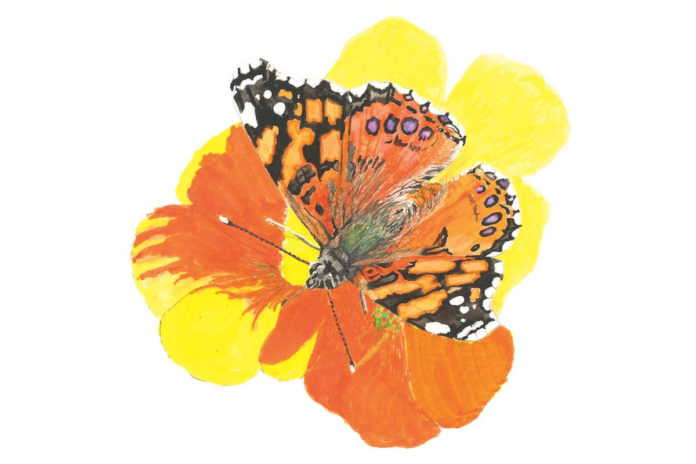
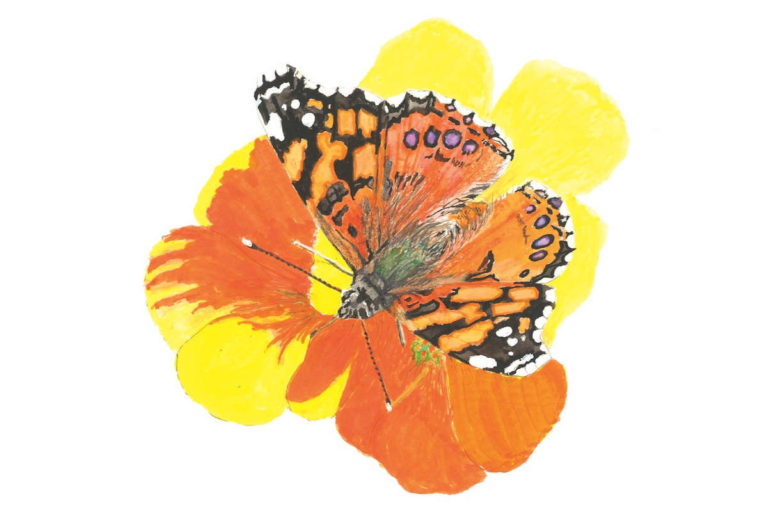
Pictured: Bay Checkerspot, illustration by Liam O’Brien.

According to the book, “the Greater Bay Area has the highest density of butterfly counts anywhere in the nation.” The section “The Best Butterfly Walks in the Greater Bay Area” calls out the Mitchell Canyon Trail to Eagle Peak in Mt. Diablo State Park which features Gray Buckeyes, Variable Checkerspots, Lorquin’s Admirals and Echo Blues, among many others. Asked about other East Bay spots, O’Brien mentioned Volmer Peak in Tilden Park, Miller/Knox Regional Shoreline in Richmond, and both Tilden’s and UC Berkeley’s Botanical Gardens.

Butterflies, the reader discovers, like hilly areas with plenty of native trees and grasses.

Yet, O’Brien noted, the home gardener can beckon them. “Bigger butterflies like bigger flowers, smaller ones like smaller flowers, like cornflowers,” he said. One of the best plants to introduce is coastal buckwheat, which is the host plant for three separate species, he said.

As for the trend to plant milkweed to foster Monarch caterpillars, “Look for narrow-leafed milkweed, not Mexican milkweed,” he cautioned. The book contains an extended conversation with “Monarch whisperer” Mia Monroe.

Readers will also learn about migration, why O’Brien still carries a net—it’s not for collecting—why he thinks the adult butterfly stage should still be called “imago,” how an extinct species of Xerces may possibly be cloned, and many other fascinating facts that would definitely win Jeopardy’s Final Answer.

Asked what in particular he would like readers to take from the book, O’Brien referred to a citation in its introduction: “Peter Brastow, founder of Nature in the City in San Francisco said, ‘Learning the name of the thing in front of you is the first moment in conservation.’”

O’Brien will read from Butterflies of the Bay Area and sign books at Mrs. Dalloway’s Literary and Garden Arts bookstore at 2904 College Ave. in Berkeley at 7pm on Oct. 8. The store is taking pre-orders of the book online. Visit heydaybooks.com for other upcoming events.
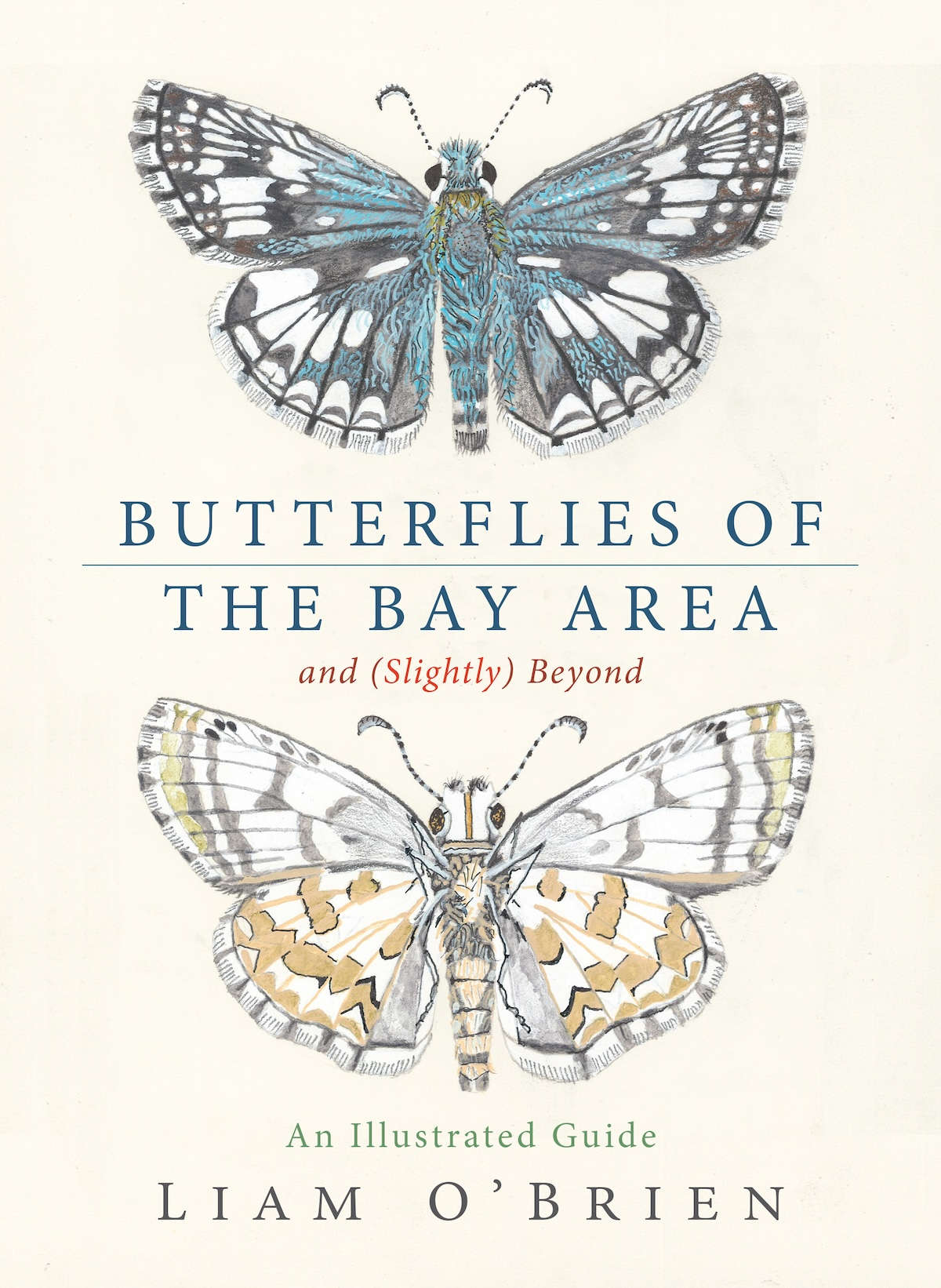
‘Butterflies of the Bay Area and (Slightly) Beyond’ by Liam O’Brien, Heyday Books, 2025, 352 pages, $50.

The Beat gets beat

1

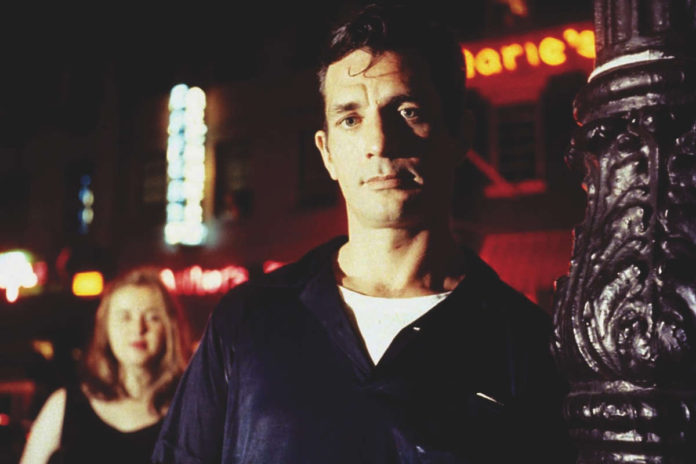
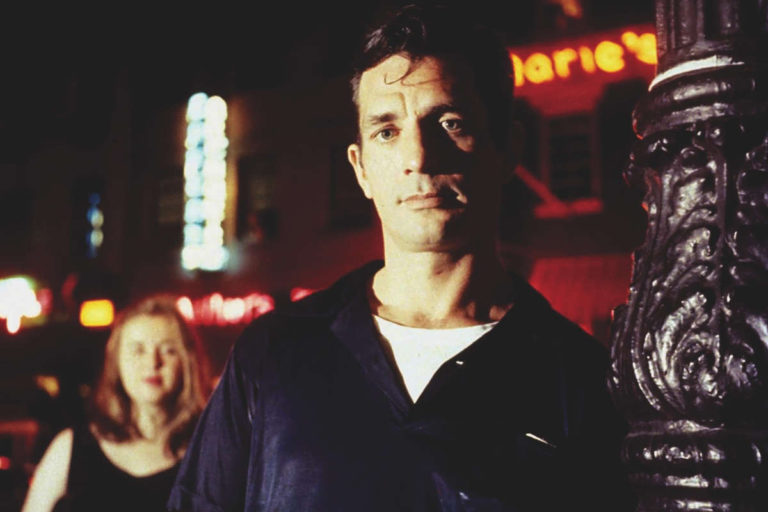
The world has had 68 years to chew on Jack Kerouac’s On the Road. But if the new documentary Kerouac’s Road: The Beat of a Nation is any indication, the final literary/cultural verdict on that 1957 landmark novel is a long way off. Farther even than the distance between the fictional Dr. Sax’s hilltop hideout in Lowell, Massachusetts, and Neal Cassady’s real-life cottage in Cow Hollow, San Francisco.

With Kerouac’s Road, director Ebs Burnough and writer Eliza Hindmarch take a different tack from most of the numerous treatments of the late author’s story. After a dazzling opening credits montage—bursting with library shots of ’50s America—the talking heads make their cases with appropriately surprising candor. They’re an impressive bunch of Bohos, neo-Bohos and never-Bohos, all making essentially the same point: Jack’s rebellious, freedom-seeking, boundaries-smashing coming-of-age tale isn’t, and really wasn’t, the same for everybody.

East Bay stalwart writer W. Kamau Bell, seated in Vesuvio Cafe in SF’s North Beach, imagines a path he might have taken if his and Kerouac’s lives had somehow been switched. Totally different. Singer/songwriter Natalie Merchant recalls her Kerouac-inflected adolescence while addressing the notion of myth-making in America, and now sees Kerouac as essentially self-destructive and self-delusional. Whose myths do we choose?

Actor Josh Brolin, who took his own youthful see-America road trip on a Harley, believes Kerouac created a political manifesto. Jay McInerney, author of Bright Lights, Big City and American Psycho, has his doubts about Kerouac’s supposedly spontaneous prose style—it was worked on intensively between 1951, when Kerouac began writing the novel, and the 1957 publication date. So, not exactly ad-lib. Prowling through a New York City record shop, actor Matt Dillon sees Kerouac as an American idol in the musical as well as the literary sense. Kerouac’s voice is played by actor Michael Imperioli.

Burnough and Hindmarch’s evocation of the Kerouac legend visits a list of places that would make Hank Snow grin: Amarillo, New Orleans, San Antonio, Philadelphia, Sedona, Saint Augustine, Atlanta, London, Manhattan, Havana, Los Angeles and others. It all begins in Lowell, the old Massachusetts mill town where “Ti Jean”—Jack’s family nickname—first realized he was an outsider, a French-Canadian working-class kid with an overactive imagination who missed his deceased older brother Gerard so much he inserted him into fantastically gothic dream scenarios.

The shifts in perspective that occur in the middle of Kerouac’s Road take the original mid-20th-century emotional travelogue to places and frames of mind that didn’t deserve to be overlooked.

The doc superimposes Kerouac’s curiosity and wanderlust onto the lives of a pair of contemporary people also in love with the road, Tenaj and Tino. Tino, a disabled Cuban-American veteran of the Iraq war is now raising a son with his Black wife Tenaj, all the while crisscrossing the country. We also drop in on a young Philadelphia Black man named Amir, who’s excited by his upcoming enrollment at Morehouse College. Finally getting out of Philly.

Compare and contrast these travelers of color with the freewheeling characters of Sal Paradise, fictional hero of On the Road, and the folks he encounters highballing across the country in the early ’50s, whooping and hollering and drunk. W. Kamau Bell points out that he, as a Black Man, could never have survived such a trip then, or even probably now. Bell likes to fantasize that Kerouac might have co-written a book with author James Baldwin—but of course that never happened. Kerouac gets accused of misogyny as well.

The doc decisively pulls away from the hedonistic Beat ethos, in favor of making it real for today. America is a sadder place now, and the racism is as bad as ever. Kerouac once stated that the first review of On the Road—a rave—made his career but ruined his life. Kerouac’s Road convinces us to accept that, and that he and the Beats lived in Dreamland.

* * *

In theaters

Sobo Ramen expands to Berkeley

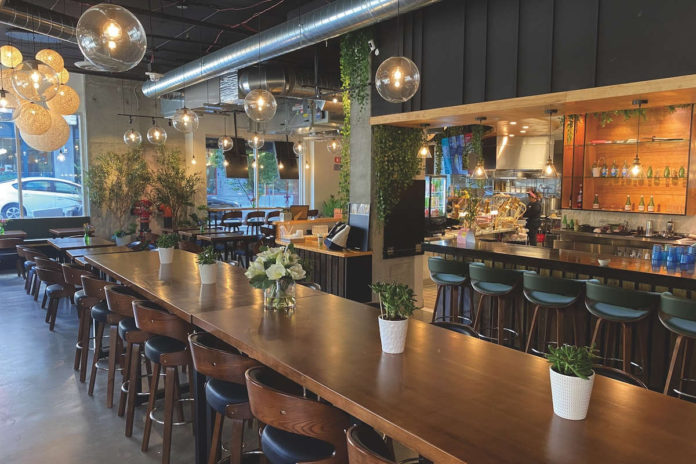
Ken Loi designed the manga-adjacent mural inside Sobo Ramen. It features a crane flying over some gigantic cherry blossoms and the stylized underside of an umbrella. “The umbrella symbolizes shelter and protection,” he said in a phone interview. “Rain or shine, this is where you gather.”

In Japan, cherry blossoms bloom once a year. Loi included them in the mural because they represent an ephemeral experience. “People travel all the way across the world to see them,” he said. “They go with family, or people they love, to cherish the moment.” The crane flying above the flowers represents loyalty. “Creating loyal customers, having a nice place for them to hang out together—that’s what I was imagining, to make them feel at home.”

Loi owns and runs the restaurant with his mother, Stella. More than a decade after opening Sobo Ramen in Oakland, the mother-and-son team have only recently achieved their pre-Covid plan to open a second location in Berkeley. “We’ve been wanting to expand to a different market and we love Berkeley, too,” he said. “We love everything about it—the food and the community.”

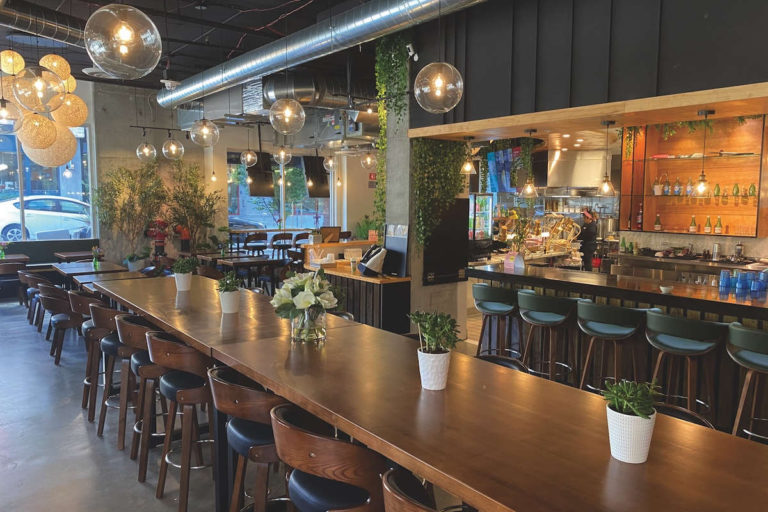
The interior decor shimmers in a cinematic way, conjuring the idea of a ramen shop in urban Japan. Loi came up with the concept. The seating arrangements comfortably accommodate groups and single diners who, after perching themselves up on the padded teal stools, can entertain themselves with the goings-on of University Avenue pedestrians.

“We’re not Japanese,” Loi said. “I’m not trying to recreate authentic Japanese ramen and vibe. For me, I grew up here in America so I consider myself an American.” Neither of the Lois are trained chefs, but Ken said they arrived at their recipes after 10 years of experimenting. “It was just me and Stella in the kitchen, in the middle of the night making soup,” he said. Previously, they ran Bay Area restaurants that served Chinese and French cuisine, including Rue de Main in Hayward.

“We just love food. Obviously we’re not just whipping it up from thin air,” he said. “There are ways things are made traditionally—how to make soup, how to boil bones.” They use those methods but they also “adjust everything to our unique taste. We sit down and work out each step,” he said.

Sobo Ramen primarily serves two broths, made from pork bones or miso. It also serves a vegan broth made with matcha. Loi described it as “earthy, a little bitter. It’s a rich coconut broth with ginger, yuzu and a hint of matcha.” Loi also tops it with a yuzu foam that doubles as a cocktail foam. “I wanted to incorporate a citrus element, so instead of just squeezing lemon juice I’m trying to do something unique,” he said.

I tried a bowl of Mayu ($15.50), the first entry on the menu. It was a pork-filled pleasure. The pork-bone broth, spiced up by a “smoky, roasted black garlic oil,” takes 17 hours to make and comes with thinly sliced pieces of pork belly. My bowl was filled with stalks of fresh bok choy. Loi told me the noodles are also made in-house.

On the way past the digital menus to the cashier, rows of appetizers sit on display. I grabbed little containers of corn ribs coated in a spice mix; tempura vegetables, expertly fried, including broccoli, onion and pumpkin; and two super crispy, pan-fried chicken dumplings. If I hadn’t been in the mood for soup, I could have made a decent meal out of the appetizers alone.

The Oakland Sobo Ramen is a sit-down dining experience that Loi described as “minimal, warm, inviting, comforting.” But, while coming up with a plan for the expansion, he noticed that many businesses were “moving towards fast-casual service.” He considers the Berkeley location to be a hybrid of both concepts. “You get in line, place your order and sit down. But we bring you your food,” he said. “I want people to spend less time ordering, and [more time] just enjoying food and each other’s company.”

Sobo Ramen, 2000 Milvia St., Berkeley. Open Mon-Thu 11:30am to 2:30pm (3pm Sat–Sun) and 5-8pm (9pm Fri–Sat). 510.944.2095. soboramen.com

Free Will Astrology: Week of Aug. 13

0

ARIES (March 21-April 19): Rama is the star of the ancient Hindu epic story, the Ramayana. I love him! He’s one of my favorite legends! His heroic journey isn’t fueled by a greed for power or personal glory. Unlike 90% of modern action heroes, he’s not pumped up with anger or a lust for vengeance. Instead, he is animated by a sense of sacred duty. Against all odds, and in the face of bad behavior by weird adversaries, he acts with exemplary integrity and calm clarity. During your upcoming exploits, Aries, I invite you to be inspired by his exalted and unwavering determination. As you proceed, ask yourself, “Is this in rigorous service to my beautiful ideals? Are my decisions and words in alignment with my deepest truths?” Be motivated by devotion as much as by hunger. Aim not just for novelty and excitement, but for generosity of spirit.

TAURUS (April 20-May 20): In the Mexican festival of La Noche de Rábanos—Night of the Radishes—giant radishes are carved into elaborate altars and scenes. Humble roots become fancy art. I think you’re engaged in a metaphorically similar process, Taurus: Sculpting with uncommon materials. Something you’ve regarded as modest—a small breakthrough or overlooked strength—is revealing unexpected value. Or perhaps a previously latent or indiscernible asset is showing you its neglected magic. Celebrate your subtle but very tangible luck. Take full advantage of half-disguised treasures.

GEMINI (May 21-June 20): In Zen archery, the aim is not simply to hit the target. Instead, it’s to align one’s body, breath, mind and bow so fully that the arrow releases itself naturally and effortlessly. It shoots itself! I would love for you to adopt this breezy attitude in the weeks ahead, Gemini. See if you can allow an evolving project, relationship or vision to reach a new maturity, but not through pushy effort. Rather, trust life to bring you the precise guidance exactly when you need it.

CANCER (June 21-July 22): In ancient Rome, the priestesses known as the Vestal Virgins tended an eternal flame. They never let it be extinguished, not even for a moment. Their devoted focus on nurturing the fire was both a religious practice and a symbol regarded as essential for the wellbeing, prosperity and survival of the Roman state. I propose, Cancerian, that you engage in your own version of Vestal Virgin-like watchfulness. Assign yourself the role of being the keeper of a sacred promise or resource. What is it, exactly? Identify this repository of spiritual wealth and dedicate yourself to its sustenance.

LEO (July 23-Aug. 22): In medieval Europe, pilgrims traveling to the shrine of Saint James in Spain often wore scallop shells. These were badges to signify they were on a sacred path in quest of divinely inspired transformation. The shell also had practical uses. It was a scoop for food and water, underscoring the humility and simplicity embraced by wayfarers on the road. I invite you to acquire and wear your own equivalent of this talisman, Leo. You have begun a new chapter in your self-perception, and life is asking you to proceed without pretense. You don’t need definite answers. You don’t have to rush to the end of the journey. The becoming is the point. I hope you seek out inspirational symbolism and generous companions to help nurture your brave transformations. (PS: Your best conversations may be with people who will lovingly witness your evolution.)

VIRGO (Aug. 23-Sept. 22): In ancient Greek drama, the peripeteia was a term for the moment when everything turns. The pivot doesn’t happen through force, but through the revelation of what was always true. I see the coming weeks as your peripeteia, Virgo. There may be no fireworks or grand announcements. Just a soft spiraling crackle that signifies a realignment of the system, a cathartic shift of emphases. Confusion resolves. Mysteries solve themselves. You might say, “Oh, yes, now I see: That’s what it all meant.” Then you can glide into the future with a refined and more well-informed set of intentions.

LIBRA (Sept. 23-Oct. 22): In coastal Portugal, there’s a lighthouse called Farol do Cabo da Roca. Built on a cliff where land ends and the Atlantic Ocean begins, it marks the westernmost edge of continental Europe. We might say it’s a threshold between the known and unknown. I believe you will soon be poised at a metaphorically similar place, Libra. An ending is at hand. It’s not catastrophic, but it is conclusive. And just beyond it are shimmers, questions and a horizon that’s not fully visible. Your job is to finish your good work, even as you periodically gaze into the distance to see what’s looming.

SCORPIO (Oct. 23-Nov. 21): I Invite you to channel the spirit of Kali—not in her form as the destroyer, but as the fierce liberator. She has the power to burn away stagnation, neutralize the poison of old lies, and slice through illusion with a sword of compassion—and so do you. I believe you are ready to sever a bond that has secretly (or maybe not-so-secretly) limited you. Don’t be afraid of the emptiness that results. It may appear to be a void, but it will quickly evolve into a fresh sanctuary. Into this newly cleared room, you can pour your strongest longings and most rebellious love. What are the wildest versions of your truths?

SAGITTARIUS (Nov. 22-Dec. 21): In some early maps of the cosmos, Sagittarius wasn’t just an archer. Your sign was symbolized by a centaur with wings: part horse, part bird, part god. I bring this to your attention because I suspect your own hybrid nature is extra wild and strong these days. A part of you wants to roam, and a part wants to ruminate. A part wants to teach, and a part needs to learn. How should you respond to the glorious paradox? I say, don’t force harmony. Let contradiction become choreography. Maybe liberating joy can arise through a dance between apparent opposites.

CAPRICORN (Dec. 22-Jan. 19): In Sardinia, there are tombs carved into rock called Domus de Janas—“houses of the fairies.” People once left offerings there to court the help of beings they couldn’t see. They truly believed that fairies are real and can exert effects in this world. In modern times, fewer Capricorns actively consort with invisible presences than any other zodiac sign. But I hope you will take a short break from your usual stance. Mysterious and mythic influences are gathering in your vicinity. You’re being nudged by forces that defy explanation. What do you have to lose? Why not have fun making room to be delighted and surprised by miracles and wonders?

AQUARIUS (Jan. 20-Feb. 18): Thou shalt embrace the confounding contradictions, Aquarius. That’s the first commandment. Here’s the second commandment: Thou shalt caress the tricky incongruities. Third: Thou shalt whisper endearments to the mysterious ambiguities and invite the mysterious ambiguities to whisper endearments to you. Fourth: Thou shalt rumble and cavort with the slippery paradoxes. Commandment number five: Thou shalt chant spicy prayers of gratitude to the incongruities, paradoxes, contradictions and ambiguities that are making you deeper and wiser and cuter.

PISCES (Feb. 19-March 20): In early medieval gardens, there was sometimes a space called the hortus conclusus. It was a walled sanctuary that protected plants and herbs from harsh weather and predation by animals. It comprised a microclimate and provided a private, peaceful space for contemplation, prayer and study. Sometime soon, Pisces, I would love for you to create your personal equivalent of a hortus conclusus—even if it’s metaphorical. You will harvest maximum benefits from surrounding yourself with extra nurturing. The insights that would come your way as you tend to your inner garden would be gently and sweetly spectacular.

Homework: What’s crucial for you to learn next? Newsletter.FreeWillAstrology.com

Social Eyes: Week of Aug. 7-13

THURSDAY, AUG. 7

POP

WANDA WHAT

Wanda What’s music pairs perfectly with an Oakland summer day. The self-identified “dyke rock” artist blends electronica, a bit of country and indie rock to create dream-pop soundscapes that’ll have the crowd swaying like palm trees. In their latest album, August 2024’s Dyke TV, lush synths and sparkly beats play a leading role, scoring bittersweet tales of love and loss. The album starts, ironically, with “Bye Bye,” in which Wanda What sings, “I touch the sun when I close my eyes/and I’m leaving town without saying goodbye.” For fans of Beach House and other airy bedroom-pop greats, this is the show to see. ADDIE MAHMASSANI

INFO: Thu, 8pm, Thee Stork Club, 2330 Telegraph Ave., Oakland. $10/adv, $12/door. 510.859.8709.

FRIDAY, AUG. 8

JAZZ

ZOHAR & ADAM

With Zohar Cabo, 17, on keyboards and his older brother Adam Cabo, 20, on drums, the New York sibling combo, Zohar & Adam, has generated a huge amount of buzz. They were raised playing in a variety of family bands with their father, former Latin big-band leader Richard Cabo; their mother, Dassi Rosenkrantz, an Israeli bassist and educator; and their older sister, singer/songwriter Noga. Getting set to release their debut album, Osmosis, the brothers have forged a sound steeped in post-bop, Latin rhythms, hip-hop and far-flung international idioms. Championed by bass great Christian McBride, the siblings have found other key allies, like Berkeley-reared keyboardist Julian Pollack. ANDREW GILBERT

INFO: Fri, 8pm, The Freight, 2020 Addison St., Berkeley. $34-$39. 510.644.2020.

FRIDAY, AUG. 8

ALTERNATIVE

JILLITH FAIR

Some of the Bay Area’s best rockers join forces to celebrate the life and work of Jill Sobule. The award-winning singer-songwriter, guitarist and human-rights activist died at age 66 in a house fire on May 1. Sobule made Billboard Top 20 history with her 1995 single “I Kissed a Girl,” the first openly gay-themed song to crack the proverbial ceiling. She continued to bust up the architecture with one of the first crowdfunded albums, the New York Times Critic’s-pick, Drama Desk-nominated autobiographical coming-of-age musical, F*ck 7th Grade. Like other Sobule tributes happening across the country, proceeds benefit a charity. At the Ivy, the organization is “It Was A Good Life” Foundation. LOU FANCHER

INFO: Fri, 8pm, Ivy Room, 860 San Pablo Ave., Albany. $20-$25. 510.526.5888.

FRIDAY, AUG. 8

ALT-ROCK

RED LEATHER

Red Leather is a musician we’ll never see clearly—and that’s the point. Face hidden by a red-fringed Stetson, never named on record, the Reno-born artist uses anonymity as armor, fueling his confessional power. His debut album, Reno, is a raw, narrative-driven document of addiction, survival and recovery. The sound is sharp-edged alt-rock with outlaw country inflections, full of crunchy guitar and plainspoken confession. Red Leather’s presence is theatrical, but the songwriting is dead serious: unsparing, autobiographical and haunted by the question of who gets to come back. SONYA BENNETT-BRANDT 

INFO: Fri, 9pm, Cornerstone, 2367 Shattuck Ave., Berkeley. $28. 510.214.8600.

SATURDAY, AUG. 9

INDIE

JUST FRIENDS

The Dublin/Pleasanton party people of alt-rock band Just Friends are on a mini tour through Nevada, California and Arizona. Born as a high-school punk band, they’ve grown into a full-blown collective with horns, moshing and a genre-hopping sound that shifts between heartfelt and ridiculous without blinking. Fronted by Sam Kless and Brianda “Brond” Goyos León, JF’s live shows feel like a pep rally for the emotionally deranged—equal parts shout-along catharsis and tightly arranged chaos. It’s a block party and a basement show rolled into one. – SBB 

INFO: Sat, 6pm, Crybaby, 1928 Telegraph Ave., Oakland. $28.

SATURDAY, AUG. 9

BLUES

BIG BLAST BLUES BENEFIT

Music lovers in town know that Eli’s is the place to be for live blues. Recently, Eli’s owner and operator, Matthew Patane, has dealt with financial strain associated with zoning issues. Long story short, the historic club urgently needs the community’s help. Enter: Margie Turner and the Outback Blues Band—a wailing, shredding, all-around powerhouse staple at Monday Night Blues. They’re hosting a benefit show for the ages, including the Bobby Young Project and lots of special guests. Eli’s has brought the East Bay 50 years of joy, and now it’s time to ensure 50 more. – AM

INFO: Sat, 7pm, Eli’s Mile High Club, 3629 Martin Luther King Jr. Way, Oakland. $20. 510.808.7565. 

SATURDAY, AUG. 9

AFROBEAT

FEMI KUTI

Sure, Femi Kuti is the son of Afrobeat pioneer Fela Kuti and played in his dad’s band for years. However, Femi started his own band (Positive Force) in the late 1980s, and for nearly 40 years the band has lived up to its name with their infectious beats, catchy melodies and political messages concerning his home country of Nigeria and social justice around the world. This is one night that’s definitely for the dancers, so make sure to put on some comfy shoes and get those stretches in before hitting the show. – MW

INFO: 8pm, UC Theatre, 2036 University Ave., Berkeley. $45. 510.356.4000. 

SUNDAY, AUG. 10

THEATER

‘THE WAITING PERIOD’

Brian Copeland’s one-man show about his 10-day wait to obtain the means to which he intended to commit suicide—a handgun—never gets old. Almost entirely so, because the comedian/actor/radio host/writer was unsuccessful. But also because Copeland is a masterful storyteller. His bestselling book, Not a Genuine Black Man, was adapted from his first solo show of the same name in 2004. Depression is Waiting’s primary theme and, sadly, will never go away. Happily, neither will Copeland, bringing his message of compassion, hope and “It’s bad, but know that you’re not alone.” – LF

INFO: Sun, 12pm, The Marsh, 2120 Allston Way, Berkeley. Free. 415.282.3055.

TUESDAY, AUG. 12

BLUES

TEDESCHI TRUCKS BAND

It’s quite a feat when a band’s debut album wins a Grammy Award for best album. Tedeschi Trucks is one of those bands. Of course, that’s because the band is led by the heavy-hitting married team of blues shredders, Susan Tedeschi and Derek Trucks, both award-winning, heavily respected musicians in their own right. Because of this, the Tedeschi Trucks Band has boasted a plethora of who’s-who musicians from the blues and jam world, including Oteil Burbridge (Dead & Co.), trumpeter Ephraim Owens, vocalist Mike Mattison (Scrapomatic) and bassist Tim Lefebvre (David Bowie/Black Crowes).MW

INFO: Tue, 6pm, Greek Theatre, 2001 Gayley Rd., Berkeley. $64-$101. 510.871.9225.

TUESDAY, AUG. 12

JAZZ

JOHN PIZZARELLI

A suavely swinging vocalist and guitarist with a gift for delivering beloved standards, Pizzarelli has honed a vast repertoire of tunes covering almost the entire 20th century, from Berlin and Gershwin to the Beatles and the Beach Boys. Over the years, he’s drawn closer to the songs he sings, often focusing on music by songwriters he’s counted as friends, such as Alan and Marilyn Bergman, Dave Frishberg, Johnny Mandel and long-departed tunesmiths whose families have embraced him, like Jimmy McHugh, Sammy Cahn and Arthur Schwartz. As the son of the late guitar-great Bucky Pizzarelli (1926-2020), he reached a musical accord with his pops via the snappy repertoire of Nat “King” Cole, and he’s been swinging ever since. – AG

INFO: Tue, 7:30pm, Yoshi’s, 510 Embarcadero West, Oakland. $35-$74. 510.238.9200.

Is the Oakland Army Base redevelopment the future Coliseum template?

0

As the County of Alameda continues a much-prolonged process toward redevelopment of the Coliseum, a process expedited earlier in July when the board of supervisors voted to sell the county’s 50% ownership of the property to the African American Sports and Entertainment Group (AASEG), a redevelopment model that began emerging 25 years ago is receiving renewed attention.

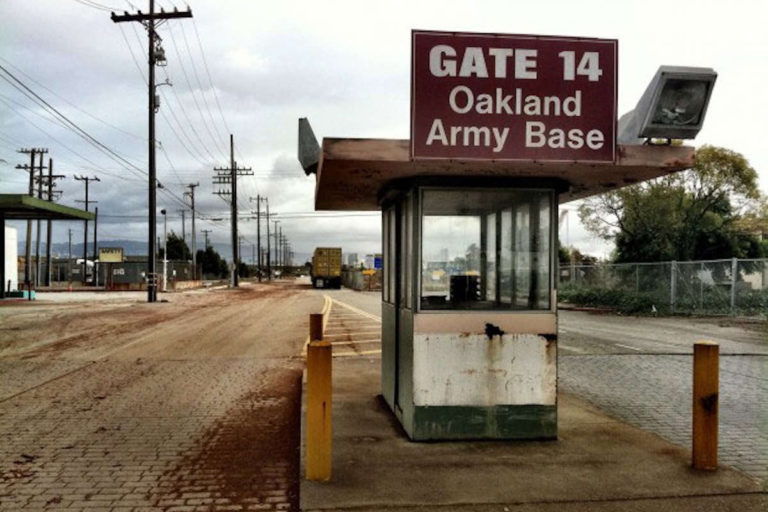
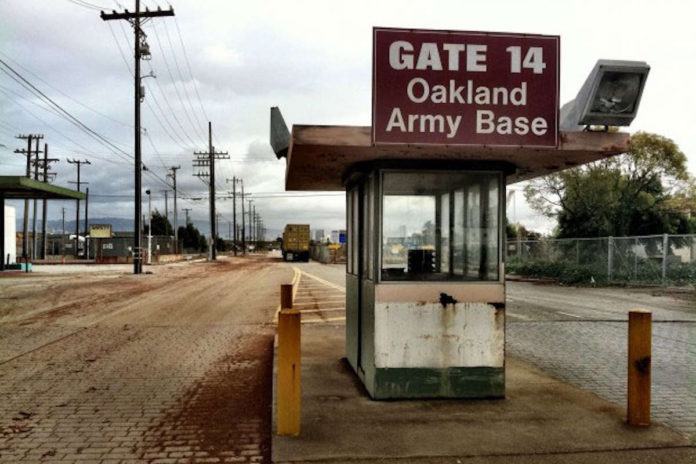
When the Oakland Army Base was finally fully decommissioned in 1999, the 425-acre “city-within-a-city” sprawling from West Oakland to the Bay lost good-paying jobs, housing, stores, bars and restaurants, community centers and other resources. Andrew Jaeger, author of the study “When Labor & Community Come Together: Lessons from the Oakland Army Base Redevelopment” (UC Berkeley Labor Center, May 2025), described bases such as OAB as “self-contained communities…[the] OAB community integrated with Oakland, particularly adjacent West Oakland, since the base employed many local residents. The base was also relatively open to civilian non-employees; there are stories of children from West Oakland playing there and dance nights open to the public.”

West Oakland residents wanted a voice in what would happen as redevelopment plans were proposed. Enter the East Bay Alliance for a Sustainable Economy (EBASE), which helped form the Revive Oakland! labor/community coalition. The coalition led the fight for a community benefits agreement (CBA), which eventually shaped the billion-dollar redevelopment of the former base.

Revive Oakland! integrated the interests of 30 organizations, said EBASE Executive Director Kate O’Hara, including “labor, youth, faith, local community organizations … which shared common interests” in seeing any redevelopment include good quality jobs. “OAB was a thriving hub of jobs and other services,” she said, and community members, having endured a painful period of deindustrialization, did not want “market forces” to be the driving determining factor in the site’s future.

States Jaeger’s study: “Between 1954 and 1985, the city lost over 20,000 industrial jobs, with West Oakland and Black communities bearing the heaviest burden.”

Beginning in 2007 and continuing through 2017, Revive Oakland! led two campaigns to ensure the former-OAB’s now-owners used community input before any redevelopment took place. The first effort, from 2007-2012, concerned the city-owned site developed by Prologis and California Capital and Investment Group; the second, from 2015-2017, targeted the section owned by the Port of Oakland, according to Jaeger’s study. “Both campaigns proved remarkably successful in achieving their demands,” the study states.

Jaeger explained further in an email: “The key success factors were Oakland’s long history of community and worker organizing, which had established networks of trust between coalition members and allies in local government; the institutional resources provided by lead organizations, especially EBASE and the Alameda Building Trades; and the coalition’s compelling message emphasizing the broad benefits of providing good jobs for all.”

EBASE provided crucial full-time organizers, researchers and other support for Revive Oakland!’s multi-pronged community organization efforts, which included door-to-door outreach to residents, town halls at neighborhood churches about the need for good jobs, demanding that city officials commit to supporting an agreement about jobs and large-scale events, such as the Urban Peace Movement’s youth concert and rally in front of Oakland City Hall.

Another important EBASE contribution, the study points out, was its connection with PowerSwitch Action (PSA) and its Community Benefits Law Center. The CBA Revive Oakland! used as a template was provided by PSA, and this “wealth of experience proved invaluable during challenging negotiations, such as when the project developer initially refused direct dialogue with community groups.”

COMMUNITY COALITION Former Oakland city councilmember Nikki Fortunato Bas speaks at a Revive Oakland! rally. (Photo courtesy of EBASE)

Ultimately the Revive Oakland! coalition successfully secured commitments for a living wage for all workers, a 50% local area target for construction and long-term operations work, a 20% apprentice target for construction work, a 25% “disadvantaged” worker target for apprentices and operations jobs, restrictions on the use of temporary workers for warehouse jobs, anti-discrimination fair chance hiring policies and use of an independent employment agency to facilitate local hire success (the West Oakland Job Resource Center). (Source: Jaeger study)

That Revive Oakland!’s efforts made a difference in the lives of local residents is exemplified in the story of Sadakao Whittington. Incarcerated for 17 years for armed robbery in Solano State Prison and released in 2014, he knew finding work would be difficult.

But he had already made up his mind to turn his life around and when he walked into the West Oakland Job Resource Center, he was prepared. “A county worker came in and asked, ‘How can I help you?’” Whittington said. With the center’s help, he passed his job requirements test and got a job in demolition.

“I was the last to be hired—and the last to leave,” he said.

Today Whittington, a respected member of the Sprinkler Fitters Local 483, is about to be certified as an instructor. Working his way up in the trades wasn’t easy. “I didn’t know how to [correctly] read a measuring tape. I had to YouTube it!” he said, chuckling. But putting on his boots, safety vest and hard hat “changed the way people look at me. Ability is nothing without opportunity.”

Whittington credits EBASE for “laying the groundwork” to give him and other West Oakland residents access to good jobs. Although he’d never heard of a CBA in 2014, today he understands how income from those jobs impacts the entire community. “EBASE is like a lighthouse for impoverished communities,” he said.

Now, as Oakland and Alameda County move forward on Coliseum plans, EBASE’s O’Hara said the successes at the former OAB can be replicated. “A Community Benefits Agreement is a central piece,” she said. In fact, she said, “The OAB victory set a national precedent.”

The multi-billion-dollar redevelopment AASEG concept “would create 20 times the number of jobs that OAB has,” Whittington said.

As for the study, “There’s growing interest in using project labor and [CBAs] to create good jobs and ensure private development yields public benefits. These are among the most effective tools available in the current climate…this study will be useful to anyone interested in leveraging these tools—workers, policymakers, community and labor organizers, and political leaders,” Jaeger said.

Culture, community and clothes emerge in Grand Lake

0

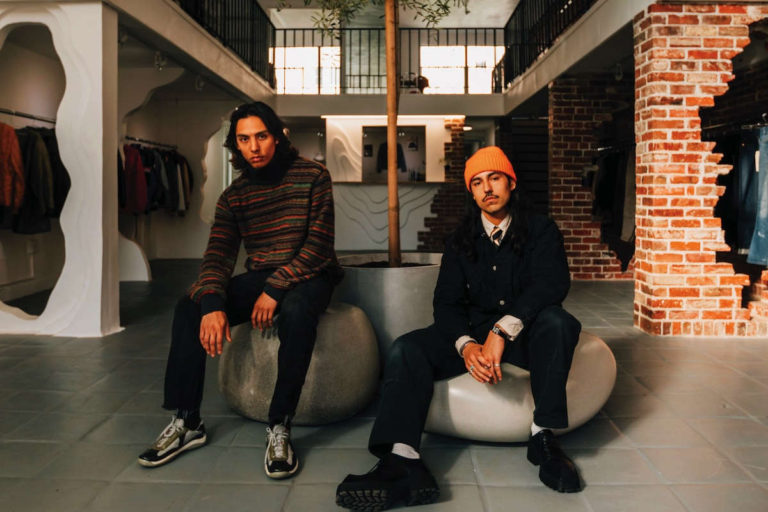
On Friday and Saturday evenings, a new energy buzzes along Lakeshore Avenue in Oakland’s Grand Lake neighborhood. Artists, rappers, singers and producers from across the Bay Area are finding common ground in an unexpected gathering place: 3319 Marché. Since opening in February 2024, the vintage clothing store has evolved into a cultural hub. At a time when the outlook for Bay Area retail feels uncertain, 3319 Marché defies the trend by staying rooted in hometown pride and creative community.

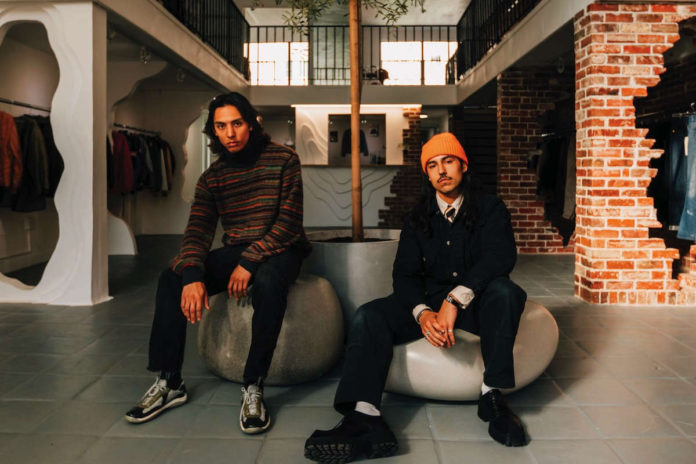
Tai Raino-Tsui and Marco Verdin—3319 Marché’s founders—are Oakland natives bonded by a mutual love of style, art, music and the city that shaped them. Their creative partnership traces back to a chance encounter in 2017 while waiting in line for Yeezys at Undefeated, the cult sneaker boutique in San Francisco’s Hayes Valley.

“When you’re in line for six hours, you don’t really have a choice but to make friends with the people around you,” Raino-Tsui said.

What began as a conversation about sneakers evolved into a shared vision rooted in fashion, sound and Oakland’s cultural fabric.

At the time, Verdin was pursuing a degree in education at San Francisco State, with dreams of becoming a teacher. Raino-Tsui, who grew up in the Grand Lake community, had long been immersed in fashion. For him, owning a storefront on Lakeshore feels like a full-circle moment.

“I used to walk these blocks when I was 8 years old, and I’d say to myself, ‘I want my own store here one day,’” Raino-Tsui said. “This was the block I knew for retail. So, just growing up right by the store and then having one here now—it feels very fulfilling.”

After meeting in 2017, the two continued building a friendship and creative partnership focused on community, secondhand luxury and high-end fashion.

“During Covid, we both had stuff stacking up,” Verdin said. “We started talking about doing a store. That led to a pop-up in downtown Oakland. It still wasn’t executed to the degree we dreamed of. It was a step toward the goal—but not close enough to the finish line yet.”

Though their early efforts didn’t unfold exactly as planned, launching a pop-up during the pandemic and setting up near Good Mother Gallery helped build a foundation. At the time, few vintage shops operated in downtown Oakland. Good Mother became a creative incubator—connecting them to a wider artist community and the world of event curation.

Their permanent location—a converted hair salon—reflects their blend of ambition and intention. Raino-Tsui, who studied fashion at FIDM in Los Angeles, says he and Verdin pulled inspiration from niche shops in L.A., New York and Japan.

Though understated in design, the space is deeply curated. From the scent in the air to the vintage speakers, to the sewing machine used for in-house tailoring, everything inside 3319 Marché was chosen with care.

“We built everything from the ground up with our bare hands,” Raino-Tsui said. “We got our hands dirty for sure. There are a lot of unseen hours and grind that went into it. We didn’t just show up with this fly store.”

While most retail brands lean into e-commerce, Raino-Tsui and Verdin committed to the physical retail experience. In an era when brick-and-mortar often feels like a dying art, they offer a counterpoint.

“People don’t really see the point of it anymore,” Verdin said, acknowledging the cost and risk of maintaining a storefront. “But for me, that’s where the value is. The whole thing is the experience—being able to walk into a store, feel the energy and connect. It gives the product more meaning, more weight.”

Today, 3319 Marché has become a creative hub for local artists to showcase their work. In May, Oakland rapper Seiji Oda hosted a listening event for his album human + nature. Last October, rapper and producer Ovrkast shot the music video for “CUT UP” inside the store. Most recently, Oakland band MeloDious celebrated their nine-year anniversary with an intimate in-store concert.

“We really do this for the community, for the love and to push boundaries,” Raino-Tsui said.

Get pressed, not stressed

0

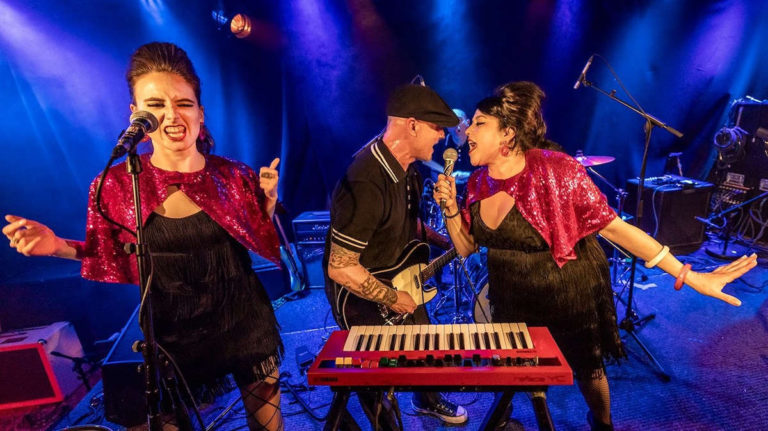
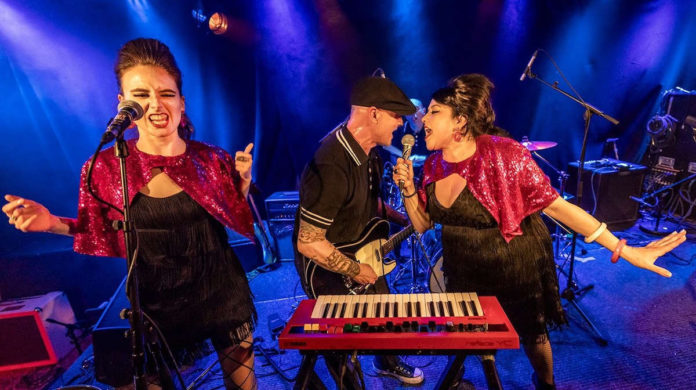
Hot Laundry plays old-time rock ’n’ roll with an infectious energy. The women in the band’s frontline—lead singer Janette Lopez and backing vocalists Gena Serey, Ileath Bridges and Kate Juliana—pump out stirring harmonies and move across the stage like the Ikettes.

Grady Hord, the band’s guitarist and songwriter, said his initial vision of the band was a group that combined the energy of the Sonics, an early proto-punk band from Tacoma, Washington, with the soulful delivery of a vocalist like Tina Turner. When he described his idea to Lopez, she was all in.

“I ain’t got her legs, but I got her spirit,” Lopez said, laughing. “I met Grady outside of the Knockout [in San Francisco], after a Halloween show he’d played. He asked me if I’d like to play some music. He wasn’t hitting on me; he actually wanted to make music! I suggested a frontline of women, doing dance moves to complement the music. By the next Halloween we had a band together and played at the Knockout.”

The initial show consisted of covers of Ike and Tina Turner hits, but Hord was soon turning out his own sharp, punchy tunes blending pop, punk, R&B, blues, soul and rock ’n’ roll. The group they assembled had Casey G. on bass guitar and drummer Arun Bhalla laying down a rhythmic foundation to complement the concise melodies driven by Hord’s inventive guitar work.

The dynamic lead vocals of Lopez, backed by the blended voices of Serey, Bridges and Juliana, put the icing on the cake. The marvelous footwork of the women, as they moved around the stage, kept the energy high. “We want to have a good time,” Lopez said. “We want everyone else to have a party, too. It’s nonstop entertainment, from the first note.”

The songs on House Rocking, the band’s new EP, capture the energy of their live shows. The band cut it at their rehearsal space in San Francisco.

“We record all the music live, with a simple setup—a Mac laptop and a handful of microphones,” Hord said. “Then I go back and dub in vocals. Sometimes I layer a guitar solo, maybe some ear candy. I keep it simple. There’s no editing or moving things around. It’s real music. The listener will get an accurate version of what we sound like.”

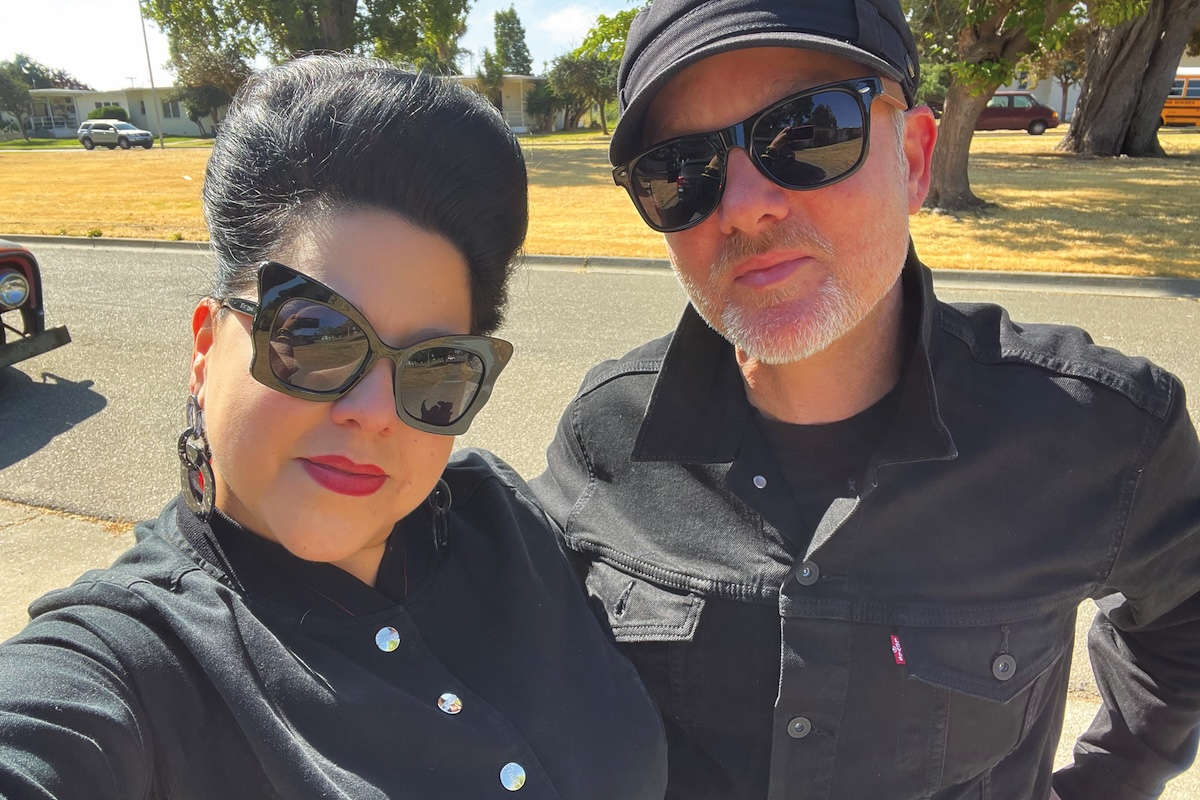
KNOCKOUT SYNERGY Hot Laundry lead singer Janette Lopez and guitarist/songwriter Grady Hord met outside a show in San Francisco. (Photo by Janette Lopez)

The tracks on the EP will have listeners up and moving the minute they hit “play.” “Dirty Robber” is a cover of a hit by the Fabulous Wailers—not Bob Marley’s Wailers. The original has a bluesy feel, but the Laundry arrangement is pure rock, played in overdrive. Lopez and the women open with the “Na na, na na, na na” chant often used by schoolyard bullies after they’ve done some damage.

The song describes the antics of an egotistical lover only interested in their own satisfaction. The women sing the chorus in harmony, while Hord delivers short, blistering solos over the breakneck rhythms of Casey G. and Arun Bhalla.

“Time for Bed,” a high-speed rocker and the opposite of a lullaby, has a chorus that sticks in one’s head. Lopez sings the verses in a carefree tone. When she says she can’t break the rules, the implication is just the opposite. Hord’s shredding solos ride the tsunami laid down by the rhythm section.

Lopez and Hord both come from working class backgrounds, and their roots are reflected in the lyrics of the songs on House Rocking. “The songs are about working your butt off,” Hord said. “Long days filling the pockets of your boss. We throw house parties when we get home. We need to fill our hearts with love to give us the energy to go back to work the following week. With hard work comes some great parties.”

Hard copies of the EP will be available on the band’s Rebeldes Unidos logo, and the band’s looking forward to their residency at the Make Out Room.

“I would like our music to affect your inner light, the one that sparks your best self,” Lopez said. “Life is short, and we’re all just a bunch of sensitive meat sacks. Let’s get loose and dance.”

Listen to tracks from ‘House Rocking’ and other releases on Hot Laundry’s Bandcamp page: hotlaundry.bandcamp.com/album/house-rocking. The band will play every Monday in August from 6:30–9:30pm at the Make-Out Room, 3225 22nd Street, San Francisco. 415.647.3997. makeoutroom.com

Reviving roots Down Home in El Cerrito

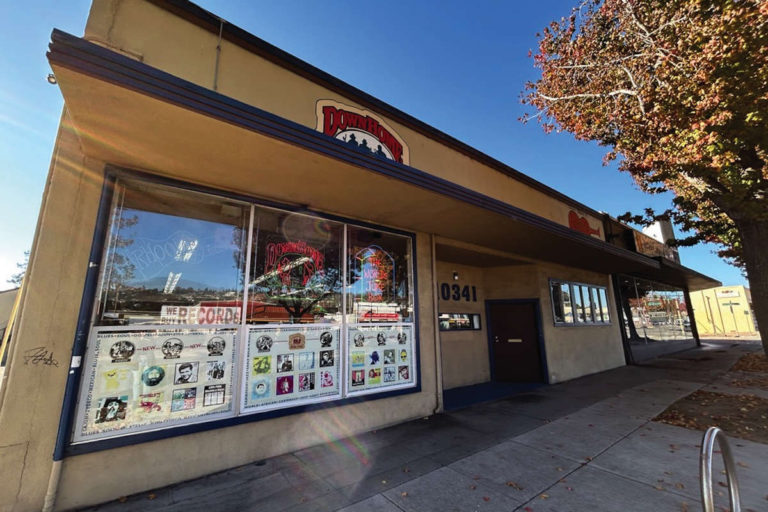
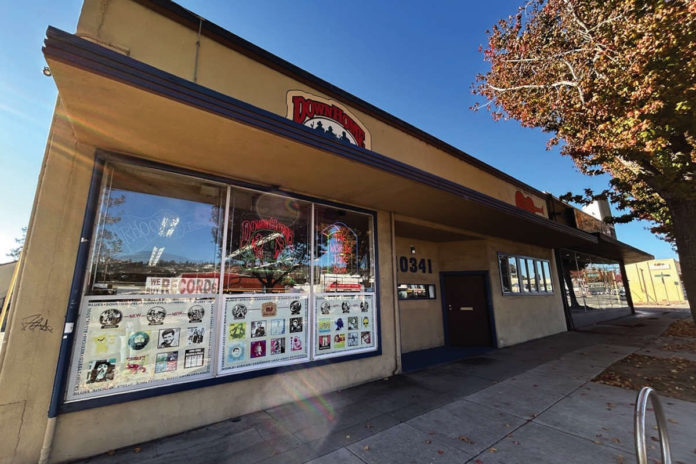
The walls of 10341 San Pablo Ave. in El Cerrito are coated with decades of music history. Nearly 50 years ago, musician and archivist Chris Strachwitz bought the modest building and began filling it. He had spent decades recording musicians across the U.S. creating songs specific to their culture and traditions: tejano, zydeco, cajun, blues. At the front of his new building he opened a record store, selling primarily his collection of roots music, but later jazz, country, folk, zydeco, cajun, gospel and more.

Strachwitz invited his friend, Les Blank, to set up a film studio in an empty office upstairs, and they became frequent collaborators. The annexed back of the building, invisible from the outside but massive on the inside, became Strachwitz’s workspace for his burgeoning record label, Arhoolie Records.

“There was a lot of love in them, for their subjects and their collaborators and the people they documented and the culture that they documented,” said Clarke Noone, an archivist who worked with Strachwitz in the final years of his life. “That animates how we are entering this next chapter.”

For decades, the store, the film studio and the record label existed in harmony, paying cheap rent to Strachwitz and attracting fans from around the world. The store sold the label’s music, and conversations with musicians spun off into documentaries. Strachwitz sold Arhoolie Records to the Smithsonian in 2016, but he formed the Arhoolie Foundation to document and celebrate roots music, often collaborating with Les Blank Films. The foundation hired Noone in 2022 to catalog Strachwitz’s life and work.

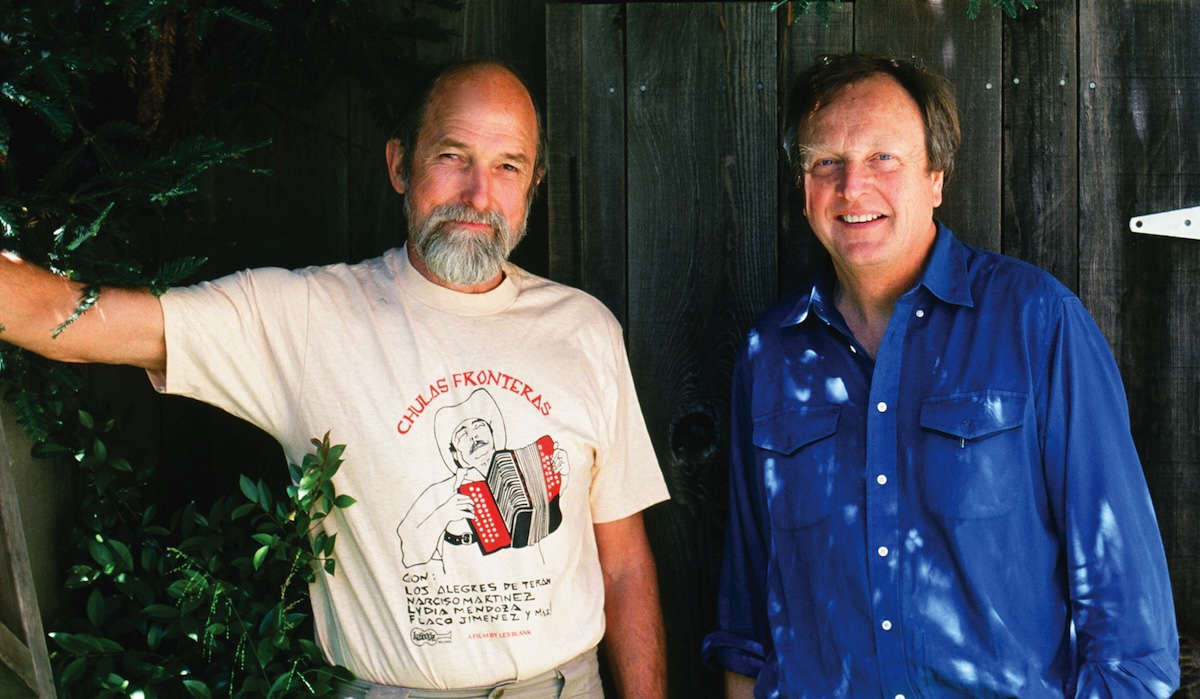
ARTFUL COLLABORATION The late Les Blank, left, and Chris Strachwitz set up a film studio upstairs at the Arhoolie building. (Photo by Chris Simon, courtesy of Les Blank Films)

But Strachwitz died in May 2023, leaving the building on San Pablo Avenue to his extended family and the future of its shared tenants in flux. The record store, film nonprofit and music foundation worried about how they would afford to pay rising rents if the building was sold to a new landlord. They worried, too, about preserving the decades of memories on the walls.

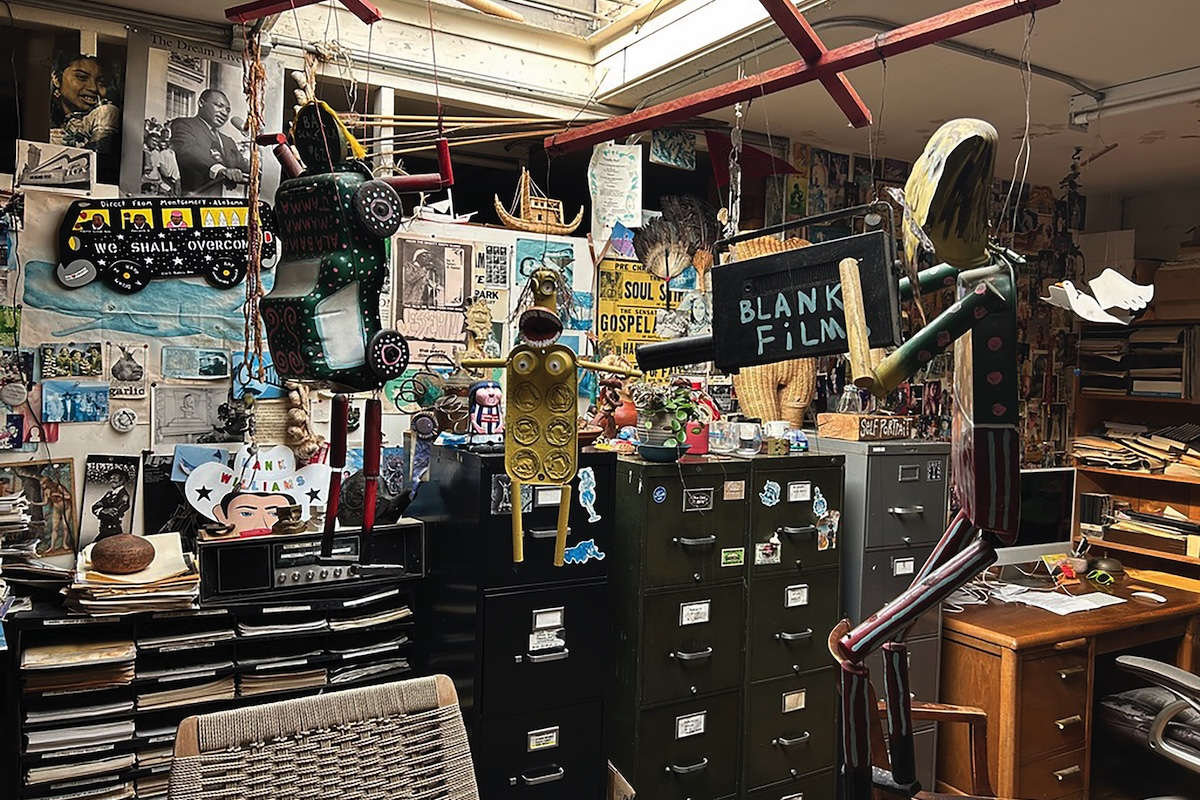
In the record store, the walls are collaged with tour posters and LP covers. And in the archiving area, CDs are stacked in neat shelves, and rows of 78s are piled, alphabetized and carefully tucked into shelves behind thin silver chains, which protect them from tumbling to the ground during an earthquake. Upstairs, the walls of Les Blank’s former studio are tacked with postcards and photos, leaving almost no white space. Oddities from his movies—a toy car puppet dangling from the ceiling, a shoe encased in resin—create a sense of inspired chaos.

“The synergy of all the organizations working together, that would be impossible to recreate, I think,” Noone said. “If that breaks, it’s like glass. You can’t put that back together.”

After months of negotiations, the building’s tenants struck a deal with its new owners to purchase 10341 San Pablo Ave. Harrod Blank, Les Blank’s son, who took over Les Blank Films after his father died, put a down payment on the building through the organization in November 2024. By April, Blank had to raise more than $2 million to fulfill the market-rate purchase agreement.

With the help of donors, the three organizations succeeded in keeping their space, Blank said. Much of the funding came from one individual, though Blank declined to give that person’s name or the amount they contributed. “I almost fell on the floor,” he said.

The Arhoolie Foundation and Les Blank Films are now co-owners of the building, with Down Home Music as a tenant. But much of Down Home Music’s inventory was left to Strachwitz’s heirs. It was appraised for an “astronomical value,” according to Blank. Down Home Music is now a nonprofit foundation called “Downhome Home Music Foundation,” and is currently purchasing the inventory back.

A GoFundMe set up by Blank raised $67,000 to be split between the Arhoolie Foundation, Les Blank Films and Down Home Music. Some of that will go toward purchasing new inventory for the store, and Down Home will ask for donations as well.

But Blank and Noone, along with Down Home Music co-Manager JC Garrett and Arhoolie Foundation Executive Director Adam Machado, have an ambitious vision for remaking the entire space. Noone and Blank wanted to keep the three organizations together to preserve the legacies of Strachwitz and Les Blank, and the culture of collaboration they modeled in their work. Now, they are hoping to extend that out to the community that supported them in their time of need.

“It’s clear for all three of us that we want to be together, so it’s sort of a marriage of the three entities,” Harrod Blank said. “And we are going to up our game, we all agree.” 

Blank recalled his first meaningful memories of the building, when he was in his 20s and making a documentary on art cars called Wild Wheels.

“Chris would work late till about three in the morning doing the Arhoolie stuff, and then I would keep working until sunrise,” Blank said. “I did that for two years, so I grew up in that building, and I watched how much good work was created in that building and what it represents culturally. It’s a triumvirate of these entities that do so much.”

INSPIRED CHAOS The walls of Les Blank’s former studio are tacked with postcards and photos, accompanied by oddities from his movies. (Photo by Jessica Blough)

Each of the three entities has a vision. Noone, with the Arhoolie Foundation, wants to create more educational opportunities around the practice of archiving. Noone, Machado and Blank also want to convert a segment of Strachwitz’s former property into a space where an artist or performer can live and work in collaboration with the foundation and film studio.

Though the record store’s inventory is still in flux, the art that adorns its walls belongs to the Arhoolie Foundation. A 2018 exhibit in the San Francisco Airport highlighted the work of Arhoolie and Down Home Music, and one of the SFO curators recreated the exhibit on the store’s walls.

“The people that work here, they are all like docents of this museum,” Blank said. “You can ask them any question you want about the music that’s in that store, and they know all the answers.”

But Garrett wants more for the space.

“I don’t want to be just a museum, a collection of oddities,” he said. “I’d like to have it be more vibrant and living.”

The building’s tenants agreed that the Down Home Music space needs more room for performers and live events, so they plan to reorganize the store space. Long term, Garrett wants to invite a rotating crew of vinyl collectors or sellers to the space. He is inspired by Crossroads Music in Portland, where 35 collectors hawk their merchandise in a shared space.

Blank wants to install ornate handmade metal umbrella light towers with string lights in Down Home Music’s parking lot and screen films on the building’s blank walls, setting up food trucks and chairs in the parking lot for impromptu festivals. The area is primed for it, Machado said.

“There’s a little bit of a corridor kind of opening up where our building is, across the street,” Machado said, pointing to pop-up music events at nearby businesses Banter Wine Bar and Little Hill Lounge. “There’s a little bit of a buzz happening. As we tell people that we’re gonna add another piece to that, there’s just excitement already there in the air.” 

Machado said, “Just getting a building was step one. We’re now on step two. We have a long way to go, but we have the security that we now control our destinies in it.”

Even the crawfish got soul

0

The album A Tribute to the King of Zydeco, Clifton Chenier, dedicated to the musical pioneer of zydeco music, arrived on June 25. It features 12 deep grooves by some of the juiciest names in entertainment, like the Rolling Stones, Lucinda Williams and Taj Mahal.

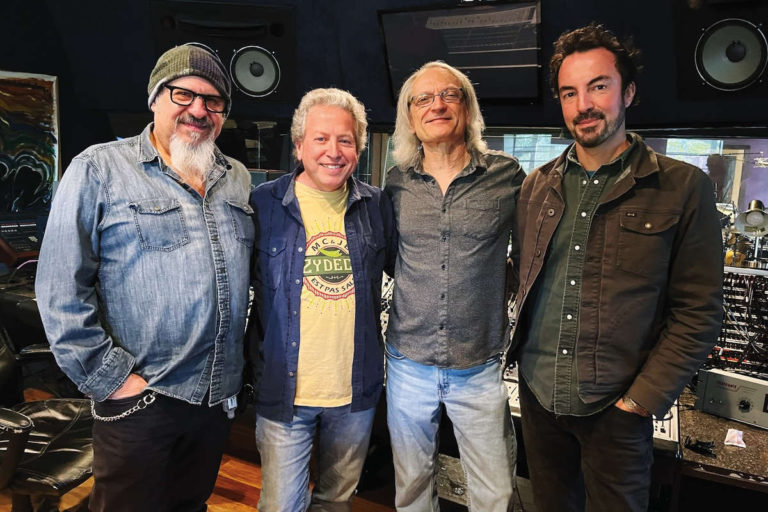
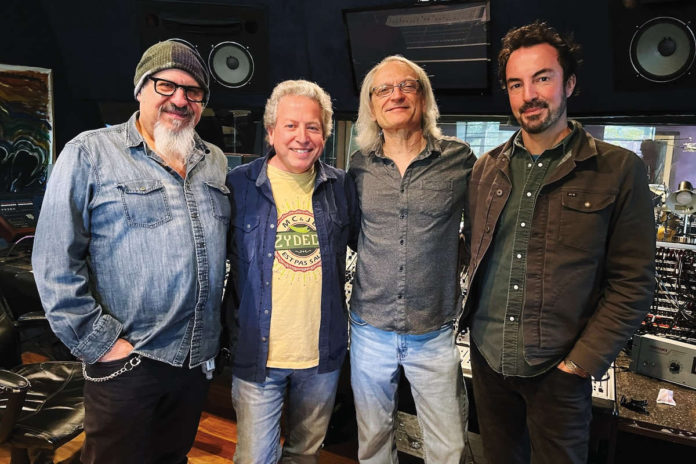
The record was produced by Steve Berlin of Los Lobos, Cajun legend Joel Savoy and John Leopold, a Santa Cruz activist and former county supervisor.

“If you have ever heard of zydeco music, it’s because of Clifton Chenier,” Leopold says. Like a man on a mission, Leopold begins an in-depth TED Talk on the roots of zydeco and the influence of Chenier. His passion for this under-represented form of music is evident in every word he says.

For brevity’s sake, here’s a condensed history:

Zydeco is often a blisteringly fast genre of music that moves people’s feet, and souls, whether they consent or not. Ground zero seems to be southwest Louisiana, where people spoke Creole, pidgin, English, French and other languages on the reg.

The music that bubbled up out of this multi-ethnic rabbit stew was played on accordions and other forms of homemade percussion instruments, like washboards, to create a new world of sound. Like much regional music it stayed regional for a time until a star, Clifton Chenier, broke out and shared it with the world.

Having grown up with an accordion-playing father, Chenier was born to tour. In 1955 he had his first national hit—“Hey Little Girl,” a remake of New Orleans legend Professor Longhair’s song—and all the states across the land got their first taste of spicy gumbo.

Chenier’s success brought him sudden attention and he began to tour with people like Ray Charles, his hero; Etta James; and Chuck Berry. But not until 1966—when esteemed San Francisco Chronicle critic Ralph J. Gleason wrote a magical, glowing review of Chenier’s performance at the Berkeley Blues Festival—was Chenier able to step out from behind the legends and find his rightful place onstage.

Zydeco contains an undeniable power. Back when Chenier played in the 1950s, he was still in his 20s and his shows ran all night long. “Clifton made zydeco his own,” Leopold says. “Not only was he a great musician, but he would play shows to unite audiences. Clifton would book shows down in southwest Louisiana, where black and white audiences didn’t mix. But when he played, he would bring everyone together.”

“I heard an interview that Clifton gave once. He said he would get harassed if he walked offstage and went to the bathroom. It was easier just to stay on stage, and all his musicians had to stay onstage as well. And they would play for four hours. He had an amazing band,” Leopold adds.

The three producers, through decades of connections, brought together a legion of artists to celebrate and record the music of Clifton Chenier. “We did six days of recording in Lafayette, Louisiana,” with a revolving door of talent like Jimmie Vaughan of the Fabulous Thunderbirds, Molly Tuttle, John Hiatt and David Hidalgo, Leopold says.

He continues, “We had close to 40 positions on this album. The house band was all stars.” One of its members, Sherelle Chenier Mouton, is Chenier’s granddaughter.

Of course, having the Rolling Stones on one’s album is sure to up one’s real estate. “It just raises the amplitude of people knowing about the album. It’s good to bring in people so they can connect with zydeco. And you get to hear Mick sing in French,” Leopold says.

Chris Strachwitz, a true champion of Chenier on vinyl and stage, founded Arhoolie Records in Berkeley in the mid-1960s. Carrying the torch of promoting underrepresented voices into the 21st century is album co-producer Joel Savoy, who also owns Valcour Records. Savoy comes from a family that has loved Cajun music for generations, and his father was close to Strachwitz. 

He “was my dad’s best friend, so we grew up hearing Chris talk about the label and about Clifton and all the artists,” Savoy says from his home in Louisiana.

Savoy is also a fiddle player who tours the world, much like Chenier, and is more than happy to share the sounds of his home. “I would say that whenever I travel, I’m an ambassador to my people and my culture. I do represent Louisiana every time I go somewhere, whether I want to or not, because you know me and all of my other traveling musician friends from here, anytime we go anywhere, we are spreading the gospel about the great state of Louisiana.

“Louisiana is so mysterious to many,” he adds. “We love our Acadiana, the community here, and we’re very proud to go all over the world and share our music. People really have started to connect to not only traditional vernacular music from the South Louisiana corner, but from all over.”

Fans can’t honor the legacy of the King of Zydeco without the music benefitting and uniting others. Valcour Records donates all profits from the sale of the album to the Clifton Chenier Memorial Scholarship Fund.

Valcour Records partnered with the Center for Louisiana Studies at the University of Louisiana at Lafayette. The fund offers annual financial assistance to students studying traditional music, specifically zydeco accordion, at the university. It’s a sure thing Chenier would approve of the music moving through the generations.‘A Tribute to the King of Zydeco, Clifton Chenier’ is available for shipping and download at valcourrecords.com.

Guide to flying artwork

Guide to flying artwork
What lifts the heart more than unexpectedly encountering a beautiful piece of Nature’s artwork, a.k.a. a butterfly? The Smithsonian says approximately 17,500 species have been identified globally, and no one yet knows what glories still float about in deep rainforests. We don’t have rainforests in the East Bay, but we do have at least 100 species of butterflies. That number...

The Beat gets beat

The Beat gets beat
The world has had 68 years to chew on Jack Kerouac’s On the Road. But if the new documentary Kerouac’s Road: The Beat of a Nation is any indication, the final literary/cultural verdict on that 1957 landmark novel is a long way off. Farther even than the distance between the fictional Dr. Sax’s hilltop hideout in Lowell, Massachusetts, and...

Sobo Ramen expands to Berkeley

Sobo Ramen expands to Berkeley
Ken Loi designed the manga-adjacent mural inside Sobo Ramen. It features a crane flying over some gigantic cherry blossoms and the stylized underside of an umbrella. “The umbrella symbolizes shelter and protection,” he said in a phone interview. “Rain or shine, this is where you gather.” In Japan, cherry blossoms bloom once a year. Loi included them in the mural...

Free Will Astrology: Week of Aug. 13

Free Will Astrology: Week of Aug. 13
ARIES (March 21-April 19): Rama is the star of the ancient Hindu epic story, the Ramayana. I love him! He’s one of my favorite legends! His heroic journey isn’t fueled by a greed for power or personal glory. Unlike 90% of modern action heroes, he’s not pumped up with anger or a lust for vengeance. Instead, he is animated...

Social Eyes: Week of Aug. 7-13

Social Eyes: Week of Aug. 7-13
THURSDAY, AUG. 7 POP WANDA WHAT Wanda What’s music pairs perfectly with an Oakland summer day. The self-identified “dyke rock” artist blends electronica, a bit of country and indie rock to create dream-pop soundscapes that’ll have the crowd swaying like palm trees. In their latest album, August 2024’s Dyke TV, lush synths and sparkly beats play a leading role, scoring bittersweet tales...

Is the Oakland Army Base redevelopment the future Coliseum template?

Is the Oakland Army Base redevelopment the future Coliseum template?
As the County of Alameda continues a much-prolonged process toward redevelopment of the Coliseum, a process expedited earlier in July when the board of supervisors voted to sell the county’s 50% ownership of the property to the African American Sports and Entertainment Group (AASEG), a redevelopment model that began emerging 25 years ago is receiving renewed attention. When the Oakland...

Culture, community and clothes emerge in Grand Lake

Culture, community and clothes emerge in Grand Lake
On Friday and Saturday evenings, a new energy buzzes along Lakeshore Avenue in Oakland’s Grand Lake neighborhood. Artists, rappers, singers and producers from across the Bay Area are finding common ground in an unexpected gathering place: 3319 Marché. Since opening in February 2024, the vintage clothing store has evolved into a cultural hub. At a time when the outlook...

Get pressed, not stressed

Get pressed, not stressed
Hot Laundry plays old-time rock ’n’ roll with an infectious energy. The women in the band’s frontline—lead singer Janette Lopez and backing vocalists Gena Serey, Ileath Bridges and Kate Juliana—pump out stirring harmonies and move across the stage like the Ikettes. Grady Hord, the band’s guitarist and songwriter, said his initial vision of the band was a group that combined...

Reviving roots Down Home in El Cerrito

Reviving roots Down Home in El Cerrito
The walls of 10341 San Pablo Ave. in El Cerrito are coated with decades of music history. Nearly 50 years ago, musician and archivist Chris Strachwitz bought the modest building and began filling it. He had spent decades recording musicians across the U.S. creating songs specific to their culture and traditions: tejano, zydeco, cajun, blues. At the front of...

Even the crawfish got soul

Even the crawfish got soul
The album A Tribute to the King of Zydeco, Clifton Chenier, dedicated to the musical pioneer of zydeco music, arrived on June 25. It features 12 deep grooves by some of the juiciest names in entertainment, like the Rolling Stones, Lucinda Williams and Taj Mahal. The record was produced by Steve Berlin of Los Lobos, Cajun legend Joel Savoy and...
19,045FansLike
17,709FollowersFollow
61,790FollowersFollow