We’re in that weird, transitional part of the year where the summer blockbusters have died out, but the prestige Oscar-bait is still being held back for another month or two. August and September are a crapshoot when it comes to whether the films will be of quality, since it’s normally when the studios release movies they’re clueless about handling or marketing. But heading into September we have a few interesting choices, including a remake of a classic from a modern master, an auteur’s newest provocation and a darkly funny romcom—also a remake! Let’s take a look.
First off, we have Caught Stealing, the new film from Darren Aronofsky, a brilliant filmmaker who has spent most of his career trafficking in heady miserablism with a dash of healthy misanthropy. He’s given viewers the hopelessness of drug addiction in Requiem for a Dream, the existential horror of other people in Mother!, the fear of mental illness and obsession in Black Swan and don’t even get me started on the unintentional misery porn of The Whale. I love several of his movies, but holy hell, they’re hard to revisit.
Caught Stealing initially seems like a departure as it’s based on an intensely fun page-turner by the great Charlie Huston and the film’s trailers made it look like a fast and loose riff on Martin Scorsese’s After Hours. The film follows Hank Thompson—played by Austin Butler, fully embracing his seemingly effortless movie star persona—a former high school baseball prodigy who, after a horrific injury, is now an alcoholic bartender in 1998 Manhattan. When his liberty-spike-sporting neighbor Russ pulls him into some shady dealings with Hasidic hitmen, Russian mobsters and an adorably bitey cat, Hank’s life goes from disappointing to dangerous overnight.
While Caught Stealing is most assuredly a departure from Aronofsky’s earlier work, there still runs beneath the surface a deadly serious undercurrent that gives even the wackiest moments a violent weight. That said, the film moves like a rocket across period NYC—look for the quick shot of Kim’s Video—and includes a few madcap and exciting sequences more propulsive than anything I’ve seen in his earlier work.
But Aronofsky struggles tonally to keep the film either as breezy or brutal as he wants it to be. What initially feels like a goodnatured crime caper ends up as a savagely violent and nasty thriller. I’m struggling to decide if that’s a feature or a bug, and to really understand Aronofsky’s intentions.
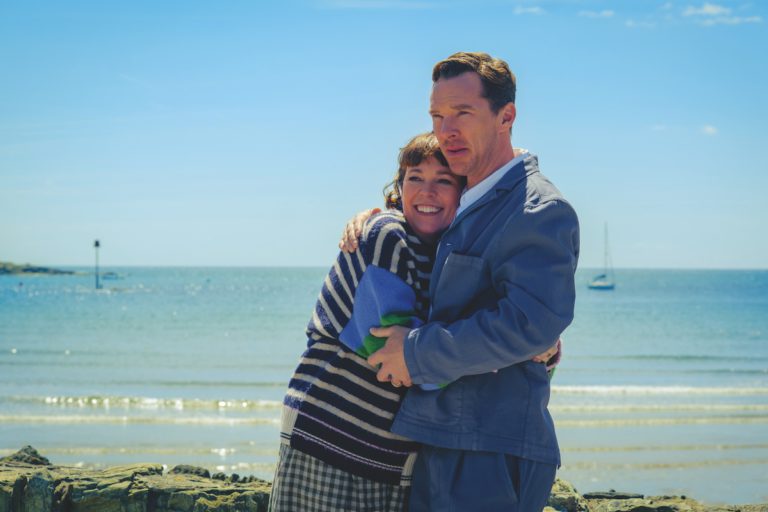
However, The Roses pulls off that tonal dance effortlessly, frontloaded with wonderfully nuanced work from Olivia Colman and Benedict Cumberbatch as Ivy and Theo Rose, who after one of the most sexy and charming meet-cutes I’ve seen in cinema, get immediately married and fall deeply in love. She’s a chef, he’s an architect and they eventually have two precocious and strange children. If you’ve seen Danny DeVito’s The War of the Roses from 1989, you’ll know exactly where this is going and it’s nowhere good. Ivy and Theo grow to despise each other and things get dark, funny and dangerous.
I hate to say it, but The Roses actually works better than the original, with Cumberbatch and Colman having such a gorgeous and homey chemistry that you genuinely want them to fix their problems and not destroy each other’s lives. As funny as the film gets, the Roses are so grounded as characters that it reminded me of my own failed loves and I found it emotionally authentic as well as hilarious. It subverts the cartoonish violence of the original and becomes easily one of the finest comedies of the year.
LOOSE REMAKE Denzel Washington and Ilfenesh Hadera star in Spike Lee’s ‘Highest 2 Lowest.’ (Photo courtesy of Apple)
Finally we have Highest 2 Lowest, Spike Lee’s loose remake of Akira Kurosawa’s 1963 masterwork High and Low. I don’t want to share too much about the story other than to say it follows Denzel Washington—working with Lee for the first time since 2006’s underrated Inside Man—as a wealthy music executive who gets caught up in a kidnapping scheme.
Is Highest 2 Lowest as good as High and Low? Not even close, but nothing ever could be because Kurosawa was always working on a different level than any other filmmaker. Still, it shows Lee more energized behind the camera than I’ve seen him in years, using all of his tricks with editing, score and performance to craft a genuinely compelling film. I have nothing but respect for Lee even attempting a remake of such a stone classic. The movie doesn’t have quite the same thematic depth as High and Low, but is one hell of an entertaining ride, nonetheless.
That’s the perfect description of all three movies this week, actually. They are rides of differing quality and destinations that emphasize enjoying the journey more than getting caught up in where the train stops. All three are worth the trip, regardless.
On Aug. 21, the American Supreme Leader created yet another dubious government agency. The “National Design Studio” is named with this administration’s mastery of doublespeak. One imagines this studio as a facility modeled after the one in Noah Hawley’s TV series Legion, where autocad and photoshop are repurposed for mind-control experiments and all of the meanings implied by “branding.” Because only billionaires matter in the 21st century, Joe Gebbia (Airbnb) was appointed to head the agency as the “Chief Design Officer.” Photos of his smug, benign smile are just as terrifying as RFK Jr.’s official snarl.
By accepting the position, Gebbia’s complicity is a given—whatever damage this Design Studio manages to unleash. But, should we ever return to a less punitive era, will he be considered as culpable as the man, and the Legion of Super-Villains, who appointed him? In Andres Veiel’s documentary Riefenstahl, the director and the audience have the answer to that question from the start. With vast archival resources at his disposal, Veiel has constructed an eviscerating cinematic response to Leni Riefenstahl’s life and career as well as Ray Müller’s 1993 documentary, The Wonderful Horrible Life of Leni Riefenstahl.
There is no background narrator summing up Riefenstahl’s collaboration with Adolf Hitler and the broader Nazi party on Triumph of the Will and Olympia, the films that established her reputation as the preeminent documentarian of the era. Veiel, instead, ingeniously repurposes Riefenstahl’s own work, and her own voice, to present a litany of damning evidence. Filmed 10 years before Riefenstahl’s death at the age of 101, Veiel inserts an interview cut from Müller’s doc. In it, Riefenstahl exhibits the kind of rage that matches Hitler’s oratorical flourishes as she reaches a fever pitch of unflinching ferocity.
Müller had the audacity to ask what interlocutors had been asking of her for decades. He was looking for a glimmer of contrition since an apology, from Riefenstahl’s point of view, was hors de combat. Veiel skillfully arranges video excerpts from British, German and American television talk shows. Whether in black and white or in bleached-out 1970s sepia tones, Riefenstahl returns again and again with the same set of scripted denials, the same unconvincing mask that reveals rather than hides her spiritual decay. With each passing decade, she remains the injured party, wrongly held to account for gas chambers she didn’t build and guns she never fired.
But the former actress kept returning to the stage. Although Riefenstahl appeared to enjoy tangling with the attention from interviews, both the negative and the positive responses from viewers, Veiel also unearths audio recordings of her conversations with Albert Speer, the Nazi Minister of Armaments and War Production. After his release from prison in 1966, they engaged in a correspondence. As baleful players on a post-Nazi world stage, they advised each other on how to profit from their besmirched reputations. To feed a news-hungry public, the media paid both shadowy figures handsomely. The steely eyed Riefenstahl gleefully took the money, retreated to a lovely forest chalet, and answered her detractors with an insolent, downturned rictus.
Riefenstahl cleanly avoids a sexist approach while recounting her life. The documentary does include Riefenstahl’s accounts of a paternal beating and at least two mentions of rape. But anecdotes about her formative years are included to fill in her portrait not to arouse sympathy from the viewer. For Veiel, she is first and foremost a Nazi propagandist, spiritually and psychically paired with her racist cohorts for eternity.
In 1993, Müller was revisiting Riefenstahl during the production of her final film, Underwater Impressions (2002). Her stance of “plausible deniability” infuses his three-hour film with noxious fumes, but Müller expects his audience to come to its own conclusions. When Veiel marries an audio account of German soldiers murdering prisoners with a close-up of Riefenstahl as an eyewitness, it conveys the truest emotion that ever registers across her celluloid face.
‘Riefenstahl’ hits select screens in San Rafael and San Jose; streams on Apple TV+ starting Oct. 21.
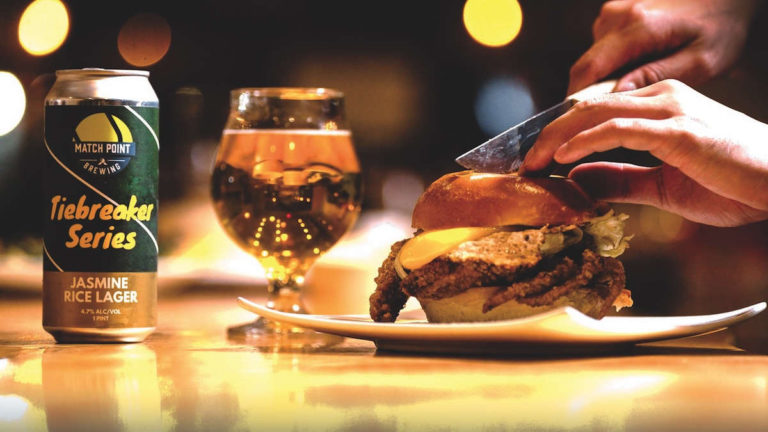
A tennis ball makes up the top half of Match Point Brewing’s logo. Co-founders Johnny Weng and Simon Chen grew up playing the sport together. Their ongoing dedication to the game includes an annual tennis tournament held in June at Albany’s Memorial Park and a recent U.S. Open Finals Watch Party. Chen and I spoke before the men’s final and he told me he was rooting for Carlos Alcaraz since Jannik Sinner won last year—in prime form, Alcaraz won in a decisive four sets.
But tennis isn’t the only sport Match Point hosts. “We’ve also been trying to let people know we are playing the WNBA Valkyries’ games,” Chen said. Earlier this summer they held a homebrew bottle share and a speed-dating event. Match Point is a welcoming place, closer in spirit to the dearly departed Albatross than it is a man cave.
“We only have TVs directly behind the bar, but near the front we have room for open-mic nights,” he said. There’s also a mahjong table set up for people who know how to play.
Weng and Chen began making beer as a homebrewer’s hobby. They bought their first starter kit and supplies at Oak Barrel Winecraft in Berkeley. “They’ve been around for a really long time,” Chen said. “I think a lot of local Bay Area breweries also started homebrewing there first.” The kits, Chen explained, come with detailed instructions about portions and how to thoroughly sanitize the equipment.
In 2024, they moved into Albany Taproom’s former location on San Pablo Avenue. “It did come with things that we would have needed to get it going, so that saved us time and some upfront startup capital,” Chen said. Match Point was also eligible for a new business grant from the City of Albany—proof that government can work for, rather than against, its citizenry.
“We’re making small batches of beer that we self-distribute to local independent grocery stores, restaurants and bars,” Chen said. That includes stores and restaurants such as Natural Grocery, Berkeley Bowl and FOB Kitchen. Match Point has actually been on Berkeley Bowl’s shelves for over two years, but the store has only recently allowed in-store tastings. “We found that the majority of people trying our beer there had never heard of us before,” he said. “It’s such a big beer aisle that it’s very easy to miss [us].”
To distinguish their brand from the many other local breweries, Match Point has positioned itself as a maker of lighter beers. “We try to stay under 6% ABV,” Chen said. In lieu of making stout, they made Drip Shot, a black lager with Vietnamese coffee beans. “We want our beers to be easily enjoyed after being active, after playing tennis, basketball, golf, biking, hiking, etc.,” he added.
Match Point’s flavor profiles come from Weng and Chen’s experience of having grown up in the Bay Area. “Flavors that we think other people are also interested in and have probably tried before,” Chen said. The Tea Time Hojicha Cream Ale is a Japanese roasted, green-tea-infused beer that is boba-adjacent. The wheat ale, Buzzer Beater, includes a mandarin orange fruit purée.
“One thing I enjoy about making craft beers is that you are able to collaborate with other small businesses and use ingredients that they are the experts on,” Chen said. The Drip Shot coffee beans come from Little Green Cyclo in Brisbane. “We liked their coffee; they liked our beers,” he said. “And then about a year later, we were able to make the Vietnamese coffee lager in cans.”
At an ICA Fund event, they met Joshua Chemparathy from Oakland’s Sinwise Farms who was serving his chai oat milk lattes as a vendor. This fall Match Point will release Rise & Grind, a masala chai amber lager made with cardamom and a chai spice blend from Sinwise. The beer is meant to correspond with autumnal flavors and Oktoberfests. “We hope to be able to pour this beer at some of the upcoming festivals we’ll be attending,” Chen said.
Match Point Brewing, 745 San Pablo Ave., Albany. Open Mon and Wed 5–8pm, Thu 5–9pm, Fri noon to 10pm, Sat 11am to 10pm, Sun 11am to 8pm. IG: @matchpointbrewing. matchpointbrewing.com
ARIES (March 21-April 19): Hindu goddess Durga rides a tiger and carries weapons in her 10 hands, including a sword, axe and thunderbolt. Yet she wears a pleasant smile. Her mandate to aid the triumph of good over evil is not fueled by hate but by luminous clarity and loving ferocity. I suggest you adopt her attitude, Aries. Can you imagine yourself as a storm of joy and benevolence? Will you work to bring more justice and fairness into the situations you engage with? I imagine you speaking complex and rugged truths with warmth and charm. I see you summoning a generous flair as you help people climb up out of their sadness and suffering. If all goes well, you will magnetize others to participate in shared visions of delight and dignity.
TAURUS (April 20-May 20): Born under the sign of Taurus, Maya Deren first expressed her extravagant creative urges as a writer, poet, photographer, clothes designer and dancer. But then she made a radical change, embarking on a new path as an experimental filmmaker. She said she had finally found a glove that fits.” Her movies were highly influential among the avant-garde in the 1940s and 1950s. I bring Deren to your attention, Taurus, because I suspect that in the coming months you, too, will find a glove that fits. And it all starts soon.
GEMINI (May 21-June 20): In medieval times, alchemists believed mercury was a sacred substance and divine intermediary. They knew that it’s the only metal that’s liquid at room temperature. This quality along with its silvery sheen (why it’s called “quicksilver”), made it seem like a bridge between solid and liquid, earth and water, heaven and earth, life and death. I nominate mercury as your power object, Gemini. You’re extra well-suited to navigate liminal zones and transitional states. You may be the only person in your circle who can navigate paradox and speak in riddles and still make sense. It’s not just cleverness. It’s wisdom wrapped in whimsy. So please offer your in-between insights freely. PS: You have another superpower, too: You can activate dormant understandings in both other people’s hearts and your own.
CANCER (June 21-July 22): In the western Pacific Ocean, there’s a species of octopus that builds its lair from coconut shells. The creature gathers together husks, dragging them across the seafloor, and fits them together. According to scientists, this use of tools by an invertebrate is unique. Let’s make the coconut octopus your power creature for now, Cancerian. You will have extra power to forge a new sanctuary or renovate an existing one, either metaphorically or literally. You will be wise to draw on what’s nearby and readily available, maybe even using unusual or unexpected building materials.
LEO (July 23-Aug. 22): I invite you to contemplate the meaning of the phrase “invisible architecture.” My dream told me it will be a theme for you in the coming weeks. What does it mean? What does it entail? Here are my thoughts: Structures are taking shape within you that may not yet be visible from the outside. Bridges are forming between once-disconnected parts of your psyche and life. You may not need to do much except consent to the slow emergence of these new semi-amazing expressions of integrity. Be patient and take notes. Intuitions arriving soon may be blueprints for future greatness. Here’s the kicker: You’re not just building for yourself. You’re working on behalf of your soul-kin, too.
VIRGO (Aug. 23-Sept. 22): A supple clarity is crystallizing within you. Congratulations! It’s not a brittle or rigid certainty, but a knack for limber discernment. I predict you will have an extra potent gift for knowing what truly matters, even amidst chaos or complication. As this superpower reaches full ripeness, you can aid the process by clearing out clutter and refining your foundational values. Make these words your magic spells: quintessence, core, crux, gist, lifeblood, root. PS: Be alert for divine messages in seemingly mundane circumstances.
LIBRA (Sept. 23-Oct. 22): The ancient Mesopotamian goddess Inanna was called “the Queen of Heaven.” Her domains were politics, divine law, love and fertility. She was a powerhouse. One chapter of her mythic story tells of her descent into the underworld. She was stripped of everything—clothes, titles, weapons—before she could be reborn. Why did she do it? Scholars say she was on a quest for greater knowledge and an expansion of her authority. And she was successful! I propose we make her your guide and companion in the coming weeks, Libra. You are at the tail-end of your own descent. The stripping is almost complete. Soon you will feel the first tremors of return—not loud, not triumphant, but sure. I have faith that your adventures will make you stronger and wiser, as Inanna’s did for her.
SCORPIO (Oct. 23-Nov. 21): In ancient Rome, the dye called Tyrian purple was used exclusively for garments worn by royalty and top officials. It had a humble origin: murex snails. Their glands yielded a pale liquid that darkened into an aristocratic violet only after sun, air and time worked upon it. I’m predicting you will be the beneficiary of comparable alchemical transformations in the coming weeks. A modest curiosity could lead to a major breakthrough. A passing fancy might ripen into a rich blessing. Seemingly nondescript encounters may evolve into precious connections.
SAGITTARIUS (Nov. 22-Dec. 21): Bees can see ultraviolet patterns in flowers that are invisible to humans. These “nectar guides” direct bees to the flower’s nectar and pollen, functioning like landing strips. Let’s apply these fun facts as metaphors for your life, Sagittarius. I suspect that life is offering you subtle yet radiant cues leading you to sources you will be glad to connect with. To be fully alert for them, you may need to shift and expand the ways you use your five senses. The universe is, in a sense, flirting with you, sending you clues through dream-logic and nonrational phenomena. Follow the shimmering glimmers.
CAPRICORN (Dec. 22-Jan. 19): At the height of her powers, Egyptian pharaoh Hatshepsut declared, “I have restored what had been ruined. I have raised up what had dissolved.” You now have a similar gift at your disposal, Capricorn. If you harness it, you will gain an enhanced capacity to unify what has been scattered, to reforge what was broken and to resurrect neglected dreams. To fulfill this potential, you must believe in your own sovereignty—not as a form of domination, but of devotion. Start with your own world. Make beauty where there was noise. Evoke dignity where there was confusion.
AQUARIUS (Jan. 20-Feb. 18): In the high Himalayas, there’s a flower called Saussurea obvallata—the Brahma Kamal. It blooms only at night and for a short time, releasing a scent that legend says can heal grief. This will be your flower of power for the coming weeks, Aquarius. It signifies that a rare and time-sensitive gift will be available, and that you must be alert to gather it in. My advice: Don’t schedule every waking hour. Leave space for mystery to arrive unannounced. You could receive a visitation, an inspiration or a fleeting insight that can change everything. It may assuage and even heal sadness, confusion, aimlessness or demoralization.
PISCES (Feb. 19-March 20): The human heart beats 100,000 times per day, 35 million times per year and 2.5 billion times in an average lifetime. It’s the most reliable “machine” ever created, working continuously and mostly without special maintenance for decades. Although you Pisceans aren’t renowned for your stability and steadiness, I predict that in the coming weeks you will be as staunch, constant and secure as a human heart. What do you plan to do with this grace period? What marvels can you accomplish?
Published in cooperation between Fit Sprout and the East Bay Express
Low libido, or low sex drive is more common among women than you may think, with up to 40 percent experiencing some form of sexual dysfunction.
According to a 2008 study, a dip in libido is common among pre-menopausal and menopausal women, yet the numbers also show low libido causing stress among women of all ages [1] [2].
If you’re a healthy woman whose sex drive seems to have abandoned you, we’d like to suggest a possible solution in the form of libido-boosting supplements for females.
Don’t let yourself miss out on the dance when there’s something that can help.
Top 6 Libido-Boosting Supplements for Females at a Glance
Vigorelle—Best libido-boosting lubricant for women
Provestra—Top libido-boosting supplements for females in menopause
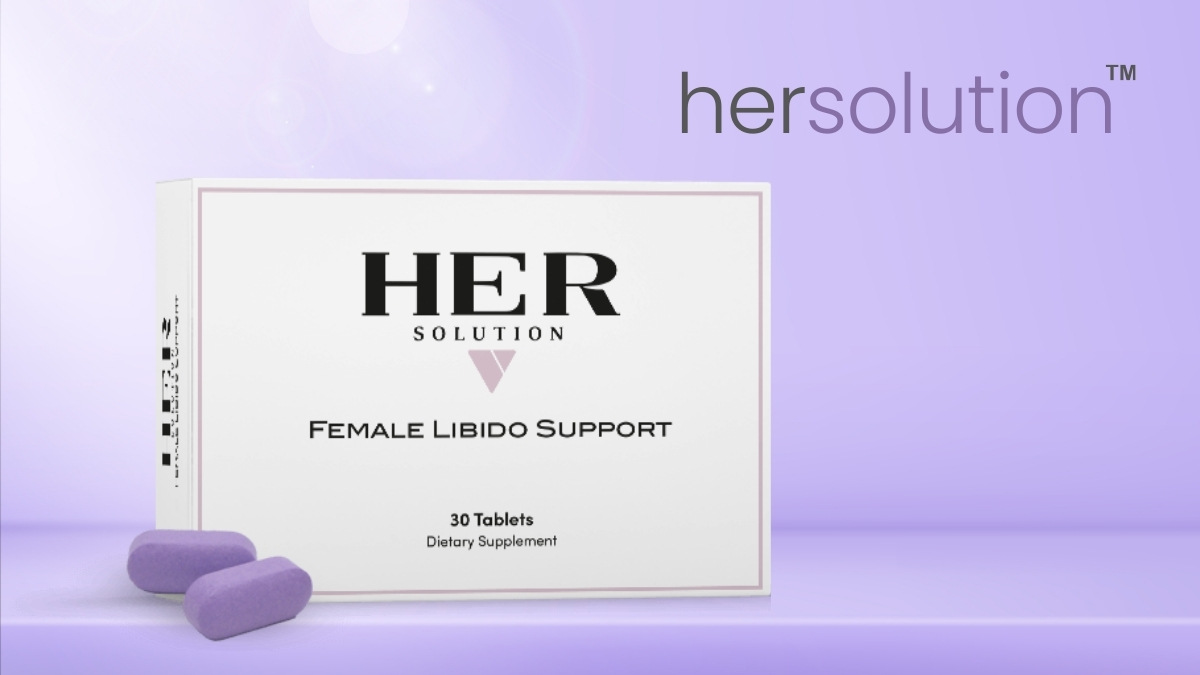
Her Solution—Best natural medication to help a woman climax
What Natural Ingredients Can Increase Female Libido?
Listed below are some of the most common ingredients used in libido-boosting supplements for females, such as herbs, vitamins, minerals, and amino acids. These ingredients can be purchased separately or as a combination formula, depending on your preferences.
You should also be aware that the effectiveness of these ingredients may differ depending on your specific health condition, as well as how consistently you use such supplements.
1. L-Arginine
How Does It Work?
L-arginine is a precursor to nitric oxide, which plays a key role in widening blood vessels and increasing blood flow to the genitals to enhance arousal and sexual response [3].
When and How To Take It?
L-arginine can be taken alone or in combination with other ingredients for hypoactive sexual desire disorder (HSDD) in women. Alone, l-arginine capsules or powder should be taken in the morning, preferably before a workout and on an empty stomach.
Potential Side Effects
Higher doses of l-arginine may cause gastrointestinal symptoms like nausea or diarrhea.
Price Range
L-arginine supplements can range in price from $25–$50 for a 60–180 capsule count.
Chasteberry is primarily prescribed as a supplement for symptoms of premenstrual syndrome (PMS), such as breast pain or tenderness associated with the menstrual cycle [4]. A 2021 study also showed that chasteberry increased female sexual functioning after 16 weeks [5].
When and How To Take It?
Chasteberry can be taken in capsules, tinctures, or drops at any time of the day, but it is ideally taken at the same time daily for best results.
Potential Side Effects
Chasteberry might cause mild side effects like nausea, upset stomach, skin rash, or headaches. It should be taken with food to minimize stomach symptoms.
Price Range
Chasteberry supplements can cost approximately $5-$35 for either pills or powder.
3. Ginseng
How Does It Work?
Ginseng can help release nitric oxide and improve the flow of blood to the female genitalia, which may possibly lead to improved lubrication and clitoral sensitivity [6].
When and How To Take It?
Ginseng comes in capsules, dry root, and extract. Take ginseng consistently, preferably in the morning or early afternoon to avoid disturbing your nightly sleep.
Potential Side Effects
Mild side effects like stomach upset, constipation, or headaches are possible.
Price Range
A daily ginseng supplement can range in cost from $8.99–$85 depending on the form and amount.
4. Maca
How Does It Work?
Preliminary research suggests that maca may help alleviate some female menopausal symptoms that can affect libido. It could also be beneficial for women with antidepressant-induced sexual dysfunction [7].
When and How To Take It?
It is generally recommended to take between 1.5 and 3 grams of maca root powder daily, ideally in the morning to experience its energizing effects.
Potential Side Effects
Maca may cause side effects like gastrointestinal issues, headaches, mood swings, and menstrual cycle changes. Maca can also interact with some medications, as well as affect hormone levels. Women with hormone-sensitive conditions like breast cancer, uterine cancer, and endometriosis should avoid using maca.
Price Range
Maca supplements can range in price from $8 to $26 depending on whether you choose capsules or powder.
5. Red Clover (Trifolium Pratense)
How Does It Work?
Red clover contains phytoestrogens. When taken by menopausal women in tests, it has been shown to reduce vaginal dryness, pain during intercourse, and low libido levels [8].
When and How To Take It?
Clinical testing suggests that women taking 80 mg of red clover daily for 90 days experienced reduced vaginal dryness and increased libido [8].
Potential Side Effects
Some women have experienced mild side effects like nausea and headaches. Red clover may also cause blood clotting, so it shouldn’t be used with blood thinners. Women with hormone-sensitive conditions, like breast cancer, uterine cancer, and endometriosis, should avoid using red clover.
Price Range
Red clover supplements in capsule form for women can range in price from $6-$25 per bottle depending on the dosage and size.
Produced by your adrenal glands, DHEA is a precursor to other hormones like estrogen and testosterone, which stimulate sexual desire. DHEA levels decrease with age, and tests show that women with impaired sexual function can benefit from taking DHEA [9].
When and How To Take It?
DHEA for decreased female libido can be taken orally in a dose of 25-50 mg daily or as a vaginal insert at bedtime.
Potential Side Effects
Because it can increase estrogen and testosterone levels, those with hormone-sensitive cancers should not take DHEA. It may also interact with other medications, so consult your doctor before taking DHEA.
Price Range
DHEA supplements in capsule form can range in cost between $7 and $35, depending on the bottle size and dosage.
According to a 2015 study, ashwagandha can reduce blood cortisol levels, which affects sexual dysfunction. Ashwagandha can also counteract female sexual deficiency (FSD) by reducing androgen deficiency and raising waning testosterone levels in menopausal women [10].
When and How To Take It?
Because it helps reduce cortisol levels that affect stress, taking ashwagandha in the morning will help you enjoy its stress-relieving benefits all day. Ashwagandha is available in various forms, including capsules, powders, tinctures, and gummies.
Potential Side Effects
Ashwagandha may have mild side effects like an upset stomach, diarrhea, or drowsiness. If you have an auto-immune or thyroid disorder, are breastfeeding, or are taking any medications, speak with your doctor before taking ashwagandha.
Price Range
Ashwagandha supplements can range in price from $8-$40 depending on the form and size of the container.
Ginkgo biloba acts to increase blood flow to the genital area, which can possibly lead to increased arousal and lubrication of the vagina [11]. Ginkgo is also a stress reducer, which may also help improve libido levels.
When and How To Take It?
A total of 120-240 mg daily taken in divided doses with meals may improve arousal. When combined with sex therapy, ginkgo biloba may also improve overall sexual desire and fulfillment [11].
Potential Side Effects
Some potential side effects of ginkgo biloba include gastrointestinal issues, dizziness, headaches, skin reactions, and heart palpitations. There is also an increased risk of bleeding and possible interactions with certain medications, such as blood thinners.
Price Range
Ginkgo biloba supplements can range in price from $6-$40 depending on the form and size of bottle you want.
Horny goat weed contains icariin, an estrogen-like compound that may relax smooth muscle tissue and improve blood flow to the gential area to increase sexual desire in women [12].
When and How To Take It?
Most dosage instructions suggest taking 250-500 mg daily of horny goat weed, whether as capsules, gummies, or tea.
Potential Side Effects
Some of the potential side effects of horny goat weed include breathing problems, a racing heart, feeling hot, and sweating. It may also interact adversely with various prescription medications, so talk to your doctor first before taking it. Those with heart disease or hormone-sensitive cancers should not take horny goat weed, too.
Price Range
Horny goat weed supplements can cost between $11 and $30 depending on the dosage size and form you want.
10. Tribulus Terrestris
How Does It Work?
A 2014 study showed that tribulus terrestris can help improve sexual desire in women who have been diagnosed with hypoactive sexual desire disorder (HSDD) [13]. This herbal extract is known to boost androgen hormone production, which influences the levels of sexual desire in both men and women.
When and How To Take It?
Research varies on the most efficacious dose of tribulus terrestris, though most dosages are standardized to contain a specific percentage of furostanol saponins, which are the active compounds.
Potential Side Effects
The possible side effects of tribulus terrestris include stomach pain, nausea, diarrhea, and headaches.
Price Range
Tribulus terrestris supplements can cost between $10 and $28 depending on the dosage size and form you prefer.
Best Libido-Boosting Supplements for Females Reviews
Good nutrition is based on synergy, which is why your body needs a variety of nutrients from different sources to reach peak effectiveness. The following brands have taken this idea of synergy and applied it to their natural libido-boosting supplements for females.
1. Vigorelle—Best Libido-Boosting Lubricant for Women
Ingredients
L-arginine HCL
Wild yam
Ginkgo biloba
Damiana leaf
Peppermint leaf
Suma root
Vitamin A, C, and E complex
Aloe vera gel
Hyaluronic acid
Dosage
Put a bit of the lubricant under the clitoris, and rub it completely on the mucus membrane in that area.
Price
1 bottle (30-day supply) costs $59
3 bottles (90-day supply) are priced at $149
6 bottles (180-day supply) sell for $269
Best For
Vigorelle can be used by ladies to relieve vaginal dryness and heighten feelings of sexual desire. It can act as a natural aphrodisiac and sexual enhancer to get you back in the erotic swing of things.
A serving size is 2 gummies, and there are 30 servings in each container.
Price
A one-time purchase of a single container is priced at $21.95
Subscribers will save 20 percent and only need to pay $17.56
Best For
These potent gummies promise to help elevate your mood and boost desire. What’s more, it may regulate cortisol levels to relieve stress which could otherwise dampen your arousal response. It can also help re-balance and re-invigorate your hormone and testosterone levels.
A one-time purchase of 1 jar (30 gummies) costs $69.99
Subscribers can save 20 percent at the lower price of $55.99
Best For
This daily supplement is composed of a variety of ingredients that are designed to reinvigorate your libido, stimulate lost eroticism, and improve your sexual pleasure and performance.
A one-time purchase of a single bottle (60 capsules) is priced at $34.50
Subscribers will save 10 percent upon renewal
Best For
Life Extension Sexual Health for Her supports a healthy female libido that will help you rediscover your sex drive and boost your arousal capabilities, natural lubrication, and overall satisfaction.
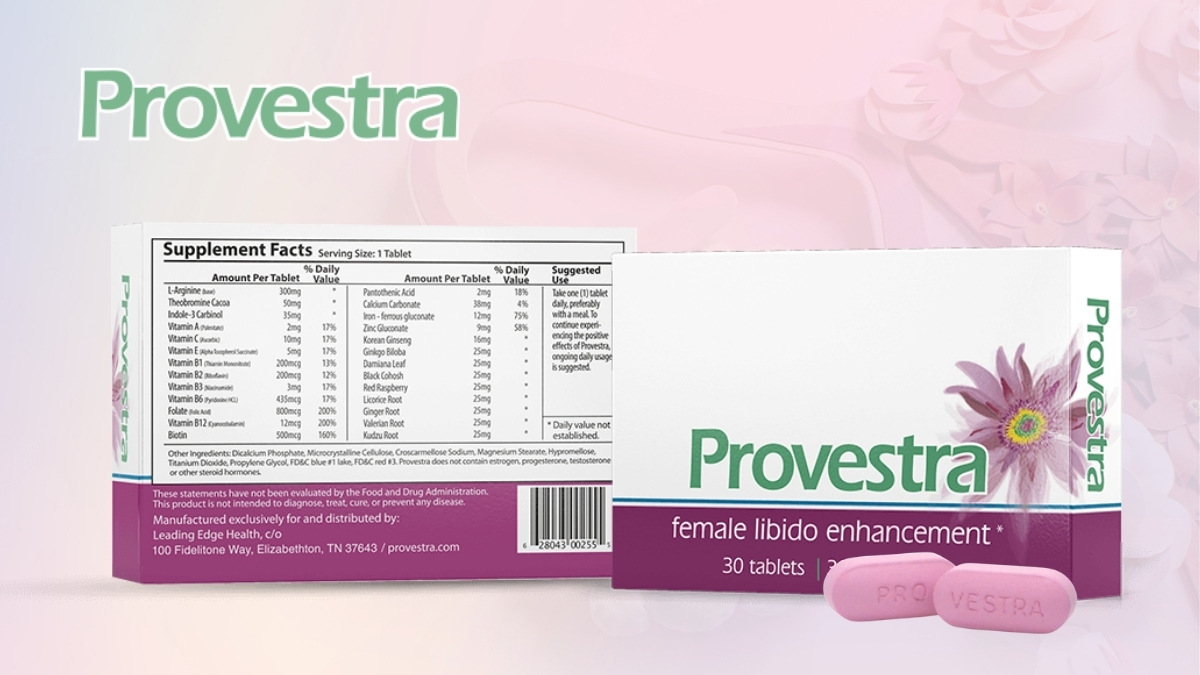
5. Provestra—Top Libido-Boosting Supplements for Females in Menopause
Ingredients
Theobromine cacao
Indole-3 carbinol
Vitamins A, C, E, B1, B2, B3, B5, B6, and B12
Folic acid
Biotin
Calcium carbonate
Iron
Ginseng
Zinc
Ginkgo biloba
Damiana leaf
Red raspberry
Black cohosh
Licorice root
Ginger root
Dosage
Take 1 tablet daily, preferably with a meal.
Price
A single purchase of a 1-month supply of Provestra costs $59
The 3-month supply is priced at $119
A 6-month supply is offered for $179
Best For
Provestra claims to help you boost your sex drive, heighten sexual sensitivity, increase vaginal lubrication, and relieve the nagging symptoms of menopause.
6. Her Solution—Best Natural Medication To Help a Woman Climax
Ingredients
Niacin
Ginkgo biloba
Hops extract
Mucuna pruriens seed (25 percent l-dopa)
Epimedium sagitattum leaf (40 percent icariins)
Cayenne pepper extract
Dosage
Take 1 pill per day.
Price
A single purchase of a 1-month supply (30 tablets) is priced at $59
A 2-month supply costs $89
The 3-month supply sells for $129
A 6-month supply is offered for $219
Best For
Her Solution promises to aid in improving vaginal dryness, increasing sexual desire and sensation, and helping pre- and postmenopausal women rediscover and attain arousal and orgasms during sex.
An ongoing disease or illness like cancer, heart disease, high blood pressure, or neurological disease
Certain prescription medications, such as antidepressants like selective serotonin reuptake inhibitors (SSRIs)
Any surgeries involving your breasts or genitals, such as a hysterectomy, can cast a shadow over how you think of your sexuality
Fatigue from illness, overwork, or the constant, never-ending responsibilities involved with caring for loved ones
Lifestyle habits like smoking, alcohol, or drug use can slowly start to dismantle your libido brick by brick
Are Libido-Boosting Supplements for Females Effective?
Yes, research shows some evidence that certain libido-boosting supplements for females have the potential to be effective:
Tribulus terrestris was found in a 2021 study to improve sexual dysfunction among pre- and postmenopausal females who took 280 mg daily for 3 months with no reported side effects [14].
Maca is a root vegetable that has been used traditionally to enhance fertility and sex drive. In a 2015 study, it was shown to counteract the loss of libido that occurs as a side effect of some antidepressant drugs [15].
In an abstract reviewing 10 previous studies, red ginseng was revealed to improve the arousal response of many women who were suffering from the effects of menopause [16].
In an 8-week study in 2015 involving 80 females with low libido, it was found that 600 mg of fenugreek extract daily improved sexual arousal and desire compared to the placebo [17].
Conclusion: Libido-Boosting Supplements for Females
As women age, menopause is a fact of life, yet it doesn’t have to be the final act when it comes to your sexuality.
Wondering how to increase libido in women? There are natural supplements out there that can bring your libido back for an encore and give you another chance at being the romantic lead in your life.
Hopefully, Vigorelle and the other libido-boosting supplements for females we’ve listed and the nutrients they contain will help you get back in the saddle for a few more passionate rides before you’re done.
You’ve come a long way, baby, and with Mother Nature’s help, perhaps you can keep the party going for a bit longer!
These are some questions that readers have been asking about libido-boosting supplements for females.
How Do I Increase My Libido as a Woman?
Increasing your libido as a woman can be approached from different angles. Lifestyle changes like exercising more, changing your diet, getting more sleep, managing stress, and limiting tobacco and alcohol intake can all be beneficial. You can also try to improve your relationship with your partner and seek medical help to examine any possible hormonal causes.
Why Is My Libido So Low?
Some common causes of low libido are relationship or marriage problems, stress, anxiety, and depression about your life and work circumstances, or even physical symptoms that result from being pre-menopausal.
What Is the Best Natural Libido Booster?
There is no one best libido booster for women or a “female Viagra.” However, there are a few that can help get your libido back on track in tandem with other lifestyle changes. Some of the best libido-boosting supplements for females that have the science to back them up are tribulus terrestris, maca, red ginseng, and fenugreek extract [14] [15] [16] [17].
How Do I Know If My Libido Is Low?
Signs that your libido is low can include both mental and physical symptoms. Some mental symptoms are decreased sexual thoughts, ongoing depression, and a continuous resentment of life circumstances that seem like they will never end. Physical symptoms might include difficulty in getting aroused and a rapid loss of enjoyment during sexual activity.
Can Changing Your Diet Boost Your Libido?
Yes, improving your diet and eating natural aphrodisiacs may possibly help boost energy levels, improve your circulation, and even start to readjust hormone levels that may be out of whack. All of these things put together can help your body to regain a more healthy balance, which is the ideal scenario to stimulate a reappearance of your sexuality.
Can Exercise Increase Female Libido?
Yes, regular physical activity from exercise might increase female libido by improving blood flow to re-energize the sexual organs. Exercise can also help reduce stress, release anger, and improve your overall mood, all of which can be helpful steps to reinvigorating your libido.
What Drinks Increase Female Libido?
There is no single drink that will increase female libido, but there are several beverages that can indirectly help. Red wine, which contains antioxidants like quercetin, can enhance blood flow and stimulate sexual function [18]. Additionally, green tea with caffeine may boost your mood [19]. Finally, water with its hydrating effects is crucial to every bodily function, including sexuality.
Are There Any Supplements To Avoid?
Not all supplements that are marketed as libido-boosting supplements for females are effective. As a result, you should consult your doctor before taking anything that is supposed to rebalance your hormones and reinvigorate your sexuality. Some supplements may do nothing, while others could be harmful depending on your age and physical condition.
West SL, D’Aloisio AA, Agans RP, Kalsbeek WD, Borisov NN, Thorp JM. Prevalence of low sexual desire and hypoactive sexual desire disorder in a nationally representative sample of US women. Arch Intern Med. 2008 Jul 14;168(13):1441-9. doi: 10.1001/archinte.168.13.1441. PMID: 18625925.
Kingsberg SA. Attitudinal survey of women living with low sexual desire. J Womens Health (Larchmt). 2014 Oct;23(10):817-23. doi: 10.1089/jwh.2014.4743. Epub 2014 Aug 8. PMID: 25105910.
Cieri-Hutcherson NE, Jaenecke A, Bahia A, Lucas D, Oluloro A, Stimmel L, Hutcherson TC. Systematic Review of l-Arginine for the Treatment of Hypoactive Sexual Desire Disorder and Related Conditions in Women. Pharmacy (Basel). 2021 Mar 27;9(2):71. doi: 10.3390/pharmacy9020071. PMID: 33801678; PMCID: PMC8103282.
U.S. Dept. of Health and Human Services, NIH Health Information, Chasteberry https://www.nccih.nih.gov/health/chasteberry
Heirati SFD, Ozgoli G, Mehri RK, Mojab F, Sahranavard S, Nasiri M. The 4-month effect of Vitex agnus-castus plant on sexual function of women of reproductive age: A clinical trial. J Educ Health Promot. August 31, 2021;10:294
Chung HS, Hwang I, Oh KJ, Lee MN, Park K. The Effect of Korean Red Ginseng on Sexual Function in Premenopausal Women: Placebo-Controlled, Double-Blind, Crossover Clinical Trial. Evid Based Complement Alternat Med. 2015;2015:913158. doi: 10.1155/2015/913158. Epub 2015 Dec 22. PMID: 26798402; PMCID: PMC4700177.
Dording CM, Schettler PJ, Dalton ED, Parkin SR, Walker RS, Fehling KB, Fava M, Mischoulon D. A double-blind placebo-controlled trial of maca root as treatment for antidepressant-induced sexual dysfunction in women. Evid Based Complement Alternat Med. 2015;2015:949036. doi: 10.1155/2015/949036. Epub 2015 Apr 14. PMID: 25954318; PMCID: PMC4411442.
Sayahi M, Keramat A, Nourimand Ph D Candidate F, Mohammadzadeh H. Is there a difference between the effects of phytoestrogens and non-phytoestrogens medicinal plants on sexual health? A systematic review and meta-analysis. Int J Reprod Biomed. 2023 Dec 19;21(11):881-900. doi: 10.18502/ijrm.v21i11.14652. PMID: 38292511; PMCID: PMC10823120.
Elraiyah T, Sonbol MB, Wang Z, Khairalseed T, Asi N, Undavalli C, Nabhan M, Altayar O, Prokop L, Montori VM, Murad MH. Clinical review: The benefits and harms of systemic dehydroepiandrosterone (DHEA) in postmenopausal women with normal adrenal function: a systematic review and meta-analysis. J Clin Endocrinol Metab. 2014 Oct;99(10):3536-42. doi: 10.1210/jc.2014-2261. PMID: 25279571; PMCID: PMC5393492.
Dongre S, Langade D, Bhattacharyya S. Efficacy and Safety of Ashwagandha (Withania somnifera) Root Extract in Improving Sexual Function in Women: A Pilot Study. Biomed Res Int. 2015;2015:284154. doi: 10.1155/2015/284154. Epub 2015 Oct 4. PMID: 26504795; PMCID: PMC4609357.
Meston CM, Rellini AH, Telch MJ. Short- and long-term effects of Ginkgo biloba extract on sexual dysfunction in women. Arch Sex Behav. 2008 Aug;37(4):530-47. doi: 10.1007/s10508-008-9316-2. Epub 2008 Feb 15. PMID: 18274887; PMCID: PMC2863090.
Makarova MN, Pozharitskaya ON, Shikov AN, Tesakova SV, Makarov VG, Tikhonov VP. Effect of lipid-based suspension of Epimedium koreanum Nakai extract on sexual behavior in rats. J Ethnopharmacol. 2007 Dec 3;114(3):412-6. doi: 10.1016/j.jep.2007.08.021. Epub 2007 Aug 19. PMID: 17890032.
Akhtari E, Raisi F, Keshavarz M, Hosseini H, Sohrabvand F, Bioos S, Kamalinejad M, Ghobadi A. Tribulus terrestris for treatment of sexual dysfunction in women: randomized double-blind placebo—controlled study. Daru. 2014 Apr 28;22(1):40. doi: 10.1186/2008-2231-22-40. PMID: 24773615; PMCID: PMC4045980.
Vale FBC, Boroni JD, Geber G, Antunes EMG, Bretas T, Lopes GP, Geber S. Effect of Tribulus Terrestris in the Treatment of Female Sexual Dysfunction and Clitoral Vascularization. Results of a Randomized Study Comparing Two Different Dosage Regimes. J Sex Marital Ther. 2021;47(7):696-706. doi: 10.1080/0092623X.2021.1938764. Epub 2021 Jun 18. PMID: 34142638.
Dording CM, Schettler PJ, Dalton ED, Parkin SR, Walker RS, Fehling KB, Fava M, Mischoulon D. A double-blind placebo-controlled trial of maca root as treatment for antidepressant-induced sexual dysfunction in women. Evid Based Complement Alternat Med. 2015;2015:949036. doi: 10.1155/2015/949036. Epub 2015 Apr 14. PMID: 25954318; PMCID: PMC4411442.
Lee HW, Choi J, Lee Y, Kil KJ, Lee MS. Ginseng for managing menopausal woman’s health: A systematic review of double-blind, randomized, placebo-controlled trials. Medicine (Baltimore). 2016 Sep;95(38):e4914. doi: 10.1097/MD.0000000000004914. PMID: 27661038; PMCID: PMC5044908.
Rao A, Steels E, Beccaria G, Inder WJ, Vitetta L. Influence of a Specialized Trigonella foenum-graecum Seed Extract (Libifem), on Testosterone, Estradiol and Sexual Function in Healthy Menstruating Women, a Randomised Placebo Controlled Study. Phytother Res. 2015 Aug;29(8):1123-30. doi: 10.1002/ptr.5355. Epub 2015 Apr 24. PMID: 25914334.
Basile, L., Condorelli, R. A., Calogero, A. E., Cannarella, R., Barbagallo, F., Crafa, A., Aversa, A., & Sandro La Vignera. (2023). Red Wine and Sexual Function in Men: An Original Point of View. Journal of Clinical Medicine, 12(12), 3883–3883. https://doi.org/10.3390/jcm12123883
Dietz, C., & Dekker, M. (2017). Effect of Green Tea Phytochemicals on Mood and Cognition. Current Pharmaceutical Design, 23(19), 2876–2905. https://doi.org/10.2174/1381612823666170105151800
Just a few years ago, landing a tech job felt almost inevitable for those with the right skills. Before the pandemic, startups were booming, Silicon Valley was flush with venture capital and companies eagerly hired junior developers, designers and data analysts, even those fresh out of bootcamps.
During the early pandemic, tech demand soared further as businesses rushed to digitize, opening even more doors for remote tech workers across the country. But that momentum didn’t last. As the dust settled, mass layoffs swept through the industry, and a new force began reshaping the landscape: artificial intelligence.
Tools like ChatGPT and automated code generators started handling tasks once assigned to entry-level workers. Now, job seekers face a market defined by tighter hiring, global competition and a growing reliance on automation. What was once a golden career path has become risky and uncertain.
Artificial intelligence in the workplace isn’t new. Factories have relied on automation for decades, but the rise of generative AI marks a turning point in how technology interacts with white-collar work. The release of tools like ChatGPT in late 2022 pushed AI into the mainstream, making it possible to instantly generate code, marketing copy, legal memos and even visual designs. What was once considered uniquely human work is now subject to rapid automation.
According to a 2023 McKinsey report, AI could automate tasks that make up 60–70% of time spent across jobs, especially in fields like customer service, legal work, finance and administration. Meanwhile, sectors like healthcare, STEM and creative tech roles are expected to grow, fueled by new AI-driven innovations.
The World Economic Forum projects 83 million jobs could be lost globally by 2027 due to automation, but also estimates 69 million new roles will emerge, many requiring new skills. Pew Research found that while most Americans expect AI to significantly impact the workforce, few feel personally at risk, highlighting a potential disconnect between perception and reality.
Despite alarm over job displacement, some economists argue that AI will augment rather than eliminate many roles, particularly those involving complex judgment or human interaction. But one thing is clear: The divide between routine, automatable work and roles requiring adaptability is widening, leaving workers and employers scrambling to keep up.
Lisa Countryman-Quiroz, CEO of the San Francisco-based nonprofit Jewish Vocational Service (JVS), has spent years helping people without four-year degrees access stable, middle-class careers. Her organization provides job training in sectors like healthcare, skilled trades and technology, with a focus on economic mobility for underrepresented workers. But as AI transforms the labor market, she says even previously reliable pathways into tech are narrowing.
Over the past two years, JVS has phased out several of its entry-level tech training programs. Roles the nonprofit once trained for, including frontline IT support or tech sales, are now increasingly automated.
“The positions we were training for are gone,” Countryman-Quiroz says. “There’s been a real shift in what’s possible.”
She notes that post-pandemic optimism around tech hiring has given way to layoffs, hiring freezes and a growing preference for AI-driven tools. As businesses look to streamline operations, automation is becoming a priority, not just in engineering roles, but across support and administrative functions too.
This shift is especially tough on young workers. Recent college grads already face higher-than-average unemployment, and now they’re competing with laid-off tech employees and federal workers re-entering the labor market. Countryman-Quiroz worries that workers without degrees or formal experience will find it harder to access family-sustaining jobs.
Still, she sees potential in this moment, if business and political leaders act quickly.
“There’s a bright spot here,” she says. “New industries and companies will emerge, but we need to invest in training now to make sure people aren’t left behind as the market shifts.”
Prathma Rastogi, a San Jose-based full-stack software engineer, has watched the slow creep of automation in her field for years, but says the pace accelerated dramatically in the last 12 months. Tools like GitHub Copilot and ChatGPT began gaining serious traction in engineering teams, assisting with tasks like writing boilerplate code, generating unit tests and even brainstorming fixes during debugging sessions.
“It’s not just hype anymore. AI is actually showing up in how teams work,” Rastogi says.
She agrees with the assessment that entry-level tech roles are the most vulnerable, particularly junior developer positions, saying AI can already handle basic coding tasks and that what’s left to humans is solution design and higher-level thinking.
This shift has changed the expectations of engineers at every level. Rastogi says developers now have to embrace continuous learning, especially in AI-related tools and methodologies. “If you’re not staying curious and learning about AI, you’re falling behind,” she says.
Where a project once required a team of 10, she says automation means it can now be completed with two. That efficiency is appealing to companies, but it also means fewer job openings and greater pressure on existing workers to upskill or shift focus. Rastogi believes the future of work will depend on people strengthening the areas AI can’t replicate: product strategy, ethical decision-making, systems thinking and human-centered design.
She urges employers and policymakers to recognize the importance of investing in the current workforce.
“Companies should prioritize reskilling their people instead of just hiring for AI roles,” she says. “And the government can support that with grants or incentives to help workers stay empowered and not replaced as these technologies evolve.”
Marco Sciorelli, a San Jose-based engineering professional, views artificial intelligence as a natural evolution in the tech industry, one that’s rapidly shifting both how people work and where new opportunities are emerging. While many focus on white-collar job loss, he emphasizes that AI is also fueling demand in less obvious sectors, particularly energy and infrastructure. As more data centers are built to support AI operations, roles for electricians, mechanical contractors and utility technicians are on the rise.
“Someone has to build and power these systems,” he says. “That’s creating work, but also pressure on the grid.”
At the same time, Sciorelli has seen firsthand how companies are using AI to cut labor costs, especially in the wake of Covid. In his own workplace, tech support was one of the first departments to be automated. With internal databases already compiled, bots quickly replaced human staff for most routine inquiries.
He also sees generative AI outperforming humans in some areas of software development, particularly in writing code.
“AI doesn’t forget or develop bad code-writing habits,” he says.
While he admits that even he’s questioned his job security, Sciorelli believes workers should focus on adapting. The future, he says, belongs to those who can complement automation with strategic thinking, creativity and skills that can’t be easily replicated by machines.
This mindset is reflected in local initiatives. In San Jose, city government staff recently completed a 10-week AI Upskilling Program, in partnership with San Jose State University, that trains public employees to build AI assistants and work tools. The initiative reportedly saved the city tens of thousands of staff hours and cut consulting costs by around $50,000 per department. This reflects a broader push toward collaborating with humans and AI.
Across Silicon Valley, educational institutions are launching focused credential programs in AI-related roles. The Silicon Valley Leadership Group, in partnership with Foothill–De Anza Community College District, has rolled out an AI Fellowship Program to develop curricula for emerging careers like prompt engineering, AI ethics and systems integration. UC Santa Cruz Extension also offers UC–approved certificate tracks in AI application development and prompt engineering, accessible to current professionals and non‑technical learners alike.
These paths mirror national trends—roles that optimize how AI tools respond are increasingly in demand, sometimes commanding top-tier salaries without requiring traditional tech degrees, according to political reporter Nik Popli. Local experts emphasize that people who can’t be easily automated will hold the most resilient roles moving forward. As tech professionals often put it: Adaptability and AI literacy are the keys to remaining competitive and contributing meaningfully in this evolving landscape.
As artificial intelligence continues to evolve, its impact on the labor market is no longer theoretical—it’s structural. From San Jose to the broader Bay Area, both displacement and opportunity are unfolding simultaneously. While automation is reducing demand for certain roles, especially at the entry level, it is also accelerating the creation of new positions and industries that require different skills.
Whether AI ultimately deepens inequality or drives broad-based economic growth depends on how stakeholders respond today. The future of work is being shaped now and readiness, not reaction, will determine who benefits.
The current state of unions across the country is a study in contradiction. On one hand, public support for unions in the U.S. is at 70%, just a tick off the highest mark in 60 years. Petitions for union elections filed with the National Labor Relations Board have more than doubled in the last four years.
On the other hand, national membership numbers are down. It’s only a slight decrease, but it continues a long, steady decline. In 1983, the first year for which a comparable data set to today exists, the union membership rate among American workers was 20.1%. By 2024, it stood at 9.9%.
It is a steep slide—but there are outliers. California is one of them.
Over the last two decades, the Golden State’s union numbers have held relatively steady, and they’ve remained well above the national average. The state’s unionization rate—the percentage of all workers who are covered by a union contract, even if they’re not members—stands at 16.3%, more than five points higher than the national average, according to a new report by labor researchers at multiple University of California campuses.
“In California, the union labor movement is pretty robust,” said Enrique Lopezlira, director of the Low-Wage Work Program at the UC Berkeley Labor Center and one of the authors of the report. “It’s a testament to the continuing efforts of unions here to organize workers and to really get engaged in state-level policy to provide better opportunities for those workers.”
It is grinding work, and as the full effects of Trump 2.0 begin to be felt, union workers could be placed under new pressures and left with fewer allies. But union strategies in California may nevertheless point a way for other states to weather the approaching storm.
* * *
The new report, produced primarily by the Berkeley center and UCLA’s Institute for Research on Labor & Employment, puts the total of California workers covered by a union at 2.67 million, or about one in six workers. That’s the largest raw total in the U.S., but seven states have a higher percentage of their workforce represented by unions: Hawaii, New York, Alaska, Washington, Connecticut, Oregon and New Jersey.
California, though, is noteworthy for its steady union presence. It hasn’t fluctuated much since 2005, despite the national decline. Further, the federal data set used to produce the union figures does not include home health care and child care workers who are classified as self-employed. In California, that takes in some 700,000 workers, even though their hourly wages are negotiated with individual counties through unions.
In other words, the unionization count is almost certainly low. So what is California doing right?
Lopezlira pointed to a couple of areas. First, he said, major unions in California, including those in health care, education and public service, have aggressively and continuously worked to organize workers. The state’s highest unionization rate is found in education, where more than a quarter of all workers are represented.
California unions have also left a major mark on state labor policy in ways that benefit workers. The state’s historic fast food wage law was sponsored by the Service Employees International Union (SEIU), as was a health care minimum wage. Unions have also sponsored or worked on the kinds of statewide issues—rent control, tenant protections—that are critically important to hourly wage workers. (Disclosure: SEIU is a supporter of Capital & Main.)
“I think the totality of our report is about how hard these unions continue to work to organize and provide benefits to their workers,” Lopezlira said. “Given all these headwinds—housing, health care affordability, technology, AI—the resiliency of California unions to look for innovative ways to help workers is critically important.”
* * *
Those headwinds are incoming. In his second term in office, President Donald Trump has made no secret of his animosity toward unions. From his attempt to dismantle the agency charged with protecting employees and enforcing labor laws to stripping the rights of federal union workers, Trump’s war on labor is readily apparent.
It is a familiar tack. Organized labor’s declining figures—both in actual membership and the total number of workers who are represented by unions, even if they aren’t members—reflect decades of workplace rules and court decisions that have made it harder to unionize. They’ve been falling since shortly after President Ronald Reagan fired 11,000 air traffic controllers in 1981, a public-sector job action that nevertheless emboldened private employers to push back on unions more forcefully.
The most recent federal labor data is from 2024, Lopezlira said, so the University of California report doesn’t really account for anything enacted under Trump 2.0. “But the erosion of labor standards is a real concern—and going after the institutions that are meant to protect those standards [like the National Labor Relations Board], that’s an even bigger problem,” he said.
That may be all the more reason to look to the California approach. Union leaders in the state have pushed for years to strengthen worker protections and make it easier for workers to organize, and the high profile wage laws in health care and fast food have reminded workers of the good their unions can do.
According to the left-leaning Economic Policy Institute, roughly 60 million workers in the U.S. wanted to join a union but couldn’t in 2024. Recent organizing pushes at vehemently anti-union franchises like Starbucks and REI, meanwhile, suggest that the appetite for employee protections and fair wages is only growing.
“It’s a bit hopeful,” Lopezlira said. It may also be exactly what’s needed, especially now.
This article was produced by Capital & Main (CapitalandMain.com). It is co-published here with permission.
As one of Berkeley drummer Scott Amendola’s primary bands in recent years, SticklerPhonics has been a lively sonic laboratory. The stripped-down trio instrumentation of two horns and a trap set provides an array of fascinating challenges. The group released a stellar album last year featuring original pieces, Technicolor Ghost Parade, and for this return Back Room engagement Amendola introduces an expanded lineup with two new horn players joining founding trombonist Danny Lubin-Laden. With a passel of improvisational prowess to harness and no chordal instrument in sight, SticklerPhonics are poised to deliver a rip-snorting set. – AG
Archer Oh cut their teeth playing backyard shows in the Inland Empire, where their scrappy energy and offbeat sense of humor earned them a devoted crowd. What started as Arturo “Archie” Medrano’s DIY indie garage project has grown into a band that can just as easily goof off on stage as they can whip a room into a frenzy with singalong hooks and jangly guitar. Between marathon tours with the Red Pears and Dogstar, sold-out shows across the West Coast and their 2025 debut album The Internal Theater, Archer Oh still sounds like the party in the neighbor’s yard. – SBB
MJ Lenderman & the Wind play with contradictions: Their songs wander between deadpan humor and flashes of raw vulnerability, where the mundane—pickup trucks, pro wrestlers, backyard afternoons—takes on strange weight. What began as Jake Lenderman’s spare home recordings has evolved into a full band that stretches his crooked alt-country sketches across wiry guitar lines and unexpected turns. The music is loose but purposeful, Southern without swagger, indie without irony. With the Wind behind him, Lenderman leans harder into the ragged joy of rock ’n’ roll, channeling both Southern grit and indie slack. – SBB
Their 1981 instrumental single “U.F.O.” is one of hip-hop’s most sampled tracks. “Moody” is saluted for laying the groundwork for house music. The four sisters from the South Bronx—Renee, Deborah, Marie and Valerie Scroggins—who founded ESG were trailblazers, even if many music fans have never heard of them. “ESG” stands for “Emerald, Sapphire & Gold,” and the band, now in its second-generation iteration, still glitters with passion and soul. Renee’s daughter, Nicole, and son, Nicholas, join her on the band’s current tour, which may be their farewell. Get out on the dance floor and “swivel your hips” in tribute to musicians who led, bled and overcame. – JH
Just when it seems stand-up comedy consists of nothing but foulmouthed Neanderthal bros—and Chelsea Handler—30-something Taylor Tomlinson pops up with another hit Netflix special, her most recent being 2024’s Have It All. Tomlinson covers the usual comedy territory: sex, dating and more, but also fearlessly tears into how bizarre it is to be living in 2025. “The Old Testament is my favorite Taylor Swift album,” she riffs at one point. She loves interacting with her audiences, and even a weird comment like “They now send dead bodies up in space” elicits an impromptu scene about knocking on NASA’s door towing a dead body. Gotta love that. She also performs on Saturday. – JH
For 16 years, Beach Fossils have been one of the leading bands in the modern lo-fi, garage-rock scene. They are led by Dustin Payseur, who conceived the band in North Carolina but didn’t start it until moving to New York, making it a fully American project with one foot in the North and one in the South. In 2015, Payseur and his wife started their own label, Bayonet Records, which the band is still on today and which recently released their 2023 album, Bunny. Keeping with tradition, Bunny keeps their sound laidback and fresh while still capturing the authenticity of their fuzzed-out sound. – MW
Bay Area native and Obie Award-winning playwright Christopher Chen’s “explosive in a test tube” play, The Motion, starts with super-sanitary animal testing—and then proceeds without stopping into a world of chaos, confusion, comedy and the confounding conditions of life. Questions rise about morality, mortality, love beyond what words can transcribe and why life wounds heal but leave deep, eternal scars. The audience—holders of voting cards—has a stake in a story where everything swings between skewed and balanced. Life is a tilt, in other words. Hat tip to Shotgun for making us think and enjoy it. Performances go until Oct. 12. – LF
Liverpool. Home of the LFC Stadium and countless Beatles tours. For those with dealings in heavy riffs and headbanging good times, Liverpool is also the home to doom/sludge band Conan. Formed in 2006, this act started as a duo and evolved into a trio over the next couple of years, minus a hiatus or two. Since then, they’ve dropped juicy riffs when the people needed them the most, often performing at major festivals like the Maryland Deathfest and Psycho California. Conan has been on a writing kick, releasing new material every couple of years for the past 13 with their most recent album, Violence Dimension, out this year. – MW
This 80-minute, one-woman show jumps into Berkeley after taking Edinburgh Fringe by storm. Laura Benanti is a funny lady, but also a highly intelligent, witty and straight-up kicker performing artist. Taking up social tropes, she turns them into treasures or twists them enough to reveal them as absurd, laughable and lose-able. With great storytelling and songs co-written with Todd Almond, Benanti deals with becoming invisible as a person ages; the delicious, deceptive art of fawning over people to feed their egos; and how every day spent alive presents a new opportunity to ask, “WTF?” No one really can answer that last one, but at least Benanti can make a person laugh. Performances go until Sept. 25. – LF
A three-time Grammy Award winner, Ruthie Foster elevates every musical situation she inhabits, infusing gospel fervor into folk and blues festivals and singer/songwriter lyricism into sacred settings. Raised in a family of Texas gospel vocalists, she was already a well-traveled performer when she began racking up Blues Music Award nominations in the late aughts. With her rich, resonant contralto and deft guitar work, she’s equally commanding as the frontwoman of a combo or holding the stage on her own, infusing joyous soul into any kind of song. Her latest album, 2024’s Mileage, features a new set of collaborations with producer Tyler Bryant and Larkin Poe’s Rebecca Lovell. – AG
Mills College, the first women’s college west of the Rockies, shocked Oakland and the broader Bay Area when it announced it would close as an independent institution and merge with Northeastern University in March 2021. For nearly 170 years, Mills served as a hub of women’s leadership, social justice and academic rigor. The sudden announcement highlighted how vulnerable small liberal arts colleges have become in today’s higher education landscape.
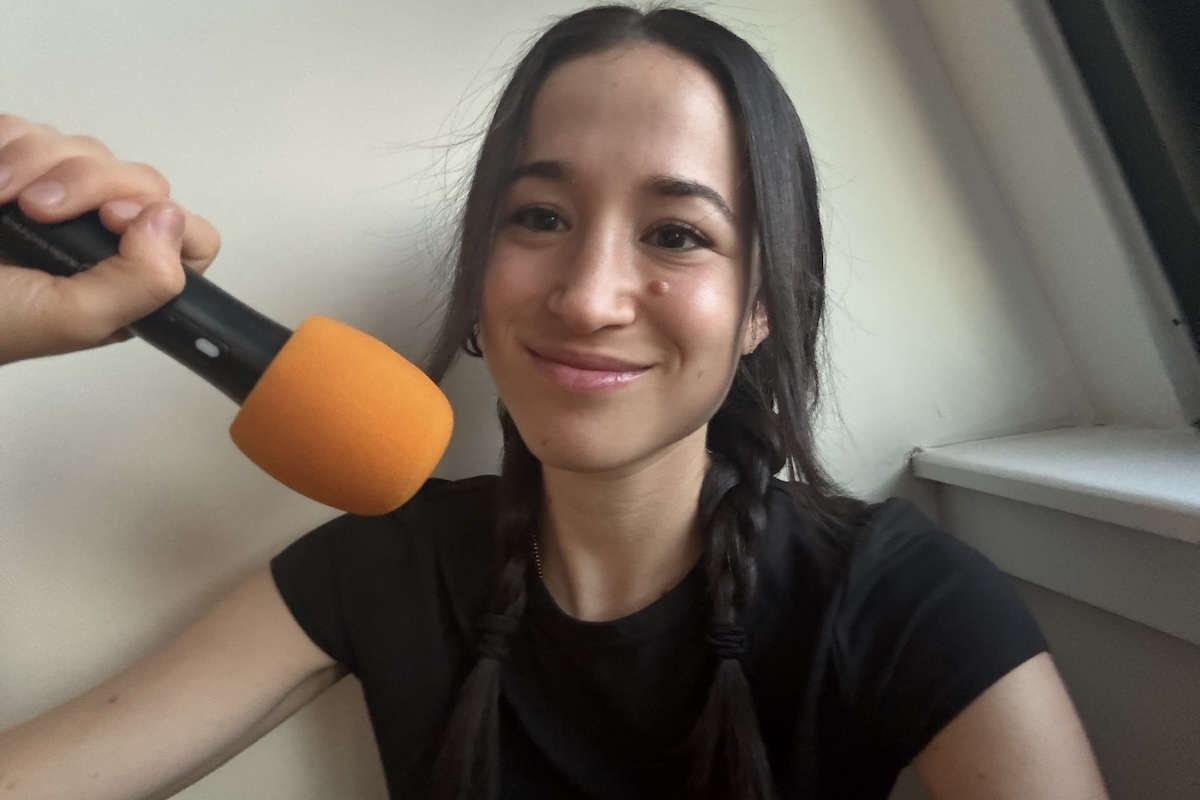
This turning point is the focus of a recent episode of Campus Files, a documentary-style podcast produced by Audacy. Hosted by Margo Gray and produced by Ian Mandt, the series investigates scandals and upheavals in higher education. Each episode works to clarify complex controversies, and the Mills story stands out as a striking example of institutional collapse intersecting with power dynamics.
Gray and Mandt approached the project with strong journalistic and audio storytelling backgrounds. Gray had previously worked on other Audacy podcasts as well as a series with a political journalist, while Mandt brought six years of experience at Audacy along with extensive work on investigative series.
Gray was drawn to the story because it promised something unusual. Accustomed to hearing about mergers and acquisitions in business contexts, she realized while researching Mills that this was the first time she had encountered the concept applied to a university. What stood out most was the stark contrast between the two institutions: Mills, a small liberal arts college for women, and Northeastern, a large, STEM-focused university.
“They could not be more different,” she thought.
During her research, Gray spoke with data consultant Matthew Hendricks, who suggested that Northeastern’s interest in Mills was likely driven by the college’s sizable endowment and manageable debt—a clear win for the university. For the students, however, the announcement was a shock. In the episode, Mills student Victoria Mayorga recounts her thoughts and emotions during the acquisition. Many students were forced to change their majors, and she described the experience as leaving her feeling hopeless, “like time stood still.”
Gray said, “The acquisition turned out to be challenging for many students. Victoria is representative of a lot of students at Mills.”
The acquisition presented profound cultural challenges for students, who watched the identity of their campus shift almost overnight. Mills had long been known as a small, diverse and socially conscious college, emphasizing social justice and community engagement. Suddenly, co-ed Northeastern students arrived en masse, the curriculum pivoted toward STEM and longstanding traditions, from graduation ceremonies to historic courses, were altered or eliminated.
Legacy students were relegated to virtual advisors in Boston, while incoming Northeastern students received preferential treatment in housing and class registration. For Victoria Mayorga and her peers, the changes were disorienting: The school they had chosen for its values and culture became almost unrecognizable.
By the end of her junior year, Mayorga faced an impossible choice. She wanted to preserve her memories of Mills as it had been, but staying meant enduring a radically altered campus and limited academic pathways. Ultimately, she decided to transfer to Northeastern’s Boston campus for her final year.
Adjusting to a university of 30,000 students after starting at a tight-knit community of 500 was difficult, and she even took time off to regroup. Yet Mayorga persevered, determined to earn her degree and ensure her diploma reflected the Mills legacy she had fought to honor, demonstrating resilience in the face of a campus transformation that had upended her education and community.
COMPLEX CONTROVERSIES Margo Gray hosts ‘Campus Files,’ a series that investigates scandals and upheavals in higher education. (Photo courtesy of Audacy)
Beyond the Mills episode, Gray and Mandt see their work as a lens into broader patterns on college campuses. For both, higher education is a microcosm of society at large, a space where issues around power, money, inclusion and activism often surface first.
“Colleges are also a window into the future of the country,” Mandt said. “The issues that young people are raising are the same issues they’ll carry into adulthood—like how they interact with authority, how they organize, how they advocate.”
Gray echoed that sentiment, noting that the campuses they cover are not just sites of scandal but also of culture and community. Part of what draws them to these stories, she says, is that they’re not only relevant and important; they’re also highly engaging.
“Our goal is for listeners to walk away entertained and informed,” Gray said. “Colleges are this mythic place in our culture, and when something goes wrong there, it exposes the tension between what we idealize and what actually happens.”
In exploring scandals, the duo aims to balance scrutiny of institutional failures with empathy for the individuals affected. Many stories, including that of Mills, involve both systemic mismanagement and real human consequences. Mandt said that giving students, faculty or staff a platform to share their experiences can be empowering, turning what might otherwise be a distant report into a vivid human narrative.
“There’s an opportunity for us to give voice to the victims in these episodes,” Mandt said.
Looking ahead, the team has more episodes planned that explore both scandal and systemic issues, from the politics of research funding at Harvard to the consequences of hazing in a Cornell acapella group—the very group that inspired the movie Pitch Perfect.
Through it all, Gray and Mandt say they aim to capture the drama, the stakes and the human stories that lie at the heart of American colleges, showing that even in the most mythologized spaces, the realities of power, culture and community cannot be ignored.
With its 49th year, the Solano Avenue Stroll celebrates an event that has proved enduringly popular and resilient. The Stroll, organized in 1974 as a “thank-you party for customers by the Thousand Oaks Business and Professional Association,” according to the event history page, survived a raucous era, the two-year Covid shutdown and leadership changes, emerging as one of the East Bay’s favorite community shindigs.
At its inception, the Stroll “took place on the very west end of Solano Avenue in Berkeley as a sidewalk sale on a Friday evening.” Today, more than 100,000 participants and visitors saunter part or all the way up and down Solano, from Albany to Berkeley or vice versa, each year on the second Sunday in September.
This year, on Sept. 14, the day will kick off with an opening ceremony including 2025 Grand Marshal Frederika Adam of Albany Sauna & Hot Tubs, and proceed with seven hours of booths, music, other performances and general conviviality.
“Absolutely,” said Stroll Executive Director and Events Producer Allen Cain, when asked if the festival was fully back after being canceled during 2020-21. “Covid taught people to be thankful [to see it back] when other, similar events did not return.”
Years ago, alcohol sales were banned from the Stroll, which is now fully family friendly. New this year, said Cain, is a wrestling ring at the Berkeley end, all-new bands that have never played the event, and a battery-powered train that can carry both adults and kids short distances. It’s also rumored that Star Wars storm troopers may be on hand.
“I encourage people to take BART [to the North Berkeley station] and use the shuttle. There will be Stroll schedules aboard … and they will be walking downhill,” Cain said.
There is also “Blue Badge” parking for wheelchair users at Solano Avenue and the Alameda and at Colusa Avenue, and free valet bicycle parking next to 1275 Solano Ave.
Cain saluted the many nonprofits that have participated for years. “We are blessed with the nonprofits,” he said. “You can shop for a preschool, sign up for a library card, learn how to adopt a pet,” and much more.
Among the many entertainment events, here are some fun, random picks:
All Day: Big Bubble People, Karaoke by Mel-o-dee Cocktails (space 1274), Kenny the Clown
And, of course, food, while sampling and sipping. Random picks: Cactus Taqueria (space 1881), Gourmet Faire (space 1650), Kingsley Eats (space 1481), Peace Natural Vegan Foods (space 1603), Starter Bakery (1181), The French Cookie Guys (space 1637) and Xocolate Bar (space 1709).
It’s never too soon to shop for the holidays. Random picks: A&E Craftspace (space 1685), Berkeley Humane Thrift Shop (space 1120), Casa of Arts (space 1615), Notorious Arts & Crafts (space 1500) and Stilblum Ceramics (space 1612).
ALCOHOL FREE The Stroll is fully family friendly. (Photo by Bill Johnston Jr.)
The Stroll has been tracking visitors for years. Cain jokingly said, “in the pre-technology days, [we used] teenagers doing zip code surveys.” Today, the tracking is more sophisticated, but the data remains much the same: The Stroll generally attracts a very local crowd. However, Cain said, advertising and marketing also reaches out to West Contra Costa County.
Asked for a favorite Stroll story, he recounted the time in 1996 when Buffalo Bob and Howdy Doody guested at the event. The Howdy Doody Show ran from 1947-1960. Its iconic opening—with Buffalo Bob asking, “Hey kids, what time is it?” and the audience enthusiastically responding, “It’s Howdy Doody Time!”—was a childhood memory for many.
Buffalo Bob and his puppet sidekick were feted and treated as VIPs, and strollers loved them, Cain said.
The Solano Stroll’s importance to the Albany/Berkeley community has been recognized nationally.
“In the year 2000,” the history page states, “the Solano Avenue Stroll became an official ‘Local Legacy,’ installed into the United States Library of Congress with the help of Congresswoman Barbara Lee. The Solano Avenue Stroll ‘celebrates America’s rich diverse culture.’”
We’re in that weird, transitional part of the year where the summer blockbusters have died out, but the prestige Oscar-bait is still being held back for another month or two. August and September are a crapshoot when it comes to whether the films will be of quality, since it’s normally when the studios release movies they’re clueless about handling...
On Aug. 21, the American Supreme Leader created yet another dubious government agency. The “National Design Studio” is named with this administration’s mastery of doublespeak. One imagines this studio as a facility modeled after the one in Noah Hawley’s TV series Legion, where autocad and photoshop are repurposed for mind-control experiments and all of the meanings implied by “branding.”...
A tennis ball makes up the top half of Match Point Brewing’s logo. Co-founders Johnny Weng and Simon Chen grew up playing the sport together. Their ongoing dedication to the game includes an annual tennis tournament held in June at Albany’s Memorial Park and a recent U.S. Open Finals Watch Party. Chen and I spoke before the men’s final...
Published in cooperation between Fit Sprout and the East Bay Express
Low libido, or low sex drive is more common among women than you may think, with up to 40 percent experiencing some form of sexual dysfunction.
According to a 2008 study, a dip in libido is common among pre-menopausal and menopausal women, yet the numbers also show low libido causing...
Just a few years ago, landing a tech job felt almost inevitable for those with the right skills. Before the pandemic, startups were booming, Silicon Valley was flush with venture capital and companies eagerly hired junior developers, designers and data analysts, even those fresh out of bootcamps.
During the early pandemic, tech demand soared further as businesses rushed to digitize,...
The current state of unions across the country is a study in contradiction. On one hand, public support for unions in the U.S. is at 70%, just a tick off the highest mark in 60 years. Petitions for union elections filed with the National Labor Relations Board have more than doubled in the last four years.
On the other hand,...
Featuring Scott Amendola’s SticklerPhonics, Archer Oh, MJ Lenderman & the Wind, ESG, Taylor Tomlinson, Beach Fossils, Christopher Chen’s 'The Motion,' Conan, Laura Benanti, and Ruthie Foster.
Mills College, the first women’s college west of the Rockies, shocked Oakland and the broader Bay Area when it announced it would close as an independent institution and merge with Northeastern University in March 2021. For nearly 170 years, Mills served as a hub of women’s leadership, social justice and academic rigor. The sudden announcement highlighted how vulnerable small...
With its 49th year, the Solano Avenue Stroll celebrates an event that has proved enduringly popular and resilient. The Stroll, organized in 1974 as a “thank-you party for customers by the Thousand Oaks Business and Professional Association,” according to the event history page, survived a raucous era, the two-year Covid shutdown and leadership changes, emerging as one of the...