
Renters left out of the housing-solution conversation

It’s easy to be convinced that the YIMBY (Yes In My Backyard) movement has the interests of rent-burdened Californians at heart while the NIMBY (Not In My Backyard) movement doesn’t. In the politicized dichotomy, it’s further implied that YIMBYs are in favor of diverse, inclusive and affordable housing-for-all, while NIMBYs are opposed. In truth, the YIMBY/NIMBY framework lacks nuance and has left the alleged IDHABY (I Don’t Have A Backyard) beneficiaries out of the discussion.

Many IDHABY folks such as renters, couch surfers and unhoused individuals essentially feel abandoned by Gov. Gavin Newsom and the YIMBY movement. In the last election season, Newsom, in the company of California Realtors, the California Apartment Association, California Republicans and many YIMBYs, lobbied hard against Prop. 33, originally called the Justice for Renters Measure.

If Prop. 33 had passed, it would have made it possible for cities to implement rent control. Newsom funded confusing no-on-Prop. 33 ads, including one that featured a single mom who worked her whole life to purchase a home, claiming that the passage of Prop. 33 might have hindered her from adding an ADU rental unit.

YIMBY Action’s website says that the U.S. is 3.85 million dwellings short and that the housing shortage “impacts people of color more because of historic racism.” There is no doubt that people of color have been denied equitable housing access due to the embedded racism and white supremacy. In the early days, housing deeds dictated who could and couldn’t live in particular neighborhoods. Today, the implicit bias of some landlords along with the rising cost of rent dictates it.

Fifty percent of California renters are rent-burdened and spend more than a third of their income on rent, while one third are severely rent-burdened and spend over half their income on rent. Sixty percent of the state’s renters are people of color, and more than half are women.

According to the Gender Equality Perspective on California Housing’s June report, 77% of single moms, 63% of Black women and 65% of women over the age of 65 are rent-burdened. The argument of the YIMBYs is that the IDHABYs can get a backyard because of all of the housing developments that are going up. 

YIMBY Action stops short of disclosing that only about 15% of the units in the new high-density housing projects will be characterized as below market rate (BMR) or “affordable.” The BMR units range in price from $225-$700K, and often include large lottery pools for applications. Many low-income renters are hard-pressed to come up with the 3% down payment, let alone the monthly mortgage fees in addition to HOA fees.  

While covering housing insecurity during the pandemic and struggling to make ends meet, I learned that my $60K income made me eligible for an affordable rental unit in the East Bay. In 2022, my girls and I made the difficult decision to leave our spacious but rundown two-bedroom apartment for a one-bed-plus-den “affordable unit” a few blocks down the road.

While my salary has held steady, my rent and monthly fees crept up to nearly $2,000 per month, making my affordable unit increasingly unaffordable. The handful of units marked as “affordable” are carpeted and dated compared to the market-rate units. Still, market-rate tenants pay around $4,000 or more for two-bedroom units.

According to the pro-development YIMBYs, families like mine can purchase a place in a new development through the myhousekeys.com platform. That is, if we’re lucky enough to get to the top of the lottery list and we meet all of the qualifications. I was ranked No. 37 in a lottery. To purchase a below-market rate unit for $215,000 with monthly HOA fees of over $500, my finances may put me at the same impasse of others I’ve interviewed who simply didn’t have the down payment or the means to handle rent plus HOA fees.

I’m not alone. Sunita Shastri, a mom of 10- and 13-year-old boys, struggled to find a unit she could afford on her preschool teacher salary and struggled even more to convince a landlord to take a chance on her. She moved into a dilapidated one-bedroom apartment for $1,900/month which had rodents, cracked walls and subpar appliances, leaving her about $200 to cover all other expenses.

When Shastri checked in with the affordable rental wait list she was on, she was told the list was closed. Ultimately, in 2023 Shastri found a property manager willing to let her get creative. She found a 70-year-old roommate and split her living room into a sitting area with two tiny makeshift bedrooms for her boys.

Shastri fared better than a couple I spoke with who now live at Project Homefulness in Oakland. Previously, they lived in their car and showered at Planet Fitness or took sponge baths in McDonald’s bathrooms after they were evicted during the pandemic for complaining about mold.

We cannot truly address the affordable housing crisis without centering the voices and needs of the IDHABY folks. If we must build millions of new units, is there wiggle room on the percentage and definition of affordable? Why not also stabilize rent so that renters aren’t priced out of their city, county or state?

And when Newsom, California Republicans, realtors, apartment associations and YIMBY align to stop measures with the potential of protecting renter rights, who are they looking out for and who are they leaving behind? If the “haves” are truly interested in creating solutions for the “have nots,” at least invite us to the table and let us weigh in.

Striking the Balance: How Writers Can Use AI Without Getting Flagged

Published in cooperation between ZeroGPT.com and the East Bay Express

AI writing tools are everywhere now—from school assignments to blog posts and social media captions. They help save time, spark ideas and make writing easier. But there is a growing problem: more platforms, schools and even employers are using AI detectors to check if the content was written by a machine.

So, how do you use AI tools without getting flagged? The answer lies in balance. You can still get help from technology, but the final content should feel real, sound human and reflect your own voice.

Here’s how writers are striking that balance.

1. Don’t copy and paste the first draft

Many people make the mistake of copying AI-written content and submitting it as-is. That’s the fastest way to get flagged. Most AI detectors look for patterns like repetitive phrases, unnatural word choices and high predictability in sentence structure.

Instead, treat AI output like a rough draft. Use it to brainstorm or structure your ideas, then rewrite parts of it in your own words. Even small changes like shortening or splitting sentences can reduce the chance of detection.

2. Use a paraphrasing tool wisely

A quality paraphrasing tool can help make AI content sound more natural. It rewrites sentences while keeping the meaning the same. This is especially helpful when AI writes in a formal or robotic tone.

But don’t just run it once and call it done. Review the new version carefully. Some tools change the meaning slightly or use odd phrasing. A good approach is to use a paraphrasing tool to freshen up the content and then fine-tune it yourself.

Think of it as a team effort AI suggests, the tool rewrites and you polish.

3. Check your work with an AI detector

Before you publish or submit your content, run it through an AI detector. It helps you catch red flags before someone else does. These tools analyze your writing and tell you how likely it is that AI wrote it.

You don’t need to be perfect. But if large parts of your content show high AI probability, it is a good sign you should revise more.

Here’s a tip: Run both the original AI version and your edited version through the same AI detector. You will see how much your changes helped.

4. Add a personal touch

AI is smart, but it can’t replace personal experience or emotion. This is where human writers always have the edge. Add real examples, your own insights or personal opinions to the piece. These are things AI can’t fake well, and AI detectors are trained to notice the difference.

Let’s say you are writing a product review or a travel blog. Include your honest thoughts, memories or even things that went wrong. That kind of detail not only sounds human—it builds trust with readers.

5. Avoid overusing fancy or generic words

One common AI mistake? Using big words where simple ones work better. Readers notice, and so do AI detectors. If a sentence feels too stiff or polished, rewrite it in a simpler way.

The same goes for generic filler phrases. AI often uses them to stretch content. A quick scan with a paraphrasing tool can help clean those up. Then, go through the content yourself to make sure every sentence sounds like something you would say.

Final thoughts

AI is a powerful writing assistant but it is not a replacement for your voice. With the right tools and a little effort, you can get the best of both worlds: speed and originality.

Using an AI detector helps you double-check your work. A good paraphrasing tool smooths things out when your writing feels too robotic. And your personal edits give it life.

Forest Tea Bar is having a matcha moment

For latecomers just discovering the trendiest beverage in town—buh-bye boba!—Forest Tea Bar proprietor Eunice Lam introduces the idea of matcha tea by comparing it to chocolate.

“Each chocolate has a different origin and taste profile,” she said during our phone interview. Varieties of matcha can land on the “grassier, fresh spring” side of the palate, or they can be umami and bold. “To understand the taste profiles of matcha, because matcha is also like wine, different cultivars have different characteristics,” Lam said. When drinking it, matcha should be savored and allowed to slowly melt in the mouth the way chocolate does.

Lam runs Forest Tea Bar with her sisters, Elaine and Gigi. Matcha lovers in Berkeley might recall Three Tea Bowls, the name of their initial foray into matcha tea-making. The Lams made the transition from that pop-up to a brick-and-mortar after two years of planning and building out the current space on Shattuck. It’s a small unit on the ground floor of a new multiuse building not far from Berkeley Bowl. While their roles in the business overlap, Eunice is the operations manager. Elaine works on developing recipes and taking photographs. And Gigi is responsible for branding. Her logo design incorporates the sisters’ last name, which means “forest.”

Eunice Lam said the logo represents the family’s connection to nature. “We want to be carrying the ancient wisdom of tea rituals within each bowl that we serve,” she said. Part of the ritual includes whisking the matcha powder, which is imported from a family tea farm in Uji, Kyoto.

The process of making each cup of tea at the cafe takes a certain amount of time and effort. Yet the persistent lines at Forest are mostly populated by a younger generation of consumers who are stereotyped as darting social-media swipers. In this case they bring their curiosity and patience to the cafe in order to share an IRL experience.

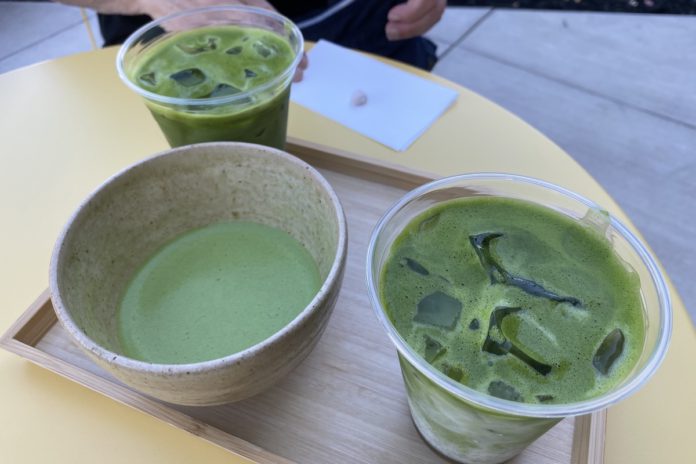
By using the authentic tools of the trade publicly, customers have been inspired to ask questions about the tea ceremony. “Just by placing the chagama [cast iron tea pot] in the space, without doing more beyond that, it sparks conversation and encourages some to read more about it on their own or ask us when they see we have a moment,” Lam said. She admits that the chasen (whisk) and chashaku (bamboo ladle) may slow the process down, but she and her sisters don’t have any plans to take shortcuts.

In addition to the tea itself, Lam hopes people will learn about the tools, which are all handmade in Japan. “If they travel to Japan they can think, ‘I’ve seen this,’ then maybe they will have more interest in supporting the craftsmanship as well,” she said. “We’re playing our little role in preserving these traditions to support those artists handcrafting them one by one.”

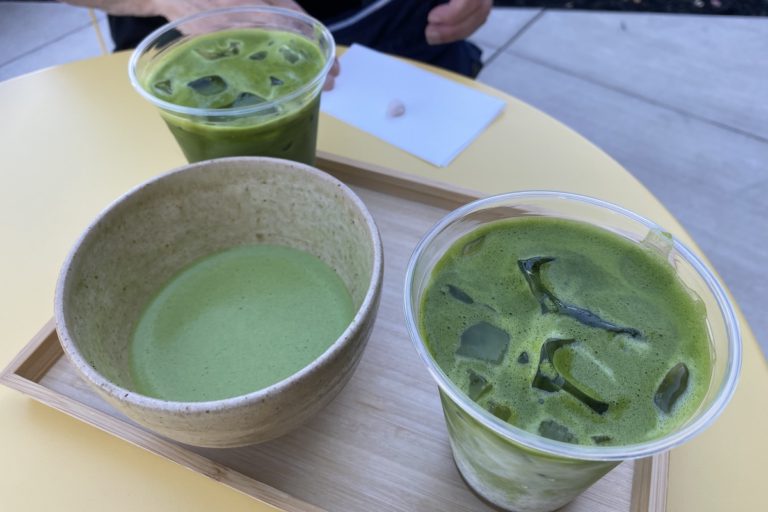
The Forest tea-makers are set up at an open counter in the middle of the cafe. After an order is placed on a digital screen, customers can move to their right to watch the chasen getting busy inside the next cup or bowl of tea. Koicha is the name of the thicker variety of matcha. Lam described the consistency of it as “very intense.” A bowl of it is meant to be shared. “We serve it with a sweet called wagashi, a bean paste that’s very soft and melts in your mouth,” she said.

Forest Tea started with Lam simply looking for a good cup of tea. For her, that meant natural ingredients combined with the beauty and nuance of a tea ceremony. Even at the pop-up, the Lam sisters used the chasen and chashaku. “If we’re serving tea, why not share those tools in the way we serve each cup, even if it’s in a grab-and-go setting,” she said.

“I’m not sure what the syrups and ingredients are in the boba scene right now,” Lam said. “I want to make something that’s focused on real food ingredients, where there’s no preservatives, no food coloring.” Forest Tea makes syrups in small batches with organic ingredients whenever possible, including rose buds, black sesame seeds, ginger and turmeric. “I want to have a healthy, delicious drink to share with the community,” Lam added.

Forest Tea Bar, 2628 Shattuck Ave., Berkeley. Open Fri-Sun, 11am to 6pm. IG: @foresteabar. forestea.life

Bistro 4293 celebrates Azerbaijani food

It’s much easier to fill in the blank for “My favorite Azerbaijani restaurant is ____,” when the restaurant in question is Mexican, Vietnamese or French.

Before sitting down to eat at Anar Usubov’s Bistro 4293, I’d read his website’s headline, “Mediterranean Restaurant & Bar.” That made me think of Mica Talmor’s Pomella, at the other end of Piedmont Avenue, which sadly closed in May. When describing her cuisine, Talmor included Levantine, Maghrebi, North African, Eastern European and Middle Eastern food as relevant influences.

In a similar fashion, Usubov is using the term “Mediterranean” as a point of entry for diners who are unfamiliar with his home country’s cooking. Bistro 4293 serves a hummus trio ($17)—plain, basil and grilled red peppers—but the texture is entirely different from Pomella’s. Talmor whipped her chickpeas into a smooth frenzy. Chef Teymur Piriyev and his wife and sous chef, Gunay, prefer to make a chunkier version. The dip made with basil is particularly well-suited to the blank flavor canvas that is a naked chickpea. Fresh, herby basil spices it up and changes its neutral beige color to a pleasant and pale shade of green.

In a phone interview, Usubov said Azerbaijani food is informed by centuries of cultural traditions. “You can actually get similar tastes by trying Iranian, Afghani or Armenian cuisine,” he said. Azerbaijan shares its borders with Georgia, Armenia, Iran and the Caspian Sea. But each country, he noted, adds its own ingredients and creative takes on many of the same dishes.

In chef Piriyev’s saffron flame chicken ($30), I recognized flavors adjacent to that of a Persian joojeh kabob, or grilled chicken skewers. The flame chicken is cooked on the bone and, like its Persian equivalent, served with a confit tomato. Pairing the slowly blistered tomato with a seasoned piece of chicken is an absolutely succulent combination.

Usubov said that Bistro 4293 embraces farm-to-table cooking. He notes that the Piriyevs are also not taking short cuts in the kitchen when it comes to making all the dishes. Citing dolmas, he said, “We buy grape leaves from Turkey. It’s a specific, tender grape leaf, which is not supposed to be thick.” The chefs wrap them all by hand. “It’s a lot of labor; can you imagine like 400-500 pieces [a day]?” he asked.

They take the same approach with their eggplant rolls ($15). Thin slices of grilled eggplant wrap a walnut-and-onion mixture. The vegetarian at our table initially thought the rolls were filled with ground meat, but our server confirmed it was merely the texture of the ground walnuts.

The word “Mediterranean” recurred on the menu for the preparation of lamb chops ($44) and sea bass ($36). Again, the Middle Eastern influences are just as prevalent and, in both cases, just as delicious. I remember momentarily turning my head away from the plate of fish, bathed in a lemon butter sauce and served with mashed potatoes, only to find it, upon a second glance, wiped completely clean.

Bistro 4293 is located in Dopo’s old space at the top of the avenue. After spending three years readying the place, Usubov opened the restaurant in June. He tried out a few chefs before finding the Piriyevs on the messaging site Telegram. “We talked on the phone, and I told him my vision and he told me his,” Usubov recalled. “That’s how we came up with the concept of the restaurant.”

Usubov believes there are more Azerbaijani restaurants on the East Coast than here on the West Coast. He writes about his journey to San Francisco on the “About Us” tab on the restaurant’s website. “In 1992, everything changed,” he says. “The military occupation and massacre forced my family to flee, and we spent nearly a decade in a refugee tent camp. Those years shaped who I am in every way.”
He and his family fled during an early phase of a conflict between Azerbaijan and Armenia over the region of  Nagorno-Karabakh. After the Soviet Union dissolved, the former satellites entered into a territorial dispute that displaced hundreds of thousands of citizens on both sides of their shared borders. In the refugee camps, Usubov had to contend with starvation, malnutrition and not having “good, sanitized water.” He revealed, “Even now, if I don’t eat bread whenever I eat a meal, I feel like I’m not full, which comes from that poverty, right?”

Bistro 4293, 4293 Piedmont Ave., Oakland. Open Tue-Sun, 11:30am to 2:30pm and 5-10pm. 510.775.5039. bistro4293.com

Free Will Astrology: Week of Sept. 24

0

ARIES (March 21-April 19): In Tonglen, a Tibetan Buddhist meditation, you visualize yourself breathing in the suffering, pain or negativity of other people, then imagine breathing out relief, healing or compassion toward them. The practice can also be done on your own behalf. The goal is to transform tension and stress into courage, vitality and healing. I recommend this practice, Aries. Can you turn your scars into interesting tattoos? Can you find mysterious opportunities lurking in the dilemmas? Can you provide grace for others as you feed your own fire? 

TAURUS (April 20-May 20): In a YouTube video, I watched Korean artisans make hanji paper in the same way their predecessors have for 1,300 years. It was complicated and meditative. They peeled off the inner bark of mulberry trees, then soaked it, cooked it and pounded it into pulp. After mixing the mash with the aibika plant, they spread it out on screens and let it dry. I learned that this gorgeous, luminous paper can endure for a thousand years. I hope you draw inspiration from this process, Taurus. Experiment with softening what has felt unyielding. Treat what’s tough or inflexible with steady, artful effort. Be imaginative and persistent as you shape raw materials into beautiful things you can use for a long time.

GEMINI (May 21-June 20): Legendary jazz musician Sun Ra was a Gemini who claimed to be from the planet Saturn. He aspired to live in a state of “cosmic discipline”—not just in his musical training but in his devotion to self-improvement, aesthetic exploration and a connection to transcendent realities. He fused outrageous style with sacred order, chaos with clarity. I invite you to draw inspiration from him. Put your personal flair in service to noble ideas. Align your exuberant self-expression with your higher purpose. Show off if it helps wake people up.

CANCER (June 21-July 22): In Inuit tradition, qarrtsiluni means “waiting in the darkness for something to burst forth.” It refers to the sacred pause before creativity erupts, before the quest begins, before the light returns. This is an apt description of your current state, Cancerian. Tend your inner stillness like a fire about to ignite. Don’t rush it. Honor the hush. The energies you store up will find their proper shape in a few weeks. Trust that the silence is not absence but incubation. Luminosity will bloom from this pregnant pause.

LEO (July 23-Aug. 22): You’re feeling the stirrings of a desire that’s at least half-wild. A surprising vision or opportunity has begun to roar softly within you. But here’s key advice: Don’t chase it recklessly. Practice strategic boldness. Choose where and how you shine. Your radiance is potent, but it will be most effective when offered deliberately, with conscious artistry. You’re being asked to embody the kind of leadership that inspires, not dominates. Be the sun that warms but doesn’t scorch! PS: People are observing you to learn how to shine.

VIRGO (Aug. 23-Sept. 22): If humans ever perfect time-travel, I’m going to the Library of Alexandria in ancient Egypt. It was crammed with papyrus scrolls by authors from all over the world. It was also a gathering point for smart people who loved to compare notes across disciplines. Poets argued amiably with mathematicians. Astronomers discussed inspirations with physicians. Breakthroughs flowed freely because ideas were allowed to migrate, hybridize and be challenged without rancor. Consider emulating that rich mélange, Virgo. Convene unlike minds, cross-pollinate and entertain unprecedented questions. The influences you need next will arrive via unexpected connections.

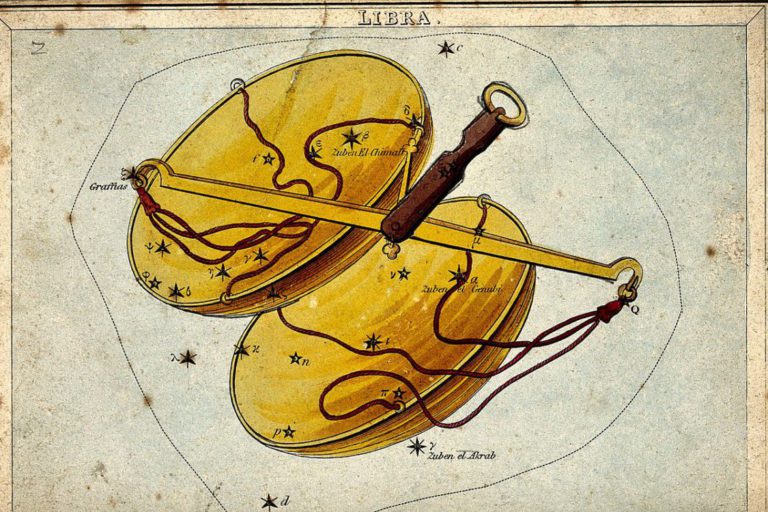
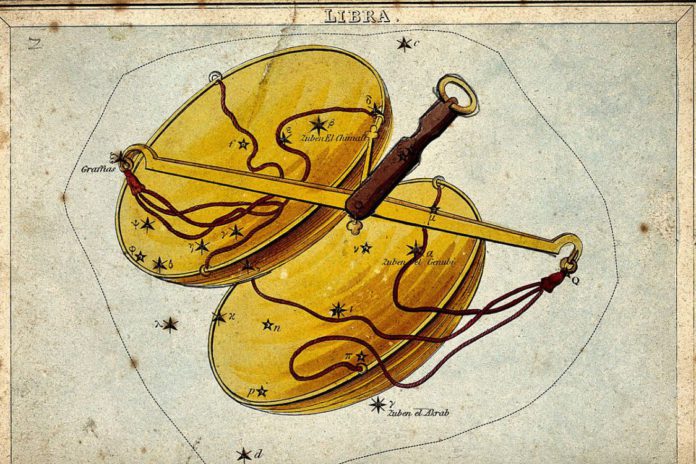
LIBRA (Sept. 23-Oct. 22): The ancient Mesopotamians believed each person had a personal god called an ilu who acted as a protector, guide and intercessor with the greater gods. You’re in a phase when your own ilu is extra active and ready to undergo an evolutionary transformation. So assume that you will be able to call on potent help, Libra. Be alert for how your instincts and intuitions are becoming more acute and specific. If you feel an odd nudge or a dream insists on being remembered, take it seriously. You’re being steered toward deeper nourishment.

SCORPIO (Oct. 23-Nov. 21): In Venice, Italy, floods periodically damage books at libraries and bookstores. Trained volunteers restore them with meticulous, hands-on methods. They use absorbent paper and towels to separate and dry the pages, working page by page. I offer this vignette as a useful metaphor, Scorpio. Why? Because I suspect that a rich part of your story needs repair. It’s at risk of becoming irrelevant, even irretrievable. Your assignment is to nurse it back to full health and coherence. Give it your tender attention as you rehabilitate its meaning. Rediscover and revive its lessons and wisdom.

SAGITTARIUS (Nov. 22-Dec. 21): In classical Indian music, a raga is not a fixed composition but a flexible framework. It’s defined by a specific scale, characteristic melodic phrases and a traditional time of day for performance. Musicians improvise and express emotion within that expansive set of constraints. Unlike Western compositions, which are written out and repeated verbatim, a raga has different notes each time it’s played. I think this beautiful art form can be inspirational for you, Sagittarius. Choose the right time and tone for what you’re creating. Dedicate yourself to a high-minded intention and then play around with flair and delight. Define three non-negotiable elements and let everything else breathe.

CAPRICORN (Dec. 22-Jan. 19): In medieval European monasteries, scribes left blank pages in certain texts. This was not done by accident, but to allow for future revelations. Later readers and scribes might fill these spaces with additional text, marginalia and personal notes. Books were seen as living documents. I recommend a metaphorical version of this practice to you, Capricorn. You will thrive by keeping spaces empty and allowing for the unknown to ripen. You may sometimes feel an urge to define, control and fortify, but acting on that impulse could interfere with the gifts that life wants to bring you. Honor what is as-yet unwritten.

AQUARIUS (Jan. 20-Feb. 18): In West African Vodún cosmology, the deity named Lêgba guards the crossroads. He is the mediator and gatekeeper between the human world and spirit realm. He speaks all languages and serves as the first point of contact for communication with other spirits. In the weeks ahead, Aquarius, you may find yourself in Lêgba’s domain: between past and future, fact and fantasy, solitude and communion. You may also become a channel for others, intuiting or translating what they can’t articulate. I won’t be surprised if you know things your rational mind doesn’t fully understand. I bet a long-locked door will swing open and a long-denied connection will finally coalesce. You’re not just passing through the crossroads. You are the crossroads.

PISCES (Feb. 19-March 20): In 1977, NASA launched two Voyager spacecraft into the abyss. Both carried a message in the form of a golden record to any extraterrestrial who might find it. There were greetings in 55 languages, natural sounds like whale songs and thunderstorms, music by Chuck Berry and others, plus over 100 images and diagrams explaining how to find Earth. It was science as a love letter, realism with a dash of audacity. I invite you to craft your own version of a golden record, Pisces. Distill a message that says who you are and what you are seeking: clear enough to be decoded by strangers, warm enough to be welcomed by friends you haven’t met. Put it where the desired audience can hear it: portfolio, outreach note, manifesto, demo. Send signals that will make the right replies inevitable.

Homework: You know that insult you fling at yourself? Stop flinging it! Newsletter.FreeWillAstrology.com

Talk is cheap

Generational habits have always shaped how people connect, but the shift from phone calls to texting is especially stark. For Monica O’Brien, a communications scholar based in southwest Florida, the contrast has become part of her research and her daily life.

“For Gen Xers, using the phone was a privilege,” she said. “Every kid dreamed of having a phone in their bedroom. I probably had a hundred numbers memorized, and now I can’t remember anyone’s.”

O’Brien recalls her father being strict about phone use, a reminder that in the 1970s and ’80s, making a call was not just convenience but standard. Today, she sees that context missing from her younger coworkers’ experiences.

“A lot of them feel anxiety about answering the phone on the sales floor,” she said. “They just never had to learn those skills. They’re so used to screens.”

That difference in comfort is borne out in research. A survey conducted by the recruitment firm Robert Walters found that 59% of young professionals prefer to use email or messaging instead of phone calls, and about half report feeling uncomfortable making business calls. Only 16% said phone conversations are an effective use of time. Older workers, by contrast, often worry that fewer calls and in-person meetings undermine relationships.

The split between generations appears in personal life as well. A 2023 YouGov poll covering 17 countries found that 40% of people said text messages were their most-used method of staying in touch with loved ones. Voice calls came in second at 29%. Among 18-to-24-year-olds, nearly half favored texting, while adults over 55 were more likely to pick up the phone.

For Keisha R., a Gen Xer from Berkeley, the choice depends on context.

“Texting is definitely more convenient,” she said. “I can schedule a text and communicate when I’m available.”

That balance between efficiency and intimacy captures the current divide. Texting offers flexibility and control, but the human voice conveys emotion that words on a screen can’t always deliver.

O’Brien recognizes both.

“I’m actually a Gen Xer who likes to text a lot,” she said. “But if I have to have a serious conversation with someone, it’s better not to text because things can get misinterpreted.”

Gen Xers, O’Brien argues, stand out for their versatility: Raised on phone calls but fluent in texting, they occupy a unique middle ground between the call-oriented Baby Boomers and the text-first Gen Zers.

“We can do it all. We’re in that sweet spot,” she said.

Wide angle shot of attractive woman using mobile phone. Pretty female standing near window texting with her smart phone. (Photo courtesy of Adobe Stock)

For Anna Trinh, who is in her early 20s, the calculation is very different. Texting is not just convenient—it is low-pressure, safe and even creative. Saying most of her discomfort stems from social anxiety, her experience echoes that of many people her age.

“I find that texting is a low-pressure form of communication, especially when compared to calls. It allows for a lot of freedom,” Trinh said.

She described the practical benefits of being able to respond on her own schedule.

“I can choose when to text back,” she said. “If I’m busy or if I’m not feeling up to responding yet, I can reply at my own convenience. This is a benefit to the other party as well.”

Texting also allows her to be mindful and expressive in ways calls cannot. She described the joy in being more mindful of what she says and using memes to creatively convey how she is feeling with friends. Safety and privacy are also factors for her. Trinh pointed to the rising number of spam and scam calls, as well as potential AI misuse of voice clips.

“There’s been a lot of scams nowadays, which is another reason why I really don’t like phone calls,” she said. “Tech is advancing rapidly, and there’s been talks of people using AI to take voice clips to impersonate others. Not only that, but I get a TON of spam calls from random VOIP numbers every day.”

Her “motto” captures her generation’s approach to phone calls: “If it’s that important, they’ll leave a voicemail,” she said.

Statistics reinforce her experience. A 2022 survey from Communication Research Reports of 18-to-24-year-olds found that 81% reported feeling anxiety before making a phone call, while most reported texting as their preferred method of communication. While older adults continue to rely on calls, young adults treat the ring with caution or avoid it entirely.

The ring of a phone may be less common among the youth today, but it has not disappeared. Instead, it competes with pings, vibrations and unread notification bubbles. For some, it provokes anxiety. For others, it signals intimacy. For many, like O’Brien, Keisha and Trinh, the real skill lies in being able to switch between modes depending on the moment.

“I think the goal is not to lose the ability to talk,” O’Brien said. “You need to be able to do both. There’s a lot you can tell from someone’s voice that you’ll never get from a text.”

Still some, like San Jose Baby Boomer Alison England, are firmly rooted in old-school ways. She believes texting is “lazy.”

“I do not even own a cell phone,” England said. “I have a landline. Personally I hate the idea of being reduced to a text recipient.”

Still, there are Gen Zers who prefer calls, Boomers who favor text and a spectrum of habits in between. O’Brien reiterates that the focus should not be on the generational divide itself, but on bridging the differences so that everyone can communicate effectively in a variety of settings. 

“You need to be able to switch,” O’Brien said. “That’s what makes you a good communicator.”

Ospreys and otters prevail in preservation fight

1

Court battles and other controversies concerning Point Molate, which over the decades have included a plan to build a casino and another to build up to 2,000 units of housing—both vehemently opposed by those in favor of saving one of the last wild spaces on the Bay—have finally come to an end.

On Aug. 26 the East Bay Regional Park District (EBRPD) announced that its purchase of 83 acres of Point Molate’s shoreline had been completed, paving the way for the entire section of the peninsula to be preserved as a park. Activists who contributed years of effort reflected on the process.

Point Molate Alliance co-founder Pam Stello said that in the beginning, “It was difficult to engage the public in defending a place they couldn’t visit. All but 11 of 412 acres are behind fences.” That changed in 2020 when photographer Jack Scheinman created the Facebook page ptmolate4all, where he posted what became viral photos of the peninsula’s beauty and diversity, as well as rebuttals to developer SunCal’s “misrepresentations about Point Molate and their development plans on their website.”

Stello noted that it was also challenging to combat what she described as “skillfully misleading narratives” about the SunCal plan being presented to the public. Through his “meticulous analysis,” she said, “Jeff Kilbreth exposed the financial risk to which SunCal’s plan would expose the city and the city’s General Fund.”

Fellow Point Molate Alliance co-founder David Helvarg listed several turning points: the 2010 Richmond election, in which Richmond voters rejected the casino plan by 58%-42%; the 2014 Richmond election that created a progressive city council; and former State Sen. Nancy Skinner’s securement of $36 million in state funds to purchase Point Molate.

“Ironically,” he said, “Covid helped.”

Residents seeking open space flocked to Point Molate Beach, opened in 2014, and “got to know the area” being proposed as a park, discovering its biodiversity and realizing its value for all city residents.

Robert Cheasty, executive director of Citizens for East Shore Parks (CESP), is part of the legal team that brought key multiple lawsuits, including a final, pivotal one challenging SunCal and its subsidiary, Winehaven Legacy LLC’s, use of an “outdated and flawed” Environmental Impact Report. SunCal filed a lis pendens, a formal notice that a lawsuit has been filed, creating a cloud on the property’s title and freezing the sale, he explained, but the company lost on appeal. “This spring,” Cheasty said, “Winehaven LLC gave up, and the sale went forward.”

The Point Molate Alliance, CESP and other organizations will remain active in planning, Stello, Helvarg and Cheasty said. 

“The organizations and individual members of the Point Molate Alliance are extremely knowledgeable about Point Molate, such as the East Bay Chapter of the California Native Plant Society and the Golden Gate Bird Alliance,” Stello said. “[They] will bring decades of experience and research about Point Molate to EBRPD’s park-planning meetings.”

Also, she noted, the Blue Frontier-Point Molate Alliance’s Coastal Leadership Program launched this summer with 27 West County youth ages 14-20. Thirteen of the program’s graduates have volunteered to serve on a youth park planning board that will continue to participate in EBRPD’s park-planning process.

“We have committed to participate fully in the planning process so that it’s a park that is truly useful and authentic,” Cheasty said. CESP also continues to advocate for its goal of linking parks and trails from Crockett to San Jose.

Park District General Manager Sabrina Landreth said that goal is in line with EBRPD’s master plan.”[This acquisition] is really appropriate for a regional park system,” she said.  

Now begins the start of “robust” community conversations with the City of Richmond and area residents about how the regional park will take shape, she said. This will make use of earlier proposed designs, but will also incorporate new voices. 

Planning and execution is expected to take years, but she pointed to the newly opened 2.5-mile extension of the Bay Trail through Point Molate as a start. “Parks are forever,” she said. “This [victory] is an example of what governments are supposed to do.”

Former State Sen. Nancy Skinner will be honored at the 40th Anniversary Celebration of Citizens for East Shore Parks at 11am, Sept. 21, at the Berkeley Yacht Club, 1 Seawall Dr., Berkeley.


Interviewees were asked to name additional people and organizations without which the effort could not have succeeded.

Pam Stello: “Carol Teltschick and Charles Smith, the first to publicly advocate for a park at Point Molate. Richmond Progressive Alliance … and the Sierra Club were in this fight from the beginning and stayed the course. Joan Garrett, who co-founded Citizens for a Sustainable Point Molate that grew into the Point Molate Alliance, was a vocal and articulate advocate for a park and skilled community organizer. The Richmond City Council—with Gayle McLaughlin and Claudia Jimenez’s leadership—was not willing to put the city at grave financial risk. We could not have won without our attorneys, Robert Cheasty, Norman La Force and Stuart Flashman, the work of Citizens of East Shore Parks manager, Roberta Wyn.

David Helvarg: “[Point Molate Alliance co-founder] Andres Soto; [Contra Costa County Supervisor] John Gioia; Sustainability, Parks, Recycling, and Wildlife Legal Defense Fund (SPRAWLDEF); Sally Tobin; Golden Gate Wetlands; [representing the Native American community] Courtney Cummings.”

Robert Cheasty:  “Gov. Newsom, and the members of CESP.”

All three reiterated Sen. Skinner’s support was crucial, and all cited the ongoing efforts of the EBRPD, its leaders and staff.

Sabrina Landreth: “I am really proud of our entire team. This is an example of what [a community] can do when we all work together.”

Use the links below to see EBX’s coverage of this issue since 2019:

eastbayexpress.com/the-clock-is-ticking-at-point-molate-1/

eastbayexpress.com/final-rounds-in-point-molate-fight-regional-park-may-finally-ko-housing-development/

eastbayexpress.com/what-happens-next-with-point-molate/

eastbayexpress.com/whose-richmond/

Social Eyes: Week of Sept. 18-24

THURSDAY, SEPT. 18

JAZZ

PURPLE GUMS

Cornetist Bobby Bradford is best known as an early and intermittent collaborator with alto saxophone legend Ornette Coleman. His equally visionary partnership with L.A. clarinetist John Carter encompassed several ensembles responsible for treasured recordings that should be far better known today. Since Carter’s death, Bradford has continued to toil fruitfully in jazz’s adventurous frontiers on his own. At 91, having lost his house in the Altadena Fire, he says “music is all I have left,” and no group better displays his telegraphic prowess than the pocket brass trio Purple Gums, featuring tuba master William Roper and San Francisco tenor saxophonist Francis Wong. The three-night residency is presented by drummer Sameer Gupta’s Rootstock Arts. ANDREW GILBERT

INFO: Thu, 7:30pm, Wyldflowr Arts, 809 37th St., Oakland. $10-$60. 510.842.5055.

THURSDAY, SEPT. 18

JAZZ

ANEESA STRINGS

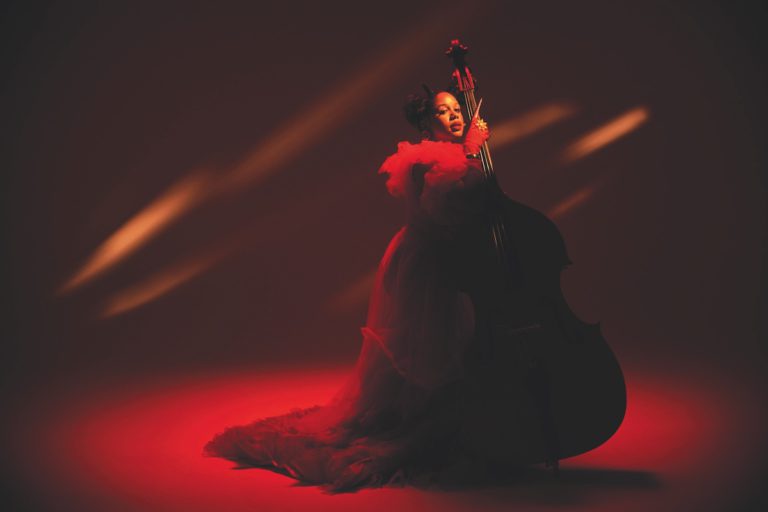
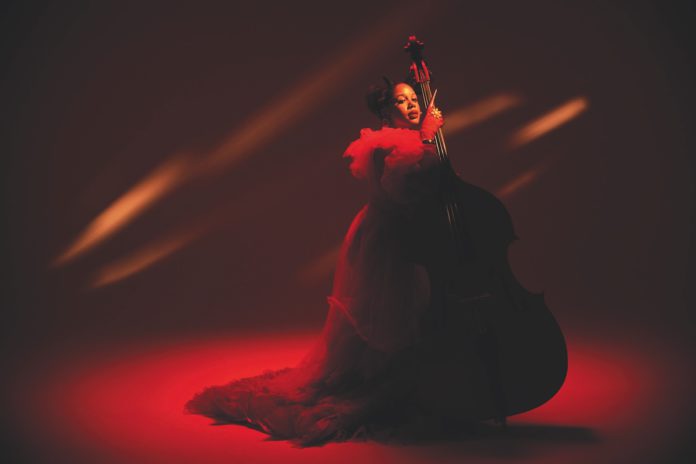
East Oakland bassist, singer and composer Aneesa Strings’ talent was recognized early by Oaktown jazz director Khalil Shaheed. He encouraged her to audition for the SFJazz High School All-Stars so, at 17, she was hauling her double bass across the Bay on BART. She excelled in the program and continues to excel, called upon by major artists to compose, create and lead musical direction. As a solo artist she is touring jazz festivals, including Newport, the Hollywood Bowl and Montreal. Listen to her inspired riff on the Beatles Abbey Road classic, “Come Together/No Diggity,” to hear why. JANIS HASHE

INFO: Thu, 7:30 & 9:30pm, Yoshi’s, 510 Embarcadero West, Oakland. $36-$69. 510.238.9200.

THURSDAY, SEPT. 18

FOLK

BERKELEY OLD-TIME MUSIC CONVENTION

Featuring workshops, jam sessions, dances, panel discussions and two major multi-act concerts, the Berkeley Old-Time Music Convention brings activities to Berkeley from Sept. 17-21 across venues including Ashkenaz, La Peña, the Starry Plough and the Berkeley Public Library. Many of the events are free, but the flagship ticketed concerts take place at the Freight, with Thursday’s triple bill featuring fiddle master Bruce Molsky, the Ozark Highballers and the Oakland Public Conservatory’s Black Banjo & Fiddle Fellows. Friday’s program includes vocalist and multi-instrumentalist Jake Blount with Judy Hyman and Jeff Claus, dulcimer player and vocalist Sarah Kate Morgan, and fiddler Suzy Thompson. – AG

INFO: Thu, 7pm, The Freight, 2020 Addison St., Berkeley. $35-$40. 510.644.2020.

FRIDAY, SEPT. 19

HIP-HOP 

AMINÉ

When people claim the Westside in hip-hop, it’s normally assumed they’re repping L.A., or at least California. But since his mixtape drop in 2014 that flex also goes to Portland if Aminé has anything to say about it. Two years later he gained fame with his “Caroline” single which peaked at No. 11 on the U.S. Billboard Hot 100 chart. Earlier this year he released his third studio album, 13 Months of Sunshine, which has several surprise guests, including Toro Y Moi. He wrote the entire album keeping in mind that he would want to write lyrics he would be proud to read in front of a small group of people, music or not. MAT WEIR

INFO: Fri, 8pm, Fox Theater, 1807 Telegraph Ave., Oakland. $62-$203. 510.302.2250.

FRIDAY, SEPT. 19

HIP-HOP

CUPCAKKE

Chicago rapper Cupcakke built her name on gleefully explicit, high-voltage anthems, but her catalog runs deeper than shock value. She can pivot from hilariously raunchy one-liners to sharp-eyed social commentary in the space of a verse, tackling sexuality, poverty, LGBTQ+ rights and other heavy subjects. Her delivery is versatile too, switching from high-octane, rapid-fire bars to moments of raw vulnerability. After self-releasing a string of viral singles and mixtapes that turned heads in both the underground and the mainstream, she’s carved out a hip-hop niche where outrageous fun and hard truths collide. SONYA BENNETT-BRANDT  

INFO: Fri, 9pm, Cornerstone, 2367 Shattuck Ave., Berkeley. $45. 510.214.8600.

SATURDAY, SEPT. 20

PUNK

NINETY POUND WUSS

Those old enough to remember the 1990s most likely remember the name Ninety Pound Wuss. Especially if those people listened to the Tooth & Nail Records catalogue. Started in 1994, Ninety Pound Wuss released three full-lengths over the next six years. However being a Christian band in the punk scene proved to be difficult, and the band broke up in 2000. Two years ago, they got back together to play a couple of reunion shows that ended up sparking their fire once more. Now, the band is ready to play their first California shows in a quarter of a century, and what better place than the epicenter of the Bay Area punk scene? – MW

INFO: Sat, 7pm, 924 Gilman St., Berkeley. $15/adv, $20/door. 510.525.9926.

SATURDAY, SEPT. 20

THEATER

‘OY, WHAT THEY SAID ABOUT LOVE’

Storytelling and documentary mash up in one-man performer Steve Budd’s investigation of love. Seeking answers about love’s ruptures and raptures, the venerable, charismatic performer conducted dozens of interviews. Performing multiple characters as the people he met—amorous couples one moment, enemies engaged in battle the next—Budd’s transformational chops are on full display. He is also terrifically funny, with clever timing for dangling a blow, then delivering it full throttle with laughs, not lethality. Performances go until Oct. 25. LOU FANCHER

INFO: Sat, 8 pm, The Marsh, 2120 Allston Way, Berkeley, $25-$100. 415.282.3055.

SUNDAY, SEPT. 21

SHOEGAZE

SLOW CRUSH

Belgium’s Slow Crush drapes heavy guitars in gauzy layers of sound, marrying shoegaze shimmer with grunge force. Since their 2018 debut, Aurora, the quartet has built a reputation for transporting live shows that feel both crushing and ethereal, a tidal wave seen through mist. Their new record, August release Thirst, deepens that duality; vocalist/bassist Isa Holliday’s haunted vocals float above roaring distortion and pulse-driven rhythms. It’s half dream, half nightmare. Now in the midst of a U.S. and Canada tour, Slow Crush continues to pull audiences into its world of catharsis, haze and sheer volume. – SBB

INFO: Sun, 7pm, Crybaby, 1928 Telegraph Ave., Oakland. $28.

MONDAY, SEPT. 22

ROCK

SHRED IS DEAD

If Jerry Garcia were alive to hang out at the Ivy Room and groove to Marcus Rezak’s Grateful Dead tribute band Shred Is Dead, he’d likely bust out the tie-dye and get jammin’ onstage. Guitarist Rezak fronts many projects and has collaborated with musicians across the rock spectrum. He’s been quoted as saying, “I like to take the Grateful Dead and make it a little more high-octane, a little faster and a little more energized.” For this gig, he’ll be joined by the Bay Area’s own Anna Elva (“the dancing drummer”), Scott Guberman (Phil & Friends) and a “bass player surprise TBA!” Never too much “Sugar Magnolia.” – JH

INFO: Mon, 7pm, Ivy Room, 860 San Pablo Ave., Albany. $18-$23. 510.526.5888.

WEDNESDAY, SEPT. 24

INDIE-FOLK

THE HEAD AND THE HEART

The band co-founded by Josiah Johnson and Jonathan Russell in 2009 arrives at The Greek newly animated. A vigorous sixth album, Aperture, has infused their trademark indie-folk sound with re-energized songwriting and deep commitment to the unique musicianship of each of its six members. The unified sound is achieved by allowing individuals to play while circling around a common goal: honest voices and vast belief in art as healer, teacher, giver-of-hope. Maybe the sun will come up on the world envisioned: A world with head and heart held aloft, not separated into silos. Maybe it’s a model for living, or maybe it’s just a strong band with fresh vitality. – LF

INFO: Wed, 6pm, Greek Theatre, 2001 Gayley Rd., Berkeley. $78. 510.871.9225.

ROHAN combines code and chords

0

ROHAN has been playing music for as long as he can remember. Although he grew up in Australia, it was the music of Berkeley’s Green Day that inspired him to start writing songs.

“My mom encouraged me to start piano lessons at a young age,” he said. “I began by playing children’s songs, but then my sister played Green Day’s American Idiot for me. That made me want to branch out and play guitar.”

He taught himself to play and sing by copying the sounds he heard on Green Day albums. By the time he was 10, he was writing songs and putting together bands. He continued playing in bands and making music after his family moved to Singapore. At the same time, he was programming computers and developing his own games and apps. 

“At 16, in Singapore, I was making tunes on my computer,” ROHAN said. “I wrote produced, arranged and learned how to record as I went along. I used GarageBand, Logic Pro, one mic and my computer. I’d program the bass and drum tracks, and sing and play guitar.” 

ROHAN moved to California to attend Stanford when he was 18. “I had a bedroom studio and kept writing and recording songs. I taught myself how to play bass as well,” he said. 

He studied music, computer programming and liberal arts, but soon dropped out to move to San Francisco and start a business. “I was creating games and apps and helping other people design websites,” he said. “I also ran a consulting company called Punk House, that creates new technology, art and events. I have a fulltime job as well as making music, which is what I’ve been doing most of my life.”

The studio in his San Francisco kitchen has a variety of mics, 30 guitars, a few basses, monitors and synthesizers. He also records occasional tracks at Hyde Street Studio. In the past three years, he’s put 24 songs up on his BandCamp page.

The songs have eclectic arrangements, merging folk, rock, punk, R&B, pop and other styles. “I have a wide-ranging taste,” ROHAN said. “The songs go in whatever direction strikes me at the time. I don’t consciously think of playing in any specific style. Whatever’s in the front of mind comes out when I play. It can be tough to get to the sound you hear in your head. Sometimes a song takes shape in one day, sometimes they marinate for months.” 

“Precious” is an inventive mix of folk and electronic textures. A wave of static fades into an acoustic ukulele, strumming simple chords, as his processed vocals evoke the feel of an Edison cylinder recording. Images of unrestricted love, and the joys it brings, are magnified by the track’s booming percussion and vocals that ebb and flow like the feverish breathing of an infatuated lover.

The end of a relationship is described in “I Wish I Could Tell You,” a bittersweet ballad. Guitar, bass and drums bring to mind the sound of an R&B combo playing in a smoke-filled, late-night bar. His pleading vocal is full of longing, as he begs a lover leaving a relationship to stop and reconsider. 

The next single in his current series will be “Killing Her Softly With My Song,” set for release on Sept. 17. “I wrote this breakup song about the end of an old relationship from my perspective,” he said. “I borrowed the title from the Roberta Flack hit, but it has nothing to do with that song, musically or emotionally.”   

Despite his prolific output, ROHAN hasn’t yet released an album. “I’m working towards a collection,” he said. “I’m trying to figure out what the message will be and putting together songs that move in that direction. When I’m writing, I let emotions flow honestly and curate them based on how they come out and how a song impacts me once it’s done. If I don’t like it, I don’t share it.”

His songs have been featured on Spotify’s Fresh Finds in Australia and New Zealand, and Apple’s Heartbreak Playlist. ROHAN’s songs are available for download on his BandCamp page for free or for whatever people want to pay. “I just do it for the love of the music,” he says. 

Listen to ROHAN’s songs at rohanx.bandcamp.com. An album will be released in early 2026. His website is: linktr.ee/rohanhq.

‘Indecent’ brings ghosts to life

Center REP launched its 58th season Sept. 7 with Pulitzer Prize-winning playwright Paula Vogel’s play, Indecent. Running through Sept. 28 at Walnut Creek’s Lesher Center for the Arts and presented in partnership with Yiddish Theatre Ensemble (YTC), the production is anchored in the true story of Polish dramatist Sholem Asch.

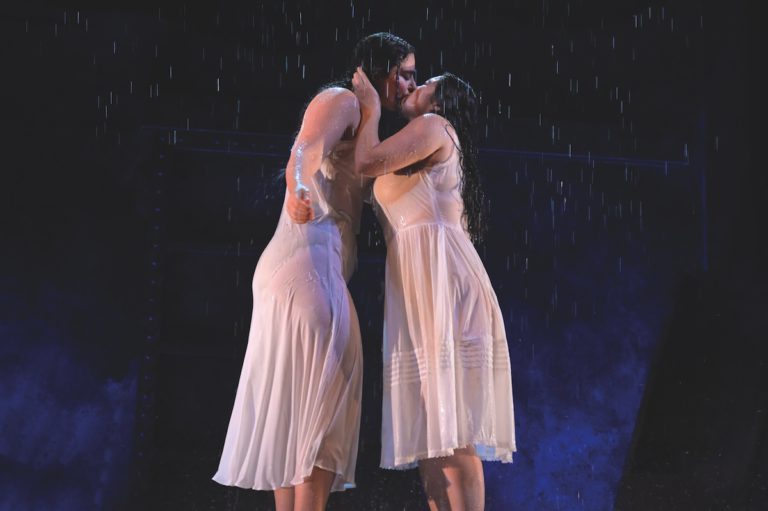
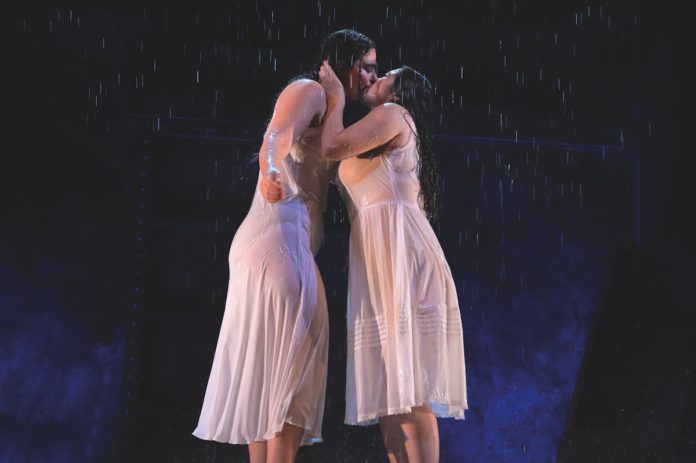
His 1906 play, God of Vengeance, successfully toured in Europe. But after it premiered in America in 1923—it included the first queer kiss on Broadway—the cast and director were charged with obscenity and jailed. The freedom to speak of and act upon queer identity was curtailed and condemned.

Which makes Vogel’s play-within-a-play relevant to audiences in 2025. After all, daily life often feels scripted or like an act. Be it a reality TV star occupying the Oval Office, social media’s “fake news” proliferation or the AI invasion, authenticity appears to have flown the coup.

The Yiddish Theatre Ensemble’s co-artistic directors, Laura Sheppard and Bruce Bierman, first presented Bay Area audiences with an online, English version of Asch’s The God of Vengeance in 2021. One year later, a collaboration with San Francisco Playhouse brought the work to local stages. Center REP breathes new life into Indecent under the direction of Elizabeth Carter, along with a seven-member cast and three musicians.

Carter says her first interest in the play was the ghost troupe that is integral to the storytelling. “I love ghosts,” she said. “I love things that always have been and always will be; a continuum of time from past to future. I call that an Afro-surrealist view with all things happening simultaneously. Potentially, our future is here, now. The second thing is the idea that a language and culture can disappear.”

Carter is not Jewish, and is both Black and queer. She said the play also speaks to interrogating oneself versus being interrogated, of a culture facing possible extinction. When any community shocks people by straying outside of societal “norms”—in this play, a tender romance between two young girls—labels are applied.

“Instead of embracing the richness of humanity,” Carter said, “we shut it down, try to control the narrative of how we and our culture are seen. That makes people feel comfortable, but it’s usually a narrow window.”

Carter was struck by the way Vogel breaks form. “It’s not a simple, chronological story,” she said. “We’re going back in time, but we’re interspersing it with present-day theater. It’s looping the past with where we are right now; a world of censorship, queer folks and trans rights being on the chopping block, immigrants being removed, an authoritarian state and dare I say, fascism. This is happening to people from 1905 to 1950 and mirrors the present environment.”

The ghost troupe had to be steeped in Jewish mysticism; the actors had to command the play’s immediacy while dancing, singing and telling stories in Yiddish. “[The script] asks a lot of them,” Carter said. “When speaking in English they have to speak with Yiddish, German and Lithuanian accents.”

Carter wants audiences leaving the theater to recognize the diasporic Jewish community and to ask themselves, “How can we let travesties like this happen again?”

In research conducted with YTC’s directors, she explored gaps in her lived-in knowledge base: German Expressionist dramaturgy, Yiddish movies and art, and more. “They gave me so much juice,” she said. “They connected me with a scholar who translated Asch’s play, sat in on run-throughs, gave actors feedback.”

Aware of the devastating “oh no, this is where we are” blow the play might make, she said there’s also hope in the way people never give up on things like the story at its center. “It’s a love story for these two girls, a love story for theater,” she said. “That gives us the hope that we can make real what we believe in our hearts to be true. In the depth of despair, there’s resistance and the idea that we can get to joy, freedom, a better ending.”

She said that, despite the reality of oppositional forces, “We just have to not cave. We have to do uplifting plays, but also plays that hold the edge and continue to have people questioning their hearts and minds to find imaginative answers in times of darkness and discomfort.”

Renters left out of the housing-solution conversation

Renters left out of the housing-solution conversation
It’s easy to be convinced that the YIMBY (Yes In My Backyard) movement has the interests of rent-burdened Californians at heart while the NIMBY (Not In My Backyard) movement doesn’t. In the politicized dichotomy, it’s further implied that YIMBYs are in favor of diverse, inclusive and affordable housing-for-all, while NIMBYs are opposed. In truth, the YIMBY/NIMBY framework lacks nuance...

Striking the Balance: How Writers Can Use AI Without Getting Flagged

Writing with AI
Published in cooperation between ZeroGPT.com and the East Bay Express AI writing tools are everywhere now—from school assignments to blog posts and social media captions. They help save time, spark ideas and make writing easier. But there is a growing problem: more platforms, schools and even employers are using AI detectors to check if the content was written by a...

Forest Tea Bar is having a matcha moment

Forest Tea Bar is having a matcha moment
For latecomers just discovering the trendiest beverage in town—buh-bye boba!—Forest Tea Bar proprietor Eunice Lam introduces the idea of matcha tea by comparing it to chocolate. “Each chocolate has a different origin and taste profile,” she said during our phone interview. Varieties of matcha can land on the “grassier, fresh spring” side of the palate, or they can be umami...

Bistro 4293 celebrates Azerbaijani food

Bistro 4293 celebrates Azerbaijani food
It’s much easier to fill in the blank for “My favorite Azerbaijani restaurant is ____,” when the restaurant in question is Mexican, Vietnamese or French. Before sitting down to eat at Anar Usubov’s Bistro 4293, I’d read his website’s headline, “Mediterranean Restaurant & Bar.” That made me think of Mica Talmor’s Pomella, at the other end of Piedmont Avenue, which...

Free Will Astrology: Week of Sept. 24

Free Will Astrology: Week of Oct. 15
Rob Brezsny's horoscopes offer advice and insights, often drawing on cultural references, historical practices, or mythological concepts to inspire personal growth, self-reflection, or a specific approach to current challenges.

Talk is cheap

Talk is cheap
Generational habits have always shaped how people connect, but the shift from phone calls to texting is especially stark. For Monica O’Brien, a communications scholar based in southwest Florida, the contrast has become part of her research and her daily life. “For Gen Xers, using the phone was a privilege,” she said. “Every kid dreamed of having a phone in...

Ospreys and otters prevail in preservation fight

Ospreys and otters prevail in preservation fight
Court battles and other controversies concerning Point Molate, which over the decades have included a plan to build a casino and another to build up to 2,000 units of housing—both vehemently opposed by those in favor of saving one of the last wild spaces on the Bay—have finally come to an end. On Aug. 26 the East Bay Regional Park...

Social Eyes: Week of Sept. 18-24

Social Eyes: Week of Sept. 18-24
Featuring Purple Gums, Aneesa Strings, Berkeley Old-Time Music Convention, Aminé, Cupcakke, Ninety Pound Wuss, Steve Budd’s 'Oy, What They Said About Love,' Slow Crush, Shred Is Dead, and The Head and the Heart.

ROHAN combines code and chords

ROHAN combines code and chords
ROHAN has been playing music for as long as he can remember. Although he grew up in Australia, it was the music of Berkeley’s Green Day that inspired him to start writing songs. “My mom encouraged me to start piano lessons at a young age,” he said. “I began by playing children’s songs, but then my sister played Green Day’s...

‘Indecent’ brings ghosts to life

'Indecent' brings ghosts to life
Center REP launched its 58th season Sept. 7 with Pulitzer Prize-winning playwright Paula Vogel’s play, Indecent. Running through Sept. 28 at Walnut Creek’s Lesher Center for the Arts and presented in partnership with Yiddish Theatre Ensemble (YTC), the production is anchored in the true story of Polish dramatist Sholem Asch. His 1906 play, God of Vengeance, successfully toured in Europe....
19,045FansLike
17,709FollowersFollow
61,790FollowersFollow