Maren Hassinger turns trash into art at BAMPFA

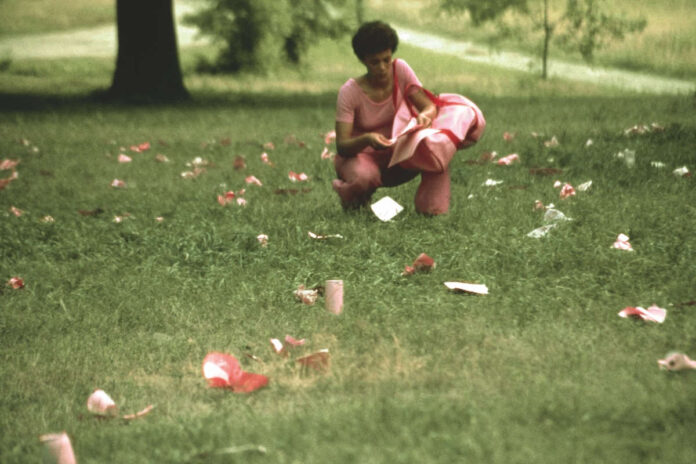
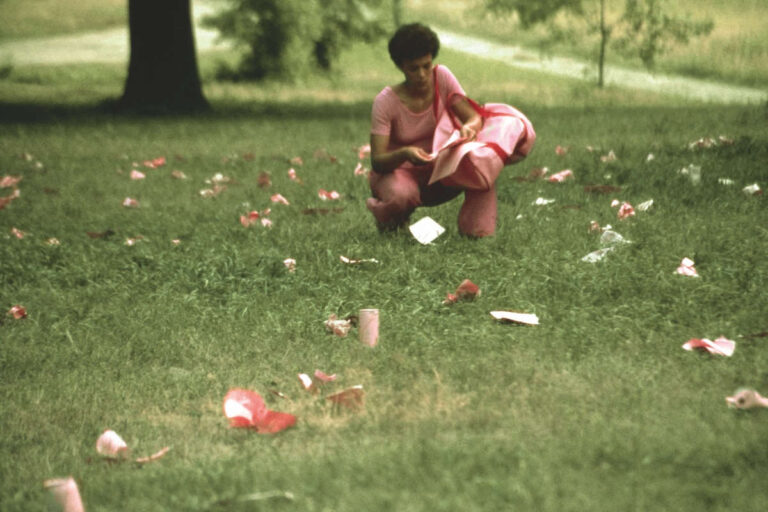
Watch for a scramble in September, when Cal undergraduates will line up to help scatter—and then reclaim—trash. As part of the ongoing retrospective at the Berkeley Art Museum and Pacific Film Archive (BAMPFA), “Maren Hassinger: Living Moving Growing,” the sculptor/performance artist/teacher will restage one of her most famous performances, Pink Trash, for only the third time since 1982.

The students will toss the litter onto UC Berkeley’s Crescent Lawn, then gather it up and repaint it pink. This is a statement, said BAMPFA materials, of “a powerful metaphor for humanity’s obligation to care for the natural world.”

Pink Trash is only one example of performance art pieces that will be recreated for the exhibition. Hassinger, now 79, is widely considered one of the most influential artists of her generation. The retrospective, which opened June 6 at BAMPFA, examines 50 years of her work, including large-scale sculpture, site-specific installation, video and performance. “Carefully choosing materials for their innate characteristics, Hassinger has explored the subjects of movement, family, love, nature, environment, consumerism, identity, and race,” BAMPFA materials note.

Another interactive opportunity will take place on the exhibition’s opening day. Visitors can join Hassinger to help create pieces that will be used in a new, large-scale installation, Wrenching News. Participants will twist and knot newspapers, which will then be assembled at BAMPFA in a public workshop led by the artist. A series of workshops during the exhibition will continue to add to the piece.

Senior curator Andrew Graham described the inspiration for “Living Moving Growing” as “kismet.” When he and chief curator Margot Norton both came to BAMPFA more than three years ago, they discovered Hassinger was an artist they jointly admired. “We jumped at the chance to work on this exhibition together,” he said. They visited Hassinger in New York, saw a show at her gallery there, and made the connection with her. “Collaboration is the crux of how she operates,” Graham noted.

From the beginning, the co-curators aimed to bring together many diverse works to the exhibition. The major sculptures yes, but, said Graham, “some of the lesser-known aspects of her practice.” The show features, for example, archival photos of her performance art work, including previously unseen photos of the artist early in her career taken by Adam Avila, an early collaborator of Hassinger’s. The black-and-white images, which will also be included in the exhibition catalog, serve as important documentation of early works by the artist that no longer exist.

As the most ambitious retrospective to date of the artist’s body of work, according to BAMPFA, “Living Moving Growing” includes recreations of temporary installations, such as Love (2008), a site-specific sculpture composed of pink plastic bags inflated by human breath and filled with love notes; Beach (1980), a floor installation of plaster and wooden dowels; and multiple sculptures that incorporate recently harvested tree branches, which the museum will realize in partnership with the University of California Botanical Garden.

Hassinger, said Graham, is part of a generation of artists, but her work demonstrates what he calls a “unique sensibility… committed to bringing people together.” She emerged alongside a community of artists working together in the ’70s as Studio Z, including Senga Nengudi, Ulysses Jenkins and David Hammons. In turn, Hassinger has been a direct influence on contemporary artists, such as CiCi Wu, Graham said.

Graham also highlighted the importance of honoring the Earth in Hassinger’s work. “The loss of nature was a defining vision of her generation,” he said. “[She believes] we have to take care of the Earth and of each other.”

Berkeley-based artist Julia Goodman will lead the monthly workshops that continue building “Wrenching News.” This is an ideal match, by Goodman’s own assessment. “I have worked with repurposed materials for over 20 years,” she said in a phone interview. Her An Unimaginable Unit of Time, for example, was created during the pandemic by tearing synthetic bedsheets and creating a rope. “It was my way of marking time,” she said. It also provided a release from the ongoing stress of a highly uncertain time.

The idea for her to lead the rest of the workshops came up in 2025, and she immediately said, “Yes.” She has now met Hassinger and formed a connection. She will shadow Hassinger in the first workshop. At subsequent ones, which will take place on an alternate Saturday and Sunday schedule, she will welcome participants of various ages. “I like intergenerational workshops,” she said.

Goodman spoke to the importance of tactile experiences in understanding much of Hassinger’s work. “It’s an opportunity to echo the handiwork of an artist,” she said. Asked if she has a favorite Hassinger work, she cited pieces using galvanized wire rope, such as Paradise Regained, in which thick wire strands evoke reeds bending in the wind. These pieces, she said, “shifted my take on the material…it changes the way I feel when I cross the [Bay Area] bridges.”

To celebrate the exhibition, BAMPFA is publishing a fully illustrated catalog on Hassinger. It will include an introductory essay by Graham and a roundtable discussion moderated by Norton with some of  Hassinger’s collaborators, including Just Above Midtown gallery founder, filmmaker and activist Linda Goode Bryant, and artists Senga Nengudi and Ava Hassinger, Maren Hassinger’s daughter. A new interview with the artist is also included, along with additional essays.

“It’s so important to hear women artists in their lifetimes,” Goodman said. Both interviewees recommended multiple visits to “Living Moving Growing” during its exhibition to see how Wrenching News, for example, evolves, and to re-absorb the ties between the works.

“Her work is so moving,” Graham said. “You feel the dynamism.”

‘Maren Hassinger: Living Moving Growing,’ now through Nov. 29, BAMPFA, 2120 Oxford St., Berkeley. 510.642.0808. bampfa.org
Social Eyes: Week of June 25-July 1

THU 6/25

PUNK 

RX BANDITS 

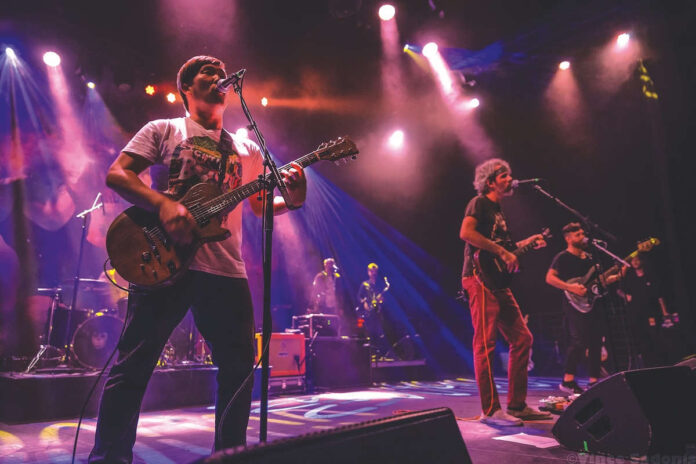
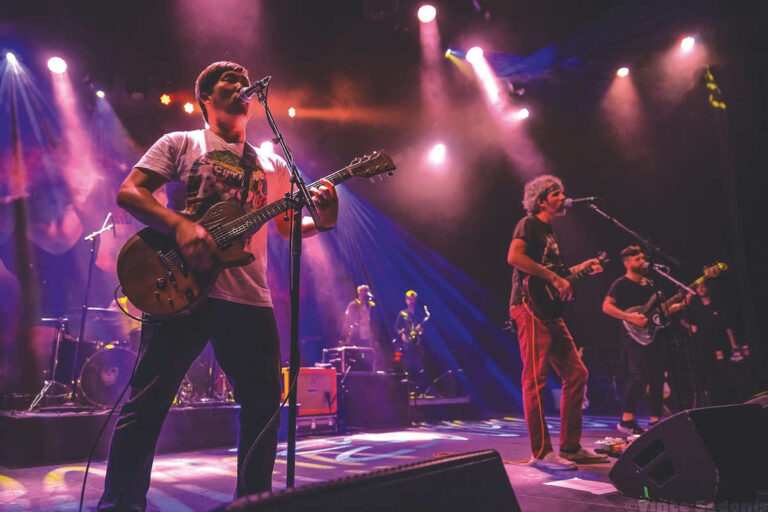
Seeing ska become cool again has been one of the best things about the 21st century. Especially for those of us who had to live through the early 2000s, fighting their friends about the music’s awesomeness, despite it falling out of fashion. Yet through it all, certain third wave bands were able to somehow remain without completely getting rid of the ska in their sound. Rx Bandits are one of those bands. Despite not having a dedicated horn section anymore—although in the last 10 years or so they have been known to bust out the horns at live shows—their last album, 2014’s Gemini, Her Majesty, has ska-like elements intertwined throughout the alt-prog-rock-meets-pop-punk sound. MAT WEIR

INFO: Thu, 7:30pm, The UC Theatre, 2036 University Ave., Berkeley. $49. 510.356.4000.

THU 6/25

ZYDECO

THE BACK DIMPLES

If a person doesn’t love the Back Dimples—a Cajun/Zydeco band based in Oakland—they haven’t heard them … yet. This is a stellar chance to rectify that deficit. Trip out onto the dance floor at Ashkenaz and let the blues/jazz/R&B/ska music ooze into bodily form. No need to be an expert mover: A beginner-friendly dance lesson begins 30 minutes before their show and puts even the shyest dancers in the comfort zone. Once equipped to spin, stomp and tiptoe with confidence, partner up with the all-ages crowd. The only things left are enjoying the five-member band’s considerable talents and discovering the eternal joy in moving to music. LOU FANCHER

INFO: Thu, 8pm, Ashkenaz, 1317 San Pablo Ave., Berkeley. $15-25. 510.525.5099.

FRI 6/26

AMERICANA

RUTHIE FOSTER

By the time Ruthie Foster won a Grammy in 2025 for Best Contemporary Blues Album with Mileage, she had already proved she was determined to go her own way. The Gause, Texas, native’s path took her through a stint in the Navy, to turning down a major record deal and finally to finding a home at legendary Sun Records. Today, she’s recognized as a captivating singer/songwriter who blends blues, folk and gospel in her own very personal, heartfelt style. “Now you understand just why my head’s not bowed / I don’t shout or jump about or have to talk real loud / But when you see me passing, it oughta make you proud,” she sings, in “Phenomenal Woman.” Amen. JANIS HASHE

INFO: Fri, 8pm, The Freight, 2020 Addison St., Berkeley. $44-$49. 510.644.2020.

FRI 6/26

JAZZ

HANNAH MAYER, NATHAN NAKADEGAWA-LEE & GUS HURTEAU

One of the pleasures of summer in the Bay Area is the profusion of gigs by young jazz musicians returning home from New York City. This collective trio brings together three stellar East Bay natives rapidly earning renown in the Big Apple. Pianist Hannah Mayer has been studying and performing with celebrated Brazilian guitarist/composer Toninho Horta for the past year. Nathan Nakadegawa-Lee, a poised and thoughtful tenor saxophonist with a beautiful tone, came out of Oakland Tech and studied with a bevy of top players at the New School. And multi-instrumentalist Gus Hurteau is an expert improviser and accompanist who’s also introduced the vibes into metal rock. Expect the unexpected. ANDREW GILBERT

INFO: Fri, 6:30pm, Piedmont Piano Company, 1728 San Pablo Ave., Oakland. $20-$25. 510.547.8188.

FRI 6/26

FILM

‘FANTASIA’

Fantasia has had an interesting history since it premiered in 1940. The original was 124 minutes, with a 15-minute intermission. Presented in four-track stereo sound (Fantasound), Leopold Stokowski conducted eight well-known pieces of classical music, creating an unforgettable serious-soundtrack-meets-cartoon dynamic. Multiple iterations had folks fiddling with the music and audiences gravitating to stories about filming mishaps and the meanings embedded in characters and plot lines. The Paramount pre-screening activities include an organ concert on the theater’s original Mighty Wurlitzer Opus 2164, classic cartoons and trailers, and a mysterious Dec-O-Win game with prize giveaway. Regardless of age, it’s a swell opportunity to be a kid once more. – LF

INFO: Fri, 7pm, Paramount Theatre, 2025 Broadway, Oakland. $12. 510.893.2300.

SAT 6/27

JAZZ

MIKAILO KASHA QUARTET

Growing up in Mountain View, bassist Mikailo Kasha was a standout player in the SFJAZZ High School All-Stars and he’s more than lived up to his promise. Now based in Miami, he’s forged a national network of colleagues and is known for putting together top-notch ensembles. This quartet features Houston vibraphonist Jalen Baker, who’s toured and recorded with trumpet star Jeremy Pelt; rising Miami pianist Tal Cohen, known for his work with Cuban drum-great Ignacio Berroa; and Los Angeles drummer Anthony Fung, a first-call accompanist on the Southland scene. Equally fluent on electric and standup bass, Kasha knows how to put together a wide-ranging program that tells an overarching story. – AG

INFO: Sat, 7:30pm, Sound Room, 3022 Broadway, Oakland. $30. 510.708.9691.

SAT 6/27

R&B

DON TOLIVER

Don Toliver’s Octane Tour pushes his sound into overdrive, a neon-haloed sprint through trap, R&B and psychedelic pop. Emerging from Houston and the Cactus Jack ecosystem, Toliver stacks reverb on elastic melodies and hooks that feel both weightless and sticky. It’s a kinetic palette. Tracks like “Body” and “ATM” are synth-slicked set pieces where falsetto slips into haze and back again. They embody Octane’s world as combustion and motion: potent backing beats retooled as fuel for a perpetual forward drive. SONYA BENNETT-BRANDT

INFO: Sat, 7:30pm, Oakland Arena, 7000 Coliseum Way, Oakland. $180-$688. 510.569.2121.

SAT 6/27

METAL

KONTUSION

Time to get those stretches in, stock up on ibuprofen and make peace with the devil because death metal is coming to town! Consisting of the main core of Mark Bronzino (Mammoth Grinder/ex-Iron Reagan) and Chris Moore (Coke Bust/Repulsion), Kontusion is a newer band with an old-school feel which, simply put, f!@#$%& rules! In 2022, they released their debut, self-titled EP and recently dropped their first full-length, Insatiable Lust For Death, just last year. While heavily steeped in death metal, they also incorporate elements of black metal into the mix for extra evil. Because why not? – MW

INFO: Sat, 9pm, Thee Stork Club, 2330 Telegraph Ave., Oakland. $20. 510.859.8709.

SUN 6/28

HIP-HOP

SLUM VILLAGE

Slum Village helped define the sound of Detroit hip-hop long before the city became a shorthand for forward-thinking beats. Formed in the early ’90s by childhood friends T3, Baatin and J Dilla, the group fused jazz-inflected grooves and off-kilter lyricism into a style that reshaped underground rap, favoring head-nodding subtlety over bombast. More than three decades later, T3 and producer-rapper Young RJ carry that legacy forward. 2024 release F.U.N. pairs the group’s signature warmth with contemporary collaborators like Larry June and Cordae as Slum Village extends Detroit’s musical lineage. – SBB

INFO: Sun, 7pm, Yoshi’s, 510 Embarcadero West, Oakland. $49-$89. 510.238.9200.

WED 7/1

AMERICANA

JIM CAMPILONGO TRIO

Settle down into one of the Back Room’s couches for an evening of instrumental roots rock/jazz/funk/country swing with noted guitarist Jim Campilongo, as he jams with master drummer Scott Amendola and iconoclast bassist Mat Muntz. Just the title of one of Campilongo’s compositions, “I’m Helen Keller And You’re A Waffle Iron,” should provide a clue to what to expect from time with him and his associates. Vintage Guitar magazine called the piece “dirge-like funk that sounds at times like nothing should fit together, but it does.” It’s apparently true that Campilongo used S&H green stamps to buy his first guitar, but it’s been a long, creative journey to the Telecaster he plays now. – JH

INFO: Wed, 7:30pm, The Back Room, 1984 Bonita Ave., Berkeley. $30. 510.654.3808.

No Coal says ‘Bring it on’

0

To anyone not keeping up with the bumpy road of the fight over the proposed coal terminal in Oakland, it might seem recent news is uniformly bad for the “no coal” movement. Court rulings have gone against No Coal in Oakland (NCIO), its allies and the City of Oakland. Then on June 3, the Trump administration announced a $75 million grant to help fund building the terminal.

This was done by invoking war powers under the Defense Production Act, and is part of $700 million designated for financing new coal-fired plants in Alaska and West Virginia, as well as support for coal plants in 10 states that voted for Trump in 2024.

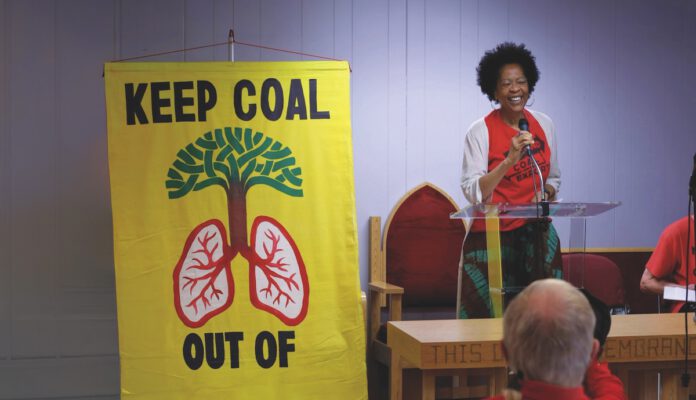
But that’s just one side of the story. The all-volunteer NCIO and its many allies, including the West Oakland Environmental Indicators Project (WOEIP), are even more determined to keep fighting what they deem a potential environmental disaster for the East Bay—and they have multiple new strategies to do so.

Oakland resident and NCIO volunteer since 2015, Aaron Reaven, said, “We are already neck-deep in fighting back.” Although developer Phil Tagami prevailed in a recent legal judgment, the judge included multiple environmental safeguards that would have to be met, he said.

And, although Oakland Mayor Barbara Lee announced shortly after her election that she would “strongly support” the Oakland City Council’s resolution to ban coal being shipped through the city, Reaven said NCIO’s efforts are shifting to the Bay Area Air District (BAAD, formerly BAAQMD), since air quality is directly affected by “fugitive dust” blown off coal cars in transit, and the distribution of this toxic dust by wind isn’t limited to the communities next to rail lines.

(East Bay Express published a story in 2023 about the extensive study documenting the existence of coal dust in communities along the rail route to the Levin Richmond Terminal: eastbayexpress.com/dust-proof/).

The long-established WOEIP is also re-focusing efforts on the BAAD, said Executive Director Veronica Eady. The organization is also looking to state representatives, such as Assemblymember Mia Bonta and Congresswoman Latifah Simon, to step up support for stopping the terminal. On June 15, Bonta introduced AB 40, the Community First Coal Review Act which, if passed, would require a “full Environmental Impact Report before any local agency may grant a discretionary approval for a new or expanded coal handling, storage or export terminal with a design capacity exceeding five million short tons per year.” 

The bill also requires an updated environmental review when the type or quantity of coal changes materially or when the existing EIR is 10 or more years old, according to Bonta’s website. On June 16, Simon filed a federal amendment that would block the use of energy and water funds for coal projects.

Eady noted it’s disputable that the Defense Production Act, created during the Cold War, can legally be used to fund further coal development. Legal proceedings calling the use into question are almost inevitable. And, she said, the tab for building the terminal is estimated to be as much as $400 million.

Then there’s the bigger picture. Despite Trump and EPA Administrator Lee Zeldin, whose links to conservative groups promoting fossil fuels are well documented, coal continues its decline. A June 15 Associated Press article quoted recent data from global energy think tank Ember which showed “the continued growth of solar and decline of coal in the United States despite federal policy. In May, for the first time, solar supplied more of the nation’s electricity than coal, or 12.8%, Ember said. Coal supplied 12.2%, its fourth-lowest monthly share ever.”

And although coal shipped through Oakland would be going to Asia, where it is still dominant, the picture is changing there as well. Ember reported: “The region’s own power mix is shifting: clean generation rose from 34.1% to 37.1%, with solar and wind (17.5%) now edging above the world average (17.3%), and renewables reaching 32% of Asia’s electricity mix overall.”

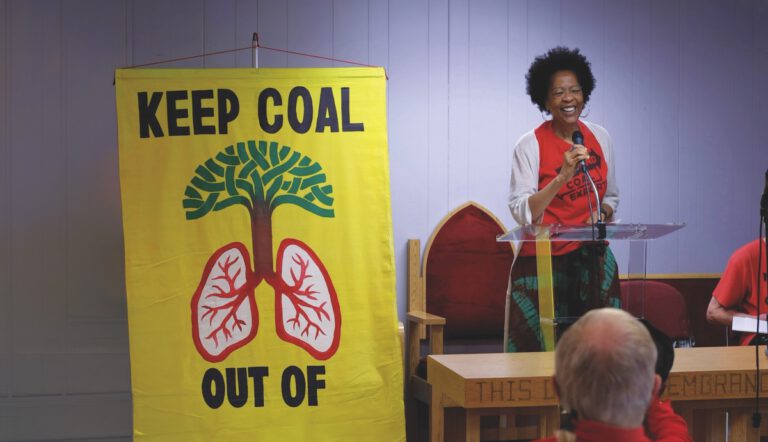
Both Reaven and Eady encouraged those interested in preventing the terminal build to attend the community meeting scheduled June 25. “Especially young people,” Eady said. “There is room for fierce young allies in the Bay Area.”

Community meeting from 7-8:30pm, June 25, at La Peña Cultural Center, 3105 Shattuck Ave., Berkeley. nocoalinoakland.info

Sightglass Coffee comes to Berkeley

Shortly after Sightglass Coffee opened on Seventh Street in 2011, a friend of mine walked me through SoMa to the San Francisco cafe and roastery. The combination of exposed beams, cathedral-like windows, giant bags of coffee beans and large machinery in motion evoked a refined steampunk aesthetic. Unlike its cheaper and faster competitors, Sightglass announced its arrival on the scene by riding on the top of the third wave of artisanal coffee makers.

The pourover, and the wait for it to finish percolating, defined the Sightglass experience. Patient temperaments appreciate this approach. As the baristas make each individual cup of coffee, it’s like watching an artist breathe life into a painting or a sculpture. To make a cup of artisanal coffee, customers must be willing to embrace the ceremonial aspects of production in the same way matcha drinkers do.

Since 2011 Sightglass has expanded slowly and deliberately, landing at a modest total of five locations. The latest is in Berkeley on the ground floor of the Helen Diller Anchor House. The Sightglass website notes that the housing tower was designed “to support UC Berkeley transfer students.” I spoke with Sightglass CEO Sharon Healy to discuss the company’s decision to open there.

Healy joined Sightglass two and half years ago. Since then, people have been asking her when and where Sightglass is going to add new locations. Her initial answer was, “Not yet.” The opportunity to move into the Berkeley location arrived at the right moment. Anchor House, she said, sits on the edge of the UC campus. “It has so much traffic, so much vibrancy—a built-in community with students there and a lot that’s growing around it.”

But the company wouldn’t have opened in the East Bay if it hadn’t established a respected brand in the city. “We’ve had so much success in San Francisco—across SoMa, Divisadero and 20th,” Healy said. “When you go in, it’s not just busy, it’s full all day long. We’re meeting new customers every single day and so it felt like the right time to expand, and like an organic next step for us.”

Choosing the location was also mission-driven. Part of Sightglass’ rent goes towards scholarships for those transfer students in need of financial assistance. “For us that really is important in terms of being a meaningful part of the community,” Healy said. After the Shake Shack opened nearby on Oxford Street, UC Berkeley asked Sightglass to move into the building because it wanted a local business to operate in the space. “It was really hard to say no to something that special,” Healy added.

“We’re really focused on being hyperlocal, not just a brand that’s going to transplant itself into the next location, and not cookie cutter,” Healy said. Berkeley also resonated with Sightglass because of the food scene. “They’re really the pioneers of farm to table, Alice Waters, innovation, creativity, art—and that really aligns with who we are.”

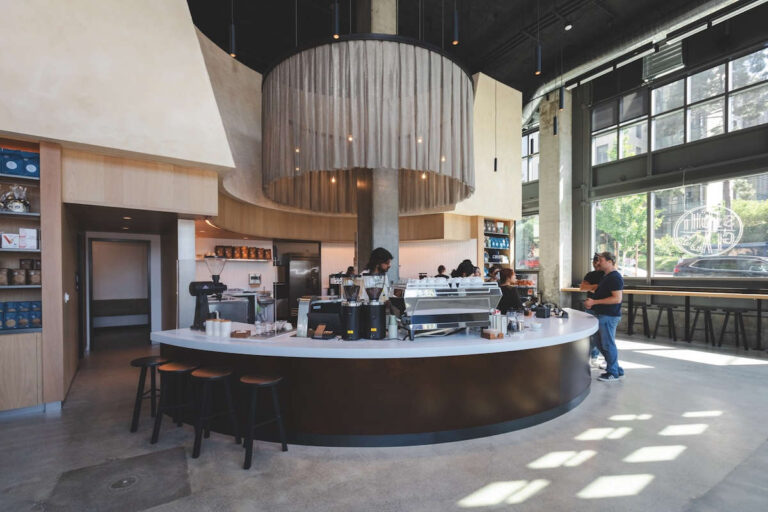
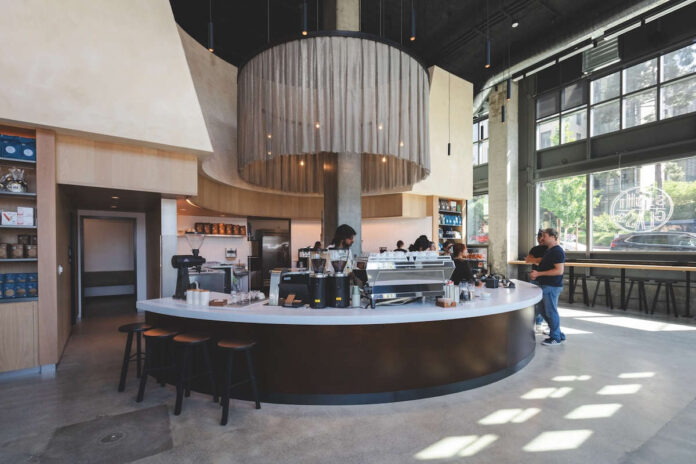
To break the cookie-cutter mold, Sightglass hired the late Olle Lundberg of Lundberg Design. Healy said she’d been a huge fan of the architect whose previous projects included Slanted Door and Flour + Water. One aspect of his aesthetic approach focused on the repurposing of found objects. For the Berkeley cafe, Lundberg Design hand-forged a 12-foot-diameter light fixture that’s wrapped in a galvanized metal netting.

“It’s meant to play off the light,” Healy said. But it’s also a play on the Sightglass name itself. Roasters look through a tube to see how the coffee is developing. “We have stage lighting all around that so you can feel the way the light filters in and out of the cafe,” Healy continued. “And it’s really a nod to that.”

For the Berkeley cafe, Sightglass created Grizzly Peak, a regenerative blend from Peru. 

“We had some Cal alums help us name it in honor of Berkeley,” Healy said. “And then a portion of the proceeds of every bag of that coffee will go to fund the Edible Schoolyard Project. We’re coming in there very thoughtfully, like we have in all of our other cafes. We want them to look and feel, through design, the way we’re connecting to the neighborhoods and the community that they’re in. So when you go into the Berkeley cafe, I hope that you’ll feel that.”

Sightglass Coffee, 2169 University Ave., Berkeley. Open weekdays 6:30am to 5pm and weekends 7am to 5pm. sightglasscoffee.com/pages/sightglass-berkeley

Free Will Astrology: Week of June 24

0

ARIES (March 21-April 19): The interesting struggles you’ll wage in the coming weeks will require your vulnerability: showing up exactly as you are when you might rather fight or escape. Your warrior nature probably prefers a clear enemy or a definable problem you can confront, but the truer conquest will come from laying down your weaponry. I suggest you meet aggression with curiosity and engage chaos with receptive stillness. At least for now, your greatest strength will be to remain undominated by your own reactive impulses. Think of it as an advanced martial art.

TAURUS (April 20-May 20): In accordance with astrological omens, I invite you to be inspired by this wisdom from artist Pablo Picasso: “I am always doing that which I cannot do in order that I may learn how to do it.” He’s proposing that we treat a lack of expertise not as an embarrassment but as a doorway. Instead of waiting until we feel ready, trained and confident, he suggests we head into territory where we fumble, guess and feel awkward. Our discomfort may lead to gratifying growth. So I dare you to ask yourself whether there’s a capacity or skill you’d love to add to your repertoire but are too shy or timid to try. Then take small, imperfect steps toward it, trusting that each move will teach you how to do what once felt impossible.

GEMINI (May 21-June 20): Hummingbirds keep track of every flower they visit and know how long it will take each one to replenish its nectar. They maintain mental maps of many feeding sites and visit them on precise schedules. To ensure their survival, they can’t waste energy on flowers that aren’t ready yet. Your mind could work like this if you want it to, Gemini. Which people, places and projects need time to refill before you visit them again? Who have you been approaching too frequently, seeking their nectar before it has had time to regenerate? In the coming weeks, practice strategic patience with your resources. In your secret conversations with yourself, call yourself “Hummingbird.”

CANCER (June 21-July 22): Now is an auspicious time to declare a sweeping amnesty and observe a personal season of pardon. To the best of your ability, release your clenched feelings about people who have caused you pain. Banish blame. Purge any lingering resentment and regret that has curdled into self‑reproach. Celebrate atonement and absolution. Most vital of all, exonerate yourself. Shed the guilt you’ve carried for missteps and missed chances. And please offer yourself a sweet gift: a ritual of renewal.

LEO (July 23-Aug. 22): If you happen to be swallowed whole by a dragon or whale sometime soon, don’t freak out. It’s far preferable to being chomped into bits first, which absolutely won’t happen. You may indeed spend a brief spell inside the creature’s dark belly, but I confidently predict you will ultimately be deposited on the outside in one intact piece, after which you will only need to find your meandering way back home. The whole episode may be confusing or humbling, but I bet it will also scrub you free of a load of old karma.

VIRGO (Aug. 23-Sept. 22): Bees perform what scientists call a “waggle dance” to communicate the location of flowers to their hive-mates. But the directions are sometimes imprecise, and the apparent sloppiness actually helps the hive. It forces other bees to explore more broadly, discovering new food sources that the original bee missed. Perfect information would make them too efficient to be adaptable. Your precision is one of your gifts, Virgo, but right now I think you need strategic vagueness and fuzzy logic. Leave some directions unclear. Mistakes and misunderstandings might lead to discoveries that your perfect plans would have eliminated.

LIBRA (Sept. 23-Oct. 22): In ancient Greek thought, kairos referred to the opportune moment. It meant the right timing, when circumstances aligned for action to be most effective. The term chronos, on the other hand, was about sequential time, which blindly marched forward without any regard for special moments or auspiciousness. Most of us are more or less hypnotized by chronos-consciousness. We measure our lives by calendar dates and external schedules. But in the coming weeks, Libra, I recommend you stay on high alert for kairos-rich pivots. For now, suspend inquiries like “Am I on schedule?” and ask, “Are the circumstances ripe?”

SCORPIO (Oct. 23-Nov. 21): Ravens are strongly motivated to engage in elaborate play: aerial acrobatics, complex games, sliding down snowbanks and sharing food with non-relatives. These behaviors lack an immediate payoff, yet support learning, motor skill development and social relationships. They seem to be both emotionally rewarding and indirectly advantageous for survival and success over the long term.​ Let’s apply this to you, Scorpio. Let’s conclude that delight isn’t wastefully frivolous and that pleasure doesn’t need to justify itself through productivity. In the coming weeks, you may face pressure to explain or defend your joy, as if to prove it’s worth it in some utilitarian way. Refuse. Like the ravens, engage in purposeless beauty and fun simply because it feels so good.

SAGITTARIUS (Nov. 22-Dec. 21): Glaciologists studying ice cores can read Earth’s climate history going back 800,000 years. Each layer contains trapped air bubbles. These are time capsules that preserve the atmospheric composition of each moment. The ice remembers everything. You accumulate similar records, Sagittarius. Each of your experiences leaves its trace. And in the coming weeks, you will have extra access to these archived layers of your own history. Memories and patterns you thought were lost will surface with intriguing clarity. I hope you study these revelations to glean insight about your long-term patterns and cycles. It’s time to see the Big Picture.

CAPRICORN (Dec. 22-Jan. 19): Many people forget, but you know: Structure is the foundation for freedom, not a suppression of it. While others fantasize about escaping responsibility, you know that mastery is key to every emancipation. When properly practiced, your flair for discipline adds vigor as well as rigor. More than any other sign of the zodiac, you are adept at using limits to give unlimited possibilities their specific shape. I trust you will express all these Capricornian powers to the max in the coming weeks. People in your life need them even more than usual.

AQUARIUS (Jan. 20-Feb. 18): Horticulturists practice “deadheading.” They remove spent flowers from plants to encourage new vitality. Faded flowers drain energy that could go toward fresh growth. Plants that have been deadheaded produce more abundant blooms than those left to manage their own decay. I recommend a metaphorical version of this practice to you, Aquarius. You’ll be wise to deadhead your emotional garden. Certain attachments, once vibrant and nourishing, have expired. They’re not evil or wrong; they’re simply finished. It’s best not to keep directing precious energy toward maintaining their faded forms. With gratitude for the old beauty, clear the way for new beauty.

PISCES (Feb. 19-March 20): For maximum safety, be as uninteresting as possible. Shun risks that might shake up your beliefs, and avoid adventures that could expose you to people who aren’t similar to you. If you really want to be certain about preserving your security and stability, as I’m recommending, the surest method is to retreat to your power spot and do nothing at all. WAIT. STOP. Dear Pisces, everything I just said was pure misdirection. I was joking. In fact, the opposite is true. The true way to nurture genuine safety and security is to pursue what sparks your curiosity and lights up your zeal. And the coming days are likely to provide you with plenty of chances to do exactly that.

Homework: Imagine what life would be like if you half-dissolved a big fear. tinyurl.com/55zz55xx

The Odyssey of James Freebury

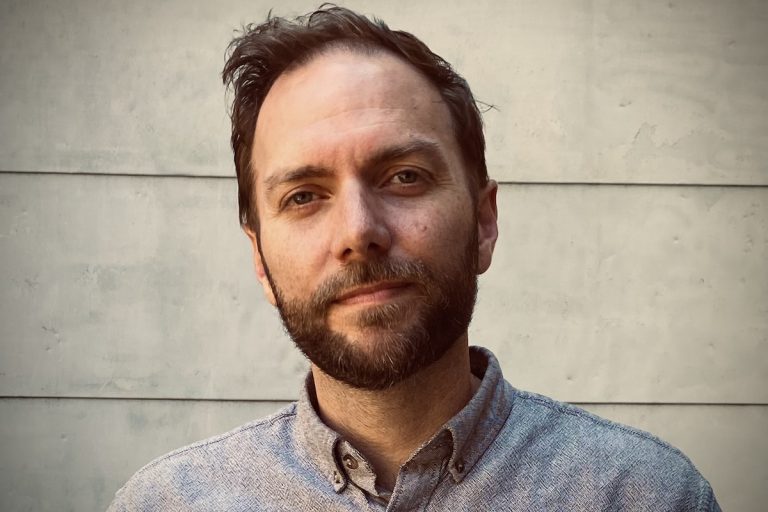
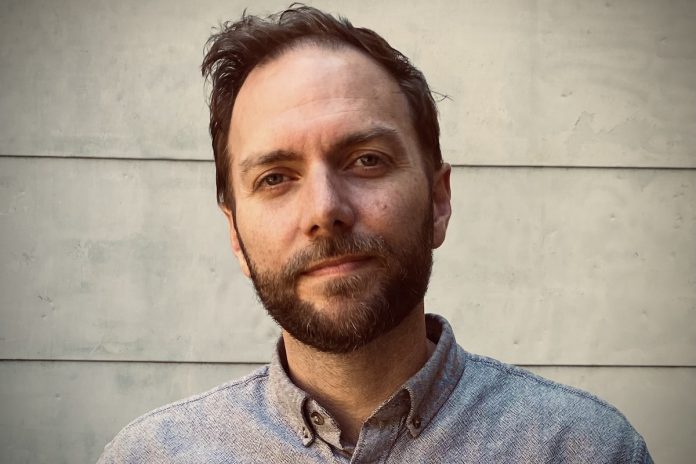
I have met James Freebury only twice. And both times after his accident. Our relationship was carried out over correspondence. My first visit was with Josh Windmiller, who introduced us. We went to pantomime for Freebury a passage from the Scandinavian epic Beowulf, of all things. We performed the scene where the hero confronts his monster.

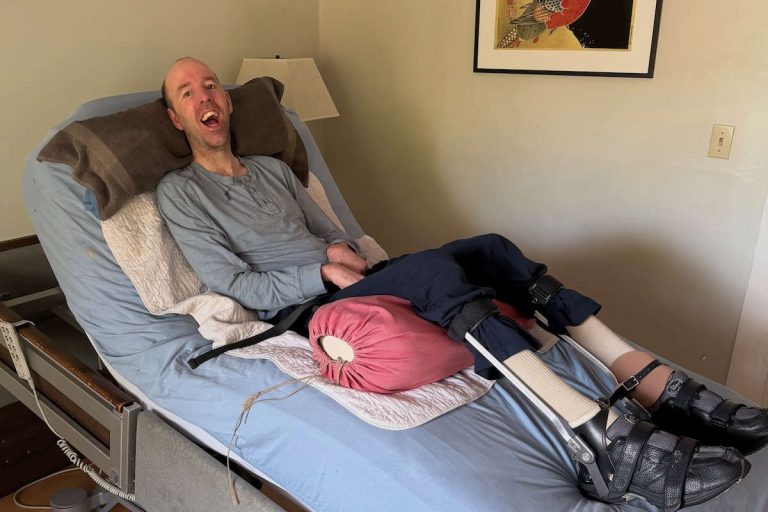
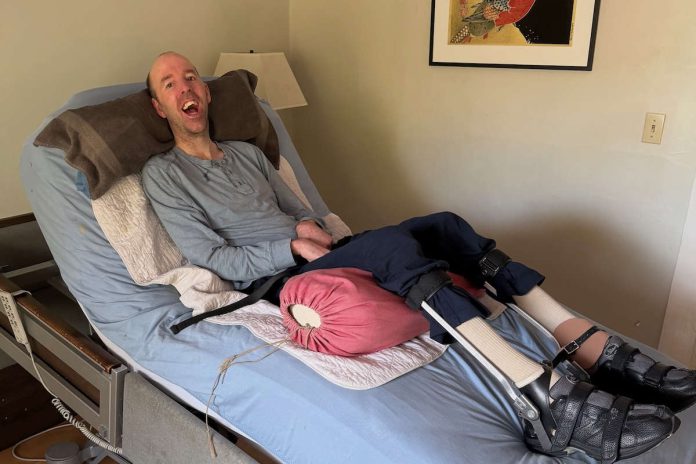
The second visit I went alone—to establish a personal trust. I remember his room; I imagine he is waiting there now. Except for his bed and two art prints, the room is quite bare. It faces away from the sea into a garden and beyond it, a slanting Sunset street. I remember Freebury’s stillness; I remember the long pauses between my questions and his replies. But what I remember best are his eyes. They alone express Freebury’s inner life and freedom now. Yes, I remember his eyes …

A MAN FALLS DOWN

What Freebury can remember of his aneurysm was a blinding headache. He had just finished working a shift at the museum. Before putting himself to bed he happened to tell his parents. That saved his life. Freebury has not risen from his bed since. It’s been four years.

Freebury remembers waking up some days later in the high tower of a hospital. It was grey outside and dreamlike. It brought to his mind the pleasant association of fairytales.

In the next moment, Freebury found he could not move. He could not shift in bed to relieve some pressure. He could not reach his arm for his phone or for water to relieve his burning thirst. He found he could not speak. He could not rise. He could not escape. He could not even scream. Freebury was helpless—as helpless as a baby. But a baby without a future; his future was in flames. James Freebury, age 38, awoke paralyzed from the neck down.

It is impossible for me to imagine his devastation in those early days … Freebury had woken up in my own personal nightmare. Is it unprofessional of me to write that? Maybe. It’s honest. Be honest—through Freebury we confront one of our greatest fears. That’s why his story is gripping. And that’s why we need for it to have “a happy ending”—for ourselves more than him.

In his hospital bed Freebury made an inventory. He found he could still move his eyes—and he could still blink. He could turn his head from right to left. Freebury found that he could still weep. And he could still hold his head up. These are small, but defining, human expressions.

And Freebury found he could still smile. He still had his mind and his memory. And he smiled as he remembered the fifth book of The Odyssey—it was the first part of that myth that he had set out to learn by heart. He had once performed it in epic style, striding the ruins of Sutro Baths like a hero. Reciting the fifth book to an audience as the crashing waves beat the rhythm and the white gulls screeched overhead, wheeling.

In the fifth book, Troy is a smoking ruin and Odysseus is sailing home after 10 long years. Caught in a storm of divine proportions, his ship is smashed to a thousand pieces and he washes to shore, alone. Odysseus awakens to find himself a castaway on a desert island—with nothing to do but rage at the gods who have forsaken him.

New strength flowed into James at the recollection. In some sense, he was Odysseus now. Deviser of the Trojan horse. He of cunning and stratagem. Odysseus escaped his island of solitude. James too would escape, and like Odysseus make it home to Ithaca. Within himself James discovered inner resources. He had a Proustian memory to mine—James likens himself to a tunneling white rabbit. And his imagination was as free as Jean Do Bauby’s butterfly. Perhaps, fatefully, James Freebury had been unknowingly preparing for his trial …

ADAPTATION 

And so it was that James Freebury learned to speak for the second time in his life. The first time, as a child, was with his mouth. The second time, as an adult, James Freebury learned to speak with his eyes. A miracle device called the Tobii Dynavox now tracks his eye movements as they range over a keyboard. It synthesizes for him his new, half-robotic voice. James now has a wheelchair—and the future prospect of one that he himself can steer with only his eyes. James dreams and devises other adaptive technologies for people in his locked-in condition.

It’s hopeful. But these themselves define the hard limits to his personal autonomy against which he struggles. He wrote to me a few days after our cordial second meeting, describing a “rough day” he spent “shaking and weeping with the physical and psychological affront” of his situation. He had been stuck down by fate in the full flood tide of his life.

ESCAPISM   

Our inner faculties of memory and imagination combine in the defining human act—the creation of story …

Freebury had written before his paralysis. But he had never considered himself a writer—he confessed that he lacked the discipline. But now, he notes with wry irony, “all he can do is write.”

Freebury first conceived of A Man Comes Down after he graduated college with a degree in medieval lit. Inspiration came as he read Peter Carey’s novel, The True History of the Kelly Gang. The setting was Old West, but through the fundamentally Celtic quality of the Irish-immigrant Kelly, Freebury discerned deeper roots in Icelandic Sagas. From there tendrils stretched back to Greece and Homer.

He loved the idea of playing up this connection in an original story. He had tried to write it before the paralysis. In his struggle with writer’s block he had gradually grown to hate the project.

Why Freebury chose to take up this project during his convalescence he didn’t quite say—many of my questions went unanswered in our large but incomplete correspondence. I can guess that it was in part to mend the back-broken continuity of his professional life. He would re-enter the arts with a major literary accomplishment. And in the long process of writing the novel, escape his paralysis into an imagined world in which he was a dangerous man of action. And, I can’t but think that in accomplishing what he was unable to when he was able bodied but blocked, Freebury would prove that in some narrow sense it was his old self that was paralyzed, and himself the free man.

‘A MAN COMES DOWN’

A Man Comes Down was published as a 20-part Substack serial over one year. Each letter of it held his gaze the one second required for the Tobii to register a keystroke. As one reads the novel, Freebury names the camera shots that frame his scenes. And he embeds a contemporary folk and rock soundtrack to amplify key dramatic moments.

The setting is “The Coast,” a mythologized California of the lawless 1850s. As the story opens, a wounded gunfighter named Ezekiel rides down from the mountains with his ex-gang in pursuit. Fatefully, he collapses at the gate of Rowena, a lonely lighthouse keeper whose outlaw husband Ned—think Kelly—has been Ezekiel’s employer and best friend for years. Something compels Rowena to take him in during his convalescence.

Set across three days and eight years, the story moves between intimate interior drama and wide landscape cinema. Its two central characters are people of unusual intelligence and restraint, whose slow-burning recognition of one another is the story’s engine. Oh … and it has a happy ending for Ezekiel.

A Man Comes Down is a novel that yearns to be a screenplay. With the right producer it could be a new American classic. As a film, imagine McCabe & Mrs. Miller meets The Secret of Roan Inish. As a cinematic TV series imagine Poldark meets The Proposition. I would pair the adaptation with a documentary about Freebury himself—think The Diving Bell and the Butterfly meets The Burden of Dreams.

If he sold it into film, A Man Comes Down could carry Freebury into realms unknown.

MYTH

Entertainments provide escapism—worlds and lives we can project ourselves into when we need to escape the rooms where we live locked with our trauma. Escapism is important. But story elevated to myth is more than simple escapism.

My mentor once told me that with higher literature and film—like the myths and folktales they superseded—we return to our lives with a new understanding of how to be human. Freebury has written a fine story. But has he achieved mythogenesis? My question for him was, what does his story teach us about life? About how to survive the trials of life? About how to thrive?

He had this to say, “The point or the lesson, is that the person or the thing you most need, may not come from the direction that you expect, hopefully, you can be yourself three dimensionally enough that you can pivot to meet the positive chances to come your way, that is true in my very difficult circumstances as well …”

I would add with some poignancy that I detected the theme of escaping the stories others impose on us. It is the plight of both the central characters.

ITHACA

James could see me from his window as I left through the garden gate. Then I turned and disappeared from his fixed view.

I was newly mindful of each step I took as I climbed his hill to the VA hospital to take in the view of Ocean Beach. I needed to clear my head. It had been taxing for him to write his answers. It was taxing for me to wait for his replies in that closed room.

His answers touched my questions but often flew off on his own flights of fancy. Had I seen him? Or was I mythologizing him with this article? Was I trapping him or was I setting him free? I was in a black mood. Dark clouds raced across the dome of the sky as I climbed higher. I stood on his peak and watched the waves wash ashore.

There I remembered his answer to my last question: “James, if this story is your Odyssey, what is your Ithaca? What is your happy ending?”

He answered severely, ruefully mindful that one of the lessons of The Odyssey is that one can never go home again. He answered: His Ithaca was to lift himself from his hospital bed and “go upstairs to my old apartment and have a cup of tea in solitude again, with a view of the sea from above.” So small a journey and yet, so impossibly vast.

Twenty thousand leagues for Odysseus and 20 steps for James are but the same. A white butterfly flashed by, tumbling on the currents of wind that stung my eyes. How can we survive? The answer is surely in our myths.

James Freebury has published ‘A Man Comes Down’ on his Substack, ‘Analysis by Paralysis.’ He hopes to have it sold into a movie. Between the chapters he has published autobiographical reflections dating from his aneurism. He welcomes collaborators to facilitate his adaptations.

Winter Stanley finds his way back to music

0

Winter Stanley says he’s always loved music for the way it helps connect him to his emotions and his friends. “I picked up the guitar in elementary school, but really became interested in it during junior high,” he says. “When I started playing music with the church band, I experienced music as something communal and emotionally moving, rather than something you listened to passively. I think that planted the seeds for songwriting and performing.”

During high school, Stanley began playing in small acoustic projects. “I started writing songs with my friend, Keith Gidlund. We had an acoustic duo and played around Northern California. That was my introduction to performing publicly,” he says.

After playing with Gidlund for a while, they started a band—Winter’s Fall. The group included Gidlund’s brother, Pete, and their friend, Hans Ashlock. They put out a self-produced EP, Muddy and White. After polishing the arrangements by playing them live, they made their first album, the eponymously titled Winter’s Fall. They produced it themselves, with everyone playing multiple instruments. They made one more album, At All Angles, produced by Adam Myatt and Glen Jackson, before going their separate ways.

“Around that same period life started changing pretty quickly for me,” Stanley says. “I got married, had two kids and began building a career working in high-end custom cabinetry. Music slowly shifted out of the center of my life, at least publicly. 

“I never really stopped writing or playing entirely, though,” he adds. “I worked on music in quieter ways and occasionally supported friends’ projects.”

After his divorce, Stanley ended up living close to Adam Myatt. Myatt had created Hand Me Down Recording, a studio and music label, in a warehouse in East Oakland.

“Adam encouraged me to come by and work on some songs,” Stanley says. “His studio is very welcoming. There are instruments everywhere, tape machines, old amps, synths, guitars hanging on the walls and different recording setups. It feels like stepping into someone’s ongoing creative practice, rather than a formal studio environment. That helped make returning to recording feel comfortable and natural.”

The first two songs they worked on were “Waves” and “The Trees Are Torches,” released as a single on Hand Me Down Records late last year. “Adam produced the songs and played on them,” Stanley says. “We took our time and let the recordings evolve organically. I played guitar and electric piano on ‘Trees.’ Adam played bass, synth and piano. He also played bass on ‘Waves.’ Those sessions became the start of me finding my way back into recording and releasing music.” 

“Trees” is a country/folk ballad, driven by Stanley’s acoustic guitar. His mournful vocals are complemented by long, wordless sighs. Subtle keyboard fills float beneath Winter’s singing, intensifying the desolation of the lyrics as he croons—“I’m facing out, in no direction …”

Stanley’s interlocking guitar work opens “Waves.” His distorted electric lines and acoustic strumming flow in and out like the undertow of an unsafe ocean. A slow, syncopated backbeat supports a melancholy lyric describing someone walking through the darkness, trying to escape from an all-pervasive loneliness.

Myatt also produced “Cold Hands,” Stanley’s new single, released on May 30. The song opens with Stanley’s acoustic guitar playing the short guitar hook that anchors the song to a lyric describing the uncertainty one feels as a relationship comes to an end. His forlorn vocal and Myatt’s long, sustained organ notes create a bleak atmosphere.

“‘Cold Hands’ was produced the way the other songs were,” Stanley says. “We worked on it collaboratively, between his studio and my home setup. I’d often track ideas or layers at home—guitars, vocals, synth parts, harmonies. Then bring the tracks into the studio for Adam to shape, mix and build on. Then we’d repeat that process, back and forth. The arrangement revealed itself early, which gives the recording a more immediate feeling.”

Stanley will promote his new singles with solo performances. “After years of coordinating bands, rehearsals, gear and all the logistics that come with that, there’s something refreshing about being able to keep things lighter and more direct,” he says. “I still think about building a band around these songs, but right now I’ve been enjoying the intimacy and immediacy of playing solo.”

Winter Stanley will play Saturday, June 20, at Zocalo Coffeehouse, 645 Bancroft Ave., San Leandro. 510.569.0102. zocalocoffee.com. Listen to his music at: winterstanleymusic.bandcamp.com, handmedownrecording.bandcamp.com and wintersfall.bandcamp.com.

Huney Knuckles builds a new East Bay funk sound

0

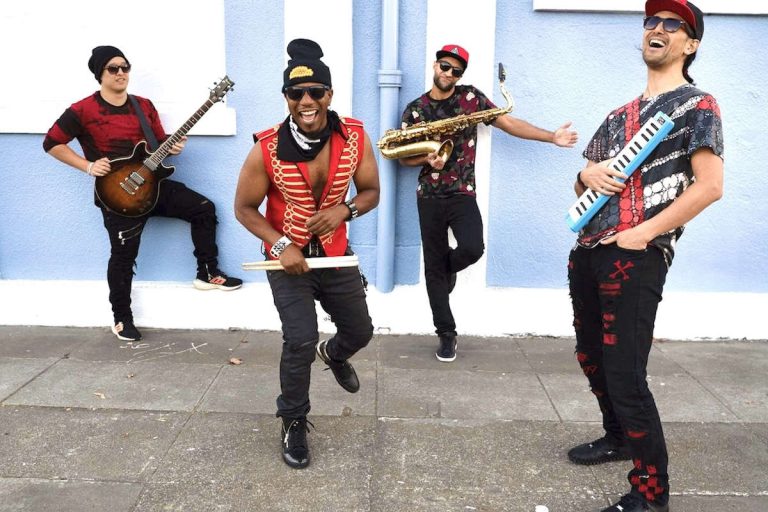
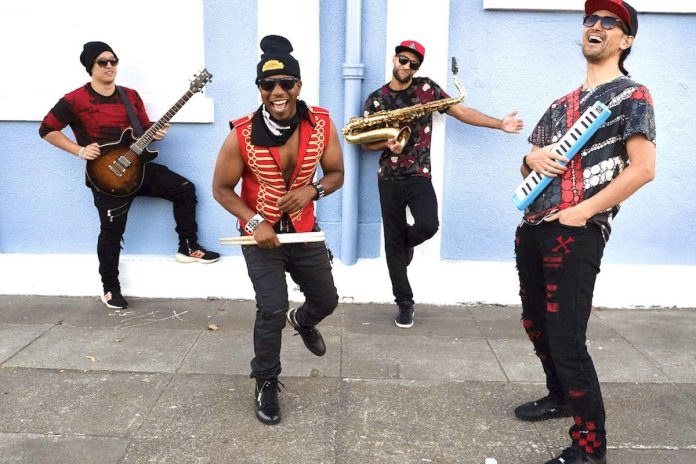
When it comes to locking down a groove, Huney Knuckles is as tough as they come. The scrappy East Bay combo has emerged in recent years as one of the most dependably funky bands on the local jazz-fusion scene, and word is starting to spread.

The group is built on the hi-octane bounce of an irresistible tandem pairing well-traveled drummer Darian Gray with Jazz Mafia mademan Kevin Wong, who covers both keyboard and low-end duties on keybass—with his left hand. Guitarist Brian Sheu alternates between blazing lead lines and telegraphic rhythm work, while saxophonist Tony Peebles delivers cresting solos and punchy riffs with aplomb. He earned a Grammy Award as a member of Pacific Mambo Orchestra. 

Huney Knuckles often plays as an instrumental combo, but on special gigs they’re joined by veteran soul crooner Tony Lindsay, who spent some two decades singing with Santana, and vocalist/saxophonist Eddie M, who toured with Prince during the Purple Rain era and went on to work with Sheila E.

After spending much of his career playing wedding and church gigs to pay the bills, “One of my favorite things about being a musician is playing festival-type events,” says Wong, who grew up in Palo Alto. “We got in once we started playing with Tony Lindsay, which brought a lot more attention.”

The vocalists will be on hand for a July 25 hit at Almost Famous Wine Company in Livermore. Like so many bands, Huney Knuckles came together in the aftermath of the pandemic shutdown, when Wong was looking for a situation to develop his own music. It was more of a lark than a serious endeavor until he landed a gig at Black Star Pirate BBQ in 2021, when it was still located in the remote Point San Pablo Harbor. The live-performance scene was just getting restarted, and he took the gig even though it paid peanuts. The band walked away with more than $400 in tips.

“We came in cold, and I didn’t have high expectations,” he recalls. “But I was instantly floored by how good it sounded. I thought, ‘Now I can put the time in for impeccable charts.’”

The addition of Peebles, a highly respected player, upped the band’s game. On faculty at the San Francisco Conservatory’s Roots, Jazz and American Music program, he’s toured internationally playing jazz, Latin jazz, funk, soul and roots reggae. The release of the 2023 EP Scuffle helped define Huney Knuckles’ trademark sound, with punchy horns bobbing and weaving over bright, bare-fisted beats.

Another key element was the indecently funky rhythm guitar work of Kelyn Crapp, who joined in late 2021. A Dallas native who came out of the prodigious North Texas State music program, he’s also a songwriter, slow-burning soloist, and creative catalyst who keeps his bandmates on their toes with a steady flow of new ideas. And until she went off to study at Juilliard last year, trumpeter Skylar Tang was also in the mix, infusing the arrangements with a jolt of youthful energy and precocious, improvisational prowess. For Wong, the band has become his primary creative focus, but he hasn’t given up his regular church gig.

He’s maintained a steady Sunday morning practice for some two decades, most recently holding down the organ chair in Richmond’s Living Word Ministries Community Church. When he started performing in a gospel choir as an adolescent he played saxophone, but before long Wong was recruited to play organ. “[S]o I was doubling on keys,” he says. “You have to take the chair that’s open. But I was terrible. If you didn’t grow up hearing all of those songs a million times, it’s hard to fit in.”

The demand for competent church organists, however, tends to outstrip the supply, so he worked steadily, including a long-running East Oakland gig at Peter’s Rock Deliverance Church of God In Christ. The Pentecostal congregation was often filled with the spirit, and prayer sessions could last five hours without a break.

“It’s like language immersion,” Wong says. “There is no sink. You can only swim. I still don’t know all the music, but I got the feeling. You have to be ready to follow the preacher. Everything and anything can change at a moment’s notice.”

He gave up the saxophone to focus on the keybass, and has developed his own approach to the instrument inspired by the combo Soulive. He doesn’t think of himself as an accompanist. He figures out how to fill in textures and riffs when he’s not soloing, but mostly he concentrates on maintaining a nasty, persuasive groove. With Huney Knuckles he’s seized the moment and sweetly pounded it into his own particular image.

“What happened to me is I spent too much of my life not being involved in writing the material, being another chef in the kitchen,” he says. “When I started this band I never envisioned that I can now make the bed that I sleep in.”

Upcoming gigs include June 18 at The Cook & Her Farmer in Oakland; June 19 at Menlo Park’s Guild Theatre, opening for Amy Winehouse tribute project Valerie; and July 23 at Madrone Art Bar in San Francisco, where the band holds down a monthly fourth-Thursday residency. And in something of a breakthrough, Huney Knuckles earned a spot at the High Sierra Music Festival, July 2-5 at a Hop Monk Tavern battle of the bands.

Sameer Gupta builds an artist hub in North Oakland

0

A few weeks ago, in a rare pilgrimage to the East Bay, the St. John Coltrane African Orthodox Church set up in a former real estate office at the corner of Telegraph and 58th Street and delivered an ecstatic benediction.

It wasn’t the first performance at the space recently rechristened as the RootStock Arts Center, but the San Francisco church’s jubilant performance of its core musical liturgy heralded the arrival of a new cultural oasis that’s already sending ripples of creative mojo around the region.

The brainchild of Fremont-raised drummer Sameer Gupta and several close collaborators, the center is a physical manifestation of a community-building ethos that Gupta honed in New York City, where he co-founded the influential Indian classical music collective Brooklyn Raga Massive. Rather than creating a venue into which he shoehorns performances, he’s developing a highly flexible space that can meet the needs of a broad spectrum of artists. 

It’s a concept partly inspired by Gupta’s early years on the Bay Area jazz scene in the ’90s, when mentors like saxophonist Bishop Norman Williams, bassist Herbie Lewis and pianist BJ Papa worked as independent artists with little institutional support. “There was no safety net for them,” Gupta said. “They were alone on their path, and a lot of musicians still feel very alone.”

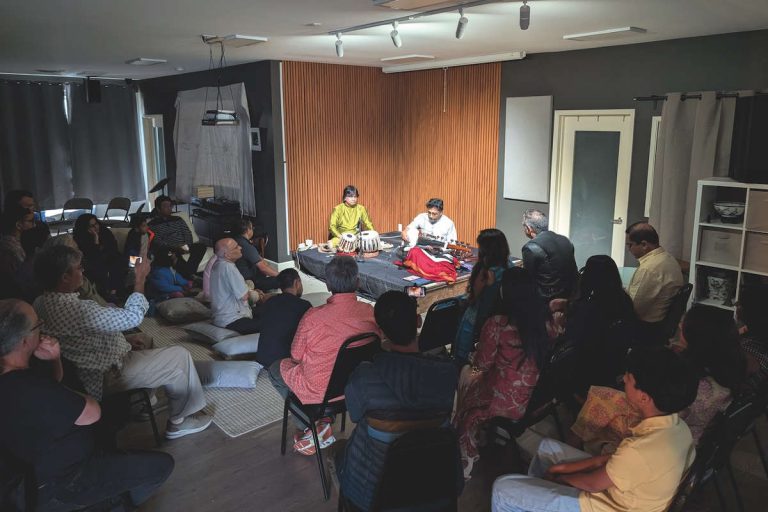
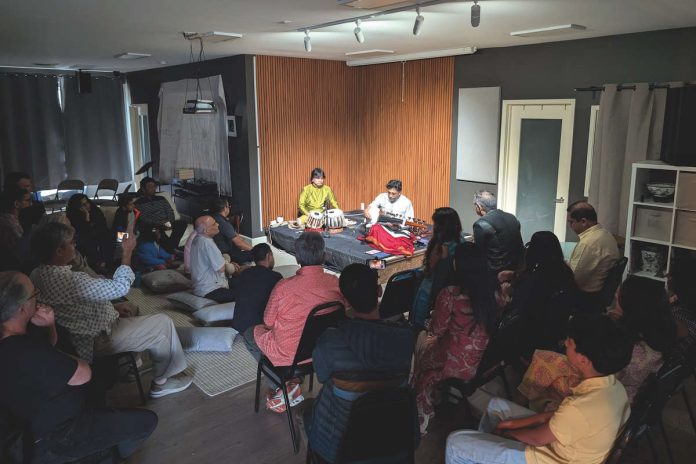
In responding to the music community’s needs, the RootStock Arts Center is still very much a work in progress, and Gupta’s goal is to keep it that way. With about 3,500 square feet and a large parking lot/patio it’s an enviably flexible building that contains more than a half-dozen discreet spaces that can accommodate an array of activities. Film screenings, conferences, workshops, classes, instrument repairs, recording sessions and of course concerts are all part of the mix.

“I was looking for a space where musicians can play with a bit of backline, and a gallery in the front,” Gupta said. “The idea was to have resources they don’t have at their house, almost like a gym with access to gear. You can get access to a keyboard, teach a lesson, or pop in and spend two or three hours practicing or composing.”

On Wednesday, June 17, RootStock screens the classic 1974 blaxploitation-meets-science-fiction film, Space Is the Place, which stars legendary keyboardist, composer and bandleader Sun Ra—filmed while he was in residency at UC Berkeley teaching the course, “The Black Man in the Cosmos.” Broun Fillinis saxophonist David Boyce, a comrade of Gupta’s in the powerhouse improvisational combo the Supplicants, leads a post-screening audience discussion.

On June 20 and July 18, RootStock Arts and Bay Artists United Collective present professional development workshops for performing artists looking to take advantage of booking conference showcases, which can lead to high-profile and relatively lucrative gigs at performing arts centers. And on June 29, violinists Trina Basu and Arun Ramamurthy present Natural Elements, their singular synthesis of Carnatic ragas, jazz, folk and Western chamber music.

In many ways, RootStock Arts Center crystalizes the activities Gupta has pursued since he moved back to the East Bay in the summer of 2023 after an impressively productive 15-year stint in New York City. He had already forged deep ties between Brooklyn Raga Massive and the Yerba Buena Gardens Festival in presenting an epic collaboration in 2017 with Classical Revolution reimagining Terry Riley’s “In C” and a 2022 tribute to Alice Coltrane featuring bass-legend Reggie Workman.

He’s transferred that relationship to RootStock, which curates “Color Your Mind” Aug. 2 for the Yerba Buena Gardens Festival. This year’s program features the brilliant Carnatic violinist and vocalist Sruti Sarathy, multi-instrumentalist Siddique Ahmed, a founding member of Afghanistan’s first rock band, and Delhi-born Suhail Yusuf Khan, a vocalist and master of the sarangi, the bowed, short-neck, three-string instrument that can sound strikingly like a human voice.

Since launching RootStock Arts as a presenting organization, he’s also partnered with the West Oakland space Wyldflowr Arts run by vocalist Tiffany Austin and saxophonist Nora Free, presenting weekly sessions that often feature musicians versed in Indian classical music. In addition he’s presented regular gigs at Medicine For Nightmares Bookstore & Gallery in the Mission. And he’s collaborated with the Berkeley Rep, presenting free Indian music performances in Michael’s Second Act Bar in conjunction with the Bollywood-inspired musical, The Lunchbox. Next up, on June 27, is “Songs of Many Lives,” a project featuring Carnatic vocalist Roopa Mahadaven and violinist/composer Sruti Sarathy.

“The dude blows my mind; he’s such a doer,” said Berkeley tenor saxophonist George Brooks, who’s spent much of his career collaborating with the world’s most acclaimed Indian classical musicians. “He moved back to the Bay Area and hit the ground running, and now he’s transformed this space from a no-vibe real estate office into a place that feels like an artist sanctuary.”

Gupta has tilled the soil, and with the RootStock Arts Center he’s ready for a thousand flowers to bloom.

RootStock Arts Center, 5741 Telegraph Ave., Oakland; rootstockarts.com.

Social Eyes: Week of June 18-24

THU 6/18

AMERICANA

TRILLIAN WELCH

Take a warm, deep break from it all when Trillian Welch returns to the Freight. The three women of the group, all Bay Area favorites, come together to honor the songs of Gillian Welch in distinctive three-part harmonies. Gillian Welch and Alison Krauss co-wrote, for example, the unforgettable “I’ll Fly Away,” featured in O Brother, Where Art Thou? Meredith Edgar, Jill Rogers and Margaret Belton each have gorgeous, unique voices, which blend to make something even more gorgeous and unique. They’re joined by their backing band, the Trillianaires, which also features multiple talented musicians for an evening that will let you fly away. JANIS HASHE

INFO: Thu, 8pm, The Freight, 2020 Addison St., Berkeley. $39-$44. 510.644.2020.

THU 6/18

THEATER

‘THE FRE’

In 2024, it was Taylor Mac lighting a fire on the OTP stage with a spectacular, comedic Andronicus revenge play. Marking a return, the company picks up the crown and rules the land of ball pits, conformity, chaos and the ever-so-human appetite for freedom. The play for ages 12 and up rides on the shoulders of a gender-queer, 11-year-old kid who glories in rowdiness and collective joy and leads the charge to “win” through unity, the ultimate prize. Be ready to roll in plastic—yes, this is an immersive audience experience in the truest sense of the word. Goes until June 28. LOU FANCHER

INFO: Thu, 7:30pm, Oakland Theater Project, FLAX art & design, 1501 Martin Luther King Jr. Way, Oakland. $10-70. 510.646.1126.

FRI 6/19

JAZZ

EMILIO SOLLA & ANTONIO LIZANA

Raised in Buenos Aires and based in New York City for the past two decades, pianist Emilio Solla has carved out a singular niche on the Latin jazz scene with his 17-piece Tango Jazz Orchestra. He’s been sought out by heavyweights such as Cuban reed maestro Paquito D’Rivera, pianist Arturo O’Farrill and cellist Yo-Yo Ma over the years, but Solla turned his attention to rising star flamenco-jazz vocalist and saxophonist Antonio Lizana for his latest project, El Siempre Mar. It’s a volatile melding of vintage Argentine folk songs and original compositions that draw on tango, Lizano’s Andalusian roots and their shared love of jazz. ANDREW GILBERT

INFO: Fri, 5:30pm, Piedmont Piano Company, 1728 San Pablo Ave., Oakland. $30-$35. 510.547.8188.

FRI 6/19

METAL

A BAND OF ORCS

Five orcish Warchiefs, worshipers of the chaos-dragon Gzoroth, have come through a wyrmhole to our realm, where they seek to pillage, recruit fresh servants for the coming Domination and subject humans to crushing death metal. Their theatrical live raids have brought them alongside metal heavyweights including Slayer, Motörhead, Cannibal Corpse, GWAR and Slipknot, but earthly accolades mean little when your ultimate goal is planetary conquest. They’re orcs who play death metal. What else do you need to know? SONYA BENNETT-BRANDT

INFO: Fri, 8pm, Spats Bar, 1974 Shattuck Ave, Berkeley. $15. 510.841.7225.

FRI 6/19

METAL

PERSEKUTOR

Persekutor calls its sound “Romanian ice metal,” a fitting description for black metal steeped in frostbitten folklore and Eastern Bloc grit. Dreamed up by frontman Vlad the Inhaler in rural Transylvania and now based in Los Angeles, the group fuses the filthy swagger of Motörhead and AC/DC with the menace of Venom, Bathory and Celtic Frost. Their songs are packed with tales of survival, superstition, hard drinking and harsh winters, delivered with metallic punishment and vampiric mischief. The result is blackened metal with an edge of violence and a sense of humor. – SBB

INFO: Fri, 9pm, Eli’s Mile High Club, 3629 Martin Luther King Jr. Way, Oakland. $18-$20. 510.808.7565.

SAT 6/20

JAZZ

ELI MALIWAN’S SAXRELIGIOUS QUINTET

The Jazzschool continues to expand its programmatic purview with a stellar spate of Pride Month programming, such as saxophonist and composer Eli Maliwan’s Saxreligious Quintet. Featuring Rob Finucane on synth, Vida Sánchezon on synth bass, pianist Gabi Aldaz and drummer JC Grady, the group tackles the daunting assignment of turning Maliwan’s solo debut album Elysia Marginata into a live production. Created via prodigious multi-tracking to explore Maliwan’s video-game-meets-jazz-nerd aesthetic, the music combines electronic textures, complex harmony, odd meters, improvisation and satirical titles. A transgender Asian American, he often writes music designed to examine and celebrate his intersecting identities, and Elysia Marginata offers a glimpse into Maliwan’s gloriously messy mind. – AG

INFO: Sat, 8pm, The Jazzschool, Hardymon Hall, 2087 Addison St., Berkeley. $15-$25. 510.845.5373.

SAT 6/20

PUNK

GUTTERMOUTH

Love them or hate them, one thing’s undeniable: Guttermouth is a band. Formed in 1989, this Orange County punk act has made a lot of fans—and enemies—over the years with their irreverent style. They were one of the earliest bands to mix skate/pop, punk-style sounds with humor, and usually purposely offensive humor at that, for a sound and feel that dominated the 1990s and early 2000s. While they did put out an EP as recently as 2016, it’s been 20 years since their last full-length studio album, leaving fans wondering if this will be the year they finally get some new music. MAT WEIR

INFO: Sat, 7pm, Crybaby, 1928 Telegraph Ave., Oakland. $30.

SAT 6/20

FOLK

TERESA TRULL AND BARBARA HIGBIE

The show at the Freight is a birthday party, with singer-songwriter, composer, producer Trull; a belated birthday party, with singer, composer and multi-instrumentalist Higbie; an album-release, per Higbie’s 2026 solo piano album, Inspiration; and a reunion. Appearing together, Trull and Higbie represent royalty in the empire of women in music. Searing vocals and lyrics delivered with sincere humility and humor. Offering a stage presence dressed up primarily with the musician’s unstoppable joy for making music. Can it be enough to make any downturned heart rise and rejoice? You bet.LF

INFO: Sat, 7pm, The Freight, 2020 Addison St., Berkeley. $39-$44. 644-2020.

SUN 6/21

COMMUNITY

MAKE MUSIC DAY BERKELEY

Berkeley will again this year transform into a giant music party as “parks, sidewalks, plazas, shops and unexpected corners” fill with all kinds of performance, from the Berkeley Symphony to the Berkeley Juneteenth Festival to the Neighborhood Kazoo Band. Wander the streets, sing—or kazoo—along in some places, sit back and listen in others. Some participants will be performing publicly for the first time; others offer an opportunity to hear polished professionals in nontraditional settings. Venues vary from the Berkeley Marina to the Study Hall Rooftop Lounge to “somebody’s driveway.” So, “Berkeley.” – JH

INFO: Sun, 11am, multiple venues, Free. makemusicday.org/berkeley

TUE 6/23

REGGAE

ISRAEL VIBRATION

The bad news is there aren’t many roots and dancehall reggae acts from the original years left touring in 2026. The good news is Israel Vibration is, along with backing band Roots Radics. Here’s the double whammy: both Albert “Apple Gabriel” Craig and Cecil “Skelly” Spence have passed on in the last six years. However, Lascelle “Wiss” Bulgin continues the vocal trio’s legacy spreading positivity and the message of Jah for eager audiences looking for a little love and light in a world of darkness. – MW

INFO: Tue, 8pm, Cornerstone, 2367 Shattuck Ave., Berkeley. $46–$49. 510.214.8600.

Maren Hassinger turns trash into art at BAMPFA

Maren Hassinger turns trash into art at BAMPFA
Watch for a scramble in September, when Cal undergraduates will line up to help scatter—and then reclaim—trash. As part of the ongoing retrospective at the Berkeley Art Museum and Pacific Film Archive (BAMPFA), “Maren Hassinger: Living Moving Growing,” the sculptor/performance artist/teacher will restage one of her most famous performances, Pink Trash, for only the third time since 1982. The students...

Social Eyes: Week of June 25-July 1

Social Eyes: Week of June 25-July 1
This week's calendar picks feature Rx Bandits, the Back Dimples, Ruthie Foster, Hannah Mayer + Nathan Nakadegawa-Lee + Gus Hurteau, 'Fantasia,' Mikailo Kasha Quartet, Don Toliver, Kontusion, Slum Village, and Jim Campilongo Trio.

No Coal says ‘Bring it on’

No Coal says ‘Bring it on’
To anyone not keeping up with the bumpy road of the fight over the proposed coal terminal in Oakland, it might seem recent news is uniformly bad for the “no coal” movement. Court rulings have gone against No Coal in Oakland (NCIO), its allies and the City of Oakland. Then on June 3, the Trump administration announced a $75...

Sightglass Coffee comes to Berkeley

Sightglass Coffee comes to Berkeley
Shortly after Sightglass Coffee opened on Seventh Street in 2011, a friend of mine walked me through SoMa to the San Francisco cafe and roastery. The combination of exposed beams, cathedral-like windows, giant bags of coffee beans and large machinery in motion evoked a refined steampunk aesthetic. Unlike its cheaper and faster competitors, Sightglass announced its arrival on the...

Free Will Astrology: Week of June 24

Free Will Astrology: Week of July 8
Welcome to Cancer season! Now is an auspicious time to declare a sweeping amnesty and observe a personal season of pardon...

The Odyssey of James Freebury

The Odyssey of James Freebury
I have met James Freebury only twice. And both times after his accident. Our relationship was carried out over correspondence. My first visit was with Josh Windmiller, who introduced us. We went to pantomime for Freebury a passage from the Scandinavian epic Beowulf, of all things. We performed the scene where the hero confronts his monster. The second visit I...

Winter Stanley finds his way back to music

Winter Stanley finds his way back to music
Winter Stanley says he’s always loved music for the way it helps connect him to his emotions and his friends. “I picked up the guitar in elementary school, but really became interested in it during junior high,” he says. “When I started playing music with the church band, I experienced music as something communal and emotionally moving, rather than...

Huney Knuckles builds a new East Bay funk sound

Huney Knuckles builds a new East Bay funk sound
When it comes to locking down a groove, Huney Knuckles is as tough as they come. The scrappy East Bay combo has emerged in recent years as one of the most dependably funky bands on the local jazz-fusion scene, and word is starting to spread. The group is built on the hi-octane bounce of an irresistible tandem pairing well-traveled drummer...

Sameer Gupta builds an artist hub in North Oakland

Sameer Gupta builds an artist hub in North Oakland
A few weeks ago, in a rare pilgrimage to the East Bay, the St. John Coltrane African Orthodox Church set up in a former real estate office at the corner of Telegraph and 58th Street and delivered an ecstatic benediction. It wasn’t the first performance at the space recently rechristened as the RootStock Arts Center, but the San Francisco church’s...

Social Eyes: Week of June 18-24

Social Eyes: Week of June 18-24
This week's calendar picks feature Trillian Welch, "The Fre," Emilio Solla & Antonio Lizana, A Band of Orcs, Persekutor, Eli Maliwan’s Saxreligious Quintet, Guttermouth, Teresa Trull & Barbara Higbie, Make Music Day Berkeley, and Israel Vibration.
19,045FansLike
17,709FollowersFollow
61,790FollowersFollow