Life saver: Reviewing Jacob Ming-Trent’s ‘How Shakespeare Saved My Life’

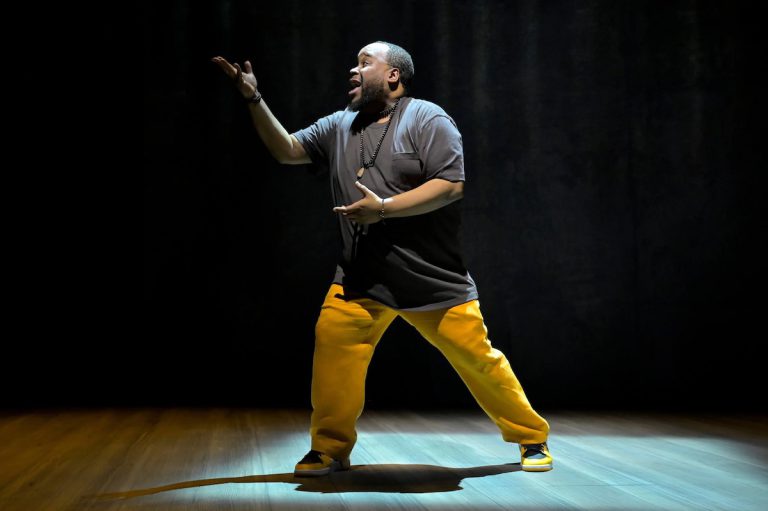
So much is said by us theater artists about theater being our sanctuary, and how theater ‘saved us’ by giving us a place to belong.  However, as Jacob Ming-Trent makes clear in his new one-man show How Shakespeare Saved My Life (directed by Tony Taccone and now playing at Berkley Rep through March 1), it’s not the building but the people inside who matter.

The 95-minute show is a semi-autobiographical version of Jacob’s lifelong devotion to Shakespeare. The sometimes-rapped, sometimes-acted, sometimes-narrated story spins through an urban landscape usually thought of as worlds apart from the River Avon. Exploring themes of toxic families, emotional abuse, homelessness, drug abuse, homicide, loneliness, suicide, generational curses, despair and rage, it also resonates with laughter, joy, love and redemption. In short, Shakespeare would have loved this.

The deceptively bare bones set (Takeshi Kata) is highly effective in its versatility and attention to detail, especially when paired with excellent projections (Alexander V. Nichols) and the thoroughly theatrical light (Alan C. Edwards) and sound (Jake Rodriguez) designs. Rarely do designers get to be over-the-top theatrical in these days of realism and shrinking budgets, but the tempest that occurs three-quarters of the way through is a potent example of the magic that can happen when all the artists are allowed to work together to create their best art.

Fair warning, if you prefer your theater experience more traditional, sitting silently in a dark room voyeuristically watching characters unaware of your presence, this may not be the play for you. House lights are up for much of the time, and Ming-Trent interacts with the audience as both a fourth-wall-breaking narrator and a spiritual leader, guiding us down the path to forgiveness and salvation… No, really, there’s even an altar call of sorts (Don’t worry, you don’t have to leave your seats, and no one will lay hands on you to pray. Unless you want them to, I suppose).

It is inevitable, as we navigate the current anti-free-speech society, that for budgetary (and other) reasons, there will be smaller shows including more one-person productions (though it is not a new phenomenon by any means). In a culture where funds are limited and people are scared to be too loud, it’s refreshing that Berkley Rep has continued to honor the very voices that certain leaders wish to silence. 

More importantly, it’s an honor to watch an artist of Ming-Trent’s caliber work. One might even call it sacred.

‘How Shakespeare Saved My Life’ runs through March 1 at Berkeley Repertory Theatre, 2025 Addison St, Berkeley. Tue – Sun @ various times. $25–$147. 510.647.2949 berkeleyrep.org

Read more about Jacob Ming-Trent and this production here.

Mohka House brings Yemeni coffee to the Dimond District

The Dimond District looks and feels like a neighborhood that’s often in an ongoing state of flux. Farmer Joe’s has been a longtime anchor while many cafes, restaurants and bars move in and then out. There are, of course, exceptions. La Farine is veering towards its 20th anniversary there. And newer restaurants like Michauxnée Olier’s Willows & Pine (2023) and the Grand Lake Kitchen (2019) are still in business. When Hive, the Place to Bee, closed its doors on MacArthur in 2023, Hamza Ghalib and his brother Yaser opened Mohka House in its place.

Mohka House is one of many Yemeni coffee houses that seemed to appear in every Bay Area region overnight. The East Bay alone has at least a dozen, including Milyar on Adeline with its flashy rococo interiors and Old Oakland’s equally ornate Sana’a Cafe. I spoke with Hamza about his cafe and the sudden proliferation of his home country’s coffee in the region.

“Yemeni coffee is one of the best, if not the best, depending on who you’re talking to,” Hamza said. “It’s very popular on the East Coast but due to Covid, it slowed things down as far as trying to import everything.” He noted that for many years the war in Yemen, followed by the lockdown, made it difficult to export anything out of the country. “There’s a huge Yemeni population here,” he added. “If you walk into corner stores, gas stations—Yemeni people are in those industries.”

After the pandemic ended, there were fewer obstacles to get in the way of launching a coffee business. “Now it’s not as hard, even though it’s still pricey. You can be talking about $40 a pound, and that’s low to medium,” Hamza said. But the price of beans can go up to $100 a pound “depending on what coffee you’re serving and the market you’re serving to.”

Hamza went on to say that, “Yemeni coffee is well known for its full, earthy flavors and chocolatey aftertaste,” and is distinguishable by its small-sized beans. “The quality is second to none just because of the way it’s planted and harvested. It’s a long process.” 

When I stopped by the cafe, I tried a cup of qishr, an unusual tea made from coffee husks. “That’s the shell of the coffee bean,” Hamza said. “There’s not even a half percent of caffeine in them. Typically, families drink it at night.”

Before they opened the cafe, the Ghalibs already had a business in the Dimond next door to the Hive. “It was sad to see them [the Hive] go because they’d been such great neighbors to me,” Hamza said. He told me that his store used to be a smoke shop and a bodega of sorts, but he added a kitchen. Mohka House makes many of its own baked goods next door, including a couple of Yemeni specialties.

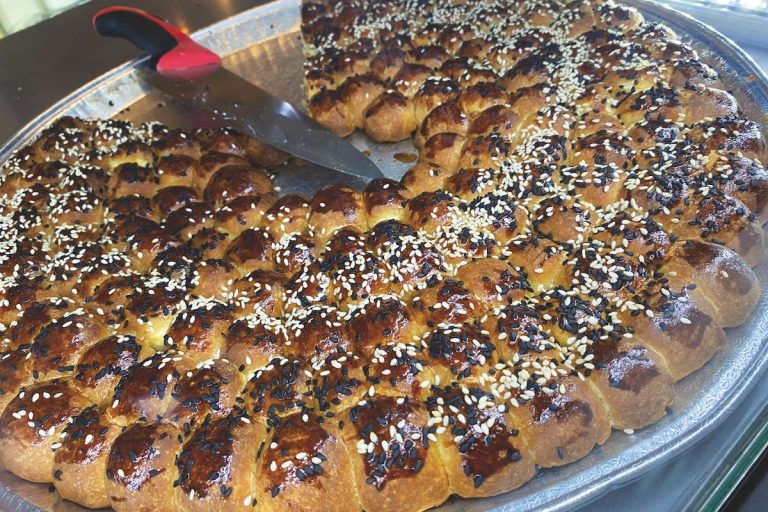
Sabaya and khaliat al nahl, both sweet, round breads, are served like large slices of pizza. I tried a slice of khaliat al nahl, or honeycomb bread. It resembles a pull-apart loaf with loose concentric circles of dough formed in the round. Inside, there’s a cream cheese sweetened on the outside by bold drizzles of honey. Sabaya forgoes the cream cheese in favor of butter. Both are dotted with sesame seeds. The honeycomb bread melts in one’s mouth when it’s hot from the oven. It’s like eating a piece of cheesecake embedded in a soft and pliable piece of cake-like bread.

Before going to sleep, Hamza said people will drink a couple of sips of qishr with either one of the breads. “Those sheets of dough are smeared with homemade Yemeni butter, eggs, and sprinkled with black caraway and sesame seeds,” he said.

For customers who’ve never tried Yemeni coffees, Hamza said, “Most of them have spices, either cardamom or clove or cinnamon, depending on what kind of coffee you’re getting.” The spices are mixed into the ground beans. After the delicate art of roasting is complete, it’s that unique mixture of spices that distinguishes one Yemeni coffee house from another.

Mohka House, open daily 7:30am to 7:30pm, 2139 MacArthur Blvd., Oakland. IG: @mohkahouse.

Free Will Astrology: Week of Feb. 4

0

ARIES (March 21-April 19): I’m thrilled by your genius for initiating what others only dream about. I celebrate your holy impatience with fakery and your refusal to waste precious life-force on enterprises that have gone stale. I’m in awe of how you make fire your ally rather than your enemy, wielding it not to destroy but to forge new realities from the raw materials of possibility. Everything I just described will be in your wheelhouse during the coming weeks.

TAURUS (April 20-May 20): How do I love you? Let me count some of the ways. 1. Your patience is masterful. You understand that some treasures can’t be rushed and that many beautiful things require slow nurturing through your devoted attention. 2. You have a knack for inducing the mundane world to reveal its small miracles and spiritual secrets. 3. You practice lucid loyalty without being in bondage to the past. You honor your history even as you make room for the future. 4. You know when to cling tightly to what needs to be protected and preserved, and you know when to gracefully loosen your grip to let everything breathe. In the coming weeks, all these superpowers of yours will be especially available to you and the people you care for.

GEMINI (May 21-June 20): In carpentry, there’s a technique called “kerf bending.” It involves making a series of small cuts in wood so it can curve without breaking. The cuts weaken the material in one sense, but they make it flexible enough to create shapes that would otherwise be impossible. I suspect you’re being kerf-bent right now, Gemini. Life is making small nicks in your certainties, your plans and your self-image. It might feel like you’re being diminished, but you’re actually being made flexible enough to bend into a new form. Don’t interpret the nicks as damage. They’re preparation for adjustments you can’t see yet. Let yourself be shaped.

CANCER (June 21-July 22): In Irish folklore, “thin places” are situations or areas where the material and spiritual worlds overlap. They aren’t always geographical. A thin place may be a moment: like the pre-dawn hour between sleeping and waking, or the silence after someone says “I love you” for the first time. I believe you’re living in a thin place right now, Cancer. The boundary between your inner world and outer circumstances is more porous than usual. This means your emotions may affect your environment more directly. Your intuitions will be even more accurate than usual, and your nightly dreams will provide you with practical clues. Be alert. Magic will be available if you notice it.

LEO (July 23-Aug. 22): In traditional Korean jogakbo, scraps of fabric too small to be useful alone are stitched together into a piece that’s both functional and beautiful. Every fragment contributes to the whole. I encourage you to treat your current life this way, Leo. Don’t dismiss iffy or unfinished experiences as “wasted time.” Instead, see if you can weave all the bits and scraps together into a valuable lesson or asset. Prediction: I foresee a lovely jogakbo in your future.

VIRGO (Aug. 23-Sept. 22): The Maori people of New Zealand practice mirimiri, a form of healing that works not by fighting disease but by restoring flow. The technique involves removing blockages so life force can move freely again. I think you need the equivalent of mirimiri, Virgo. There’s a small but non-trivial obstruction in your life. The good news is that you now have the power to figure out where the flow got stuck and then gently coax it back into motion. Let the healing begin! Here’s a good way to begin: Vow that you won’t hold yourself back from enjoying your life to the max.

LIBRA (Sept. 23-Oct. 22): In the coming weeks, I encourage you to prioritize mirth, revelry and gratification. For starters, you could invite kindred spirits to join you in pursuing experimental forms of pleasure. Have fun riffing and brainstorming about feeling good in ways you’ve never tried or even imagined before. Seek out stories from other explorers of bliss and delight who can inspire you to expand your sense of wonder. Then, with your mind as open as your heart, give yourself the freedom to enjoy as many playful adventures and evocative amusements as you dare.

SCORPIO (Oct. 23-Nov. 21): In the Inuktitut language of the Intuit people, the word ajurnarmat is translated as “it can’t be helped.” It acknowledges forces at work beyond human control. Rather than pure resignation, it reflects an attitude of accepting what can’t be changed, which helps people conserve energy and adapt creatively to challenging circumstances. So for example, when hunters encounter impossible ice conditions, ajurnamat allows them to refrain from forcing the situation and notice what may actually be possible. I suspect you’re facing your own ajurnarmat, Scorpio. Your breakthrough will emerge as soon as you admit the truth of what’s happening and allow your perception to shift. What looks unnavigable from one angle may reveal a solution if you approach it from another direction. Practice strategic surrender.

SAGITTARIUS (Nov. 22-Dec. 21): Your hunger for meaning is admirable! I love it. I never want you to mute your drive to discover what’s interesting and useful. But now and then, the hot intensity of your quest can make you feel that nothing is ever enough. You get into the habit of always looking past what’s actually here and being obsessed with what you imagine should be or could be there. In the coming days, dear Sagittarius, I invite you to avoid that tendency. Rather than compulsively pursuing high adventure and vast vistas, focus on the sweet, intimate details. The wisdom you yearn for might be embedded in ordinariness.

CAPRICORN (Dec. 22-Jan. 19): In architecture, a “flying buttress” is an external support system that allows a massive building like a cathedral to reach greater heights without collapsing under its own weight. Because the buttress is partly open to the air rather than solidly built against the wall from top to bottom, it appears to “fly,” which is where the name comes from. In the coming weeks, I encourage you Capricorns to acquire your own equivalent of at least one new flying buttress. Who or what could this be? A collaborator who shares the load? A new form of discipline that provides scaffolding? A truth you finally speak aloud that lets others help you? To get the process started, shed any belief you have that strength means carrying everything all by yourself.

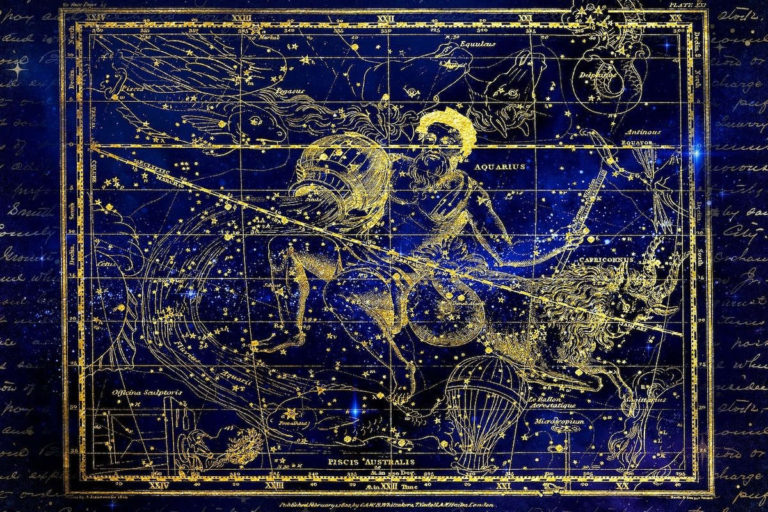
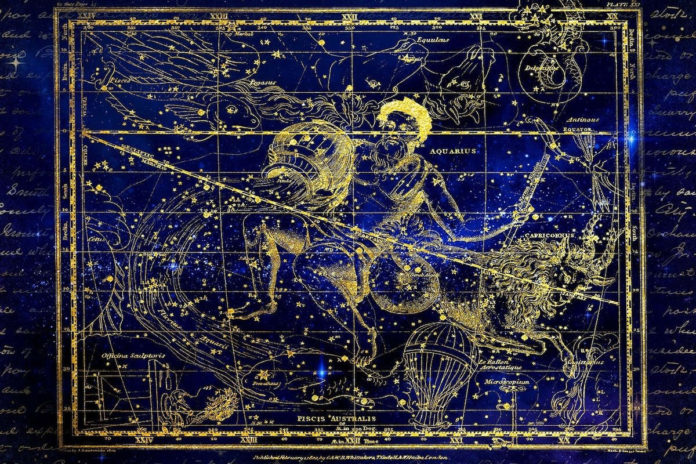
AQUARIUS (Jan. 20-Feb. 18): The coming weeks will challenge you to think with tenderness and feel with clarity. You’ll be called on to stay sharply alert even as you remain loose, kind and at ease. Your good fortune will expand as you open your awareness wider, while also firming up the boundaries that keep mean people from bothering you. The really good news is that cosmic forces are lining up to guide you and coach you in exactly these skills. You are primed to explore intriguing paradoxes and contradictions that have valuable lessons.

PISCES (Feb. 19-March 20): In alchemy, solve et coagula is a Latin phrase translated as “dissolve and coagulate.” It means that transformation must begin with the process of breaking down before any building begins. You can’t skip over the dissolving phase and jump straight into creating the new structure. I mention this, dear Pisces, because I believe you’re now in the dissolving phase. It might feel destabilizing, even a bit unnerving, but I urge you to stick with it. When the moment comes to construct the beautiful new forms, you will know. But that time isn’t yet. Keep dissolving a while longer.

Homework: What small burden could you let go that will provide a rush of freedom? Newsletter.FreeWillAstrology.com

Art / Tech: Postmodern Cultural Incubator critiques technology with art

0

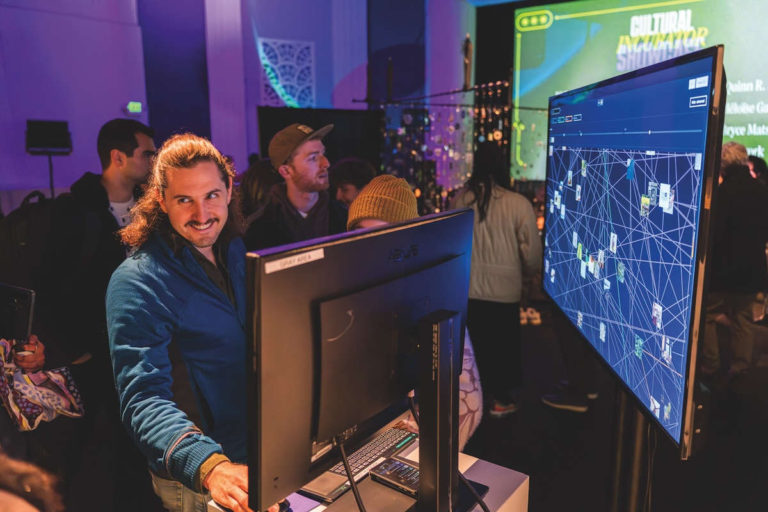
Late one afternoon along San Francisco’s Mission Street, I walked into a sublime panic. The Gray Area Cultural Incubator cohort was setting up its culminating exhibition, premiering in the Grand Theater just hours after my visit. Mostly I crept around in awe of the artistic fervor, installations going up in every corner of the theater, giant interactive video screens and vintage tech CRTs.

Clearly in charge of the whirl, Hannah Scott described the space as an open-ended ecosystem that supports artists in cultivating “anti-disciplinary collaboration.” The program is an intentional counter to the silos that might try to contain fashion or video game design. That cross pollination of disciplines excites the innovation instinct in the teams, and the findings of these artistic experiments present ways of sustaining “art’s influence in technology, science and the humanities.”

All around the busy room, I scanned the projects as Scott bounded off with a polite yet firm, “Excuse me.” In between groovy Fry’s Electronics-esque bead curtains sparkling over a retro living room interface and a horror-adjacent interactive sculpted trash heap, the visual aspects of installations belied a great variation in approaches to the common themes of the Cultural Incubator. It’s a six-to-eight-month program that emphasizes the intersection of art and technology, and in particular the critique of current deployments of technology that might limit our imagining of what we can do with tech, and who gets the benefits of it.

Gray area, on Mission

Scott is the research manager of Gray Area Foundation for the Arts, the nonprofit that runs the venue that is the Grand Theater, as well as the Cultural Incubator and many more programs. In all the iterations this flexible arts institution has morphed through in its nearly 25 years, the focus has always been on putting the creative exploration of technology into practice in community.

Public events in the theater draw people to the neighborhood for “experimental sound performances and audio visual performances [as well as] talks by scholars and artists.” Chief among the activities in service of the nonprofit’s mission is the Cultural Incubator, which brings cohorts of intersectional artists together to critique today’s unchecked creep of technology into the artist’s domain.

The Incubator program is about “showcasing how artists are engaging with technology and sort of changing the ways in which we look at technology and its impact on society,” said Scott, and exploring “the opportunities that new technologies offer to creative expression.”

“[We] started with the recognition that there was a lack of artist-residency type programs specifically for creative technologists,” she continued, referencing contemporary artists especially in need of access to technology, the resources and mentorship, and the chance to work. “[At Gray Area] they bring their projects to the next level.”

The current climate can be difficult for arts all throughout the Bay, so the showcase at the end of the Incubator program guarantees the artists an opportunity to show their work in an institutional setting. Said Scott, “To move from being a hobbyist into confidently calling yourself an artist and having an opportunity to showcase that work” supports their artistic growth.

COMPUTER LOVE A Cathode Ray Tube sits at the center of expiring ‘Utopia Ghostly Signals’ by Crassula Shang, with its retro-groovy computer-part curtains a-sparkle. (Photo by Naveed Ahmad)

Standout projects: Heaps

“Before the Incubator, I didn’t see my many streams of work as a unified artistic practice,” said 2025 cohort member M Elio. “Participating in critique sessions, having access to mentors, and presenting my work at the showcase helped me to feel like my work is legitimate and valuable.”

Elio, a neurodivergent artist and entrepreneur, was “frustrated with the limitations of neurotypical data processing tools.” The solution was Heaps, “a sandbox game that creates 3D worlds” from just about anything a person is studying. Just feeding the bot words results in algorithmically generated worlds for users to explore.

“Heaps kills the cloud-based chatbot and replaces it with an open source, locally run, completely private LLM. Plus, our interface uses structured data, which protects vulnerable users from AI-induced psychosis,” says the company’s site. It feels like a you-need-to see-it-to-believe-it situation, but what’s clever is that these are artists making a company—crucially, one that thinks outside the Big Tech box, like housing the AI on one’s local system to protect it from the influence of other actors.

South of Hell

Mya Exum is the co-creator of a digitally immersive fashion label called South of Hell. She was impressed by the commitment of the team when she joined the Incubator.

They did a great job of “just promoting us, motivating us, showing what we can [do], just get the concept across so we can start talking to the world about what we’ve been trying to do,” Exum said when asked about the experience of the Incubator. “It’s been cool.”

Real life became difficult at times during the process, but “the gallery’s been really great. They were super flexible,” Exum said. She added, “Hannah, the one we were just talking to,” pointing out Scott winding between towering installations of every conceivable technical requirement, “has been so helpful.”

Turntable

Turntable is an online music community and curation space. “I felt like music discovery and culture was disjointed and dissatisfying, so I created an online space where people can talk and learn about music,” said platform creator Amaya Lim. “It’s part social media, part personal library curation mechanism and part discovery tool.”

Lim called it a “hyper-personalized, passive listening paradigm” with which she “seeks to recontextualize listeners’ relationships with music and technology, especially with recommendation algorithms.” Whew. Society needs that.

“I built Turntable because I felt streaming services were limiting my music discovery horizons and changing my taste even as an engaged listener,” Lim said, adding that she “always wanted to connect with friends and fans online on a platform that was driven by community and curation.”

Where we echo

Engineer Bryce Matsumori described his project as “a meditative screensaver and interactive art piece about fishing for meaning.” Users can “catch echoes of others’ lives left behind by past visitors” in a projected pool of water and digital artifacts. The anonymous interactions offer “moments of connection and hope” so users “feel a little less alone.”

Sign up for the open call

By the end of this month Gray Area will be looking for the next group of artists to come through to level up. The Incubator is calling for creatives all around the Bay to come work together with local and international artists. To learn more and sign up for the announcement, go to the venue’s website, grayarea.org.


Gray Area Cultural Incubator Cohort applications will be announced soon. Gray Area/Grand Theater, 2665 Mission St., San Francisco. Contact Gray Area at in**@******ea.org or 415.843.1423.

Freedom From Fear Pt. 2: The tactical side of terror

This is the second of a three-part series on ongoing issues with U.S. Immigration and Customs Enforcement as it reaches into our areas. -–Editor

Part 2: True designs of the administration

Let me be emphatic; all undocumented immigrants have committed a crime. They have all broken immigration law. All of the undocumented immigrants I spoke to frankly admitted this.

And almost all of them also expressed a real desire for immigration reform.  That surprised me—at first. Although, on second thought, they would almost certainly benefit from any rationalized system—which would necessarily recognize their indispensable importance to the U.S. economy. 

In all justice, it might trigger a second amnesty—like that signed into law by President Ronald Regan in 1986, granting 3 million undocumented immigrants a path to citizenship. People who have served here in our hardest jobs for 20 years have earned it. Call it sweat equity.

Reform is badly needed. But Donald Trump’s new ICE is not the reform we need. 

Surprisingly, it is not even effective at arresting the undocumented for deportation. “You’re not going to arrest illegal immigrants by marching down the street in full battle regalia,” Jason Houser, a former ICE chief-of-staff, is quoted as saying (The Economist, “Trumpforce,” Nov. 15, 2025).

Given the real danger and dire poverty of their counties of departure, ICE terror is unlikely to inspire mass “reverse immigration” either. As bad as things are, none of the people I spoke to spoke of fleeing. They spoke of hiding.

But mass deportation doesn’t appear to be the real objective of Trump’s terror campaign. It is doubtful that the Republican Party’s billionaire and trillionaire donor class or its millionaire Congress would ever allow for the mass deportation of 11 million undocumented workers—even if it were logistically or politically possible. They wouldn’t—their wealth and status depends on the mass exploitation of immigrant labor. 

A showy surge in immigration arrests, emphasizing terror tactics, and the production of salacious anti-immigrant propaganda would deliver all the emotional “satisfaction” of Trump’s “build a wall” campaign promise, while actually deepening America’s economic status quo. 

Thoroughly terrorized, the remaining mass of undocumented workers would be less visible in the public sphere, more silent and more compliant in their own exploitation. They would become much less political—and much more profitable. That is precisely the effect this deportation campaign is having, and I would argue, that is its intended aim. It fits the facts, and it fits all the political requirements. It fits.

Moving Targets

But it’s worse—much worse than that. Seemly, by design, the target of this terror is wider in its scope than undocumented immigrants. The target appears to be “all brown people” in America. 

During a much needed break between our interviews, I asked my translator, “Marisol,” whether she felt targeted by ICE herself. A second-generation Mexican-American and an elected public official, she should feel safe. By way of answer, “Marisol” related a bitter joke to me, which illustrates how the campaign has been widely perceived in the Latin-American community. “ICE agents use ‘the brown bag test.’ They hold a brown bag to your face, and if the color matches—bam, you’re an illegal. Off you go to Alligator Alcatraz,” she said.

“Are you afraid?” is a question I asked all the Latino U.S. citizens I spoke to for this article. I quote “Marisol” because her answer is representative.

She spoke to me of the waves of fear within this American community touched off by each made-for-TV raid. The last and the biggest wave came when it seemed San Francisco would be next. That fear is still rippling and reverberating throughout the Bay Area. The chill is on. 

There are still prominent Latino events in her district—she showed me photos from a Mexican rodeo the week before on her phone—but there are fewer now. And being out in the community now involves second guessing, precautions, some bravery—and political defiance. Many are choosing to keep their heads down.

To test the prevalence of the belief that ICE was using promiscuous, “brown paper bag” racial profiling, I asked a sample of Americans of Afghani, Indian, Egyptian, Brazilian, Filipino, Black, Chinese and Native descent. By degrees of severity, they all felt targeted by Trump’s ICE campaign—perhaps they would be harassed by gunmen at CVS or their status challenged. Several related ICE to the end of DEI visibility and their erasure from American history curricula.

The anxiety, isolation, concealment and dread now seeping through Black, Brown, Native and Asian communities—under pressure from a predominantly white enforcement apparatus answering to a white government that treats them as criminal—gives Trump’s open-ended mass deportation campaign the character of a white supremacist restoration in America. One abetted by billionaires seeking even greater economic power over us.

“National minorities” are the broad target … for now. By pretext of immigration reform, Trump now commands his own secretive police force operating throughout the country. It can target individual opponents or it can create economic and political chaos in whole regions. “Which political opponent, community or state in America will be targeted next?” was a live wire theme running through our taut private conversations. It is a question all Americans should be asking now.  By pretext of the law, it could be anyone. 

I, reader, am a white man. But I am also a journalist. Will armed presidential police bring a trumped-up charge of “aiding and abetting alien enemies” to my door? Who isn’t economically involved with illegal immigrants? Who hasn’t said a disparaging thing against Trump?

American Fascism

Whether white nationalist restoration is the express design or an approved byproduct, that is the outcome, and it tracks with what we’ve seen and what we know of an administration that canceled the observation of Juneteenth (marking the end of slavery in America).

This article is a table—crunch the numbers:

In this new, muscular ICE, there is now, for the first time in the history of America, a large national police force that answers solely to the president. 

There are no democratic checks or limits to this new presidential power.

All the qualities and characteristics of this force appear chosen and calibrated to inspire terror. It is secretive and non-transparent to review. Its arresting officers are masked, armored, anonymous—often refusing to give their names or show their badges. They are heavily armed, militarized, aggressive—often violent; they are dismissive of Miranda rights, dismissive of warrants. 

They violate declared sanctuaries, homes, schools, hospitals and churches.

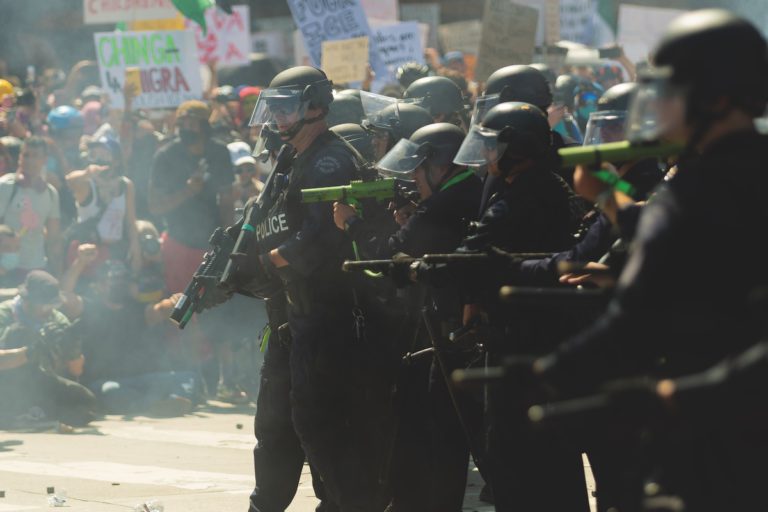
They attack peaceful protestors.They stage political propaganda. They claim immunity from prosecution. 

They strike in lightning raids at any location in the nation. Their deployment has been heavily partisan, a tool not for law, but for the consolidation of political power.

With charges of violating immigration law, they frequently carry trumped up charges of the most monstrous kind—rape, murder, treason. They dehumanize the most vulnerable among us.

They disappear people—that is their work. By a pattern that appears to be a policy, they often fail to inform families of these disappearances or their judicial process—family members just “disappear,” fanning the terror.

They disappear people into a dark judicial process that frequently violates human rights and international norms of due process before the law—some of our most important checks against tyranny.

They are linked with barbaric secret prisons.

By its practical effects, their mission takes on a white supremacist cast, suggesting a limited form of racial cleansing through forced removal and the political and economic subordination of nonwhites broadly through terror.

This is not a historical metaphor or a rhetorical flourish; the newly reformed ICE is being operated as an authoritarian secret police force. They are acting like Gestapo—albeit Gestapo adapted to a modern American context of ubiquitous smart phones, steroidal militarism, social media obsession, show biz politics, billionaire aristocracy, and stars and stripes iconography. If their use and tactical pattern is allowed to harden into the new normal, the United States will have crossed the line into a white supremacist police state.

Finally, of the one who wields this enormous power, Donald Trump—the billionaire president: ICE’s arbitrary and vindictive commander-in-chief is sustained by a nascent cult of personality; his crushing policies flatten institutional checks and exaggerate existing economic and racial hierarchies to concentrate power in his own hands. 

He behaves in openly authoritarian ways, seeking to terrorize his many political opponents.  He has already tried to overturn the result of one presidential election he lost, and his allies have spoken openly about seeking an unconstitutional third term. In ICE, he now has his terror weapon.

Their tactical masks are off, reader. In the scale and spectacle of this “mass deportation campaign,” the Trump administration’s intentions can no longer be disguised. If judged only by the all pervading fear, this is fascism—fascism in a new form, fitted to a new era. At the end of 24 interviews, the only question that remained to me was “Will the fascists win this time?” 

It’s time to take our gloves off.

Next week, Part 3: Fighting Fear.

Learn more: linktr.ee/iceterrorANDamericandemocracy.

Social Eyes: Week of Jan. 29-Feb. 4

THURSDAY, JAN. 29

JAZZ

PHILIP GELB

Back in Oakland after a long, productive stay in Thailand, Philip Gelb checks into Wyldflowr Arts for a three-night residency, starting Thursday with his first Bay Area shakuhachi performance in more than a decade. For many years he was a leading new-music practitioner of the ethereal Japanese end-blown bamboo flute and a mainstay on the Bay Area scene. Newly inspired by collaborations in Thailand, he’s playing solo traditional and modern pieces for shakuhachi along with Buchla modular synthesizer. Friday’s concert features his new improvisation ensemble, Kra Pa. It’s a talent-packed group designed for electronic and acoustic sonic explorations. Saturday he celebrates the music of his late mentor, Pauline Oliveros, with a 25-piece orchestra. ANDREW GILBERT

INFO: Thu, 7:30pm, Wyldflowr Arts, 809 37th St., Oakland. $10-$20. 510.842.5055.

THURSDAY, JAN. 29

AMERICANA

POKEY LAFARGE

A seductive crooner and facile guitarist, LaFarge makes a person yearn to travel. Not on a jet, but in an old Chevy or maybe a 1990s Ram pickup that never sheds the dust of a dirt road despite rainstorms and wind. His solo tour suggests the show has him picking up his guitar and swinging his sweet voice into the air while “reimagining songs from his nine-album catalog as well as new interpretations of gospel, rock & roll, and country classics.” The captivating performer has a new EP and is joined by flatpicker Julian Davis and the Situation. Astonishing command of their bass, banjo and guitar strings is just one feature to love with this quartet. LOU FANCHER

INFO: Thu, 8pm, The Freight, 2020 Addison St., Berkeley. $44-49. 510.644.2020.

THURSDAY, JAN. 29

AMERICANA

JASON ISBELL AND THE 400 UNIT

Jason Isbell refuses to be pigeonholed, either as a musician or as a person. The six-time Grammy winner comes from Deep South roots in Northern Alabama, and his music salutes his origins, but he cites Bob Dylan as his major influence, is proudly and vocally left-wing, and released a solo album last year, Foxes in the Snow, that’s just him and his acoustic guitar. This is to say that fans of his huge 2013 success Southeastern and/or his critically acclaimed 2017 album with the 400 Unit, The Nashville Sound, can likely expect to hear some of their favorite songs at the Fox Theatre show—but don’t expect just “greatest hits” from this artist. JANIS HASHE

INFO: Thu, 8pm, Fox Theater, 1807 Telegraph Ave., Oakland. $83-$138. 510.302.2250.

FRIDAY, JAN. 30

JAZZ

DUO-B

The protean partnership of bassist Lisa Mezzacappa and drummer Jason Levis formed the rhythmic core of a dazzlingly disparate series of albums released over the past year on Mezzacappa’s Queen Bee Records, but they’ve also honed their own volatile body of music as Duo-B. They’re celebrating the release of the fifth Duo B. album, Incomplete, Open, with a three-hour, nonstop Royal Rumble improv marathon, where they’ll be joined by a dozen challengers at timed intervals throughout the evening. It’s a murderers’ row of improvisers, including reed wrangler Cory Wright, cello champions Ben Davis and Crystal Pascucci-Clifford, guitar insurrectionists Liberty Ellman and Myles Boisen, and ROVA saxophonist Steve Adams. – AG 

INFO: Fri, 7pm, Temescal Art Center, 511 48th St., Oakland. $15.

FRIDAY, JAN. 30

JAZZ

GARETH PEARSON

Drawing upon influences like Jerry Reed, Chet Atkins, Merle Travis and his personal mentor, jazz guitarist Tommy Emmanuel, it’s easy to see why Gareth Pearson is called, “The Welsh Tornado.” Pearson combines jazz, pop and country for a cool, mellow, rippling sound that makes it seem like his fingers are moving in a whirlwind across the strings. His newest album is A Tweak on Antique from 2018, but Pearson has released several singles over the years. His latest, “Tiger Rag,” exemplifies Pearson’s style, with as many notes squeezed in as possible while still keeping in the “jazz guitar” genre without crossing over into experimental, noise or some form of acoustic black metal. MAT WEIR

INFO: Fri, 7pm, The Back Room, 1984 Bonita Ave., Berkeley. $25. 510.654.3808.

FRIDAY, JAN. 30

ROCK

MATTEO MANCUSO

Matteo Mancuso’s playing is a reset on what the electric guitar can do. Raised in Palermo and trained in classical guitar from childhood, Mancuso uses a fully developed fingerstyle technique instead of a pick, letting him articulate rapid lines, wide intervals and dense chords with a smoothness and control that feels closer to piano phrasing than standard rock lead guitar. He has toured with his own trio, centering shows on original compositions that swivel between jazz, rock and classical. He’s a guitarist shaping his own musical vernacular. SONYA BENNETT-BRANDT

INFO: Fri, 8pm, UC Theatre, 2036 University Ave., Berkeley. $33. 510.356.4000.

SATURDAY, JAN. 31 CORRECTION: SUNDAY, FEB. 1

CLASSICAL

STEVEN BANKS AND XAK BJERKEN

This weekend, experience a meeting of the minds when two jazz virtuosos—and college professors—team up for a duo of sax and piano. Classical saxophonist Steven Banks will reimagine favorite classical music originally written for cellos and bassoons. For years Banks’ mission has been to bring classical saxophone to the forefront of the classical music world, and this weekend’s performance showcases this with works by Beethoven and Barber, along with Carlos Simon and John Musto. Banks will be joined by pianist Xak Bjerken, a professor of music at Cornell University who has played with the Los Angeles Philharmonic, the Scottish Chamber Orchestra and Schoenberg Ensemble. – MW

INFO: Sat, 3pm, Cal Performances at UC Berkeley, Hertz Hall, Berkeley. $67-$82. 510.642.0212.

SATURDAY, JAN. 31

PODCAST

FOLK & FUNKY

Signup for a meet-and-greet VIP ticket or go mainline and participate in Folk and Funky’s first live, interactive podcast. Originally created and co-hosted by Yuba City’s Simran and San Jose’s Amrin—they are cousins and are often joined by Slamz—this stop at Cornerstone features G Sidhu and JK. The taped session opening the show pulls from stories behind their new releases, Punjabi World Order and Art of Punjab. When the podcast is a wrap, back-to-back performances by G Sidhu and JK follow. In the “third act,” DJ Slamz keeps the momentum going pell-mell with Punjabi-powered music. Check out the podcasts to get acclimated to the team’s approachable, deeply invested conversational style. – LF

INFO: Sat, 8pm, Cornerstone, 2367 Shattuck Ave., Berkeley. $50-106. 510.214.8600.

TUESDAY, FEB. 3

ROCK

DRINK THE SEA

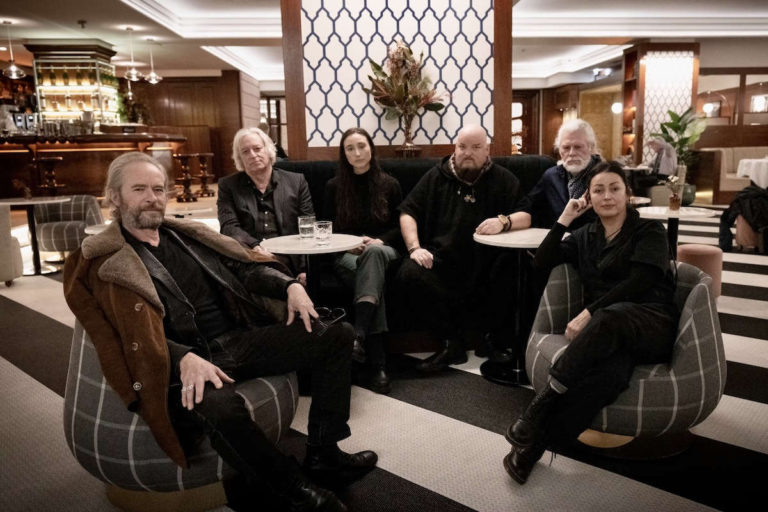
Talk about international. From Olympia, Washington, to England, Iceland, Brazil, Chile, Spain and Joshua Tree, the supergroup Drink The Sea has been getting its musical act together all over the world. Alain Johannes (Queens of the Stone Age), Barrett Martin (Screaming Trees), Peter Buck (R.E.M.) and pal Duke Garwood (Mark Lanegan Band) have now released two albums. The oud, sitar, gamelan, marimba and kalimba all make musical contributions on this new music, which Drink The Sea will feature at the Freight along, it is promised, with “a few songs from their former bands.” They’re figuring it out on the fly, but what a fly. – JH

INFO: Tue, 8pm, The Freight, 2020 Addison St., Berkeley. $49-$74. 510.644.2020.

WEDNESDAY, FEB. 4

ALTERNATIVE

NICK HEXUM

Nick Hexum, longtime frontman, rhythm guitarist and songwriter for 311, has used his solo EP trilogy, Waxing Nostalgic, Full Memories and Waning Time, to strip things back and write closer to the bone. He steps away from stadium grooves and into Americana-tinged terrain, picking up mandolin, pedal steel and guitar textures. Hexum’s voice, familiar but newly open, guides each track through careful reckonings with midlife, fatherhood and loss. The sound is steeped in Hexum’s new influences—k.d. lang, Patsy Cline, Duke Ellington—and sharpened by collaborations with friends and family—like “Please Explain” with Ben Kweller. – SBB 

INFO: Wed, 8pm, Cornerstone, 2367 Shattuck Ave., Berkeley. $45. 510.214.8600.

Oakland band digs into country-rock

1

Oakland-based musician Joe Rut has been writing songs and releasing them on his own for a long time. Over the years he’s delved into folk, electronic and experimental music, but said country has always been in his heart. 

“When I was a kid, my neighbor in Bakersfield played pedal steel,” Rut said. “I’d hear him practicing all the time, and it stuck in my head. Later on, we lived up the canyon from Merle Haggard’s place. That made a cool connection in my head when listening to his albums.”

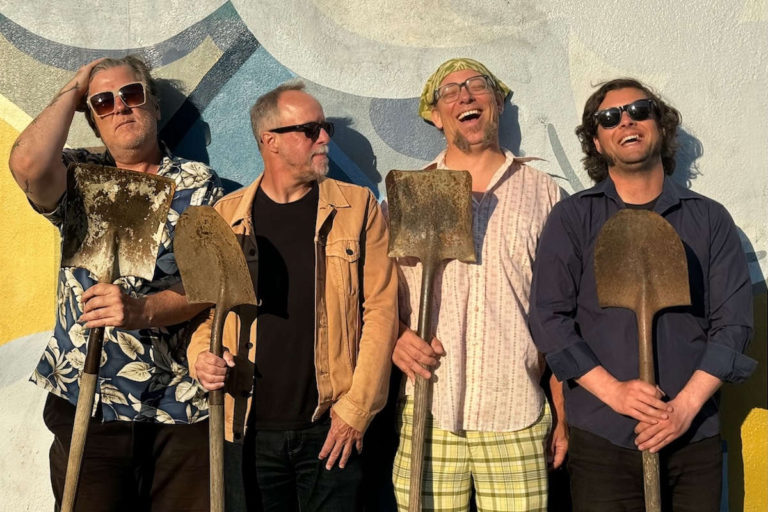
That connection is highlighted in the lyrics of “Undercover Truckin’ Man,” the opening track on Joe Rut & the Sunshine Shovelers’ eponymous debut. Rut sings: “I like Merle Haggard, but he wouldn’t have liked me.”

Rut took piano lessons in grade school, but they didn’t stick. He asked his parents for a guitar because he wanted to be Ace Frehley of KISS. When his guitar teacher told him the members of KISS “weren’t real musicians,” he stopped playing—until high school. “I found a friend who knew all the classic rock riffs. That’s when I started hearing songs in my head,” he said.

When working an office job and following his muse came into conflict, Rut quit his job. “That was about 30 years ago,” he said. “I decided I was going to focus on songwriting. I drove up to the Sierra foothills, rented a cabin, tore the radio out of my ’67 Fairlane Wagon and put the TV in the garage. I cashed in my 401k to buy instruments and recording gear that I did not know how to play or use. Two years later, I had my first album recorded. I never looked back.”

Over time, Rut put out experimental albums as Lumper/Splitter, played in the country-noir band Loretta Lynch—he was the only man in an all-woman band—and made folk albums under his own name, including San Pedro and Sunflower. He never intended to start a band, preferring to capture the tunes he heard in his head on his own. Then fate intervened.

“A few years back, I was doing a gig as a solo acoustic act,” Rut said. “Tim [Rowe], the drummer for the headliner, came up to me after my set and said, ‘I dig your songs, let me know if you ever need a drummer.’ Five minutes later, Russ [Kiel] came up to me and said, ‘Let me know if you ever need a bass player.’ I said to myself, ‘Well, it looks like I’ve got a band.’ Jamie [Duncan], another musician I knew, was the obvious person to ask to play lead guitar, and there you go.”

The band honed their performances for over a year, leaning heavily into the country rock sound of Rut’s childhood home of Bakersfield. Finally, Rut figured it was time to head into the studio.  

“I showed these songs to the band, playing guitar and singing,” Rut said. “The arrangements are the result of four minds looking at these stories from different angles, being sensitive to what furthers the story and what does not. It was fun to be in the studio and not be steering the ship.”

The band played the songs live, with no click track, then decided what they wanted to fix or overdub. The result is an album that sounds like a series of short stories set to music.

A mid-tempo country groove opens “Hitcher.” Rut sings in a high tenor, describing the advice a truck driver gives to the guitar-playing boy he picks up. They smoke weed as the driver describes the hazards of the road and listens to the tunes the youngster plays.

“We Gonna Have A Party” lives up to its title, with a honky-tonk groove and a humorous lyric, full of over-the-top images. Duncan’s guitar solos echo the sound of Roy Nichols, Haggard’s lead guitarist, who blended jazz, country and rock.

Rut & the Sunshine Shovelers will play songs from their debut at their album-release party at the Ivy Room. “I love the precision of studio recording, but it ultimately pales to the excitement and abandon of playing live,” Rut said. “We’re stoked to finally bring this album into the light.”

Joe Rut & the Sunshine Shovelers play the Ivy Room on Friday, Jan. 30, at 7pm. Ruby Lee Hill opens. 860 San Pablo Ave., Albany. ivyroom.com

Love Power: Wong Kar Wai retrospective lights up BAMPFA

When the name Wong Kar Wai first lit up stateside screens in the early 1990s, it was as if a bolt of lightning had suddenly struck the Hong Kong film scene, and now its energy was radiating across the Pacific. The electricity was intense and immediate.

Wong’s approach was a radical departure from the then-Crown Colony’s typical fare, which relied heavily, up until that time, on swords and gangsters. Wong’s films made room for affairs of the heart, in contrast to the stylized violence that had been Hong Kong’s most popular product for years.

Not very long after that, this reviewer called Wong the world’s most romantic filmmaker. Nothing in the world has happened since then to challenge that reputation.

“In the Mood for Love: The Films of Wong Kar Wai,” a selective retrospective of 13 of Wong’s most provocative works, is now well under way at the Berkeley Art Museum Pacific Film Archive. The most brilliant of the director’s gems—presented by the Hong Kong Economic and Trade Office—are there for pleasurable examination through Feb. 28. 

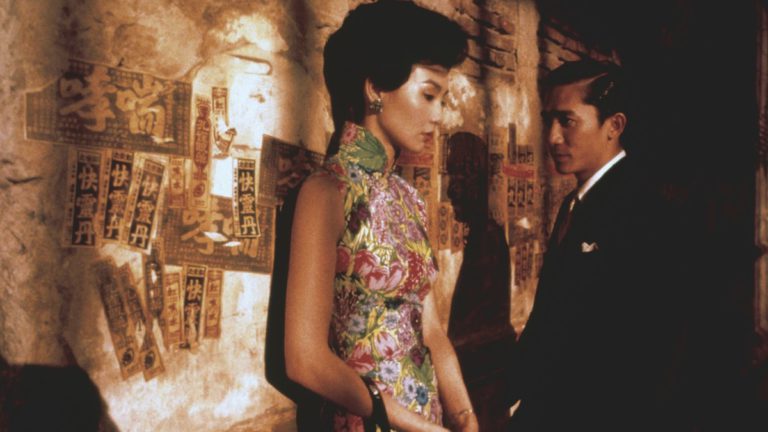
Wong’s biggest all-time critical hit is the 2000 release In the Mood for Love, a lightning rod for doomed romanticism starring the most magnetic actors in Hong Kong, Maggie Cheung and Tony Leung Chiu Wai. It screens Jan. 30 and Feb. 14. As if aroused by an insistent sexual drumbeat coming from deep inside them, cautious-but-curious urbanites Su Li-zhen (Cheung) and Chow Mowan (Leung)—each married to another person—perform an intricate pas de deux in the hallways and stairs of their HK apartment house. Never mind that the film was mostly shot in Bangkok and Angkor Wat, in order to recapture the vanished surface vibe of 1962 HK.

Cinematographer Christopher Doyle’s images never fail to enchant us, likewise the mid-20th-century chic of Cheung’s cheongsams and Leung’s Mad Men suits. But the film’s overpowering rhythm comes from the downward tragic trajectory of the lovers’ lives. Filmmaker Wong is a sucker for sadness, especially when it’s warmed by body heat. The result is one of the most rewarding film dramas of the fledgling 21st century.

The 1997 production Happy Together creates an altogether different shower of sparks, in the story of a pair of on-again, off-again gay male lovers—played by Tony Leung Chiu Wai and Leslie Cheung—bouncing around Buenos Aires and into and out of each others’ arms. Once again the overriding mood is one of lingering melancholy. Try as he might, Leung’s working-class expat can never quite get drunken playboy Cheung off his mind. Expect one or two rough-sex sequences, arranged in contrast to Leung’s patented gloomy wistfulness. DP Doyle’s camera work makes it all seem the height of modern metrosexuality, à la intense bursts of bad-boy horseplay in a succession of flavorful Argentine street scenes. Happy Together shows Feb. 13, with an introduction by critic Iggy Cortez.

Just as his use of the Mamas & the Papas’ “California Dreamin’” threatens to overwhelm the filmmaker’s jazzed-up 1994 policier Chungking Express—screening Feb. 28—Wong is seemingly unafraid to let his obsessions run away with his stories.

The Grandmaster (2013) is a case-in-point, a putative reflection on previous decades’ costumed historical epics told from the point of view of the legendary, real-life martial artist Ip Man, played by then-51-year-old Tony Leung Chiu Wai.

Amid the splendiferous settings and political stresses of 20th-century China, the character of Ip manages to evoke internal power struggles, the Japanese invasion in World War II and his championing of the martial art of Wing Chun into a heroic panorama. Meanwhile, the ongoing love story of Ip and Miss Gong (Zhang Ziyi) is the definition of tough love.

Like their mafia counterparts in Western gangster pics, Ip’s and his fellow martial artists’ speech is flavored with near-poetic metaphor, such as—“If you don’t see something, does it not exist?” The Grandmaster plays Feb. 21. For further info, visit: bampfa.org

* * *

Through Feb. 28 at BAMPFA

James Beard Foundation announces best nom noms

On Wednesday, Jan. 21, the James Beard Foundation (JBF) announced the 2026 James Beard Award semifinalists. These annual awards, the JBF site proclaims, “represent the pinnacle of culinary recognition in the U.S.” East Bay culinary artists, once again, made the cut. This long lead announcement provokes the public’s interest for the better part of six months. Finalist info arrives on March 31 followed by a June 15 winner-take-all ceremony in Chicago. WTF has previously covered all of this year’s contenders. Here’s a short refresher course on the nominees.

BEST CHEF BY REGION: CALIFORNIA
JBF’s categories must make sense internally. They’ve got one named “Outstanding Chef” and another named “Best Chef by Region.” In their cooking hierarchy, outstanding must mean something different than best. Large as it is, California gets its own regional category with 20 best chef nominees. Three of them work in Oakland.

Sun Moon Studio’s dining room only accommodates a handful of diners. Sarah Cooper and Alan Hsu’s restaurant is located on the lower floor of an unassuming building on Union Street. During the day, that part of Oakland is pretty sedate. But at night a golden glow emanates from Sun Moon’s window. It’s an indication that good seasonal cooking is taking place inside. When I interviewed the couple in 2024, the buzz and momentum for Sun Moon was already underway. Last year they received a Michelin star and landed on best restaurant lists at both the New York Times and Bon Appétit. Reservations are still required weeks in advance to secure a table. With this latest nomination in hand, interested parties should look at their spring datebooks now. If they want to taste their dishes before then, Sun Moon will pop-up at SF’s The Happy Crane on Feb. 11 for a Lunar New Year dinner. Sun Moon Studio,1940 Union St., Ste. 21, Oakland. sunmoonstudio.com

Chef Geoff Davis is the other East Bay semifinalist in this category. His Temescal restaurant, Burdell, grew out of several pop-ups. A protegée and friend of James Syhabout (Commis), Davis had a few false starts before gaining traction with a series of dinners he made at Andrew Vennari’s Sequoia Diner. I just read that the Laurel Heights diner will soon be under new ownership. Since Burdell opened in 2023, like Sun Moon, the chef has received national attention for his “nostalgic soul food.” Esquire magazine included Burdell as one of its 50 Best New Restaurants in America in 2023. And he was previously a James Beard finalist in 2024. Apart from these accolades, Burdell has managed a rare feat. His cooking has been eaten up by the socials, but the restaurant itself is a neighborhood anchor and a local favorite. Burdell, 4640 Telegraph Ave., Oakland. burdelloakland.com

OUTSTANDING PASTRY CHEF OR BAKER
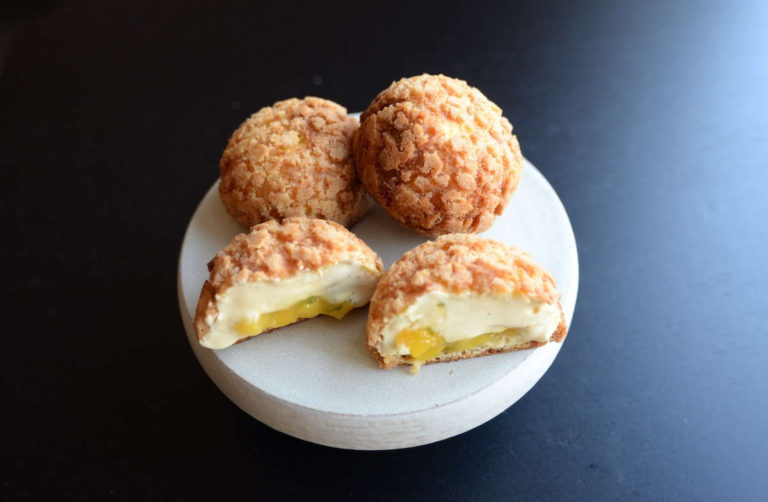
“Is this guy really talking about Tarts de Feybesse again?” Yeah, you betcha dear reader. Chefs Monique Feybesse and Paul Feybesse have made the Beard list for the second year in a row. Does that mean they’re going to qualify as finalists this year? Magic eight ball says, “Without a doubt.” Their Oakland bakery is set up like a stage. Customers walk in and immediately sense a hive of activity taking place behind the tall kitchen windows. This husband-and-wife team have a remarkable work ethic. But their shared ambitions serve a purpose. They mean to delight. After one look at the case of pastries and desserts, customers get to see their imagination at play. The colors are as vibrant as the flavors. This week they started selling a calamansi baba à la Tequila that looks like a trompe l’oeil egg on top of a brioche bun. Don’t get me started on the range of their inventive éclair fillings or I’ll start singing “Constant Craving.” Tarts de Feybesse, 324 24th St., Oakland. tartsdefeybesse.com

EMERGING CHEF

This category appears to be the equivalent of the “Best New Artist” category at the Grammys. Steve Joo is in the emerging chef category not because he just got started. He’s simply being recognized, a lot and regularly, for his traditional approach to making homemade tofu and banchan at his deli restaurant Joodooboo. Since its 2022 opening on Market Street in Oakland, the range of items has continued to evolve. Right now the lunch and dinner menus feature a farmer’s rice bowl, a fried dooboo—tofu—meal and a nori acorn noodle bowl. Joodooboo, 4201 Market St., Oakland; IG: @joodooboo.

Free Will Astrology: Week of Jan. 28

0

ARIES (March 21-April 19): In 1953, Edmund Hillary of New Zealand and Tenzing Norgay of Nepal became the first climbers to trek to the summit of Mount Everest. They both said later that the climb down was as important and challenging as the ascent. The lesson: Achievement doesn’t end when you reach the peak. Aries, you may be nearing or have just passed a high point of effort or recognition. Soon you will need to manage the descent with aplomb. Don’t rush! Tread carefully as you complete your victory. It’s not as glamorous as the push upward, but it’s equally vital to the legacy of the climb.

TAURUS (April 20-May 20): Aurora borealis occurs when highly charged particles from the Sun strike molecules high in the Earth’s atmosphere, causing them to glow. The display that looks like gorgeous magic is actually our planet’s invisible magnetic shield and upper atmosphere lighting up under the pressure of an intense solar storm. Dear Taurus, I think your life has a metaphorical resemblance. The strength you’ve been quietly maintaining without much fanfare has become vividly apparent because it’s being activated. The protection you’ve been offering and the boundaries you’ve been holding are more visible than usual. This is good news! Your shields are working.

GEMINI (May 21-June 20): “Nothing in excess” was the maxim inscribed on the ancient Temple of Apollo at Delphi. “Moderation is a chief moral virtue,” proclaimed the philosopher Aristotle. But I don’t recommend those approaches for you right now, Gemini. A sounder principle is “More is better” or “Almost too much is just the right amount.” You have a holy duty to cultivate lavishness and splendor. I hope you will stir up as many joyous liberations and fun exploits as possible.

CANCER (June 21-July 22): When sea otters sleep, they sometimes hold each other’s paws to keep from drifting apart. This simple, instinctive act ensures they remain safe and connected. I suggest making their bond your power symbol for now, Cancer. You’ll be wise to formulate a strong intention about which people, values and projects you want to be tethered to. And if sea otters holding hands sounds too sentimental or cutesy to be a power symbol, you need to rethink your understanding of power. For you right now, it’s potency personified.

LEO (July 23-Aug. 22): To be healthy, we all need to continually be in the process of letting go. It’s always a favorable phase to shed aspects of our old selves to make room for what comes next. The challenge for you Leos is to keep showing up with your special brightness even as parts of you die away to feed new growth. So here are my questions: What old versions of your generosity or courage are ready to compost? What fiercer, wilder, more sustainable expression of your leonine nature wants to emerge? The coming weeks will be an excellent time to stop performing as the hero you used to be and become the hero you are destined to become.

VIRGO (Aug. 23-Sept. 22): The Haudenosaunee people practice “seventh-generation thinking”: making decisions based on their impact seven generations into the future. You would be wise to incorporate the spirit of their visionary approach, Virgo. Here’s the problem: You’re so skilled at fixing what needs urgent attention that you sometimes neglect what’s even more important in the long run. So I will ask you to contemplate what choices you could make now that will be blessings to your future self. This might involve ripening an immature skill, shedding a boring obligation that drains you or delivering honest words that don’t come easily. Rather than obsessing on the crisis of the moment, send a sweet boost to the life you want to be living three years from now.

LIBRA (Sept. 23-Oct. 22): Are you open to the idea that new wisdom doesn’t always demand struggle and strain? In the days ahead, I invite you to move as if the world is deeply in love with you; as if every element, every coincidence, every kind pair of eyes is cheering you forward. Imagine that generous souls everywhere want to help you be and reveal your best self. Trust that unseen allies are rearranging the flow of fate to help you grow into the beautiful original you were born to be. Do you dare to be so confident that life loves you?

SCORPIO (Oct. 23-Nov. 21): Psychologist James Pennebaker did studies showing that people who write about traumatic experiences for just 15 minutes a day show improved immune function, fewer doctor visits and better emotional health. But here’s a key detail: The benefits don’t come from the trauma itself or from “processing feelings.” They come from constructing a narrative: making meaning, finding patterns and creating coherence. The healing isn’t in the wound. It’s in the story you shape from the wound’s raw material. You Scorpios excel at this alchemical work. One of your superpowers is to take what’s dark, buried or painful and transform it through the piercing attention of your intelligence and imagination. The coming weeks will be an excellent time to do this.

SAGITTARIUS (Nov. 22-Dec. 21): In Jewish mysticism, tikkun olam means “repair of the world.” This is the idea that we’re all responsible for healing what’s broken. But the teaching also says you’re not required to complete the work; you’re only asked to not abandon it. This is your message right now, Sagittarius: You don’t have to save everyone. You don’t have to heal everything, and you don’t even have to finish the projects you’ve started. But you can’t abandon them entirely, either. Keep showing up. Do what you can today. That’s enough. The work will continue whether or not you complete it. Your part is to not walk away from your own brokenness and the world’s. Stay engaged.

CAPRICORN (Dec. 22-Jan. 19): The Talmud teaches that “every blade of grass has an angel bending over it, whispering, ‘Grow, grow.’” I sense that you are now receiving the extra intense influence of your own guardian angels, Capricorn. They aren’t demanding or threatening, just encouraging. Please tune into their helpful ministrations. Don’t get distracted by harsher voices, like your internalized critic, the pressure of impossible standards or the ghost of adversaries who didn’t believe in you. Here’s your assignment: Create time and space to hear and fully register the supportive counsel. It’s saying: Grow. You’re allowed to grow. You don’t have to earn it. Just grow.

AQUARIUS (Jan. 20-Feb. 18): In ecology, there’s a concept called “keystone species.” This refers to organisms that have a huge effect on their environment relative to their abundance. Remove them, and the whole ecosystem shifts. I bring this up, Aquarius, because I believe you are currently functioning as a keystone species in your social ecosystem. You may not even be fully aware of how much your presence influences others. And here’s the challenge: You shouldn’t let your impact weigh on your conscience. You don’t have to sacrifice yourself as you carry out your service. Instead, ask how you can contribute to the common good while also thriving yourself. Ensuring your well-being isn’t selfish; it’s essential to the gifts you provide and the duties you perform.

PISCES (Feb. 19-March 20): I foresee a dose of real magic becoming available to you: equivalent to an enchanted potion, a handful of charmed seeds or a supernatural spell. But owning the magic and knowing how to use it are two different matters. There’s no promise you will instantly grasp its secrets. To give yourself the best shot, follow a few rules: 1. Keep it quiet. Only share news of your lucky charm with those who truly need to hear about it. 2. Before using it to make wholesale transformations, test it gently in a situation where the stakes are low. 3. Whatever you do, make sure your magic leaves no bruises behind.

Homework: Is a wounded part of you finally ready to heal? Do it! Newsletter.FreeWillAstrology.com

Life saver: Reviewing Jacob Ming-Trent’s ‘How Shakespeare Saved My Life’

Life saver: Reviewing Jacob Ming-Trent's 'How Shakespeare Saved My Life'
So much is said by us theater artists about theater being our sanctuary, and how theater ‘saved us’ by giving us a place to belong.  However, as Jacob Ming-Trent makes clear in his new one-man show How Shakespeare Saved My Life (directed by Tony Taccone and now playing at Berkley Rep through March 1), it’s not the building but...

Mohka House brings Yemeni coffee to the Dimond District

Mohka House brings Yemeni coffee to the Dimond District
The Dimond District looks and feels like a neighborhood that’s often in an ongoing state of flux. Farmer Joe’s has been a longtime anchor while many cafes, restaurants and bars move in and then out. There are, of course, exceptions. La Farine is veering towards its 20th anniversary there. And newer restaurants like Michauxnée Olier’s Willows & Pine (2023)...

Free Will Astrology: Week of Feb. 4

Free Will Astrology: Week of Feb. 11
What's your horoscope this week?

Art / Tech: Postmodern Cultural Incubator critiques technology with art

Art / Tech: Postmodern Cultural Incubator critiques technology with art
Late one afternoon along San Francisco’s Mission Street, I walked into a sublime panic. The Gray Area Cultural Incubator cohort was setting up its culminating exhibition, premiering in the Grand Theater just hours after my visit. Mostly I crept around in awe of the artistic fervor, installations going up in every corner of the theater, giant interactive video screens...

Freedom From Fear Pt. 2: The tactical side of terror

Freedom From Fear Pt. 2: the tactical side of terror
This is the second of a three-part series on ongoing issues with U.S. Immigration and Customs Enforcement as it reaches into our areas. -–Editor Part 2: True designs of the administration Let me be emphatic; all undocumented immigrants have committed a crime. They have all broken immigration law. All of the undocumented immigrants I spoke to frankly admitted this. And almost all...

Social Eyes: Week of Jan. 29-Feb. 4

Social Eyes: Week of Jan. 29-Feb. 4
This week's calendar picks feature Philip Gelb, Pokey LaFarge, Jason Isbell and the 400 Unit, Duo-B, Gareth Pearson, Matteo Mancuso, Steven Banks and Xak Bjerken, Folk and Funky live podcast, Drink the Sea, and Nick Hexum.

Oakland band digs into country-rock

Oakland band digs into country-rock
Oakland-based musician Joe Rut has been writing songs and releasing them on his own for a long time. Over the years he’s delved into folk, electronic and experimental music, but said country has always been in his heart.  “When I was a kid, my neighbor in Bakersfield played pedal steel,” Rut said. “I’d hear him practicing all the time, and...

Love Power: Wong Kar Wai retrospective lights up BAMPFA

Love Power: Wong Kar Wai retrospective lights up BAMPFA
When the name Wong Kar Wai first lit up stateside screens in the early 1990s, it was as if a bolt of lightning had suddenly struck the Hong Kong film scene, and now its energy was radiating across the Pacific. The electricity was intense and immediate. Wong’s approach was a radical departure from the then-Crown Colony’s typical fare, which relied...

James Beard Foundation announces best nom noms

James Beard Foundation announces best nom noms
On Wednesday, Jan. 21, the James Beard Foundation (JBF) announced the 2026 James Beard Award semifinalists. These annual awards, the JBF site proclaims, “represent the pinnacle of culinary recognition in the U.S.” East Bay culinary artists, once again, made the cut. This long lead announcement provokes the public’s interest for the better part of six months. Finalist info arrives...

Free Will Astrology: Week of Jan. 28

Free Will Astrology: Week of Feb. 11
We are now in Aquarius season. How can we contribute to the common good while also thriving ourselves?
19,045FansLike
17,709FollowersFollow
61,790FollowersFollow