Back in time: California confronts Trump’s third-term talk

Could President Donald Trump be setting himself up to do what Franklin D. Roosevelt did in 1941, by serving a third term as president? While some folks pay little mind to Trump’s occasional hints of staying in office longer, California Sen. Tom Umberg isn’t leaving it to chance.

The 22nd Amendment, added to the United States Constitution in 1951, states that no person shall be elected to the office of the president more than twice. Until recently, it seemed that Americans were in unanimous agreement that this rule was in the best interest of Americans and democracy as a whole. However, in late 2025 Trump constituents began selling t-shirts bearing the words, “Trump 2028 (Rewrite the Rules).” 

Since Trump took office for his second term a little over a year ago, he’s hinted at and sometimes explicitly talked about an additional term in office. Trump told reporters in a press conference last fall that a third term would really be his fourth term because of what he called—without evidence—“the rigged election.” On Jan. 28, the FBI released a statement saying it executed a warrant at the Fulton County Election Hub and Operation Center in Union City while investigating President Trump’s false claims that the 2020 election was rigged. 

Just over a year into Trump’s second term in office, Americans on both sides of the political aisle are dissatisfied with the slow-to-be-released, heavily redacted Epstein files. The National Rifle Association joined ICE protesters across the country in denouncing the killing of Alex Pretti. The United States is trending downwards in global popularity in response to tariffs, bombing campaigns, the kidnapping of Venezuelan President Nicolás Maduro, the seizing of oil, the proposed real estate project in Gaza and more recent actions. 

So why in the midst of this political moment is Trump still ruminating on the outcome of the 2020 election? Is it because he seeks what he perceives as retroactive justice for an election he believes he won? Or could he be searching for justification to stay in office longer by running for a third term? 

Just in case the latter is true, Sen. Umberg said in a phone interview that he put forth “no kings” legislation to safeguard the election process in California. Senate Bill 46 enables the California secretary of state to exclude presidential candidates from the ballot if they are ineligible to hold office, according to the constitution. In other words, if Trump sought a third term as president, Trump’s name wouldn’t appear on California’s ballot. 

“Most of us think that the Constitution is quite clear on that point, but there’s at least one person who thinks they should be able to serve a third term,” Umberg said. “Thus we need this bill to make it absolutely crystal clear that in California, if you serve two terms as president, you cannot appear on the ballot to serve a third term.”

While SB 46 would apply only to California, Umberg suspects that colleagues in other states may follow suit with similar measures to safeguard the election. Some of Umberg’s GOP colleagues have suggested that measure is unnecessary or even redundant given the existence of the 22nd Amendment. 

“What they’re saying is that we shouldn’t take the president at his word,” Umberg said. “I do take the president seriously. When he says, for example, that people born in the United States aren’t necessarily citizens and he tries to have them removed from the country—it turns out he wasn’t kidding.” 

Terri Jett, a political scientist, scholar and activist from Richmond, prides herself on making politics accessible to people of all ages with her PBS Simple Civics three-minute video series. Jett says that in an ideal world, we wouldn’t need SB 46 because of how clear-cut and simple it is in the Constitution. However, she says that at this political moment a safeguard might be necessary.

“Our checks and balances system is not working properly,” Jett said. “The rule of law actually also is not working properly.” 

Given the current makeup of the Supreme Court, Jett said little would surprise her. And if SB 46 safeguards the election, she’s all for it.

“Regardless of the person … we do not want a monarchy in place, and we want to be able to change our representatives, even though we don’t do it to the extent that I wish we would,” Jett said. “We need to take whatever measure we can to add some guardrails to ensure that our constitutional protections are still in place and still effective.”

Nick, an enlisted member of the United States military who is rooted in the East Bay but is currently on assignment out of state, declined to share his last name. Nick said that just because there is one incident in American history when a Democrat served three terms, SB 46 shouldn’t go into effect just yet. 

“I think since FDR had the chance to serve more than two terms,” Nick said, “wouldn’t it be fair to let a Republican do it once to even the playing field? Then the parties can truly agree to eliminate any names from candidates seeking a third term.”

President Roosevelt is in fact the only president in U.S. history to have served more than two terms. Roosevelt began his third term in 1941 when he defeated Republican Nominee Wendell Willkie, which coincided with the timing of World War II. Roosevelt served a short time into what would have been his fourth term when he died on April 12, 1945.

Ironically many have noted similarities between Trump’s deportation policies and Roosevelt’s Executive Order 9066 which incarcerated 120,000 Japanese Americans in internment camps.

Although Nick said he recognizes that federal law caps the presidency at two terms, he is tired of California’s “self-declared exceptions.”

“Califoria regularly flouts federal law,” Nick said. “Why wouldn’t it be fair for red states to similarly declare an exception, should their voters desire it?”  

SB 46 would only apply to California and has no bearing on Senate bills that other states might elect to implement. 

Veronica F. declined to share her last name or her city of residence, but said she refuses to accept that traveling back in time to the Roosevelt era is in anyone’s best interest. 

“My grandmother, who is still alive, was a toddler when she was taken to a Japanese internment camp,” she said. “She described to me men who were not in uniform who were driving unmarked cars and took her and her family when she was a child. Now, we’re seeing the same thing happen across the country today. Children, families, people who’ve lived here their whole lives, people who want peace of mind being taken violently.

“I can’t sit by and do nothing,” she added. “Too many people did that when my grandma was interned, and I’m not doing that today.”

Nadia Nouri is a county council member of the Santa Clara County Green Party and a longtime resident of Silicon Valley who migrated to the U.S. from Iran some 48 years ago. She says she has no desire to live in an oligarchy or a dictatorship.

“We need to put more term limits on people in power,” she said. “Some are dying in their seats.” Nouri believes the longer people serve, the more apt they are to be affected by corruption and cognitive decline.

“I had elderly parents,” she continued. “There’s nothing bad about being elderly, but as we get older, our brains don’t work like they once did. At a certain point, we need rest and retirement.”

President Trump turns 80 in June, which Nouri said is not an ideal age for leading a country. She also discussed a noteworthy disconnect between what the Trump administration is telling Iranians to do—protest—and how it’s responding to Americans who do the same thing. At the same time, she says there are also undeniable parallels. 

“What the Trump administration is doing through ICE is very similar to what the Iranian regime does on the streets,” Nouri said. “They come and take the demonstrators away and disappear them. What’s the difference?”

Monica Uribe and her partner, Angel Sandoval, reside in Santa Clara and have been on Bay Area streets protesting nearly every weekend since Trump took office last January.

“I would definitely support any measure that stops Trump from being in office for a third term,” Uribe said. “Or anybody serving as president. We, as Americans, want to be able to choose and vote every time—because the people in this country get the last say.”

Uribe said it feels like the sitting government of the United States is being run as a dictatorship.

“Trump wants to get away with it, but we’re here to stop it,” he said. “Thankfully a lot of the courts are siding with us, and we’re winning a lot of the battles.”
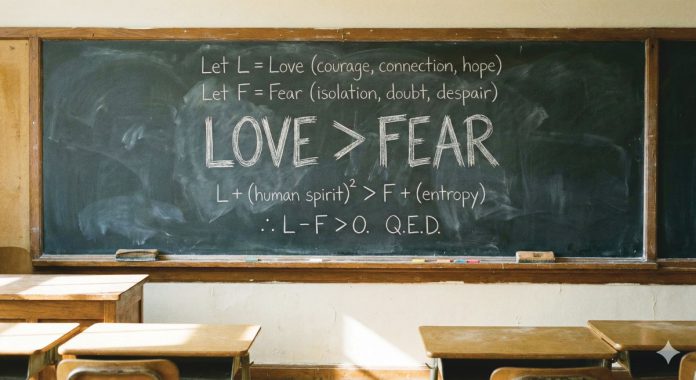
Revealing the nature of love

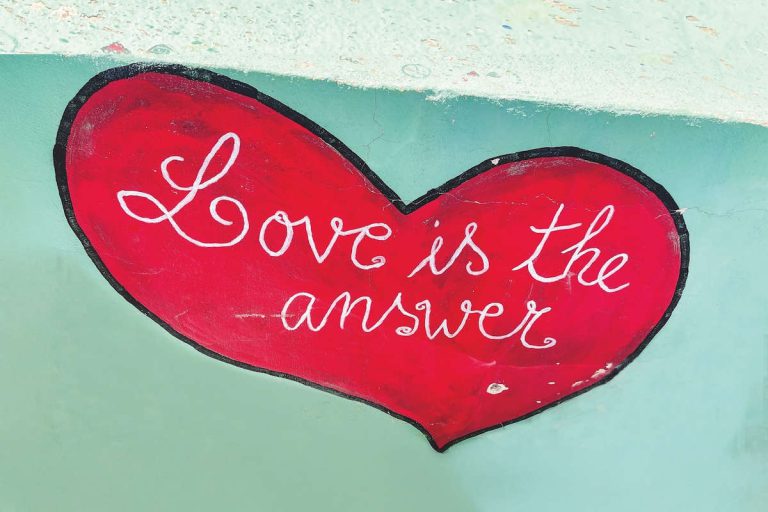
Here, journalist and organizer Cincinnatus Hibbard offers the second of two sneak peeks at elements of his forthcoming book, ‘Love is The Answer.’

Part one of the previously published piece—headlined ‘The Word We Need’ and available on our website—ends with a choice between love and fear, in this life and in the present political moment. In the past, as Hibbard suggests, love was not considered a viable choice—perhaps because it was ill defined as vague, misty, numinous. Here, he defines what love is and why it is the answer. —Editor

I will now undrape for you a defined definition of love (in its mystical aspect).

It flashes out. In its form, this definition is a list—a list of qualities and traits bound in complex (a red cut jewel beyond price).

Attend, lovers—just as “love is the answer,” love is the answers. Each quality of love is a direct answer to a different problem (in these challenging times). As you read each of these traits, think of their binary opposites—they are the qualities of fear, and “the system” itself is defined.

Love is Otherworldly.

Love is a realm and a world apart. Recall being in bed with your lover and young love, and feeling that the screaming world was so far away. This new world is uncanny, strange and new. Not because it is upside down, but because it is right side up.

Love is Gentle and Tender.

Love is Peaceful.

Let me define this aspect of love through its antithesis, fear. Power (really, fear) is in competition with everyone. And absolute power is at war with everyone, and indeed at war with everything—all of creation. Everything is a threat because power is afraid of everything. In a state of love, we are, if transiently, at harmony with everything.

Love is Slow.

Love is Timeless.

In this world defined by fear, we are ruled by the ticking clock, by calendars, by schedules filling with appointments and deadlines until the staccato pace of life is taken at a run. When love is embodied, time is suspended. The power of clocks is broken. You step into a realm that is timeless and eternal.

Love is a True Destination.

When you chase status and ambition, there is no destination, no rest. You are forever running (scared). Attend. Love is the only thing in the universe that has the quality of arriving at a true destination—it is the place of rest and repose. Which is why we call love “home.”

Love is Magic.

Real magic is wonder—wonder for the real, everyday miracles of life. Love brings you into a child-like state of awe.

Love is Euphoric.

In this corrupt world, damaging drugs are used to approximate euphoria. But unlike drugs, love does not degenerate mind, body and soul. Love can be used for euphoria every day, and it makes you healthier.

Love is Healing.

If you want to undo the bodily ravages of cortisol (the stress hormone), try oxytocin (the love hormone). Love restores the tissues.

Love is Healed.

Transient love allows you to experience what it is to be whole and complete in yourself, previewing the end (the destination) of your trauma healing journey.

Love is Connection and Omni-Connectiveness.

Love is Union and Unity.

Love is Abundant.

Love is Satiated.

Nothing to do, nowhere to go—love satisfies and fulfills as nothing else can. Power (fear) is a hungry ghost whose yearnings and appetites can never be appeased.

Love is Grateful.

Love is Accepting.

Love is Ego Death.

In all ages, a willingness to die (for a child or a lover or a sacred cause) has been the greatest test and expression of love. The ultimate sacrifice is made and made without hesitation because, in love the lover has experienced “ego death.” In love, there is a detaching from ego, and a willing shedding of property and land and personal titles, jobs, roles, reputation, one’s story and one’s name—and even one’s body—one’s life.

In love, they fall away like a mask and draping disguise, leaving all that remains—spirit, soul or just a pure loving essence…

Love is Liberation and True Freedom.

Love is Fearless.

Love is Safe.

Again, we chase wealth and status because power appears to be the place of safety in this unsafe world. But that is illusory—there is no safety in this world. Only in a state of love can we feel truly safe—perhaps because we are at peace with losing all our wealth and status.

Love is Sacred.

I once attempted to define what is sacred to me. Ask yourself, what is sacred in this profane world? To me, it is the moments of deep vulnerable connection (love) and things charged with the associations of love (family photos, hand-made gifts, love letters and wedding rings).

Love is Perfect and Perfection.

That closes the open list. In summary, love is otherworldly, peaceful, tender, slow, timeless, a true destination, euphoric, magic, healing, healed (whole), connected, abundant, satiated, grateful, accepting, egoless, liberated, fearless, safe, sacred and perfection. And in contrast—the contrast of opposed antitheses, power (fear) is worldly, violent, harsh, fast, timed, without destination or rest, hurt, disenchanted, sickening, incomplete, isolated, in a state of scarcity, ungrateful, rejected and rejecting, egotistical, scared, imprisoned, unsafe, corrupt and imperfect.

Love is the Answer

On a narrative note, the last section is the note I sent to those two operators (in Part One) the day after our meeting—the morning after my late night revelation (intellectual orgasm).

Recall those two interlocking social problems that those players brought  me—those of over-consumption and over-work. Recollect that we had been at an impasse—we had no solution that didn’t seem to make things worse. Now take those two issues, and make a longer list of all the intractable problems of the world. With our fears and anxieties, we can extend that list almost without limit. 

There’s environmental degradation and mass extinction, political polarization, immigration and human trafficking, congressional deadlock, inequality and fascism, international rearmament (etc., etc., etc). They are all impasse issues, and for now, they are all getting worse—as trends you can follow them, like fuses, to a general explosion, and a future where all is night.

Tranquilo, lovers. Have another look at the 21 bound qualities of love. While not a direct solution, I ask you—can you think of a single social issue or conflict that would not be eased, loosened, soothed, smoothed and remedied, if not outright cured, by a visitation by these 21 loving qualities? Consider the effects of (re)connection and egolessness on our politics alone …

As here defined, definitively, love reveals itself as the all-medicine. Love is the panacea to cure all of what ails this sick—and dying world.

Here and now—at long last, we can declare that Love is The Answer. That night, I shouted it into the darkness—eureka. I have found it.

… And yet, somehow, the changes worked by love are more than a cure … they amount to a total transformation. Enclose the list of love in the shell of conceptual totality by drawing a round circle from its last quality, “perfection,” back to its first quality, “otherworldliness,” taking them all in. Break that first word into bits—it becomes “other world,” and “another world.” … Love  is not simply de-escalation or reform capitalism—love contains within it the seed of a new world …

… But out of fear, the old world and its powers will stand up to defend the status quo—with fearsome tooth and claw (and a lot of guns). So which will win out, love or fear?

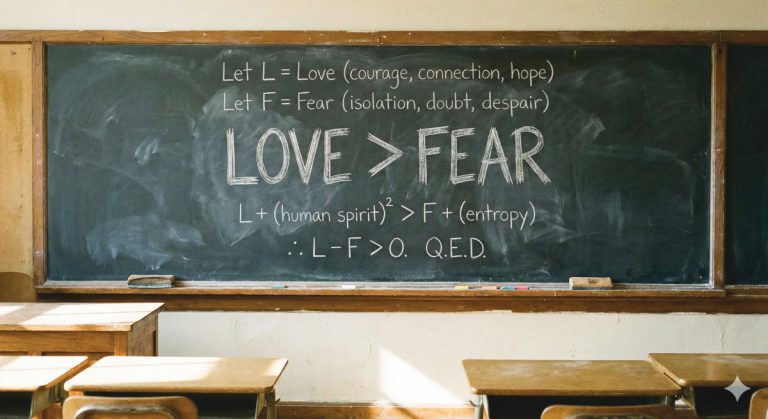
Love vs. Fear

At the climax of Part One, I posed a choice—the choice between love and fear. Cut through the noise to the bone. It is the choice that stands before us in this moment in time—in history—in society—in the rooms and places of countless confrontations—will we choose to love or to fear—and submit or attempt to overpower?

A choice is a conflict within ourselves. And in this, it is a conflict between two. So let us match them. Imagine this choice as two people opposed over any intractable issue. 

One embodies the 21 qualities of love, and is unarmed. The other embodies the 21 qualities of fear, but has all of the armaments of power. One has been made saint-like by love, and one has been made monstrous by fear.

Which will win?

Power wins, right? Power is, after all, power—it has the guns and the police and the prisons …

Think again.

In a mystical state of love, a person is made fearless. You can hurt them, but they cannot be harmed—emotionally, they feel true safety. Egoless and unattached, love is quite ready to give its life. Whereas for all its ferocity, power is mortally afraid. Moreover, love has everything power (fear) wants and cannot have (satiety, rest, repose, healing, connection, bliss, etc., etc.). Love is all we want. Power cannot seize these things—they disappear as it closes its heavy fist. But it need not do so, because true love offers these things to “the enemy” freely and compassionately.

Love is unarmed and it is vulnerable, but love has a power—a power that is not power, and a force that is not force. Love overcomes, not by destruction but by defection, by conversion—by embracing “enemies” to unify all.

Love wins. In inner choice and outer conflict, love prevails—so choose love. I have.

There is a quote without attribution that hangs in my home, over my workspace. On a red and pink piece of foam core, it reads, “Love is the revolution everyone is waiting for. And when it truly arrives, it will be unresisted.” … Love will be a revolution without guns.

The Problem With the Solution

Definitively, Love is The Answer. … But is there a problem with the solution?

In this fearful world, love is thought to be rare—and perhaps the scarcest and most expensive commodity of all. Whereas fear is seemingly limitless. Perhaps, psychologically speaking, fear is the true product and consumable of the world-capitalist machinery. So … is love too rare to be the answer?

… I agree that people are afraid. And while I agree that most things (controlled property) are charged with a certain anxiety, I posit the posture that “love is scarce” is actually part of the self-breeding and self-protecting ideology of Power. That is to say, “that’s just what they want you to think.”

In my new dedicated (consecrated) pursuit of love, I have come to believe that love is infinite—and free. To the satisfaction of my own skepticism, I have proven it by accessing love and love’s 21 qualities from little things and unlikely things everywhere—and even from challenging things (like sadness, judgement, heartbreak, litter, childhood trauma, political conflict, contentious issues and even the end of  the world—hint, hint; it is only the end of the system of fear and oppression). Though morally complex, aspects of love can be seen in these bad and horrible things with the right lens. 

And each time we do so, love becomes more and more abundant. And fear more scarce. And a new world draws closer to its dawning.

Across the chapters of this book, I will show you. And you will see. Follow me. I am not a leader; I am led—in pursuit of love and the mystical experience.

If you and I are ever parted, remember these words:

These are truly scary times. And there is worse to come. There will be disasters and paroxysms of fear as the old world thrashes through its death spirals. Come what may, choose love. Let love be your oracle and guide. Ask love; follow love; be love—it knows the way.

Learn more: Join Cincinnatus Hibbard in his pursuit of love into the next world at loveistheanswerbook.substack.com. There, his book, ‘Love is The Answer,’ is being published as a serial. Subscribers can expect chapters that inspire love, along with audiobook recordings set to ambient electronica, original art, films, tips and tricks, as well as performance dates and workshops leading into his book release and beyond.

My Fair Lad(y) meets BDSM

After a brief separation dedicated to soul-searching, Eliza Doolittle returns to Professor Henry Higgins’ house. He greets her with a singular question that encapsulates the nature of their relationship—“Eliza, where the devil are my slippers?” The 1964 film, My Fair Lady, abruptly ends there. In some versions of the staged musical, the cockney flower girl throws the bloomin’ slippers at him. The regressive ending of the movie begs the question: Why does she return to such a domineering man when Freddy, a handsome young stud, is waiting for her on the street where she lives?

Ah, the vicissitudes of love and its attendant dependencies. Eliza’s rebellious attempt to break free of her professor is short-lived. Without the rigid schedule and structure Higgins provides, she is adrift, displaced from her economic class of origin and not yet settled into a new one. On the surface, writer and director Harry Lighton’s Pillion is dressed up in an entirely different wardrobe. One that involves leather biker wear and BDSM accessories.

Without the wearying sight of hairy white buttocks routinely on display, the protagonists of Lighton’s movie are merely a century ahead in time. Their psychological make-up is essentially the same as their cinematic forefathers. Or fore-daddies in this case.

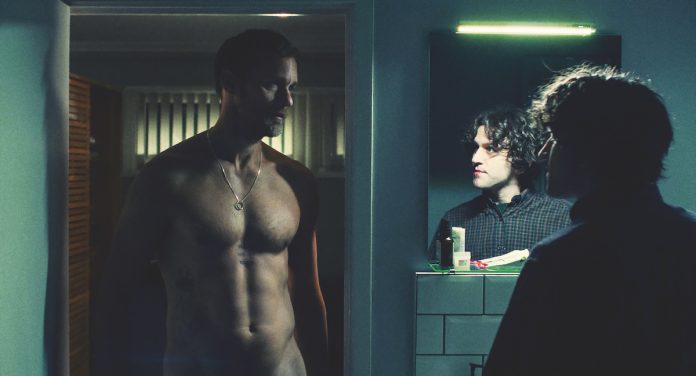
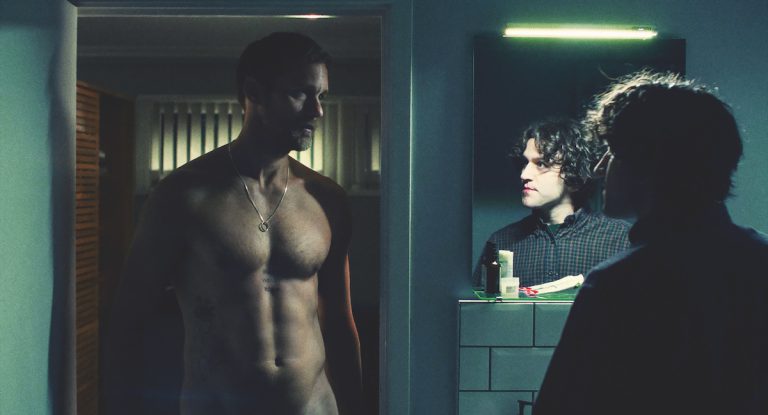
Lighton skillfully introduces Colin (Harry Melling) with a wintry portrait of his personal and professional life. He works as a traffic warden by day, absorbing the ire of automobile owners in a parking garage. At night, he sings in a barbershop quartet with his father and older brother, complete with striped suits and straw hats. During his off hours, Colin eats meals with his family, walks the family dog and sits in his room. He is a recessive figure without a uniform or wardrobe of his own to declare an identity to the broader world.

Until Ray (Alexander Skarsgård) appears at the pub one night where Colin sings. Melling’s voice is as pure and rich as a boy soloing in the chorus of a Catholic mass. After the performance Ray approaches him and sets the terms of their first encounter. It doesn’t dawn on Colin that he’s been hemmed in and infantilized by his humdrum routines. When he unzips Ray’s leather onesie, Colin’s transformation into a sexually liberated gay man begins. Melling’s sense of excitement is palpable. It looks like Colin’s having fun for the first time in his life.

But his lack of experience makes for an awkward alleyway tryst. From the outset, Ray is consistently withholding. Skarsgård inhabits the character with a defensive posture. Instead of endowing Ray with an inner life, he leads with the sharp edges of his taut physical beauty. When Ray reads chapters of Karl Ove Knausgård’s My Struggle in bed at night, the novel’s content might suggest what his inner turmoil is all about. But the damage registers in his silence and not in the script. Skarsgård undercuts his onscreen presence as the ultimate object of desire by discarding Ray’s soul. He’s an impenetrable alpha male whose only need for connection is physical.

For this dom-and-sub lust story to have a hope of lasting beyond one fumbling blowjob, Colin adopts the trappings of Ray’s subculture. Because he’s used to playing by his family’s rules, as lax and loving as those are, obeying Ray’s commands isn’t much of a change. Like Eliza and Sandy in Grease, to belong to his new sexual partner’s stratum in society he must change his appearance. Colin’s crown of charming messy curls is the first thing to go. They reflect an inner softness that’s banished from Ray’s hardcore social life. Post-punk jeans, t-shirts, and a lock and circle of chains around his pale neck all are replacements for his normcore gear.

Pillion treads lightly around the subject of class. Without mentioning Ray’s profession, his economic status provides him with the freedom to move about the world as he pleases. That’s just as attractive to Colin—and Eliza—as the package itself. But after Higgins sings to himself, “I’ve grown accustomed to her face,” Eliza returns to him because she knows he adores her. When Colin finally asserts his own identity, fueled by his own separate and individual desires, Ray, a cocksure Narcissus, isn’t equipped to respond. He’s grown accustomed to his own pretty face staring back at himself in the mirror.

‘Pillion’ opens Feb. 19 at the Rialto Cinemas Elmwood.

Buzzed Lightbeer zooms into 2026

0

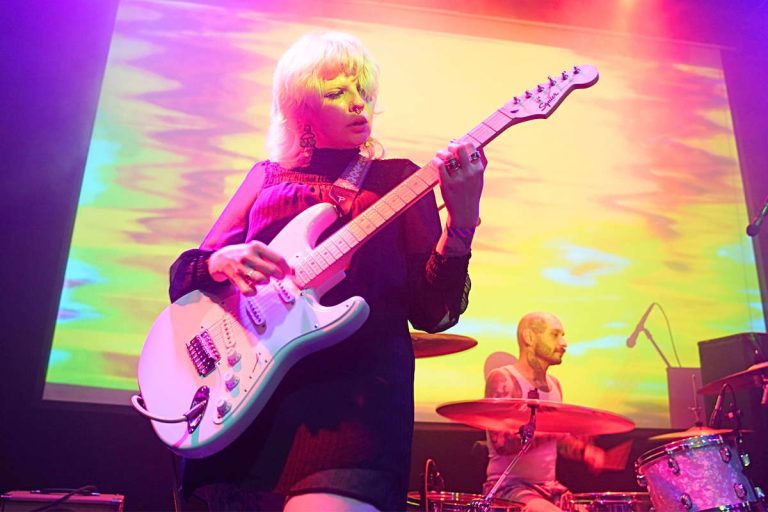
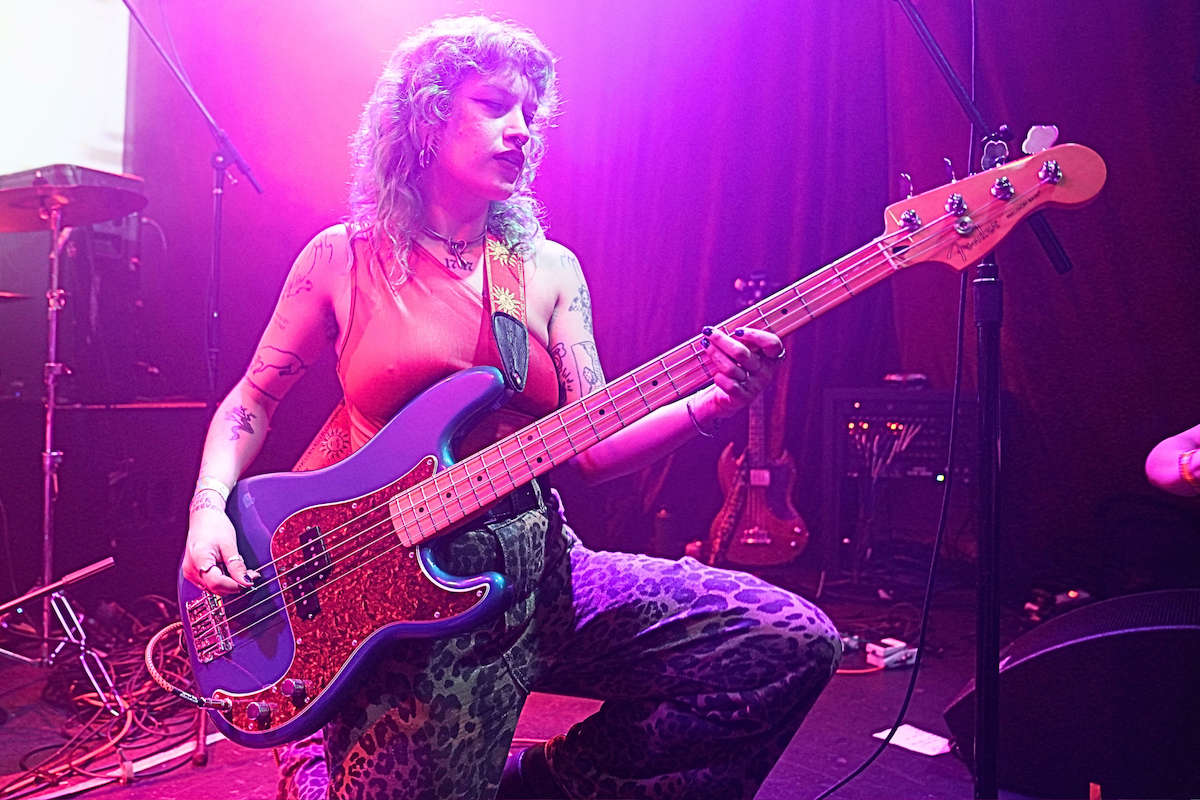
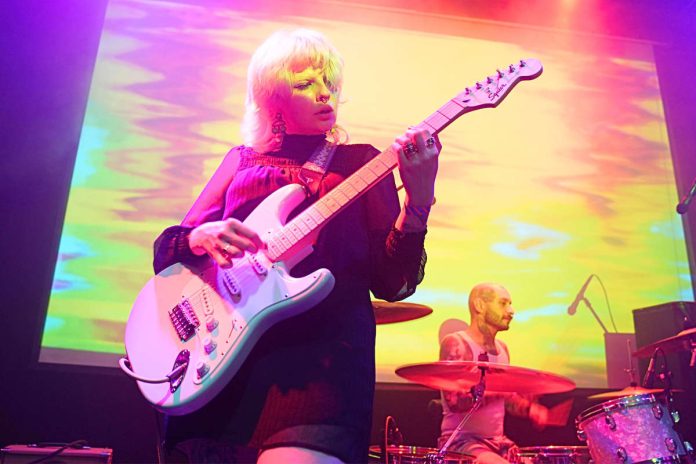
The buzz is growing about Buzzed Lightbeer. The San Francisco band hit last year hard by having an admirable poll position at Psyched Radio’s Tenderloin Music Festival and opening for a sold-out Shannon and the Clams show on Halloween. This year Gabbi Araujo (bassist, vocalist), Ronnie Hillix (guitarist, vocalist) and Michael Negrete (drummer) are buzzing with some headlining shows—most recently they sold out the Rickshaw Stop with little more than “word of mouth” promotion. 

Meanwhile, Buzzed Lightbeer is no stranger to our planet across the bridge having played shows at Berkeley’s Starry Plough and 924 Gilman, Oakland’s Thee Stork Club and The Golden Bull (RIP), with high hopes to play Eli’s Mile High Club after the band heard that they have blood-wrestling matches.

“The East Bay knows how to create art and community from a very human place as San Francisco is becoming oversaturated by tech and AI,” says Araujo. “We played Ivy Room multiple times, which we love—we had a lot of sweaty lesbian fun at our show with Thelma & the Sleaze a couple of years ago.” 

On Thursday, Feb.19, Buzzed Lightbeer will be making a well-orchestrated return crash landing at the women-owned and operated Ivy Room in Albany. 

Gabbi Araujo (bassist, vocalist) is a founding member of Buzzed Lightbeer.

While the band was formed in 2018, Araujo says, “Things really kicked off when Ronnie joined the band about a year later.” All Toy Story dad jokes aside, this band is tighter than the airlock on Star Command. Trust that it takes a lot of discipline to seem so disheveled.

Buzzed Lightbeer’s sound often draws parallels to bands like Hole or Bikini Kill but is also shaped by early Cramps and Stooges. They cite The Runaways and Amyl & the Sniffers as inspiration. 

“As much as Hole has influenced our sound, I still think it’s weird when people point that out,” says Hillix. “One time a drunk Irish dude at one of our shows said we sounded like the Beatles mixed with the Ramones. That was an insane thing to say, but strangely true.” 

Araujo describes their music as “Hard rock psychobilly meets pop-punk.”

As for the band’s recent surge—and their move onto bigger stages—Araujo chalks it up to a mix of timing and evolution. “We’ve been getting the right gigs,” she says. “Maybe we’re more dialed in or our performances have gotten raunchier.” She laughs, then adds the obvious factor: “We’ve also been around a while.” 

Hillix agrees, noting that the growth feels earned. “It definitely feels right to be playing bigger shows, given how long we’ve been in the game now.”

Buzzed Lightbeer is also charging forward with new blood. Recent addition Negrete says his heavier musical background brings “a lot of power and energy” to the live show. He’s clearly all in. “I love being part of Buzzed Lightbeer,” he says. “Ronnie and Gabby are the most fun and creative people I’ve ever played music with.”

The band is currently mixing a new LP to be released on Psyched! Records. A tour and a slot at Oakland’s Doll Fest follows next month. 

Buzzed Lightbeer, with Marble and Moon Wave: Thu, Feb. 19 at 8pm, Ivy Room, 860 San Pablo Ave., Albany; ivyroom.com.

View Buzzed Lightbeer – Cash Grab (Official Video).

Social Eyes: Week of Feb. 19-25

THURSDAY, FEB. 19

WORLD

JAI UTTAL & THE PAGAN LOVE ORCHESTRA

In Hinduism, bhakti means devotion, trust, homage, worship, piety, faith or love, often to a personal deity. For decades, Jai Uttal has used this faith as the core of his music, living with Bengalese street musicians and mastering kirtan, the art of chanting and singing to God, with his guru Neem Karoli Baba. To that tradition he’s brought reggae, rock, jazz and soul, creating what is really a whole new genre. He and his band, the Pagan Love Orchestra, have been playing together since 1990, and will bring their mission of love to The Freight, along with an invitation to audience members to “sing, dance and commune.” JANIS HASHE

INFO: 8pm, The Freight, 2020 Addison St., Berkeley. $39-$44. 510.644.2020.

THURSDAY, FEB. 19

JAZZ

NICOLE MCCABE

West Coast jazz fans have every reason to feel pride over the ascension of Nicole McCabe, the Novato-raised alto saxophone powerhouse who’s established herself as one of the most exciting improvisers on the L.A. scene. She made an impressive entrance with her 2020 debut album, Introducing Nicole McCabe. McCabe’s supple phrasing and huge sound has made her a collaborator of choice for a disparate array of jazz heavyweights, from drummer Ari Hoenig and vocalist Dee Dee Bridgewater to pianist Gerald Clayton and vibraphonist Sasha Berliner. She’s back in the Bay Area to celebrate the release of her new album, Color Theory, with bassist Alan Jones, pianist Michael Potter and drummer Michael Mitchell. ANDREW GILBERT

INFO: 7:30pm, The Sound Room, 3022 Broadway, Oakland. $32. 510.708.9691.

FRIDAY, FEB. 20

PODCAST

‘CINEMA THERAPY’

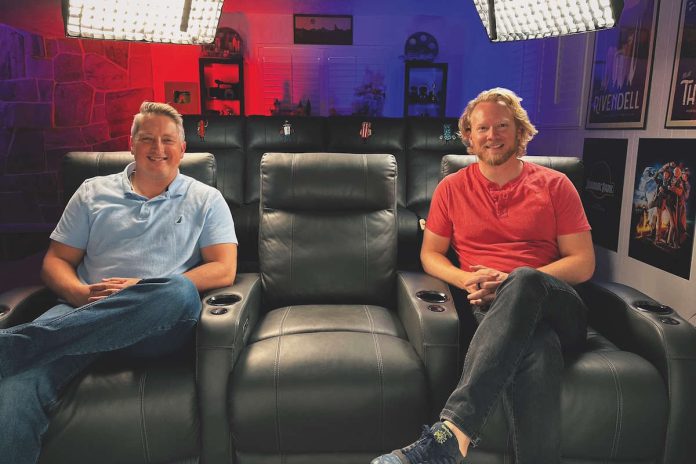
What’s better than watching a movie with friends and having an in-depth conversation about the character dynamics, their off-screen backstories and what they would be like in real life? What if those friends are a licensed therapist and filmmaker? That’s exactly the premise behind “Cinema Therapy” with hosts Jonathan Decker (LMFT) and Alan Seawright (director). This week they dive into the Pirates of the Caribbean franchise to bring a special couples’ therapy twist to the show as they dissect the relationship between Will Turner (Orlando Bloom) and Elizabeth Swann (Keira Knightley). Get ready for a night of swashbuckling, love and plenty of dad jokes with an exclusive Q&A after. MAT WEIR

INFO: 8pm, Cornerstone, 2367 Shattuck Ave., Berkeley. $40-$89. 510.214.8600.

FRIDAY, FEB. 20

THEATER

‘ONCE’

The Tony Award-winning musical Once, based on the 2007 film of the same name, tells a story of how music triumphs over cultural differences, allowing people to connect with those who come from very different backgrounds. It takes place in Dublin, where a busker meets a Czech immigrant. They discover an instant musical bond, begin to write songs together and, of course, also fall in love. The song “Falling Slowly,” which won an Oscar for Best Original Song, tells us, “Well, you have suffered enough/And warred with yourself/It’s time that you won.” Words to love by. Goes till March 15. – JH

INFO: 7pm, Berkeley Playhouse, 2640 College Ave., Berkeley. $33. 510.845.8542.

FRIDAY, FEB. 20

JAZZ

LIBERTY ELLMAN TRIO

Bay Area guitarist Liberty Ellman was in the thick of the action in the ’90s. Relocating to New York at the turn of the century, he became a pivotal figure in several celebrated bands, most conspicuously Henry Threadgill’s ensemble, Zooid. He’s released a half-dozen excellent albums of his own but has made his widest mark as a collaborator. Since moving back to the Bay Area five years ago, when the California Jazz Conservatory recruited him as a professor, Ellman has gradually begun performing more around the region. Though the degree-granting program closed down last year, Ellman is sticking around. He plays with a stellar trio featuring drummer Jaimeo Brown and bassist Jeff Denson. – AG

INFO: 8pm, The Jazzschool, 2087 Addison St., Berkeley. $25. 510.845.5373.

SATURDAY, FEB. 21

HIP-HOP

FATBOI SHARIF

Fatboi Sharif operates in rap’s creepier corridors, where horror imagery, gallows humor and emotional candor bleed together. The New Jersey MC is known for verses dense with grotesque detail and precisely honed lyrics, delivered over beats that feel warped and woozy. On his 2025 release, Goth Girl On The Enterprise, Sharif pushes that unstable world further out of orbit. The album is a sci-fi fever dream of body horror and dark comedy with production that lurches, shimmers and decays. It’s unsettling but magnetic work, rap that drags listeners into its unstable inner terrain. SONYA BENNETT-BRANDT

INFO: 8pm, Thee Stork Club, 2330 Telegraph Ave., Oakland. $15/adv, $20/door. 510.859.8709.

SATURDAY, FEB. 21

THEATER

‘DISENCHANTED’

“Disenchanted! The Hit Musical Comedy” gleefully detonates the Disney fairy-tale fantasy, swapping earnest moral lessons for sharp satire and bawdy jokes as Snow White gathers a fed-up cohort of princesses to torch the myths that have flattened them into marketable cliché. Written by Dennis T. Giacino and Fiely Matias, the show leans hard into adult humor, cultural references and sly political digs, delivering a high-energy revue with late-night cabaret sauciness. If you’ve ever rolled your eyes at happily-ever-after, this is a sparkling takedown of it. Performance also on Sunday. – SBB

INFO: 4 & 8pm, Henry J. Kaiser Center for the Arts, 10 10th St., Oakland. $57-$63.

SATURDAY, FEB. 21

JAZZ

MARCUS SHELBY SEXTET

Composer, bassist, bandleader and educator Marcus Shelby and his sextet meet up with Charles Mingus. “Conversation: The Language of Charles Mingus” offers a rare opportunity to hear compositions written by the American composer between 1950 and 1960, select excerpts from Mingus’ body of works and an oratory by Shelby. Archival film clips and Shelby’s own input about the history of American music and Black musicians add to the dynamic range of the live performance. In addition to Shelby, the sextet comes stocked with first-rate musicians: Darren Johnston (trumpet), Tony Peebles (alto sax), Danny Lubin-Laden (trombone), Greg Jacobs (piano) and Jemal Ramirez (drums). LOU FANCHER

INFO: 5:30pm, Piedmont Piano Company, 1728 San Pablo Ave., Oakland. $30-35. 510.547.8188.

SATURDAY, FEB. 21

DANCE

A.I.M.

Choreographer Kyle Abraham brings his sublime A.I.M. company to Berkeley for this Cal Performances debut. Featuring live music, the program’s three works spring from the inspiration Abraham drew from the compositions. Stories told veer from love to isolation to social revolution. Black and queer culture are inextricably embedded in every solo, duet and ensemble section. The program’s music includes “The Gettin’,” with music by Max Roach and arrangements and original compositions by Robert Glasper; Nina Simone’s “If We Were a Love Song”; and the Bay Area Premiere of “2 X 4,” by composer/saxophonist Shelley Washington. Performance also on Sunday. – LF

INFO: 8pm, Cal Performances at Zellerbach Hall, 101 Zellerbach Hall, #4800, Berkeley. $38-$89. 510.642.9988.

TUESDAY, FEB. 24

POP

ARTEMAS

Pop is a large genre that can incorporate a wide girth of different sounds. So when Artemas was trying to define his music, he opted to call it Lovercore, which he also named his fourth mixtape. And in all honesty, it’s the perfect way to describe his catchy and darkly romantic style. His songs of infatuation and heartbreak take elements from industrial and post-punk, yet remain very much in the dance/club end of the pop pool. It’s no wonder that at 26 years old, the British singer, songwriter and producer already has over 3 billion streams and No. 1 hits around the world from Latvia to Germany. – MW

INFO: 8pm, Fox Theater, 1807 Telegraph Ave., Oakland. $50-$74. 510.302.2250.

Flour + Water entices casual diners in the East Bay

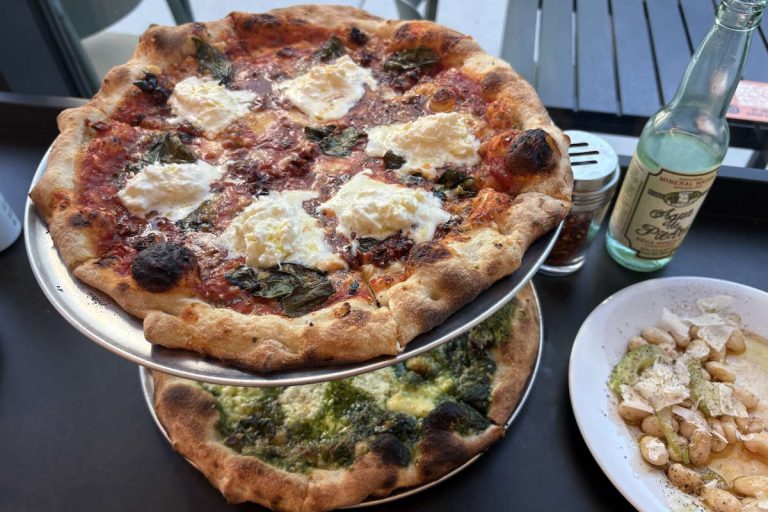
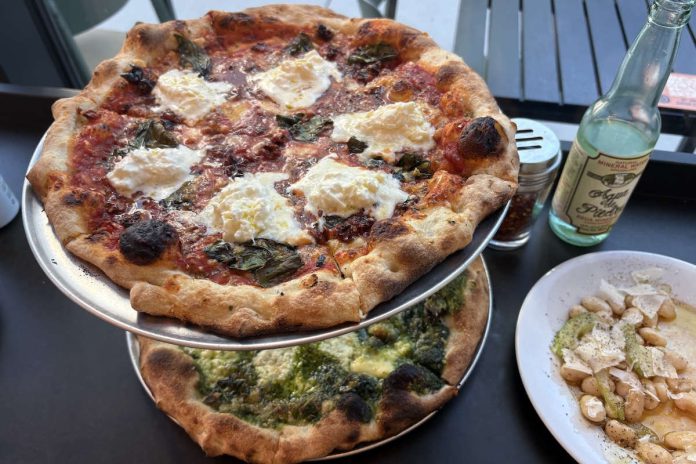
Sitting in one of the inside window seats at Flour + Water, we watched the Vespr lobby’s giant mobile shimmer in the sunlight. Directly in front of us on the ground level, we could see what the diners on the patio outside had ordered. In turn, three women passing by on the street were so entranced by the sight of our pizzas they decided to come inside to snoop around.

One of them broke away from her trio of gal pals to take a closer look at our pesto and burrata pizza pies. She told us she’d been to the San Francisco location of Flour + Water but hadn’t known about the Oakland opening. We encouraged her to come back to try the food. Meanwhile the hungry couple sitting next to us kept glancing over, covetously, at our chicken wings and a plate of white beans and celery.

The 24th Street iteration of Flour + Water’s first East Bay restaurant is more casual than the original one in the city. The new space nods to the idea of the coolest school cafeteria, one that’s been designed for a savvy, business-lunch crowd. Diners order at the counter then wait for the dishes to arrive as the smell of blistering pizza dough permeates the room. The long row of high windows suffuses the dining room with light. That sense of openness must be behind the communal call and response we experienced.

The restaurant already feels like it’s enlivening the neighborhood. Tarts de Feybesse is right across the way. Throughout lunch, pedestrians passed us and the bakery’s patrons who were leisurely indulging in éclairs and entremets. That corner of 24th Street provides a quiet thruway linking Whole Foods to downtown.

The Flour + Water group of restaurants is run by two co-chefs, Thomas McNaughton and Ryan Pollnow. When I had lunch there, Pollnow was aproned up on site and cooking in the kitchen. “Anytime you go through an opening everything’s new to everyone,” he said. During the first couple of months the team is paying “aggressive attention” to the details. “There are chefs working below Tom and I who we trust dearly. And our kitchen manager here, Felipe Cruz, will be overseeing this location 100% of his time.”

Once operations are settled, Pollnow will pull back and return to the flagship Flour + Water and Penny Roma. McNaughton, he said, has begun to take on more of a CEO role overseeing the strategic growth of the pizza shops. Right now there are three pizza shop locations, two in San Francisco and this latest one in Oakland.  

The East Bay opening happened, in part, after Flour + Water launched a frozen pizza line that sold well at the nearby Whole Foods. To this day, Pollnow noted, it’s still the No. 1 store for frozen pizza sales. “That gave us a bit of confidence, even though it’s a scary move to go outside of San Francisco with the Flour + Water brand,” he said. To create the Oakland menu, the team found inspiration in a couple of beloved and well-established East Bay brands.

The Cheese Board serves a green sauce with its celebrated pizzas. “In my opinion, the green sauce is a known thing in the pizza world,” Pollnow said. “I’ve seen other pizzerias serving it as a side dip for crust, and I love it.” A couple of years ago, some Flour + Water managers went on an East Bay pizza crawl. “It was the first time as a group that we all sat around and obsessed over how delicious the green sauce is.”

When they developed the recipe for the chicken wings, the team also believed it was a perfect dip for pizza crust and the wings. “I’ve been shopping at the Oaktown Spice Shop since I can remember. They’re super close, right on the lake,” Pollnow said. The chefs went through the process of sampling their products and landed on the “Grand Lake Shake,” the seasoning for the wings. “With the pizza shops going into different locations,” he added, “we always want to be mindful of where we are and to pay homage to that place.”

Flour + Water, open 11:30am to 10pm, Mon–Sat (until 9pm on Sun).271 24th St., Oakland. fwpizzashop.com

Viridian’s Red Envelope honors the Year of the Fire Horse

Many cocktail enthusiasts in the East Bay set their clocks for the month of February. They know they’re going to get something unique from Oakland’s Viridian for the Chinese Lunar New Year.

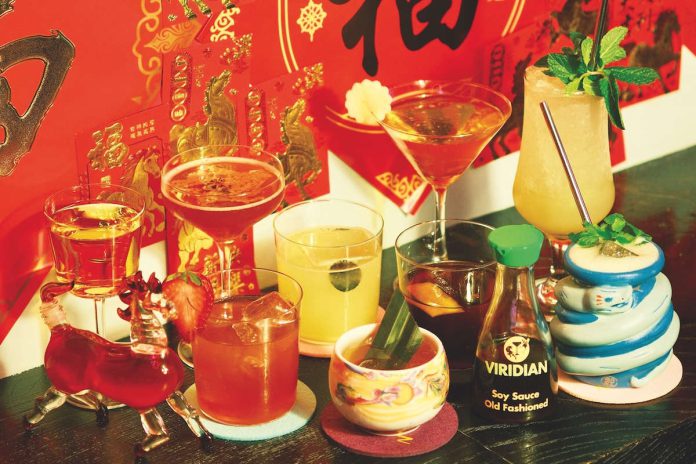
The famed Asian-American cocktail bar and restaurant returns with its annual series of pop-ups titled “Red Envelope,” which refers to a traditional monetary gift of cash in a red-and-gold envelope symbolizing a family’s wish for prosperity and good fortune. Those who visit Viridian this season will surely be able to share in some fortuitous offerings. What better way to celebrate than with an expertly crafted seasonal food and beverage menu? 

Behind the scenes, the preparation for such an ordeal is a labor of love that’s well worth the time. William Tsui, Viridian co-founder and bar director, leads a veteran team every year through three to four weeks of research and development, to get 14 brand-new cocktails dialed and ready to go.

Viridian patrons who’ve eaten around a traditional table during Lunar New Year will be able to identify ingredients used in these drinks as everyday food items found in Asian households. But for everyone else, the experience is the doorway to a whole new world of smells and flavors.

This menu takes well-known Asian ingredients to the next level. A perfect example combines Char Siu sauce (Korean BBQ sauce) and an Asian evergreen shrub called Osmanthus in the same drink. An herbal, deeply concentrated flavor profile awaits those who dare to experience something new.

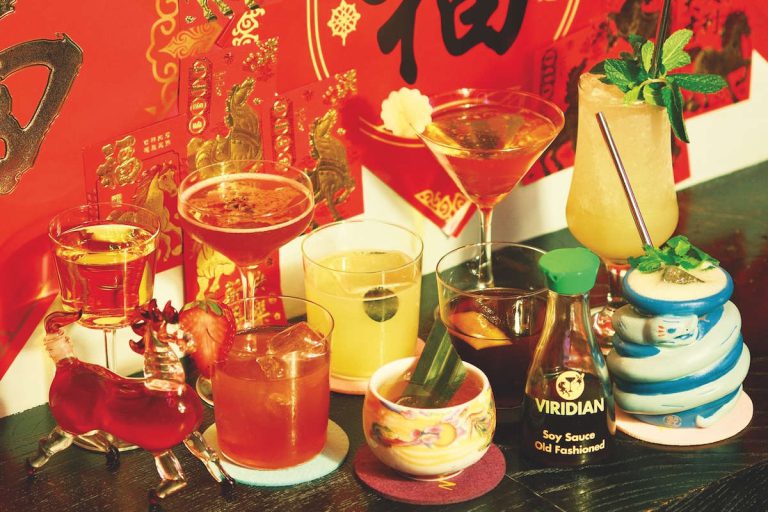
Earlier this month I spent an evening at Viridian. Enamored with the scene around me—a flurry of ornately traditional Lunar New Year lanterns, elaborate paper-mâché, twinkling light displays and a few 60-foot dragons—something caught my attention. One of the many talented bartenders poured a concoction from a soy sauce container into a guest’s glass.

“That can’t be what I think it is,” turned into, “There’s no way.” Using a black sugar liqueur from the island of Okinawa called Kokotu de Lequio, along with Kanosuke Single Malt Japanese Whiskey and—yep—soy sauce, Tsui and the team created an Old Fashioned like nothing I’d ever tasted, let alone heard of before.

“It’s fun to watch people’s reactions. They go from being tentative and stand-offish to pleasantly surprised,” said lead bartender Ken Kawachi. “This is really a highlight of our year, watching people enjoy a brainchild you’ve worked so hard on.”

Andrew Hori made a name for himself as the sous chef at the Michelin-starred, Healdsburg-based Single Thread. He continues that excellence as Viridian’s executive consulting chef. His menu for Red Envelope 2026 is filled with nostalgic Asian classics with a healthy dose of modern flair. He enhances the taste of classic Hong Kong Shrimp Toast by adding a Scallion & Gochugaru waffle into the mix, or augments a Thai Pomelo salad with trout that’s brined with a traditional Japanese ferment of shio koji.

In addition to Viridian’s own specialized menu, some of the most notable bar programs in California will take part in the festivities. Both Los Angeles’ Thunderbolt, ranked No. 24 on North America’s 50 Best Bars 2025 list, and 52 Remedies, in San Diego, will make pop-up appearances. If anyone’s ever felt the urge to take part in a Kei Lun Martial Arts Lion Dance while sipping on a wasabi melon cordial, they’d better get to Viridian quickly.

And I’m putting a reminder on my calendar for next year.

Red Envelope at Viridian, 2226 Broadway, Oakland. Open Wed-Sun, 5pm till late, now through March 1. redenvelopepopup.com

Free Will Astrology: Week of Feb. 18

0

ARIES (March 21-April 19): Saturn has entered Aries. I see this landmark shift as being potentially very good news for you. Between now and April 2028, you will have enhanced powers to channel your restless heart in constructive directions. I predict you will narrow down your multiple interests and devote yourself to a few resonant paths rather than scattering your intense energy. More than ever before, you can summon the determination to follow through on what you initiate. My Saturn-in-Aries prayer: May you be bold, even brazen, in identifying where you truly belong, and never settle for a half-certain fit.

TAURUS (April 20-May 20): I am issuing a Wow Advisory. Consider this your high-voltage wonder alert. Your future may offer you thrilling quests and epic exploits that could be unnerving to people who want you to remain the same as you have been. You will have a knack for stirring up liberating encounters with lavish pleasures and rich feelings that transform your brain chemistry. The rousing mysteries you attract into your sphere may send provocative ripples through your own imagination as well as your web of allies. Expect juicy plot twists. Be alert for portals opening in the middle of nowhere.

GEMINI (May 21-June 20): In Leonardo da Vinci’s notebooks, you find anatomical drawings next to flying machine designs, mathematical calculations alongside water flow observations and philosophical musings interrupted by grocery lists. He moved from painting to engineering to scientific observation as curiosity led him. Let’s make him your inspirational role model for now, Gemini. Disobey categories! Merge categories! Mix and match categories! Let’s assume that your eager mind will create expanded knowledge networks that prove valuable in unexpected ways. Let’s hypothesize that your cheerful rebellion against conventional ways of organizing reality will spawn energizing innovations in your beautiful, mysterious life.

CANCER (June 21-July 22): In falconry, there’s a practice called “weathering.” It involves regularly exposing trained birds to the wild elements so they don’t become too domesticated and lose their wildness. The falconer needs a partner, not a pet. Does that theme resonate, Cancerian? Is it possible that you have been too sheltered lately? Either by your own caution or by well-meaning people who think they’re protecting you? Let’s make sure you stay in touch with the fervent, untamed sides of your nature. How? You could expose yourself to an experience that scares you a little. Take a fun risk you’ve been rationalizing away. Invite touches of rowdiness into your life.

LEO (July 23-Aug. 22): The loudest noise in history? It was the 1883 volcanic eruption of Krakatoa in Indonesia, heard thousands of miles away. The pressure wave circled the Earth multiple times. I am predicting a benevolent version of a Krakatoa event for you in the coming months. Not literal loudness, but a shiny bright expression of such magnitude that it redefines your world and what people thought was possible from you. Can you be prepared for it? A little. You’ll be wise to cultivate visionary equanimity: a calm willingness to stay focused on the big picture. I predict your big boom will be challenging but ultimately magnificent and empowering.

VIRGO (Aug. 23-Sept. 22): Buddhism teaches about “near enemies”: qualities that may appear to be virtues but aren’t. For example, pity masquerades as compassion. Clingy attachment pretends to be love. Apathy and indifference pose as equanimity. In the coming weeks, Virgo, I hope you won’t get distracted by near enemies. Your assignment: Investigate whether any of your supposed virtues are actually near enemies. After you’ve done that, find out if any of your so-called negative emotions might harbor interesting powers you could tap into.

LIBRA (Sept. 23-Oct. 22): Many intelligent people think astrology is dangerous nonsense perpetrated by quacks. For any horoscope writer with an ego, this affront tends to be deflating. Like everyone else, we want to be appreciated. On the other hand, I have found that practicing an art that gets so much disdain has been mostly liberating. It’s impossible for me to get bloated with excess pride. I practice astrology for the joy it affords me, not to garner recognition. So in a backhanded way, a seemingly disheartening drawback serves as an energizing boon. My prediction is that you, Libra, will soon harvest an analogous turnabout. You will draw strength, even inspiration, from what may ostensibly appear to be a liability.

SCORPIO (Oct. 23-Nov. 21): Mycologist Paul Stamets claims mushrooms taught him to think in networks rather than hierarchies. He sees how everything feeds everything else through vast webs of underground filaments. This is Scorpio wisdom at its most scintillating: homing in on the hidden circuitry working below the surface; gauging the way nourishment is distributed incrementally through many collaborative interconnections; seeing the synergy between seemingly separate sources. I hope you will accentuate this mode of understanding in the coming weeks. The key to your soulful success and happiness will be in how well you map the mycelial-like networks, both in the world around you and in your inner depths. PS: For extra credit, study the invisible threads that link your obsessions to each other, your wounds to your gifts, and your rage to your tenderness.

SAGITTARIUS (Nov. 22-Dec. 21): The peregrine falcon dives at speeds exceeding 240 miles per hour, making it the fastest animal on Earth. But before the dive, there’s often a period of circling, scanning, and waiting. The spectacular descent is set up by the patient reconnaissance that precedes it. I believe you’re now in a phase similar to the falcon’s preparatory reconnaissance, Sagittarius. The quality of your eventual plunge will depend on how well you’re tracking your target now. Use this time to gather intelligence, not to second-guess your readiness. You’ll know when your aim is true.

CAPRICORN (Dec. 22-Jan. 19): There’s a certain miracle you could really use right now, Capricorn. But to attract it into your life would require a subtle and simple shift. In a related development, the revelation you need most is concealed in plain sight. To get these two goodies into your life, you shouldn’t make the error of seeking them in exotic locales. Ordinary events in the daily routine will bring you what you need: the miracle and the revelation that will change everything for the better.

AQUARIUS (Jan. 20-Feb. 18): Over the last 4,000 years, a host of things have been used as money in addition to precious metals and paper currency. Among them have been cows, seashells, cheese, tobacco, velvet, tulips, elephant tusks and huge stone wheels. I hope this poetic fact will inspire your imagination about financial matters. In the coming weeks, I expect you’ll be extra creative in drumming up new approaches to getting the cash you need. Here are questions to guide you. Which of your underused talents might be ready to boost your income? What undervalued gifts could you be more aggressive about giving? What neglected treasures or underutilized assets could you use to generate money?

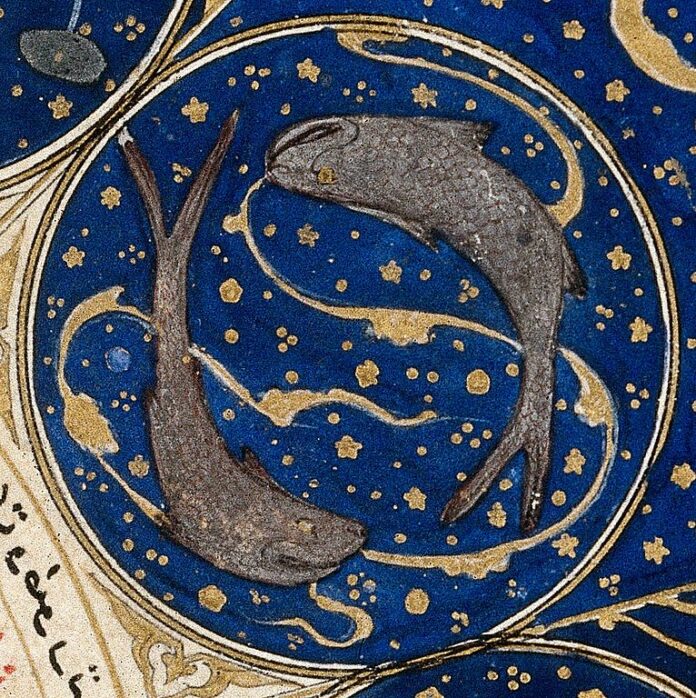
PISCES (Feb. 19-March 20): Big bright transitions are at hand: from thrashing around in the educational mire to celebrating your sweet escape; from wrangling with shadows and ghosts to greeting new allies; from messing around with interesting but confounding chaos to seizing fresh opportunities to shine and thrive. Hallelujah! What explains this exhilarating shift? The Season of Dazzling Self-Adoration is dawning for you Pisceans. In the weeks ahead, you will be inspired to embark on bold experiments in loving yourself with extra fervor and ingenuity.

Homework: What imperfect but pretty good part of your life deserves more of your love? Newsletter.FreeWillAstrology.com

The word we need

Here,  journalist and organizer Cincinnatus Hibbard shares the first chapter of his forthcoming book, ‘Love is The Answer,’ as part of a two-part series in our pages. —Editor

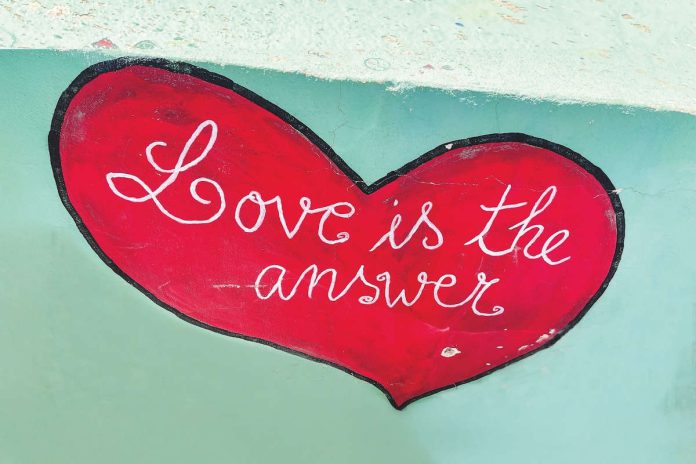
“ … Love … love is the answer—the solution … to everything.” The words were wrenched out of me. That inner critic who sat watch on my words was aghast. Suddenly I was ill at ease …

These were serious people I was sitting down with. Worldly people—Adults. And I was being hopelessly naive.

True, they had progressive leanings—but they were operators … heavyweights—such as the machine makes—keen animals, such as the jungle breeds. I had almost convinced them that I was a killer myself this hour and more. But then—for some damnable reason, I turned up my soft white underbelly and gave up the game by professing love … damn.

I had brought these two professionals together in a glass and steel corporate office so that they could meet each other. As a journalist and an organizer, this is what I do—I bring people together to help solve the problems of our community. And the problems these two brought both had broad social implications and vague affinities with each other.

Sitting to the left of me, drinking a matcha latte, was a regional figure. Her work and mission was a project to change the culture of consumption among middle-class consumers. Her method was educational—she taught awareness. She wanted people to shift their business from cheap Walmart and fast Amazon to local businesses promoting a slow culture of quality, ecology, and community. But people were stuck in their ways, frozen.

Sitting to the right of me, drinking black tea, was a national figure. He was an expert and consultant to the wealthy. His work and mission was to change the culture of work (and overwork) among executives. His clients were money mad, productive machines chasing empire and breakdown. Like addicts, they wanted to stop—but couldn’t. His methods were therapeutic. He wanted his clients to slow down, take time for family, reconnect with friends, rediscover hobbies, and build legacies of philanthropic giving.

As he spoke, he gave me pause. “Even the rich and the powerful are unhappy in this system,” I thought. “The winners” of “the game.” 

I sat between right and left with my double-shotted dirty chai, and between them we talked around and around the twin poles of the two issues. We talked long, with speed, fluency, urgency of cause, and intellectual aggression—spiraling up, up, into the blue sky like raptors, until, sighting the horizons, their problems seemed the problems of the world.

We spitballed. But all our solutions seemed to make these matters worse. I think we knew in our hearts that our “solutions” derived from the system itself, and partook of its brutality. It has been said that “you can’t dismantle the master’s house with the master’s tools.” And all our solutions amounted to more commands—more complexity, longer lists, more hurry, fear and shame, and burnout productivity—the fuels and the fire accelerating us into the slow motion train wreck of total crisis.

We were paralyzed. We, and the world itself, were now at an impasse. And with that, our over-caffeinated conversation stalled, and entered free fall.

It was at that moment, in the mounting pressure of nothing to say, that I had said it—the inexcusable thing. It just rose up inside of me—“Love is the answer.”

My words were received with shocked silence. And then, there was a sudden, unexpected softening—like a long exhalation. Slowly, and somewhat shyly, they agreed. Love was—somehow, some way—the solution. In the great paradox of love, these two heavies had been disarmed by my vulnerability.

We did not attempt to answer why or how love could be the answer to society’s problems—of frenzied over-work and hollow hyper-consumption. Really, we couldn’t. But somehow we knew it in our hearts, and our agreement was enough that day. The meeting ended shortly thereafter, floating away on a lightness of being …

Two Become One

In hindsight, I think things had been building to that moment. Perhaps deep intuition had guided me to bring those heavyweights together to bring it about—a catalyst. Making my statement there had in some sense committed me before my peers to pursue love as “the answer.” Truth be told, I had been thinking a lot about love—love as an alternative to our world, founded in fear. I had been dreaming about it—at the margins of my hectic life. 

WRITER Cincinnatus Hibbard believes that deep in our hearts everyone knows that love is the answer to fear, but few advocates of love can say why love is the answer, or how it applies. Love is vague and seemingly impractical. So Hibbard undertakes to define love and how it addresses itself to the problems of modernity and the present political crisis. (Photo by Loren Hansen)

Reading into the wisdom traditions, as best as I could tell there are three alternative ends in life—three goals, three drives, and three outcomes. The first is the most familiar, because it is our choice. We seek it. And its pursuit gives rise to our world-system. One can call it “status,” or one can call it “power.” But it is the control of money and people as safety. To lack power in this system is to be in danger. Thus we are driven toward the accumulation of power in pursuit of safety, whipped by fear. As only total control is total safety, power is a zero-sum game. We immediately come into conflict with each other. It gives rise to competition, violence, and exclusion—and thus to sexism, and racism, and nation set against nation. The world as we know it is born in fear.

You have only to define the emotional constructs drifting along the spectrum of fear to describe our lives within this system—anxiety, stress, dread, pessimism, cynicism, phobia—such as xenophobia (racism) and neophobia (conservatism), panic, PTSD, mania, paranoia, decision paralysis, nightmare, and terrorism.

Now for the two alternatives to fear/power. They are rare in this world—but they do exist—uneasily, because they are antithetical to fear/control, opposing it. Hypothetically, alternative worlds could be built around them. But they are not considered practical or serious. Perhaps because they are so hard to define—they’re vague, nebulous, numinous. 

The alternatives to fear are love, and the mystical experience. Love is the end-all-be-all of lovers, the pursuit of poets, and the naive—the child-like. And, the mystical experience is the one true goal of the spiritual, some religionists, and the mystics—those wild, poetical, lovers of God.

Power/fear, love, and the mystical experience are our choice of three. But perhaps it is only a choice of one—the one that is workable and practical. I myself chose the pursuit of status (fear).

I still pursued love and the mystical experience, but academically—in library cross references sprawling across continents and millennia. There were partial definitions—fragments of pieces, vague and incomplete. Although I pursued these two alternatives separately, along parallel lines, I began to see that there were overlaps in the two definitions—commonalities, and I dare say affinities …

For example, “otherworldliness” was a quality-characteristic shared both by love and the mystical experience—as was “timelessness”—the suspension of all madly ticking clocks and countdowns. “Love is the answer,” said my heart.

“Euphoria” or heavenly “bliss” was another quality common to love and the mystical experience—as was “healing.” Either act as a kind of medicine to our inflamed, cortisol-drenched bodies.

But most provocative of all was a characteristic central to the definition of both love and the beatific experience—“ego death,” and the emergence of “soul”—experienced as a kind of liberation. That too seemed medicinal—the medicine to treat our ego-dominant world. Indeed, each quality held in common seemed to address the issues of the world with a profound and penetrating directness. “Love is the answer,” said my head.

I pursued this research project with a detached intellectual rigor. So it embarrassed me to admit to myself that these incomplete definitions of love and the mystical experience seemed to yearn toward each other … almost as lovers yearn …

And there the project stood for some time, waiting.

Until my fool utterance—that catalytic spark compelling me to explain to all my peers why love was in fact “the answer.” I came home from the meeting all in a passion. I was going to fit the full fragmentary definitions of love and the mystical experience together, as one …

And as I did so, I discovered … that they completed each other.

It is hard for me to relate the raw and ecstatic emotional power that was released in that epiphany, but it contained within it the simple mechanism of a key sliding into a lock. 

Something opened—the barred gate of our collective impasse. The unified definition was still “love”—but love in its aspect transformed. It was love surrounded by a nimbus, a halo—an aura of spiritual power. Like a sacred heart.

In what I had, love was at long last, definitively, “The Answer.” I could prove it. I looked up from my writing blinking tears of joy. Life had become, in that moment, simple. Decision became simple. Action became simple. Ours was a choice … between love and fear.

Part Two runs next week—read it here. Learn more at loveistheanswerbook.substack.com.

Nimsins reflects on resilience

0

Oakland rappers continue to uphold a longstanding tradition of hip-hop that prioritizes community accountability over individual fame. This vital local scene persists even as streaming metrics and corporate influence reshape the genre, often pushing grassroots voices to the margins.

In the 1990s, artists commonly acknowledged incarcerated political prisoners or paid tribute to friends and family living behind bars. These stories feel unfashionable today and rarely translate into algorithm-friendly soundtracks.

East Oakland rapper Nimsins continues that tradition through his music, most recently with Black August 2. The album takes its name from Black August, an annual observance honoring imprisoned freedom fighters and political prisoners connected to the Black liberation struggle. The tradition is often marked by fasting, physical discipline and political study.

The project was recorded during a month-long fast from social media, along with daily fasting from sunrise to sunset. During that period, Nimsins focused almost exclusively on writing. The discipline allowed him to slow down and reflect on his place in the world.

“This album is what was on my mind when I was abstaining and moving through life,” he said. “That’s what I’m trying to leave with people.”

Nimsins’ connection to Oakland runs deep. At the age of two, he lost a kidney to a stray bullet while playing outside his grandmother’s house. Growing up, he was told the experience marked him with a sense of purpose.

“People always said I had a gift, like there was something I was supposed to do,” he said.

His teenage pursuits included graffiti, skateboarding and poetry. He described himself as an angry kid who struggled to process his emotions until writing offered a release. Over time, poetry evolved into hip-hop.

“I used to have a lot of anger problems,” he said. “Poetry helped me, and eventually it turned into rap.”

By the age of 15, Nimsins began recording music on a desktop computer and submitting songs to TeamBackPack. He studied Seagram and Richie Rich alongside Lil Wayne. Later he became more invested in freestyle rap and began participating in cyphers at First Fridays in downtown Oakland.

He attended local high schools before earning his diploma through independent study. During that rebellious period he also began engaging deeply with Black empowerment literature and questioning the institutions shaping his life and community.

After several years navigating the gig economy, he enrolled in college as a first-generation student. He moved through the Peralta Colleges and transferred to San Jose State, earning a degree in anthropology. That academic grounding surfaces throughout his discography and on Black August 2, where references to Frantz Fanon and bell hooks function less as name-drops and more as guiding influences.

Musically, the album finds Nimsins in a reflective pocket. He assembled a loose collective of producers through group texts, sharing sample ideas inspired by records he encountered at local shops. The result is a contemplative project that emphasizes observation over performance.

On “Cuz Doin Time,” he reflects on a conversation with a cousin who converted to Islam. “No Pape” features Nimsins moving confidently over an ImagineBeatz production, asserting a sense of resilience shaped by the literature he encountered as a teenager. On “You Know The Rest” he weaves together portraits of everyday realities in Oakland. The song touches on failed hoop dreams, domestic violence and addiction.

Black August 2 offers an on-the-ground view of life for people navigating Oakland from the margins. The story is told by a perceptive artist who uses music to make sense of the world around him.

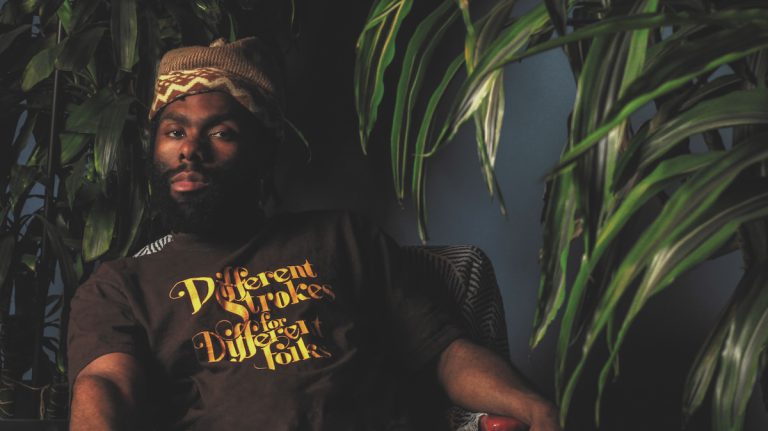
A survivor of violent crime, Nimsins uses the music to push back against the idea that Black people are supposed to move and think one way. He wants Black people, especially in Oakland, to feel comfortable being themselves. “I like seeing Black people do different things,” he said. “You can be from the hood and still have your own interests. The world doesn’t always make space for that, so that’s what I’m trying to push.”

Back in time: California confronts Trump’s third-term talk

Back in time: California confronts Trump’s third-term talk
Could President Donald Trump be setting himself up to do what Franklin D. Roosevelt did in 1941, by serving a third term as president? While some folks pay little mind to Trump’s occasional hints of staying in office longer, California Sen. Tom Umberg isn’t leaving it to chance. The 22nd Amendment, added to the United States Constitution in 1951, states...

Revealing the nature of love

Revealing the nature of love
Here, journalist and organizer Cincinnatus Hibbard offers the second of two sneak peeks at elements of his forthcoming book, ‘Love is The Answer.’ Part one of the previously published piece—headlined ‘The Word We Need’ and available on our website—ends with a choice between love and fear, in this life and in the present political moment. In the past, as...

My Fair Lad(y) meets BDSM

My Fair Lad(y) meets BDSM
After a brief separation dedicated to soul-searching, Eliza Doolittle returns to Professor Henry Higgins’ house. He greets her with a singular question that encapsulates the nature of their relationship—“Eliza, where the devil are my slippers?” The 1964 film, My Fair Lady, abruptly ends there. In some versions of the staged musical, the cockney flower girl throws the bloomin’ slippers...

Buzzed Lightbeer zooms into 2026

Buzzed Lightbeer zooms into 2026
The buzz is growing about Buzzed Lightbeer. The San Francisco band hit last year hard by having an admirable poll position at Psyched Radio's Tenderloin Music Festival and opening for a sold-out Shannon and the Clams show on Halloween. This year Gabbi Araujo (bassist, vocalist), Ronnie Hillix (guitarist, vocalist) and Michael Negrete (drummer) are buzzing with some headlining shows—most...

Social Eyes: Week of Feb. 19-25

Social Eyes: Week of Feb. 19-25
This week's calendar picks (aka, Social Eyes: Week of Feb. 19-25) features Jai Uttal & the Pagan Love Orchestra, Nicole McCabe, 'Cinema Therapy,' 'Once,' Liberty Ellman Trio, Fatboi Sharif, 'Disenchanted! The Hit Musical Comedy,' Marcus Shelby Sextet, A.I.M., and Artemas.

Flour + Water entices casual diners in the East Bay

Flour + Water entices casual diners in the East Bay
Sitting in one of the inside window seats at Flour + Water, we watched the Vespr lobby’s giant mobile shimmer in the sunlight. Directly in front of us on the ground level, we could see what the diners on the patio outside had ordered. In turn, three women passing by on the street were so entranced by the sight...

Viridian’s Red Envelope honors the Year of the Fire Horse

Viridian's Red Envelope honors the Year of the Fire Horse
Many cocktail enthusiasts in the East Bay set their clocks for the month of February. They know they’re going to get something unique from Oakland’s Viridian for the Chinese Lunar New Year. The famed Asian-American cocktail bar and restaurant returns with its annual series of pop-ups titled “Red Envelope,” which refers to a traditional monetary gift of cash in a...

Free Will Astrology: Week of Feb. 18

Free Will Astrology: Week of Feb. 18
It's eclipse season! What undervalued gifts could you be more aggressive about giving?

The word we need

The word we need
Here,  journalist and organizer Cincinnatus Hibbard shares the first chapter of his forthcoming book, ‘Love is The Answer,’ as part of a two-part series in our pages. —Editor “ … Love … love is the answer—the solution … to everything.” The words were wrenched out of me. That inner critic who sat watch on my words was aghast. Suddenly I...

Nimsins reflects on resilience

Nimsins reflects on resilience
Oakland rappers continue to uphold a longstanding tradition of hip-hop that prioritizes community accountability over individual fame. This vital local scene persists even as streaming metrics and corporate influence reshape the genre, often pushing grassroots voices to the margins. In the 1990s, artists commonly acknowledged incarcerated political prisoners or paid tribute to friends and family living behind bars. These stories...
19,045FansLike
17,709FollowersFollow
61,790FollowersFollow