
Berkeley officials are studying a plan to improve circulation in the
stagnant lagoons of Aquatic Park. They say the stale water kills fish,
increases algae growth, and gives the park a distinctive odor that you
can enjoy when you’re speeding past on I-80. But environmentalists fear
the plan will increase storm water runoff, killing fish and degrading
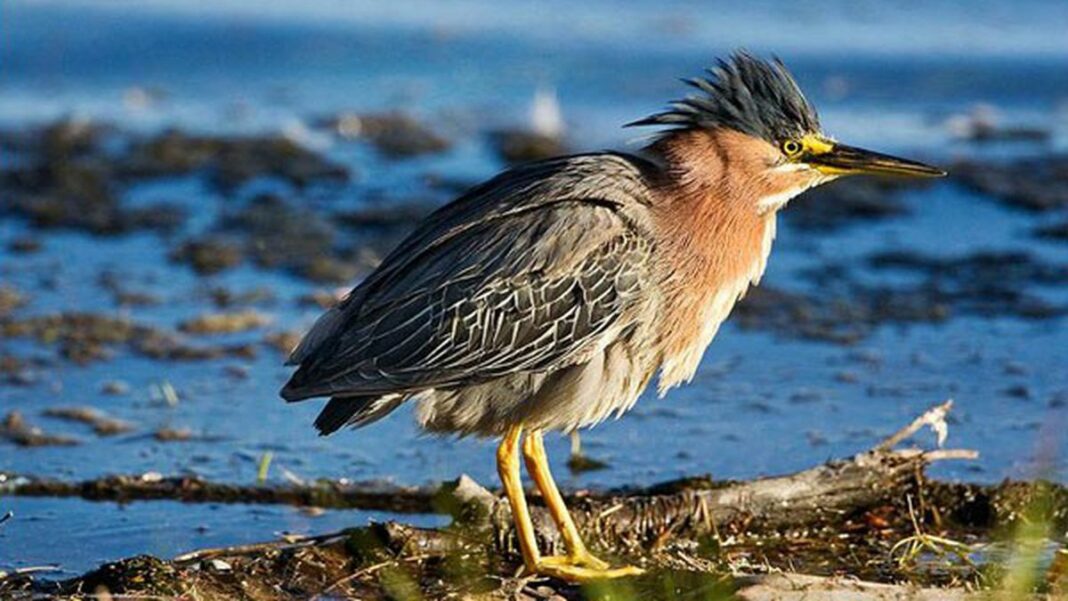
the environment in one of the Bay Area’s most important waterbird
habitats.
Aquatic Park is Berkeley’s largest city park, stretching along the
western shoreline from Ashby Avenue to one block shy of University
Avenue. The majority of the park is underwater, consisting of three
man-made lagoons cut off from the bay eighty years ago by the
construction of what is now the freeway. Their only outlets to the bay
are a few aging and badly designed tide tubes that run under the
freeway.
The lagoons host fish and invertebrates that feed a variety of
visiting or permanent waterbirds. The park is one of the nicest places
to bird-watch in Berkeley, and is a popular destination for kayaking,
biking, and disc golf. But when it rains, the shoreline park becomes
the last stop on the way to the bay for a hefty portion of the city’s
storm water runoff, which carries with it chemical pollutants as well
as trash.
So Berkeley has begun an ambitious year-long project to look at
possible changes to the park. Because a major component of the plan
will likely include changes to the park’s two main storm drains,
elected officials and environmentalists talk about the plan in terms of
moving more storm water off city streets. These drains currently carry
the city’s runoff to the bay and dump storm water into the lagoons when
they get too full. Meanwhile, the project’s official goals don’t
mention flood control and are restoring the natural habitat, enhancing
the park’s appearance, and improving water quality by increasing
circulation with the bay.
But critics believe the costs of improved tidal circulation outweigh
the benefits. “Almost any project that could be used to increase the
tidal exchange with the bay could also be used to dump more storm water
into the lagoons,” said Golden Gate Audubon Society board member Phil
Price, a former member of the city’s Parks and Recreation
Commission.
The flooding in West Berkeley is certainly serious. In December
2005, a so-called fifty-year flood occurred at high tide. Berkeley’s
ninety-year-old sewer and storm drain system was unable to handle the
load, and the damage to homes and businesses just uphill of Aquatic
Park was considerable. Helen Meyer of Meyer Sound on San Pablo watched
in horror as the street turned into a river. The water came up over the
sidewalk and through the front door of the building. It flowed down the
halls of the state-of-the-art sound lab, into the offices, and out the
back door. The floodwater included raw sewage and cleaning up the mess
took days.
Steven Goldin also fought a daylong losing battle with the
floodwater at two of his buildings near the park. Damages to his and
his tenants’ property were about $130,000, not including labor. Two
years later, another storm almost did the same amount of damage, but
Goldin was ready. With an eight-man crew he hired working alongside
city employees, they were able to hold back most of the water.
So flood control is a high priority for some. “I don’t want to see
any storm water go into the lagoon, but if I have a choice between
homes flooding in West Berkeley and businesses flooding in West
Berkeley and some water going into the lagoon, to me that’s a decision
that we have to make in order to preserve and save the homes of West
Berkeley,” said Darryl Moore, the Berkeley councilman who represents
the district uphill of the park.
But some environmentalists view runoff as a threat to the health of
Aquatic Park. “Floodwaters bring vast amounts of trash, which choke the
productive shallows where egrets and herons feed,” said Mark Liolios, a
cofounder of the group Aquatic Park EGRET, which organizes volunteers
to plant trees, clean up garbage, and maintain vegetation in the park
in coordination with the city. “Berkeley’s runoff contains elevated
levels of four toxic metals.” Even clean storm water can kill the
saltwater fish if there’s too much of it.
Eighteen years ago, Liolios helped found EGRET — which stands
for Environmental Greening, Restoration, and Education Team — to
care for the native plants and trees along the shoreline of the park
for the benefit of the waterbirds and the people who like to watch
them. The group has been working to prevent the city from increasing
the amount of storm water that spills into the lagoons. He believes
widening the two main storm drains at either end of the park would
result in more storm water entering the lagoons and destroying bird and
fish habitat. “They will likely use it for storm water discharge to the
maximum extent feasible,” he said. He insists that the city has been
pushing to dump more of its storm water into the park’s lagoons for
more than a decade.
And Liolios is not alone. “The proposal to widen the discharge
outlets from the two storm drains that bracket the park is problematic
and controversial, at best,” reads a letter sent to the city council
and the mayor, signed by Liolios as well as Norman La Force, Chair of
the San Francisco Bay Chapter of the Sierra Club, and Patricia Vaughan
Jones of Citizens for East Shore Parks. “At worst, if these outlets are
widened, toxic pollutants will be piped into the city’s premier
migratory waterbird habitat during the season the birds are in
residence.”
But city employees insist that environmentalists are
mischaracterizing the plan. They say their goal is to improve tidal
circulation between the lagoons of the park and the bay. Under existing
conditions, it takes sixteen days for all of the water in the park to
cycle out into the bay, which is too slow for a healthy aquatic
environment, according to the hydrology expert hired by the city. This
slow tidal exchange gets even worse after flooding from a so-called
hundred-year storm, when it’s estimated that it would take more than 48
days for all the storm water to make its way out of the park. Part of
the plan the city is considering would make this tidal exchange about
four times faster.
“It is highly likely that this will improve the bird habitat by
improving the circulation and the oxygen content — improving the
food source, not only the fish but the insect food source,” said Parks
Superintendent Sue Ferrera. “This really could be a big benefit to the
habitat in this park, and these are things we’ll know better as this
process goes forward and we have studies that will determine this.” The
city has begun to study all of the different options under the plan,
which won’t be completed for another year.
“This is about trust,” added William Rogers, Berkeley’s director of
parks, recreation, and waterfront. “My understanding about what the
environmentalists’ concerns are is that they don’t trust the city, and
their belief is that if we have the ability to control how much storm
water goes into the lagoon, then we will choose to have more storm
water go into the lagoon rather then less. … Frankly, from my
perspective, if we have the ability to control the amount of storm
water that goes into the lagoon, we’re actually in a better position
because [part of the system] right now is broken and we can’t control
what happens.”
Rogers admitted that the project could result in more storm water in
the lagoons, but he emphasized that when it pours in Berkeley the water
already ends up in Aquatic Park. It is, after all, downhill from about
half of the city, and Rogers says the situation would be much improved
if the project can in fact speed up tidal circulation with the bay. “To
the extent that we can get water out of the lagoon more quickly, then
that is much better for the ecosystem in Aquatic Park,” he said.