
Glimpsing makeshift white crosses planted on roadsides, most of us
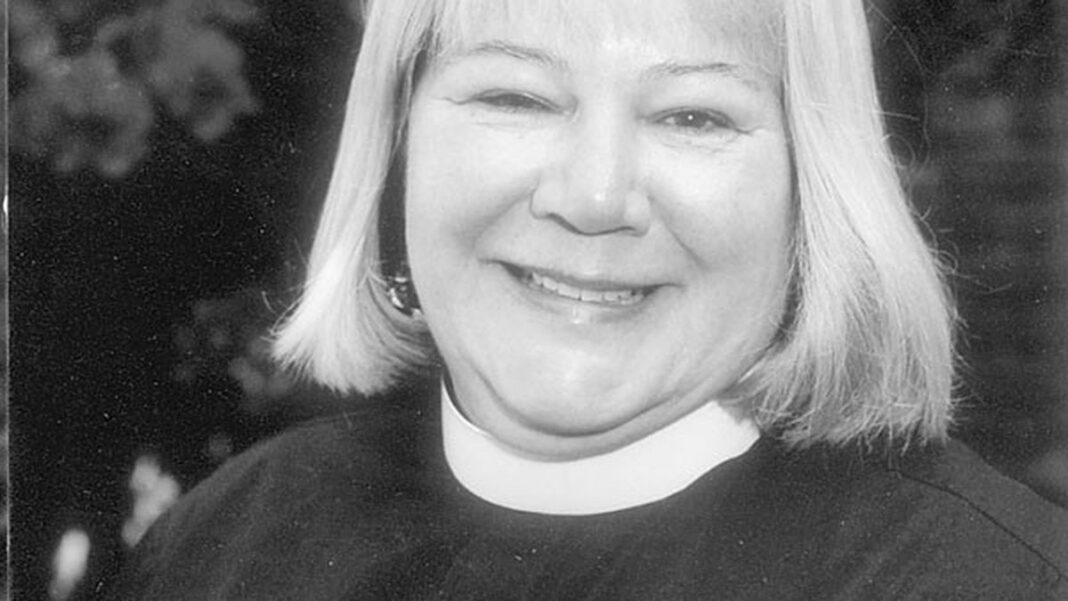
think, fleetingly: How sad. But for Graduate Theological Union
professor and Episcopal priest Lizette Larson-Miller, they’re a
formal field of study.
“I noticed those white crosses — they do always tug at
the heart — then began stopping on the roadside to read and see,
and then began wondering what people thought they were doing as they
built them, engaged with them, left things there, and gathered around
them,” says Larson-Miller, whose October 21 lecture, “Places for the
Dead,” is part of Grace North Church‘s (2138 Cedar St.,
Berkeley) Fond Farewell Speakers Series — which is, in turn, part
of a two-month examination of death and dying that culminates in a
November 7 Green Funeral Fair.
Berkeley illustrator Ann Arnold, a Grace North parishioner,
originally wanted to stage a wedding fair, but was convinced by friends
that a funeral fair could be more useful and even more fun. She asked
writer Liz O’Connell-Gates to organize it. The idea appealed to
O’Connell-Gates, in whose native Ireland cemeteries and the dead are
ever-present parts of quotidian life. She quickly set about signing up
requiem singers, a shroudmaker, an eco-casketmaker, a Day of the Dead
expert, an estate planner, a stonecarver, a UC Berkeley archaeologist,
the Mitford Institute’s Karen Leonard, Spirit Rock Meditation Center
cofounder James Baraz, members of Kehilla Synagogue’s burial society,
and other participants.
“My interest in the dead and in the sick is closely related to my
interest in sacred space,” says Larson-Miller, who is Dean of the
Chapel at GTU. “One of the primary hermeneutics of naming a space
sacred is the presence of the dead.” Studying sickness-and-death rites
throughout history, she believes that “the neat, clean, and body-free
funeral has been one of the biggest detriments to a healthy cultural
ability to deal with death in the past century,” because “the ability
to face the reality of death is diminished when there is no reminder”:
that is, no corpse, no visits to the site of death or the remains’
lodging-place.
“The disappearance of mourning rituals that allow people temporal
space in which to grow into a changed life” are another modern problem,
she says. “The good news is that, especially since 9/11, this seems to
be changing in the United States. From a Christian perspective, I think
the lack is an overcapitulation to culture, particularly the inability
to face death,” Larson-Miller explains. “Facing the death of another is
also facing one’s own death: a double challenge. Again and again,
obituaries … are pointing to a ‘celebration of life’ which looks back
at the life of the dead person, rather than forward to their ongoing
life in eternity. Christian funerals are always threefold: praise of
God, comfort of the mourners, and commendation of the dead.” We’re
ignoring the latter these days, she says: Ideally, “the funeral also
does something for the deceased, not just for the living.” 7 p.m., $10.
GraceNorthChurch.org