
When the most recent group of MacArthur Fellows was announced in October, three recipients of the “genius grants” were from the Bay Area: Oakland novelist Tommy Orange, Stanford assistant professor of chemical engineering William Tarpeh, and UC Berkeley associate professor in the Herbert Wertheim School of Optometry and Vision Science Teresa Puthussery.
One of the unusual aspects of the MacArthur Fellowships is that recipients are not notified in advance that they have been nominated. According to the MacArthur Foundation: “A pool of peers from various fields nominates individuals to be fellows. According to the award’s requirements, there are three field categories: exceptional creativity, promise for significant future advances based on a track record of notable accomplishments, and potential for the fellowship to facilitate subsequent creative work.”
East Bay Express spoke to Orange and Tarpeh about the $800,000 awards, administered over five years, and what they mean for their work.
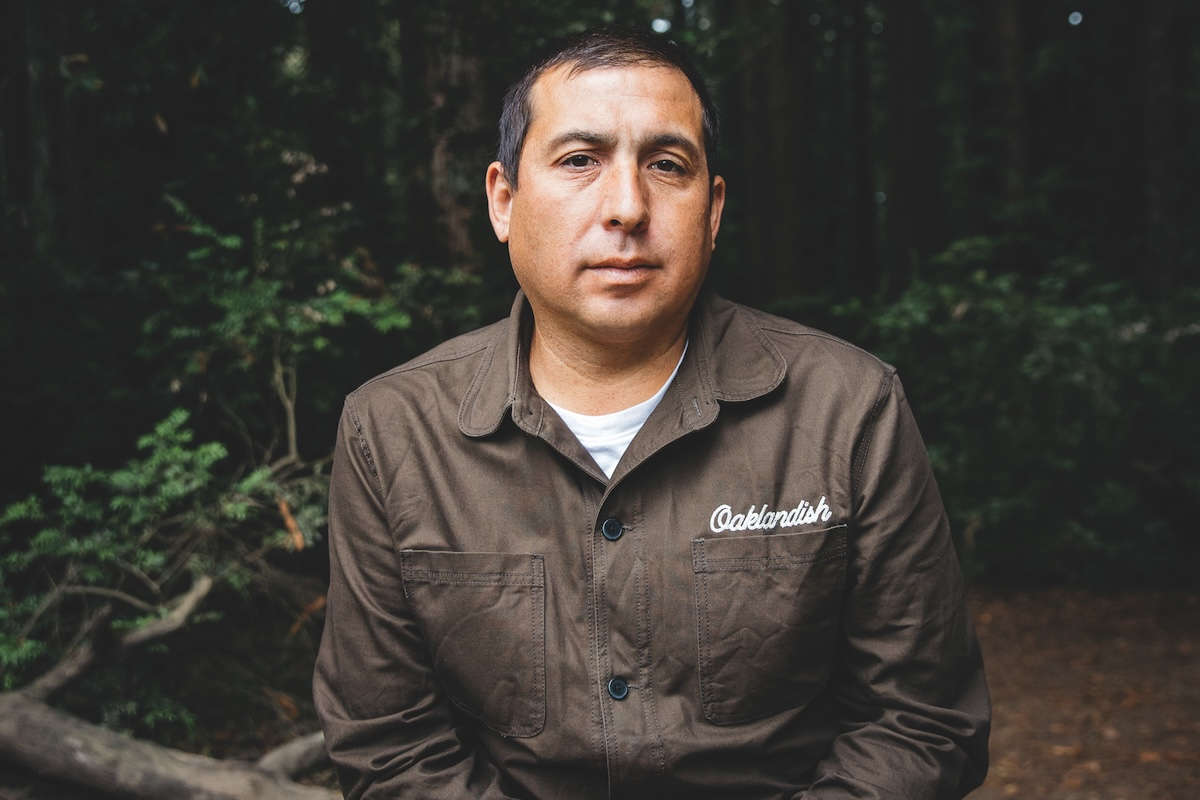
Tommy Orange’s first novel, There There, about an Oakland Native American family’s struggles and solidarity, was a finalist for the 2019 Pulitzer Award and won the 2019 PEN/Hemingway Award. His prequel/sequel, Wandering Star, was longlisted for the 2024 Booker Prize.
“They tricked me!” Orange chuckled when asked about his MacArthur notification. He was asked to do a phone call about someone he knew who was being considered for the fellowship. “And then they dropped the news!”
He’ll use part of his fellowship money as he finishes his third novel. He is currently working on another draft and expects to be finished by the end of the year. This book, though it features Native characters and takes place in Oakland, is not connected to the first two, he said.
The fellowship will also be of help with a film project that may be greenlighted soon, he said. His concern about the impact AI may have on creative projects is compelling him to start many new projects. “I think we have about five years [before the impact is fully felt],” he said, and as that is the time frame of the fellowship, the two things are connected in his plans.
At this point in his career he could live anywhere, but the Oakland-born author said, “I love Oakland—its diversity … Oakland has a lot to give to its people.”
In John Freeman’s recent book, California Rewritten, Freeman refers to There There as “sonically rich.”
Orange noted that he likes to hole up in a hotel—his favorite was the now-closed Waterfront in Jack London Square—and read his drafts aloud, over and over. “The way I write and think about sentences has to do with sound,” he said. He is concerned that the popularity of recorded books is causing people to lose their textural relationship to story. “Storytelling is all oral,” he said.
In the video he filmed for the MacArthur Foundation, he refers to thinking about characters’ “nuance and specificity.” Asked to elaborate, he said, “You start out having a general idea of something … then get more specific. It’s not weirdness for the sake of weirdness. [Showing a character’s vulnerability] draws people in.”
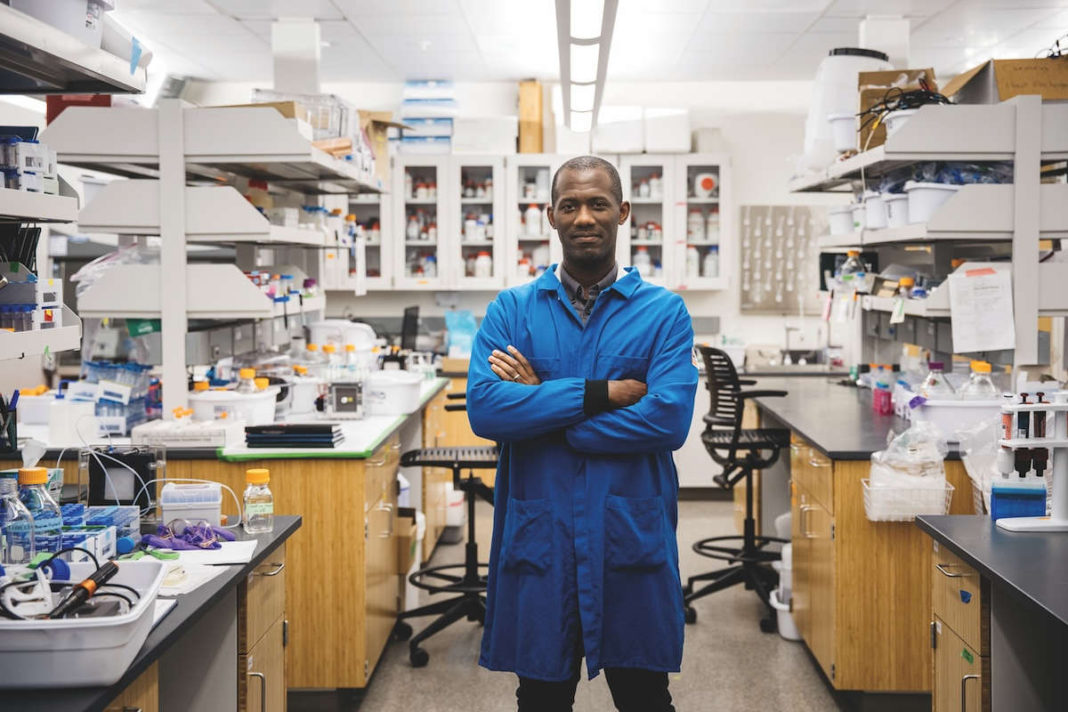
MacArthur Fellow William Tarpeh’s passion is developing cost-effective technologies for recovering valuable resources from wastewater, primarily nitrogen, sulfur and phosphorus. These resources can then be converted into chemicals and used in fertilizers, household products and industry. The assistant professor of chemical engineering at Stanford is focused on the uses of these technologies in places such as under-resourced and poor communities in Africa and rural Alabama.
Tarpeh was also “pranked” initially by the fellowship administrators. “They emailed me first, saying they were thinking of giving grants in my area,” he said. When he agreed to a phone call, the caller asked, “Are you alone?” before revealing that Tarpeh was actually the recipient of the award.
He is still deciding how to use the funds, but projects in Alabama and Africa that were interrupted first by Covid and recently by federal government cutbacks will likely be reinvigorated. For example, according to Stanford sources, the Alabama project is linked to environmental justice. Tarpeh is studying problems with failing septic tanks, particularly in low-income Black communities, to see if some of his lab’s processes might be a solution.
Tarpeh’s video on the MacArthur site shows him describing his lab’s work as “electric chemical wastewater refining.” The concept is a “closed loop. We take things from the environment, use them as many times as possible, and then discharge as little as possible to the environment,” he said.
Tarpeh said he is humbled to follow in the footsteps of 1995 MacArthur Fellow Bryan Stevenson, the American lawyer and founder of the Equal Justice Initiative, who serves as an inspiration to him.
Although Tarpeh is a Washington, D.C., native, he earned his master’s and doctoral degrees in environmental engineering at UC Berkeley and, as he said, “Almost all of my adult life has been spent in the Bay Area.” It was as a Berkeley grad student, he said, that he began tying engineering to social programs, and found the support to try a different path in his field. He passes his concepts on to the students he mentors at Stanford.
In his video, he said, “I would love it if we could get to a future where the concept of wastewater is obsolete.”
The third Bay Area MacArthur Fellow, Teresa Puthussery, is a neurobiologist and optometrist at UC Berkeley, whose research is devoted to advances in the early detection of ocular neuropathies like glaucoma, which remain undetectable until the later stages of the disease. Although she was not available for an interview, in her MacArthur video she said, “I hope in my lifetime we can see some of these treatments for these blinding diseases reach the clinic, and improve the quality of life for our patients.”










Here’s a little bit more about Teresa Puthussery https://vcresearch.berkeley.edu/news/vision-scientist-teresa-puthussery-receives-macarthur-genius-award