
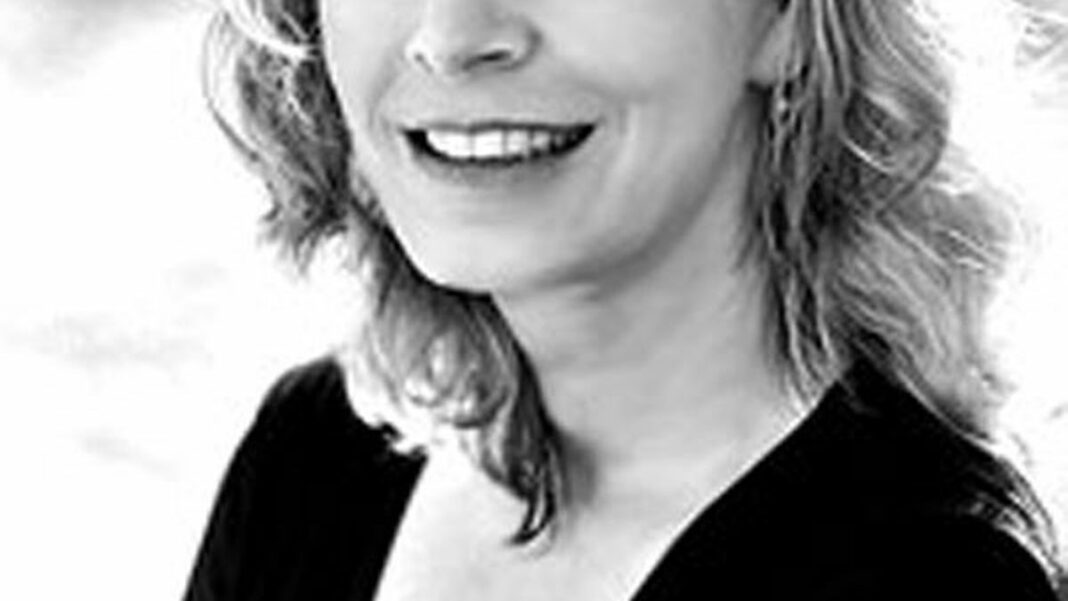
In Christi Phillips’ 2007 novel The Rosetti Letter,
modern-day Ph.D candidate Claire Donovan finds romance and intrigue in
Venice, where she’s researching her dissertation on a mysterious
courtesan who penned an urgent secret missive to the Venetian Council
warning of a Spanish plot to overthrow the Republic in 1618. Claire
Donovan and the 17th century resurface in that novel’s new sequel,
The Devlin Diary, which Phillips discusses at A Great Good
Place for Books (6120 La Salle Ave., Oakland) on Thursday, August
6. In this book, Claire — now teaching history at Cambridge
— probes the links between a colleague’s death and the
tangled travails of Hannah Devlin, personal physician to the mistress
of King Charles II in fire- and plague-ravaged London.
Although Phillips has always been an avid reader, given to devouring
the entire collected works of authors she admires, it was historical
fiction that made the strongest early impression. While reading Laura
Ingalls Wilder’s “Little House” series at age nine or ten, “I knew I
wanted to be a writer,” she reflects now. Her favorites include a wide
range of authors including Madeleine L’Engle, Evelyn Waugh, and fellow
Bay Area residents Beverly Cleary and Michael Chabon — but the
one book she tried and failed to finish, time and again, has been
Fyodor Dostoyevsky’s The Brothers Karamazov.
Currently she’s working on a third novel, set in 17th-century
France. But, as is true for so many novelists, fiction was not her
first writing gig. In the early 1990s, Phillips worked at Mosfilm, the
Russian film studio: “At that time it was still the Soviet Union.
Moscow was suffering from one of its worst-ever food shortages, and
Gorbachev was about to be toppled from power.” Her job was to compose
synopses “of what were considered to be the hundred best films in the
extensive Mosfilm library,” she recalls, “which included such classics
as The Battleship Potemkin, Andrei Rublov, and Solaris.
When it was first proposed to me, it seemed like a relatively easy job”
— except that Phillips didn’t speak Russian. The films
weren’t subtitled. A translator accompanied her to the screening room
every day.
Considering “the lack of food, the ready availability of Russian
vodka and Georgian brandy, and this steady diet of mortally depressing
Russian films about punishments and crimes,” Phillips felt “as near to
comatose as it’s possible to be … without actually being in a
hospital bed.” What could be worse? Well … the day came when she sat
down to watch the four-hour film version of The Brothers
Karamazov. During its second reel, her translator gave up —
because, he lamented, the screenplay’s language was too arcane and
philosophical. Nor would he summarize the whirlwind plot.
For Phillips, history was repeating itself. The saga of Ivan,
Dmitri, and Alyosha “had defeated me again.” 7 p.m., free. GGPBooks.com