
FOLLOW US
Mapping the Cybernetic Supernode
Techie Blood
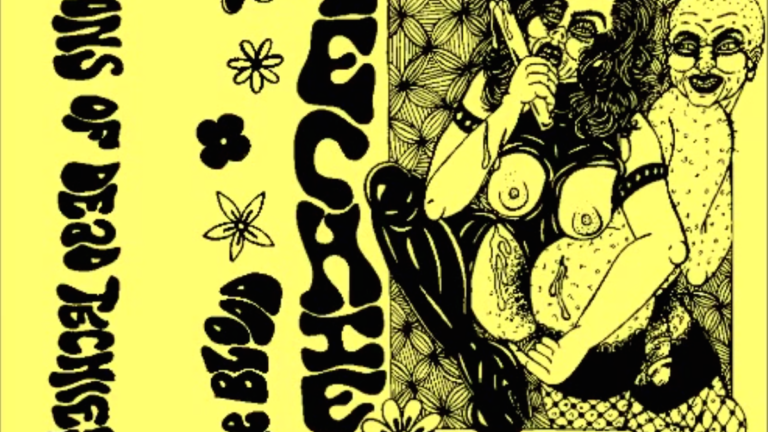
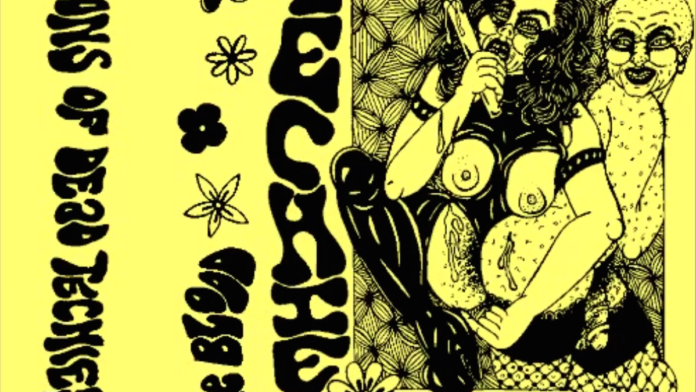
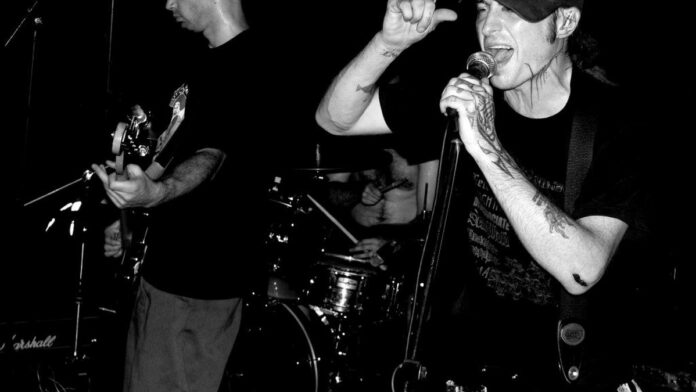
There’s little available information about Techie Blood, the new hardcore band that features members of Stressors and Cudgel, other than its abrasive, seven-minute mixtape, Neighborhood Watch #12 aka Millions of Dead Techies. The short recording was uploaded to a mysterious YouTube channel called Guy Fieri Official in August, though the account does not appear to belong to the bleach blond, hedgehog-haired celebrity chef. Techie Blood’s music is punchy, fast, and violent, with distorted, steely instrumentation that culminates in a barrage of noise. Though Neighborhood Watch #12 sounds mechanized and industrial, it ends with a washed-out, distorted beat that strangely evokes R&B. Techie Blood’s extreme name and aesthetic resonates with the anti-gentrification current in the Bay Area’s rock scene, with many bands reacting to the region’s skyrocketing cost of living with aggressive, angry music that departs from the garage-pop of years past. The group performs with Seattle band Lysol and Oakland band The Light on November 28 at 1-2-3-4 Go! Records.
Feels IV
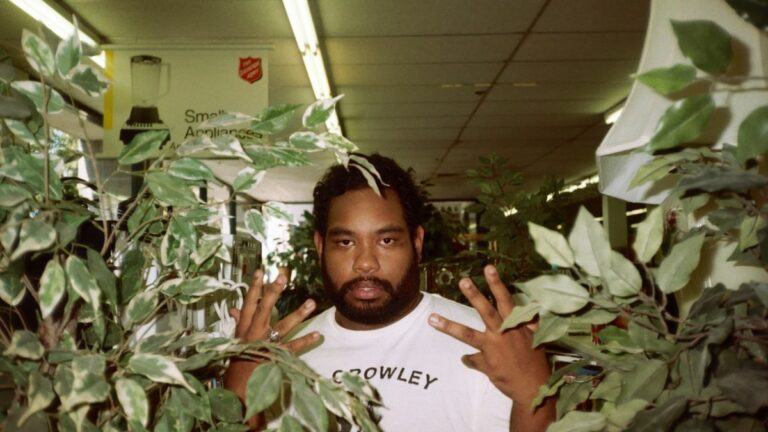
Now in its fourth incarnation, Feels has grown large enough to be considered a festival, though the homegrown event still carries the scrappy ethos of its DIY, warehouse party beginnings. Wine & Bowties — a music and culture blog and promotional outfit that longtime friends Max Gibson and Will Bundy operate together — is throwing the music and art event at American Steel Studios in West Oakland. This time around, the sought-after Canadian producer and DJ Ryan Hemsworth tops the bill. Also headlining is Antwon, an LA-based rapper with a booming voice who got his start in Oakland’s music scene. Antwon’s sound is steeped in Nineties nostalgia and his energetic live shows hark back to his punk roots. Oakland band Meat Market, which is known for its distorted yet hooky pop tracks with a noticeable punk influence, will also perform, as will Shruggs and Rayana Jay, a new, local singer-producer duo. A plethora of local artists will fill American Steel with their artwork, zines, and collectibles, as well. DJs Neto 187, Namaste Shawty, the MoreVibes crew, and others will keep the dance party going all night.
The Great Thanksgiving Listen
Leftöver Crack
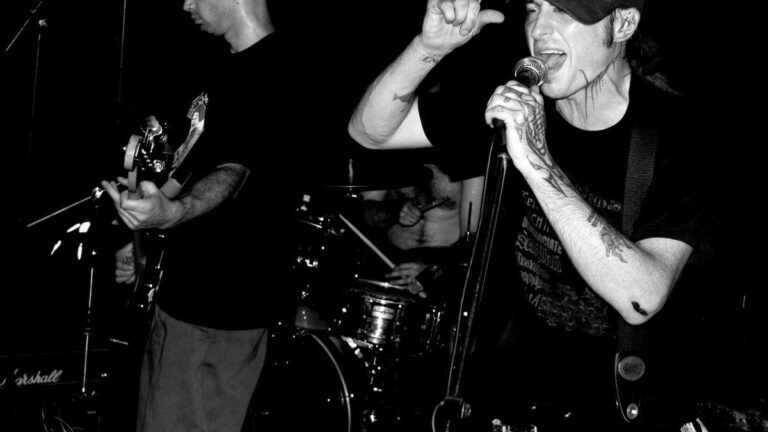
Though the storied New York punk band Leftöver Crack never signed to a major label, the group developed a cult following after it debuted in the late Nineties with its self-released demo, Shoot the Kids at School. Like the project’s title suggests, the group’s peppy-yet-gritty ska-punk discography is snarky and contrarian. Lead singer Scott Sturgeon, aka Stza, has used his lyrics to call out capitalism, police brutality, racism, and homophobia, and his social criticisms are as relevant today as they were more than ten years ago when Leftöver Crack released most of its material. On the track “Gay Rude Boys Unite” from its 2001 album, Mediocre Generica, for instance, he criticizes people who purport to be anti-racist but have homophobic beliefs. The track was definitely ahead of its time, as the concept of intersectionality — or seeing the overlap between different kinds of marginalized people’s struggles — has only entered into mainstream feminist discourse recently. So come on, leave the closet, and on your way out grab a bat/’Cause there’s a battle to be fought, and the prize is fucking fat, he growls. Leftöver Crack performs at 924 Gilman on November 28 with Theories, Rats in the Wall, and Heartless Folk.
Synesthesia
Disgraced
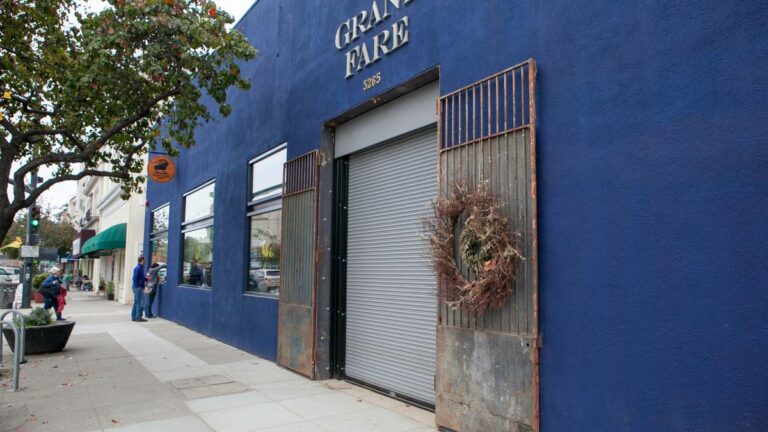
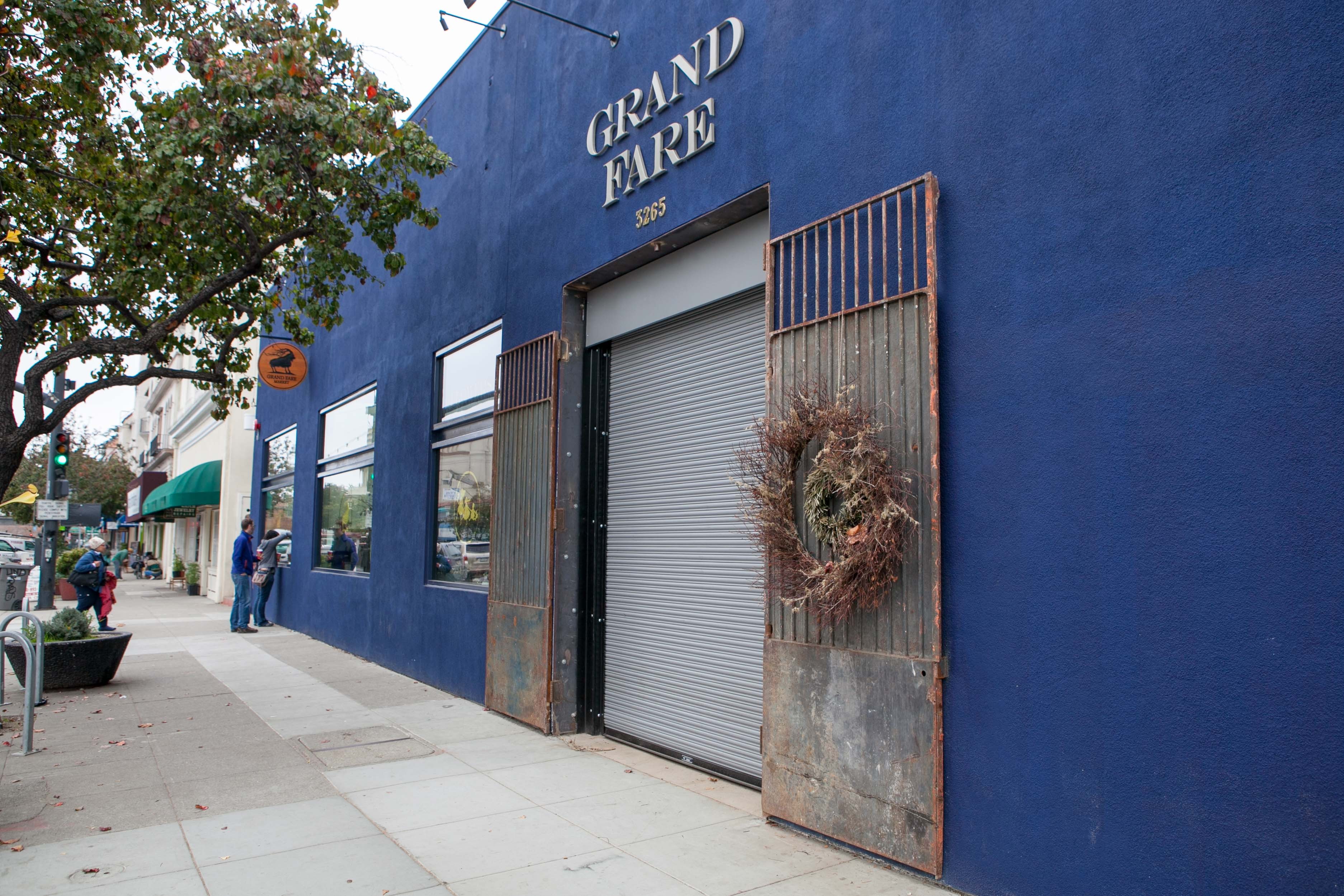
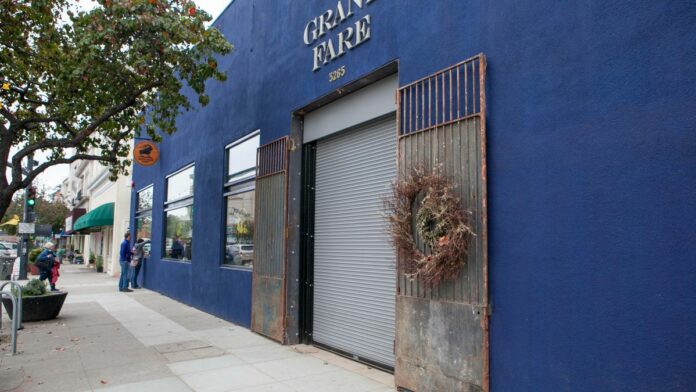
Grand Fare Market on Hold

See also:
A Hybrid Market for Grand Avenue
[jump] It was a surprise to me, too. Just a few days earlier, I’d spoken to co-owner Doug Washington and chef Ben Coe, and both men were upbeat about Grand Fare’s successes and sanguine about its challenges. But on Saturday, Washington told me, via text message, “We needed to shut down to figure out what changes to make to Grand Fare before moving on.” When pressed to give a timetable for when some new incarnation of the business might reopen, he said it would be at least eight weeks. Later, in an interview with Inside Scoop, Washington was even more ambivalent. When asked if Grand Fare would even reopen at all, he said, “We plan to spend some time figuring that out.”
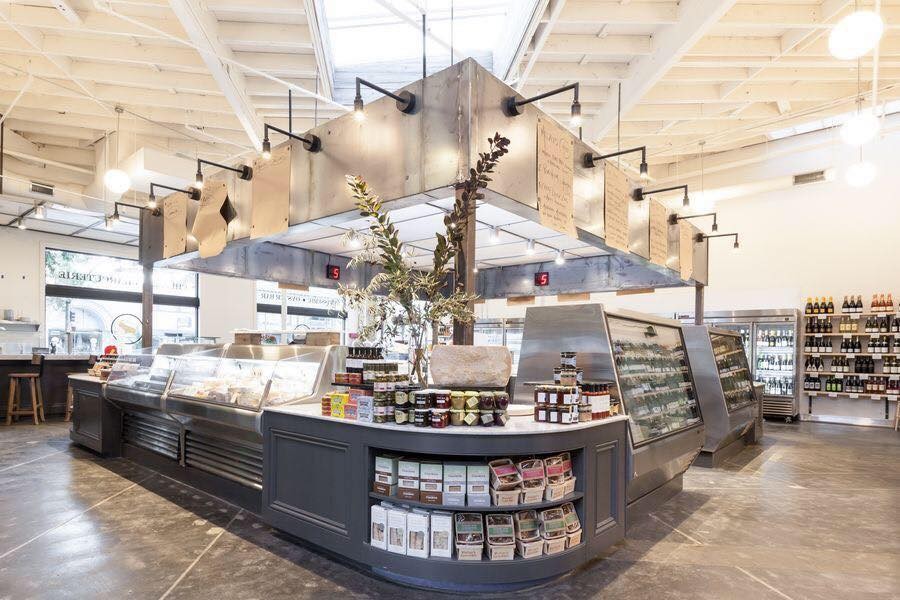
All in all, it was a stunningly fast rise and fall for what had been one of Oakland’s most highly anticipated, and most ambitious, new restaurants. In truth, it seems inaccurate to even label Grand Fare as a “restaurant,” strictly, because it also combined elements of a grocery store, deli coffee shop, bakery, beer garden, and ice cream truck — all of that in a lavishly-appointed 3,500-square-foot indoor and outdoor space. And much of it was wonderful in its way. The indoor portion had the look and feel of the kind of luxury grocery store I associate with the ritzy parts of cities like Paris or Tokyo. There were gleaming cases filled with wonderful cheeses, charcuterie, and to-go items such as duck confit and stuffed portabella mushrooms. A carefully curated selection of snacks made by local food artisans was arranged just so. Chipper employees offered samples of the hearty, unusual house-made grain salads that the shop sold by the pound — quaintly, in South Asian-style metal tiffin boxes, for customers who chose to eat in the garden courtyard.
And what a garden it was: Tree-lined and lit up with twinkly string lights, so that even on a random weeknight, I felt like I’d walked in on a festive backyard wedding party. A vintage Airstream trailer served pastries in the morning and Humphry Slocombe ice cream in the afternoon and night.

Still, when I spoke to Washington last week, he talked only of minor tweaks that were in the works — of his desire to simplify the ordering process and to more prominently display the whole rotisserie chickens and other hot entrées. The goal, he said, was to create a feeling of abundance. “You shouldn’t have to stand at the center island and choose like you’re at a restaurant,” he said.
In the end, it seems that basic finances were what did Grand Fare in. In a Facebook post, Washington and his wife (and co-owner) Freya Prowe wrote, “The market’s current incarnation simply required too much cost to keep up basic operations, and we couldn’t keep it going.”
What was never in question were the chef’s cooking chops. Coe’s previous gigs were at Commis and the now-shuttered Box & Bells — both high-profile restaurants owned by James Syhabout — and that pedigree showed here, even in seemingly simple dishes. An array of flatbreads were topped variously with thinly sliced lamb and chimichurri — like a suped-up roast beef sandwich — or big chunks of yogurt-sauced Louisiana shrimp so plump and luxurious I nearly mistook them for lobster. Meaty, tandoori-spiced pork ribs were cooked sous-vide, in a temperature-controlled water bath, then finished on the grill. They had just the right texture and were flavorful enough that no sauce was needed. A spinach salad that featured spit-roasted Piri-Piri chicken was as good a chicken salad as I can recall eating this year.
Here’s to hoping Coe lands on his feet. But whatever the future holds for the talented chef, it seems unlikely that it will be at Grand Fare, even if Washington does resurrect the concept a few months from now. When reached by phone on Monday, Coe said he didn’t have any more information about the decision to shutter the restaurant than I did. A phone call late Friday night was the only notice he got. “For one reason or another, that’s it,” he said.
Friday’s FTP Rally Shows Schaaf Has Abandoned Her Nighttime Street March Ban
[slideshow-1]
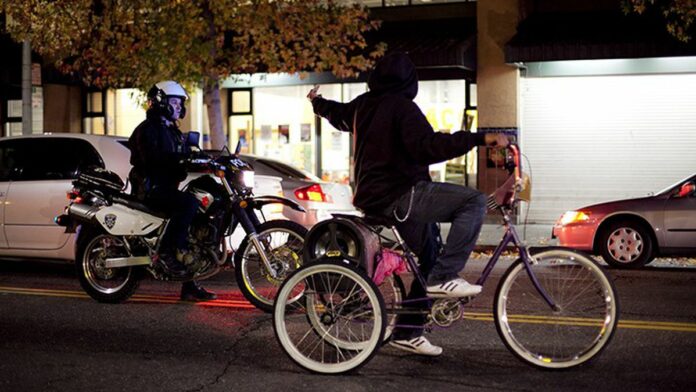
Roughly fifty demonstrators marched from Fruitvale BART on Friday night to Oakland City Hall in an anti-police rally called in response to the fatal shooting of Richard Perkins by Oakland police on November 15. But unlike protests earlier this year, police didn’t try to drive demonstrators onto the sidewalks to comply with Oakland Mayor Libby Schaaf’s policy banning nighttime street marches. The police department’s actions strongly indicated that it’s no longer enforcing the mayor’s controversial ban.
Perkins was shot by four Oakland police officers at a gas station on the corner of 90th and Bancroft avenues. According to OPD, Perkins approached the officers with a “replica” pistol just before the officers shot him.
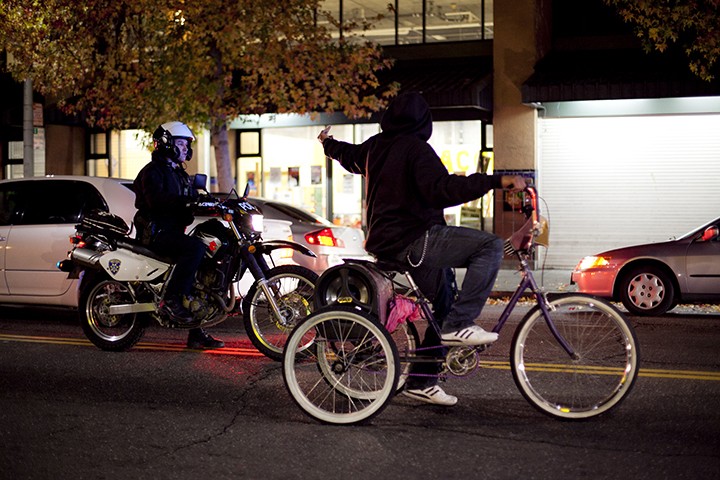
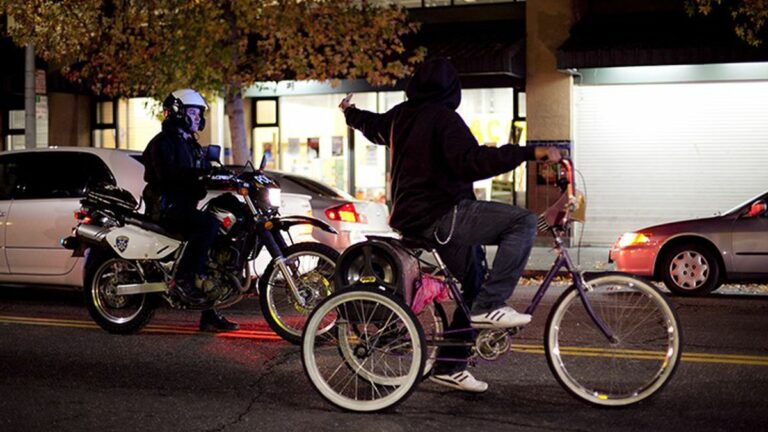
The demonstrators, many wearing masks or bandanas, marched down International Boulevard to Oakland City Hall with a “Know Ya Enemy” banner. Anti-police anthems were played from a mobile sound system built into a tricycle. There did not appear to be any arrests related to the demonstration, nor any property damage. Dozens of OPD officers followed the march and at some points surrounded the protesters on three sides.
One of the demonstrators, whose brother is currently incarcerated, said everyone at the rally on Friday had one thing in common. “We’ve all been abused by the police,” said Gerardo Gonzalez.
[jump]
Also spotted at the rally was Ramsey Orta, the New York man who filmed the killing of Eric Garner by New York City police officers in July 2014. Orta told the Express he is traveling to various cities and working with community groups on police accountability projects. For much of the march, Orta had his cellphone out and was filming the police.
Friday’s rally was a smaller gathering than the Michael Brown and Eric Garner demonstrations that took place in the final months of 2014 and early 2015 as part of the national Black Lives Matter movement. After the fatal shooting of Demouria Hogg in June, hundreds of people gathered at the intersection of Lakeshore Avenue and the Interstate 580 off ramp, where Hogg was shot by a rookie OPD officer.
Neither the June demonstration nor Friday’s march was broken up by the police, despite Schaaf’s declarations in May banning nighttime street protests. Schaaf acknowledged the ban at the time and said it was not a new law, but a reinterpretation of an existing one.
Schaaf’s spokesperson Erica Derryck did not immediately return a phone message today seeking comment as to whether the mayor has officially abandoned her ban on nighttime street marches in the city.
One sergeant at Friday’s march told the Express that his officers had not been told to move people off the streets or make any arrests. “We’re here to facilitate this march,” he said.

Federal Lawsuit: Demonstrators Allege Police Misconduct in Black Lives Matter Protests in Berkeley Last Year

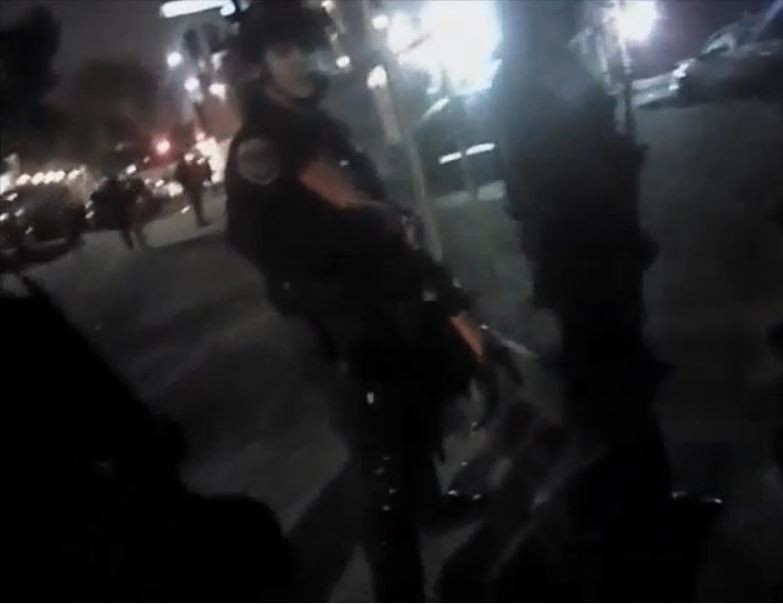
“The Berkeley Police responded brutally, clubbing peaceful protesters and journalists, often from behind, some in the head, indiscriminately and unnecessarily; and using profligate amounts of teargas without justification,” the complaint reads.
Rachel Lederman of the National Lawyers Guild, one of the attorneys representing the demonstrators, said the plaintiffs didn’t rush to file the suit because they were hopeful that the city would respond to the complaints with a thorough review of its crowd control policies.
[jump] Shortly after the demonstrations, on December 12, 2014, the Police Review Commission voted to temporarily ban the department’s use of tear gas for crowd control until a full investigation could be completed. The police department released a report in June detailing the events leading up to the December 6 and 7 protests that resulted in police using force against demonstrators and made 32 recommendations to improve the department’s conduct. Although the recommendations do not go so far as to prohibit the use of batons, tear gas, or less-than-lethal rounds as a tactic for crowd control, they do call for more training, accountability, and communication, both among law enforcement agencies involved and with protesters at the scene, when employing these tactics.
The Berkeley City Council is expected to vote on Tuesday, December 1 on whether to accept the Police Review Commission’s own investigation into the department’s response and implement the city manager’s recommendations.
“We were hopeful that [the investigation] would go somewhere, because it’s been such an extended process … but it is looking like it will be a repeat of the City Council passing a piecemeal solution rather than what is needed, which is a comprehensive revamping of Berkeley Police Department’s policing and crowd control police,” Lederman said of the upcoming council meeting.

The suit calls for reforming the department’s policies and seeks monetary damages for the plaintiffs. Lederman said it represents a range of people who were at the event, some of whom had decided to participate only moments before it turned violent. Others were trying to quell tensions when they were struck. Plaintiff Moni Law, a 55-year-old Berkeley resident, city employee, and UC Berkeley alumna, “was urging other demonstrators to step further back from the police line, when she was clubbed in the back from behind by a Berkeley officer, and had a burning smoke grenade thrown at her, without justification,” according to the complaint.
Journalists were also swept into the fray, including 25-year-old photographer Sam Wolson, who was on assignment for the San Francisco Chronicle, when he “knelt to take a photo with his back slightly to the police,” and an officer allegedly hit him “on the back of his head and upper neck, without warning.”
James Chanin, another attorney representing the plaintiffs, said there was no excuse for Berkeley police’s use of force. “This was a protest that was done all over the country and a protest that was done all over the Bay Area and a protest that was done in specifically Oakland and San Francisco, and none of those cities had the problems that Berkeley did because none of [those police departments] looked at it the way that Berkeley did,” Chanin said. “[Berkeley] decided this was going to be a violent protest, and by their own words, they did crowd control and not crowd management. … They basically stereotyped the demonstrators according to the least common denominator and acted accordingly, and the result was they had people complain and had a big City Council meeting filled with people protesting what they had done.”