Oakland Black Cowboy Association gets ‘Boots on the Ground’

0

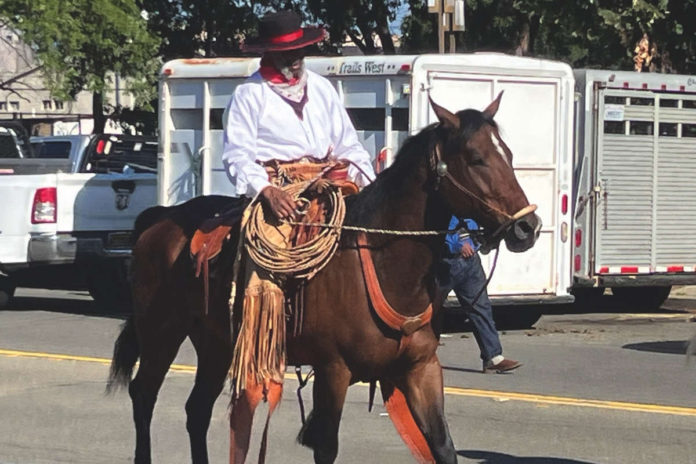
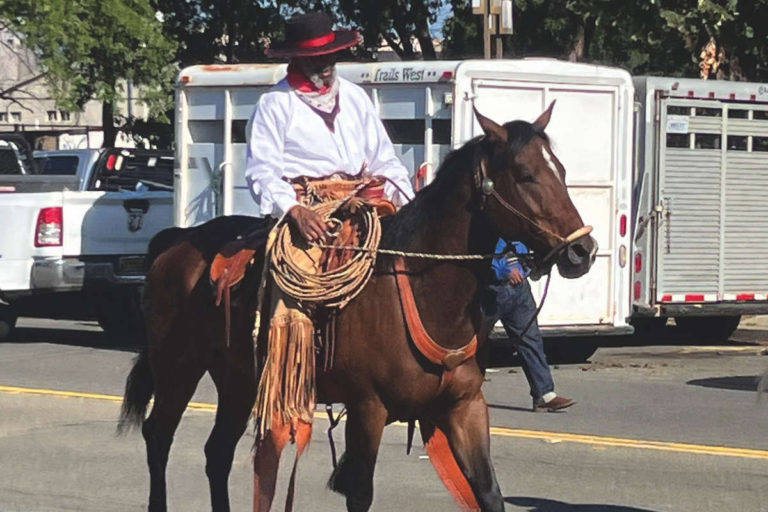
Wild West attire, live music and camaraderie are all trademarks of Oakland’s iconic Black Cowboy parade and festival.

The annual events, hosted by the Oakland Black Cowboy Association (OBCA) on Oct. 4, brought hundreds of Western enthusiasts to DeFremery Park. The festivities almost didn’t leave the stables this year because of financial issues, leading the OBCA to solicit its first-ever GoFundMe call for donations.

Now OBCA staff say they are looking into different ways to raise money and doing everything they can to ensure locals have access to future events celebrating Black cowboy culture.

“We were able to put on a fabulous parade and festival, but it’s still a long way to go,” OBCA volunteer Jessica Smith said. “We’re actively moving forward to continue to grow the organization.”

Upcoming OBCA events include an appreciation dinner for donors on Nov. 22. A few family days are also on the horizon, but the details and dates haven’t been sent yet, according to Vice President Debra Lawson.

Recently the OBCA’s beloved Shetland pony, Michael Jackson, passed away. Jackson gave rides to children at school and community events, and helped the association fundraise. Lawson said they are raising funds to buy a new one.

Founded in 1976, the OBCA hosts local educational workshops and community events to honor the history of Black cowboys and cowgirls. The nonprofit is volunteer-run and frequently collaborates with small businesses, schools and cultural organizations. Its funding comes from a mix of local sponsors and community donations.

The OBCA is well-known for keeping the cowboy culture going year-round in the region. This month marks the 51st celebration of its parade and festival, which always takes place in West Oakland.

In August however, the association faced a roughly $20,000 financial shortfall after the group’s former president allegedly mismanaged funds. In an effort to keep the event going, OBCA launched a GoFundMe page. With the help of 533 donations, the OBCA managed to raise $32,785 of their listed $50,000 goal.

Lawson and Smith declined to go into details about the reasons behind the loss of funding. The fundraiser description states the OBCA is going through “serious financial hardships and lost its entire budget” weeks before the festival was scheduled to take place. The association noted it was also seeking legal resources.

Lawson said the OBCA is thankful for the outpouring of community support, and amazed at how funds were raised in such a short amount of time.

“We would have probably still tried to put forward, but it probably would have been a struggle,” she said.

The parade portion started in the morning, where participants circled around Oakland’s Market, 18th, Union and Eighth streets. The festival followed the event, offering people the opportunity to enjoy a variety of activities including live music, dancing, a fashion show, and pony and horse rides. Eventgoers hail mostly from The Town, but people come from all over the Bay Area and California. One traveled all the way from Washington, D.C., to check out the event, Lawson said.

The theme for this year’s festivities was “Boots on the Ground,” a phrase that refers to different people being present together and actively working to achieve a specific goal. Smith said the theme was fitting given OBCA’s recent circumstances.

“From overcoming dire significant hardship to being lifted up by the community and having what was one of our best parades and festivals to date … it was really exciting,” Smith said. “There were smiles on people’s faces all day long.”
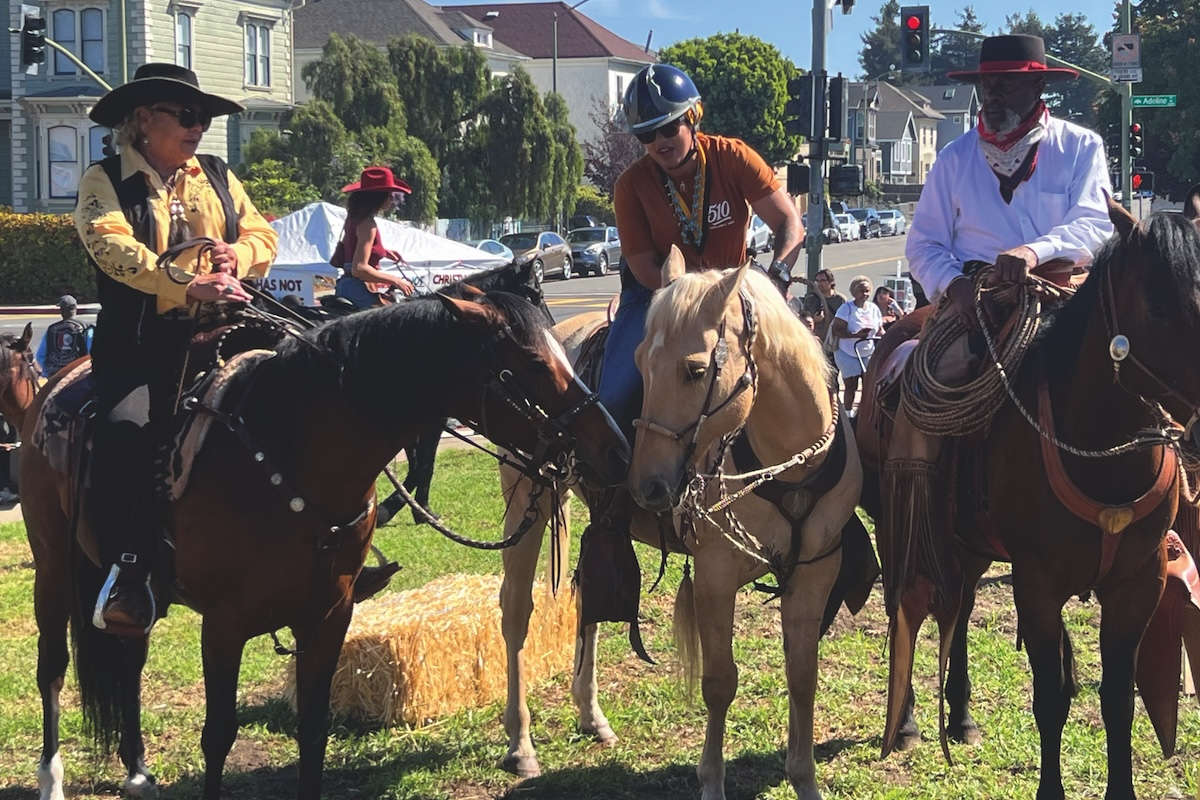
FOUNDED IN 1976 The Oakland Black Cowboy Association hosts local educational workshops and community events to honor the history of Black cowboys and cowgirls. (Photo courtesy of Jessica Smith)

Smith and Lawson said the OBCA focuses on encouraging children to get involved with cowboy culture. During the October festival, the OBCA created a children’s area where kids could visit a petting zoo, get their faces painted, and ride a mechanical bull and horse.

Lawson emphasized the importance for the younger generations to understand the history of Black cowboys and carry on their legacy.

Black cowboys were a prominent, yet marginalized, group in the American West. They are estimated to have made up 20-25% of the total cowboy population during the late 19th century. The cowboys and girls were known for their skills in roping, branding and saddling up cattle. Their contributions were largely watered down in media and literary depictions of the Old West, which often portrayed cowboys as being exclusively white. 

Today, only a handful of organizations in California work to preserve their history. They include the Urban Saddles in South Gate and the Compton Cowboys in Compton, as well as the Wilton Riders in Sacramento.

The OBCA is the only organization of its kind in the Bay Area, though the region hosts other events that honor the legacy of Black cowboys, including The Bill Pickett Invitational Rodeo, the longest-running Black rodeo in the U.S. Hundreds of locals attended the invitational rodeo event over the summer in Oakland.

Smith and Lawson say they look forward to meeting children who come to OBCA’s events, and teaching them about the organization’s mission and values.

“We really want to be able to connect with the younger generation and plant the seeds,” Smith said. “We want them to know that they can be a part of the organization and be a part of the community.”
Breathing room to make art

The indelible image of artists starving happily in garrets while living the “La Vie Boheme,” as Rent would have it, has some roots in reality. Many artists, both visual and performing, do struggle to follow their passion while paying the rent. Starving happily … perhaps not.

Since 1986, the Eureka Fellowship Program, established by the Fleishhacker Foundation, has given direct financial support to Bay Area visual artists. Unlike most grant programs, the awards are unrestricted and can be used in whatever ways awardees need to continue creating. The awards are given in cycles, this time around, 2026-28.

Last month, 12 Bay Area artists received the news of the $40,000 grants. Eight of these are East Bay residents. East Bay Express spoke to three of them to find out how the award will impact their lives and work.

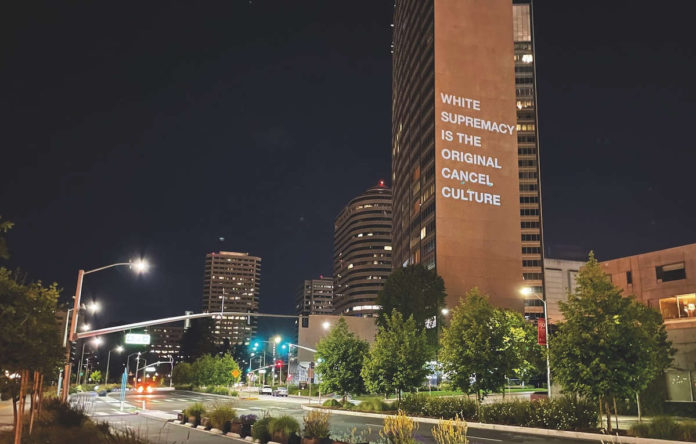
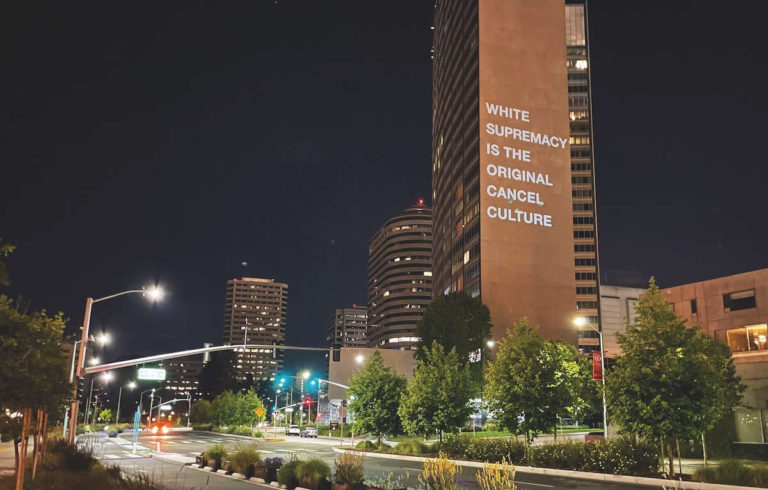
Richmond-based Christy Chan uses video, installation and performance to “question the everyday power structures that uphold white supremacy in the United States.” Her guerrilla public art project, “Dear America,” which projects art works created by Asian Americans onto high-rise buildings, was hatched in response to the wave of violence against Asian-Americans during the Covid pandemic. She will receive her fellowship during the 2028 cycle.

“This is coming at a critical time for artists,” Chan said in a phone interview. “Grants are being cut, and the kind of art is being altered. This gives me a runway to continue taking risks and experimenting … [I can] keep making art even as the political landscape shifts.”

Chan’s fellowship starts in 2028, but she is working on multiple projects now. Her installation “Fainting Couch: Whose Comfort?” is on view at the Di Rosa Art Center in Napa until Jan. 25, 2026, and her short film, Somewhere to Be, premieres at the Hawaii International Film Festival this month, followed by a European premiere in Berlin at the Interfilm – Kuki Film Festival in November.

The film stars an 8-year-old girl from Oakland, and W. Kamau Bell serves as its executive producer. Three Bay Area organizations—including the Berkeley Film Foundation—funded it, Chan said.

“It’s a dark comedy about the interior world of a Chinese-American immigrant family,” she said. “I didn’t plan for this film to come out at this moment, but I am interested in seeing how it can be part of [this moment].”

Chan has always been interested, she said, in showing the experiences of immigrants. She is currently looking for the right location to show the film in the East Bay.

Visit Chan’s website at christychan.com

Nimah Gobir lives in Oakland, and “makes paintings about family, memory and Black identity,” according to her bio. She also creates sculptural pieces. Her parents are immigrants from Nigeria, and she uses photos from her own childhood, layering them with textiles, embroidery and brushwork. In addition to her undergraduate degrees, she has an M.Ed. from Harvard Graduate School of Education with a focus in arts in education.

Gobir received an award in the 2028 cycle as well. “But,” she said in a phone interview, “it is so helpful … I appreciate having the time to plan. It makes me feel more resilient.” Like so many artists, she currently juggles a job while working on her artwork. The award will allow her necessary space for experimentation and process, she said, adding, “I am planning for more time to work on art.”

She’s fascinated by the power and mutability of memory, particularly as it exists in families. Something that happened in the past “can seem like it happened to you,” she said. She uses the boxes and boxes of photos her family took, primarily during the ’70s, ’80s and ’90s, sometimes of just her parents, sometimes of her and her sister, and sorts them into piles as she considers her artworks.

“There are recurring perspectives,” she said. “My mom wearing the same shirt, for example. They form the source material for a painting.” She also collects Nigerian phrases from her parents’ conversations, such as “better dey come,” which in their homeland is a way of expressing both personal encouragement and hope for Nigeria’s future.

“Better Dey Come” is the title of Gobir’s exhibition which just closed at Oakland’s Johansson Projects gallery. “Gobir explores…through lines across generations, finding resonance among her current daily rituals, childhood, and family’s past: braiding hair, sitting for a meal, washing dishes, posing for a group picture. Her mixed-media work collapses time and space, leaving the viewer in a kaleidoscope of memories that diffuse into the present moment,” gallery materials state.

Visit Gobir’s website at nimahgobir.com

Oakland’s Jillian Crochet also received a Eureka Fellowship award. Her work spans sculpture, video and performance “to confront grief and disability.” A wheelchair user, Crochet uses her own experiences to ask, “What is natural/unnatural?” and “What bodies are included/excluded—important?” Her work, she writes in her bio, “reveals the inherent ableism of our built environment and social structures, while seeking to carve out a space for the disabled body to find pleasure and comfort—to liberate the disabled body from normalized marginalization and oppression.”

Reached by phone, Crochet, who will receive her award in the 2026 cycle, said she plans to use the funds to acquire a bigger studio. “[My] sculptures take up a lot of space. And, I will be able to hire fabricators and assistants to realize more ambitious projects,” she said.

Asked about her process in visualizing and creating her art, she said, “I experiment with touch. I have sensory sensitivities. I’m drawn to things that have an intriguing sensorial element, such as rocks on a beach or fabric that’s very soft. And, I’m interested in how vision is prioritized in our culture.”

Her work often references the world’s “built environment,” as opposed to nature. “I pose questions,” she said. Her sculpture Lumpy Bed, currently on view at the Ed Roberts Campus in Berkeley, was inspired both by stress balls and by “the rolling green hills of California,” she said. Viewers are encouraged to lay or sit on the piece.

One work-in-progress is a film about the impractical nature of beach wheelchairs. Her website notes, “Beach wheelchairs loaned by parks require someone to push you, making autonomy impossible. They are hard to maneuver. I will hire a body-builder to push me and document via video and photo.”

Visit Crochet’s website at jilliancrochet.com

Other East Bay artists receiving Eureka Fellowship awards include Jennifer Huang, Sahar Khoury and Rahsaan Thomas, of Oakland; Marlon Mullen, of Rodeo; and Masako Miki, of Berkeley.

‘Runway Stories’ tell spooky-weird tales

For every person wondering how a woodworker becomes a storyteller, curiosity and over-zealous caution will be conquered Oct. 30 under the Big Top tent at Radium Runway. “Runway Stories: The Side Show” lands courtesy of Radium Presents at the waterfront arts center in Alameda Point. The two-hour show is flavored with humor, humanity and tears; all arriving via wildly diverse strategies for finding the funny buried in spooky-weird tales.

Curated and MC’d by JP Frary, maker of exquisite wood furniture and sculpture, and secret sorcerer of far-from-wooden storytelling, “Runway Stories” features four wordsmiths: Glynn Washington, Holly Shaw, Don Reed and Gina Stahl-Haven.

In an interview, Frary described the storytelling roots that began in his childhood home, journeyed with him to his woodworking space in Alameda where they reached his client’s homes and businesses, and eventually resulted in his live appearances in the Bay Area.

“The first thing to know is that I’m predominantly Irish,” Frary said. “My grandfather would always hold court at the dining room table. He’d tell stories and was in charge of the floor. If someone hadn’t spoken in a while, he’d point at them [to indicate] it was their chance to tell a story. If you were shy, it was awful, but if not, it was opportunity.”

As a woodworker, Frary uses primarily recycled materials—objects that already have their own stories. When he makes furniture or sculptures, he listens to clients’ stories. Picking up their words and extending them into tangible objects has Frary whittling and winging on narratives he hopes provide a sense of place and time.

“I hope there’s a vibe, just like when I tell a story in public,” Frary said. “When my wife and I went to The Moth on a wedding anniversary, I put my name in a hat and was lucky enough to get picked. That’s how I got hooked.”

Frary said the public forum and atmosphere is completely different than when he is alone in the studio. “The shared experience in storytelling has an instant, direct feedback loop,” he said. “The best thing you can do as an audience member is to clear your head and let other people take you somewhere, drive the bus. It’s a great thing when you touch somebody enough that they are reminded of something similar in their lives. I’m the luckiest person in the world to get to do that.”

Frary is also fortunate that the Bay Area is a bevy of funny folks. He provided quick snapshot descriptions for each of the artists he selected.

“Don, from watching him onstage, has become my professor,” Frary said. “I learn so much from him. Holly is a conundrum. Sometimes, she’s literally trying to seduce the audience—like date me—and other times, she’s breaking up with them.”

Washington hosts the podcast Snap Judgment, a format that requires keeping the banter flowing fluidly from start to finish. “Glynn on stage is a miracle worker with silence,” Frary said. “He leaves big, mesmerizing times—long, long moments—when he’s not talking. He puts something in audiences’ heads and then becomes the master of the pause.”

Stahl-Haven’s routines frequently press into everyday topics: romantic partnerships, marriage, motherhood, sleep habits, body image and, inevitably, the bumpy road she’s traveled ever since blood clots changed the geography of her life’s map. “Gina is warm, genuine, real and hella funny,” Frary said. “She puts you in her shoes and lets you see how absurd things are. Only someone who’s been through a health issue that could have killed her and who has courage can use humor that is almost gallows and has gravity.”

Each storyteller will have about 15 minutes, with Frary ushering the audience through the diversity of their voices with his own stories. An added thread weaving the show into a complete tapestry includes prompts given to members of the audience. “From those, the best, weirdest stories will be told live,” Frary said. “The first prompt is, ‘Have you ever had sex with a ghost?’ I won’t tell all of the prompts now, but that’s one to get anyone started.”

‘Runway Stories: The Side Show,’ 7:30pm Thursday, Oct. 30, Radium Runway, 2151 Ferry Point, Alameda. radiumpresents.org

‘One Battle After Another’ ignites our revolutionary spirit

0

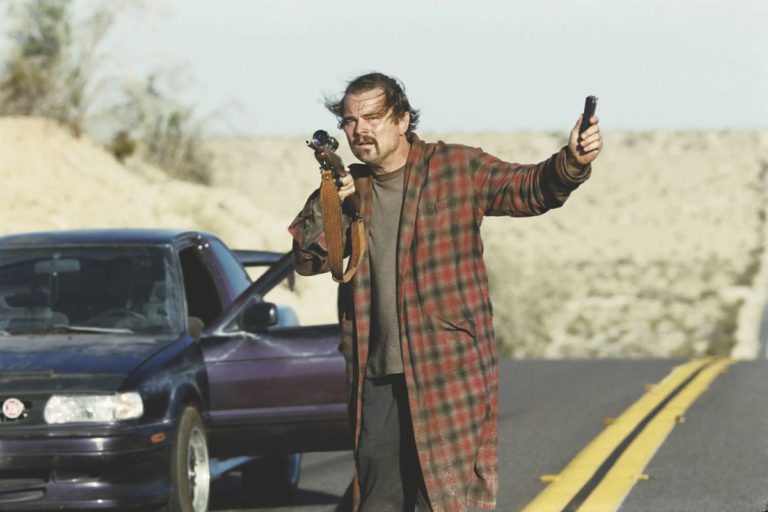
Let me get the hype out of the way: One Battle After Another isn’t simply just an instant classic—which it is. Neither is it just another great Paul Thomas Anderson movie. What One Battle After Another actually achieves is something even more singular: It’s a film released at a perfect time that feels like a manifesto, a state of the union address and a canary in a coal mine, all in one.

But since Anderson is a master filmmaker incapable of making art that doesn’t leave a lasting imprint on our cultural zeitgeist, he didn’t just conjure a scolding rebuke of policy or a bitter takedown of the racism inherent in our current administration. He instead made a film completely drunk on the possibility of cinema and the importance of the medium. Every frame, every performance, every line of dialogue exists not just to make a statement, but to be a wildly entertaining rollercoaster capturing lightning in a bottle and then setting it free for us to dance beneath.

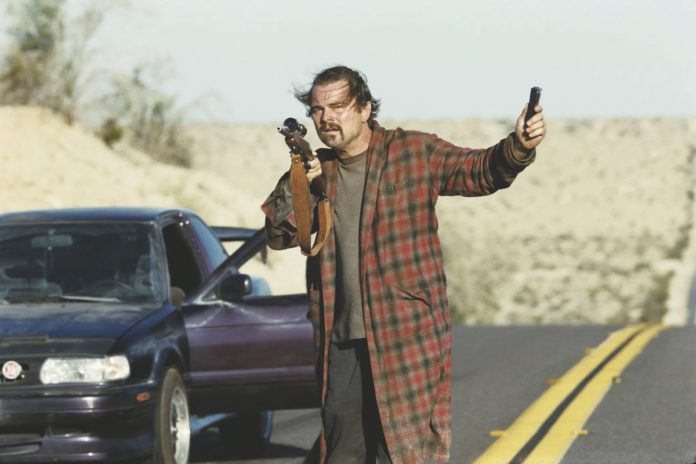
Equal parts Dr. Strangelove, The Battle of Algiers and Paper Moon, the film follows Leonardo DiCaprio as “Ghetto” Pat Calhoun, an explosives expert and member of the French 75, a revolutionary group that we meet rescuing immigrants from a detention center in Southern California. He falls in love with Perfidia Beverly Hills, played by the incendiary Teyana Taylor, and has a daughter, Charlene. On the run from the U.S. government—personified by Sean Penn’s profoundly disturbed Col. Steven Lockjaw—Pat just wants to keep his little girl safe while being true to his own subversive spirit. 

One Battle After Another is also ridiculously funny and twitchily intense—an unreservedly entertaining ride that pulls the audience along through its twists and turns in such a propulsive way as to make it feel just as revolutionary as the French 75.

Beneath the expertly calibrated performances by DiCaprio, Penn and Benicio del Toro, and beneath the brilliant madcap satire designed to stir the hearts and minds of its viewers, what Anderson really achieves with this film is to say, unequivocally, that the most American thing a person can do is to be a revolutionary. Not necessarily by the strictest definition of the terms, but by living life in a way that fosters connection, beauty and love.

As much as One Battle After Another rallies against injustice, racism and a police state, it pushes its viewers toward just being better humans and more engaged members of our community, while leading with love instead of fear.

Aside from Anderson’s stunning script and direction, we’re also blessed with career-best compositional work by Radiohead’s Jonny Greenwood, understated and lush cinematography by Michael Bauman, and star-making performances from Taylor and Chase Infiniti. Every detail is executed flawlessly in a way that most movies don’t even come close to achieving, making One Battle After Another feel momentous even as we watch it, but without crystallizing as to why until after it’s over. It’s perfect. An actual, perfect film. One of the very few.

What’s also slyly and brilliantly subversive is that One Battle After Another isn’t just set in Trump’s America. By letting the technology look somewhat dated in the service of a story that feels immediate, One Battle After Another becomes unstuck in time. It’s a rallying cry for the past, the present and the future that won’t feel like an artifact when people marvel at its prescience 100 years from now. Anderson isn’t telling people to wake up right now; he’s telling the entire world to pay attention to the collective mistakes of our past so we’re not chalking off the outline of the ruins in our future.

One Battle After Another will be taught in film classes decades from now when instructors want to illuminate the inherent power of cinema in the hands of a visionary. I hope the shaggy odyssey of this story helps empower generations of Americans to push back against the dehumanizing othering being weaponized into turning a country of immigrants into something far less utopian than dystopian.

Whatever the eventual legacy of this movie is, it’s unlikely there will be a more entertaining or important film in 2025. Movies like this are why I champion cinema as an art form and have dedicated a big part of my life to writing about them. It’s a mirror and a window. What do you see?

Social Eyes: Week of Oct. 23-29

THURSDAY, OCT. 23

JAZZ

BEN GOLDBERG FESTIVAL OF MUSIC

Berkeley clarinetist and composer Ben Goldberg is shoehorning a season’s worth of creative action into a three-day festival at Wyldflowr Arts. The Ben Goldberg Festival of Music opens each night with a solo set, followed by two different groups. Thursday includes Goldberg’s long-running trio Invisible Guy, and Ben Goldberg’s Glamorous Escapades playing Porch Concert Material. Friday’s program is similarly promising, featuring Things That Move, the umbrella moniker for Goldberg’s assorted collaborations with Tune-Yards bassist Nate Brenner, and Archimedes Lullaby, a sextet with Brenner, Atwal, Coleman, saxophonist Kasey Knudsen, and guitarist Andrew Conklin. The festival closes Saturday with the ensemble, Insect Life. ANDREW GILBERT

INFO: Thu, 6:30pm, Wyldflowr Arts, 809 37th St., Oakland. $30 ($85 for 3-day pass). 510.842.5055.

THURSDAY, OCT. 23

JAZZ

BRANDEE YOUNGER TRIO

No artist on the national jazz scene has done more to raise the visibility of the harp in the 21st century than Brandee Younger. Sought after by stars including Common, Lauryn Hill, John Legend, Ravi Coltrane and Christian McBride, she’s also earned attention as a composer. Her tune “Hortense” was featured in the documentary, Beyoncé: Homecoming. She’s made a concerted effort to celebrate harp matriarchs Alice Coltrane and Dorothy Ashby, while forging her own encompassing sound. Recorded on Coltrane’s restored harp, her latest album, Gadabout Season, features collaborations with artists such as British saxophonist Shabaka Hutchings, gospel-inspired pianist Courtney Bryan, and indie-soul pianist and vocalist Niia. – AG

INFO: Thu, 8pm, The Freight, 2020 Addison St., Berkeley. $39-$44. 510.644.2020.

THURSDAY, OCT. 23

STORYTELLING

PRETTY GOOD STORIES

Once upon a time there was a talented trio composed of Moth GrandSLAM champion David Rodriquez, Moth StorySlam winner Ruven Hannah and singer-songwriter-musician Jon Smear. The organizers of a way-cool storytelling event’s fifth iteration invited them to spread their wings with in-depth stories and intermingled original songs delivered by Smear. Audiences know the series is casual, that the stories might be comic, tragic, searingly profound. Deciding if the stories are pretty good, as advertised, or rise to greatest ever or sink to shoulda-brought-ear-plugs is up to each individual. Inarguably, nothing beats hearing tales and tunes live and with other—live—people. The End. LOU FANCHER

INFO: Thu, 7:30pm, The Back Room, 1984 Bonita Ave., Berkeley. $10-$15. 510.654.3808.

FRIDAY, OCT. 24

R&B

JANINE 

Born in New Zealand, this singer creates pop tunes that connect the gaps between R&B and soul. She digs deep within to give her fans an intimate look inside her life and thoughts. Which is truly exemplified in her latest album, Pain and Paradise. In it she sings about the death of her father, and how in dealing with the grief there is love and beauty in resiliency. Janine has headlined sold-out shows around the world, including the last time she played the Bay. This year, she’s offering a fan meet ’n’ greet that includes a signed laminate, a photo op and a special acoustic performance before the show. MAT WEIR 

INFO: Fri, 7pm, Cry Baby, 1928 Telegraph Ave., Oakland. $31.36.

FRIDAY, OCT. 24 

INDIE

LA LOM

In 2019, guitarist Zac Sokolow, bassist Jake Faulkner and drummer Nicholas Baker were hired as the instrumental background music for the Hollywood Roosevelt Hotel’s lobby, rendering versions of ’50s and ’60s ballads. Then a little Mexican bolero and cumbia sonidera and Bakersfield country kinda got woven in and now, as La Lom (Los Angeles League of Musicians), the trio’s music reflects the sonic landscape of one of the world’s most multinational cities. Listen to Sokolow segue into Hawaiian guitar-esque riffs during the band’s version of Dolly Parton’s “I will Always Love You,” to get the palm-tree-studded picture. JANIS HASHE

INFO: Fri, 8pm, UC Theatre, 2036 University Ave., Berkeley. $35. 510.356.4000.

SATURDAY, OCT. 25

METAL

GWAR

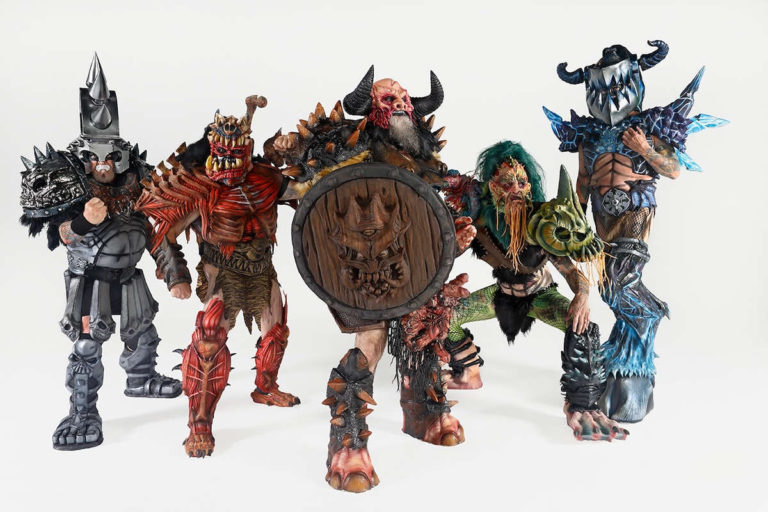
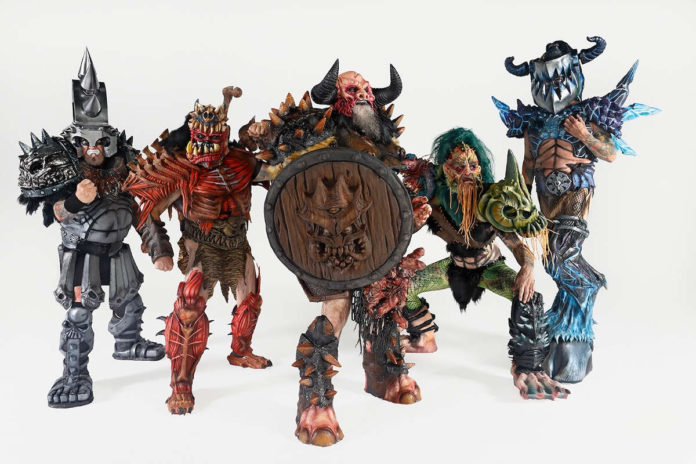
Puny humans!!!! The intergalactic overlords and masters, GWAR, return to the Bay Area and this time they’re bringing friends. For their 40th anniversary they are welcoming the return of Gor Gor the crack-addicted dinosaur, along with fellow metal and punk warriors Dwarves, Helmet and Blood Vulture. Be prepared for mayhem, slaughter and gallons upon gallons of bloodshed. Like any good bohab knows, wearing the whitest outfit possible ensures the most fun. After 40 years GWAR’s become the best at what they do—playing metal; fighting robots, monsters and aliens; and slaying anyone who gets in the way. Hail the mighty GWAR! – MW

INFO: Sat, 7pm, UC Theatre, 2036 University Ave., Berkeley. $42.50. 510.356.4000.

SATURDAY, OCT. 25

STORYTELLING

SPOOKED LIVE

Fans of KQED’s Snap Judgement wait all year for its true Halloween takes of spine-tingling encounters with the supernatural. This year, evil twin podcast Spooked joins ghostly hands with “SJ” host Glynn Washington to expound every creak and shriek live onstage at the very likely haunted Paramount Theatre. Past creepy tales have included the one about “a man who discovers that if you love someone enough, they never truly leave you.” Those who come in full scary regalia will be in the lurching to win the Spooked LIVE Best-Dressed Prize. Could it be a trip to the Other Side? – JH

INFO: Sat, 7pm, Paramount Theatre, 2025 Broadway, Oakland. $53-$91. 510.893.2300.

SUNDAY, OCT. 26

VARIOUS

ONE SONG ALL NIGHT

No need to be rich, cool, born under a certain astrological sign, or have sexy charisma to fall into the bathtub and soak during an entire show in Prince’s effervescent “Kiss.” Vocalists Hannah Mayree, Mike Blankenship, Dame Drummer, Anaís Azul, Tammy Hall, and Flex Duo: Bryan Dyer & Dave Worm nuzzle up to the mic with interpretations of the iconic song. What do a banjo, piano, drum kit or the amazingly varied vocal gymnastics of these five Bay Area musicians bring to the table? Not sure, but revel in how one inspired piece of pop music is sturdy enough to fire up like a sparkler, slink along sultry streams or bounce higher than a bunny on the moon. – LF

INFO: Sun, 7pm, The Freight, 2020 Addison St., Berkeley. $34-39. 510.644.2020.

TUESDAY, OCT. 28

ALT-ROCK

HAUNTED HOUSE

Haunted House: The darkest corners of the internet throwing a rave in a crypt. The collective—Savage Ga$p, Grim Salvo, Witchouse 40k, Kamaara and Twentythree—melds horrorcore aesthetics with trap, metal and alt-rock to create something grotesque and magnetic. Their sound is cinematic and corrosive, composed of distorted basslines, haunted melodies and voices dragged through another dimension. What began as a loose coalition of underground cult favorites has grown into a full-blown creative universe. Their latest, Nightcrawler Tour, takes that world on the road, turning venues across the country into feverish, neon-lit haunts. SONYA BENNETT-BRANDT 

INFO: Tue, 8pm, Cornerstone, 2367 Shattuck Ave., Berkeley. $34. 510.214.8600.

WEDNESDAY, OCT. 29

EMO

SATURDAYS AT YOUR PLACE

Kalamazoo-based band Saturdays at Your Place nods to early 2000s Midwest emo and modern DIY—they’re messy and melodic, and they wear their hearts on their sleeves. Their new album, These Things Happen, captures what makes them special: never overwrought, never overly ironic, their angst is all lowercase. Standout track “what am I supposed to do” is the band at their best—unrestrained, cathartic frustration paired with a winning sweetness. It’s the sound of growing pains turned into singalongs. – SBB 

INFO: Wed, 8pm, 924 Gilman St., Berkeley. $22. 510.524.8180.

Murder By Death gives last call

0

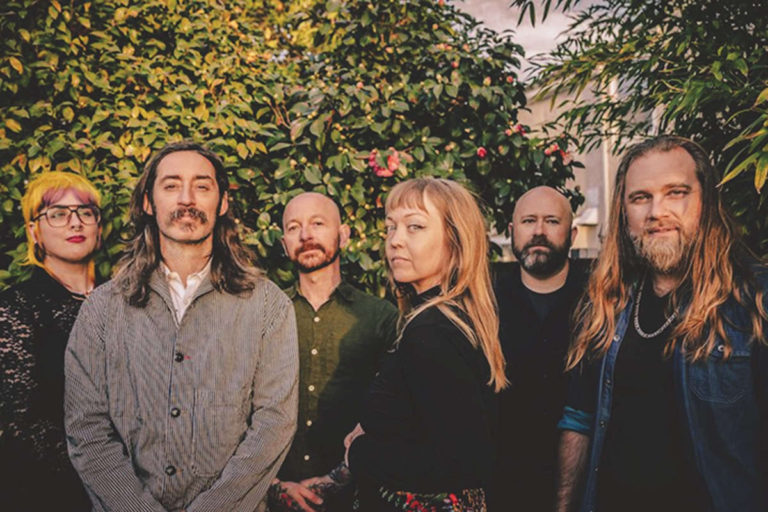
When Adam Turla said, “Honestly I forgot about this, I was out in the garden doing some weeding and then saw my phone reminder,” it was the first time a musician had ever told me they forgot about an interview due to gardening. However it made sense coming from Turla, who plans to spend a lot more time in the garden after his band completes their final tour this year. After 25 years of constant playing, touring and recording, the indie-rock, Western-inspired, Murder By Death (MBD) is hanging it up.

“For 25 years we’ve been moving toward ‘the next thing,’” he said. “There’s been no rest, and that’s one of the things we realized.”

While MBD might not be a household name like Against Me!, My Morning Jacket, My Chemical Romance and Coheed & Cambria—all of whom they’ve played with over the years—they’ve earned a large fanbase. One example is MBD’s 2012 Kickstarter for their sixth studio album, Bitter Drink, Bitter Moon, which became the website’s third-highest funded music project ever at the time. Every album since exceeded the initial funding goals.

So MBD’s announcement in March that their following tour and their 10th studio album, Egg & Dart, would be their last, sent a shock through every fan’s heart, mine included. Fortunately, the band will still play their yearly Cave Show at The Caverns—an actual cave with killer acoustics—in Pelham, Tennessee.

“The rule is that we’re getting off the road,” Turla said. “I haven’t had much opportunity for spontaneity, because touring is the exact opposite.”

It’s difficult to express how much this band means to fans. Formed in 2000 at Indiana University Bloomington, they originally called themselves Little Joe Gould, later naming themselves after the irreverent Neil Simon play and movie. It’s a move Turla has remembered with a tinge of regret in past interviews when stating that the name—particularly the “Murder” part—often kept them off bills despite the music falling within the Americana genre.

“But it’s really hard to do that hindsight stuff,” he said. “Because I also think it won over some listeners from the punk/hardcore scene, and it has a lasting power.”

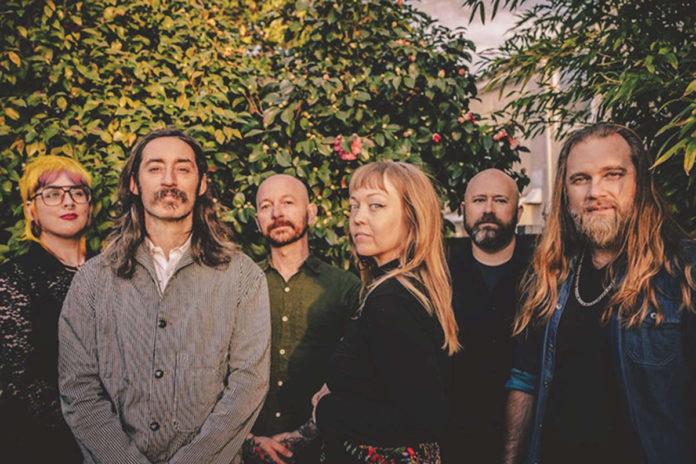
With Turla on guitar and vocals, the band consists of Sarah Balliet, who is married to Turla, on cello; Emma Tiemann on violin; Dagan Thogerson on drums; Tyler Morse on bass; and David Fountain on piano, trumpet, mandolin and lap steel. Their sound traverses the dark space between energetic and uplifting to soft, somber and morose.

Yet each song is its own beautifully written narrative fitting inside a bigger concept album. Love, regret, the end of time, rest, rebirth and family are just some of the themes one might find on any given album. Dark humor cuts through the serious nature to let just enough light in on each album.

“Hope is a big theme,” Turla said. “I always joke that Murder By Death is like a very dystopian universe of lyrics, but there’s always a glimmer of hope. Our albums always present a world that is not ideal but—essentially—through striving, there’s a rallying cry for hope.”

Egg & Dart, named after the Greek style of architecture that represents the duality of life and death, cuts to the bone with songs of loss (“Searcher”), grief (“Wandering” and “If”) and the desire of redemption, like the upbeat “Lose You” with its New Wave synth. Turla admitted the collection of goodbyes is “basically an elegy,” and like any elegy it’s bittersweet.

Turla said their success outweighs anything they expected as college kids playing in Indiana. “We didn’t understand the potential this band had,” he said. “I never imagined we’d be successful to this degree.”

So, as the band winds down, we tip our hats and lower our heads. Everything must rest, and now it’s time for Murder By Death to close this chapter. But who knows? Maybe there will be an epilogue or even a few more chapters in the future, possibly under one of the names Turla is keeping safe.

Because, even after an album of long goodbyes, Egg & Dart still ends on a glimmer of hope with the final words: “Everything destroyed comes back again in the end / Everything destroyed will return again.”

Murder By Death plays their final Bay Area show on Tuesday, Oct. 28, at the UC Theatre in Berkeley. theuctheatre.org

‘No Time for Poetry’ offers modern reflection

0

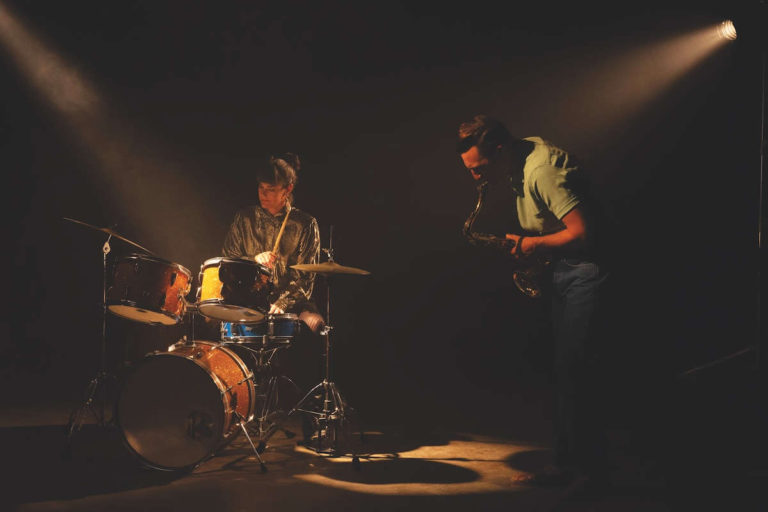
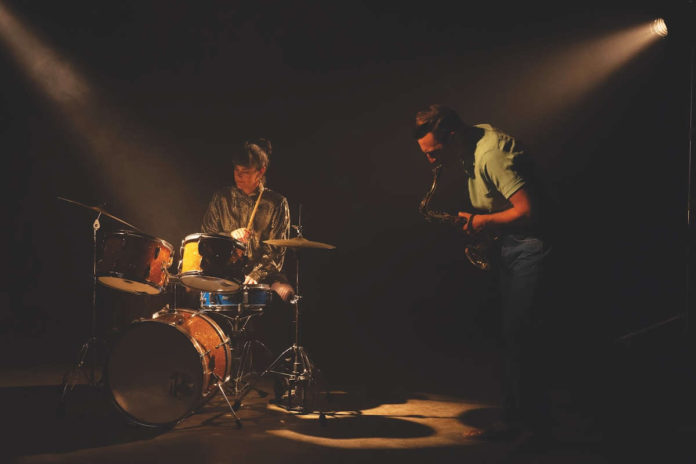
The Oakland couple that fronts the Saxophones—singer/songwriter and multi-instrumentalist Alexi Erenkov and drummer Alison Alderdice—met at a music camp. Alderdice was there as a singer and Erenkov as a songwriter. He’d just set aside the saxophone he’d been playing since middle school.

“I had a music teacher who got me into Stan Getz and Ben Webster, but I didn’t try to compose,” Erenkov said. “Jazz was too technical and emotionless. I connected more with songwriters like Paul Simon. Songwriting was always in the back of my mind.”

Erenkov was fond of lo-fi performers like Daniel Johnston and asked Alderdice to pick up the drums for the band he wanted to start. “I convinced her that sound and technique didn’t matter,” he said. “Since we started, things have progressed. We don’t have a very lo-fi sound now.”

The Saxophones put out their first EP, If You’re On The Water, in 2016. It got traction on blogs in the U.S. and Europe. Full Time Hobby, a label based in London, gave them a record deal. They began to tour internationally. “There’s more of a scene over there,” Erenkov said. “More venues and more support.”

Their new album, No Time For Poetry, continues to showcase their introspective sound. “The album title encapsulates the themes of the record,” Erenkov said. “The feeling of a moment when things are moving so swiftly, and changing so rapidly, there’s little time for reflection and stillness.

“Leonard Cohen is my favorite songwriter,” Erenkov continued. “While I was writing, I was listening to his albums I’m Your Man and The Future. They have a dated, futuristic sound, a hokey sci-fi sound. So, on this album, I leaned into keyboard and synthesizer more than before when composing. I didn’t use the guitar at all, so these songs are a bit more modern.”

Erenkov said the songs on No Time For Poetry are concerned with what’s going on in our society, rather than his own personal narrative. “I channel whatever’s on my mind at the moment,” he said. “There are a number of implicitly political tunes, influenced by the anger and cruel behavior I see from the administration, and people in general. It seems people are operating with less patience and more vindictiveness.”

The songs took shape over a 10-month period, in the couple’s home studio. “I teach music for a living, so I have a setup with an organ, guitars, woodwinds and a drum set,” Erenkov said. “The other albums were written while taking care of my kids. But they’re both in school now, so I had more psychic space to write and experiment.”

Many of the ideas for the album are put together at their home, Erenkov said. Then he makes demos and sends them to Richard Laws, the band’s keyboard and bass player, who now lives in Oregon. Laws sends his thoughts back, and Erenkov incorporates them into the arrangements.

“We’ve recorded our previous records on analog tape,” Erenkov said. “This time we wanted a cleaner, more digital sound, with less noise. After the basics were down, we went up to Vancouver, Washington, with Richard. We recorded the vocals and drums at Scenic Burrows, with Richard and me producing.”

Chiming keyboard notes and long, ambient sax tones open “Too Big for California,” a poetic description of the fires that swept the state. Erenkov’s mellow sung/spoken vocal floats over a leisurely groove, as he describes the disconnect between people living in the cities and the folks living close to the blazing hills. 

A muted bass line and atmospheric sax figures drift through “America’s the Victim.” The rhythm has a Latin/bossa nova feel that compliments an ironic lyric, describing the imagined woes of the privileged class.

“Burning With Desire” is a slow, despondent tango. Erenkov’s sax glides sadly between his phrasing as he takes a long, lonely spin around a dancefloor, looking for the affection that he fears will never come.

“I like trying to make an album come out the way it sounds in my head,” Erenkov said. “It’s never exactly what I intended it to be, but it’s always an interesting journey. I’m really happy with how this album turned out.”

The Saxophones’ ‘No Time For Poetry’ will be released on Nov. 7. Listen to their music at thesaxophonesus.bandcamp.com.

Obelisco reopens on Lakeshore

Leticia Chavez’s pozole doesn’t need the tiny container of habanero sauce that comes with it. Made with a tomato and cilantro broth, the spice levels in the verde version ($18) are delicious on their own. Giving into temptation, I decided to add the sauce anyway even though it was the color of molten lava. Regrets, I’ve had a few. At 12:30am that night, spooning in the habanero sauce felt like another big one. But that caveat shouldn’t deter fearless diners from attempting that perilous climb up the Scoville scale.

In addition to comforting pozole and the spiciest of sauces, Chavez makes sopes; enchiladas with mole, verde or rojo sauces; chile rellenos; ceviches and fajitas. I also tried one of the tacos and could immediately taste how fresh the tortillas were. Whether crispy or soft, they’re all handmade.

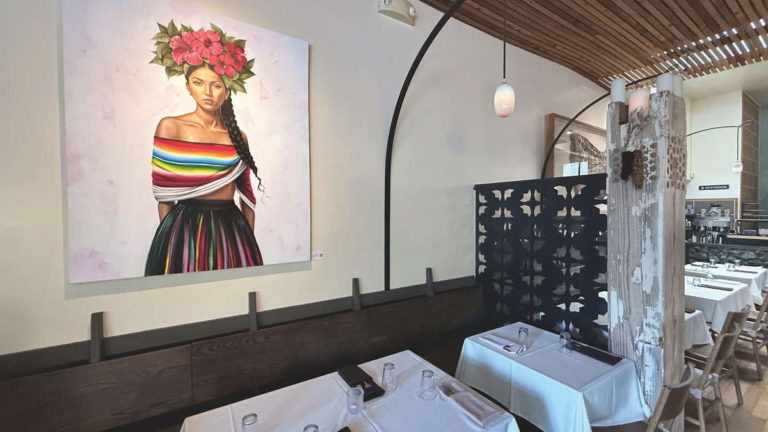
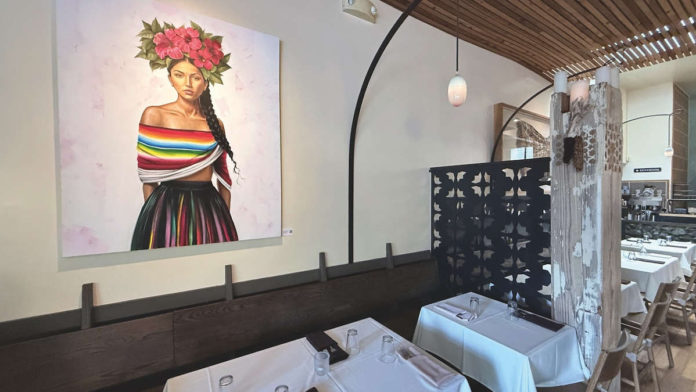
Obelisco is the third incarnation of Chavez’s restaurant. She started Taco Grill in 2007 across the street from the Fruitvale BART station. Several years later, she changed the name to Obelisco, after the hibiscus flower which grows abundantly in Puerto Vallarta, her hometown. This more evocative name suggested that the restaurant was making many other traditional Mexican dishes beyond the beloved taco. Chavez, who spoke with me on the phone with her helpful son Alain, told me that from the start the dishes have been made from a combination of family recipes and ones she’s adapted with California ingredients.

When she first opened Taco Grill, Chavez was one of the first Oakland chefs to adopt the practice of using organic, hormone-free meats. At the time, she had to explain what the term “organic” meant, that it was healthier than eating foods processed with chemicals. “People were so used to having greasy Mexican food, it was hard in the beginning to get people on board to eat ‘healthy food,’” Alain said. “Not realizing that real Mexican food is made fresh.”

Alain and his two sisters don’t have formal roles at the family-run Obelisco. They all do “a bit of everything” to help their mom out. “It’s not even a mom-and-pop shop,” Alain said. “It’s a mom shop, and she only has so much capacity and bandwidth.” He and his siblings have been her able assistants since the Taco Grill days. “People who’ve been coming back to us, they remember me when I was in high school,” he said.

The move from Fruitvale to Lakeshore took several months to complete. “It’s a really big change from Fruitvale, which was more of a taqueria-style restaurant,” Alain said. “Now we have a full, craft-cocktail agave bar.” Chavez decided to close the original location at the end of 2024 after sales declined in the neighborhood. People there began working from home after Covid.

When she was offered an opportunity to take over Shakewell’s space, the move made sense. Alain said many of their longtime customers live in the Dimond, Montclair and Piedmont neighborhoods. Another big plus—Chavez lives right down the street.

“Twenty years ago, the possibility of a Latina immigrant opening an expensive restaurant on Lakeshore was not possible,” Alain added. He noted that in all the years they’ve been in the neighborhood there’s never been a sit-down, family-style Mexican restaurant on Grand Avenue or Lakeshore. And no, Chipotle doesn’t qualify in this category.

“I keep hearing from all our neighbors who’ve lived here for years—they’ve never had an authentic Mexican restaurant that’s true to my grandmother’s recipes,” Alain said. “And they’re saying they’re so happy that we’re finally providing that for them.”

Chavez worked diligently to get the restaurant’s paperwork approved by the City of Oakland during the course of this year. If not for her perseverance, the review process could have been prolonged. Having said that, when Obelisco’s doors reopened for business Alain said they weren’t 100% ready.

“Even now, we’re still not quite prepared for the number of clients who are visiting us,” he said. “But we need to have the doors open.” The plan is to hire more staff and to stay open longer in order to create a sense of community, the way that Tim Nugent’s Shakewell used to do.

Obelisco, 3407 Lakeshore Ave., Oakland. Open Tue-Sun, 4–9pm. 510.817.4640. obeliscorestaurant.com

Free Will Astrology: Week of Oct. 22

0

ARIES (March 21-April 19): I bet your upcoming night dreams will include marriages, mating dances and sacramental unions. Even if you are not planning deeper mergers with trustworthy allies in your waking life, your subconscious mind is musing on such possibilities. I hope this horoscope inspires you to make such fantasies more conscious. What collaborations and blends would serve you well? Give your imagination permission to ponder new and exciting connections. Visualize yourself thriving amidst new connections.

TAURUS (April 20-May 20): In winemaking, malolactic fermentation softens a wine’s tart malic acid into gentler lactic acid. This process imparts a creamier and rounder mouthfeel, while preserving the wine’s structure. In accordance with astrological omens, I invite you to adopt this as your metaphor of power. See if you can refine your intensity without losing your integrity. Keep things interesting, but soften the edges a bit. Introduce warmth and steadiness into provocative situations so they’re free of irritation and easier to engage with, but still enriching.

GEMINI (May 21-June 20): The coming weeks will be an excellent time to practice the art of strategic disruption. One way to do it is to interrupt your patterns so they don’t calcify and obstruct you. Just for fun, you could eat breakfast for dinner. Take a different route to a familiar place. Talk to a person you would usually avoid. Say no when you’d normally say yes, or vice versa. Part of your brain loves efficiency, habits and well-worn grooves. But grooves can become ruts. As a rousing spiritual experiment, you could do things differently for no reason except to prove to yourself that you can. Playful chaos can be a form of prayer. Messing with your standard approaches will unleash your creativity.

CANCER (June 21-July 22): In Shinto mythology, Ame-no-Uzume is the goddess of mirth and revelry. In one story, she seduces the sun out of its hiding place by performing a humorous and provocative dance. I am sending her over to your sphere right now in the hope that she will coax you out of your comfort zone of retreat, control and self-protection. While I’m glad you have taken this break to recharge your spiritual batteries, I think it’s time to come out and play. You have done important work to nurture and process your deep feelings. Now we would love you to express what you’ve learned with freewheeling panache.

LEO (July 23-Aug. 22): Ancient cultures in Sumeria, Egypt and China used willow bark as a pain reliever. Many centuries later, in 1828, European scientists isolated the chemical salicin from the bark and used it to create aspirin. What had been a folk remedy became a widely used medicine all over the planet. Is there a metaphorically comparable development unfolding in your life? I think so. Something you’ve known or practiced could be evolving into its next form. The world may finally be ready to receive wisdom, a technique or an insight you’ve used for a long time. Consider refining and upgrading it. Share it in ways that meet the present moment’s specific need.

VIRGO (Aug. 23-Sept. 22): In honor of your special needs right now, Virgo, I am coining a new English word: edge-ucation. It’s like “education” but with an extra edge. Though book-learning is included in its purview, it also requires you to seek out raw teaching in all possible ways: on the streets, the bedroom, the natural world, everywhere. To properly pursue your higher edge-education, you must hunt down provocative influences, thought-provoking adventures and unfamiliar stimulation. Make the whole world your laboratory and classroom.

LIBRA (Sept. 23-Oct. 22): When I began writing horoscopes years ago, I had greater empathy with some of the signs than with others. But I worked hard to overcome this bias, and now I truly love and understand every tribe of the zodiac equally. I attribute this accomplishment to the fact that I have three Libra planets in my natal chart. They have propelled me to develop a warm, affectionate, fair-minded objectivity. I have a deeply honed capacity for seeing and liking people as they genuinely are, without imposing my expectations and projections onto them. The coming weeks will be an excellent time to tap into these qualities in yourself, dear Libra.

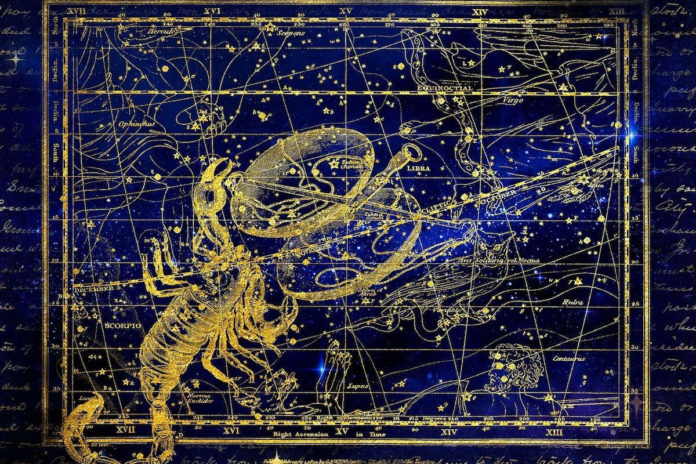
SCORPIO (Oct. 23-Nov. 21): Many cultures regard obsidian as having protective powers against negative energy. This makes it popular for healing talismans. Obsidian mirrors have often been used to scry for visions and prophecies. Because obsidian is so sharp, ancient peoples incorporated it into tools used to hunt for food, like knives and arrowheads. In modern times, obsidian is used for its beauty in tabletops, tiles and architectural components. Do you know how this precious substance is formed? It’s born in the shock between elements: molten lava meets water or cool air and hardens so quickly that crystals can’t form, trapping a mirror-dark clarity in volcanic glass. I propose we make it your symbolic power object in the coming months, Scorpio.

SAGITTARIUS (Nov. 22-Dec. 21): Medieval alchemists engaged in literal laboratory work as they attempted to create elixirs of immortality, concoct medicines to heal diseases and metamorphose lead into gold. But the modern practice of alchemy is primarily a psychological effort to achieve awakening and enlightenment. In the early stages of the work, the seeker experiences the metaphorical “black sun.” It’s a dark radiance, the beginning of creative decay, that fuels the coming transformation. I suspect you now have the potential to call on this potent asset, Sagittarius. It’s wild, though. You must proceed with caution and discernment. What worn-out aspects of yourself are you ready to let rot, thereby fertilizing future growth?

CAPRICORN (Dec. 22-Jan. 19): In Japan, shakkei refers to the practice of “borrowed scenery.” The idea is to create a garden so that surrounding features become part of its expansive context: distant mountains, an expanse of sky or a nearby body of water. The artistry lies in allowing the horizon to merge gracefully with what’s close at hand. I recommend this approach to you, Capricorn. Frame your current project with a backdrop that enlarges it. Partner with places, influences or long-view purposes that augment your meaning and enhance your beauty. Align your personal actions with a vast story so they send even more potent ripples out into the world.

AQUARIUS (Jan. 20-Feb. 18): Computer scientist Radia Perlman is the “Mother of the Internet.” She invented the Spanning Tree Protocol, a component that’s essential for the flow of online data. Despite her work’s splashy importance, hardly anyone knows of her. With that in mind, I remind you: Some revolutions unfold with little fanfare; positive transformations may be inconspicuous. How does that relate to you? I suspect the next beautiful or useful thing you contribute may also be veiled and underestimated, at least at first. And yet it may ultimately generate a shift more significant than you can now imagine. My advice is to trust the long game. You’re doing good work, though its recognition may be late in arriving.

PISCES (Feb. 19-March 20): The mystical Persian poet Hafez wrote, “Fear is the cheapest room in the house. I’d like to see you living in better conditions.” Picture that shabby room, Pisces: cramped, dim, damp. Now imagine you have resolved to never again live in such a place. In fact, sometime soon you will move, metaphorically speaking, into a spacious, high-ceilinged place with wide windows and skylights, fresh air flooding through. I believe life will conspire on your behalf if you initiate this bold move. You now have extra power to exorcize at least some of your angsts and embrace liberating joy.

Homework: Is it important to distinguish what you need from what you want? Newsletter.FreeWillAstrology.com

What’s there, here: on Golden State writers in ‘California Rewritten’

0

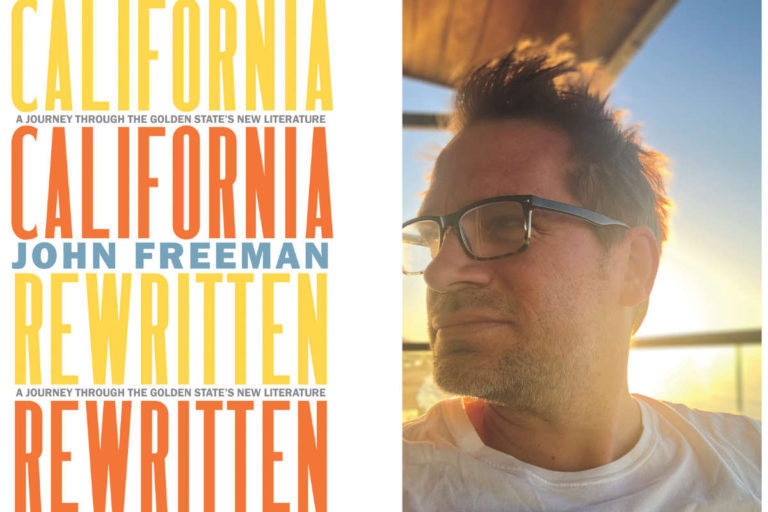
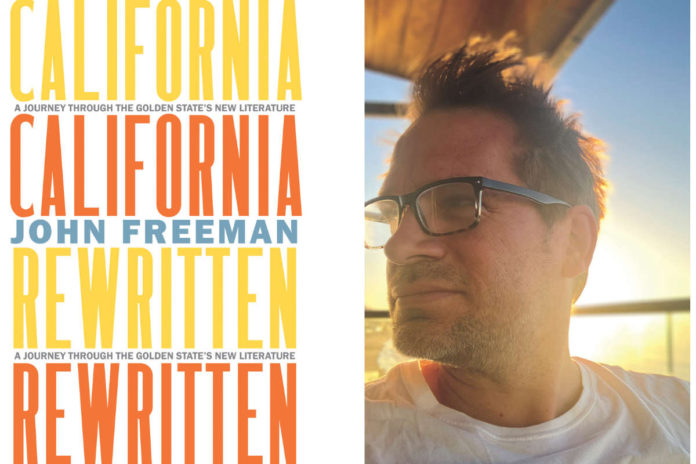
John Freeman, author of just-released California Rewritten: A Journey Through the Golden State’s New Literature, has an ask for his East Coast friends. “Picture the entire length of the East Coast as one state,” he says. That might give them an idea of the multi-habitat, multicultural, multi-political jigsaw puzzle that is California.

This concept is reflected in the 51 essays that make up California Rewritten, covering work from living California writers from Deborah A. Miranda (Bad Indians) to Amy Tan (The Backyard Bird Chronicles). Multiple Bay Area authors are part of the mix, including Rebecca Solnit (A Paradise Built in Hell), Elaine Castillo (America Is Not the Heart), Karen Tei Yamashita (I Hotel), Tommy Orange (There There) and Maxine Hong Kingston (The Woman Warrior) among others.

The idea for the book first came up in 2019, while Freeman dined in Berkeley with a group of people associated with his magazine, Freeman’s. The concept evolved as he hosted Zoom conversations with Alta Journal’s California Book Club. One of the first discussions kickstarting the idea revolved around C Pam Zhang’s How Much of These Hills Is Gold, Freeman said in a phone interview. The story about a Chinese family moving to California during the Gold Rush is “a story distorted by time,” he said.

In the essay on this book, he writes, “It might be a stretch to call it California’s Beloved, but [the writing] moves with the same rough magic and has a similar relationship to America’s radicalized indentured labor as Toni Morrison’s haunted masterpiece.”

That California is the source of so much contemporary literature, fiction, poetry and nonfiction—“more Californians have won Pulitzers in literature in the past decade than writers from any other region in America,” Freeman writes in the book’s introduction—made selections for California Rewritten difficult, he said. But two parameters made it a little easier. He wanted the authors to be alive, and he wanted to cover the gamut of California, not just L.A. and San Francisco. And themes arose, which seemed to naturally create sections.

So the book is divided into 12 sections, beginning with “Early Myths.” The first essay delves into Deborah A. Miranda’s Bad Indians: A Tribal Memoir.

Myths, Landscapes, Sounds, Ruptures

The essay on Bad Indians begins with Freeman’s own memories of being taught about the California missions as a school kid. “It is astounding how long this destructive and delusional fantasy of benign coexistence sold by ‘the mission project’ has remained a core part of the California curriculum,” despite the reality being genocide of the state’s Indigenous peoples, Freeman writes.

Miranda’s book, which includes poems, narratives, oral histories, field notes, “pseudo phrenological data” and other forms, is “a dazzling array of storytelling modes,” he writes. It delivers “vivid portraits of people,” her own people, the Ohlone—Costanoan Esselen.

Freeman quotes Miranda: “Maybe, like a basket that has huge holes where pieces were ripped out and is crumbling to dust and can’t be reclaimed, my tribe must reinvent itself—rather than try and copy what isn’t there in the first place.”

In section seven, “How We Sound,” one of the selections is Jaime Cortez’s Gordo. The short-story collection, set in a farmworkers’ camp in Watsonville, is based on Cortez’s own childhood. “To read this book is to feel part of a neighborhood, a place, one Cortez invites you into and allows you to watch as it asserts its boundaries through the eyes of a young, probably queer, slightly husky kid named Gordo. … That the sweat and labor of working happens off-screen, so to speak, speaks volumes.”

From Gordo, quoted by Freeman: “Primi loved a party. He splurged and rented maroon Bostonian lace-up shoes and a matching tuxedo with ruffles that made him look like a downwardly mobile rain forest rooster puffing up his plumes for one last mating dance.”

In the section “The State of Poetry,” Freeman includes his essay “On City Lights on Ferlinghetti’s 100th,” as well as musings on Gary Snyder and other poets.

“The magic of Ferlinghetti’s writing,” Freeman writes, “exists entirely in … transitions. They allow for his politics never to become the hinge on which the door of a poem swings, but rather something larger, and more eternally humane, even hopeful.”

Lawrence Ferlinghetti’s “Recipe for Happiness Khaborovsk Or Anywhere”:

“One grand boulevard with trees

with one grand cafe in the sun

with strong black coffee in very small cups

One not necessarily very beautiful

man or woman who loves you.

One fine day.”

The long essay “On Gary Snyder” illuminates the poet’s very long life and literary odyssey, his friendship with Allen Ginsberg, his “sensitivity to geography and our connection to land,” his many decades of studying Zen and the influence of Chinese poetry.

Quoting from Snyder’s The Practice of the Wild: “It is as hard to get the children herded into the car and down the hill to the bus as it is to chant sutras in the Buddha hall on a cold morning. One move is not better than the other, each can be quite boring, and they both have the virtuous quality of repetition.”

In section 12, “Ruptures,” the reader finds Hua Hsu’s Stay True. “It begins,” Freeman writes, “as so many California stories do, in the car.” Hsu writes, “Back then, there was no such thing as spending too much time in the car,” and Freeman notes, “and just like that we’re tooling around Berkeley toward College Avenue in a hand-me-down Volvo.” The book is about Hsu’s real relationship with his best friend, Ken, who is murdered. There are many references to books and songs of the times.

“The songs, through their repetition, take on the power of a soundscape,” Freeman writes. “Of all these, the Beach Boys’ ‘God Only Knows,’ is the most lasting, with its repeated phrase, ‘God only knows what I’d be without you.’”

The Book as a Map

Freeman is aware that California Rewritten isn’t the kind of book most people will sit down and read cover-to-cover. It requires time to think about each book discussed, time to absorb what each one says about California, its myths, its deceptions, its beauty, its constant reinvention.

“The book is like a map,” Freeman says. “There’s no right way to read it.” It wasn’t written for academics, he emphasizes, but for “delight and engagement.” California has always been a place where “oddballs are welcome,” he says, “and I hope readers [find the book] as openhearted as California at its best. I’m just trying to help that along … it’s part of a conversation that began with a conversation.”

John Freeman’s book tour will stop at several greater Bay Area bookstores and events, where he will also host authors featured in ‘California Rewritten,’ including Oct. 22 with Rebecca Solnit and Paul Yamazaki at Verdi Club, in San Francisco; Oct. 27 at Pegasus Books, in Berkeley; Oct. 29 with Tommy Orange at Clio’s, in Oakland; and Oct. 30 with Maxine Hong Kingston at Commonwealth Club of California, in San Francisco.

‘California Rewritten,’ by John Freeman. Heyday Books, $30. Release date Oct. 14, 2025.

Oakland Black Cowboy Association gets ‘Boots on the Ground’

Oakland Black Cowboy Association gets 'Boots on the Ground'
Wild West attire, live music and camaraderie are all trademarks of Oakland’s iconic Black Cowboy parade and festival. The annual events, hosted by the Oakland Black Cowboy Association (OBCA) on Oct. 4, brought hundreds of Western enthusiasts to DeFremery Park. The festivities almost didn’t leave the stables this year because of financial issues, leading the OBCA to solicit its first-ever...

Breathing room to make art

Breathing room to make art
The indelible image of artists starving happily in garrets while living the “La Vie Boheme,” as Rent would have it, has some roots in reality. Many artists, both visual and performing, do struggle to follow their passion while paying the rent. Starving happily … perhaps not. Since 1986, the Eureka Fellowship Program, established by the Fleishhacker Foundation, has given direct...

‘Runway Stories’ tell spooky-weird tales

'Runway Stories' tell spooky-weird tales
For every person wondering how a woodworker becomes a storyteller, curiosity and over-zealous caution will be conquered Oct. 30 under the Big Top tent at Radium Runway. “Runway Stories: The Side Show” lands courtesy of Radium Presents at the waterfront arts center in Alameda Point. The two-hour show is flavored with humor, humanity and tears; all arriving via wildly...

‘One Battle After Another’ ignites our revolutionary spirit

'One Battle After Another' ignites our revolutionary spirit
Let me get the hype out of the way: One Battle After Another isn’t simply just an instant classic—which it is. Neither is it just another great Paul Thomas Anderson movie. What One Battle After Another actually achieves is something even more singular: It’s a film released at a perfect time that feels like a manifesto, a state of...

Social Eyes: Week of Oct. 23-29

Social Eyes: Week of Oct. 23-29
THURSDAY, OCT. 23 JAZZ BEN GOLDBERG FESTIVAL OF MUSIC Berkeley clarinetist and composer Ben Goldberg is shoehorning a season’s worth of creative action into a three-day festival at Wyldflowr Arts. The Ben Goldberg Festival of Music opens each night with a solo set, followed by two different groups. Thursday includes Goldberg’s long-running trio Invisible Guy, and Ben Goldberg’s Glamorous Escapades playing Porch...

Murder By Death gives last call

Murder By Death gives last call
When Adam Turla said, “Honestly I forgot about this, I was out in the garden doing some weeding and then saw my phone reminder,” it was the first time a musician had ever told me they forgot about an interview due to gardening. However it made sense coming from Turla, who plans to spend a lot more time in...

‘No Time for Poetry’ offers modern reflection

'No Time for Poetry' offers modern reflection
The Oakland couple that fronts the Saxophones—singer/songwriter and multi-instrumentalist Alexi Erenkov and drummer Alison Alderdice—met at a music camp. Alderdice was there as a singer and Erenkov as a songwriter. He’d just set aside the saxophone he’d been playing since middle school. “I had a music teacher who got me into Stan Getz and Ben Webster, but I didn’t try...

Obelisco reopens on Lakeshore

Obelisco reopens on Lakeshore
Leticia Chavez’s pozole doesn’t need the tiny container of habanero sauce that comes with it. Made with a tomato and cilantro broth, the spice levels in the verde version ($18) are delicious on their own. Giving into temptation, I decided to add the sauce anyway even though it was the color of molten lava. Regrets, I’ve had a few....

Free Will Astrology: Week of Oct. 22

Free Will Astrology: Week of Nov. 12
ARIES (March 21-April 19): I bet your upcoming night dreams will include marriages, mating dances and sacramental unions. Even if you are not planning deeper mergers with trustworthy allies in your waking life, your subconscious mind is musing on such possibilities. I hope this horoscope inspires you to make such fantasies more conscious. What collaborations and blends would serve...

What’s there, here: on Golden State writers in ‘California Rewritten’

What’s there, here: on Golden State writers in ‘California Rewritten’
John Freeman, author of just-released California Rewritten: A Journey Through the Golden State’s New Literature, has an ask for his East Coast friends. “Picture the entire length of the East Coast as one state,” he says. That might give them an idea of the multi-habitat, multicultural, multi-political jigsaw puzzle that is California. This concept is reflected in the 51 essays...
19,045FansLike
17,709FollowersFollow
61,790FollowersFollow