Free Will Astrology: Week of Nov. 12

0

ARIES (March 21-April 19): The Akan concept of Sankofa is represented by a bird looking backward while moving forward. The message is “Go back and get it.” You must retrieve wisdom from the past in order to move into the future. Forgetting where you came from doesn’t liberate you; it orphans you. I encourage you to make Sankofa a prime meditation, Aries. The shape of your becoming must include the shape of your origin. You can’t transcend what you haven’t integrated. So look back, retrieve what you left behind and bring it forward.

TAURUS (April 20-May 20): The coming weeks will be an excellent time for you to engage in STRATEGIC FORGETTING. It’s the art of deliberately unlearning what you were taught about who you should be, what you should want and how you should spend your precious life. Fact: Fanatical brand loyalty to yourself can be an act of self-sabotage. I suggest you fire yourself from your own expectations. Clock out from the job of being who you were yesterday. It’s liberation time!

GEMINI (May 21-June 20): We should all risk asking supposedly wrong questions. Doing so reminds us that truth and discovery often hide in the compost pile of our mistaken notions. A wrong question can help us shed tired assumptions, expose invisible taboos and lure new insights out of hiding. By leaning into the awkward, we invite surprise, which may be a rich source of genuine learning. With that in mind, I invite you to ask the following: Why not? What if I fail spectacularly? What would I do if I weren’t afraid of looking dumb? How can I make this weirder? What if the opposite were true? What if I said yes? What if I said no? What if this is all simpler than I’m making it? What if it’s stranger than I can imagine?

CANCER (June 21-July 22): Cancerian novelist Octavia Butler said her stories were fueled by two obsessions: “Where will we be going?” and “How will we get there?” One critic praised this approach, saying she paid “serious attention to the way human beings actually work together and against each other.” Other critics praised her “clear-headed and brutally unsentimental” explorations of “far-reaching issues of race, sex, power.” She was a gritty visionary whose imagination was expansive and attention to detail meticulous. Let’s make her your inspirational role model. Your future self is now leaning toward you, whispering previews and hints about paths still half-formed. You’re being invited to be both a dreamer and builder, both a seer and strategist. Where are you going, and how will you get there?

LEO (July 23-Aug. 22): The Tagalog language includes the word kilig. It refers to the butterfly-in-the-stomach flutter when something momentous, romantic or cute happens. I suspect kilig will be a featured experience for you in the coming weeks—if you make room for it. Please don’t fill up every minute with mundane tasks and relentless worrying. Meditate on the truth that you deserve an influx of such blessings and must expand your consciousness to welcome their full arrival.

VIRGO (Aug. 23-Sept. 22): Your liver performs countless functions, including storing vitamins, synthesizing proteins, regulating blood sugar, filtering 1.5 quarts of blood per minute and detoxifying metabolic wastes. It can regenerate itself from as little as 25% of its original tissue. It’s your internal resurrection machine: proof that some damage is reversible, and some second chances come built-in. Many cultures have regarded the liver not just as an organ, but as the seat of the soul and the source of passions. Some practice ritual purification ceremonies that honor the liver’s pivotal role. In accordance with astrological omens, Virgo, I invite you to celebrate this central repository of your life energy. Regard it as an inspiring symbol of your ability to revitalize yourself.

LIBRA (Sept. 23-Oct. 22): The pupils of your eyes aren’t black. They are actually holes. Each pupil is an absence, a portal where light enters you and becomes sight. Do you understand how amazing this is? You have two voids in your face through which the world pours itself into your nervous system. These crucial features are literally made of nothing. The voidness is key to your love of life. Everything I just said reframes emptiness not as loss or deficiency, but as a functioning joy. Without the pupils’ hollowness, there is no color, no shape, no sunrise, no art. Likewise in emotional life, our ability to be delighted depends on vulnerability. To feel wonder and curiosity is to let the world enter us, just as light enters the eye.

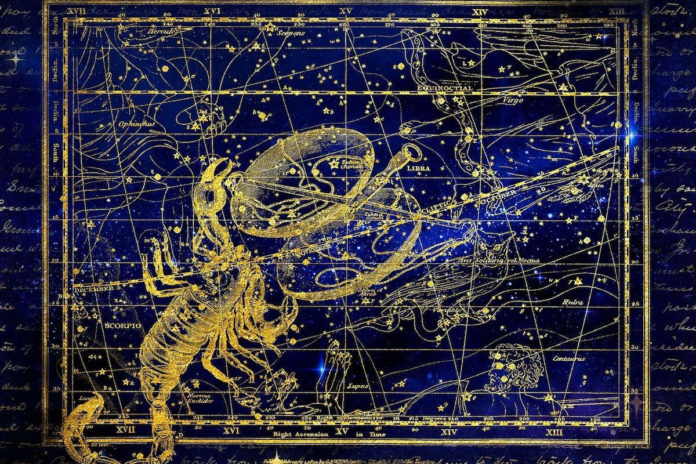
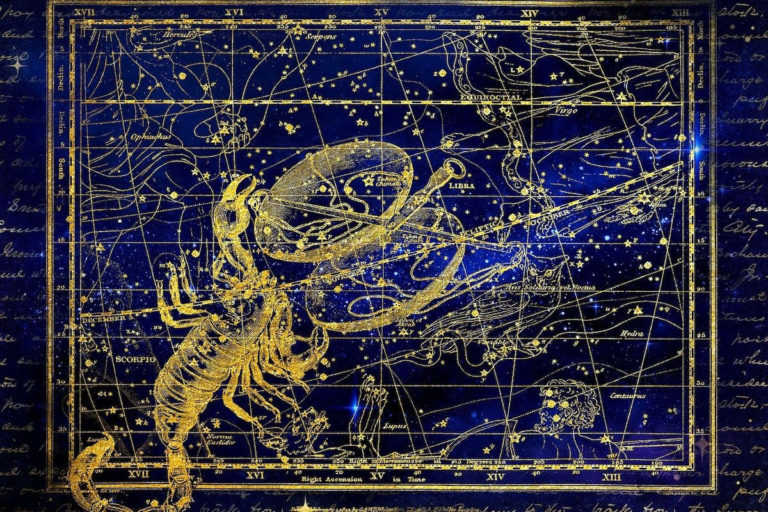
SCORPIO (Oct. 23-Nov. 21): Your dreams speak in images, not ideas. They bypass your rational defenses and tell the truth slantwise because the truth straight-on may be too bright to bear. The source of dreams, your unconscious, is fluent in a language that your waking mind may not be entirely adept in understanding: symbol, metaphor and emotional logic. It tries to tell you things your conscious self refuses to hear. Are you listening? Or are you too busy being reasonable? The coming weeks will be a crucial time to tune in to messages from deep within you.

SAGITTARIUS (Nov. 22-Dec. 21): The tour guide at the museum was describing the leisure habits of ancient Romans. “Each day’s work was often completed by noon,” he said. “For the remainder of the day, they indulged in amusement and pleasure. Over half of the calendar consisted of holidays.” As I heard this cheerful news, my attention gravitated to you, Sagittarius. You probably can’t permanently arrange your schedule to be like the Romans.’ But you’ll be wise to do so during the coming days. Do you dare to give yourself such abundant comfort and delight? Might you be bold enough to rebel against the daily drudgery to honor your soul’s and body’s cravings for relief and release?

CAPRICORN (Dec. 22-Jan. 19): The Zulu greeting Sawubona means “I see you.” Not just “hello,” but “I acknowledge your existence, your dignity and your humanity.” The response is Ngikhona: “I am here.” In this exchange, people receive a respectful appreciation of the fact that they contain deeper truths below the surface level of their personality. This is the opposite of the Western world’s default state of mutual invisibility. What if you greeted everyone like this, Capricorn—with an intention to bestow honor and recognition? I recommend that you try this experiment. It will spur others to treat you even better than they already do.

AQUARIUS (Jan. 20-Feb. 18): Bear with me while I propose an outlandish-sounding theory: that you have enough of everything. Not eventually, not after the next achievement, but right now: You have all you need. What if enoughness is not a quantity but a quality of attention? What if enoughness isn’t a perk you have to earn but a treasure you simply claim? In this way of thinking, you consider the possibility that the finish line keeps moving because you keep moving it. And now you will decide to stop doing that. You resolve to believe that this breath, this moment and this gloriously imperfect life are enough, and the voice telling you it’s not enough is selling something you don’t need.

PISCES (Feb. 19-March 20): The Inuit people have dozens of words for snow. The Scots have over 100 words for rain. Sanskrit is renowned for its detailed and nuanced vocabulary relating to love, tenderness and spiritual bliss. According to some estimates, there are 96 different terms for various expressions of love, including the romantic and sensual kind, as well as compassion, friendship, devotion and transcendence. I invite you to take an inventory of all the kinds of affection and care you experience. Now is an excellent phase to expand your understanding of these mysteries—and increase your capacity for giving and receiving them.

Homework: What blessing would be most fun for you to bestow right now? Newsletter.FreeWillAstrology.com
The Power of Lunch

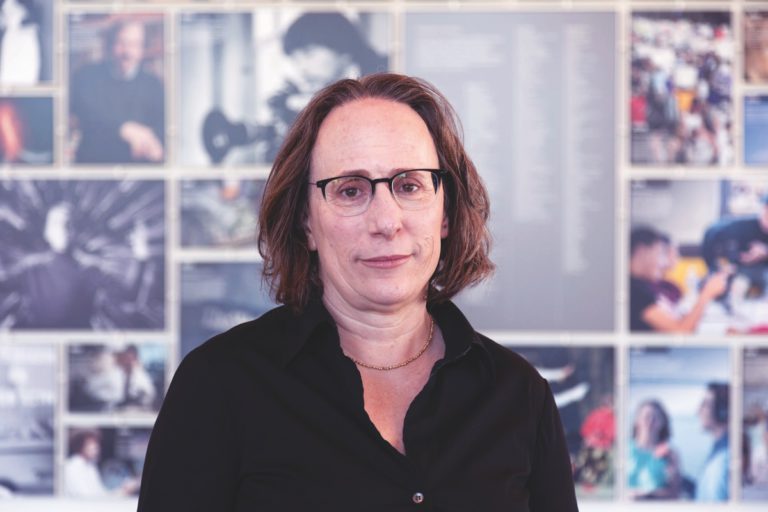
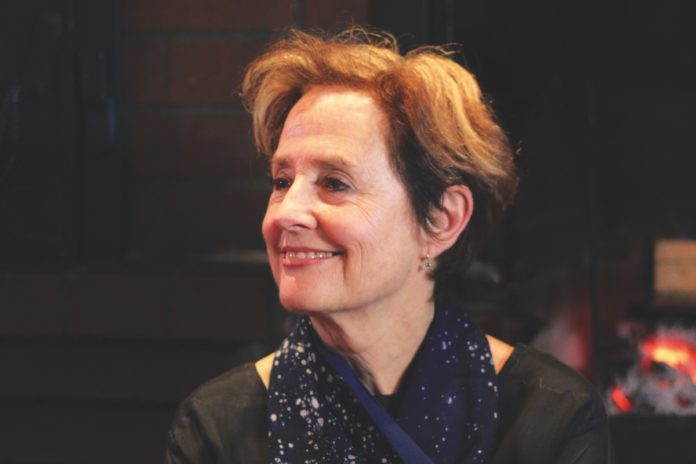
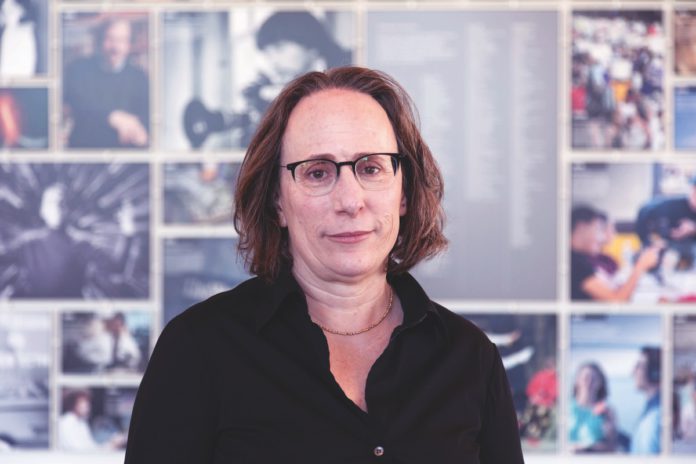
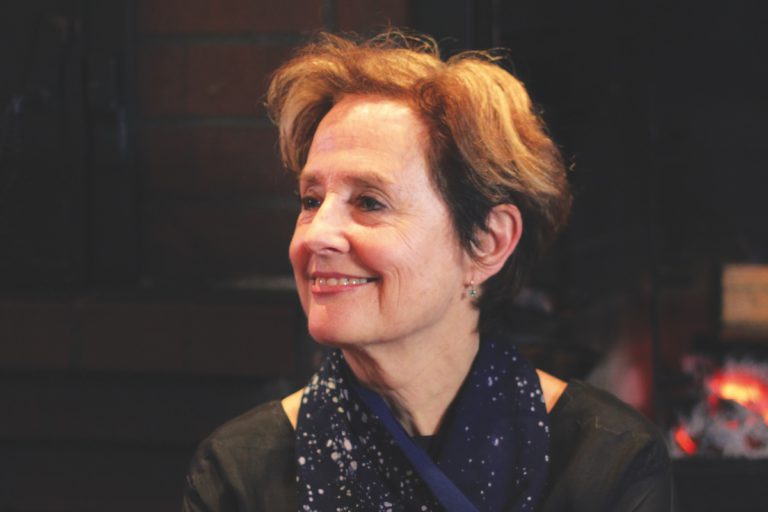
Alice Waters, the pioneering founder of Chez Panisse and creator of the groundbreaking Edible Schoolyard Project, remains a leading voice in the farm-to-table movement. Now 81, she just released a new book, A School Lunch Revolution. As the title implies, her latest project is no less ambitious than the culinary innovations she’s so well known for.

Waters reminds us that the future of both health and climate begins with what’s on our plates. Changing the way schools buy food and serve lunch can have a major impact on climate change, health and even learning.

“We have to support only farmers who are farming organically and regeneratively,” she says. “That’s what worked at Chez Panisse—we got to know the farmers and have always bought our food straight from them.”

Before her Oct. 19 talk in Berkeley, the tireless visionary talked about her book, her mission and why lunch might just be the most powerful meal of the day.

You’ve introduced the idea that food is political, and that every choice we make about what we eat matters. How does A School Lunch Revolution carry that message forward for a new generation?

ALICE WATERS: By doing what we did at the beginning of Chez Panisse 54 years ago. It’s connecting with the local farmers and ranchers and fishers who are doing the right thing organically and regeneratively. This addresses climate change, and it fits into the USDA reimbursement requirements too.

We experimented with lots of schools in California and around the country, and we know kids like very simple foods. It’s the power of food that makes me believe that we can make this change, absolutely.

You describe lunch as a daily opportunity for connection, nourishment and education. How do you envision the ideal school lunch, not just on the plate, but in spirit?

In spirit, I like to think about the Conscious Kitchen over in Marin. … They took the gymnasium, and they brought in dining tables and chairs, and they put up pictures of food during the lunch hour.

They managed to get the help of parents who go to the farmers’ markets, and they completely changed school lunch. Children come in and sit down and eat the food together, and that’s a big, important point. That’s how we, dare I say, could teach democracy.

It sounds like it turned lunch from controlled chaos into a time of value, learning and connection.

Yes! A long time ago, at the beginning of the Edible Schoolyard, I thought we would be able to go all the way and build the cafeteria and do school lunch. So I thought about it very deeply, and I had the opportunity to decide. The cafeteria showed that it fed all 800 kids seated into rooms on either side of the cafeteria, and I thought, “We could be connected so we don’t just waste time eating lunch, right?”

So I’ve really thought a lot about that data. It’s not just about eating delicious local, seasonal food, but it’s about sitting down and eating it together.

Absolutely! It sounds like there’s so many other opportunities for learning that could be naturally folded in.

Yes, and in the testing they’ve been doing with Jennifer Newsom they had real classes of kids that were coming in and it was so interesting that you didn’t have to really do anything in the way of teaching. They just started eating and talking to each other. There was not really any resistance.

Your work often blurs the line between nourishment and activism. How do you sustain hope and motivation in the face of systems that still resist change?

Because I am sure that the power of food wins. And it’s connected to how the food grows. Local and healthy is the only kind of food I want to eat. And that’s what we’ve been doing at Chez Panisse for 54 years. So I know that when I can’t find one thing, I find another. And I know also that if farmers know that I’m buying it at the real cost they want to continue to grow it. It’s helped spark a cultural shift toward local, seasonal food.

Looking back, what lessons from that movement feel the most urgent to revisit today in an era of industrialized food systems and climate change?

Well, that’s school lunch, because the next generation needs to make different decisions about the world they live in. Food is essential, and I believe that education is as essential as food in an intellectual, thinking way.

So, what could be better than to get every school on this planet buying food directly? And then it would normalize it, too. Just in the Bay Area you can see what farmers’ markets have done.

Practically every town has them, and they were designed to help the farmer. We need something more, and school lunch is that idea. Every day, eating food from the local people who grow it. And that’s a support system that our farmers and ranchers and fishers have never had.

It’s bringing back the way things used to be in this country.

This is why I love it, because every country on this planet has done it in the recent past or is still eating that way. Cities like Paris. I saw it in Japan, one of the more enlightened places on the earth. Scandinavia; lots of places are doing this.

In England King Charles was part of a huge foundation, too, and so I know that we can learn a tremendous amount if we make this a global effort. And I’m hoping that Slow Food will take it on as theirs.

What I love about your cookbook is that it’s so simple, and I think that’s what people need. There’s a mistaken idea that eating healthy is time consuming, complicated and expensive, but it does not need to be.

No it doesn’t. I mean, the difference is in the preparation. I might bite into an apple, but most kids are not willing to do that. But if you cut the apple and slice it, every one of the kids wants to try it. It’s just about the intimidation of certain things that have pushed kids away and, of course, the indoctrination of all the ads [for highly processed food].

We have a lot to deal with, but the school really wants to do this. I know that it’s possible, and what I’m going to try and do next is find videos of schools that have done it.

Because we need to see that in action. 

Your work, your passion and your commitment are so inspiring.

I just know that it works. I would never change the way we purchase food for Chez Panisse. We serve 500 people a day, and always know the farmers to call. It’s a total education, and everyone who comes eats every bite. I wouldn’t be so bold if I didn’t know for sure. I’ve done the Edible Schoolyard for 34 years and I don’t know if you know, but it’s expanded around the world to 7,500 schools.

It’s just because it’s an idea whose time has come. It’s about learning by doing and education of the senses.

Bay visionary turns struggle and soul into art

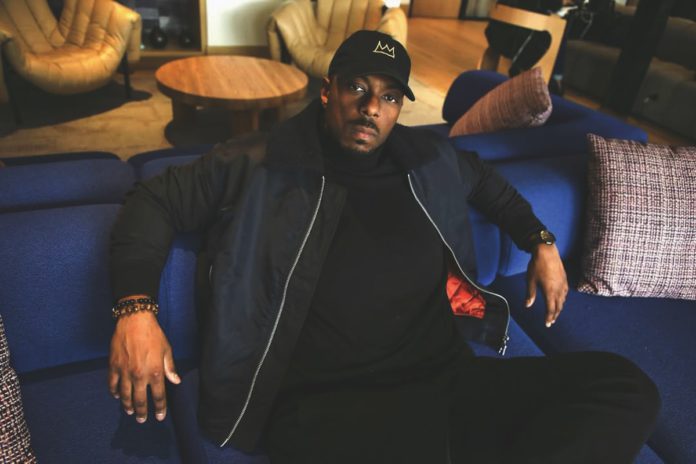
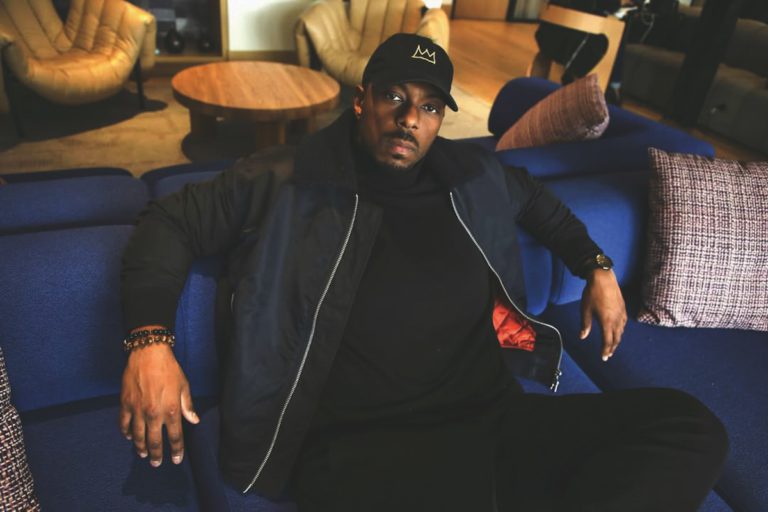
Filmmaker Michael J. Payton grew up in Oakland, with short stints in Pittsburg and Richmond, but it was the Bay that gave him his sense of independence and the confidence to trust his vision. Since age 11, he’s known exactly what he wanted to do.

“I saw hip-hop and the media industry as a way to get out,” Payton says. “I saw people who looked like me, came from neighborhoods like mine and spoke like me. They were making millions of dollars and speaking truth to power.”

While studying TV and radio broadcasting at San Francisco State University, Payton earned a scholarship from the Shawn Carter Foundation. The relief of having his tuition covered allowed him to fully focus on his creative pursuits. That scholarship did more than fund his education, it opened doors and built a network of support that continues to shape his career.

“The Shawn Carter Foundation isn’t just giving young people scholarships,” Payton says. “They’re teaching financial literacy, taking kids out of the hood and letting them see what life is like beyond their neighborhood.”

In 2017 Payton was selected as a California Capital Fellow, committing to a year of public service under then-Gov. Jerry Brown. The experience provided him a firsthand look at how public policy decisions are made and how resources get distributed. One highlight was helping the City of Stockton secure millions of dollars in funding for AmeriCorps volunteer initiatives.

“Being a fellow taught me how decisions get made and how resources get allocated,” Payton recalls. “I’m always trying to advance a conversation about the broader issues that affect my community.”

After completing the fellowship, Payton moved to New York to attend NYU, where he earned a master’s in media, culture and communication in 2020. His time there accelerated his path as a filmmaker. While living in New York, he created an unauthorized YouTube documentary on Murder Inc., the label behind artists like Ja Rule, Ashanti and Lloyd. The project quietly gained traction, enough to catch the attention of Irv Gotti, the label’s co-founder.

One day, Payton received a direct message from Gotti on Instagram. The record executive had watched the film and wanted Payton to direct the official story. That message led to The Murder Inc Story, a five-part documentary series on BET chronicling the label’s rise, fall and resilience during a federal investigation.

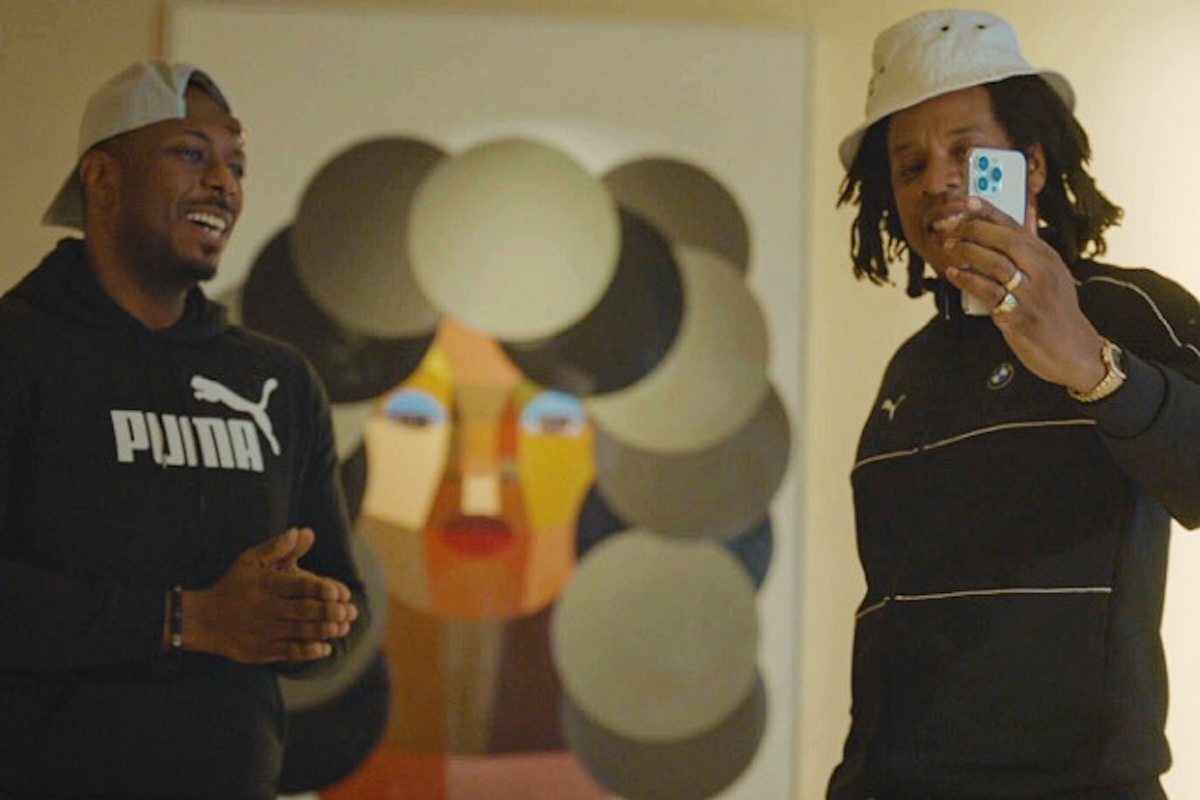
Directing the series delivered a full-circle moment: interviewing Jay-Z, whose foundation helped Payton attend college years earlier. During their conversation, Payton shared that he had been a Shawn Carter Foundation scholarship recipient. Jay-Z immediately called his mother, Dr. Gloria Carter, co-founder of the foundation, to connect with one of its success stories in real time.

“Michael is a direct representation of everything the foundation stands for,” says Dania Diaz, executive director of the Shawn Carter Foundation. “His professionalism, his compassion, his drive to empower his community—that’s exactly what we hope to cultivate.”

FULL CIRCLE For ‘The Murder Inc. Story,’ Payton interviewed Jay-Z, whose foundation helped Payton attend college years earlier. (Photo courtesy of Michael J. Payton)

Looking ahead, Payton is developing a documentary on Soul Beat, the former Bay Area TV station that amplified Black culture in the ’80s and ’90s. He hopes to preserve its legacy while continuing to tell stories that challenge injustice and celebrate creativity born from struggle.

“Entertainment is great,” he says. “But at what point are we going to start using these platforms to push back on the harm being done to our communities?” From an East Bay kid with a camera to a filmmaker interviewing icons, Payton’s path mirrors the Bay’s self-made spirit—resourceful, political and proud. As he turns his lens toward projects like Soul Beat, he’s not just telling stories from the Bay, he’s preserving its legacy and proving those voices still matter far beyond it.

New book details fight to shut youth prisons

0

In the 1990s, writes Albany-based author Nell Bernstein in her new book In Our Future We Are Free, a myth emerged—that of so-called “juvenile superpredators.” It was fueled by pseudoscience, notably the writings of Princeton University political science professor John J. DiIulio Jr. who, Bernstein writes, “spliced speculative demographics with deep-seated racial stereotypes to come up with a monster that was perfectly attuned to public fears and political appetites.”

This in turn fueled a nationwide push to try juvenile offenders as adults, and to expand infrastructure to incarcerate what were overwhelmingly youth of color. “During the 1990s, almost every state in the nation passed new laws facilitating the transmogrification of children into adults for the purpose of punishment,” Bernstein reports. “By the early 2000s, a quarter-million teenagers were being tried in adult court each year.”

The subtitle of Bernstein’s book, The Dismantling of the Youth Prison, informs readers that she will document how, over 20-plus years, a coalition of parents, organizations, doctors, lawyers, journalists and youth fought to end the brutality of these institutions—and won.

“The 75% drop in youth incarceration that has taken place over the past two decades is the result of countless individual decisions about whether to lock up a particular child,” she writes. “Over time, these decisions influenced…an emerging consensus that locking up kids for low-level offenses is both unproductive and morally indefensible.”

Bernstein’s involvement in this issue began early, she said in a phone interview. Her first job was in a youth group home, and she spent 10 years editing a youth newspaper in San Francisco, including hiring kids coming out of California Youth Authority facilities. The stories she heard and writes about were horrific, making In Our Future a hard read at times, but served as the inspiration for her earlier book, Burning Down the House: The End of Juvenile Prison, as well as her newest one.

In Our Future relates stories from across the United States, but activists in the East Bay, and Bay Area in general, were key to the struggle. In 2001, Oakland’s Ella Baker Center for Human Rights began hosting meetings for parents to discuss how to help their incarcerated children. This grew into a statewide campaign.

Also in 2001, the Alameda Board of Supervisors, convening to review a plan for a new, huge youth jail, found itself “facing a small army of young people. Unfurling banners that read too big, too far, too racist, protestors called attention to a disturbing statistic: Black people made up just 17% of Alameda County residents but 59% of those in the current juvenile hall. Building an even larger one, young activists argued, was simply an invitation to lock up more Black youth,” Bernstein writes. The plan was not approved.

San Francisco’s Young Women’s Freedom Center, founded in 1994, is lauded for its work, which “is unabashedly abolitionist. Its statewide Freedom 2030 campaign aims to end the criminalization of women, girls, and gender-expansive people.”

The book details pushback to the coalition’s efforts, including from the well-funded California Correctional Peace Officers Association. Yet against the odds, in 2020, California Gov. Gavin Newsom announced plans to shut down the state’s youth prison system. The California Youth Authority closed in 2023.

But, as Bernstein details, in some counties, this has pushed youth into juvenile halls, never designed for long-term incarceration, where they once again struggle with deplorable conditions. “The U.S. still has the highest rate of youth incarceration on the planet,” she said. Root causes of youth offending—poverty, racism, poor schools, mental health—are still not being addressed.

Yet, Bernstein sees the book’s message as one of hope, and beyond that, inspiration for other movements, especially those resisting an authoritarian state. She writes, “As I spoke with some of [the] leaders, I was reminded of the AIDS quilt—pieced together by people all over the country, unknown to one another but all affected by the same tragedy, each square an expression of love as resistance.”

She has launched a Substack, using the book’s title, for those wanting to continue that conversation.

‘In Our Future We Are Free’ by Nell Bernstein, release date Nov. 11, 2025, The New Press, $29.99.

Social Eyes: Week of Nov. 6-12

THURSDAY, NOV. 6

GOTH ROCK

NOX NOVACULA

Emerging from the pallid cemetery known as Seattle, Nox Novacula breathes cold, dead air into the gothic scene with their theatrical, deathrock hymns. Their dark, seductive energy pays homage to the genre’s origins but stays urgently modern. There are echoes of Christian Death, Sisters of Mercy and Death Cult, twisted and experimented upon. On their latest LP, Feed the Fire, Charlotte Blythe’s commanding, virtuoso vocals guide the listener through icy-hot tales of despair and action, giving a traditional macabre art a new electronic pulse. SONYA BENNETT-BRANDT

INFO: Thu, 9pm, Eli’s Mile High Club, 3629 Martin Luther King Jr. Way, Oakland. $12/adv, $15/door. 510.808.7565.

THURSDAY, NOV. 6

PUNK/RAP

WORLDS COLLIDE

There’s no denying we live in a divided society. The citizens of this country are having a wedge driven further and deeper between us, separating rich and poor, liberal and conservative, “legal” and “illegal.” Isn’t it time we just all came together to get along? That’s the idea behind Worlds Collide, a mash-up show of Bay Area rap and punk artists featuring, but not limited to, Kai the MC, Blunt Force Karma, TheeRemendy and Durango Dog. Celebrate the best in Bay Area underground music with eight different acts that celebrate the DIY ethic. MAT WEIR

INFO: Thu, 7pm, Continental Club, 1658 12th St., Oakland. $10/adv, $15/door. 510.542.5742.

FRIDAY, NOV. 7

JAZZ

JOEL FRAHM TRIO

Over some three decades, Joel Frahm built a sterling reputation in the New York jazz scene as a commanding tenor saxophonist whose warm, brawny tone, compelling sense of swing and boundless improvisational imagination made him an invaluable collaborator. With more than 100 albums as a leader and sideman to his credit, Frahm can be found in the midst of a bevy of brilliant projects. In his only Bay Area date on a Western tour, he performs with his long-running trio featuring bassist Dan Loomis and drummer Ernesto Cervini, a band ideally equipped to match his intense lyricism and muscular, rhythmic expression. ANDREW GILBERT

INFO: Fri, 7:30 pm, The Sound Room, 3022 Broadway, Oakland. $31.72. 510.708.9691.

FRIDAY, NOV. 7

INDIE

Y LA BAMBA

The famed los luchadores wrestlers take their name from “lucha,” which means “fight,” but is also a nickname for “light.” Y La Bamba is touring in support of its seventh album, Lucha, and both meanings resonated with the band’s lead vocalist and producer, Elena “Luz” Mendoza Ramos. The isolation of the pandemic, Ramos’ move to Mexico City after 15 years in Portland, her struggle to reconcile her multiple identities—female, queer, Mexican American/Chicanx—all influenced the songs that became the album described as “sonically sprawling.” Ramos sings, “I was very confused / By the memories / Of a sorrowful yesterday” on “Nunca,” from Lucha. Confused, maybe. A survivor, definitely. JANIS HASHE

INFO: Fri, 9pm, The New Parish, 1743 San Pablo Ave., Oakland. $32.55. 510.227.8177.

FRIDAY, NOV. 7

THEATER

HIRSCHFELD’S BROADWAY

Shotgun Players, the beloved ant-meets-Goliath jump-start theater company, hops a few blocks northeast to Brower Center with this production. An evening with David Leopold from the Al Hirschfeld Foundation, playing host to a multimedia presentation, celebrates Hirschfeld’s legendary art. The option to simply gawk is there, but so is the opportunity to purchase limited-edition prints hand-signed by the artist. A portion of all sales supports Shotgun Players’ contribution to the East Bay’s theater scene. Copies of Sondheim, an oversized tabletop book offering star essays and Hirschfeld’s more than 50 drawings of Sondheim and his musicals, plays and films, will be available. LOU FANCHER

INFO: Fri, 7pm, David Brower Center, 2150 Allston Way, Berkeley. $20. 510.841.6500.

SATURDAY, NOV. 8

JAZZ

MALI OBOMSAWIN QUARTET

Brooklyn bassist, vocalist and composer Mali Obomsawin stands at the center of a rising movement of Native American jazz artists expanding the tradition by drawing on Indigenous music and highlighting the contributions of overlooked masters from the past. A member of the Julia Keefe Indigenous Big Band, Obomsawin also leads several projects of her own. At the Freight she performs her score for Julian Brave NoiseCat and Emily Kassie’s documentary, Sugarcane, an investigation into the history of abuse at Indian residential schools in Canada. Her score for Sugarcane draws on her dedication to free jazz, rock and American roots music. – AG

INFO: Sat, 8pm, The Freight, 2020 Addison St., Berkeley. $39-$44. 510.644.2020.

SATURDAY, NOV. 8

SQUARE DANCE

DARE TO BE SQUARE WEST

Remember “Swing your partner, do-si-do” from middle school? No? Then learn it for the first time when Dare To Be Square West promenades into Berkeley. Founded in 2003 in North Carolina, the dance group’s western arm was started in—where else?—Portland in 2007. Ashkenaz is hosting a whole weekend of calling, music and traditional square dances, featuring mentor callers and dance bands L.A.’s Echo Mountain and Portland’s Stumptown Stringband. Local talent is also promised. This is an all-ages event, so small sashayers are welcome. Performances on Nov. 8-9. – JH

INFO: Sat, 7:30pm, Ashkenaz, 1317 San Pablo Ave., Berkeley. $20-$150. 510.525.5099.

SUNDAY, NOV. 9

EMO

TRSH

Springfield, Missouri’s TRSH stirs volatile punk into the Midwest emo revival. Their lyrics are self-deprecating and transparently honest portraits of messing things up, sliding towards rock bottom and not caring, but actually caring a lot. Live, the gap between the audience and the band thins as the crowd is pulled into the wry, raw chaos. With their new LP, String Theory, they merge high-energy, riff-heavy technicality with irreverent humor and their own flair. Who else would title a song “Drown Me in a Bathtub Filled with Wingstop Ranch”? – SBB

INFO: Sun, 7pm, 924 Gilman St., Berkeley. $18. 510.524.8180.

TUESDAY, NOV. 11

INDIE

PORTUGAL. THE MAN

It’s impossible to decide if Portugal. The Man’s fervor for social justice or for turning out ear-worm singles and RIAA-certified Platinum albums like 2017’s Woodstock is greater. Instead, simply sink into the sonic mental health of the drum-forward, lyric-led, alt-rock band. Their Pass The Mic Foundation and Frances Changed My Life initiatives focus on activism related to the genetic disease DHDDS—band members John and Zoe Gourley’s daughter has the condition—and on human rights, community health and the environment. How those forces impact Indigenous Peoples is a central concern. While raising and contributing millions of dollars to related charities, Portugal can’t help but add favorite tracks to fans’ audiophiles—a win-win for everyone. – LF

INFO: Tue, 8pm, Fox Theater, 1807 Telegraph Ave., Oakland. $66-89. 510.302.2250.

WEDNESDAY, NOV. 12

PSYCH

MELT-BANANA

All last month independent, nonprofit radio station Psyched! Radio hosted multiple shows around the Bay. Under the banner of Psyched! Fest, this multi-day, multi-venue fest celebrated the best in psych-rock from Shannon and the Clams and Black Rebel Motorcycle Club to up-and-coming artists like Gabi Bravo and Dark Chisme. It even had a movie day featuring director Lance Bangs and a literary night with authors Tate Swindell, K.R. Morrison and Ayla Ginger. Now it all culminates into this, the Psyched! Fest After Party with the wildly crazed headliner, Melt-Banana. Since forming in the early 1990s, this Japanese noise-rock/punk/psych act has pushed the boundaries of what it means to play music. – MW

INFO: Wed, 7pm, Cornerstone, 2367 Shattuck Ave., Berkeley. $38.06. 510.214.8600.

The Lucky Losers play blues without borders

0

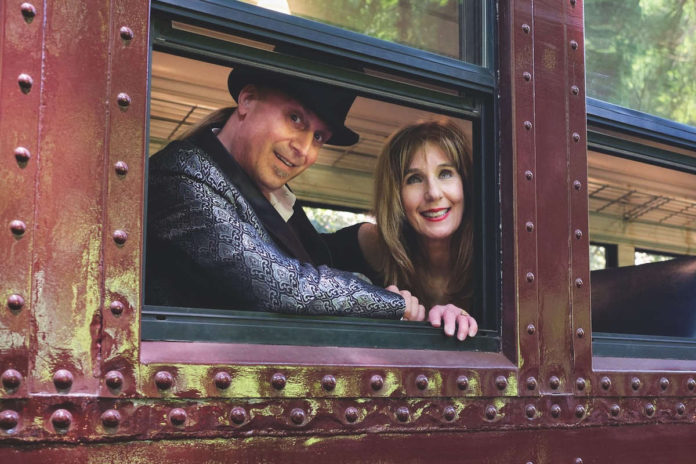
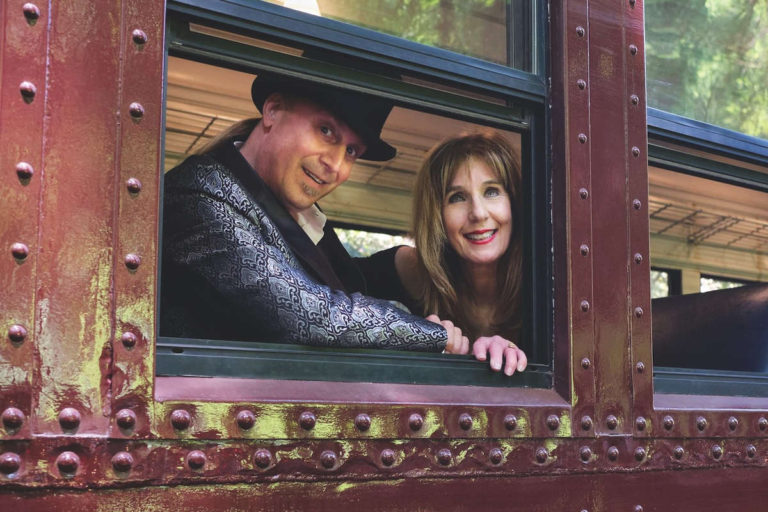
The Lucky Losers just got back to San Francisco after a long national tour. The duo—vocalist Cathy Lemons, and singer and harmonica player Phil Berkowitz—said they were glad to be home, but they didn’t have a lot of time to rest.

“We’re releasing our new album, Arrival, in a couple of days,” Lemons said. “We book and manage ourselves, so putting a record out requires a lot of work. We have to hire a radio publicist and a press publicist, arrange for the distribution and manufacture of the CDs, and get things set up on the streaming services. It’s all got to be perfect.”

Arrival is the duo’s sixth collection, and follows in the footsteps of their 2020 set Godless Land, winner of five Independent Blues Awards, including Best Blues/R&B Soul CD. It’s a fitting award, since their arrangements draw on R&B, soul, gospel, rock, funk and downhome blues.

They recorded Arrival at Greaseland Studios with members of their touring band—Chris Burns on keys, Simon Smith on lead guitar—along with some special guests and multi-instrumentalist and producer Kid Andersen (Rick Estrin & the Nightcats, Tommy Castro).

“We’re more focused on classic soul and blues this time around,” Berkowitz said. “We even have some ’70s pop and rock’n’roll.” Lemons agreed and said they also included “Ain’t the Marrying Kind,” an acoustic outing, with percussion supplied by stomping feet and hand clapping.

“I came up with that song at the end of the recording sessions,” Lemons said. “I had the idea of us having a public argument, kind of like in Jackie Gleason’s The Honeymooners. My mother was married four times and my sister was married six times, so I’m terrified of marriage, but it’s a funny song.

“We didn’t have a drummer in the studio,” Lemons continued. “Kid [Andersen] had us stomp on the floor, and we recorded it with some reverberation. We all clapped the back beat together and Kid played his 12-string guitar with a Mississippi blues sound, giving it a bit of a John Lee Hooker vibe.”

Lemons and Andersen also collaborated on “S-C-A-M,” an R&B number. The chorus is chanted by the ensemble, accented by a horn section, with Lemons singing about the ways folks can get bilked out of their cash, by everyone from local thieves to government officials.

There’s a hint of gospel in “Pull on The Rope.” Burns plays sustained notes on the organ to open the tune, with Lemons adding sanctified melismas to her vocal lines. It’s a metaphorical description of the search for salvation, with a call-and-response chorus and a short, soulful harmonica solo by Berkowitz. 

Berkowitz also shines on “I Believe Her,” a slow, traditional blues. His keening harp accents intensify Lemons’ vocal, as she expresses the difficulty women face when calling out an abusive relationship to family and friends.

This is the sixth album the duo has made with Andersen. They said they loved his approach to producing and arranging. “He has a grand vision and, if you trust him and give up on your ego, he’ll bring the songs to life,” Lemons said.

“He’s got a great sense of pitch, as do I, so between the three of us we’ve never come up with a bum note on any record,” Lemons continued. “He has a library of thousands of roots and blues songs in his mind. His references are identical to ours, so we can count on him to understand what we’re going for. He helped us lean into the sound of early ’70s soul.”

Although they’ve been making records and playing together for 11 years, Berkowitz said he believed Arrival was a fitting title for the duo’s latest offering. “I imagined us arriving on a train or stage coach,” he said. “Then I thought, ‘Just because you’ve arrived in one spot along your way, it doesn’t mean you’ve got time to rest on your laurels. It’s a continuum.’

“You’ve arrived many times in your life,” he added. “Sometimes you’re greeted with flying colors, sometimes with: ‘What took you so long?’ A lot of effort goes into arriving, creatively and physically. That’s why we put out albums. Each one is a starting point to the next destination.”

‘Arrival’ will be released by MoMojo Records on Friday, Nov. 7. For more info visit theluckylosers.com. Listen to the band’s albums at theluckyloserswin.bandcamp.com.

SNAP lapse leads to local scaling back, sharing and communing

East Bayers are implementing their own contingency plans as the Trump administration reluctantly agrees to issue half the Supplemental Nutrition Assistance Program (SNAP) benefits for its 42 million recipients on a delayed schedule. Residents are scaling back, going without and leaning on each other. 

Maribel Flores lives in Concord with her three daughters. Since her brother got deported last month, Flores and her 65-year-old mother now also care for her brother’s children.

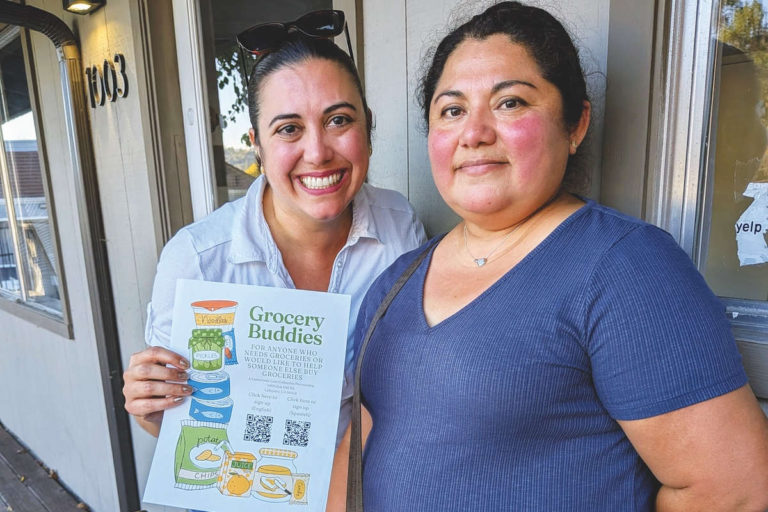
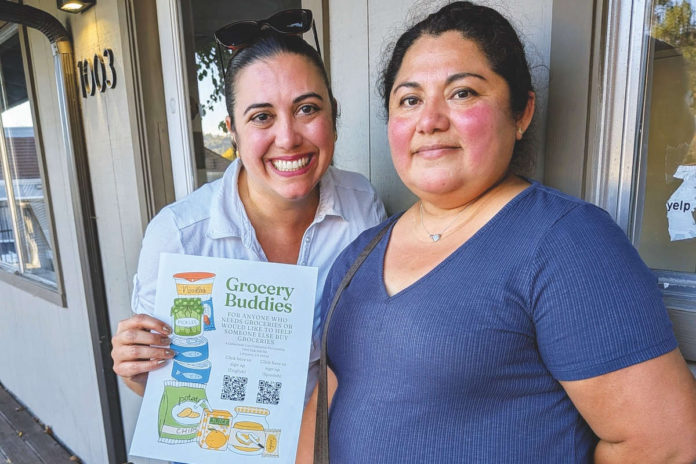
“I gave up my food stamps a few years ago and started going to the food bank instead,” Flores said as she signed up for a grocery buddies program. Flores’ mother struggles with diabetes, and her daughter has autism. “I have medical insurance, but everything is expensive,” she said. “I’m very shy about asking for help, but today I’m surprised and happy to get some.”

Elizabeth Berkes, from Moraga, is part of a collective of women from her church who are creating a system in which folks in need sign up for a grocery shopping buddy to help keep food on tables. Berkes set up a table outside of the Lamorinda Care Collective free store in Lafayette with a Google Form and Google Translate ready, as people from both sides of the Caldecott Tunnel signed up to either receive or offer help.

“It’s so frustrating that the government isn’t willing to take care of its citizens,” Berkes said. “The only blessing is that we get to step in and meet our neighbors.”

As a single mom and a preschool teacher, Sunita Shastri is used to being frugal. Shastri lives in an apartment with her boys and an unrelated roommate. She cooks at home and considers it a blessing that she’s always been able to use her EBT card (SNAP) at the local Indian store to keep all the staples on hand. Over the weekend Shastri spoke with her children.

“I explained to my kids that we’re scaling back. No meat or fish. Just the basic things like fruit, onions and tomatoes,” Shastri said. “We’ll have lentil soup and rice, and maybe an egg once in a while for a treat.”

Before Shastri had SNAP benefits which now afford her a monthly food allowance of around $300, she remembers finding it hard to buy anything other than rice and lentils. “The dahl and lentils that I have in my pantry will suffice for about 3-4 months. I’ve budgeted $20 a month for fruit,” Shastri said. “It’s sad to tell my kids that they can’t eat what they want or that they can’t cook because we don’t have enough food.”

Matt Harrison is the executive director of the Community Youth Center (CYC) in Concord, a place that serves 2,100 youth between the ages of 3 and 18—the majority of whom come from low-income families.

“As financial stress and food stress comes into a household, it has a ripple effect. When there’s anxiety, stress and fear, and no certainty for the future, it creates a dangerous home environment,” Harrison said. “If you’re worried about your next meal, then homework isn’t important and your academic future starts to fall away. Then the cycle repeats itself, and this is how we end up in a cycle of poverty.”

While food insecurity is a real issue for families of CYC members including some who utilize SNAP benefits, Harrison says others go without—particularly immigrant families.

“If I’m scared or living in fear of being deported or having a loved one get deported, I’m not seeking help,” Harrison said.

Harrison says it’s more important than ever for Americans to commune with one another. The CYC is offering Thanksgiving meals to the families of its youth members. It also offers resource fairs with partners such as Monument Crisis Center, Welcome Home Baby, Making Waves Education Foundation and Northern California Family Center.

“We’re leaning heavily into the community part of our name,” Harrison said. “It’s the only thing that gets us through the divisiveness in our country. We need to stop blaming and yelling, and start having dialogue. We need to understand that our political perspectives are different because our lives are different.”

The java jives in Oakland’s newly opened ‘third places’

The host at a restaurant I ate at this week described it as a “third place.” He pointed out a couple of people at the bar drinking coffee with their laptops open, three bearded businessmen sharing a booth and a vision of the world, and friends who’d gathered together for lunch. When it comes to third places in the East Bay, we are spoiled for choice. I counted no less than four new cafes that have opened here within the last few months.

Marin’s Kitchen & Coffee’s soft opening took place at the end of August. After IB’s Hoagies closed, the landlord contacted James Woodard, who runs Haus of Chefs next door on 21st Street. Woodard is also the founder and owner of Smokin Woods BBQ, which he started in 2013. He pitched the idea of a breakfast and lunch cafe to his friend, DeShan Wiseman. Then they brought in their mutual friend, Harwell Lang, as a third business partner.

Wiseman has a day job at PG&E, but he told me he currently handles inventory and supplies. “I kind of curated the space,” he said. “I got a lot of the artwork and coordinated with the design of the spot.” Lang, he said, is really into coffee. “He’s a traveler, so he likes to go to different countries to try types of coffees from other parts of the world.”

Woodard created the breakfast and lunch menu, but his barbecue only shows up in a pulled-pork sandwich. Wiseman noted that Marin’s has “a totally different vibe.” All three business owners are from Oakland. “I’ve seen the change in Oakland,” Wiseman said. “Really after Covid, so many places are leaving but we still wanted to bring something that would be upscale to our city.”

Over the past few years, Wiseman watched downtown Oakland turn into a ghost town. “But knowing that people were starting to come back to work, actually coming to their offices, we wanted to bring something—coffee and matcha and things like that,” he said. His daughters love matcha drinks and regularly come up with new flavors for the beverage menu.

A few blocks away on 30th Street, Olivia Lee opened Olivia Coffee & Flower at the end of August. The cafe is easy to miss. If one runs into Petit Cafe up the hill, they’ve passed it by. From across the street, it looks like a lobby on the lower floor of a multi-use building. Up close, a small sandwich board sign on the front ramp indicates the way in.  

Lee was juggling a tech career with a wedding and floral design business, but dreaming about opening a cafe. She then spent the past two years learning about coffee roasting, brewing and the correct way to extract espresso. During the wedding off-season, she went to South Korea for a coffee expo and met the owner of Gan Gyeul Coffee. She tasted something unique in the way his company roasts beans.

“I found out that his roasting style is very experimental and not very easy to find in the United States,” Lee said. She brought home a couple of Gan Gyeul coffee bags but couldn’t find a similar style of roasting—which balanced flavor and acidity—here. One of her customers, a coffee connoisseur, told Lee he could taste the difference in her pour-over. He had purchased the same beans elsewhere, but they’d been processed by a different roaster.

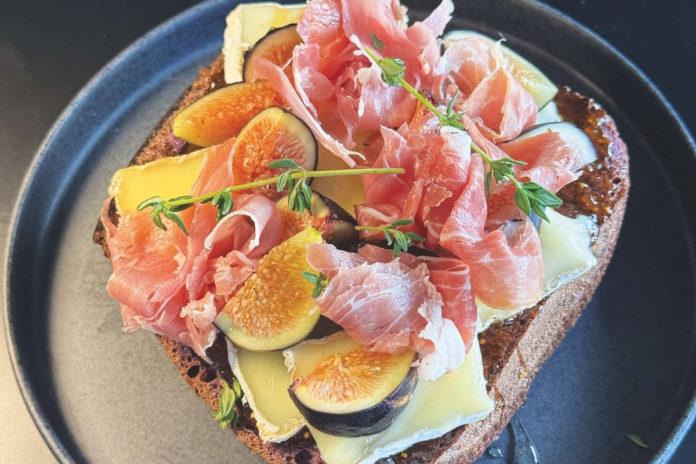
Lee serves a half-dozen different kinds of pour-overs. Each one is listed on the menu with descriptions of its terroir and tasting notes. But she also makes coffee-free specialty drinks, such as matcha and hojicha lattes. I tried a high-viscosity black sesame soy milk latte ($7) and an avocado toast with cherry tomatoes and mozzarella ($10). Lee serves her beverages in clear, compostable cups. They’re wider than most disposable beverage cups, and the transparency makes for trippy viewing as the ingredients swirl around and mingle. An iced banana milk latte looks glamorous both in person and online.

The sheepdog on the logo is modeled after Gurumi, the cafe’s mascot and Lee’s canine companion. Lee also still makes flower arrangements which are currently available as pre-orders.

Marin’s Kitchen & Coffee, 400 21st St., Oakland. Open Mon-Fri, 7am to 3pm. IG: marinskitchenandcoffee

Olivia Coffee & Flower, 371 30th St., Suite C100, Oakland. Open Mon-Fri, 7:30am to 3pm. IG: olivia_coffeeflower

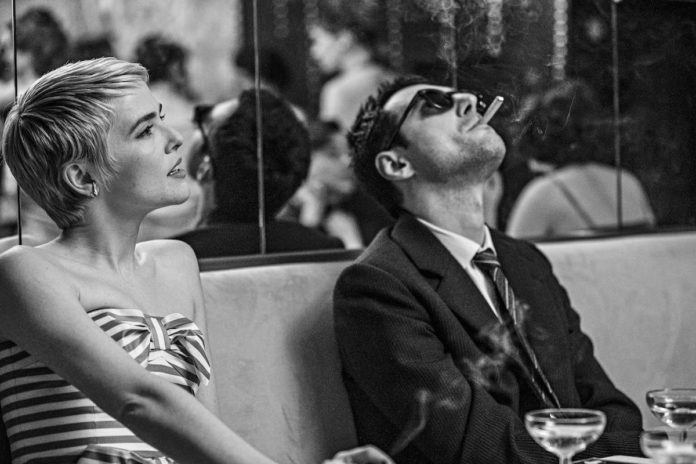
Linklater pays tribute to Godard in ‘Nouvelle Vague’

0

TORN FROM A REVIEWER’S NOTE PAD: Walking out of Richard Linklater’s Nouvelle Vague, we couldn’t get a certain crazy retro-pop ditty out of our heads. In Dave Frishberg and Bob Dorough’s 1966 song “I’m Hip,” unforgettably covered by cocktail-lounge chantoozie Blossom Dearie, the singer mock-complains about the latest, coolest thing from Paris: “Every Saturday night/With my suit buttoned tight and my suedes on/I’m gettin’ my kicks/Watchin’ arty French flicks with my shades on.” 

They were talking about Jean-Luc Godard, of course.

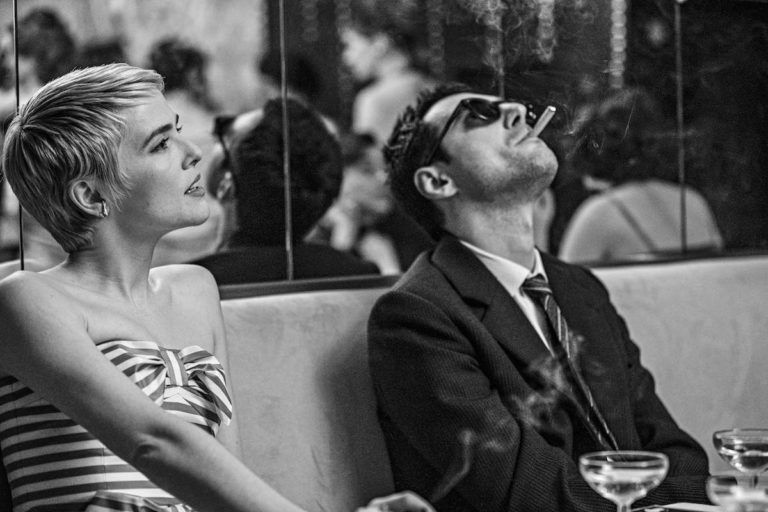
Nouvelle Vague is filmmaker Richard Linklater’s dramatized, somewhat fictionalized tribute to director Godard’s outrageously influential film, À bout de souffle. That 1960 release, translated as Breathless in English-language markets, inspired a worldwide vogue for French movies with a similar brash and stylish attitude. They became collectively labeled the French New Wave. 

The much younger Linklater—who went on to fashion such hard-to-categorize films as Slacker, Boyhood and the Before Sunrise trilogy—was left breathless himself when he first looked at Godard’s daring debut, years after the fact in the 1980s, when Linklater was just starting out. For better or worse, Linklater throws everything he knows about the late Godard into the new tribute. 

Linklater must have been just about the last hipster to flip out over Franco-Swiss import Godard: his unshaven rodent-like face, his sexy starlet girlfriends (clock Danish model Anna Karina), his wholehearted love of classic big-studio Hollywood, the avant-garde design of his titles, etc. But most of all the zany exuberance of his movies, suddenly popping in and out of art houses like a cigarette machine loaded with Gauloises—in those zany, exuberant days before students everywhere began worrying about Vietnam. 

Nouvelle Vague has noble intentions. It’s a valentine to the spirit of the French New Wave from someone who knows what he’s talking about—equipped with sparkling production values, interesting characterizations and the all-important sense of humor. 

But there are questions. At this stage of the game, producing an appreciation of a cultural phenomenon and era that most 21st-century movie audiences have never heard of is braver than brave—it’s the definition of what-the-hell narrowcasting. To release it in subtitled French is even crazier. The cast of unknown French actors, starring Guillaume Marbeck as Godard, is the cherry on top, fully and openly declaring that Linklater’s love letter is a rare specialty item aimed at cinephiles and film industry veterans only. Who else is going to sit still for make-believe “cameos” of such contemporaries as Georges de Beauregard, François Moreuil or Phuong Maittret?

Not for Linklater is the A Complete Unknown approach, with its pop-culture idol worship made accessible by using Hollywood stars and dreamy romantic interludes. That’s the easy way to do it. Linklater does it the hard way. He’s in love. So we’ve got the black-and-white story of a relatively obscure figure and his times, in the French language, with no stars. It looks and feels like the consummate reward project. (Try to picture Timothée Chalamet as Godard, with Margot Robbie as Jean Seberg.)

Notwithstanding the above, adventurous film nerds surrendering to Linklater’s vision of le beau monde are in for a treat. The Cahiers du Cinéma claque of critics who transformed themselves into filmmakers is all dug up, alongside every auteur from Jean-Pierre Melville (cowboy-hatted, at his “factory”) to Robert Bresson (portrayed by Aurélien Lorgnier as an ancient sage). 

One of Linklater’s stated aims in Nouvelle Vague is to demonstrate how a film gets made, down to the smallest detail. In the case of Godard’s À bout de souffle, Linklater shows how difficult it was to make such a complicated scheme look fun. A grumbling producer might boil the original pic’s concept down to “a realistic, sexy slice of film noir,” but we know better than that. Jean-Luc Godard was some sort of revolutionary prophet, and Breathless/À bout de souffle was the opening title in his 138-film gospel. 

* * *

In theaters Oct. 31; on Netflix starting Nov. 14.

Free Will Astrology: Week of Nov. 5

0

ARIES (March 21-April 19): In 1995, wolves were reintroduced to the American wildlife area known as Yellowstone Park after a 70-year absence. They hunted elk, which changed elk behavior, which changed vegetation patterns, which stabilized riverbanks, which altered the course of the Lamar River and its tributaries. The wolves changed the rivers! This phenomenon is called a trophic cascade: One species reorganizing an entire ecosystem through a web of indirect effects. For the foreseeable future, Aries, you will be a trophic cascade, too. Your choices will create many ripples beyond your personal sphere. I hope you wield your influence with maximum integrity.

TAURUS (April 20-May 20): I authorize you to explore the mysteries of sacred laziness. It’s your right and duty to engage in intense relaxing, unwinding and detoxifying. Proceed on the theory that rest is not the absence of productivity but a different kind of production—the cultivation of dreams, the composting of experience and the slow fermentation of insight. What if your worth isn’t always measured by your output? What if being less active for a while is essential to your beautiful success in the future?

GEMINI (May 21-June 20): You are not yet who you will become. Your current struggle has not yet generated its full wisdom. Your confusion hasn’t fully clarified into purpose. The mess hasn’t composted into soil. The ending that looms hasn’t revealed the beginning it portends. In sum, Gemini, you are far from done. The story isn’t over. The verdict isn’t in. You haven’t met everyone who will love you and help you. You haven’t become delightfully impossible in all the ways you will eventually become delightfully impossible.

CANCER (June 21-July 22): By the time he became an elder, Cancerian artist David Hockney had enjoyed a long and brilliant career as a painter, primarily applying paint to canvases. Then, at age 72, he made a radical departure, generating artworks using iPhones and iPads. He loved how these digital media allowed him to instantly capture fleeting moments of beauty. His success with this alternate form of expression has been as great as his previous work. I encourage you to be as daring and innovative as Hockney. Your imaginative energy and creative powers are peaking. Take full advantage!

LEO (July 23-Aug. 22): In his “Letter from Birmingham Jail,” Black activist Martin Luther King Jr. wrote, “We are caught in an inescapable network of mutuality, tied in a single garment of destiny. Whatever affects one directly, affects all indirectly.” He was proclaiming a universal truth: Real courage is never just about personal glory. It’s about using your fire to help and illuminate others. You Leos are made to do this: to be bold not just for your own sake, but as a source of strength for your community. Your charisma and creativity can be precious resources for all those whose lives you touch. In the coming weeks, how will you wield them for mutual uplift?

VIRGO (Aug. 23-Sept. 22): Who would have predicted that the first woman to climb Mount Everest would have three planets in Virgo? Japanese mountaineer Junko Tabei did it in 1975. To what did she attribute her success? She described herself not as fearless, but as “a person who never gives up.” I will note another key character trait: rebellious willfulness. In her time, women were discouraged from the sport. They were regarded as too fragile and impractical for rugged ascents. She defied all that. Let’s make her your inspirational role model, Virgo. Be persistent, resolute, indefatigable and, if necessary, renegade.

LIBRA (Sept. 23-Oct. 22): Among the Mbuti people of the Congo, there’s no word for “thank you.” Gratitude is so foundational to their culture that it requires no special acknowledgment. It’s not singled out in moments of politeness; it’s a sweet ambient presence in the daily flux. I invite you to live like that for now, Libra. Practice feeling reverence and respect for every little thing that makes your life such an amazing gift. Feel your appreciation humming through ordinary moments like background music. I guarantee you that this experiment will boost the flow of gratitude-worthy experiences in your direction.

SCORPIO (Oct. 23-Nov. 21): Martin Luther King Jr. said that harnessing our pain and transforming it into wise love can change the world for the better. More than any other sign, Scorpio, you understand this mystery: How descent can lead to renewal, how darkness can awaken brilliance. It’s one of your birthrights to embody King’s militant tenderness—to take what has wounded you, alchemize it, and make it into a force that heals others as well as yourself. You have the natural power to demonstrate that vulnerability and ferocity can coexist, that forgiveness can live alongside uncompromising truth. When you transmute your shadows into offerings of power, you confirm King’s conviction that “the arc of the moral universe is long, but it bends toward justice.”

SAGITTARIUS (Nov. 22-Dec. 21): Apophenia is the tendency to perceive meaningful patterns in seemingly random data. On the downside, it may cause a belief in delusional conspiracy theories. But it can also be a generator of life’s poetry, leading us to see faces in clouds, hear fateful messages in static and find key revelations in a horoscope. Psychologist C.G. Jung articulated another positive variation of the phenomenon. His concept of synchronicity refers to the occurrence of meaningful coincidences between internal psychological states and external events that feel deeply significant and even astounding to the person experiencing them. Synchronicities suggest there’s a mysterious underlying order in the universe, linking mind and matter in nonrational ways. In the coming weeks, Sagittarius, I suspect you will experience a slew of synchronicities and the good kind of apophenia.

CAPRICORN (Dec. 22-Jan. 19): Philosopher Alfred Korzybski coined the phrase, “the map is not the territory.” In other words, your concepts about reality are not reality itself. Your idea of love is not love. Your theory about who you are is not who you are. It’s true that many maps are useful fictions. But when you forget they’re fiction, you’re lost even when you think you know where you are. Here’s the good news, Capricorn: In the weeks ahead, you are poised to see and understand the world exactly as it is—maybe more than ever before. Lean into this awesome opportunity.

AQUARIUS (Jan. 20-Feb. 18): Babies are born with about 300 bones, but adults have 206. Many of our first bones fuse with others. From one perspective, then, we begin our lives abundant with possibility and rich with redundancy. Then we solidify, becoming structurally sound but less flexible. Aging is a process of strategic sacrifice, necessary but not without loss. Please meditate on these facts as a metaphor for the decisions you face. The question isn’t whether to ripen and mature—that’s a given—but which growth will serve you and which will diminish you.

PISCES (Feb. 19-March 20): Beneath every thriving forest lies a lacework of mycelium. Through it, tree roots trade nourishment, warn each other of drought or illness, and make sure that young shoots benefit from elders’ reserves. Scientists call it the “wood-wide web.” Indigenous traditions have long understood the principle: Life flourishes when a vast communication network operates below the surface to foster care and collaboration. Take your cues from these themes, Pisces. Tend creatively to the web of connections that joins you to friends, collaborators and kindred spirits. Proceed with the faith that generosity multiplies pathways and invites good fortune to circulate freely. Offer what you can, knowing that the cycle of giving will find its way back to you.

Homework: What attachment would be healthy to relinquish? Newsletter.FreeWillAstrology.com
Free Will Astrology: Week of Nov. 12

Free Will Astrology: Week of Nov. 12
Rob Brezsny's horoscopes this week include Sankofa, strategic forgetting, wrong questions, Octavia Butler, kilig, your liver, pupils, and so much more!

The Power of Lunch

The Power of Lunch
Alice Waters, the pioneering founder of Chez Panisse and creator of the groundbreaking Edible Schoolyard Project, remains a leading voice in the farm-to-table movement. Now 81, she just released a new book, A School Lunch Revolution. As the title implies, her latest project is no less ambitious than the culinary innovations she’s so well known for. Waters reminds us that...

Bay visionary turns struggle and soul into art

Bay visionary turns struggle and soul into art
Filmmaker Michael J. Payton grew up in Oakland, with short stints in Pittsburg and Richmond, but it was the Bay that gave him his sense of independence and the confidence to trust his vision. Since age 11, he’s known exactly what he wanted to do. “I saw hip-hop and the media industry as a way to get out,” Payton says....

New book details fight to shut youth prisons

New book details fight to shut youth prisons
In the 1990s, writes Albany-based author Nell Bernstein in her new book In Our Future We Are Free, a myth emerged—that of so-called “juvenile superpredators.” It was fueled by pseudoscience, notably the writings of Princeton University political science professor John J. DiIulio Jr. who, Bernstein writes, “spliced speculative demographics with deep-seated racial stereotypes to come up with a monster...

Social Eyes: Week of Nov. 6-12

Social Eyes: Week of Nov. 6-12
THURSDAY, NOV. 6 GOTH ROCK NOX NOVACULA Emerging from the pallid cemetery known as Seattle, Nox Novacula breathes cold, dead air into the gothic scene with their theatrical, deathrock hymns. Their dark, seductive energy pays homage to the genre’s origins but stays urgently modern. There are echoes of Christian Death, Sisters of Mercy and Death Cult, twisted and experimented upon. On their...

The Lucky Losers play blues without borders

The Lucky Losers play blues without borders
The Lucky Losers just got back to San Francisco after a long national tour. The duo—vocalist Cathy Lemons, and singer and harmonica player Phil Berkowitz—said they were glad to be home, but they didn’t have a lot of time to rest. “We’re releasing our new album, Arrival, in a couple of days,” Lemons said. “We book and manage ourselves, so...

SNAP lapse leads to local scaling back, sharing and communing

SNAP lapse leads to local scaling back, sharing and communing
East Bayers are implementing their own contingency plans as the Trump administration reluctantly agrees to issue half the Supplemental Nutrition Assistance Program (SNAP) benefits for its 42 million recipients on a delayed schedule. Residents are scaling back, going without and leaning on each other.  Maribel Flores lives in Concord with her three daughters. Since her brother got deported last month,...

The java jives in Oakland’s newly opened ‘third places’

The java jives in Oakland's newly opened 'third places'
The host at a restaurant I ate at this week described it as a “third place.” He pointed out a couple of people at the bar drinking coffee with their laptops open, three bearded businessmen sharing a booth and a vision of the world, and friends who’d gathered together for lunch. When it comes to third places in the...

Linklater pays tribute to Godard in ‘Nouvelle Vague’

Linklater pays tribute to Godard in ‘Nouvelle Vague’
TORN FROM A REVIEWER’S NOTE PAD: Walking out of Richard Linklater’s Nouvelle Vague, we couldn’t get a certain crazy retro-pop ditty out of our heads. In Dave Frishberg and Bob Dorough’s 1966 song “I’m Hip,” unforgettably covered by cocktail-lounge chantoozie Blossom Dearie, the singer mock-complains about the latest, coolest thing from Paris: “Every Saturday night/With my suit buttoned tight...

Free Will Astrology: Week of Nov. 5

Free Will Astrology: Week of Nov. 12
Rob Brezsny's horoscopes offer advice and insights into the coming weeks, using historical figures, cultural practices, or natural phenomena as metaphors.
19,045FansLike
17,709FollowersFollow
61,790FollowersFollow