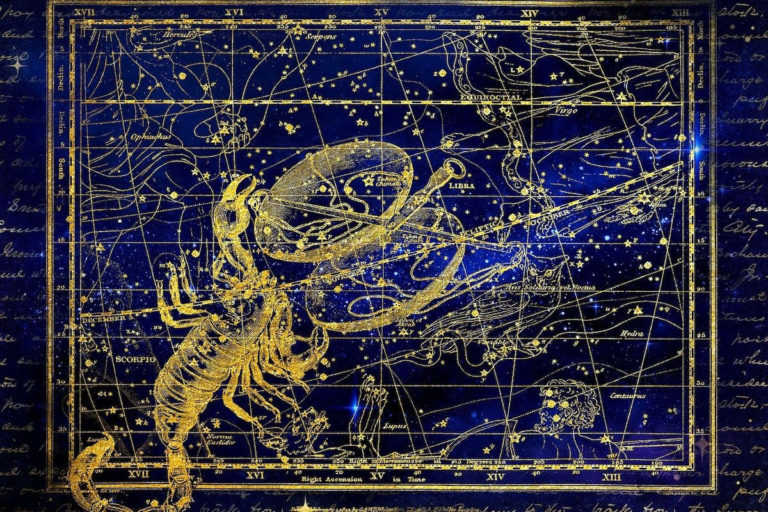
Free Will Astrology: Week of Nov. 19

0

ARIES (March 21-April 19): In the coming weeks, I invite you to commune intimately with your holy anger. Not petulant tantrums, not the ego’s defensive rage, but the fierce love that refuses to tolerate injustice. You will be wise to draw on the righteous “No!” that draws boundaries and defends the vulnerable. I hope you will call on protective fury on behalf of those who need help. Here’s a reminder of what I’m sure you know: Calmness in the face of cruelty isn’t enlightenment but complicity. Your anger, when it safeguards and serves love rather than destroys, is a spiritual practice.

TAURUS (April 20-May 20): The Korean concept of jeong is the emotional bond that forms between people, places or things through shared experiences over time. It’s deeper than love and more complex than attachment: the accumulated weight of history together. You can have jeong for a person you don’t even like anymore, for a city that broke your heart, for a coffee mug you’ve used every morning for years. As the scar tissue of togetherness, it can be beautiful and poignant. Now is an especially good time for you to appreciate and honor your jeong. Celebrate and learn from the soulful mysteries your history has bequeathed you.

GEMINI (May 21-June 20): Over 100 trillion bacteria live in your intestines. They have a powerful impact. They produce neurotransmitters, influence your mood, train your immune system and communicate with your brain via the vagus nerve. Other life forms are part of the team within you, too, including fungi, viruses and archaea. So in a real sense, you are not merely a human who contains small organisms. You are an ecosystem of species making collective decisions. Your “gut feelings” are collaborations. I bring this all to your attention because the coming weeks will be a highly favorable time to enhance the health of your gut biome. For more info: tinyurl.com/EnhanceGutBiome.

CANCER (June 21-July 22): Why, yes, I myself am born under the sign of Cancer the Crab, just as you are. So as I offer you my ongoing observations and counsel, I am also giving myself blessings. In the coming weeks, we will benefit from going through a phase of consolidation and integration. The creative flourishes we have unveiled recently need to be refined and activated on deeper levels. This necessary deepening may initially feel more like work than play, and not as much fun as the rapid progress we have been enjoying. But with a slight tweak of our attitude, we can thoroughly thrive during this upcoming phase.

LEO (July 23-Aug. 22): I suggest that in the coming weeks you care more about getting things done than pursuing impossible magnificence. The simple labor of love you actually finish is worth more than the masterpiece you never start. The healthy but makeshift meal you throw together feeds you well, whereas the theoretical but abandoned feast does not. Even more than usual, Leo, the perfect will be the enemy of the good. Here are quotes to inspire you. 1. “Perfectionism is self-abuse of the highest order.” —Anne Wilson Schaef. 2. “Striving for excellence motivates you; striving for perfection is demoralizing.” —Harriet Braiker. 3. “Perfection is not attainable, but if we chase perfection, we can catch excellence.” —Vince Lombardi.

VIRGO (Aug. 23-Sept. 22): Now is an excellent time to practice the art of forgetting. I hope you formulate an intention to release the grievances and grudges that are overdue for dissolution. They not only don’t serve you but actually diminish you. Here’s a fact about your brain: It remembers everything unless you actively practice forgetting. So here’s my plan: Meditate on the truth that forgiveness is not a feeling; it’s a decision to stop rehearsing the resentment, to quit telling yourself the story that keeps the wound fresh. The lesson you’re ready to learn: Some memories are worth evicting. Not all the past is worth preserving. Selective amnesia can be a survival skill.

LIBRA (Sept. 23-Oct. 22): A Navajo blessing says, “May you walk in beauty.” Not just see beauty or create it, but walk in it, inhabit it and move through the world as if beauty is your gravity. When you’re at the height of your lyrical powers, Libra, you do this naturally. You are especially receptive to the aesthetic soul of things. You can draw out the harmony beneath surface friction and improvise grace in the midst of chaos. I’m happy to tell you that you are currently at the height of these lyrical powers. I hope you’ll be bold in expressing them. Even if others aren’t consciously aware and appreciative of what you’re doing, beautify every situation you’re in.

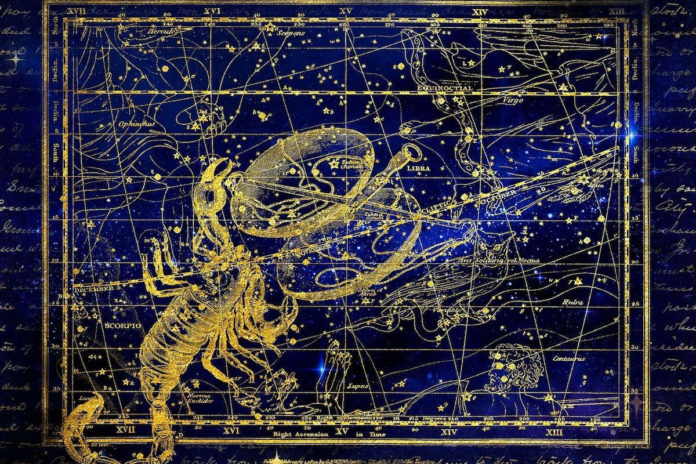
SCORPIO (Oct. 23-Nov. 21): Your theme for the coming weeks is the fertile power of small things: The transformations that happen in the margins and subtle gestures. A kind word that shifts someone’s day, for instance. Or a refusal to participate in casual cruelty. Or a choice to see value in what you’re supposed to ignore. So I hope you will meditate on this healing theme: Change doesn’t always announce itself with drama and manifestos. The most heroic act might be to pay tender attention and refuse to be numbed. Find power in understated insurrections.

SAGITTARIUS (Nov. 22-Dec. 21): A day on Venus (one rotation on its axis) lasts about 243 Earth days. However, a year on Venus (one orbit around the sun) takes only about 225 Earth days. So a Venusian day is longer than its year. If you lived on Venus, the sun wouldn’t even set before your next Venusian birthday arrived. Here’s another weird fact: Contrary to what happens on every other planet in the solar system, on Venus the sun rises in the west and sets in the east. Moral of the story: Even planets refuse to conform, and make their own rules. If celestial bodies can be so gloriously contrary to convention, so can you. In accordance with current astrological omens, I encourage you to exuberantly explore this creative freedom in the coming weeks.

CAPRICORN (Dec. 22-Jan. 19): Let’s revisit the ancient Greeks’ understanding that we are all born with a daimon: a guiding spirit who whispers help and counsel, especially if we stay alert for its assistance. Typically, the messages are subtle, even half-disguised. Our daimons don’t usually shout. But I predict that will change for you in the coming weeks, especially if you cultivate listening as a superpower. Your personal daimon will be extra talkative and forthcoming. So be vigilant for unexpected support, Capricorn. Expect epiphanies and breakthrough revelations. Pay attention to the book that falls open to a page that has an oracular hint just for you. Take notice of a song that repeats, or a sudden urge to change direction on your walk.

AQUARIUS (Jan. 20-Feb. 18): Awe should be one of your featured emotions in the coming weeks. I hope you will also seek out and cultivate reverence, deep respect, excited wonder and an attraction to sublime surprises. Why do I recommend such seemingly impractical measures? Because you’re close to breaking through into a heightened capacity for generosity of spirit and a sweet lust for life. Being alert for amazement and attuned to transcendent experiences could change your life for the better forever. I love your ego—it’s a crucial aspect of your make-up—but now is a time to exalt and uplift your soul.

PISCES (Feb. 19-March 20): What if your anxiety is actually misinterpreted excitement? What if the difference between worry and exhilaration is the story you tell yourself about the electricity streaming through you? Maybe your body is revving up for something interesting and important, but your mind mislabels the sensation. Try this experiment: Next time your heart races and your mind spins, tell yourself “I’m excited” instead of “I’m anxious.” See if your mood shape-shifts.

Homework: What innovations are you finally done rehearsing and ready to unveil? Newsletter.FreeWillAstrology.com
Another silent spring: the last flight of the monarch

Alongside the endangered redwood, the monarch butterfly is a symbol of our land. 

We have taken the monarch as our emblem—one sees it in many places—on our T-shirts and jewelry, our journals and our sky-flying kites. It is on our place-making murals of fluttering monarchs and happy people. The monarch floats up from our subconscious and haunts our dreams …

Little wonder then that the annual migration of the western monarchs, flying up the coast from Mexico, is one of the great natural wonders of the West Coast.

Or, I should say, it was.

As I write, at the height of fall harvest, we are at the height of the monarch migration. Let me ask our readers—trash consumerism aside, has anyone seen a single, solitary one?

Although it goes little reported, in the last 10 years the monarch population has collapsed, from a degraded and declining baseline of several million in the 1990s to just 9,000 this last year. (See The Xerces Society for Invertebrate Conservation’s paper, Western Monarch Declines to Near Record Low, 2025.)

That means if one has been so lucky—so blessed—to see one monarch this year, in 1995 they would have seen 200 monarch butterflies floating through our skies. If they have seen 10, they would have seen 2,000 monarchs—can one imagine such a prodigy? Most likely one has seen zero. Our hazy, blue-and-brown skies are empty.

Emptier Skies

Poets have called butterflies “nature’s living jewels.” As a general trend, across the United States, butterfly populations are collapsing. (See North American Butterfly Association’s American Butterflies magazine story, “The Great Butterfly Die-Off,” 2025.)

Can one even imagine a world without the play of butterflies? If that thought causes pain, then one is connected to the butterfly and its pain. With its death, something dies in oneself.

It’s not just butterflies that are going extinct. As a generality, most “winged insect” populations are now in a mass die-off. That broad group and segment of life includes butterflies and moths, mosquitos, honey bees, flies, dragonflies, beetles of all stripes, wasps, cicadas, lightning bugs, ladybugs and more.

They are all rapidly disappearing—right here, and all around the world. The rapid decline is so dramatic and distressing that some scientists are calling it “The Insect Apocalypse.” (See Current Biology Magazine, “The Insect Apocalypse and Why it Matters,” 2019.) That’s a striking phrase. It’s a big story. It’s the headline for 2025.

It’s funny we haven’t even heard of it, huh? I haven’t seen any mention of it while endlessly doomscrolling my Instagram Reels. But perhaps some of us have noticed it, if only secondarily—with less need to spray pesticides on our lots or clean smashed bugs off our windshields.

As a class, insects represent a major part of the “biomass” on Earth—that is the weight and the number of life forms on Earth. And they’re rapidly dying away. That might not move us all. When we interact with insects, quite often they are seen as pests and nuisances. “Bugs are gross.” But it should be concerning—insects, as the basis of biomass, are the basis of food chains. Pluck hard on that food web, and it ripples out to shake all living species.

Hurt by the seeming indifference of most people to insects, local butterfly expert John Hibbard—my own father—elaborated on that point: “In the grand scheme of nature, butterflies [and caterpillars] exist to feed birds.”

The elder Hibbard is right: Along with insect populations, bird populations are collapsing all around us. According to a recent report by the North American Bird Conservation Initiative (NABCI), 30% of North American bird species are now in free-fall decline. (See NABCI’s “The State of Birds,” 2025.) Birds are falling, from emptier skies. And silent is the spring (see Rachel Carson’s epochal Silent Spring, 1962). And these deaths are not painless deaths. Mass starvation—the inability to get insect food for themselves and their young—is a cause of their collapse.

Our plants are dying, too. Insects feed animals, and they also pollinate flowering trees and plants—forming a vital link in their reproductive cycle and fruiting. Insect death ripples and rips through the meadows and forests where we seek spiritual refreshment and peace. All the food web is shaking violently, as in a great earthquake, as if in a great storm.

The Holocene Mass Extinction

Reader—fellow human being—we have reached an inflection point, a decision point. And now, it is time to choose. Have no doubt. This is the biggest story of our times. Make no mistake. Trump is just noise, China is noise, Tik Tok trends are noise. Taylor Swift’s wedding is noise, the football season is noise, and Disney-Marvel is a desperate distraction from what is happening here and now.

Stop distracting oneself. Undeceive oneself. Put the pieces together. Endangered apes and elephants in Africa, dead coral reefs in Arabia and Australia, collapsing fisheries, disappearing kelp forests, the slash-and-burn destruction of the Amazon, the endangered honey bee, the last flight of the monarch—these are all pieces of a much bigger story: Global Mass Extinction.

Per The International Union for Conservation of Nature (IUCN), a once-every-four-years gathering of global nature conservation experts, leaders and decision-makers, 28% of all living species are now at risk of extinction. It won’t stop there. (See IUCN’s “Red List.”) That’s trillions of insects, plants and animals sick and starving, unable to propagate or keep their young alive. Mass extinction is the headline for 2025 and 2026 and 2027. And it’s the only story that matters.

Factors & Cause

The surprising thing is, we all already know the factors causing what scientists call the “holocene mass extinction event.” But, with a galvanic thrill, let us review them with renewed urgency. 

The leading causes of mass species extinction are development—roadbuilding, land clearing, timber cutting, mining, house building, livestock grazing, monoculture farming and pollution of formerly “undeveloped land”—i.e., animal habitats and ecosystems. Development is driven by bad policy, overpopulation and consumptive consumerism gone mad.

Those are the general factors oppressing all other species. But there is also a specific factor suppressing all insect life and setting off a cascade effect of dropping dominos among the larger animals and plants that depend on them for food or reproduction.

All I can say is that it is a relatively new pesticide in increasing agricultural use. It is a broad-spectrum insect killer and long-lived. In dust suspension it has blown about everywhere, and it is present in most of the inorganic food we eat.

I have been warned by some of my science advisors not to be more specific than that. The corporations that make it would think nothing of breaking me or burning this paper down with smear campaigns and baseless-but-expensive nuisance lawsuits. In fact, that seems to be part of their multibillion-dollar business plan. It’s good business to close newspapers.

But the cause is us. Whether or not we are fully aware of it, we are doing this. We are making this happen with our daily choices. This is the true story of our times, and it is the true meaning of our lives. It is our legacy. Like it or not, gathered around our own good works lie thousands of dead butterflies and bees, and birds and squirrels, lizards, snakes, fish, foxes, otters, coyotes, elk, wolves, bears, eagles and mountain lions. Don’t look away.

And while we have now exceeded the point of irreparable damage to life on Earth and may lose the innocent monarch butterfly, it is in our power to choose again and save other species. Just as we already know the causes, we already know what to do.

But let us revisit those changes with renewed urgency and purpose. Thrill to it.

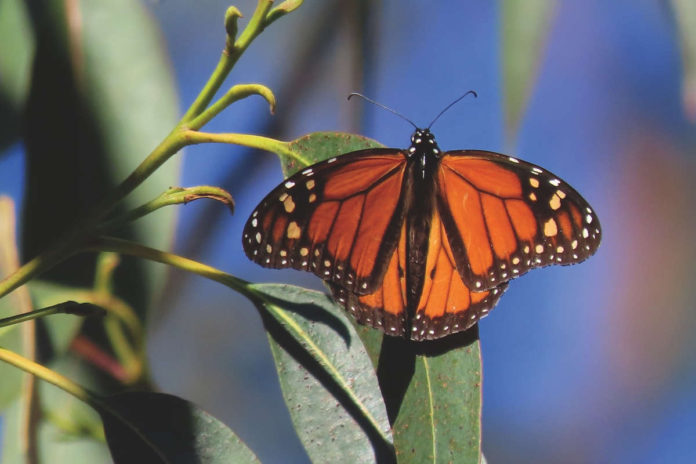
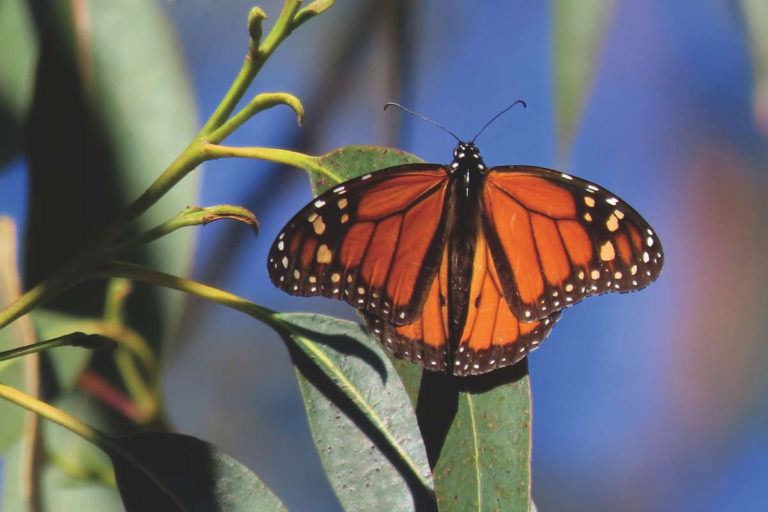
FLIGHT OF THE MONARCH The last mass extinction, which killed the dinosaurs, happened 65 million years ago. Now human activity is causing a sixth mass extinction, which is targeting insects such as this monarch butterfly, photographed in Laytonville, California. (Photo by Ann Donohue)

An Urgent New Environmentalism

A meta-analysis of research published by Science Magazine in 2020 revealed “Declines in Terrestrial But Increases in Freshwater Insect Abundances.” The authors of this scientific paper attributed the turnaround to environmental laws and regulations designed to clean up and protect our waterways. Those very same protections are now being torn up by the Trump administration, which is now opening all federal land to rapacious development.

The first lesson of this story is the powerful effect that good government policy can have on reducing species loss. The second lesson is that, for the present, we can’t count on the government to lead the response to mass extinction. Here, submitted by some of the local naturalists and international scientists that helped inform this article, are priorities for a grassroots campaign to slow mass extinction. They are none of them new. It’s the old green agenda. But it’s urgent.

1. Support candidates with a green agenda.

The green new deal. Stopping the sale of federal land while building new parks and linking existing parks. Fighting climate change and climate denial. Helping farmers transition to organic, pesticide-free farming and subsidizing the purchasing of expensive organic food—health food for all.

2. Support nonprofits that promote environmental conservation.

We can support them with our vote, money or in-kind donations; our volunteer time; or by using Facebook, TikTok and Instagram to boost their message.

3. Buy less—reduce, reuse, repair.

4. Buy local—local production and shipping has a reduced environmental impact.

5. Buy organic food and wine.

6. Buy less meat—start with “Meatless Mondays.”

7. Avoid purchases with high-carbon footprints. If one flies, buy carbon offsets.

8. Convert part or all of one’s yard or business landscaping to promote pollinator-friendly native plants. Look up “butterfly gardening” and “national park in your backyard.”

9. Spend time connecting with wild nature. It’s good for the body and good for the soul.

10. Talk about these issues with family and friends. Have a conversation about this article. Keep this issue alive on all one’s platforms.

We’ve seen this list before. But now we know we do these things for the bird and the butterfly, the otter and the oak tree. We can’t wait for Washington and Sacramento.

The Humans

Why isn’t mass extinction the story everyone is talking about? Some of the environmental activists, butterfly people, birders and research scientists I spoke to seemed to imply that people just don’t care. “People only care about people,” they said.

But, the fact is, we do care—we are connected to these animals and flowering plants, heart and soul. We love our plants and pets. We love the monarch butterfly. And, whatever people say, humans are fundamentally moral creatures. What proves our morality is how much time and energy we spend distracting ourselves, avoiding a confrontation with the truth.

We fear the truth about our actions because, no matter what we say in public, we don’t actually think we are good people. We know that if we confronted the truth we would be forced to change—by our own fundamentally moral constitutions.

We fear the change, and we fear the reckoning. But we forget how cleansing it can be to make amends, and how lightening it can be to make sacrifices for other living beings. And although we grumble, we forget how adaptive we are. The discomfort of change is brief, and briefly it is forgotten.

Don’t look away. When buying inorganic food or trendy plastic junk, we are buying a dead songbird too. Each time. In time, those purchases add up to a dead bald eagle and a dead grizzly bear. We bought those dead animals. And must pay for them—the cost comes out of our own souls. We are connected. When we buy organics, we literally save lives.

We can change. It is in our power to stop this. And change we must. In this journalistic diatribe I have emphasized what mass extinction will cost our souls—our dreams, symbols, our wonderment, emblems, archetypes, awe, mascots, cartoons, spirit guides, our love, our friends. However, mass extinction may cost us our lives too. For if there is a domino effect, collapsing up the food chain, the last domino to fall will be humans—the apex predator. We cannot simply fence off our corn and our cattle as the environment collapses and burns all around us.

The words of Dr. Joshua Arnold, a scientist who studies the role of beneficial insects in human food agriculture, put it succinctly: “There is a dogma about what we will be able to craft our way out of any problem, but the promises of technology will not be able to make up for a dying planet. Everything we do depends on the ecosystem around us. We might be able to eek on by for a time but we will suffer … Technology won’t save us.”

According to The World Economic Forum and the United Nations Food Summit, pollinating and pest-eating insects are critical to the cultivation of 35% of the world’s food supply (“Why We Need to Give Insects the Role they Deserve in Our Food Systems,” 2021).

With the human population projected to increase by 2 billion by 2050, that projected food shortfall has us fighting a world war. The Insect Apocalypse is the harbinger of a greater slaughter. There still is time to avert it. Let the death of the monarch be our turning point.

Learn more and act: linktr.ee/massextinctionLINKS.

Pulley power finds new purpose

Obscured by digital innovations, it’s easy to overlook the mighty pulley. Evidence of its use can be found as far back as Ancient Egypt’s Twelfth Dynasty; later, pulleys were employed in essential mechanisms during the Renaissance.

The pulley’s central actions and supreme value rely on the use of a wheel with grooves in its circumference through which cables, belts or ropes exert tremendous power. Capable of moving or lifting large loads industrially, everyday life is equally pulley-reliant—think elevators, window blinds, garage doors and more.

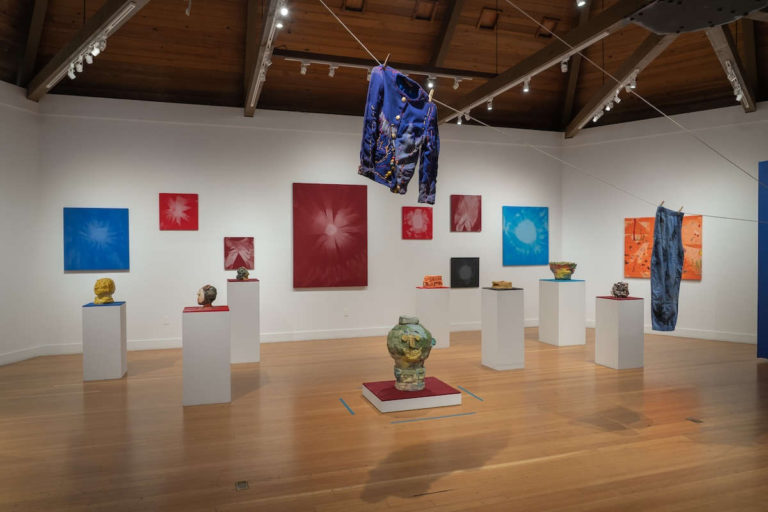
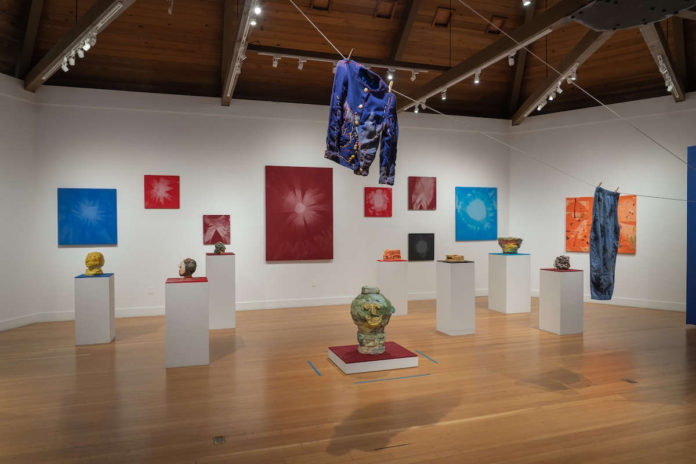
Leave it to artists to find new purpose in the humble pulley, as evidenced in an exhibit on display through Nov. 16 at Berkeley Art Center. Artists from NIAD Art Center teamed up with Oakland-based curator/multidisciplinary artist Christopher Robin Duncan over a two-year process that resulted in the show’s 27 artworks. Each fabric canvas, wearable fabric and ceramic sculpture created shared a three-to-six month outdoor exposure.

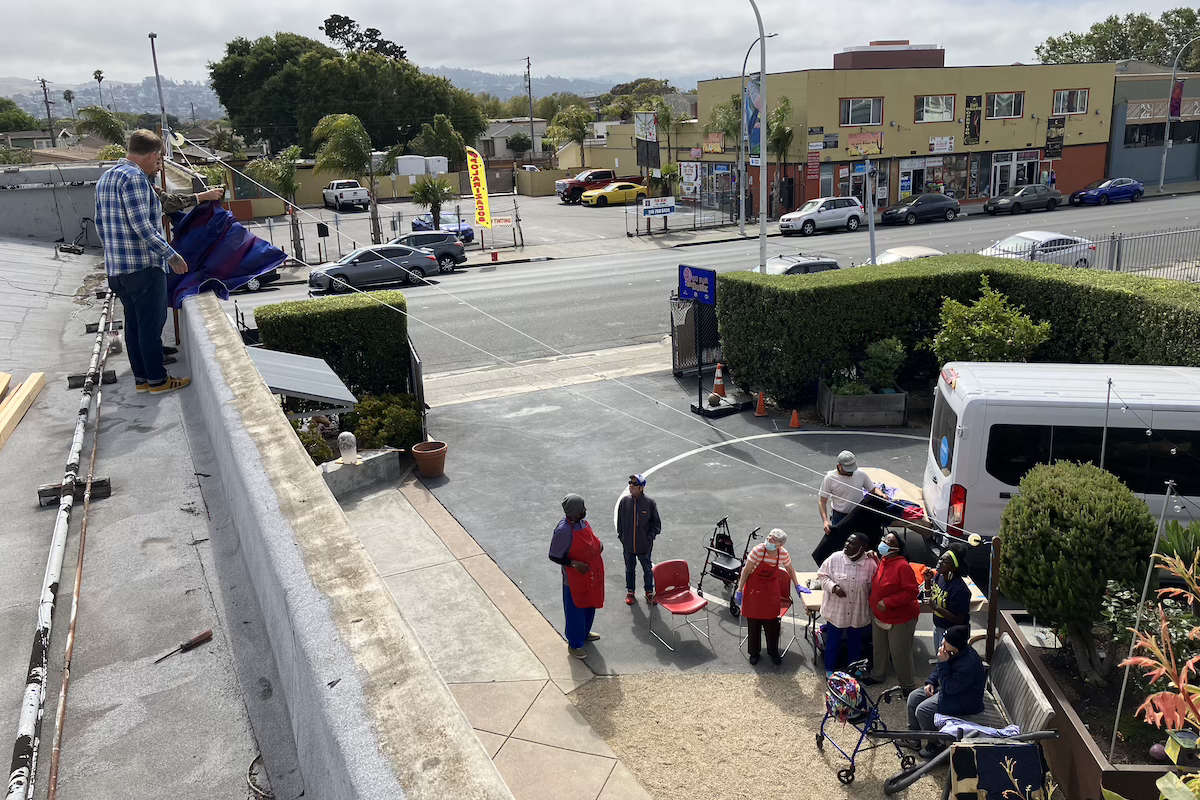
Marvelously, the simple pulley from which the exhibition draws its title was used to lift the artworks to the rooftop. Metaphorically, the mechanism served like a beacon of light, underscoring the exhibit’s “elevate all” intentions.

Founded in Richmond, NIAD Art Center is a studio and exhibition space in which adults with intellectual and developmental disabilities create the featured art. More than 80 participants are now prominent artists represented by national and international galleries. Works by NIAD artists can be found in the permanent collections of The Museum of Modern Art New York, SFMOMA, RISD Museum, MAD Musée in Belgium, the Oakland Museum of California and more.

Duncan first encountered NIAD artists while participating in a group exhibit at Marin MOCA. All of the artists’ work involved textiles or sewing. Duncan, some of whose work consists of painted and/or photographic images cast on fabric and exposed to long-term sunlight, was intrigued. “It was powerful and profound,” he said. “My work paired with what felt like their pure, open expression. I was so moved. That was the spark.”

Rooftops—large, flat open spaces—are essential to Duncan’s practice. Driving to NIAD one day, he noticed the building’s roof. The idea that germinated led to PULLEY.

Art-making is often a solo endeavor, but Ducan found that working with the NIAD artists transformed his thought patterns. “During the workshops, every role I had ever formed for myself was altered or broken,” he said. “Their way of interacting with materials had no rules, no parameters. I was clutching my pearls and thinking things like, ‘You’re going to paint on that already?’ I found myself surrendering, stepping out of the way.”

The most significant element beyond discovering NIAD artists’ approach was conveying the artwork to the roof. “We prepped everything and when the full moon came, it was time to get the fabric on the roof. I had thought I’d just carry it up, because I’m able-bodied,” Duncan said.

ELEVATE COLLABORATE The simple pulley from which the exhibition draws its title was used to lift the artworks to the NIAD rooftop, care of Christopher Robin Duncan and NIAD artists. (Photo courtesy of NIAD Art Center)

“An interesting moment came when the head facilitator said, ‘Let’s find a way so everyone can be involved’ and came up with the pulley system,” Duncan continued. “It was ridiculous, wonderful and fun, with everyone putting their work on the pulley, running it up, having time pass and then harvesting it.”

Invigorated by the interactions, Duncan said, “You go somewhere and think you’ll be an educator. Then you walk into a space and realize you are the student. I definitely benefited from the NIAD artists, and I’m just grateful to have paid attention.”

Having paid attention to time and its effects since childhood—watching family members age, the choreography of light and shadow outdoors—Duncan knows the arc’s value. Slowing down in defiance of the speed of contemporary life allows transformation that breeds revelation, growth and understanding.

“Looking back and letting things marinate has caused me to move forward with more integrity,” he said.

The exhibition is accompanied by a catalogue published by LAND AND SEA with essays by the publisher’s co-founders, Duncan and Elena Gross—writer, curator and director of exhibitions and public programs at the GLBT Historical Society in San Francisco. After the closing event, the publication will be available for purchase and found on the NIAD website.

Sonny Smith’s latest album speaks the language of music

0

On his latest album, The Diving Kind, Sonny Smith of San Francisco departs from his usual method of composing. The music was improvised in a studio in Senegal, with Senegalese musicians.

“I went to Senegal with Robin Girod, who runs the Moi J’Connais label in Switzerland,” Smith said. “I met him during many years of touring Europe. I’d play with his bands when I was in Geneva. We had a mutual friend, who married a Senegalese painter, M’baye Diop. When we had the idea of making an album in Senegal, M’baye said he’d be our guide. When we heard that, we began organizing a way to go with him to his home country.”

After Girod arranged for a grant from the Geneva Arts Council, they flew to Dakar, the country’s capital. From there, they traveled to Saint-Louis and the studio of Boubacar Tall. Tall brought some musicians he knew into the studio. For the next six days, they jammed with Smith and Girod.

“The language barrier was complete,” Smith said. “No one spoke English. I didn’t speak Wolof [the main Senegalese language]. The French they do speak is a very different French than what Robin [Girod] speaks. We communicated through music and the occasional pantomime.”

Smith said the Senegalese music heard in the West is generally more commercial. “The production qualities are a bit antiseptic to me,” he said. “The lyrics often focused on a positive message. Once we were there, in taxi cabs and on the streets, we heard a lot of raw underground music. It’s called Mbalax, very percussion-heavy, often long jams.” That’s the sound Smith and Girod aimed for. 

Girod produced the sessions and played bass in his own post-punk style. Smith played piano, guitar, organ and bass. He wrote lyrics and sang during the sessions, mostly to convey the song forms he was aiming at.

“I’d present some kind of form, maybe two chords or three chords, and it would take off from there,” Smith said. “The keyboard player, Souleymane Samb, performed in many styles—one had a very Arabic percussive mallet kind of sound. Khadim Niang, the hand drummer, was amazing, with rhythmic parts I’ve never heard; ways of stopping the beat or increasing the polyrhythms. Sometimes he’d carry a song with just a kalimba, or a talking drum, later on adding 13 sabar [hand drum] parts.” 

Smith then brought the tracks back to San Francisco on a hard drive. In his home studio he put them on a tape machine and added bass lines and additional drum parts supplied by his friend, Joe Lyle. He asked Theresa N’Gambi from Zambia to sing on some tracks, and mixed them into the sounds that appear on the album. “The result departed from Senegal, or Zambia, or America, into something less easy to categorize,” he said.

“Letters from the Future” is a mid-tempo jam that rides a complex pattern supplied by Khadim Niang, percussionist Yorro Niang and Girod’s swooping bass. It showcases the group’s interlocking rhythms. The keyboard hook Samb plays to open “Something To Hold Onto” has a hint of R&B that’s augmented by Girod’s rolling bass line. N’Gambi’s multi-tracked harmonies complement Smith’s delivery of a lyric describing life’s unpredictable twists and turns.

“House Of Mirrors” is an instrumental track blending reggae and R&B. Samb’s keyboard alternates between the sounds of a calliope and a melodica, riding over the intricate rhythms of Niang and Niang. Smith adds a few dub effects here and there, replicating the feel of a reggae track from the ’60s.

At his upcoming show at the Great American Music Hall, Sonny and his San Francisco band will play songs from the albums he’s previously released. He’ll be selling LPs of The Diving Kind, but won’t play the songs on the album without the Senegalese musicians featured on the recording.

“I’m sure there are American musicians that could pull it off, but that doesn’t ring true for me,” he said. “That music must be played with the musicians from Senegal. Maybe that sentiment will change someday, but for now it feels connected to those musicians. I would feel odd playing it with others.”

Sonny and the Sunsets will play at 8:45pm Friday, Nov. 14, at The Great American Music Hall, 859 O’Farrell St., San Francisco. 415.885.0750. gamh.com. Listen to ‘The Diving Kind’ at: sonnyandthesunsets.bandcamp.com/album/the-diving-kind.

How Small Businesses in the East Bay Are Finding New Ways to Thrive

0

Published in cooperation between Kaboozt and the East Bay Express

The East Bay’s small business scene has always been a vibrant patchwork of cultures, ideas and grit. In recent years, however, local entrepreneurs have faced a rapidly shifting landscape—rising rents, changing consumer habits and the lingering effects of the pandemic. Yet, as always, East Bay business owners are finding creative ways to adapt, survive and even thrive.

How Businesses Are Adapting to a Changing Marketplace

Walk down Telegraph Avenue or through the heart of Old Oakland, and it’s clear the business landscape is in flux. Some longtime favorites have shuttered, but new ventures—cafés, pop-ups and art collectives—are filling the gaps. Many owners say the key is flexibility: shifting product lines, experimenting with delivery and pickup and forging new partnerships with other local businesses. The East Bay’s diversity isn’t just cultural—it’s economic, too, and that’s proving to be a strength as businesses pivot to meet new demands.

How Businesses Are Accessing Support and Financial Incentives

One of the biggest hurdles for small businesses remains access to capital and support. Local governments and nonprofit organizations have stepped up with grants, microloans and technical assistance, but navigating these resources can be daunting. To maximize available grants or partnerships, business owners carefully evaluate options such as top bonuses reviewed by industry experts, ensuring they don’t leave money on the table. Savvy entrepreneurs are also leveraging community crowdfunding and local investment networks, building resilience through collective support.

Building Community Roots and Cultural Identity

For many East Bay businesses, success isn’t just about profit—it’s about serving and reflecting the community. Restaurants and shops often double as gathering spaces, hosting open mics, art shows and mutual aid events. This deep connection to local culture helps businesses weather tough times and builds loyalty that can’t be bought. The story of the East Bay’s small businesses is one of adaptation, but also of holding fast to roots and values, even as the ground shifts beneath them.

The Role of Media And Advocacy in Supporting Local Businesses

Local media has played a critical role in spotlighting the challenges and triumphs of East Bay entrepreneurs. Recent coverage of newsroom tensions and diversity challenges at East Bay Express provides important context for understanding the paper’s evolving editorial approach and community engagement efforts. As the business landscape changes, so too does the way stories are told—ensuring that the voices of those most affected remain front and center in the public conversation. This ongoing dialogue between media, business and community is vital for a healthy, responsive local economy.

The East Bay’s small business community is nothing if not resilient. Through innovation, collaboration and a fierce commitment to their neighborhoods, local entrepreneurs continue to shape the region’s identity—reminding everyone that even in uncertain times, the East Bay spirit endures.

Take your medicine

0

Punk is an elusive thing. It’s easier to say what isn’t punk than to explain what is. On top of that, the 50-year-old genre has evolved so much over time, it’s basically become a giant umbrella with many people taking refuge under it.

However, certain bands are so undeniably old-school punk rock it leaves no doubt where their roots lie.

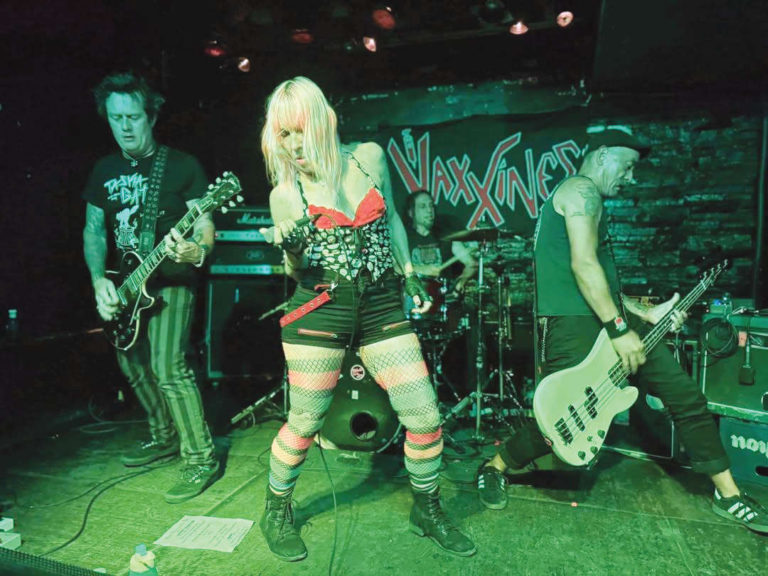
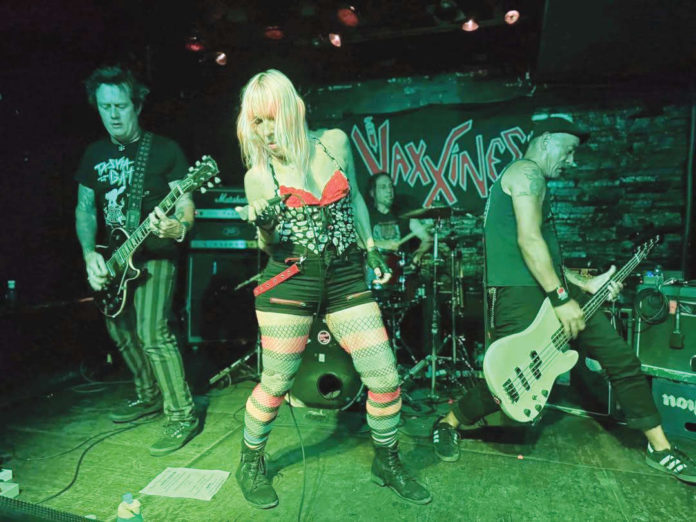
Oakland’s Vaxxines are one of those bands.

“It’s authentic,” singer Chelsea Rose says of the band’s live performances. “Punk-rock audiences aren’t stupid. They can sense if it’s a pose or the real deal.”

Formed in the aftermath of the 2020 pandemic lockdowns, the Vaxxines—not to be confused with indie British rock group, the Vaccines—rose from the ashes of another East Bay band, the Pathogens. That band, which formed in 2014, had a pretty significant presence in the punk scene, locally and abroad, consisting of members from prominent groups like Tilt, Econochrist and Blatz.

However, Covid and the lockdowns led to the Pathogens not practicing for almost a year. When things reopened several of the members had moved away, leaving original drummer Markley Hart and guitarist Sebastian Stuart to figure out a cure for their live-show-lacking ailment. The current drummer, Ian Larkin, joined the band earlier this year.

“Markley and I had been practicing, along with being in eight different bands over 20 years,” Stuart says. “So we decided to put together a new project to continue what we had started with the Pathogens.”

They quickly recruited friend and bassist Adachi Hiroyuki—who also owns and operates the Oakland-based, punk rock, Japanese-style fried chicken restaurants Aburaya and Arubaya Go—and began the hunt for a singer.

“We literally just put a flier out with pictures of Joan Jett, Exene from X, Poly Styrene [X-Ray Specs] and I forget who else was on it,” Stuart says. “But we just put them up at bars, cafes and salons.”

The band went through two singers before landing with Rose. However, her first show with the Vaxxines was in 2022 as a last minute fill-in when they played with the legendary San Francisco punk act, the Avengers. A close friend of the band—“The Pathogens were one of my favorite bands,” she says—Rose has also played in or currently performs with a number of other Bay Area stalwarts like Bite, White Trash Debutantes and Class of ’77.

“But because of different factors we really didn’t know if it was going to work out with me being the permanent singer,” she says. “So they went on to have K.C. [Vanderzee] as their second singer.”

However, when Vanderzee stepped away from the band last year, she suggested Rose step back in. Now, any punk knows it’s nothing new or strange for a band to go through line-up changes. Some more than others. What makes this change stand out is that when Hutchison left, the Vaxxines were basically finished with their debut, self-titled full-length.

But instead of just releasing it and moving forward to have audiences question why the switch-up, the band instead decided to re-record the vocals with Rose.

“We had a lot of support from the label, Dead Beat Records,” Stuart says. “It’s important to have the live show match, especially when putting out an album.”

The result, released on vinyl and cassette this last July and due out on all streaming platforms in the very near future, is a 13-track collection of blistering and catchy punk songs that range from the political, such as “ACAB,” to the nihilistic, such as “California Screaming.” In classic, snotty-punk style a couple of humorous tracks, such as “Defund the Meter Maid,” stick out like middle fingers matched with a smirk. The band also gives a nod to their roots with “Whiskey Business,” written by the Pathogens.

They’ve additionally been working on videos and in July released the first from the album “Live Your Life,” directed by Matt Eskew of the Hellflowers.

“That song has a really great message because it’s about living your life without regrets,” Rose says. “I’m very much of the ‘Live for today’ [variety]. ‘Nothing lasts forever’ is kind of my whole motto in life.”

The Vaxxines play 8pm Friday, Nov. 14, at the Ivy Room, 860 San Pablo Ave., Albany. ivyroom.com

Social Eyes: Week of Nov. 13-19

THURSDAY, NOV. 13

COMEDY

MATT BRAUNGER

Matt Braunger’s comedy lives somewhere between absurd storytelling and painfully accurate self-awareness. A Portland native with roots in Chicago improv, he’s built a career on laughing at what’s going wrong. You’ve seen him everywhere—MADtv, Agent Carter, Upload, Disjointed—but it’s on stage where his ability to comfortably skewer himself and his midlife disasters take off. Now on his “Party Girl (Dad)” tour, Braunger proves that growing up is overrated and getting old is really funny. SONYA BENNETT-BRANDT 

INFO: Thu, 8pm, Cornerstone, 2367 Shattuck Ave., Berkeley. $29. 510.214.8600.

FRIDAY, NOV. 14

JAZZ

CLAUDIA VILLELA & VITOR GONÇALVES

Born and raised in Rio de Janeiro, vocalist, pianist, percussionist and composer Claudia Villela has lived in the Santa Cruz area for some four decades, and she’s played an essential role in making the Bay Area a hotbed of Brazilian jazz. Whether singing her originals or gems from the Brazilian songbook, she’s an enthralling vocalist and an improviser of the highest order. She shines in duo settings, and she’s performed and recorded a good deal with Vitor Gonçalves, a New York-based pianist, accordionist and composer who also hails from Rio. Aside from his work with Villela, he’s been most visible in the Bay Area as a steady collaborator with Israeli reed star Anat Cohen. ANDREW GILBERT

INFO: Fri, 5:30pm, Piedmont Piano Company, 1728 San Pablo Ave., Oakland. $35-$40. 510.547.8188.

FRIDAY, NOV. 14

THEATER

‘MOTHER OF EXILES’

Once again, Berkeley Rep stages a world premiere theatrical piece confronting an issue the country is grappling with. Mother of Exiles follows one family’s century-and-a-half odyssey, beginning in 1898 on Angel Island, as a pregnant woman faces deportation. One hundred years later, her great-great-grandson accidentally conjures her spirit, and the story continues through 2063, as descendants must face an ocean journey to find sanctuary. Jessica Huang’s “multigenerational triptych” was developed in the Rep’s The Ground Floor, its Center for the Creation and Development of New Work, and combines high drama with moments of very human humor. Performances go through Dec. 21. JANIS HASHE

INFO: Fri, 8pm, Berkeley Rep, 2025 Addison St., Berkeley. $33-$81. 510.649.2949.

SATURDAY, NOV. 15

HIP-HOP

RAEKWON & MOBB DEEP

Three of New York’s sharpest narrators of grit and glory are reuniting. Raekwon, the Wu-Tang wordsmith who turned street tales into modern mythology, joins Mobb Deep—hip-hop duo Prodigy and Havoc—whose ice-cold beats and bulletproof bars made Queensbridge a legend. Thirty years on, their influence still rumbles through every basement studio and boom-bap loop. Their 30th Anniversary Tour is a trip to the golden age of rap, and a testament to the irrepressible influence of stories told right. – SBB

INFO: Sat, 8pm, UC Theatre, 2036 University Ave., Berkeley. $38. 510.356.4000.

SATURDAY, NOV. 15

THEATER

‘SUNDAY IN THE PARK WITH GEORGE’

The musical tells a fictional story of the creation by Georges Seurat of “A Sunday Afternoon on the Island of La Grande Jatte,” the artist’s most famous painting. Painted in pointillist style, millions of tiny dots and horizontal brushstrokes are transformed by the human eye into harmonious colors and forms depicting people, dogs and other bounding animals of all persuasions. Along with the idealistic, hazy landscape, there is a reverence for turning tasks and disciplines into things of tremendous beauty. Underneath all of the art-making is the company’s usual flair with stories involving matters of the heart and legacies left behind. Performances go until Dec. 30. LOU FANCHER

INFO: Sat, 8pm, Shotgun Players, 1901 Ashby Ave., Berkeley. $8-$40. 510.841.6500.

SUNDAY, NOV. 16

BLUEGRASS

THE CALIFORNIA BLUEGRASS REUNION

Featuring a heavyweight roster of artists who’ve led their own bands at the Freight over the years, the California Bluegrass Reunion is an annual celebration of California’s rich bluegrass tradition that includes Bill Evans (banjo), John Reischman (mandolin), Jim Nunally (guitar), Chad Manning (fiddle), Sharon Gilchrist (bass) and Mike Witcher (dobro). They’ve all played together in various combinations and situations, and this year the aggregation pays tribute to California songwriters who’ve helped define the Golden State’s acoustic music scene since the 1970s, including Kate Wolf, Herb Pedersen, Laurie Lewis, Kathy Kallick, Tony Rice and David Grisman. – AG

INFO: Sun, 7pm, The Freight, 2020 Addison St., Berkeley. $44-$49. 510.644.2020.

SUNDAY, NOV. 16

FOLK

STEPH STRINGS

Listening to young Aussie singer/songwriter/guitarist Steph Strings’ breakout EP LION evokes memories of ’60s folk rock—yet her sometimes-ferocious, sometimes-tender fingerstyle playing is all her own. Blues and Celtic notes resonate in her tunes, and her lyrics, sung with her pure, intense voice, often reference nature, as in the title cut from her 2024 EP Cradle Mountain: “I rode my horse to Cradle Mountain / We barely made a scene / Trudging through, wasting nothing / Hiding beneath the leaves.” She is making her first-ever U.S. tour, after selling out shows in Oz, the U.K., Europe and Canada. Catch her now. Hear her roar. – JH

INFO: Sun, 8pm, Cornerstone, 2367 Shattuck Ave., Berkeley. $28. 510.214.8600.

MONDAY, NOV. 17

HIP-HOP

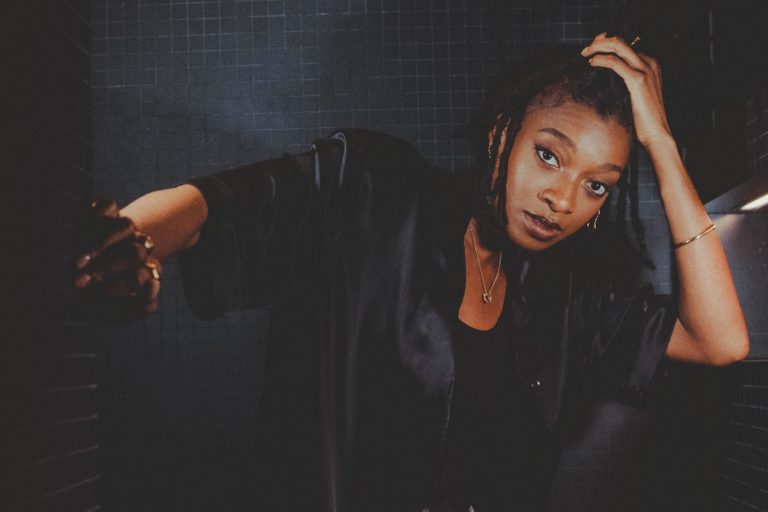
LITTLE SIMZ

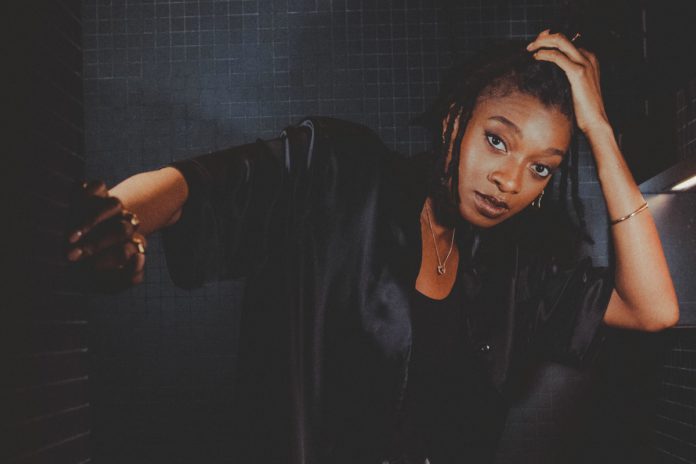
Few artists in the music world right now possess the artistry Little Simz does. With her smooth delivery, witty lyrics and original beats, Little Simz rides the lines between artist, poet and 

rapper. Born to Nigerian parents in London, she not only draws inspiration from hip-hop but also from jazz artists like John Coltrane, Nina Simone and Billie Holiday. Each of her albums evolves upon the last, as she’s determined to push the boundaries of her craft. There’s a reason why she’s beloved by fans and critics alike and has performed around the world with artists like Nas, Coldplay and Lauryn Hill. MAT WEIR

INFO: Mon, 8pm, Fox Theater, 1807 Telegraph Ave., Oakland. $56-$156. 510.302.2250.

TUESDAY, NOV. 18

HIP-HOP

BURNA BOY

Started from the bottom, now he’s here! Burna Boy, born Damini Ogulu in Nigeria, has taken the world by storm with his original take on Afrobeats that earned him a Grammy in 2021. Yet it’s not just his beats but his lyrics that win sway with fans, as he doesn’t write anything down. Instead, when he’s in the studio, he plays the beats and melodies and lets the words flow through him. By combining reggae, dancehall, reggaeton, hip-hop and R&B, Burna Boy earned himself the title of “Nigerian cultural giant” by Rolling Stone, along with making the publication’s “Best 200 Singers Of All Time” list. – MW

INFO: Tue, 8:30pm, Oakland Arena, 7000 Coliseum Way, Oakland. $66-$292. 510.569.2121.

TUESDAY, NOV. 18

INDIE

CAROLINE ROSE

Overloaded with things to love—top of the list is Year of the Slug, Rose’s newest album—catch an indie artist at the top of their game. Along with dreamy landscapes of shoegaze come bursts of high-potency rockabilly and punk rock that slaps into the overdrive of psychobilly. A person might toss out their music due to all the fancy jargon critics use to describe it, but hold up. Underneath it all is a solid musician with a singular vision that includes recording albums in GarageBand from a phone and touring exclusively to independent venues to avoid any money feeding the beasts of big corporations and recording labels. – LF

INFO: Tue, 8pm, Thee Stork Club, 2330 Telegraph Ave., Oakland. $25. 510.859.8709.

Mutual aid matters: A list of local food banks and drop-offs

On Nov. 1, millions of Americans began to lose food aid. SNAP (Supplemental Nutrition Assistance Program) recipients and federal employees are now turning to their communities for support as the longest federal government shutdown in American history drags into its second month, halting both food stamp payments and workers’ paychecks.

The Trump administration had refused to release any of the emergency funds, which had already been allocated by Congress to support SNAP, but two judges concluded that withholding them was illegal. These judges gave the Trump administration until Nov. 3 to provide a plan for how it would replenish these benefits, and the administration responded saying it would provide reduced food aid to more than 42 million Americans. But it didn’t say how much money or how quickly beneficiaries would see this much-needed assistance on their cards when they go shopping.  

Federal judges in Massachusetts and Rhode Island ruled that the USDA needed to use $5.25 billion in emergency funds to make at least partial payments to Americans on SNAP, but the Trump administration and the USDA claim that doing so could take weeks, if not months.

Bay Area residents are stepping up to the plate to help and protect their neighbors through mutual aid, a powerful tool in communities under duress from capitalist greed and political neglect. During the pandemic, mutual aid provided people with food and clothing, brought folks medicine and even helped them pay their rent through collective community collaboration.

Whether people are in need or want to help their neighbors, here’s an incomplete list of local food banks and drop-off spots to help us continue to keep our communities healthy and whole. 

Food Drive Drop-Offs In Oakland

Cafe Santana: 4100 MacArthur Blvd., Oakland.

RBA Creative: 3817 MacArthur Blvd., Oakland.

Showing Out Hair Gallery: 3717 MacArthur Blvd., Oakland.

Dear John: 3807 MacArthur Blvd., Oakland; Nov. 7 to Dec. 5.

Food Banks & Distributors

Mercy Brown Bag Program: 3431 Foothill Blvd., Oakland.

Hunger Program: Food Distribution Center – 1802 Fairview St., Berkeley.

Berkeley Food Network: 1925 Ninth St.

Free Little Pantry: 36600 Niles Blvd., Fremont.

Berkeley Food Pantry: 1600 Sacramento St., Berkeley; Mon, Wed, Fri 2-4pm.

California Association of Food Banks: 1616 Franklin St., Oakland.

Emeryville Citizens Assistance Program (ECAP): 2628 San Pablo Ave., Oakland; noon to 4pm, Mon-Sat.

Harbor House Ministries: Food Distribution Center – 1811 11th Ave., Oakland.

Telegraph Community Center: 5316 Telegraph Ave., Oakland.

Acta Non Verba: Youth Urban Farm Project: 248 Third St., #1056, Oakland.

Golden Light Ministries Church: 878 33rd St., Oakland; Food giveaways Wed and Fri, 1:30-4pm.

East Bay Food Not Bombs: 4799 Shattuck Ave., Oakland; 510.332.6535.

Free Food Distribution in Alameda County

Alameda Food Bank: 677 W. Ranger Ave. 

Gail Steele Multi-Service Center: 24100 Amador St., Hayward; Mon and Wed.

Enterprise Self-Sufficiency Center: 8477 Enterprise Way, Oakland: Tue and Thu.

Thomas L. Berkeley Self-Sufficiency Center: 2000 San Pablo Ave., Oakland: Mon and Fri.

Eastmont Self-Sufficiency Center: 6955 Foothill Blvd., #100, Oakland: Tue and Thu.

East Oakland Collective: Feed The Hood: 7800 MacArthur Blvd., Oakland; Dec. 6, 9am to 1pm. 

Meals on Wheels of Alameda County: (For seniors) 510.777.9560 (text or voice).

Fruitvale Transit Village: 3301 E. 12th St., Oakland; Wed at 10am.

East Oakland Collective: 7800 MacArthur Blvd., Oakland; Tue and Thu at 11am.

FREEdom Store from Homies Empowerment: 7637 MacArthur Blvd., Oakland; Tue-Wed, 10am to 3pm (register by calling 510.729.2072 on Mon-Wed, noon to 3pm).

FoodNow.net: The Alameda County Community Food Bank can connect people to different food sources—from emergency groceries that they can pick up at nearby locations, to home-delivered groceries and monthly benefits from CalFresh to help buy groceries every month.

HOPE Collaborative Food Resource: Year-round farmers’ markets, healthy eating recipes, food education games and food justice-related articles and education. hopecollaborative.net/food-resources.html

Payakk enchants in Merriewood

Payakk is situated in the middle of Merriewood’s commercial district. Surrounded by trees, those few blocks leading up to the Oakland Hills remind me of an enchanted forest. Every time I catch a glimpse of Thornhill Drive on the way out of Montclair, the neighborhood seems to suddenly materialize the way Narnia did for Lucy at the back of a magical wardrobe.

Instead of a lion, chef Nattaporn Pinpech’s spirit animal is a tiger. Her daughter’s name means “year of the tiger.” Pinpech, who goes by chef Tobb, named her first Bay Area restaurant, Secrets of Tiger, for her. Two years later Tobb has opened Payakk, which means “big tiger” in Thai. Emeryville’s Secrets of Tiger, Tobb told me, specializes in Thai street food. Dishes such as pad Thai; curry puffs stuffed with chicken and potatoes; drunken noodles, so named for their power to cure hangovers; and spring rolls.

At Payakk, Tobb said, “The menu is upscale.” She described the cooking there as closer to “royal Thai cuisine.” But the two menus do overlap in places. A pad Thai chaiya, according to a note on the menu, was served for the first time in the United States at Secrets of Tiger—and I’m not going to contest that claim. This regional dish from Southern Thailand alters the usual pad Thai by including coconut milk, tamarind, cane sugar, shrimp and crab. Someone I know tried it when they went and said the dish was, “omg so good, fresh, high-quality shrimp and crab.”

We tried a different specialty, the Green Lady Tiger Curry. Ribeye steak is chargrilled then served on top of a spicy green curry sauce. Dark green leaves of Thai basil are fried then added as garnish, slick and shiny from their oily bath. Tobb is generous with her serving portions. The plate held more meat than either of us could imagine eating in a single sitting.

To start the meal we split mushroom nam prik and a light, simple plate of bean sprouts and green onion stems cooked in soy sauce. I ought to try making this refreshing dish at home. The nam prik is described as a “rustic chili dip” made with garlic and served with a softboiled egg cut into two jammy halves, lettuce leaves and, oddly, three or four sauteed brussels sprouts.

We also made the mistake of ordering a second heavy meat dish. My instinct was to order the tom yong gai yang soup. But I went to Payakk without my glasses and only read the first line under Sua Yai, which I thought was a grilled pork dish. The description I missed continued with: “And 13 oz. ribeye steak.” It was just too much steak for one meal.

Tobb, who is Chinese and Thai, said her cooking reflects not only her roots but also her training and travels throughout Asia. “We have the same stir fry techniques in Thailand and China. In the United States, it’s called wok,” she said. To make fried rice, she uses a pan on high heat with cold oil to coat every grain. The ingredients in Thai food have also evolved over time. “We didn’t [originally] eat pork or lamb, but we were influenced by commerce with China, India and Persia,” she said.

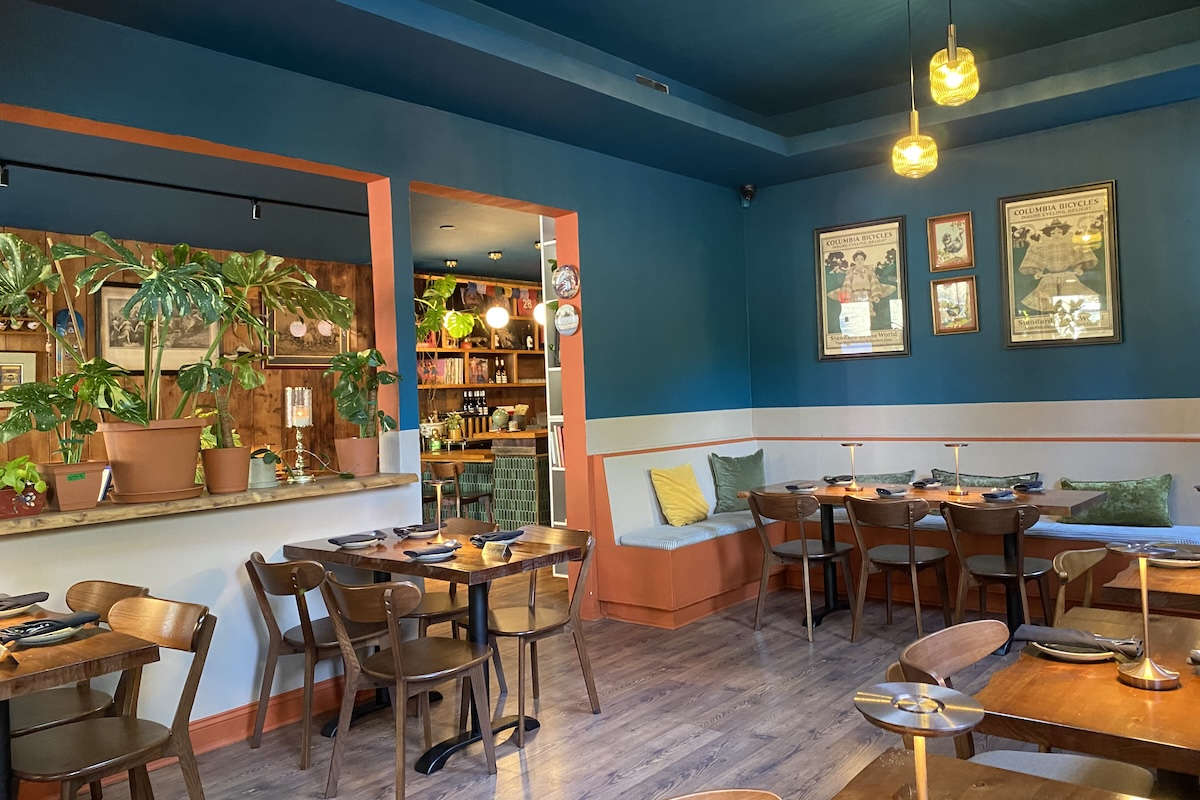
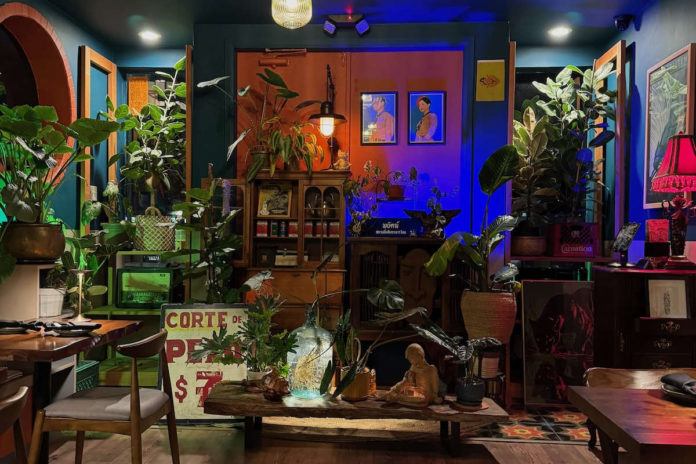
ENCHANTED INTERIOR With a mixture of plants, benches, tables and framed prints, Payakk’s two parallel dining rooms look homey and welcoming. (Photo by J. S. Edalatpour)

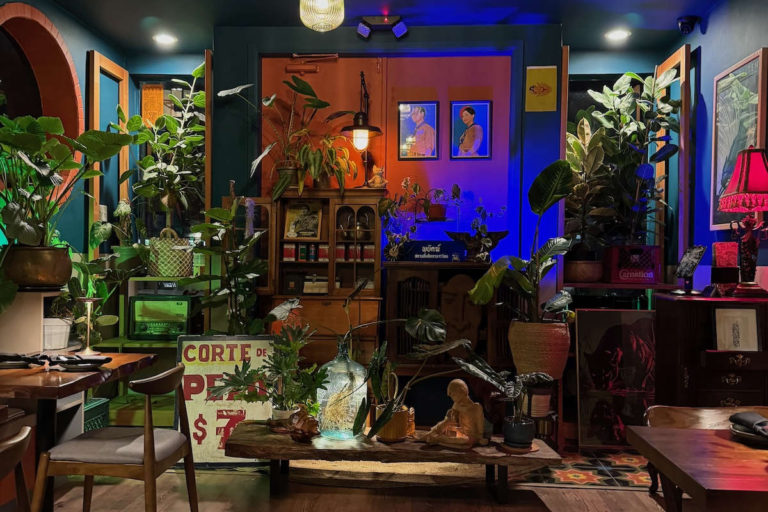
The interior design of Payakk extends the feeling of that enchanted landing in Merriewood. Tobb’s husband, Jaturakorn “Yong” Pinpech, is the art director. She said he can’t cook, but his background in advertising and graphic design has been good for branding. The strong teal walls are accented with a pale orange that feels exactly right.

One original wood-paneled wall remains in place, circa a hippie-er bygone Berkeley era. With a mixture of plants, benches, tables and framed prints, the two parallel dining rooms look homey and welcoming. Tobb also hired Tle, an architect from Khon Kaen University, who built a large wooden bar adorned with dark green tiles. They match the deep-fried basil leaves.

This month Tobb will change up the menu by adding traditional dishes from the Trat Province in east Thailand, including a super-spicy duck curry.

Payakk, 5761 Thornhill Dr., Oakland. Open Thu-Mon, 5-9pm. 510.844.4010. payakk.com

‘Nuremberg’ reviewed: Evil on trial

1

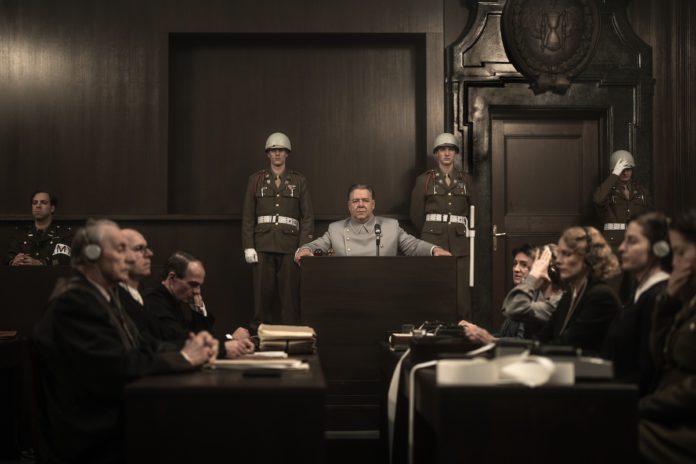
James Vanderbilt’s Nuremberg is a grand, complex, thought-provoking, intelligent piece of work, a combination war movie/courtroom drama/political beacon, on a subject that most of its audience might think is over and done with. 

All the action takes place in 1945-46, in the aftermath of World War II in Europe. The key setting is a previously bomb-damaged courtroom in Nuremberg, Germany, where an international military tribunal of four judges from the Allied powers—one each from the U.S., Great Britain, the Soviet Union and France—meet to decide the fate of 24 Germans, essentially the top surviving political, military and economic leaders of the Third Reich (Adolf Hitler, Joseph Goebbels and Heinrich Himmler are already dead by suicide). 

As director-co-writer Vanderbilt—adapting a book by journalist Jack El-Hai—sets up the story, the top dog among the vanquished Nazis is Hermann Göring (played by Russell Crowe), commander of the Luftwaffe. Putatively second in line after Hitler, Göring was captured alive by American troops in Austria in May, 1945. 

Like most of the defendants, Göring is unrepentant, defiant, even arrogant toward the court. That stance poses a strategic challenge to the lead American prosecutor, Robert H. Jackson (Michael Shannon), a U.S. Supreme Court justice. Jackson seeks to establish a legal basis for charging the Nazis in this unprecedented—that word, so familiar to stateside viewers in 2025—criminal case. 

With help from Dr. Douglas Kelley (Rami Malek), a U.S. Army psychiatrist brought in to chat up (read: headshrink) Göring and prevent suicides, Jackson and the other Allied prosecutors are able to charge the original Nazi—Göring was a Hitler comrade since the failed “Beer Hall Putsch” of 1923—with four offenses: crimes against peace, war crimes, crimes against humanity and conspiracy to commit. 

Göring is as slippery as a bockwurst on a toothpick. A decorated ace flyer of biplanes in WWI, by 1945 he had become a fat, opiate-addicted subject of caricature, as well as a major looter of confiscated artworks. Nevertheless, the former importer and hunter of American raccoons to populate German forests (look it up) still thought of himself as too wily and strong to be convicted.

Göring’s bragging intrigues the inquisitive Dr. Kelley, and so does his explanation of Hitler’s appeal to the average German. “He made us feel German again,” enthuses the ex-Reichsmarschall – words to be modified years later by another “strong man” public figure, in another continent far away.

Australian actor Crowe has made a specialty of portraying flawed tough guys (L.A. Confidential, Gladiator, Les Misérables). His Göring is one of his best, and the role matches up well with Malek’s crafty psychiatrist. There are definite similarities between the Göring-Kelley relationship and the one between Hannibal Lecter and Clarice Starling in The Silence of the Lambs—questions of morality and ethics, and intellectual power versus low animal cunning. 

Implicit in the subtext of Nuremberg is the rejection of the idea, sometimes voiced in our present day, that it’s better to deal with the crimes of a mad dictator and his rabid followers with more violence, rather than in a court of law. Some high-ranking Americans favored summary execution. Nothing doing, the law must prevail, declares Robert Jackson unequivocally. On the other hand, Kelly’s solution to the Göring problem is more psychological: “The trick is to use his vanity against him.” 

Director Vanderbilt’s well-chosen cast works hand-in-hand with the authentic-looking settings. The film was shot in Budapest, Hungary and the U.S. The lead character actors resemble their historical subjects uncannily, with special kudos to Crowe, Malek, Shannon, Richard E. Grant (as British judge Sir David Maxwell Fyfe) and Dutch actor Lotte Verbeek as Göring’s thoroughly Nazi widow, Emmy. 

It would be relatively easy to fashion a whodunnit about Nazi Germany’s many crimes. What’s more difficult, and more gratifying, is Nuremberg’s determination to make a “whydunnit” instead. So we have something to refer to other than explosions and atrocities. Murder will out.

* * *

In theaters

Free Will Astrology: Week of Nov. 19

Free Will Astrology: Week of Nov. 12
Rob Brezsny offers thoughtful horoscopes for finding power (Scorpio) and creative freedom (Sagittarius), among other pursuits.

Another silent spring: the last flight of the monarch

Another silent spring: the last flight of the monarch
Alongside the endangered redwood, the monarch butterfly is a symbol of our land.  We have taken the monarch as our emblem—one sees it in many places—on our T-shirts and jewelry, our journals and our sky-flying kites. It is on our place-making murals of fluttering monarchs and happy people. The monarch floats up from our subconscious and haunts our dreams … Little...

Pulley power finds new purpose

Pulley power finds new purpose
Obscured by digital innovations, it’s easy to overlook the mighty pulley. Evidence of its use can be found as far back as Ancient Egypt’s Twelfth Dynasty; later, pulleys were employed in essential mechanisms during the Renaissance. The pulley’s central actions and supreme value rely on the use of a wheel with grooves in its circumference through which cables, belts or...

Sonny Smith’s latest album speaks the language of music

Sonny Smith's latest album speaks the language of music
On his latest album, The Diving Kind, Sonny Smith of San Francisco departs from his usual method of composing. The music was improvised in a studio in Senegal, with Senegalese musicians. “I went to Senegal with Robin Girod, who runs the Moi J’Connais label in Switzerland,” Smith said. “I met him during many years of touring Europe. I’d play with...

How Small Businesses in the East Bay Are Finding New Ways to Thrive

Small East Bay businesses find ways to thrive
Published in cooperation between Kaboozt and the East Bay Express The East Bay’s small business scene has always been a vibrant patchwork of cultures, ideas and grit. In recent years, however, local entrepreneurs have faced a rapidly shifting landscape—rising rents, changing consumer habits and the lingering effects of the pandemic. Yet, as always, East Bay business owners are finding creative...

Take your medicine

Take your medicine
Punk is an elusive thing. It’s easier to say what isn’t punk than to explain what is. On top of that, the 50-year-old genre has evolved so much over time, it’s basically become a giant umbrella with many people taking refuge under it. However, certain bands are so undeniably old-school punk rock it leaves no doubt where their roots lie. Oakland’s...

Social Eyes: Week of Nov. 13-19

Social Eyes: Week of Nov. 13-19
THURSDAY, NOV. 13 COMEDY MATT BRAUNGER Matt Braunger’s comedy lives somewhere between absurd storytelling and painfully accurate self-awareness. A Portland native with roots in Chicago improv, he’s built a career on laughing at what’s going wrong. You’ve seen him everywhere—MADtv, Agent Carter, Upload, Disjointed—but it’s on stage where his ability to comfortably skewer himself and his midlife disasters take off. Now on...

Mutual aid matters: A list of local food banks and drop-offs

Mutual aid matters: A list of local food banks and drop-offs
On Nov. 1, millions of Americans began to lose food aid. SNAP (Supplemental Nutrition Assistance Program) recipients and federal employees are now turning to their communities for support as the longest federal government shutdown in American history drags into its second month, halting both food stamp payments and workers’ paychecks. The Trump administration had refused to release any of the...

Payakk enchants in Merriewood

Payakk enchants in Merriewood
Payakk is situated in the middle of Merriewood’s commercial district. Surrounded by trees, those few blocks leading up to the Oakland Hills remind me of an enchanted forest. Every time I catch a glimpse of Thornhill Drive on the way out of Montclair, the neighborhood seems to suddenly materialize the way Narnia did for Lucy at the back of...

‘Nuremberg’ reviewed: Evil on trial

'Nuremberg' reviewed: Evil on trial
James Vanderbilt’s Nuremberg is a grand, complex, thought-provoking, intelligent piece of work, a combination war movie/courtroom drama/political beacon, on a subject that most of its audience might think is over and done with.  All the action takes place in 1945-46, in the aftermath of World War II in Europe. The key setting is a previously bomb-damaged courtroom in Nuremberg, Germany,...
19,045FansLike
17,709FollowersFollow
61,790FollowersFollow