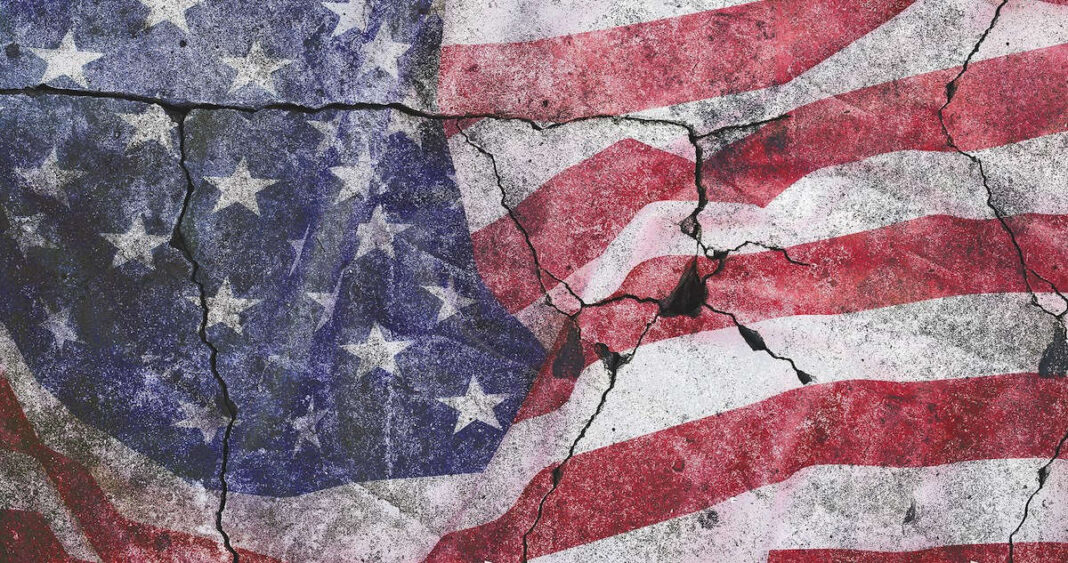
American democracy is facing some serious challenges, according to California registered voters in a recent poll. A UC Berkeley Institute of Government Studies (IGS) poll of 5,962 registered voters revealed that 68% feel American democracy is under attack, 64% said voter suppression is a major concern and 79% said corporations have too much influence on elections.
These results, and an extensive amount of additional collected data, were highlighted at an April 27 event in Sacramento, co-hosted by the UCLA Voting Rights Project and also featuring opening remarks from current California gubernatorial candidate, Xavier Becerra.
“We conduct four or five polls a year,” said Jeffrey & Ashley McDermott Endowed Chair, IGS, Eric Schickler. Findings from this poll indicate “widespread concern about the state of democracy that cuts across racial groups.” The poll was conducted before the Supreme Court ruling affecting voters in Louisiana, but a majority of those polled were already opposing rollbacks in voting rights, he said.
Reported in the data: “When asked whether attempts by the federal government and FBI to interfere with the administration of elections in California was a problem, 60% of Californians believe it is a major or somewhat of a problem, including 79% of Democrats and 64% of No Party Preference voters, but only 22% of Republicans.”
Schickler noted that a proposal currently making its way through the California legislature, the California Voting Rights Act, resulted in partisan results. “This proposal divided the parties sharply,” the report said, “with 88% of Democrats in favor, as compared to 25% of Republicans.”
On the question of Big Money in politics, the question was asked several ways, Schickler said. Voters favor reforms to ensure greater equality and transparency in the state’s electoral process. Fully 76% of California voters supported requiring that the top three funders in support of and the top three funders opposed to a state ballot measure are listed as part of the official ballot summaries provided to voters.
Just 3% are opposed, with 21% offering no opinion. The data noted: “This is a rare reform issue on which Democrats (78%), Republicans (74%), and No Party Preference (75%) all agree by overwhelming margins.”
However, no further questions were asked about deceptive names used by supporting and opposing funders, such as “Californians for Fair Government,” which could mean anything, and no specific questions were asked about the 2010 Supreme Court’s “Citizens United” decision, which effectively allows unlimited spending on political campaigns by corporations and pacs.
Another interesting and significant aspect of the polling focused on “low-propensity voters”—those who don’t vote on a regular basis. Asked what might increase their frequency of voting, “the most common response [41%] was the need for unbiased and trusted news sources.”
Other comments from the data: “Those who report being less likely to vote in the upcoming June primary election offer a variety of reasons for not participating. Mentioned most frequently are a lack of information about the issues and candidates (38%), concerns that moneyed special interests have too much influence (35%), and the belief that their vote does not matter (28%).”
Yet in a media environment where many people insist on using social media, including ultra-partisan “influencers” and podcasters as a primary source of news, how are these potential voters going to find “unbiased” news sources without making the effort to do so?
“Voters’ self-explanation of why they don’t vote often isn’t really the reason,” Schickler said. “This presents a struggle for us. We think a lot about politics, but a lot of potential voters don’t pay that much attention to it.” This, he said, makes it harder for them to evaluate what is actually trustworthy about candidates and issues.
He pointed out that the time when many, if not most, people regularly read the same newspapers and listen to the same radio and television news programming is gone, replaced by a fractured information environment that promotes siloed “confirmation bias” and echo chambers.
The results of the recent polling show, Schickler said, “that California voters broadly agree that American democracy faces deep challenges, but they are deeply divided about the source of these problems and what should be done to resolve them.”