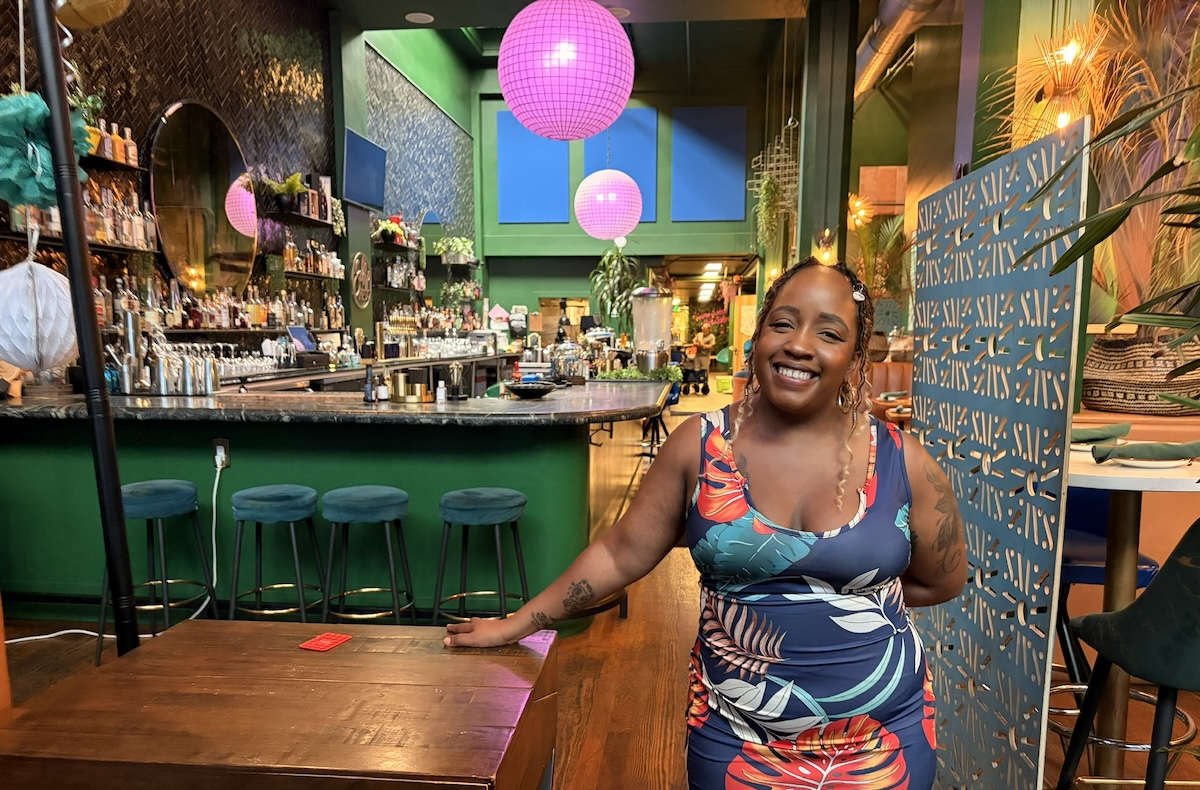
Kimberley Davidson has lived in Oakland her whole life and remembers when she could spend all day and all night downtown. She says you still “can-ish” but that it’s harder, and one has to know exactly where to go.
“I’m scared for downtown sometimes,” she said.
She dons a glossy expression while recalling the mid-2010s and days spent at Lake Merritt that inevitably finished with a bar-hop around downtown.
Davidson currently manages Sobre Mesa, a cocktail bar located a block away from Broadway. Before that, she managed Luka’s Taproom, a downtown staple until its closure in 2022 due to disputes over rent increases.
It’s been over five years since the pandemic fundamentally shifted conversations surrounding downtowns across America. The urban doom loop theory—proposed in 2022 by Stijn Van Nieuwerburgh, a finance and real-estate professor at Columbia University—worked its way into the mainstream and has hung in the air ever since. The doom loop begins with remote work leading to office vacancies and eventual budget deficits that leave governments unable to fund social programming which, in turn, pushes even more people away from downtowns.
Throughout the Bay Area, downtown areas exhibit varying degrees of occupancy and underutilized commercial space. Office vacancy rates in Oakland and Silicon Valley remain at record highs. In Berkeley, a similar trend of increasing office vacancy plagues quarterly reports, while San Francisco’s office vacancy rate is actually steadily decreasing, though not yet to pre-Covid levels.
But is that all there is to it? Though Bay Area cities suffer similar commercial decline—universally blamed on the pandemic—they each also face their own unique set of concerns and plans to revitalize, with some finding greater success than others.
Negative perception
It’s midday in Oakland and the owners of the last mom-and-pop shop downtown—their claim—do not want their identities on the record. Keeping their various frustrations with the city out of the press is how they’ve survived, says the person behind the counter of a shop that sits in stark contrast to the vacant stores and plywood sheets that otherwise define downtown.
As the other owner stands outside discussing the reasons it’s so hard to stay afloat in Oakland, multiple passersby greet them, some on a first-name basis. If one were to ignore their peripheral vision, this might just be the downtown Oakland of old.
According to the Tax Foundation, Oakland—along with Chicago, Long Beach and Fremont—has the third-highest state and local sales tax rate for major cities across the U.S. This can drive customers away in a city that already struggles with foot traffic due to concerns of violence and infamous car break-ins, which Davidson experienced eight times in one year.
Ironically, crime is actually down in the city, says Carroll Fife, Oakland council member of District 3, which includes downtown. Her claim is backed by city data showing a 22% decrease in violent crime from last year’s first-quarter analysis.
Crime is also down in San Jose, with a decrease in both property and violent crimes between 2024 and 2025. Despite this, locals, such as San Jose State alum Shawn Luis, perceive downtown San Jose to be generally more “scummy” than it was a decade ago.
Leaders of nonprofit organizations dedicated to revitalizing downtowns across the Bay struggle with public perception of their cities.
Marisa Rodriguez, CEO of the Union Square Alliance in San Francisco, says that sensationalized reports of crime in the city make downtown seem like a war zone, deterring potential tourists and even those who live in surrounding neighborhoods.
With multiple sponsors backing out of First Fridays this year due to reports of violence often erroneously linked to the festival, public perception of Oakland directly impacts its future. Similar fears of violence drive away consumers, generating less money for revitalization efforts in a city that’s already stretched thin.
Oakland has been and continues to be in a budget deficit. Mayor Barbara Lee mentioned this deficit in her mid-cycle budget report, which cites Oakland’s financial strain as a reason the city is unable to fulfill social services. Often called a structural deficit, meaning that the amount Oakland makes and spends is consistently disproportionate, Oakland’s precarious financial situation makes it hard for city leaders to focus on downtown.
Instead, Fife prioritizes homelessness, though she does believe the issues are tied.
“Businesses who want to come into Oakland, they don’t feel like they can do business here,” she said. “So that’s probably one of the biggest hindrances. And for me, I just feel like housing is a human right, and we gotta get people indoors and everything else will fall into place.”
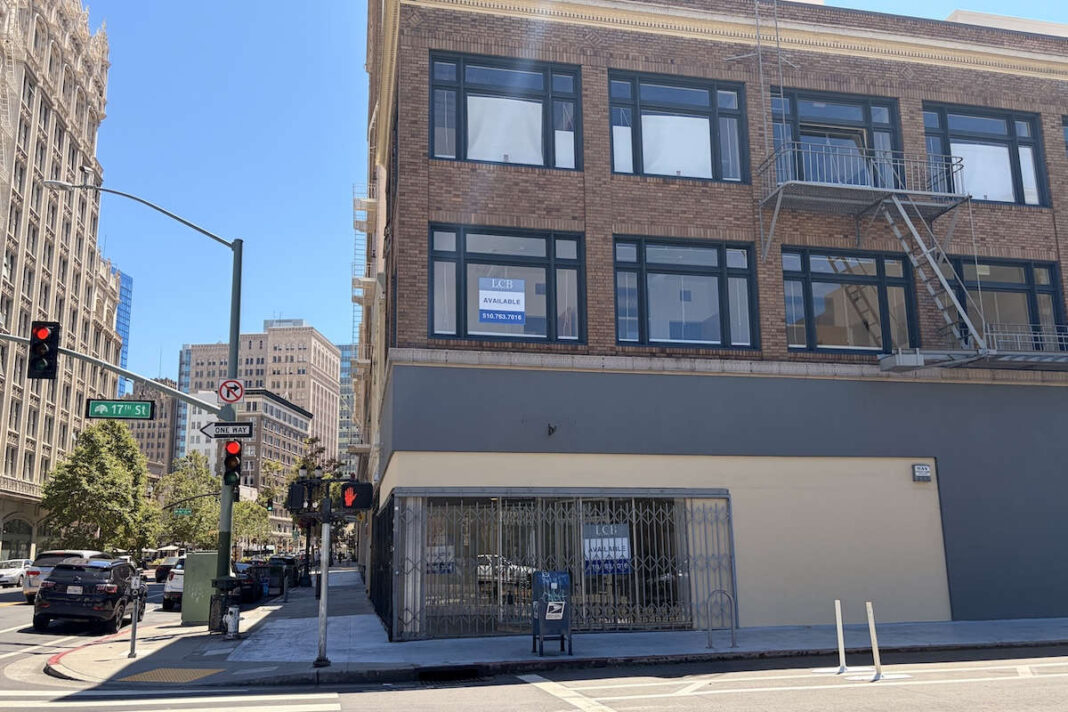
Empty storefronts
For Berkeley Councilmember Igor Tregub, who oversees the district including downtown, revitalization is a priority. In late July, Tregub put forth a recommendation to establish performance standards for commercial district properties for the city manager to enforce. This means that projects not advancing near their timeframe will have to make their properties presentable, use the ground-floor space creatively or have their permits revoked.
Empty movie theaters are common along the avenues and streets that make up downtown. Landmark’s California Theatre on Kittridge Street is arguably the most distinct; its marquee mixes art deco and modernist styling from various renovations that unintentionally pays homage to the theater’s long history in Berkeley, starting in 1914.
Tregub’s recommendation could lead to theaters’ temporary use as something other than empty facades. One resident suggested they should be turned into roller rinks.
However some residents, such as Matt O’Brien, who moved to Berkeley in 1984 as a student, believe that there’s been a switch in Berkeley City Council—that it used to put residents first, but is now more interested in bringing in large developments.
On Nextdoor, a neighborhood social networking app, users in Berkeley consistently theorize on Downtown Berkeley’s decline, with many doing their own digging after years of losing legacy businesses like Mel’s Diner or, more recently, Half Price Books.
Changes in Berkeley’s zoning laws to allow for construction of taller buildings have been highly debated, with front-yard signs that oppose rezoning dotting several neighborhoods around the city. In 2023, Berkeley approved an eight-year housing plan that would rezone Berkeley to allow for denser development.
This mirrors the goals of California initiatives such as the State Density Bonus Law, in which developers are granted an increase in allowable density, concessions and incentives, waivers or reductions of development standards, and reductions in parking requirements when they agree to include affordable housing in projects of five or more units.
In April of this year, Councilmembers Rashi Kesarwani and Tregub, along with Mayor Adena Ishii, proposed a Citywide Local Density Bonus program that would grant developers the same densities, bonuses, waivers and concessions as the state law without requiring on-site, for-sale, below-market-rate housing.
Though upzoning and the new developments it attracts might contribute to Downtown Berkeley’s death rattle, increased housing density is understandable if it’s for the purpose of providing affordable housing. Especially in a city that once hosted the People’s Park encampment—now a university housing development set to open in 2027—and still holds hundreds of unhoused residents.
The proposed Berkeley-specific density bonus program replaces this nuance with an in-lieu affordable housing fee to the City’s Housing Trust Fund, leading many to wonder who upzoning and increased density is meant to benefit.
As the small-business owner of La Note, a French restaurant on Shattuck Avenue, Dorothée Mitrani tries not to concern herself with developers and their plans for Berkeley, despite having shared space with them on the board of the Downtown Berkeley Association. She says Berkeley has always had its periods of liveliness and stagnation, but that recently she’s noticed more optimism.
Mitrani echoes sentiments that John Caner, CEO of the Downtown Berkeley Association, shared with the East Bay Express in regards to leasing negotiations currently taking place on 17 previously stalled housing projects, along with Flying Horse Investments acquiring Shattuck Plaza nearly a year ago.
Tregub attributes these stalled projects to rising construction costs, higher interest rates, economic uncertainty, and tariffs and disruptions to the supply chain associated with construction materials.
In the heart of Silicon Valley, bottom-floor retail space remains similarly boarded. The San Jose Downtown Association tracked around a dozen businesses that closed in its service area within the last year.
A local bartender says that luckily, dive bars are recession-proof. But he doesn’t like what’s happening to his community; it reminds him of the dot-com boom.
According to a 2009 Regional Report by the U.S. Bureau of Labor Statistics, employment in Silicon Valley high-tech industries declined by around 17%, representing the loss of more than 85,000 jobs, after the peak of the high-tech boom. This is often referred to as the bursting of the dot-com bubble. Now locals worry that the AI-bubble will soon do the same, leaving them unwilling to spend as much as they usually would downtown.
Nate LeBlanc, economic development director for the San Jose Downtown Association, says the city is not so interested in bringing back lunchtime foot traffic. Instead it focuses on activating the downtown’s “experience economy,” recently bolstered by events such as hosting World Cup games and the Superbowl Final, which brought significant commercial activity into the city.
With office vacancies on the rise, events of this kind are increasingly necessary to bring in crowds. San Jose is the geographically largest city in Northern California. Spearheaded by City Manager Anthony “Dutch” Hamann, San Jose conducted 14,000 annexations between 1945 and 1970. In 2024, the San Francisco Bay Area Planning and Urban Research Association suggested tightening the large city by promoting a “central San Jose” with downtown at its core.
Hamann wanted San Jose to be the next Los Angeles. While he did succeed in turning a collection of agricultural towns into a high-tech hub, this sprawling metropolis still has a ways to go before its downtown surpasses that of its neighboring San Francisco.
What’s worked
Though downtown San Francisco also struggled after the pandemic, a stroll through Union Square feels markedly different than many other Bay Area downtowns. One would be hard pressed to call it a ghost town, with foot traffic clearly visible on a Sunday morning. Cafes are well patronized and plywood storefronts are hard to find, as old charm seamlessly mixes with modern retail.
Retail was and is vital to downtown’s recovery according to TJ Wenzel, managing partner at the San Francisco Downtown Development Corporation (DDC). The nonprofit focuses on deploying catalytic capital—or funds that accept disproportionate risk for the goal of public good—as a “bridge to downtown San Francisco’s vibrant future.”
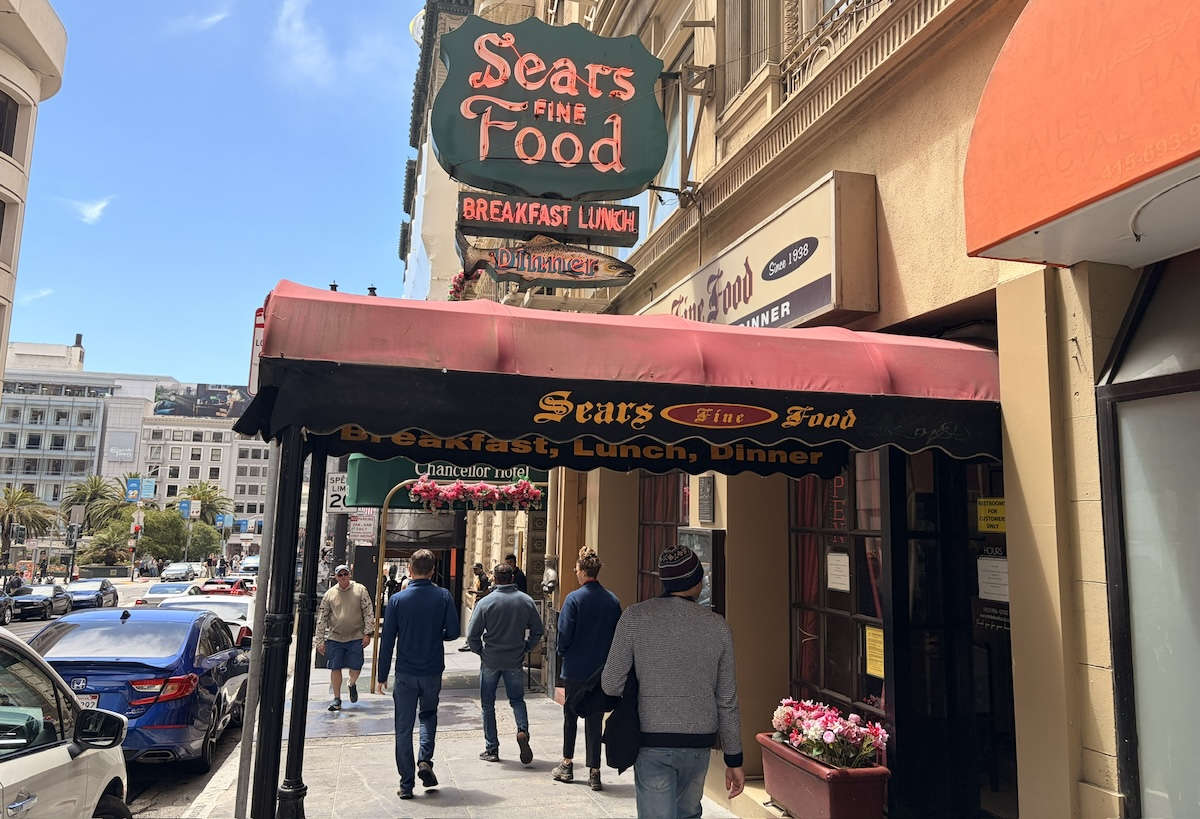
In April the DDC launched the Developed Downtown Business Fund, which garnered over 500 applicants, to support businesses coming into downtown. Additionally, the DDC provides funding to projects such as the Powell Street improvement project and the Embarcadero Plaza renovation, deploys street-level ambassadors and oversees the daily power washing of sidewalks, and invests in events such as First Thursdays to incentivize foot traffic.
This year, Powell Street foot traffic is up by 20%, while around 180,000 square feet of retail has been absorbed in Union Square.
Rodriguez, of the Union Square Alliance, says that the conventions calendar is back to pre-Covid levels. She sees downtown San Francisco’s renewal as vital to the spirit of the Bay Area.
“As the city continues to heal, you’re going to see more and more Northern Californians re-identifying with the city,” Rodriguez said. “Their city.”
Vacant to Vibrant, another program implemented to bolster revitalization, helps small businesses with permitting and funding to collaborate with property owners in creating pop-ups for vacant storefronts. This has caught the attention of leaders in other cities, with Oakland floating the idea of implementing a similar program.
Nan Chotiphanomvivat, manager of Powell Street’s Roxanne Cafe, felt the downtown San Francisco she once knew slowly coming back this past year. Chotiphanomvivat believes in the city and everything it’s offered her for the last 12 years, despite its rough patch.
“If I have to compare [it] to flowers,” she said, “it’s kinda like [it] started blooming again.”