When you’re flush, save money as if you were broke. And when you’re
broke — keep on saving.
“Live during a good year as if it were a bad year,” urges Kate
Wilusz, a Certified Financial Planner and UC Berkeley graduate who
works as a franchisee for Ameriprise Financial. And during a bad year
— such as, perhaps, this one — she advises staying
strong, keeping close track of every cent spent, and investing in real
estate, stocks, and bonds.
“They’re all on tremendous sale right now,” Wilusz says. “You can
buy them at the same prices now that they sold for ten and fifteen
years ago. In many ways, this is a fantastic time. It’s like going to
Macy’s and seeing that coat you’ve been wanting — and now it’s
marked down to 75 percent off.”
But that’s the fun part. Before snarfing up bargain-basement shares
and rental properties, we’d better have our own houses in order. To
start this process, Wilusz asks all of her new clients to itemize their
expenses.
“It drives people crazy, how detailed I am about this,” she said.
But little things add up: Sweat the small stuff. “How much do you spend
on wine? On groceries? On skiing? How much do you pay in taxes and how
much is your health insurance? People tell me, ‘Oh, we’re safe because
we make $200,000 a year.’ Once I know how much they spend, I have to
tell them, ‘But the lifestyle you’re living costs $22,000 a
month.'”
Oops.
After that initial shockwave, they have to ask themselves what to
cut out.
Cutting is crucial, Wilusz asserts.
“Save each and every month, even — especially —
when you don’t think you can save any more. Save when you’re broke or
you’ll be broke your entire life.” These savings can create what Wilusz
considers the financial-planning essentials: a safe emergency fund and
good insurance: not just home, health, and life insurance, but
disability insurance.
“Disability insurance is the most important, but nobody thinks about
it until they need it. The two main reasons that people lose their
homes in this country are job loss and disability. What happens if you
throw out your back or get cancer and can’t work? These things can be
devastating” to bodies and bank accounts. Yet most of us would
rather not even imagine it: “Most people just say, ‘Not me, not me, not
me.'”
That la-la-la-la-I-can’t-hear-you impulse also keeps many from
creating wills and living trusts. The very idea of writing a will can
be daunting, because it means facing death. For some, it feels like the
first step toward the gallows, or like signing one’s own death
certificate. Living trusts, by contrast, have less of a gloomy air. In
creating a trust, which is a fairly quick and inexpensive procedure,
you forfeit ownership of your assets to a “trust,” a legal entity which
you control entirely. You name someone else as the beneficiary; upon
your death, that person simply assumes control of the trust. As there
is no actual change of ownership of the assets, beneficiaries can avoid
probate.
For Wilusz, the possibility of ill health and death are all too
real. Her father died suddenly, unexpectedly, at age 55. But most of us
prefer to dwell in fantasy. Far too many, she says, count on future
windfalls in the form of salary increases and inheritances. But the
former is unlikely in today’s job market; the latter is ever more a
pipe dream.
“People live longer these days, but not healthier. Before they die,
most people’s parents will have long-term medical needs which will not
only wipe out what would have been the kids’ inheritance but might also
even put the kids into debt.”
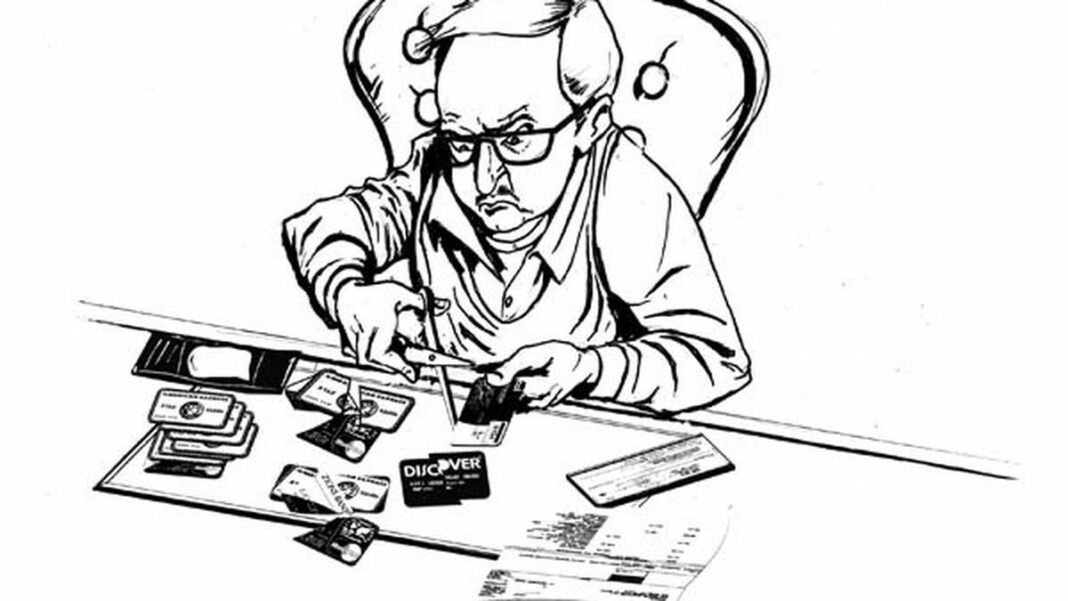
So get real. First and foremost, stop spending play money.
Buying on credit means using funds you do not have and might
never obtain. The acquisitions are real; your being able to afford them
is imaginary. Bolstered by the fantasy that is credit, “people don’t
have to live within their means anymore,” Wilusz laments. Debtors’
prisons and poorhouses are a thing of the past, but “the modern-day
equivalent of the poorhouse is living in a house you can’t afford with
a mortgage you can’t afford while using credit cards for everything.”
Young people are particularly susceptible, she says. “They’re going
into debt for Coach and Victoria’s Secret. There are twenty-year-old
girls carrying $500 Coach bags on every street, and the worst thing
that ever happened to feminism is the Victoria’s Secret credit
card.
“Don’t borrow money,” she pleads. “Grow up.”
It’s no joke. Safeguarding nest eggs often means readjusting how you
think and act.
This process entails “more than money,” asserts Jonathan DeYoe, a
financial planner who heads DeYoe Wealth Management in Berkeley. He
reached this career via a spiritual path, arriving at finance after
attending the Graduate Theological Union’s Institute of Buddhist
Studies, and that was after absorbing a strong work ethic from
his ranch-bred Midwestern father. To taxes, trusts, investment
portfolios, and all the rest, DeYoe takes a keenly philosophical
approach, which he boils down to three key elements: patience, faith,
and discipline.
The discipline bit is familiar to anyone who ever adopted a fitness
program, quit a bad habit, or actually kept a New Year’s resolution. At
first, it feels impossible.
“In this consumer culture, we are so trained that to not
spend is somehow bad. Advertisers spend millions of dollars every year
trying to get us sucked in. But we do have a choice. We can say,
‘I don’t have to buy all that stuff.'” Typically, DeYoe says, “when
people realize the work it takes to get their houses in order, they
don’t want to do it.” After he and his associates help clients confront
their own mental-behavioral “disconnects,” they compose a written
financial plan: “I’m a fascist when it comes to written financial
plans.” Plan in hand, the seeker of financial security must adjust to
making tradeoffs.
“Severely restrict spending and debt. Save until you have three to
six months’ liquidity, then keep saving. Maybe it means you’ll have to
retire a year later. Keep increasing your skills, because that’s the
key to increasing your income. And if you’ve got to save and save and
save, then no: You can’t buy that flat-screen TV.”
Now more than ever, it behooves us to consider the
future — because we’re likelier than any generation in
history to have a future.
“Fifteen years ago, people still retired at 65 and went fishing. Now
they keep going, take a different career, write a book. Our goals and
our milestones are increasing,” says DeYoe. This is where patience
comes in. “If you’ll need $200,000 to send Tommy to college on January
1, 2018, and between now and then you want to make certain purchases
and take certain vacations and go on a six-month sabbatical, then we
need to determine how much you’ll need to save every month in order to
make that happen. What do the things you want cost now and, roughly,
what will they cost at that point in the future when you hope to get
them?” In plush years and poor years alike, he says, “everyone’s
biggest fear is outliving their money: of actually running out once
they can’t work anymore. And it happens daily. Half the retired
population in the United States lives on nothing but Social
Security.”
The antidote?
Save. Prioritize. Diversify.
“Maintain a whole bunch of liquidity, including a year’s income,
basically in cash — just in case,” DeYoe advises. Don’t put all
those nest eggs into one basket. Gold, stocks, bonds, commodities,
cash, real estate: “The fundamental fact is that at any given time, we
never know what will happen tomorrow. Even if we have an inkling, we
should always maintain broad, broad diversification. That’s why I never
advise people to stay out of the stock market.” He agrees with Wilusz
that the current economic meltdown presents “tremendous opportunities.
Those who are at or near retirement right now and who have been saving
for years and years should be looking at this as the mother of all
opportunities.” Stuffing your entire life savings under the mattress or
selling every last share, terrified by the daily financial news, “is as
horrible a decision as buying real estate in 2005 or investing in
dot-coms in 2000,” he says. “These days I see a bubble of fear and
pessimism, the same bubble that I saw in 2002.”
And this is where the faith comes in: faith in one’s own ability to
budget and faith that bad times will end.
“The thing I really, really love about this country is that every
four years we get an opportunity for a peaceful transfer of power. The
conversation always continues, and I believe in the conversation.
Humans progress, and I have faith that with so many people trying to
solve this current economic mess, it will be solved. The Great
Depression was a ten-year, horrible, awful debacle — and it was
solved. In the early ’70s, we had 18 percent inflation — and that
was solved. I know it’s hard for folks in Florida whose homes are down
70 percent this year — but hey, they were up 100 percent five
years ago. We go through cycles. Read history, and you’ll know that
this too will be okay.”