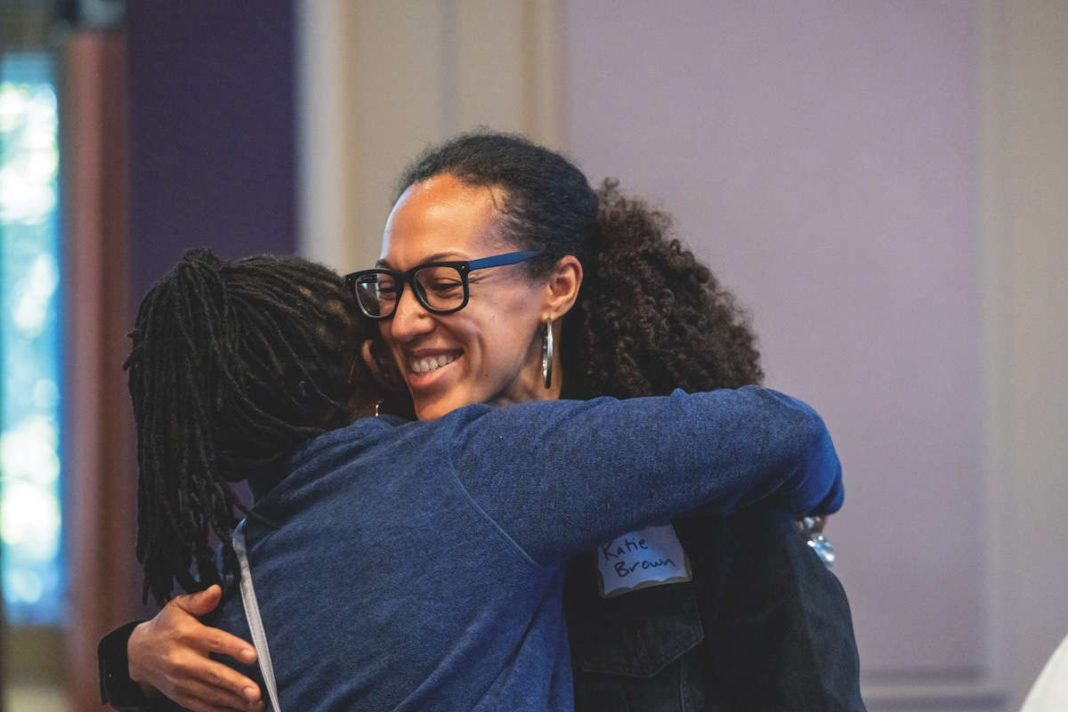
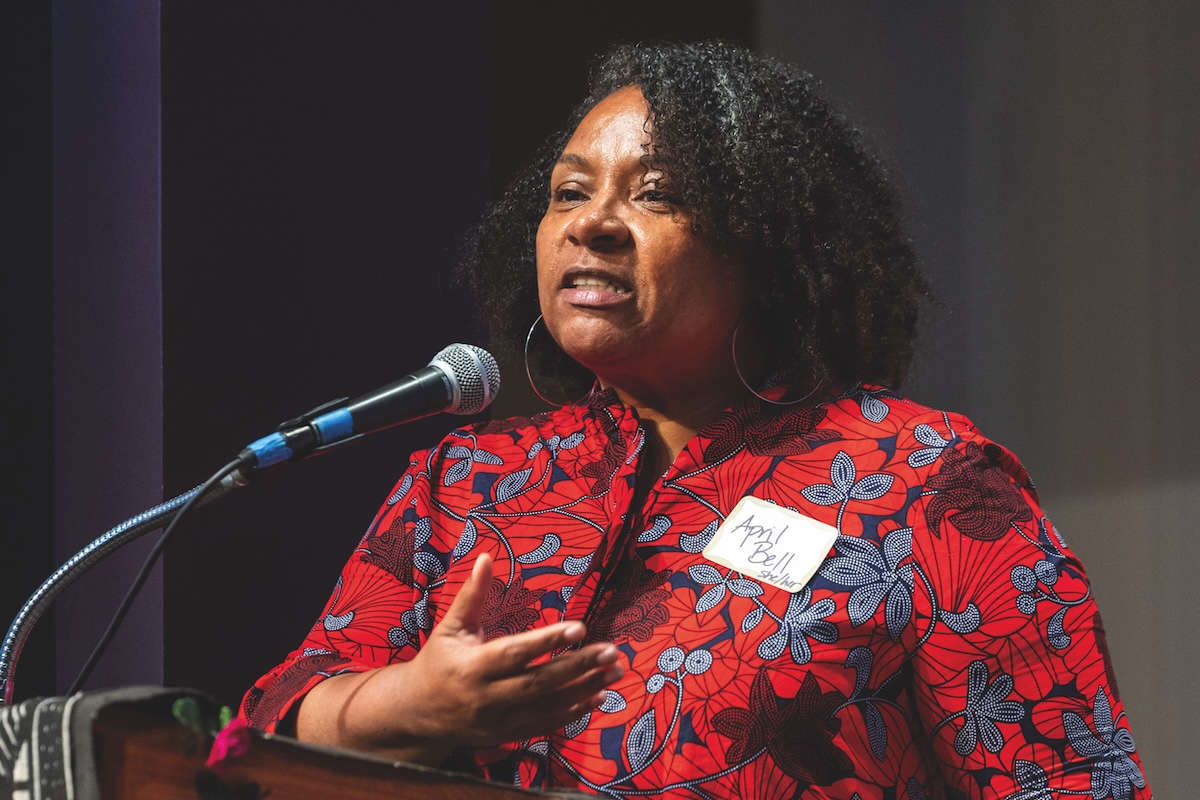
On May 29, in Oakland’s Preservation Park, an event showcasing storytellers took place. Unique about this particular storytelling event were the topic and participants: “Black Women Speak: An Abortion Storytelling Showcase” featured four Black women speaking out on video about their personal abortion experiences, the culmination of a digital storytelling workshop led by April Bell, Ph.D, an assistant professor in the Department of Family & Community Medicine at the University of California San Francisco (UCSF) and director of the Girlx Lab.
Workshop participants felt that “they couldn’t speak out before this because of judgement,” Bell said. There are many stereotypes about Black women who choose to have abortions, she noted. “They are ‘young and irresponsible,’ or ‘older and irresponsible.’” Racist tropes about “hypersexual” Black women, “welfare queens” and, within the Black community itself, the idea that a Black woman who has an abortion is “committing genocide,” have all contributed to a cycle of shame and secrecy.
The truth for many Black women, Bell said, ranges from medical conditions that make pregnancy dangerous; not wanting to be tied forever to a violent, coercive, controlling partner; pregnancy resulting from assault; or the inability to afford another child.
Storytelling, she said, is a way to “buck stigmas and create open dialogue” on a topic that is both extremely intimate and highly politicized.
Bell became interested in storytelling as a grad student, and received a grant to fund a project on this topic. She’d been introduced to the storytelling tradition during time spent in Ghana, and “got intrigued about the impact of storytelling on behavior change,” she said.
For this project she began by reaching out to her own network, looking for women willing to tell their abortion stories. She reassured them that “you can tell your story as you wish to do,” and said, “After talking to me, they felt confident.”
Vanessa Riles was one of the people she contacted. Riles sent out a number of texts to other women before making a decision to participate herself.
“The process was about creating a safe space for people to tell stories significant to them,” she said. As the project started during the pandemic, participants met regularly on Zoom, watched films that others made of their stories and began telling stories out loud to each other.
The workshop consisted of six sessions over six weeks, with participants evolving their stories and also learning how to use the technology to record them for presentation.
Riles had never spoken about her abortion experience before participating. It was a very diverse group of women and the stories told were just as diverse, she said. Supporting this, Bell noted that one woman “had been assaulted at 14, and had been carrying the shame for 50 years. She began leaving it behind in the workshop.”
Alexis Cobbins, another workshop participant, had initially been asked to “help spread the word” before realizing she wanted to participate herself.
“We need a shift on messaging [on abortion],” she said. As a married mother with children, she felt she could tell a story that would be different from some of the other participants. Her story evolved during the course of the workshop sessions, as she refined what she wanted to say and how.
Bell said that in the beginning of the process, some women asked, “What do you want me to say?” Part of the experience involved reassuring participants that whatever they said was right; that they would be supported and safe in saying it.
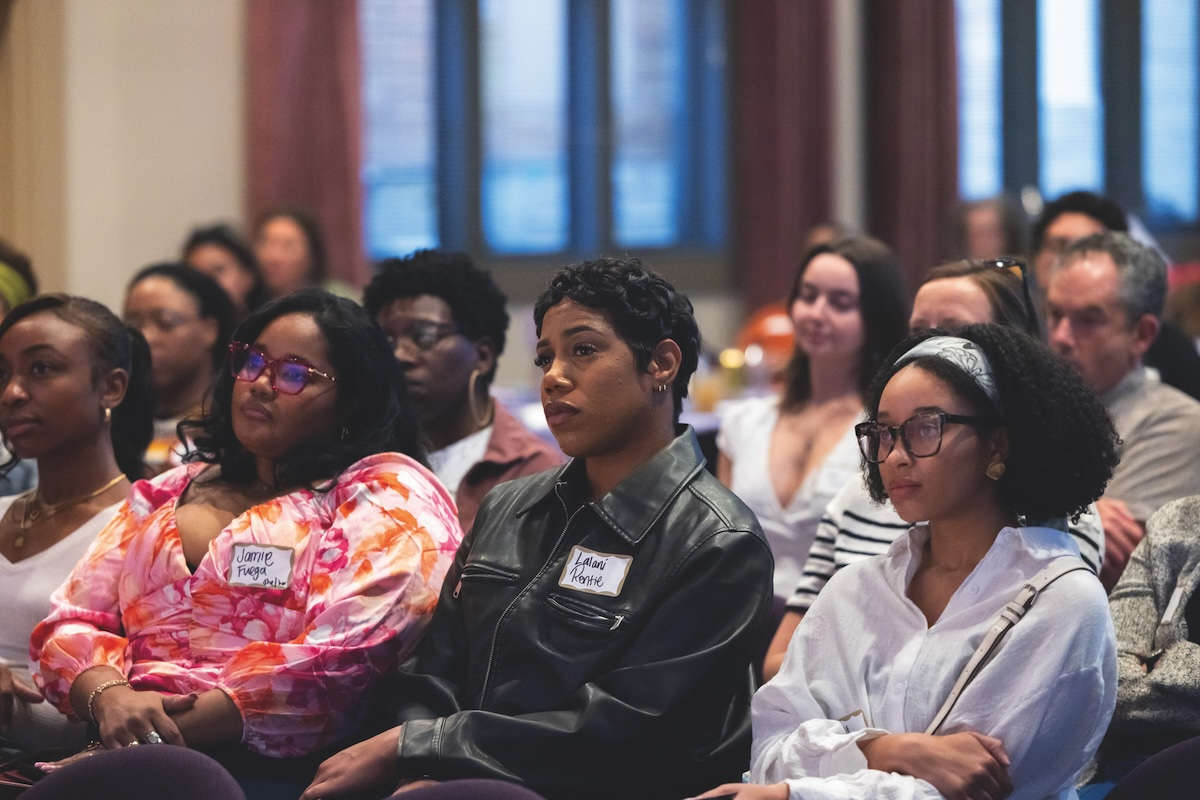
Katherine Brown, M.D., MAS, of the UCSF Black Womxn’s Health & Livelihood Initiative, connected with Bell’s project because of her interest in the lived experiences of abortion for Black women. Her involvement in the storytelling workshop “has guided my work forward,” she said.
“[Black women] are often not mentioned in the stories about ‘choice,’” she said, which more often focuses on the narratives of white feminists. She wanted to be part of de-stigmatizing the experiences of Black women, letting them know that “they are not alone” and that “it’s OK to take care of yourself.”
The overturning of Roe v. Wade has meant, she said, that many women don’t understand that they can still access reproductive care—at least here in California.
All of those interviewed agreed that the storytelling workshop provided multiple benefits for the participants, elicited valuable research information and suggested a path forward for other storytelling events centering around Black women.
“Black women’s pain is unseen in this society,” Riles said. “Just being able to speak your own truth … there is no space for that right now. Research like this needs to be funded. It can be transformative.”
Cobbins said, “I am more open to sharing my story now.” In accord with Riles, she said, “Traditionally, we have not been able to have a voice. [Historically] we haven’t even been able to make our own reproductive choices,” referencing women being used to breed new slaves, and more recently, forced sterilization.
The story of civil rights leader Fannie Lou Hamer provides context:
“In 1961, Hamer underwent surgery for removal of a fibroid and instead was given a hysterectomy without her knowledge or consent. Hamer found that three-fifths of all Black women from her community, Sunflower County, Mississippi, underwent unwanted sterilization.”
Brown said that “a goal is to fund [other storytelling workshops] in other areas of healthcare.” She said the May event reinforced the need for speaking out on abortion access, as well as brought together a coalition of people and groups in a “warm and welcoming atmosphere.”
Turnout was larger than expected, and tabling by Planned Parenthood, ACCESS Reproductive Justice, Black Women for Wellness and other groups gave attendees the chance to ask questions and receive answers. “Community members, academics, artists … everyone found it moving to hear women share their stories,” Brown said.
“The event was a wonderful experience. It was empowering. I want women to know that abortion is a reproductive tool for you to use as needed,” Cobbins said.
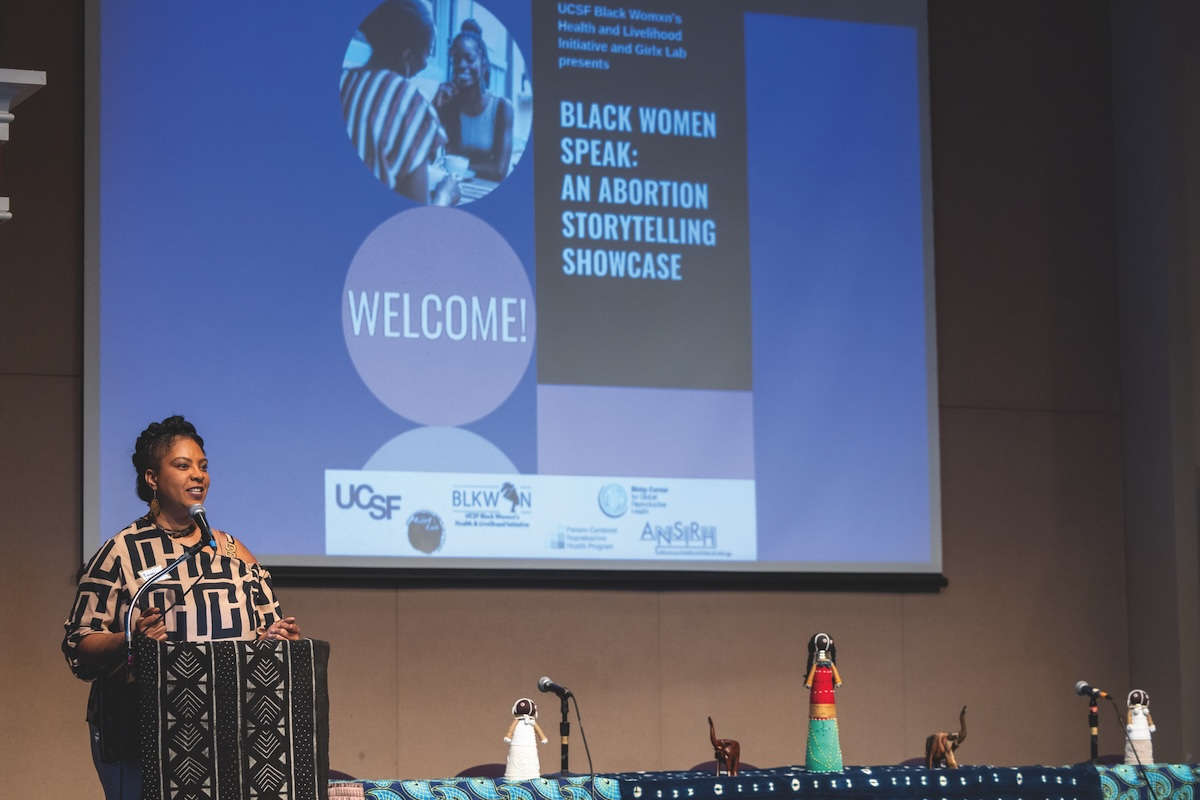
“Four of us had our films shown that night,” Riles said, adding that the films were followed by a question-and-answer period. “I was able to verbalize where I am now. It’s an ongoing process. I believe women have the right to choose, and standing up and putting my name to something, saying, ‘I made a choice,’ that alone opens me up.”
The anti-choice movement is “about control over women’s reproductive autonomy,” Brown said, “and about controlling the role of women.” She hopes funding will become available to promote more events like “Black Women Speak.”
Bell has authored a paper on the storytelling workshop which will be published in a professional journal, discussing “the impact potential for storytelling to be a powerful tool for intervention.” The focus on storytelling, she said, “invites community participation and collective involvement.”
Beyond that, she said, “We want to use the stories to change people’s thinking. Abortion is a matter of justice, human rights … [they are all] so interconnected with bodily autonomy.”