

After the Wall
By Jana Hensel
Public Affairs, $24
A native of the former East Germany, Hensel was thirteen when the Berlin Wall fell; surprisingly (says the translator’s endnote), this is “the first book to explore the trials and tribulations of a generation of East Germans that spent its childhood in the GDR and its adolescence and adulthood in the reunited Federal Republic.” A best-seller in Germany, it’s a memoir about growing up in a sort of no-person’s-land, where familiar institutions, popular-culture benchmarks, and even psychological mindsets wilted away almost instantly. Its most absorbing parts detail Hensel’s childhood experiences, so commonly mundane in the Eastern Bloc yet so exotic and even frightening to the West: bake sales in the school lobby to raise funds for Nelson Mandela and the Sandinistas, cutthroat competition to recycle newspapers (one of the few ways for young kids to earn money in the socialist economy), and getting scouted for Olympic athletic potential in the school gym. When Hensel reflects on her life as an adult, the book enters more complex yet, in a way, less satisfying territory. While it’s clear that neither she nor most other people wish for a return to those days of earnestly dogmatic socialism, she finds the certainty and carefree materialism of her West German peers almost equally unsettling. Hensel looks back at those lost symbols of the GDR with an almost perverse nostalgia, lamenting the loss of a collective cultural memory: something those of us whose nations haven’t ceased to exist take for granted. — Richie Unterberger
The Disinherited
By Han Ong
Farrar, Straus and Giroux, $25
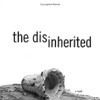
Roger Cacera, a “tired 44-year-old with his instincts for apology decimated, with no desire to be, or gift for being, forgiven,” returns to the Philippines from America to bury his estranged father, a sugar tycoon, and confronts not only his family’s “decrepit dynasty,” but the messy, buried truth of his own bicultural identity. This industrial-sized can of worms contains complex feelings of filial responsibility, equal measures of contempt and pity for the islands and their people, and a sizable, unexpected, and unwanted inheritance. That’s especially important because “in Manila, it was apparent that to attain freedom you had to have a shitload of money.” Perhaps to reconcile the “long process of corruption” that has been his American life, Cacera decides to give the money away, and his stint as an accidental do-gooder does a fair share of harm. Here in his second novel, high-school dropout Ong maintains the skewering energy of his debut Fixer Chao, about a phony feng shui guru hustling moneyed Manhattanites. His attentive, unsentimental prose takes a paring knife to social stratification, but for all its methodical dissection, its drive to really get inside, The Disinherited is often peculiarly impenetrable. Ong’s talent for observation is so keen and relentless that it becomes exhausting. He seems not quite to have internalized the discretion that comes from practicing the less-is-more rule: choking off the flood of detail in favor of the single, telling splash. — Jonathan Kiefer
Passing Through
By Colin Channer
One World, $13.95
Jamaican-born Channer’s collection of interlocking tales set in the Caribbean is dressed up like a high-priced hooker: classy and beautiful, but a whore nonetheless. The cover shows the backside charms of a tall brown exotic in a parrot-colored dress, and boasts of “titillating candor.” But readers looking for highbrow smut will be disappointed to find the words “fuck” and “cock” missing their middle letters, and “pussy” rendered once as the “fatty pleats between her legs” and again as the spot where her “sexual juices were well fermented.” Channer appears mainly interested in sex as a metaphor that can be stretched to cover life’s political, religious, racial, and natural disasters. The best that can be said of the characters who occupy Channer’s fictional island of San Carlos is that they survive. If they are not corrupt, they are weighed down with weaknesses that border on malice. In one story, a priest fathers two children doomed to second-class status in a nation with “bastard laws.” In another, a young girl is banished from her home. After being raped, she tells her tormentor, “I will take this lesson to my grave. It has some wicked people in this world.” Twice Channer invokes Graham Greene’s The Power and the Glory. Channer isn’t up to that level of tragically flawed heroism, but there is more to his writing than his handlers would have you believe. — Matt King
Steeped in the World of Tea
Edited by Sharon Bard, Birgit Nielsen, and Clara Rosemarda
Interlink, $20
An elegant literary tribute to the pleasures of tea, this collection of fiction, nonfiction, and poetry opens with a powerful piece by a woman who, determined to conceive a child, chooses to drink an herbal Chinese fertility brew (cost: $45 a month) rather than undergo in-vitro fertilization (cost: $25,000 a time). “Maybe it’s because this tea is medicine from the Earth,” Lorraine Ash writes. “And if nothing can be done, [the tea] will not insist there’s something wrong with it or me or Buddha or the Earth.” In “Tea Cups and Christmas Angels,” Tolbert McCarroll presents Tina, his ailing toddler, who is hospitalized on Christmas Eve. By chance, a bottle of Grand Marnier (slated for eggnog) and Tina’s favorite toy tea set accompany the child and her worried family to the emergency room. At the stroke of midnight, in a prayerful toast, the McCarroll clan pours the liqueur into Tina’s tiny cups, creating a holiday tradition they will later continue. Here and there in this book, readers learn the particulars of Irish tea and are offered authentic recipes for Indian chai (“put a pat of butter in the pan … when it sizzles … add tea leaves”) and for the aromatic Moroccan mint tea that is poured from high above in a dazzling liquid arc. In an absorbing tea diary called “Passage,” M. Romo-Carmona shares intimacies that linger long after the “first sip.” And in the poem “Kenya, Marinya Estate,” Marc E. Hostadter puts it this way: “Blood flows in this liquid/black plasma of our ancestors.” — Evelyn C. White
A Handbook of American Prayer
By Lucius Shepard
Thunder’s Mouth, $22
Wardlin Stuart is serving a ten-year prison sentence for manslaughter when an attack by a fellow inmate prompts him to pray for his life. Stuart’s survival makes him wonder whether “prayer, perhaps even faith, might be seen as an immoderate act of physics, a functional means of effecting small changes in reality.” Soon he’s praying his way to success, and when he publishes a guide to the method he has dubbed “prayerstyle,” the book races up the best-seller lists. Once paroled, Stuart manages to live quietly and contentedly for a time, until the cottage industry he has created takes on a life of its own. In this novel’s opening pages, you’re taken in immediately by the lightning pace of Shepard’s prose, but it loses momentum when Stuart is thrust into the limelight by the modern seekers who revere him and the fundamentalists who revile him. Adding to this tedium is a liberal sprinkling of celebrity cameos, such as Sharon Stone calling into Larry King Live during Stuart’s appearance on the show: “[T]he book’s absolutely taken over Dreamworks,” she exclaims. “Johnny Depp was reading it while he was doing a project there. He gave a copy to Steven … and you know Steven. Now it’s everywhere.” In real life, it is everywhere, in the form of blockbusters such as The Seven Spiritual Laws of Success — how-tos on using prayer for personal gain. Shepard might not mention their authors by name, but how artfully he skewers their stock-in-trade. — Blair Campbell
The Artist Is a Thief
By Stephen Gray
Allen & Unwin, $11.95
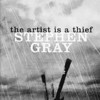
In this evocative and wildly affecting novel, accountant-turned-reluctant-gumshoe Jean-Loup Wild investigates the affairs of an artists’ association — alongside a brutal murder — in the Australian outback community of Mission Hole. Gray’s sense of place (and sense of out-of-place) is immediate and every character, from taxi driver Valerian to party girl Linda to the reclusive aboriginal artist Margaret Thatcher Gandarrwuy, is so well drawn as to be unforgettable: “Beauty rose like a prize fighter from the canvas and hooked him in the throat” is how Gray has Jean-Loup describe one painting’s effect, and the novel’s beginning pages read like the best literary tearjerker since Valerie Martin’s The Great Divorce. Like Martin, Gray is rarely manipulative and the book’s historical digressions and backstories are as intriguing and skillfully done as the main plot involving the murder and how it might relate to a defaced Gandarrwuy painting. “That priest talk about terra nullius. Empty land. I tell you, it’s you that’s terra nullius, not us. You got terra nullius in your soul,” Jean-Loup is warned early on. In providing a vivid and thoughtful entrée into what might otherwise be an unfamiliar world, The Artist has more in common with, say, mysteries by Michael Nava than the more atmosphere-driven books of Tony Hillerman. It’s the intelligence and the bravery of the writing that makes the story soar and the sensibility that keeps it grounded. — Susan Compo
The Line of Beauty
By Alan Hollinghurst
Bloomsbury, $24.95
In three exquisite novels, Hollinghurst earned a reputation as an exacting writer with a gift for portraying a gay man’s search for love, sex, and beauty. With this, his fourth — winner of the 2004 Man Booker Prize — he lambastes these desires in a roaring good tale. Set between Britain’s 1983 and 1987 elections, it concerns young Oxford grad Nick Guest, who moves into the posh family mansion of his classmate Toby Fedden. In addition to being Nick’s fantasy love interest, Toby is also the son of a Tory MP, a staunch supporter of Thatcher. This arrangement is made rather awkward by the fact that while Toby’s father follows the party line — think Reagan-era family values — Nick has a black lover and calls Toby’s sister “darling.” The Feddens attempt to seem enlightened, and Nick does his very best to keep his behavior out of view. The pressure of all this social collusion makes this novel a fizzy and intoxicating read. But As Nick evolves from virgin naïf to coke-addled party boy with a millionaire Lebanese boyfriend, the tale becomes less a send-up of class than a study of how those on the margins of Thatcherite London were tainted by that period’s ecstatic vacuity. The Line of Beauty resembles Vile Bodies, Evelyn Waugh’s scurrilous satire of London party people. Unlike Waugh, though, Hollinghurst doesn’t simply jeer at his hero. As this book dives toward its crushing finale, and AIDS puts an end to impetuous sexuality, Hollinghurst retains a wincing affection for Nick. He is, after all, caught up in a moment larger than himself, and reaches out for beauty pathetically, learning over the course of this beautiful and very amusing novel how dangerous an instinct that can be. — John Freeman
Hip: The History
By John Leland
HarperCollins, $26.95
Hip: The Sociology would be a more apt title for this work, which unearths many fascinating points but grows wearisome and repetitive over its four-hundred-plus pages. New York Times reporter Leland is an incredibly deft writer who weaves together complex, multifaceted sentences that would seem pretentious or cluttered if assembled by less talented hands. And miraculously, he manages to sound more than convincing when he drops the names of seemingly disparate cultural figures such as Herman Melville and Big Daddy Kane virtually within the same breath. Yet for all his formidable skill, Leland offers one quasi-academic chapter after another with titles such as “Bebop, Cool Jazz, and the Cold War” or “Pulp Fiction, Film Noir, and Gangsta Rap” that read like slightly cooler versions of a term paper. In fact, after a while, this book starts to evoke nothing so much as being trapped with the cool young professor who insisted on meeting at the cafe across the street from his office. Leland’s strong points, such as noting that both minstrel shows and gangsta rap sold a cartoon version of black life to white audiences, will induce a round of head-nodding and affirmation. But by the time he pens a sentence such as “[Bugs Bunny] set the principled rebellion of Emerson and Thoreau in a landscape of outrageous violence,” readers will be scratching their heads and quipping: “What’s up, Doc Leland?” — Joe Eskenazi