
The East Bay has already contributed one scandal to the
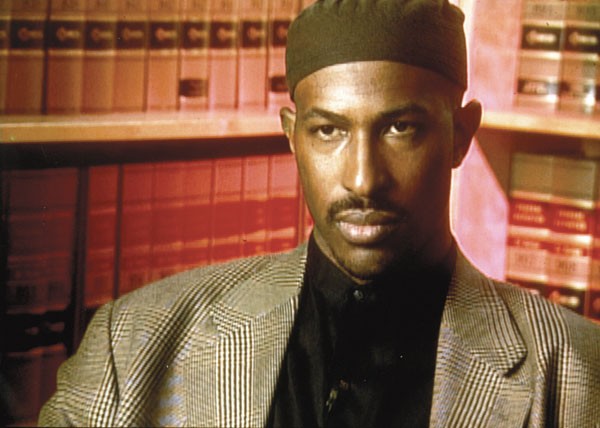
administration of Barack Obama, in the form of the rise and fall of Van
Jones. Once an exuberant, young radical who even dubbed himself a
communist for a while, Jones matured into a sophisticated lawyer and
motivational speaker, seducing reporters and public officials with
sweeping talk of marrying together civil rights, environmental justice,
and green jobs. Obama’s team brought Jones into the White House as one
of his “czars,” an advisory role that acquired an unfortunate moniker.
But as everyone now knows, his past caught up with him, as right-wing
talk jocks and Fox News pundits discovered his history as a Marxist
zealot. People may change, but in the Internet era, everything you say
or write stays with you forever. Jones discovered this only after it
was too late.
Now, the East Bay is serving up another instance of this phenomenon.
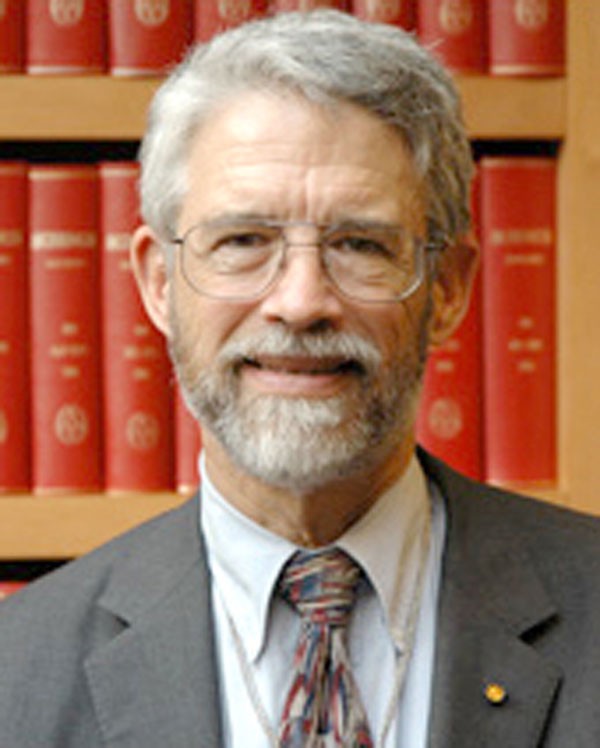
John Holdren has capped his distinguished career in science by becoming
Obama’s director of the White House Office of Science and Technology
Policy, where he advises the president on climate change, among other
issues. He’s accomplished quite a bit in his life, working as a
physicist at Lawrence Livermore Laboratory, teaching at UC Berkeley
from 1973 to 1996, and becoming Harvard’s Teresa and John Heinz
professor of environmental policy.

Credits: Linda A. Cicero / Stanford News Service
Quite a résumé, to be sure. But while Holdren was
working at Berkeley, he became alarmed at overpopulation, which was
then seen as the worst environmental catastrophe facing the planet.
Hooking up with Paul Ehrlich, the Stanford biologist and famed author
of The Population Bomb, Holdren co-authored a textbook in which
they rather cold-bloodedly discussed theoretical solutions to the
problem such as introducing sterilization drugs into the water supply,
or forcing abortions on single pregnant women.
Well, people change. But thanks to the magic of the Internet,
right-wing blogs, newspapers, and television networks have seized on
Holdren’s old work and painted him as a wild-eyed environmental
extremist — a crazed, misanthropic ideologue bent on controlling
our lives and mass sterilization. The campaign doesn’t have quite the
same legs as the one that ended the career of Van Jones (that Holdren
is neither black nor charismatic may have something to do with it), but
it hasn’t gone away either. Every few days, Holdren is denounced by
Rush Limbaugh, The Washington Times, or the countless right-wing
blogs.
This anklebiting has proven to be quite an annoyance to Holdren,
distracting him from the important work he’s trying to do. And now, as
the president travels to this week’s United Nations summit on climate
change, Holdren’s name has surfaced in the so-called “Climategate”
scandal, in which British scientists have been accused of fudging data
on global warming. Holdren won’t lose his job any time soon, but there
is a steady, remarkably persistent effort to smear his good name. And
like Van Jones, he himself helped that effort along.
But how, exactly? By flirting with ideas that didn’t seem so crazy
three decades ago. The fact is that science changes, and our thinking
about population growth and family planning has evolved quite a bit in
the last thirty years. But in politics, especially in the Internet era,
it’s not possible to change. That climatologists once thought the globe
was cooling merely proves that they’ve gotten better data. But to
global warming deniers, it actually proves that scientists don’t know
anything at all. That Holdren once thought overpopulation posed a
mortal, imminent threat to the world merely proves that he can change
his mind when presented with better information. But to his opponents,
it proves he’s a dangerous nut.
At a time when populists distrust expertise, every scientific
endeavor is politicized, and the Internet preserves your every
utterance, it’s getting harder and harder for scientists to do what
they’re supposed to: think out loud.
Here’s what Holdren and Ehrlich said. In 1977, while a professor at
Berkeley, Holdren co-wote Ecoscience, a long, elaborate textbook
on the state of environmental thinking at the time. Ehrlich, of course,
is famous as the man who most prominently warned that the world was
dangerously close to a catastrophe produced by overpopulation, and his
concerns are all over the book. “In today’s world … the number of
children in a family is a matter of profound public concern,” he and
Holdren wrote. “For example, no one may lawfully have more than one
spouse at a time. Why should the law not be able to prevent people from
having more than two children?”
Holdren and Erhlich considered a variety of other options for
limiting population growth. Perhaps we could slip sterilization drugs
into the water or food supply. Or force the mothers of illegitimate
children to give them up for adoption. Or force pregnant single women
to marry or have abortions. Ultimately, they decided that such options
probably won’t work. But they didn’t exactly recoil from the ideas in
moral horror. And therein lies the rub.
Once Holdren was appointed to his current post, he became subjected
to the intense partisan scrutiny that is part of the conservative
campaign to claim that a sinister cabal of tyrannical czars are
gathering absolute power in Washington. Obama’s enemies have pored over
everything his appointees ever did or said. And this summer, they found
Ecoscience. The blog Zombietime published excerpts of the book
on its web site, under the heading: “John Holdren, Obama’s science
czar, says: Forced abortions and mass sterilization needed to save the
planet.”
The meme went viral from there. Rush Limbaugh and Michelle Malkin
denounced Holdren as an environmental wacko. Sean Hannity went on his
prime-time Fox News show and said, “We know, for example, there’s John
Holdren, the science and technology advisor, who has advocated
compulsory abortion.” Investors Business Daily published an
editorial that declared, “Our new science czar, John Holdren, once
backed compulsory sterilization and forced abortion as part of a
government population-control program. The only thing missing was the
Soylent Green recipe.”
Weirdly, this subject had already come and gone during Holdren’s
confirmation process months earlier. Louisiana Senator David Vitter
explicitly asked him about it, and Holdren definitively stated that he
thought that the government should never be involved in any
population-control measures. But such is the nature of mass media that
suddenly, everyone rediscovered the issue and raised hell all over
again. Even now, every few days a different news organ will be shocked
to discover Ecoscience and publish a story brimming with
outrage.
Holdren’s press representative Rick Weiss refused to discuss the
matter, clearly exasperated by the fact that he has to talk about it
yet again. But he forwarded a recent public statement from Holdren, in
which he says that this was just a theoretical discussion in an
academic textbook that was published thirty freakin’ years ago. In
addition, Holdren’s office pointed out that he and Ehrlich clearly
rejected such schemes in the same textbook, citing “obvious moral
objections.”
In fact, most of the tone of book was fairly bloodless when
discussing such ideas. And if you talk to Ehrlich today, he still
thinks that overpopulation is a serious problem. While he doesn’t
advocate putting sterilization drugs in drinking water, he doesn’t
exactly reject that strategy, either. “If it were possible, safely,
biologically to give everybody something … before they had a child,
that would in my view be the most ethically positive thing we can do,”
he said in a recent interview. “So, of course, I don’t reject it with
moral horror. “
Nevertheless, Ehrlich notes that his and Holdren’s book ultimately
rejected coercive population-control mechanisms. “Toward the end, we
say the only thing we advocate is gentle government pressure, plus
access to contraception,” Ehrlich said. And the field of population
studies has advanced tremendously since then, he notes. “John and I
wouldn’t write what we wrote in 1977,” he said. “Things change.”
If anyone interested in learning more about Holdren’s views had
bothered to call Ehrlich, the latter said he would gladly have offered
this nuanced perspective, teasing out the truth from the hyperactive
rhetoric and context-free textbook excerpts. But despite all the ink
spilled on the subject — all the television and radio segments
that have discussed Ecoscience and Holdren — exactly one
reporter has ever tried to discuss this matter with Ehrlich. After all,
all the journalists and pundits needed was a few words floating in a
vacuum.
Just like with Van Jones.
The experience of Jones is relevant not just because he’s from the
East Bay, and his situation so perfectly parallels that of Holdren’s.
He matters because when the right-wing attack dogs went after Jones as
a communist, the ammunition they used came from right here, the pages
of the East Bay Express.
In fact, the snippet that ultimately doomed Van Jones was written by
my wife, the reporter Eliza Strickland. I remember watching Eliza
struggle over the profile of Jones, striving to capture the
complexities of a fascinating, occasionally troubling, man. The
portrait of Jones that emerged was one of a man who was charismatic,
thoughtful, and passionate, but also sometimes manipulative and
calculating, capable of hiding his real agenda and betraying his
friends if he had to. The story tracked his slow growth from a youthful
radical into a more mature and contemplative adult, the same process we
all naturally undergo.
After publishing the article in 2005, Eliza watched as Jones’ career
suddenly went into overdrive. All at once, the national media
positively fell in love with him, and with the idea of a charismatic
black leader reframing environmentalism as a matter of civil rights and
the empowerment of impoverished urban neighborhoods. That he can also
be ruthless or political never made it into, say, Elizabeth Kolbert’s
profile of Jones in The New Yorker.
“It was certainly disconcerting to see him being characterized as
the embodiment of all we want in society,” Eliza recalled recently.
“The article I wrote certainly praised his skills, but also questioned
his methods. But that didn’t matter, because he had become an icon. It
was a little frustrating to see his character reduced to that.”
But that was nothing compared to what came next. Once Jones made it
into the White House, the right-wing media and blogosphere stumbled
across Strickland’s story. Out of a 6,100-word article, they seized on
one snippet, in which Jones was briefly radicalized when the cops
busted him at a Rodney King demonstration and he met some interesting
radicals in jail. Suddenly, the right-wing media had a narrative: One
of Obama’s czars wasn’t a complicated human being, but a cartoon
communist.
For a brief moment, my wife’s story was among the world’s most
famous news articles. You couldn’t read The Wall Street Journal
or listen to talk radio without some reference to it. “According to the
East Bay Express, yadda yadda yadda.” What had been a nuanced
portrait of the man was now just a bullet aimed straight at his heart.
One of Jones’ supporters even wrote this paper, calling on the editors
to repudiate the character assassination — since, after all, we
were indirectly responsible for it.
And throughout the firestorm, as everyone was citing her story, not
one single reporter called Eliza to ask her to expand upon what she
wrote. “If someone had called me, I would have been delighted to
explain the context of that quote,” she recalled. “But only one
reporter ever did, and that was after Van Jones had resigned.” No one
was interested in the possibility of complexity.
But of course, that’s politics, and Van Jones lived and died by the
very same sword. But science is different. It’s supposed to make
mistakes; that’s how we learn. It’s a sloppy, fumbling process, but
politics and image management don’t allow for mistakes.
Now that Holdren has entered the White House, the rules have changed
under his feet. When he and Ehrlich wrote their book, we didn’t know
very much about population growth, but what we did know scared the shit
out of people. Here’s what we have learned about overpopulation and the
environment since then, according to John Townsend, director of
Reproductive Health for the Population Council. Thirty years ago, the
average woman on the planet was having six children. While growth rates
in Europe and the United States were much lower, countries in the Third
World were exploding with people, and there was no end in sight.
Holdren and Ehrlich extrapolated the data and saw nothing but
disaster.
“The thought was population growth was uncontrolled, it had unknown
consequences, and the capability of analyzing data was fairly limited,”
Townsend said. “So people began projecting into the future. What will
this look like?”
What they didn’t know — what no one yet knew — was that
the rate of population growth was slowly leveling off. Today, the
average number of children born to each woman has dropped from six to
three. It’s not happening uniformly across the globe; Mali and Niger,
for example, have deeply troubling population growth rates. But
thirty-plus years after Holdren’s book, a consensus has emerged that
the human population will eventually stabilize of its own accord.
In addition, questions of female empowerment and human rights have
trickled into a field that had heretofore regarded population growth as
an abstraction. As China and India were caught sterilizing women in the
1980s, experts like Holdren shuddered at the human cost of what had
previously been theories about how to solve a very real problem. By the
1990s, the thinking of experts in the field shifted from a global
perspective to an emphasis on female empowerment and the availability
of contraceptives. According to Michelle Goldberg, a writer at
The American Prospect, Holdren sat on the board of the
MacArthur Foundation, which provided key funding to women’s rights
groups that changed the emphasis from population control to human
rights and feminism. In other words, Holdren’s thinking developed,
along with that of the rest of the world.
“In terms of Holdren, I wouldn’t hold it against him,” Townsend
said. “But I wouldn’t let him get away with it if he tried it now.”
Holdren’s not exactly getting away with it. Even now, someone is
probably rediscovering his work from the Seventies and denouncing him
on the web. Paul Ehrlich has set up a Google Alert for his and
Holdren’s names, and he says that about seven blogs post something
about them every day. Last week, a climate-change skeptic denounced
Holdren as a “flat-out communist” on Sean Hannity’s radio show.
David Harsanyi is a conservative columnist for The Denver
Post and Reason magazine; he wrote what is probably the most
sophisticated recent critique of Holdren. When asked whether Holdren
was just reflecting the consensus of experts at the time, Harsanyi
claims that the scientist actually has a history of exaggerating
environmental problems to scare people into following his agenda.
“Even if I was to accept what Holdren’s defenders claim, he’s not
much better today,” Harsanyi wrote in an e-mail. “Someone who believes
motivating citizenry by using his standing to peddle irrational fear is
not someone who should be involved in policy.”
And so we come to “Climategate,” in which a hacker released e-mails
from British scientists that, critics says, seem to suggest some of
them were manipulating data to hide the fact that they can’t show as
dramatic an increase in temperature as they predicted. One of the
e-mails was written by Holdren, although there’s nothing incriminating
in his communication. Nevertheless, conservative activists are claiming
that Holdren has been “implicated” in the scandal.
This week, Barack Obama is in Denmark for the climate change
conference, and the Climategate scandal is breaking just as the world
tries to talk about the future. Holdren is playing a key role in this
conversation. And as he does, Ehrlich says, an army of activists are
using his old work to denounce and distract him. “On the other hand,
John is a big boy, one of the most honored scientists in the world,”
Ehrlich says. “He knew what he was getting into. But it bothers
me.”
Nothing is more complicated than the weather, and as scientists try
to predict the future of climate change, they’re bound to make
mistakes. But Holdren is operating in a different world now — a
world where complexity is a liability or an irritant, where nuance is
ignored, and activists on all sides strip away context as they search
for something that can kill your career when framed in the right
way.
Just ask Van Jones.