In late 2017, drummer Jason Willer (Jello Biafra’s Guantanamo School of Medicine, UK Subs) and bassist Matt Freeman (Operation Ivy, Rancid) started laying the foundation for what would become an East Bay rock powerhouse: Charger.
“Matt had the idea for the band as well as the name pretty much from the start,” Willer said. “I teach Matt’s son the drums. One day I asked Matt if he’d like to play some music. We got together and went from there.”
At that point songs were put together, and the addition of guitarist Andrew McGee (SpiritWorld) in early 2018 finalized Charger. Several months of practice went into sound structure and songwriting before any live shows or recording took place. Charger’s careful calculation before the band’s rollout came with a big payoff.
There’s often an unfair expectation when members of established bands work on other projects—in this case, one might suspect a punk or ska-punk sound to come from the players involved. But while Charger may have that in spirit, the final product is quite different from that.
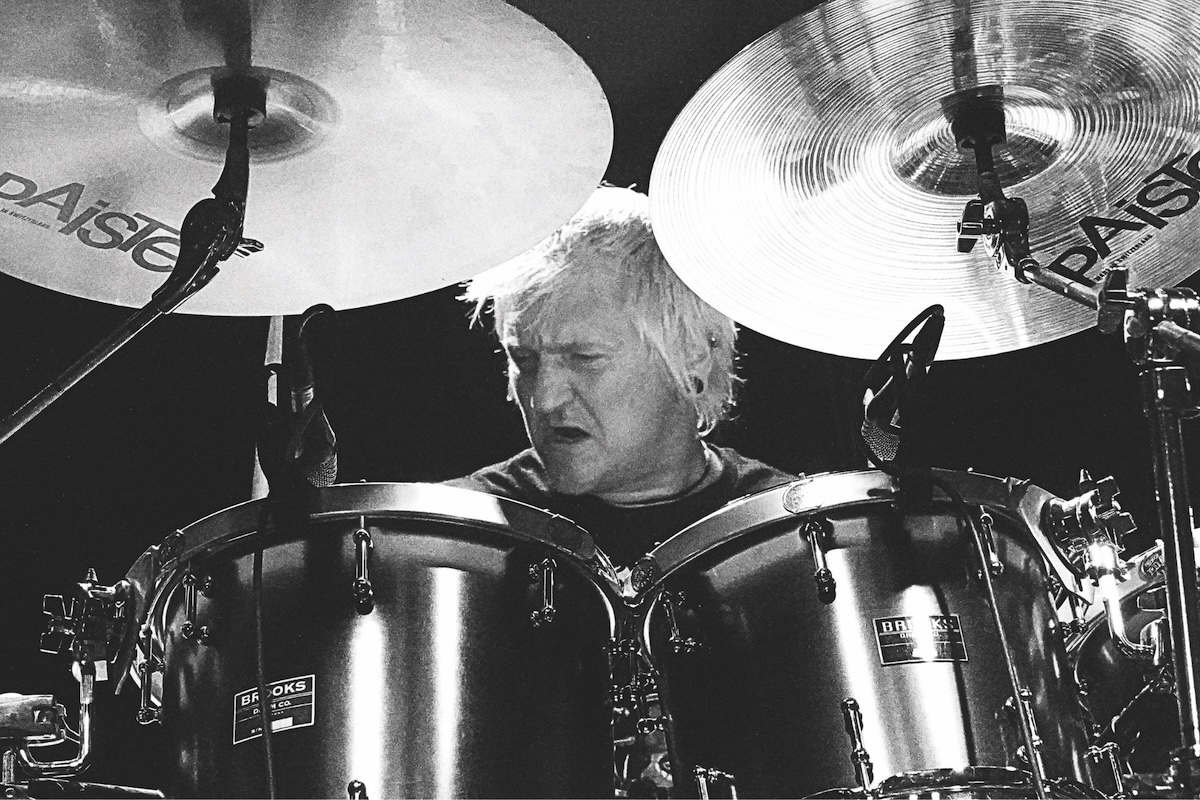
HARD ’N’ HEAVY Drummer Jason Willer calls out Motorhead and Black Sabbath as influences. (Photo by Jody Lyon)
“We really like Motorhead and Black Sabbath and that shines through, along with our roots and influence of growing up in the East Bay,” Willer said. “Matt and I both grew up here so no matter what we do, we’re going to have an East Bay sound. It runs deep.”
While bands of Charger’s breed typically have two or even three guitarists, McGee is the only guitarist, resulting in a sound that not only stands out for its solidarity but also widens its reach, sonically.
“The key to being the only guitar player in a metal or hard-rock band is being able to expand the sound, play a solo or make a bunch of noise, and then zip it the fuck down on time before the vocals come in,” McGee said. “It’s a mix of rhythm, lead and background atmosphere.”
Trying something new this time around, Willer is playing on a custom kit from manufacturer Brooks Drum Company out of Brentwood.
“I’d never played double bass in a band before,” Willer said. “Charger definitely has more of a heavy rock/metal edge to it. It’s caused me to challenge and push my playing in a different direction, which is always a good thing.”
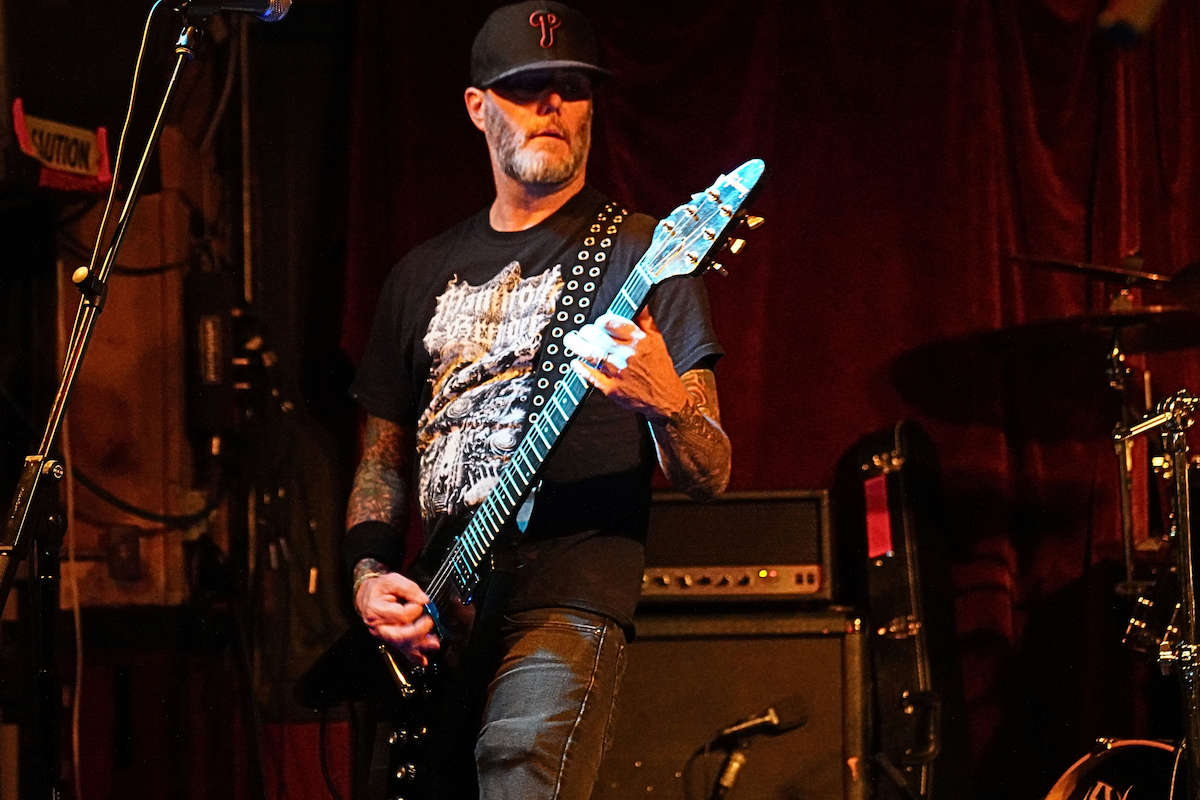
SONIC EXPANSION Andrew McGee (SpiritWorld) joined Charger as the sole guitarist in early 2018.
Freeman’s renowned bass-playing abilities are put front and center as a lead instrument, in concert with his very potent singing style. For Rancid, Freeman’s vocals are more typically single verses or backup, with a few tracks featuring his voice for entire songs. In the case of Charger, his vocals are definitely a more prominent lead feature. What stands out most is Charger’s use of rhythm as its focal point—in most cases metal bands lean on guitar leading their way sonically.
“Matt and I went into it building our sound from the ground up rhythmically. We wanted to prioritize rhythm as a strong foundation,” Willer said.
“Charger is more like a living, breathing, locomotive train of rhythm with Matt and Jason barreling down the tracks,” McGee said. “I can lock in and out with them to increase the intensity or expand the sound wherever it feels right, and that can change depending on the day.”
Because of other band obligations and Covid, Charger has only produced a handful of shows, tours and releases since the time of its formation.
“Trust we have fun wherever we play,” Willer said. “Of course Eli’s always goes off, and it’s really fun to play there.”
Charger will play with Owl and Ancient Rage on Saturday, April 5, 8pm at Eli’s Mile High Club, 3629 Martin Luther King Jr. Way, Oakland. For info: elismilehighclub.com.
CHARGER / OFFICIAL MUSIC VIDEO / “ROLLING THROUGH THE NIGHT”
Chef Kanlaya Palivan and her team have transformed the space on San Pablo Avenue that formerly belonged to Paisan. They’ve added bright orange dining room chairs. Yellow, pink, red and blue lanterns hang down from the ceiling. And a botanical wall blooms with artificial flowers and butterflies. The greenery even forms an informal wreath around a sign exclaiming the Lao greeting, “Sabaidee.”
Leading up to this January’s opening, Lao Garden notified its social media followers that opening day would be postponed. While Palivan waited for the City of Berkeley to approve the restaurant’s permits, she briefly set up a kitchen in Oakland as Rose Garden Uptown. A couple of months later, when Berkeley approved the permits, she sold Rose Garden to new owners.
At Lao Garden, Palivan boldly plates nam khao ($22) with a giant fan of fresh romaine leaves. This crispy rice dish is served as a salad that diners can then ladle into a lettuce leaf to make a wrap. “Croutons” or crumbly balls of rice are jumbled together with heaps of fresh herbs, peanuts, fermented pork sausage, fish sauce and lime juice. It’s an interactive plate of food mixing several potent sour flavors.
While the bright-pink morsels of fermented pork gave me a reason to pause—rawish or uncooked proteins have never agreed with me—they’re only one item on a long list of well-blended ingredients. Vegetarians can opt for a small appetizer plate of crispy rice ($12) that could work as a substitute. Palivan told me that her version of nam khao differs from other restaurants.
“It’s not soggy like other places that offer the same dish,” she said. “It’s a secret we’re not sharing.”
Lao Garden’s menu is vast. Almost every item or heading has a brief, cheerful description. On nam khao Palivan writes, “Golden crispy rice balls boast a crunchy exterior that gives way to a soft, flavorful interior.” The front of the menu includes: small plates; fried rice; grilled/steamed/roasted; soup; yum salads and seafood; thum, a traditional Lao smashed salad; and laab, a meat and herb salad made with padaek, a fermented fish sauce.
The back of the menu continues on with six more sections, including noodles “served on a bed of cabbage, carrots, bean sprouts, green onions and mint.” Drunken noodles ($18) have a nice, spicy tang to them. Kua mee Lao ($15) is the Lao equivalent of pad Thai but Palivan serves it with “fluffy scrambled eggs and the natural sweetness of tender bean sprouts.”
The kitchen can manage the menu because many of the dishes share the same foundation. “Let’s say for the laab, you have different proteins—beef, pork, duck or even shrimp—but the base is pretty much the same,” Palivan said, adding that she’s eaten at Thai/Lao restaurants that don’t serve authentic Laotian dishes. “Our own Laotian people who have dined with us, they say things like, ‘Wow, this is really like home cooking.’”
Laab, according to Palivan, originated from Laos. “If you go to a Thai Isan restaurant, it’s on the sweet side,” she said. Whereas the Laotian version includes a toasted rice that’s ground and then sprinkled on the dish. “You can taste a little crunchiness in it. And, of course, there’s lime juice on there,” she said. The addition of padaek—a secret ingredient that she is willing to share—also sets it apart from the Thai version.
The chef uses the word “funky” to describe the flavor of padaek. When the sauce is on an order of thum lao lao ($18), or green papaya salad, “You either really like it or you don’t,” Palivan said. If you cook it right, padaek has a fishy smell. “We cook ours to a point where the smell is not overwhelming. The taste is just wonderful. The aroma is there,” she said. “It’s a certain way of preparing it.”
The fermented fish sauce didn’t overwhelm my plate of laab gai ($18). It paired nicely with nam khao, lightened up by lime and cilantro. Elsewhere, I’d eaten a green papaya dish that was smothered in an unpleasant version of a padaek sauce. The “certain way of preparing it” makes all the difference.
Lao Garden, 2514 San Pablo Ave., Berkeley. Open Mon-Sat 11am to 3pm and 5–9pm, Sun noon to 3pm and 5–9pm. 510.705.1958. laogarden.net
Oct. 13th might be six months away, but that doesn’t mean people can’t “treat yo’ self.” The award-winning comedian, actor, writer and director is known for his role as Tom Haverford on Parks and Recreation and as Dev Shah on his hit Netflix show, Master of None. However, he’s also appeared in several hit movies and pop-culture shows like Bob’s Burgers, The Venture Bros. and Ice Age: Continental Drift. His stand-up touches on everything from being raised Muslim in South Carolina in the ’80s and ’90s to current topics and situations everyone can relate to. – MAT WEIR
Pianist and composer Emmet Cohen is forging modern jazz with virtuosity, swing and entrepreneurial vision. A prodigy who began studying Suzuki piano at three, Cohen has become known for his fluid technique, connection to tradition and Live From Emmet’s Place, a livestream concert series. Birthed during Covid lockdowns, the wildly popular series—now 128 volumes deep—is filmed in Cohen’s living room, broadcasting the energy of Harlem rent parties to millions worldwide. Whether headlining at The Freight or streaming from his apartment, Cohen’s music is a crisp bridge between tradition and innovation. – SONYA BENNETT-BRANDT
Japanese lo-fi punk band Ging Nang Boyz is on their first-ever American tour, led by the passionate and unpredictable Kazunobu Mineta. The idiosyncratic band rocketed to the top of the Japanese punk scene in 2003 after releasing two debut albums on the same day; they then released two more albums on the same day in 2014. Band members have come and gone, but Mineta’s uninhibited, wailing vocals are the throughline in cult-favorite tracks like “I Don’t Wanna Die” and “Boys on the Run,” making every performance feel like an urgent, raunchy confession. – SBB
In 2022, English singer/songwriter Myles Smith began posting himself singing covers online, and one resonated: his version of the Neighbourhood’s Sweater Weather went viral, leading him to a major-label deal and a roller-coaster initiation into stardom. With his dulcet tones and folk-pop leanings, Smith completed his breakthrough in 2024 by releasing his debut EP, You Promised a Lifetime. The singer is known to wear his heart on his sleeve, taking on vulnerable and introspective themes in hit singles like “Stargazing” and “Solo.” He thinks of his shows as group therapy for his loyal fans. – ADDIE MAHMASSANI
Sacramento punk-rock outfit Destroy Boys has been going strong for almost a decade. Founding members Alexia Roditis and Violet Mayugba have honed the craft of writing frenzied hardcore tracks throughout four ferocious albums. August 2024’s Funeral Soundtrack No. 4 is their latest offering, deploying horror motifs to throw a sonic funeral for old relationships and oppressive identities. Featuring collaborations with Marisa Dabice of Mannequin Pussy and Kat Moss of Scowl, the album darkly captivates from start to finish. The creepy organ part that kicks off on the first track, “Bad Guy,” is especially inspired. – AM
In 2007, a historian at the U.S. Holocaust Memorial Museum received a photo album of teenage girls recruited to work as switchboard, telephone and radio operators at Auschwitz. One showed a young woman holding an empty plate and shedding faux tears while an SS officer held a plate of blueberries. The photo album’s owner had written here there are blueberries. Nearby, thousands of Jewish people were being killed. The gripping play explores the nature of inhumanity, injustice, misdirected patriotism and manipulative propaganda. Arriving with prescient timing and displaying an urgent, chilling and profound warning, Moisés Kaufman’s 14-year project, developed and co-authored with Amanda Gronich, involved concentration camp survivors. History tells a horrid story and, fortunately, this production preserves it. – LOU FANCHER
Among the overlooked Latinas in this hit comedy production are movie stars like Ramon Novarro, Dolores Del Río, Lupe Vélez and Rosaura Revueltas. Trust the sturdy creative team of solo performer Tina D’Elia and director Mary Guzmán to thrust queer storytelling, history and culture into rampaging humor and chaos. D’Elia plays the entire cast of LGBTQ+ characters, including the two lead roles: Angel, a Puerto Rican-Italian dyke hoping to pitch a pilot show to a television network and Angel’s queer Latina buddy, Carla. Events take a hairpin curve, and while addressing serious topics related to incarceration, deportation, racism and queer-phobia, the show never loses sight of the healing power of laughter. – LF
At 21, pianist Joey Alexander is already a well-traveled veteran who’s performed at many of the world’s great jazz venues and festivals. The Indonesian-born prodigy, famously introduced to American audiences in 2014 when Wynton Marsalis invited him to perform at Jazz at Lincoln Center, has survived his early promise and emerged as a virtuoso with a point of view. Focusing on composing original tunes for his powerhouse trio, he’s developed a lithe, slinky group sound full of quicksilver accelerations and surprising dynamic shifts. His latest album, 2023’s Continuance, is also his most satisfying, suggesting that Alexander still has plenty of room to grow. – ANDREW GILBERT
Qadim Ensemble is ideally situated to celebrate Arab American Heritage Month. The ensemble brings together a fascinating cast of artists who, by upbringing or personal quest, have immersed themselves in an overlapping array of traditions from a region repeatedly remade by the rise and fall of empires. Featuring Eliyahu Sills on flutes and reeds, Syria-reared Druze percussionist Faisal Zedan, Iranian percussionist Nariman Assadi, Iranian multi-instrumentalist Sirvan Manhoobi, dancer Miriam Peretz and vocalist Rachel Valfer, Qadim plays music both deeply rooted in traditional forms and fully alive to the context and moment of its creation. Many of the pieces were gathered by Valfer, who spent years collecting songs directly from the source around the Middle East. – AG
INFO: Sun, 7:30pm, Ashkenaz, 1317 San Pablo Ave., Berkeley. $29/adv, $35/door. 510.525.5099.
MONDAY, APRIL 7
ROCK
SWAMI JOHN REIS
John Reis is a man of many names: Swami, Slasher and Speedo are just a few. But for those who haven’t been sanctified in the sound of Swami John Reis, they might know him from some of his other projects like Pitchfork, Rocket from the Crypt, the Sultans, Hot Snakes and Drive Like Jehu. With credentials like that, it’s easy to say that Reis has been at the forefront of cool, creating underground music that influences the mainstream scene. This tour will be extra fun for fans as he dropped his fourth solo album, Time To Let You Down, under the Swami name. – MW
INFO: Mon, 8pm, Ivy Room, 860 San Pablo Ave., Albany. $23/adv, $28/door. 510.526.5888.
“These are the tales, the freaky tales / These are the tales that I tell so well”
— Lyrics from “Freaky Tales” by Too Short
Anna Boden and Ryan Fleck take the title of their new film, which is set in the East Bay, from Too Short’s rap song, “Freaky Tales.” The imaginative overlap essentially ends there. Too Short raps about his sexual proclivities and his many, many—real or fictional—conquests. While their four-chapter movie does include a rap-off battle of the sexes with some X-rated braggadocio, FreakyTales remains otherwise consistently chaste. The filmmakers favored a Grand-Guignol display of stylized urban violence in the place of sensuality and romance. Nobody goes for a hike and a picnic in the redwoods.
FreakyTales is a graphic novel brought to life in pulpy images that provide satisfying endings for hormonally charged adolescents and their adult counterparts. In a virtual interview, Boden said that separating the script into four distinct narratives “allowed us to tell these short, more propulsive, to-the-point stories.”
The violence, whether implied or on screen, includes a pregnant woman’s murder, the killing of an elderly woman and two members of her family, a battle royale between Gilman Street punk rockers and indie kids versus a gang of neo-Nazis, and a climactic revenge killing orgy presented as a dark knight-superhero fantasy.
The filmmakers mentioned the 2005 film Sin City as one source of inspiration. “When we were trying to pitch the story to financiers, we had a lot of imagery from different graphic novels,” Fleck recalled. “We wanted to both make it feel very grounded and authentic in a time and place, but also cue the audience in quite early that it wasn’t going to be totally based in reality.”
The first of the four “freaky tales” takes place in and around 924 Gilman St., the epicenter of punk-rock music in the East Bay. Boden said that in real life she’s anti-violence, but they based the Gilman Street tale on a true story. “We did talk to some of the OG Gilman crew who were actually involved in that [conflict], and they also talked to our actors about it,” Fleck said. Boden and Fleck also met with Corbett Redford, whose documentary Turn It Around: The Story of East Bay Punk includes a segment about the fight.
“Gilman was a volunteer-run club that was a nonviolent place that is non-sexist, non-racist, where they could play their music and be their own community,” Boden said. “And that started getting overrun by Nazi boneheads.” Boden said that back in the 1980s the volunteers took a vote to see how they would deal with the boneheads. They decided to fight back. The decision to stand up and fight against hate was the compelling part of the story for the filmmakers.
By taking the portrayal of the fight to the extreme, by making it cartoonish, Boden said, “We’re giving our audience this catharsis of the underdogs kicking the bullies’ butts from the safety of the movie theater.”
Fleck grew up in the Bay Area but remembered being too shy to go to Gilman Street. “I was maybe too intimidated when I was in high school to go there,” he said. “As an adult, the more I got into punk rock music I learned about it later and had so much respect [for it].”
The Grand Lake Theatre, another familiar East Bay landmark, appears as a throughline linking the four tales. “Once we came up with these chapters, I found myself writing in the places that I knew,” Fleck said. “I grew up going to movies at the Grand Lake Theatre. I remember seeing Malcolm X there, and Austin Powers on Mother’s Day with my mom.” Additionally, Fleck included Loard’s Ice Cream, the Mormon Temple and Lake Merritt in the film. “All of these places needed to be represented in the movie,” he said.
Boden, who grew up in Massachusetts, has worked with Fleck for over 20 years. He told her a lot about the Bay Area and they visited it together. “Ryan talked about it as a very diverse place, socially conscious, a place where he forged his identity,” she said. When they were in town, Fleck’s father drove Boden around to show her the street art. “But the culture, the music, and of course his sports fandom—I always knew that the Bay Area was a place that he was very proud of being from, and that he had a lot of love for.”
‘Freaky Tales’ opens Thursday, April 3 at the Grand Lake Theater.
ARIES (March 21-April 19): Have you ever been part of an innovation team? Its goal is not simply to develop as many new ideas and approaches as possible, but rather to generate good, truly useful new ideas and approaches. The most effective teams don’t necessarily move with frantic speed. In fact, there’s value in “productive pausing”—strategic interludes of reflection that allow deeper revelations to arise. It’s crucial to know when to slow down and let hunches and insights ripen. This is excellent advice for you. You’re in a phase when innovation is needed and likely. For best results, infuse your productivity with periodic stillness.
TAURUS (April 20-May 20): Barnacles are crustaceans that form vast colonies on rocks, pilings, whales and boats. They may grow so heavy on a ship that they increase its heft and require as much as a 40% increase in fuel consumption. Some sailors refer to them as “crusty foulers.” All of us have our own metaphorical equivalent of crusty foulers: encumbrances and deadweights that drag us down and inhibit our rate of progress. In my astrological opinion, the coming weeks will be a favorable time for you to shed as much of yours as possible. (I’ll be shedding mine in June.)
GEMINI (May 21-June 20): In 1088, the Chinese polymath and statesman Shen Kuo published his book Dream Torrent Essays, also translated as Dream Pool Essays. In this masterwork, he wrote about everything that intrigued and fascinated him, including the effects of lightning strikes, the nature of eclipses, how to make swords, building tall pagodas resistant to wind damage and a pearl-like UFO he saw regularly. I think the coming weeks would be an excellent time for you to begin your own version of Dream Torrent Essays, Gemini. You could generate maximum fun and self-knowledge by compiling all the reasons you love being alive on this mysterious planet.
CANCER (June 21-July 22): The mimosa is known as the “sensitive plant.” The moment its leaves are touched, they fold inwards, exposing the sharp spines of its stems. Why do they do that? Botanists say it’s meant to deter herbivore predators from nibbling it. Although you Cancerians sometimes display equally extreme hair-trigger defense mechanisms, I’m happy to say that you will be unlikely to do so in the coming weeks. You are primed to be extra bold and super-responsive. Here’s one reason why: You are finely tuning your protective instincts so they work with effective grace—neither too strong nor too weak. That’s an excellent formula to make fun new connections and avoid mediocre new connections.
LEO (July 23-Aug. 22): While sleeping on a recent night, I dreamed of an old friend I had lost touch with for 20 years. It was wonderful. We were remembering mystic breakthroughs we had while younger. When I awoke the next day, I was delighted to find an email from this friend, hoping for us to be back in touch. Hyper-rationalists might call this coincidence, but I know it was magical synchronicity—evidence that we humans are connected via the psychic airways. I’m predicting at least three such events for you in the coming weeks, Leo. Treat them with the reverence they deserve. Take them seriously as signs of things you should pay closer attention to.
VIRGO (Aug. 23-Sept. 22): A star that astronomers call EBLM J0555-57Ab is 670 light years away. Its diameter is the smallest of any known star, just a bit larger than Saturn in our solar system. But its mass is 250 times greater than Saturn’s. It’s concentrated and potent. I’ll be inclined to compare you to EBLM J0555-57Ab in the coming weeks, Virgo. Like this modest-sized powerhouse, you will be stronger and more impactful than you may appear. The quality you offer will be more effective than others’ quantity. Your focused, dynamic efficiency could make you extra influential.
LIBRA (Sept. 23-Oct. 22): Libran jazz pianist and composer Thelonious Monk was an influential musician in part because he didn’t conform to conventions. According to music writer Tarik Moody, Monk’s music features “dissonances and angular melodic twists, and are consistent with his unorthodox approach to the piano, which combined a highly percussive attack with abrupt, dramatic use of switched key releases, silences and hesitations.” Many of Monk’s most innovative improvisations grew out of apparent mistakes. He explored and developed wrong notes to make them into intentional aspects of his compositions. “His genius,” said another critic, “lay in his ability to transform accidents into opportunities.” I’d love to see you capitalize on that approach, Libra. You now have the power to ensure that seeming gaffes and glitches will yield positive and useful results.
SCORPIO (Oct. 23-Nov. 21): Author Richard Wright said that people “can starve from a lack of self-realization as much as they can from a lack of bread.” That’s rarely a problem for Scorpios, since you are among the zodiac’s best sleuths when exploring your inner depths. Does any other sign naturally gather more self-realization than you? No! But having said that, I want to alert you to the fact that you are entering a phase when you will benefit from even deeper dives into your mysterious depths. It’s an excellent time to wander into the frontiers of your self-knowledge.
SAGITTARIUS (Nov. 22-Dec. 21): Andean condors hunt for prey while flying through the sky with their 10-foot wingspan. They’ve got a good strategy for conserving their energy: riding on thermal currents with little effort, often soaring for vast distances. I recommend that you channel the Andean condor in the coming weeks, Sagittarius. Always be angling to work smarter rather than harder. Look for tricks and workarounds that will enable you to be as efficient and stress-free as possible. Trust that as you align yourself with natural flows, you will cover a lot of ground with minimal strain. Celebrate the freedom that comes from embracing ease.
CAPRICORN (Dec. 22-Jan. 19): While hiking in nature, people often rely on their phones to navigate. And what if their battery dies or there’s poor cell service out in the middle of nowhere? They might use an old-fashioned compass. It won’t reveal which direction to go, but will keep the hiker apprised of where true north lies. In that spirit, Capricorn, I invite you to make April the month you get in closer communication with your own inner compass. It’s a favorable and necessary time to become even more highly attuned to your ultimate guide and champion: the voice of the teacher within you.
AQUARIUS (Jan. 20-Feb. 18): “It is advisable to look from the tide pool to the stars and then back to the tide pool.” Aquarian author John Steinbeck wrote that. I think it’s useful counsel for you in the coming weeks. What does it imply? Here are a few meditations. 1. Be tuned in to both the small personal world right in front of you and the big picture of the wider world. Balance and coordinate your understandings of them. 2. If you shift your perspective back and forth between the macrocosmic and microcosmic perspectives, you’re far more likely to understand how life really works. 3. You may flourish best by blending the evaluative powers of your objective, rational analysis and your intuitive, nonrational feelings.
PISCES (Feb. 19-March 20): The earliest humans used bones and pebbles to assist in arithmetic calculations. Later, they got help from abacuses and crude mechanical devices. Electronic calculators didn’t arrive until the 1960s. All were efforts to bypass tedious reckonings. All were ingenious attempts to manage necessary details that weren’t much fun. In that spirit, I encourage you to seek time-saving, boredom-preventing innovations in the coming weeks. Now is an excellent time to maximize your spacious ability to do things you love to do.
Bay Area-based author Samina Ali has twice lost her identity. The first time, during her childhood, involved a blend of beliefs and misplaced paperwork. Growing up as the middle of three children and the only daughter of immigrant Indian parents, Ali lived alternately in Minneapolis and Hyderabad, India. Her mother and father, convinced by an Iman she was born under unfortunate stars, hid and ultimately lost her birth documents. Ali’s best guess at her age is 55.
The second time, at approximately 29 years of age, almost every trace of Ali’s memory and imprint on the world vanished due to medical negligence and gender and racial bias. The losses included her ability to move, speak, think, recognize close family members, know her past, understand the present and, especially, imagine having a future.
Pregnant with her first child, Ali writes in a harrowing new memoir, Pieces You’ll Never Get Back (Catapult), about already knowing something was wrong during a first trimester routine sonogram at UCSF-Stanford Hospital. Appearing as a smudge the size of a Cheerio, her baby was well-positioned, but the pain in her head and chest that later became debilitating pulsed just as fervently as her son’s tiny, determined heart.
During delivery, after doctors had for months repeatedly dismissed her questions about symptoms related to what was in fact preeclampsia, Ali suffered a massive, grand-mal seizure, multiple strokes, a likely heart attack, organ failures and more.
Waking up from a medically induced coma days later, Ali could not recall giving birth to Ishmael, her baby. Her memoir chronicles the riveting, unfathomable story of her journey as she and her son, now 25, formed new brain neurons and discovered who they are individually and in relationship to each other.
Most remarkably, and during which she earned from her parents and medical team a name she at first hated but now accepts, “Miracle Girl,” the path to healing came via a startling “medicine.” It was her return to writing that created, sculpted and established the “new, forever missing pieces” Ali.
“For many years, I stopped writing,” she said, in a phone interview. “I’ve actually never read Madras on Rainy Days, my novel that went out [during the arduous recovery years]. When people tell me they’ve bought it, I have to stop my response, which is to say, ‘Don’t read it!’ Because I’m seeing those days working on the computer when I’d have to turn, spin in the chair, fall to the ground, curl up and hold my head. I couldn’t be in that space with writing again until I was pregnant with my daughter, Zaara, who’s now 16.”
Ali remembers her second pregnancy as being “like a ticking time bomb.” No longer 29, her body had been felled, almost killed, by devastating physical trauma. “I started journaling in order to leave something for my son if I didn’t survive,” she said. “Ten years later, I took those stories and turned them into a memoir.”
While writing her novel she had heard the narrative voice in Urdu, her first language. For multiple reasons she decided the memoir had to be heard and written in English. Regardless, it required navigating a steep learning curve.
“You know, there’s no true ‘recovery’ from brain damage,” Ali said. “Those neurons are dead. I still have aphasia and will not see I’m writing wrong words. It’s not until I go back to re-read and come across words [that] I’m like, wait, where did that come from? I also have experiences of not remembering an event or reaching for a word where it’s black. I stare into a field of darkness. It’s only neurological plasticity and new connections that define recovery.”
Which in no way means Ali is incapable of deep thought and writing with intensity and truth about complex themes such as inequities in healthcare for women, especially brown and Black women. In the book, she also extrapolates connections between cultures, specifically American and Muslim, finding common characteristics in Christian and Muslim religious concepts, emphasizing the importance of surrendering control, living with memory loss, and addressing how names given to children and communities reflect history.
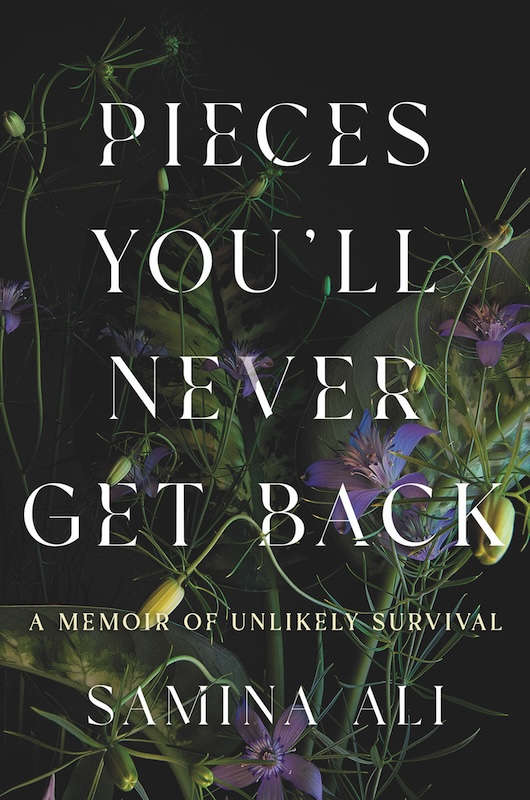
UNLIKELY SURVIVAL Award-winning author Samina Ali writes of overcoming a life-altering neurological disorder, the traumatic birth of her son and more in her new memoir. (Photo courtesy of Catapult)
“Take memory, which has many forms,” Ali said. “The way we all make sense of these disparate experiences is to create a story. Sometimes the stories we create about ourselves aren’t positive. It will have an imprint of loss, of ‘that always happens to me, I’ll never get what I want in life, no one will ever love me.’
“These stories we often take for fact, because our brains are telling them to us and we always believe our brains,” Ali continued. “But memories are unreliable. Shedding those negative stories, knowing they’re just neural pathways, we have to go back over and over and create new, more positive stories. I know loss, but I’m no longer sad about that. I recognized I was creating a scarcity story and stopped imprinting negative emotions on lost memories.”
Even so, negative facts about contemporary life’s brutal realities are not denied. For example, a report by the Association of Reproductive Health Professionals states that over the past 50 years, Black women giving birth in the U.S. were approximately four times as likely to die as white women. A brown woman’s wealth and education doesn’t matter; a reality Ali discovered when her preeclampsia was overlooked and her pain intentionally dismissed.
“The ignorance is shocking, astounding and really sad,” she said. “Even in reviews and articles about the book, it was mentioned I had a ‘rare complication.’ But preeclampsia is the most common complication of pregnancy. If we start to accept pregnancy and delivery don’t always go the way we think, we’ll recognize women have been dying throughout history.”
Ali said that when people enter the hospital they’re at the mercy of the doctors on their case. “Some listen, but the majority rush and dismiss you,” she said. “We’re told to be our own advocates, but even that doesn’t mean you get what you deserve. I shouldn’t have been fighting about my health.
“There was a sense that as a brown woman, I should be able to bear more pain,” Ali added. “What was shocking was that I wasn’t complaining about labor pains—it was immense pain in my head and chest. They thought their medical knowledge was more solid than my knowledge.”
Instead of sliding into resentment and a divisive mindset, Ali made the deliberate decision to choose surrender, trust, connections and unification. Her son’s name, Ishmael, represents and unifies his full identity as the child of an Indian mother and a white father.
“For me, the name expresses Islam’s inclusivity,” Ali said. “People today think Islam is intolerant, fanatic. But when you look at the faith itself, the Holy Book says Muslims aren’t the only believers. Christians and Jews are people of the book. Similarly, Zaara’s name reaches to her father’s Eastern heritage and European roots.”
Ali believes the book’s main theme is important in this time when the current administration is getting rid of words like “woman” and “female.” “We need these differences of gender, race, beliefs while still being able to see we’re unified, connected,” she said. “We have to create circles of solace and community, and hold onto that.”
Surrendering control opens the window to experiencing awe without denying actual life losses—illness, divorce, unemployment, lost histories and abilities, and more. Learning to move to “the other side” of loss with confidence requires constantly “digging in, holding on and finding resilience in even the darkest hours.”
Ali’s third act will likely be a return to fiction, but for now, she graciously accepts the “miracle” moniker and feels tremendous gratitude every year when she and her son together celebrate their “birthday.”
Lief Sorbye is the lead singer, main songwriter and mandolin player of Tempest, the Bay Area-based Celtic band that’s developed a worldwide following in the past 35-plus years.
Sorbye said he’s been playing music for as long as he can remember. Inspired by the Beatles, he began performing in rock cover bands in high school in Oslo, Norway. Then a friend played him an album by the Incredible String Band. He began researching traditional Irish music, teaching himself to play jigs, reels and ballads, and became an amateur folklorist in the process.
“I wanted to play the songs, but didn’t have the patience to learn fiddle,” Sorbye said. “The mandolin is tuned like a fiddle, so that became the instrument I used to explore Celtic music. After moving to the Bay Area I started Tempest to combine Celtic, Scandinavian, rock, folk and world music.”
Sorbye called his style Celtodelic. Tempest quickly grew from a local phenomenon to an outfit that regularly headlines festivals all over North America and Europe. His musical journey is the subject of a book he recently completed with the help of his publisher and co-writer, Stephen Provost—What I Tell My Friends, Vol. 1: The Busking Years, to be published Aug. 1.
A few years ago, Provost showed up at a Tempest show and expressed interest in writing a biography of Sorbey or the band, or both.
“That planted a seed,” Sorbye said. “I’d been traveling with the band for decades. There’s a lot of downtime in touring—riding in a van or sitting in hotel lobbies. When I was hanging out with bandmates, I’d tell them stories of my past. I slowly began to realize how colorful of a past it was.
“Writing a song is something I was familiar with,” he continued. “A book was uncharted territory. Then, in 2023, I had an accident. I had to do physical therapy and decided to take up Steven’s offer.” Sorbye put the band on hold and began writing.
“I put my childhood under the microscope,” Sorbye said. “I had bits and pieces of photos and old journals. I contacted people from my past, because it became important to have all the details correct. I wanted to be as true to my reality as possible.”
As the story unfolded, Sorbye worked with Provost. “It took shape like an extended interview,” Sorbye said. “I’d tell my life story to him and he’d send it back to me to check over. We did Zoom sessions. I’d send him a list of topics. As I expanded on them, it became me telling the story and he became the narrator, shaping the story in a more journalistic manner. It takes courage to be totally honest.”
Sorbye was supposed to write one book, but the history kept expanding. The first book takes in his busking years—his education as a street performer—and how he immigrated to the United States in 1981. The second volume will be called The Tempest Years.
“I’m hoping to get that done by 2026,” he said.
Tempest has gone through many incarnations over the decades, but their current tour includes the quartet that Sorbye put together in 1988, including Rob Wullenjohn on guitar, Ian Butler on bass, drummer Adolfo Lazo, and Sorbye on vocals and double-necked mandolin.
Sorbye put most gigs on hold while he wrote the book, but he played a few with the original members, from the band’s early days.
“When a band first starts, it’s just friends getting together to play music,” Sorbye said. “We rekindled that original spirit at those gigs. Rob and Ian left to start their families, but with their kids out the door, they were excited to rejoin. We’re also featuring Jon Berger on fiddle. He left the band to become an attorney. When I called and asked him to come back, he’d just retired and wanted to get back to playing music. It was a cosmic moment.
“There’s an uplifting feeling you get when you’re playing live music and connecting with the audience,” Sorbye continued. “It’s nurturing, and it’s important to have that kind of joyfulness during dark times. Right now, we need music more than ever. Keeping joy alive is part of the resistance.”
Tempest will play 8pm Saturday, March 29, at The Starry Plough, 3101 Shattuck Ave., Berkeley. 510.841.0188. thestarryplow.com. ‘What I Tell My Friends, Vol. 1: The Busking Years’ will be published by Dragon Crown Books in August. Order copies at tempestmusic.com.
During his first hour in office, after pledging to “Drill, baby, drill,” begin deportations immediately and “Forge a society that is colorblind”—ignoring the fact that deportation policies are anything but colorblind—President Trump announced that the official policy of the United States government is that there are only two genders: male and female.
While those who stood behind and around Donald Trump as he made these statements cheered him on and offered standing ovations, many of the students I work with in my day job on a college campus wallowed in sadness and disbelief.
As someone who exclusively uses they/them pronouns and identifies as gender nonbinary, Mitchell Foster wasn’t at all thrilled with Trump’s rhetoric on his first day in office.
“Transgender and nonbinary people have been around for thousands of years,” Foster said. “We’re a resilient people and we’re not disappearing just because Trump said so.”
Foster grew up going to Catholic school in the Philippines and struggled to relate to some of the other boys. “I remember being six years old, playing pretend, and I would always choose the female characters,” Foster recalled. “In the Catholic school there was a stark difference between the things boys were allowed to do and the things girls were not allowed to do. The boys were rowdy and got dirty all the time. I preferred playing with the girls.”
Foster recalls confiding to an aunt about a crush while in first grade and being quickly redirected. “All the girls in my class had a crush on a certain boy and I did, too,” Foster said. “When I told my aunt, she said, ‘What do you mean you have a crush on a boy?’ I didn’t know it wasn’t allowed. I felt ashamed and embarrassed about it.”
It wasn’t until Foster was in their early 20s taking critical race theory and feminist studies classes in the United States that Foster found the language and the context to understand themself. “I had never come out as gay or lesbian, but I knew something was different,” Foster said. “One day I was sitting on a bench doing my class readings and then it clicked for me. I was like, ‘OK, I’m gender nonbinary.’”
Foster has never experienced body dysmorphia, but lights up while describing the refreshing and radical act of staying true to themself.
“Some days I might feel more feminine, like someone who uses she/her pronouns, and some days I might feel more masculine, but ‘they’ is all encompassing,” Foster said. “If by being me in my nonbinary identity, I make a small impact and pave the path for another person to do the same, then I’m happy.”
If the Trump administration makes threats of nonbinary identity denial a reality by ignoring the gender-identity spectrum, Foster is ready to cope.
“I’ll do what I need to do to get by,” Foster said. “If an ID has an ‘M’ on it or I don’t have access to a gender-inclusive bathroom, I reflect on how I might appear that day. If I look more feminine, I’ll use the women’s room. If I look more masculine, I’ll use the guys’ room.”
While these things can be taken for granted by cis-gendered people—people whose gender identity matches their appearance and their assigned sex—Foster refuses to be bogged down by this.
“I know who I am,” Foster said. “That’s what matters.”
Justin Cole hasn’t met Mitchell Foster just yet, but chances are that’s about to change. Cole, a dancer, teacher and parent, volunteered to teach and perform a community dance to launch Transgender Day(s) of Visibility in downtown Lafayette this week. The Contra Costa County city has become a hotspot for allies from across Alameda and Contra Costa counties to counter the messaging of a handful of anti-trans protesters who appear each spring across from multiple schools in the district.
“A major component of our mission and values is inclusivity,” Cole said. “Dance is a universal uniting gift to everyone.”
Cole vaguely remembers what it was like in the phase of his life when he was afraid to show up as his true, authentic self. “I used to be ashamed and afraid to openly talk about having a husband, especially to my students,” Cole said.
However, that all changed when he became a parent after adopting a son. “That’s when I truly owned who I was,” Cole said. “Today I can just say that Brian is my husband if one of my dancers asks me who he is. I can’t say that’s 100% true in every case. Sometimes Brian is still my roommate when I feel like I need to be cautious.”
But all in all Cole is much more unapologetic about who he is today—a gay man in his 50s who in addition to being a dad and a husband is committed to bringing joy to the world through dance. To Cole, dancing his way through Transgender Day(s) of Visibility while sporting the colors of the Transgender flag is not only an act of allyship, but also an act of resistance.
“You can’t really argue with dance,” Cole said. “You can feel happiness, sadness, be uplifted or moved. You don’t have to agree with it. But it usually makes you feel something. That is the point.”
Two pop-up sets present the unparalleled blend of resistance, embrace and unity expressed in Amihan’s music. Jazz, funk, R&B and hip-hop influences braid their way into new works sculpted with OMCA’s current exhibits in mind. The personable and charismatic vocalist/guitarist is joined by her sister Malaya on vocals, bassist Kumi Maxson, keyboardist Julian Lopez and drummer Michael Morales. Admission to the Thursday After Hours event includes refreshments and music by DJ Mark DiVita and gallery chats during which visitors can ask questions and engage in one-on-one conversations with OMCA facilitators about the exhibits. – LOU FANCHER
Yaima hails from Seattle and specializes in a genre they call Cascadian Folktronica. Combining electronic production, live instrumentation, tribal rhythms and atmospheric sound, the duo creates nature-inspired soundscapes that transport their fans to peaceful regions of the body and mind. Multi-instrumentalist and producer Masaru Higasa brings a unique array of instruments to the stage with handpan, didgeridoo and electronic beats at the fore. Meanwhile, Pepper Proud adds soothing vocals and lyrics crafted to bridge the gap between nature and humankind. The band’s name derives from the Mapudungun word for that which water runs through. – ADDIE MAHMASSANI
Listen up, nerds! Let’s get one thing straight: ska has never stopped being cool. The mainstream might’ve picked it up and dropped it as a one-time fad, but the true believers never let it go. Just look to the underground and see there’s no need to defend ska when new bands like Chudson are making music. Formed last year, this fledgling straightedge DIY band sounds like a well-oiled machine and has already released several singles along with an EP. Plus, they also incorporate a cool synthesizer! Add San Jose ska madmen the Hellas, San Francisco’s Sad Snack and SoCal’s Citrus Jr. and be prepared to dance the night away with a giant, feel-good smile. – MAT WEIR
Hip cats and cool chicks: get ready to set the room a-rockin’ because Mitch Woods & His Rocket 88s have come a-knockin’. Woods has kept the spirit of original rock ’n’ roll alive for over four decades with his bluesy, boogie-woogie sound. The classically trained pianist got the boogie-woogie itch when he was a young pup growing up in Greenwich Village. His music recalls big band jazz, Jerry Lee Lewis, Louis Jordan and Fats Domino. Get ready for fast fingers burning over ivory keys and bring those dancing shoes, because there’s no way anyone will be standing still when Woods & His Rocket 88s hit the stage. – MW
A larger-than-life character at the keyboard and off stage, Cuban-born, Barcelona-based pianist Omar Sosa seems like an ideal subject for a documentary. Soren Sorensen aced the assignment with his award-winning film, Omar Sosa’s 88 Well-Tuned Drums, which recounts Sosa’s life and career from Camagüey to Havana, where he studied percussion. Eventually landing in Oakland, he emerged as a brilliant new voice on the Latin music scene, absorbing new sounds and styles. He’ll be on hand for a screening of the doc, which he’ll follow with a solo recital. Given that he’ll be playing on Piedmont Piano’s Fazioli, his instrument will indeed be well-tuned. – ANDREW GILBERT
INFO: Sat, 5:30pm, Piedmont Piano Company, 1728 San Pablo Ave., Oakland. $45/adv, $50/door. 510.547.8188.
SATURDAY, MARCH 29
REGGAE
PREZIDENT BROWN
It’s been three decades since Fitz Albert Cotterell, inaugurated as Prezident Brown by roots reggae producer and sound system operator Jack Ruby, established himself as an international act at the Reggae Sumfest and Reggae Sunsplash festivals. Collaborations with Everton Blender, Steel Pulse, Anthony Red Rose and Anthony Malvo put him on the charts, and Prez has been a force ever since, with forays across North America to spread his conscious gospel of good times and righteous living. He headlines a double bill with Kingston-born Afrocentric singer, songwriter, producer and arranger Brady Shammar, who’s performed widely around the region since she moved to California and toured with Groundation in 2018. – AG
INFO: Sat, 10pm, Ashkenaz, 1317 San Pablo Ave., Berkeley. $25/adv, $30/door. 510.525.5099.
SUNDAY, MARCH 30
AUTHOR EVENT
EL DELFÍN MÁGICO DE LA AMAZONÍA
Enjoy a full plate of pleasures at this free launch of El Delfín Mágico de la Amazonía (The Magical Dolphin of the Amazon), a bilingual storybook for all ages. Author, journalist and award-winning filmmaker Veronica Moscoso leads the storytelling about friendly pink dolphins cavorting while a dark undercurrent reveals the species as endangered and provides insight into the importance of protecting and preserving marine life and Amazonian culture. Engaging activities such as decorating dolphin-shaped cookies with pink frosting, learning about marine life from an expert biologist and a Q&A with Moscoso bring the human community into kinship with the rest of planet Earth. – LF
The four members of Windborne have over two decades of studying polyphonic music logged in the books, and that expertise is unmistakable the second they begin to sing. The beauty of their vocal harmonies sweeps audiences away into a world of ethereal sound, shifting between styles but never losing the magic. They’re as innovative a group as any, known for packaging their albums within lovely, illustrated books containing stories about their songs and traditions. Their most recent is called To Warm the Winter Hearth. This is the band to turn to for a cheery evening of acoustic sound. – AM
Pasadena-born R&B singer/songwriter and multi-instrumentalist Fana Hues has developed a precise sonic aesthetic: a silky, glowy, sun-soaked gauziness. Fana’s three albums form a colorful and harmonious trilogy chronicling her evolution into womanhood, painted with joy and lighthearted vulnerability. Her “Matters of the Heart” tour celebrates her most recent album, Moth. The 2024 album is a luminous portrait of love, lust, patience and growth, layering emotions with crisp, lyrical execution and clean, glittery production. – SONYA BENNETT-BRANDT
Five-piece acoustic folk band Holy Locust draws inspiration from all the folk traditions that embrace chaos and resistance, from Mexican street corners to Irish pubs and New Orleans jazz. Their combination of banjo, fiddle, accordion, cello, guitar and group harmony has timeless, witchy energy; theirs is the soundtrack of train tracks and candlelit backroad bars braided with the wild flavors of acoustic punk. Holy Locust’s latest album, Breaking the Wheel, plunges into darker waters, brimming with urgency and an unrelenting drive forward. – SBB
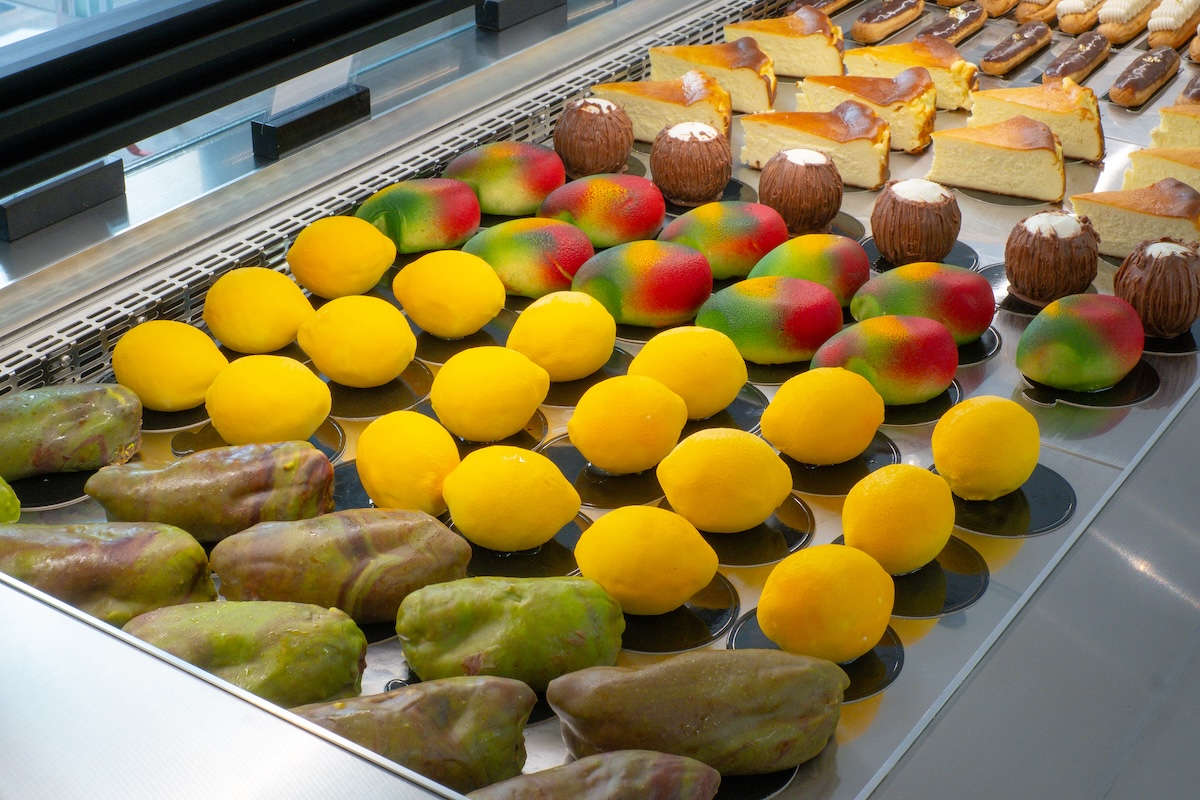
In the line at Tarts de Feybesse last week, a customer couldn’t make up their mind. They paused to deliberate over the multiple choices on display. It was as if they were stunned and dazzled by the array of eclairs, entremets and viennoiseries. Paul Feybesse patiently answered every one of their questions, explaining flavors and ingredients, while also sensing the tension increasing in the room. At one point, he subtly turned his head to the kitchen behind him to call out to Monique, his wife and business partner.
Until then, Monique had been hurrying back and forth from the ovens to the cooling racks. Another baker rolled out dough on a table. The bakery is designed like a stage. When a customer walks into the shop, they look directly into the kitchen through tall panes of glass. Responding to her husband’s call for moral support, Monique came forward to restock a shelf with a mango trompe l’oeil entremets. Watching her at work was a pleasant distraction. Her busyness was both performative and utilitarian. This call and response displayed the ease with which the couple acts as a team.
“Honestly, we grew up in high-pressure environments at some of the best restaurants in the world,” Monique said during a phone interview. Both she and her husband’s resumes include a long list of celebrated restaurants such as Pavillon Ledoyen in Paris, Atera in New York and Ninebark in Napa Valley.
“We know how to produce and how to perform in front of people,” she said. And they’ve come to think of their new space as an open restaurant. “We understand the flow of what a busy restaurant is supposed to be like.”
In October, Tarts de Feybesse opened its doors on the first floor of a brand-new building. There’s a slightly jarring juxtaposition between the traditional French pastries and breads for sale and the ultra-modern, marble-and-glass interiors. All of the baked goods look like they belong in a Parisian patisserie, but the shop itself belongs to a colder Kubrickian future. The bakery’s tagline—“Contemporary patisserie where tradition meets our era”—accounts for the disparity.
But Monique’s Filipino heritage also helps to define this mission statement and inform many of the menu’s most unique items. Financiers are laden with citrus or mango compotes. There are black sesame, mango and pistachio eclairs. Rhubarb tarts and calamansi napoleons shine jewel-like alongside more familiar chaussons aux pommes, pains suisse and slices of quiche.
Prepare to be dazzled by the array of eclairs, entremets and viennoiseries at Tarts de Feybesse. (Photo by Angelo Ste Maria)
Monique doesn’t consider Tarts de Feybesse a Filipino bakery per se. “We are using influences from there, which makes it very special for me,” she said. “It’s not just French cuisine—which I absolutely love, I’m a geek for it—but it’s coming back to my roots, showing Paul what it is, too, and him appreciating that and falling in love with that side of our family.”
Monique, a former Top Chef contestant, said that instead of putting ube in everything they’re using less well-known Filipino ingredients such as malunggay and pili nuts. “Pili nuts are so tender and have a lot of fat content,” she said.
“They’re delicious and good for you. I want people to fall in love with them naturally and organically, to normalize it without me saying, ‘This is Filipino,’” she continued. Malunggay, she added, has a grassy note to it. “We’ve used it the same way people use matcha in desserts.”
Three years ago Tarts de Feybesse operated out of a rented kitchen in Vallejo where the couple lives. During those semi-pandemic times, Paul drove around the Bay Area delivering their baked goods himself. Monique told me they looked for a brick-and-mortar location in several cities before they signed their Oakland lease. The build-out of the space took a year and half plus the time it took to secure city permits.
“We are not only thankful for Oakland but the East Bay in particular. They’ve just welcomed us with open arms,” Monique said. While there are many other great bakeries in the East Bay, Tarts de Feybesse, she believes, fills a very particular niche as a pastry shop. “We meet new people every single day, and they’re ready for something new.”
In late 2017, drummer Jason Willer (Jello Biafra’s Guantanamo School of Medicine, UK Subs) and bassist Matt Freeman (Operation Ivy, Rancid) started laying the foundation for what would become an East Bay rock powerhouse: Charger.
“Matt had the idea for the band as well as the name pretty much from the start,” Willer said. “I teach Matt’s son the drums....
Chef Kanlaya Palivan and her team have transformed the space on San Pablo Avenue that formerly belonged to Paisan. They’ve added bright orange dining room chairs. Yellow, pink, red and blue lanterns hang down from the ceiling. And a botanical wall blooms with artificial flowers and butterflies. The greenery even forms an informal wreath around a sign exclaiming the...
THURSDAY, APRIL 3
COMEDY
AZIZ ANSARI
Oct. 13th might be six months away, but that doesn’t mean people can’t “treat yo’ self.” The award-winning comedian, actor, writer and director is known for his role as Tom Haverford on Parks and Recreation and as Dev Shah on his hit Netflix show, Master of None. However, he’s also appeared in several hit movies and...
“These are the tales, the freaky tales / These are the tales that I tell so well”
— Lyrics from “Freaky Tales” by Too Short
Anna Boden and Ryan Fleck take the title of their new film, which is set in the East Bay, from Too Short’s rap song, “Freaky Tales.” The imaginative overlap essentially ends there. Too Short raps about...
ARIES (March 21-April 19): Have you ever been part of an innovation team? Its goal is not simply to develop as many new ideas and approaches as possible, but rather to generate good, truly useful new ideas and approaches. The most effective teams don’t necessarily move with frantic speed. In fact, there’s value in “productive pausing”—strategic interludes of reflection...
Bay Area-based author Samina Ali has twice lost her identity. The first time, during her childhood, involved a blend of beliefs and misplaced paperwork. Growing up as the middle of three children and the only daughter of immigrant Indian parents, Ali lived alternately in Minneapolis and Hyderabad, India. Her mother and father, convinced by an Iman she was born...
Lief Sorbye is the lead singer, main songwriter and mandolin player of Tempest, the Bay Area-based Celtic band that’s developed a worldwide following in the past 35-plus years.
Sorbye said he’s been playing music for as long as he can remember. Inspired by the Beatles, he began performing in rock cover bands in high school in Oslo, Norway. Then a...
During his first hour in office, after pledging to “Drill, baby, drill,” begin deportations immediately and “Forge a society that is colorblind”—ignoring the fact that deportation policies are anything but colorblind—President Trump announced that the official policy of the United States government is that there are only two genders: male and female.
While those who stood behind and around Donald...
THURSDAY, MARCH 27
FOLK
AMIHAN
Two pop-up sets present the unparalleled blend of resistance, embrace and unity expressed in Amihan’s music. Jazz, funk, R&B and hip-hop influences braid their way into new works sculpted with OMCA’s current exhibits in mind. The personable and charismatic vocalist/guitarist is joined by her sister Malaya on vocals, bassist Kumi Maxson, keyboardist Julian Lopez and drummer Michael...
In the line at Tarts de Feybesse last week, a customer couldn’t make up their mind. They paused to deliberate over the multiple choices on display. It was as if they were stunned and dazzled by the array of eclairs, entremets and viennoiseries. Paul Feybesse patiently answered every one of their questions, explaining flavors and ingredients, while also sensing...