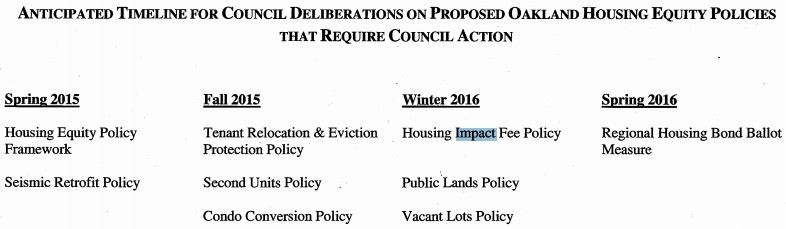


But approving the housing roadmap doesn’t mean any of the policies spelled out in it – from restricting condo conversions, to implementing a housing impact fee, to dedicating public lands for affordable housing – will actually be put into practice. Each of these ideas, and other laws that could address the housing crisis, must be brought to the council separately and voted on. Therefore it remains an open question as to when, and if, the city will take action to address the growing crisis of affordability and displacement that is pushing out longtime residents, especially low-income households.
See also: Will Oakland Protect and Expand Affordable Housing?
[jump]
Oakland residents, who waited several hours to address the council, are clearly frustrated by what they see as the slow pace of the city to address the problem.
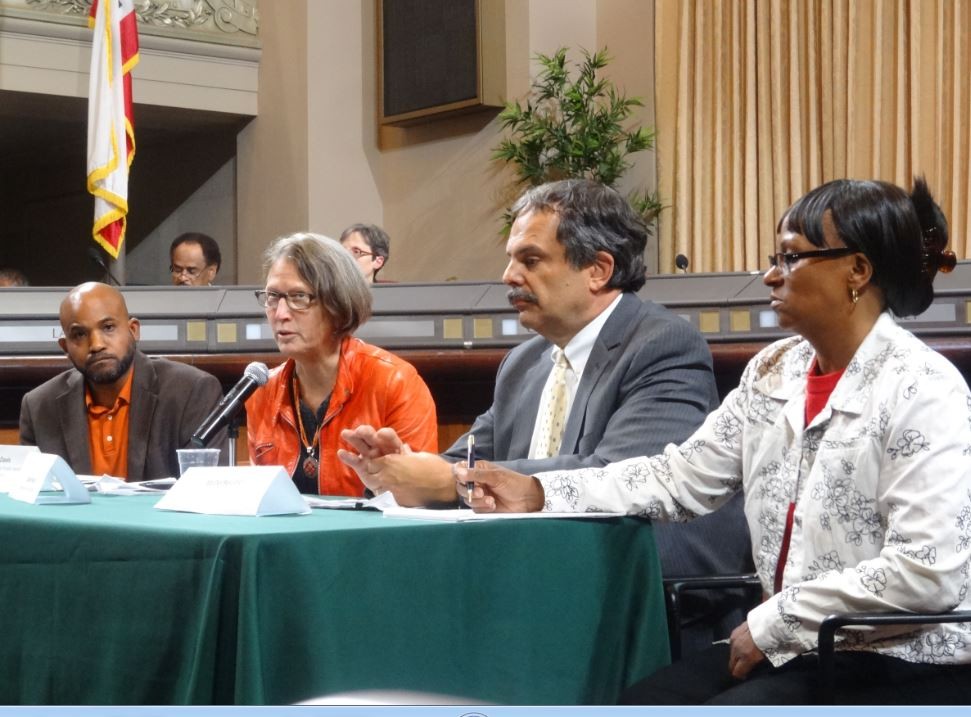
Speaker after speaker, many of the members of Oakland’s shrinking Black community who have been hit hardest by rising rents and home prices, came to the microphone to tell stories of displacement and dispossession from neighborhoods they grew up in.
And an expert panel assembled by Council President Gibson McElhaney laid out some of the causes and consequences of Oakland’s housing crisis.
Alma Blackwell, a housing rights organizer with Causa Justa/Just Cause, said the current change in Oakland’s affordability began when Jerry Brown was mayor and the city was purposefully geared toward attracting higher income residents by building expensive condos and apartments around downtown. She said that while Oakland has done a lot in recent years to attract capital to the city, there hasn’t been enough attention on preventing the influx of more affluent newcomers, and the redevelopment of vast portions of the city, from squeezing out the poor. Blackwell added that while it’s necessary for the council and mayor to pass new laws and find new sources of funding to keep housing affordable, the city also needs to enforce its current housing laws, especially for building code violations and tenant protections.
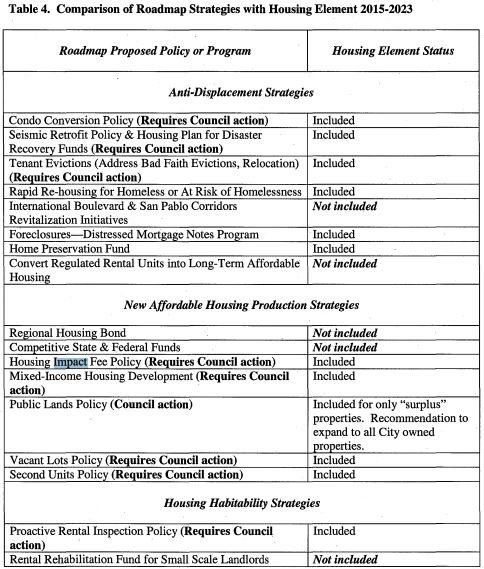
Councilmember Dan Kalb’s office is working on reforming the Oakland condominium conversion ordinance, and this morning Mayor Libby Schaaf announced her support for expanding tenant protections in two- to four-unit apartment buildings that are threatened with condo conversion. City staff have estimated that as many as 2,000 apartments are threatened with conversion into condos over the next seven years if nothing is done.
City staff is also working with a consultant on studying impact fees, but the process has dragged on for well over a year. In contrast, other cities such as Emeryville and Berkeley have been quick to implement and fine-tune their housing impact fees. The council is expected to receive a staff report on impact fees early next year, but it’s unclear where different councilmembers stand on the issue.