
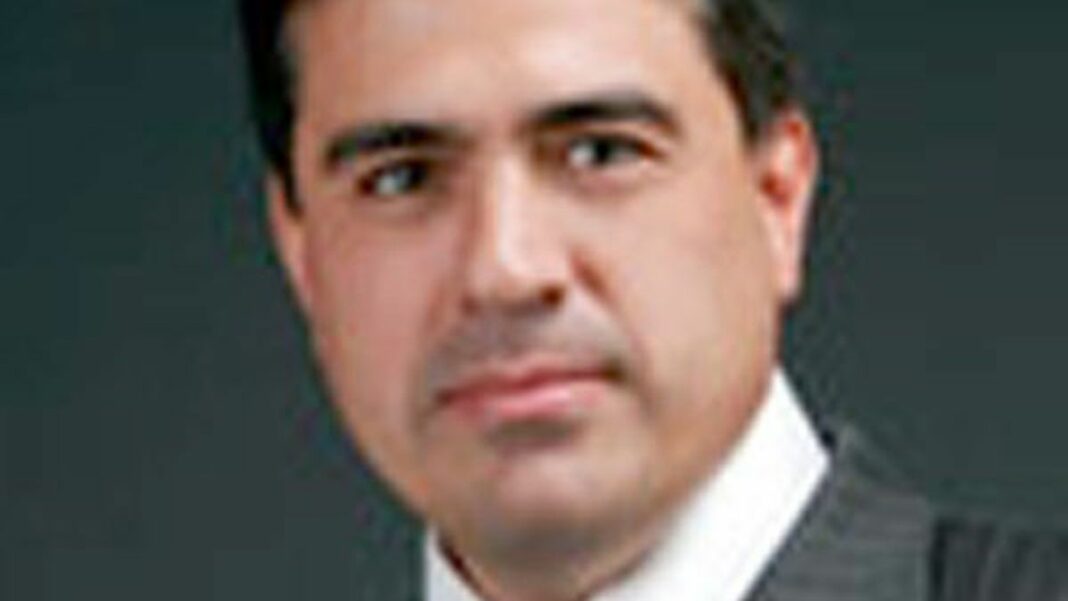
Oakland’s top lobbyist, Carlos Plazola, is under investigation by the city’s Public Ethics Commission for allegedly lobbying public officials repeatedly over the past year and not reporting it as required by law. The investigation stems from two ethics complaints involving the former staff member for Oakland City Council President Ignacio De La Fuente. The first alleges that Plazola conducted an illegal secret meeting in September with De La Fuente and two other councilmembers and then failed to report it as lobbying, while the second claims that Plazola repeatedly lobbied councilmembers and other city officials in the past several months on at least four different issues without disclosing it.
The evidence against Plazola appears convincing, but the ethics complaints and his response so far to them also raise numerous questions about the city’s lobbying law and who should be registering as a lobbyist. In fact, a simple analysis of the law reveals that dozens of people who regularly attempt to influence the decisions of Oakland city officials should be registering as lobbyists and are not. In short, Plazola appears to be just the tip of the iceberg.

Carlos Plazola. 
Monica Molina Plazola.

The first ethics complaint was filed by City Councilwoman Nancy Nadel, and originally focused on whether Plazola’s September 12 closed-door sit-down with De La Fuente, Larry Reid, and Henry Chang violated both Oakland’s and California’s open meeting laws. But while investigating the complaint, Public Ethics Commission Executive Director Dan Purnell and Deputy City Attorney Mark Morodomi started raising questions about whether the private meeting also involved lobbying as defined under Oakland law. Purnell noted at a Public Ethics Commission meeting earlier this month that Plazola, a registered lobbyist in Oakland who represents developers, did not report the closed-door meeting with the council members as lobbying. Under city law, all lobbying activities must be disclosed to the public ethics commission.
The second complaint, meanwhile, was filed last week by local activist John Klein. He provided extensive, documented evidence that Plazola lobbied to stop Mayor Ron Dellums‘ appointment of Ada Chan to the Oakland Planning Commission, lobbied to oust acting City Administrator Dan Lindheim, lobbied to extend city deadlines for developers to complete construction projects, and lobbied against building height limits in downtown and along Lake Merritt. Plazola’s lobbying clients include the developer of a proposed 42-story condo tower on the lake that Klein and other activists oppose. “It’s OK to lobby,” Klein said of Plazola’s activities. “Just be upfront about it.”
So is Plazola purposely attempting to hide his contacts with Oakland politicians? In response to the concerns raised by Purnell, Plazola and his friend, Oakland attorney Jenny Kassan, have argued that he did not have to disclose the private meeting with council members because at the time he was representing not his lobbying clients but the Oakland Builders Alliance, a nonprofit trade group he co-founded and chairs. “As you know, I have no problem registering as a lobbyist, as I have done consistently in the past, when it is clear I am engaging in lobbying activities on behalf of clients,” Plazola wrote in an e-mail to Full Disclosure.
Plazola and his wife Monica Molina Plazola also have claimed that the closed-door meeting did not constitute lobbying, because he was not seeking a financial benefit for himself or members of the builders alliance, a group of about 75 small- and medium-size developers, construction companies, and architects. “The basis of the lobbying ordinance should be to regulate an individual that attempts to influence decision makers for the direct, or indirect, benefit of a client or organization,” Monica Plazola argued in a letter to Purnell and Morodomi. Purnell said in a commission report that Carlos Plazola claimed his September 12 closed-door meeting wasn’t lobbying because during his presentation to councilmembers, he made it clear that members of the builders alliance “expect nothing in return.”
But Plazola’s arguments about why he shouldn’t have to report his lobbying activity on behalf of the builders alliance don’t hold up under scrutiny. The same can’t be said, however, about his contention that if the ethics commission rules against him, then other members of nonprofits in Oakland also should be required to report their contacts with city officials. That assertion appears to have merit.
The reason is that the city’s lobbying law is about open government and transparency. That is, the public has a right to know when a person representing a corporation or organization meets with city decision makers and attempts to convince them to vote a certain way on a pending issue. That way, the public gains insight into how governmental decisions are made and who influences them. It’s about full disclosure, cracking open the door to backroom deals.
As a result, the authors of the law wrote it broadly to include all kinds of communication with city officials. Under the ordinance, a lobbyist isn’t just the traditional hired gun who buttonholes politicians in a city hall doorway. It also includes anyone whose “duties as a salaried employee, officer or director of any corporation, organization, or association include communication directly or through agents with any public official, officer or designated employee, for the purpose of influencing any proposed or pending governmental action of the city.” In other words, the members of nonprofit groups are no different than corporate employees and hired guns when they try to influence a politicians’ vote or a bureaucrats’ decision. They’re all lobbyists.
Under that definition, Plazola clearly should have reported his lobbying activity while representing the Oakland Builders Alliance. And he should have known that, because last year his business associate Jonathan Bair filed an ethics complaint against Serena Chen of the nonprofit American Lung Association for not registering as a lobbyist while she advocated for the passage of Oakland’s new anti-smoking law. According to Klein and Naomi Schiff, a local preservationist, Bair has been employed by O’Keeffe Development, which also hired Plazola as its lobbyist in its effort to erect the 42-story condo tower on Lake Merritt. Bair, who also writes the local blog Future Oakland, ultimately won the ethics case against Chen when she agreed to voluntarily register as a lobbyist to avoid being fined.
It’s possible that Plazola didn’t know about Bair’s complaint — he wouldn’t answer a question about it. But as a registered lobbyist, he should have been aware of it, and as a result, it’s silly for him to now claim that he shouldn’t have to report his lobbying because he was representing a nonprofit, when Chen was doing the same thing. “It looks like he’s blatantly ignoring the ordinance,” said Ralph Kanz, a good government advocate and former member of the ethics commission. “He’s lobbying.” City records show that Plazola has reported no lobby activity at all this year, even though he’s been a near constant presence at city hall, advocating on behalf of the builders alliance, which he runs out of his lobbying office.
Moreover, Plazola and his wife’s assertion that members of nonprofits should only have to register as lobbyists if they’re seeking to financially benefit themselves or their organization “directly or indirectly” actually is an argument for why he should have reported his lobbying activity in the first place. For example, in his closed-door meeting with councilmembers, public documents show he advocated for a program that would provide loans to low-income Oakland residents to remodel their homes. Despite his claim that the builders alliance “expect(s) nothing in return,” members of that nonprofit could see a jump in business if there are suddenly a bunch of government-financed home construction projects.
In addition, Plazola and members of the alliance also stand to benefit financially, at least indirectly, if not directly, as a result of his lobbying against Chan and Lindheim, since many developers and contractors consider them both to be anti-development. Builders’ alliance members also stand to benefit directly from the extension of city deadlines for construction projects because, without the extensions, many projects simply wouldn’t get done. And as for Plazola advocating against height limitations in downtown and along Lake Merritt, it could benefit not only his nonprofit members, but also O’Keeffe Development and its condo tower plans. Klein also has filed a lobbying complaint against builders alliance members Kathy Kuhner, Joe DeCredico, and Jay Dodson over some of these same issues. Plazola has not yet responded to Klein’s allegations.
But his friend, Oakland attorney Kassan, maintains that requiring members of nonprofits to register as lobbyists would “open a can of worms” that could affect hundreds of people, possibly infringing on First Amendment rights, and throwing a wrench in how government operates. “It would lead to attorneys being required to advise their clients that if they serve on any board, they must register as lobbyists if they ever want to be able to speak freely to city council members or ‘designated employees,'” she wrote to the Public Ethics Commission. “This could create a major chilling effect on public participation in the legislative process and could even potentially be challenged as an overbroad limitation on free speech rights.”
This argument seems a bit alarmist. Not only should the ethics commission ultimately force Plazola to report his builders alliance lobbying activity, it should then advise members of other nonprofits that they should do the same. That includes members of nonprofits who run crime-prevention programs and those who help at-risk youth and then turn around and advocate on behalf of city funding programs that keep them in business. They’re lobbyists too, and the public has the right to know when they’ve met with city decision makers and attempted to influence votes.
Helen Hutchison, president of the Oakland League of Women Voters, which pushed for the lobbying law in the first place, said she would have no problem registering if the ethics commission requires it. “I do lobby the city council,” she said. “And if we’re required to resister, we will stand up and do it.”
Still, there’s a difference between what Hutchison does and what Plazola, Chen, and many other employees of nonprofit agencies do. For Plazola and Chen, their lobbying involves a direct or indirect financial benefit to themselves or their organization. For Chen, it’s her Lung Association salary. For Plazola, it’s himself, his members, or his actual business clients. But for Hutchison and other nonprofit agency volunteers, their lobbying typically has nothing to do with financial gain.
According to Purnell, executive director of the ethics commission, the commission will be reviewing the issue of who is and who is not a lobbyist during the coming months as he investigates the complaints against Plazola. As for the secret meeting with city council members, all sides seem to agree that it was illegal. Last week, De La Fuente scheduled a public meeting in January in which Plazola will come back and give the same presentation he gave in private. When asked why he didn’t realize the September meeting violated both city and state open meeting laws, De La Fuente responded: “I didn’t think about it. To me, it wasn’t a big deal. It was a mistake — period.”
As for the lobbying, if the commission ultimately adopts the Plazolas’ own definition, it seems clear that he’ll have to report his advocacy on behalf of the builders alliance, but Hutchison and those like her will be exempt from registering. But from my perspective, that falls short of full disclosure. I think all employees, officers, and directors of nonprofit groups should register as lobbyists and publicly report their activity whenever they try to influence a vote or a governmental decision pending before the city. But I would add one wrinkle — the lobbyist registration should also include a disclosure as to whether the lobbying involved a direct or indirect financial benefit for the lobbyist or her organization. Full Disclosure wants to know who’s doing it for the money, and who isn’t.