
Last week, officials from Toyota Motor Corporation confirmed what
tens of thousands of East Bay residents had feared. Next March they
will be closing the New United Motor Manufacturing, Inc. auto plant in
Fremont, throwing 4,600 autoworkers out of jobs and threatening the
jobs of tens of thousands of others who work for companies dependent
upon the facility.
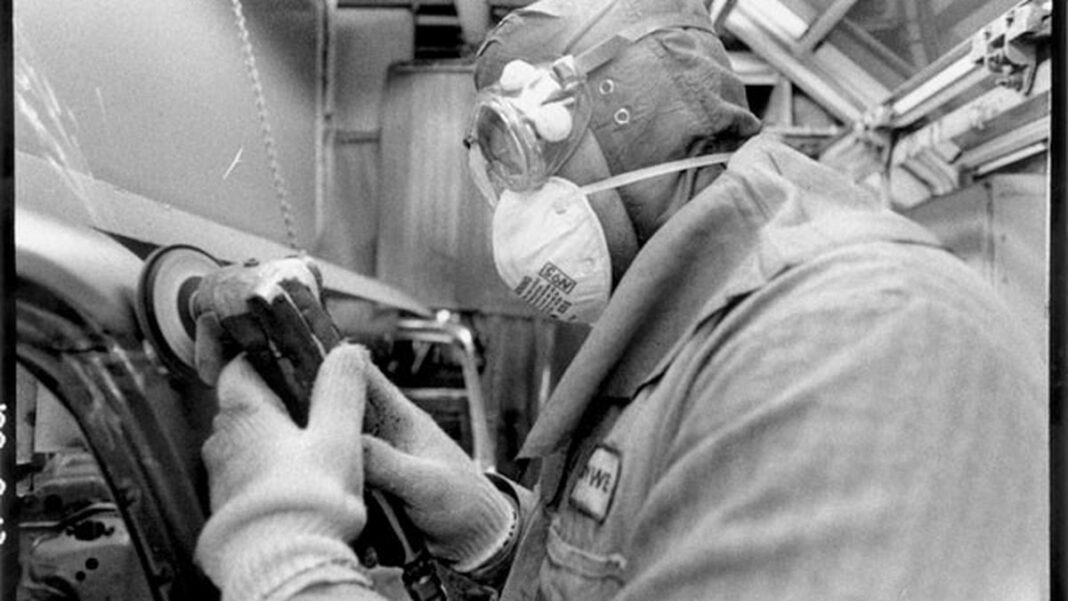
People have spent their lives in the NUMMI plant, probably logging
more time with the compressed-air tools at their workstations than with
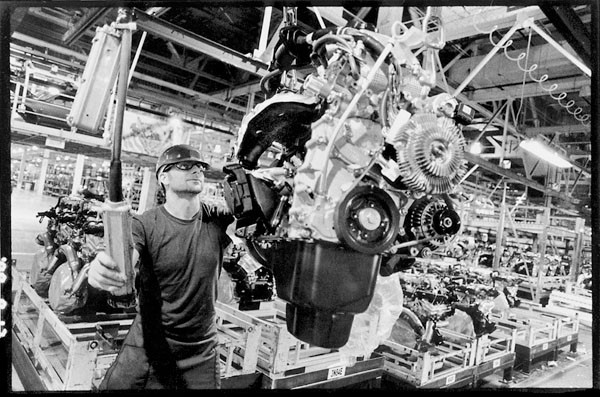
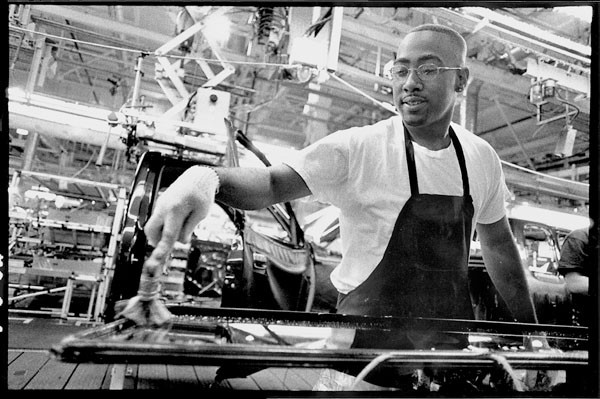
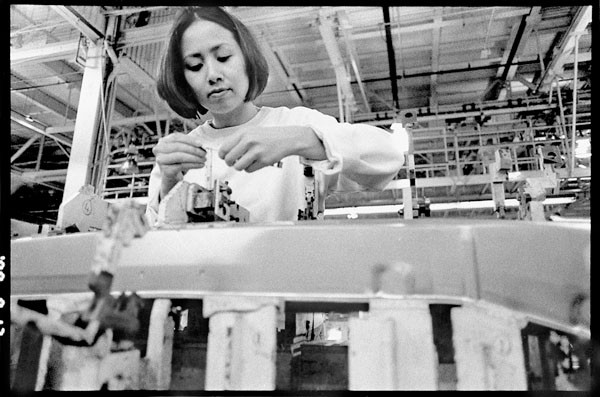
their families at home. The plant is like a city, thousands of jobs and
thousands of people working in a complicated dance in which each one’s
contribution makes possible that of the next person down the line. And
like a city, it supports the people who work in it.





A NUMMI job brings the paycheck that pays the mortgage and the now
astronomical tuition for kids in college. A NUMMI job makes possible
the friendships that grow over years laboring in the same workplace.
Working at NUMMI means being part of the union, with all the
frustrations and infighting, but also the ability to pull together to
get the contract that makes an industrial job bearable and ensures that
a kid’s visit to a doctor or dentist doesn’t bottom out the family bank
account.
General Motors used to run this plant by itself, back in the 1960s
and 1970s, when it was GM Fremont. It was a feisty plant with a feisty
union, and a linchpin for years in the movement to stop concessions in
union bargaining. When GM closed the plant the first time, in the early
1980s, many thought it was revenge. Afterward, autoworkers from Fremont
became migrants. Many lived a lonely existence in motels in Oklahoma
City or Texas, trying to hold onto seniority in a union auto job,
sending money back home to families in California. Others lost their
homes, and worse. In the wave of plant closures of the early 1980s, the
Department of Commerce even kept a statistic of how many people
committed suicide for every thousand who lost jobs when their plant
shut down. No one in Washington has the courage to face that number
anymore.
When GM and Toyota announced their partnership to reopen the plant,
desperation was so great that people to agreed to a union contract
outside the national pattern before the lines even started moving. Big
concessions to the “Japanese style of management” often pitted workers
against one another and their union, too. It took years to fight those
problems out with management.
When General Motors announced in June that it would withdraw from
its partnership with Toyota, everyone knew that spelled trouble. What
sense did it make for GM to withdraw from a plant that consistently
made vehicles that sold well, at a profit? But the GM bailout put the
company under managers with more apparent concern for the company’s
bankers and investors than for its employees and suppliers. Keeping
production going at low-cost plants outside the United States may
return the company to profitability, but at the cost of the jobs and
welfare of tens of thousands of people. Whose interest was our
government serving with such a bailout? Even in France, the
conservative Sarkozy government told French automakers they had to keep
their factories running if they wanted a government subsidy. But here
in the United States, who was bailed out, and who wasn’t?
Without a GM partner, Toyota is moving to close its only American
auto plant with a union. And the company just got a big taxpayer-funded
gift, too. More vehicles sold under the Cash for Clunkers program were
Corollas made at the NUMMI plant than any other model. The
administration and Congress threw $3 billion at Toyota and the other
auto giants to reduce car prices and increase sales. But there was no
requirement that the subsidy come with a commitment to keep the people
who made those cars working.
Look at the photographs of the people of NUMMI. These experienced
and talented people could make anything. If Toyota doesn’t want to make
cars in Fremont, why not put the plant to use making buses or railcars
for BART and other local transit systems for which taxpayers have
already agreed to give up billions of dollars? And if Toyota and GM
don’t want to give up the plant or put it to that use, then a true
government commitment would be to use its power of eminent domain to
take it over and ensure that the abilities of its workers don’t go to
waste — and that their families and the others depending on
continued production there aren’t plunged into poverty and despair.