
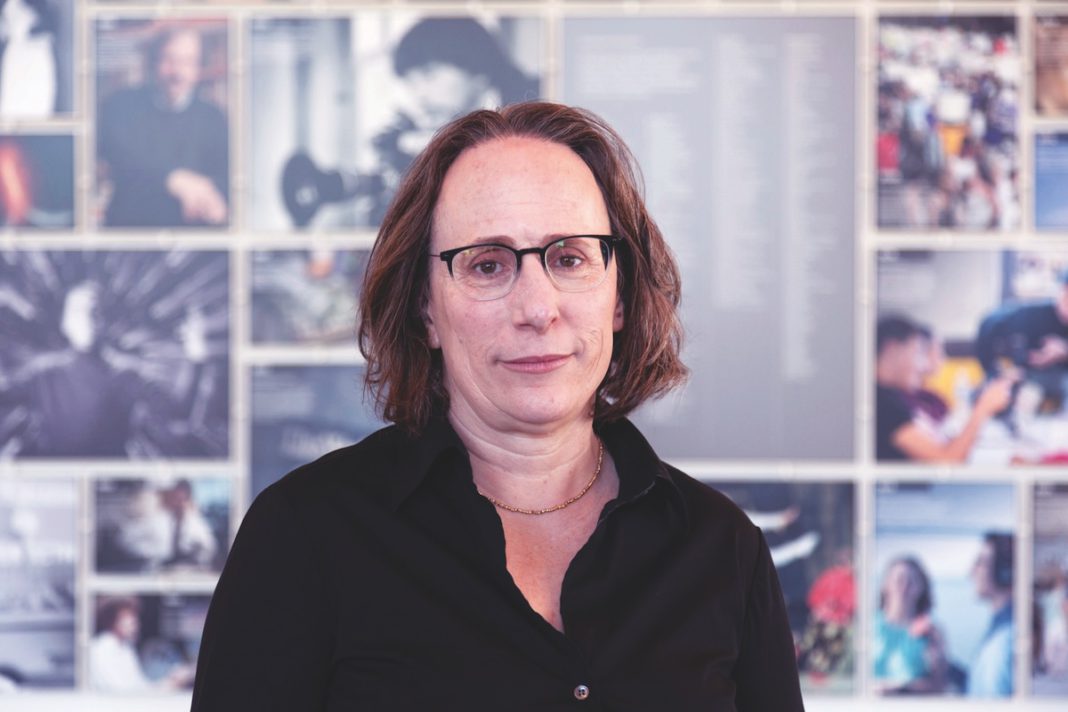
In the 1990s, writes Albany-based author Nell Bernstein in her new book In Our Future We Are Free, a myth emerged—that of so-called “juvenile superpredators.” It was fueled by pseudoscience, notably the writings of Princeton University political science professor John J. DiIulio Jr. who, Bernstein writes, “spliced speculative demographics with deep-seated racial stereotypes to come up with a monster that was perfectly attuned to public fears and political appetites.”
This in turn fueled a nationwide push to try juvenile offenders as adults, and to expand infrastructure to incarcerate what were overwhelmingly youth of color. “During the 1990s, almost every state in the nation passed new laws facilitating the transmogrification of children into adults for the purpose of punishment,” Bernstein reports. “By the early 2000s, a quarter-million teenagers were being tried in adult court each year.”
The subtitle of Bernstein’s book, The Dismantling of the Youth Prison, informs readers that she will document how, over 20-plus years, a coalition of parents, organizations, doctors, lawyers, journalists and youth fought to end the brutality of these institutions—and won.
“The 75% drop in youth incarceration that has taken place over the past two decades is the result of countless individual decisions about whether to lock up a particular child,” she writes. “Over time, these decisions influenced…an emerging consensus that locking up kids for low-level offenses is both unproductive and morally indefensible.”
Bernstein’s involvement in this issue began early, she said in a phone interview. Her first job was in a youth group home, and she spent 10 years editing a youth newspaper in San Francisco, including hiring kids coming out of California Youth Authority facilities. The stories she heard and writes about were horrific, making In Our Future a hard read at times, but served as the inspiration for her earlier book, Burning Down the House: The End of Juvenile Prison, as well as her newest one.
In Our Future relates stories from across the United States, but activists in the East Bay, and Bay Area in general, were key to the struggle. In 2001, Oakland’s Ella Baker Center for Human Rights began hosting meetings for parents to discuss how to help their incarcerated children. This grew into a statewide campaign.
Also in 2001, the Alameda Board of Supervisors, convening to review a plan for a new, huge youth jail, found itself “facing a small army of young people. Unfurling banners that read too big, too far, too racist, protestors called attention to a disturbing statistic: Black people made up just 17% of Alameda County residents but 59% of those in the current juvenile hall. Building an even larger one, young activists argued, was simply an invitation to lock up more Black youth,” Bernstein writes. The plan was not approved.
San Francisco’s Young Women’s Freedom Center, founded in 1994, is lauded for its work, which “is unabashedly abolitionist. Its statewide Freedom 2030 campaign aims to end the criminalization of women, girls, and gender-expansive people.”
The book details pushback to the coalition’s efforts, including from the well-funded California Correctional Peace Officers Association. Yet against the odds, in 2020, California Gov. Gavin Newsom announced plans to shut down the state’s youth prison system. The California Youth Authority closed in 2023.
But, as Bernstein details, in some counties, this has pushed youth into juvenile halls, never designed for long-term incarceration, where they once again struggle with deplorable conditions. “The U.S. still has the highest rate of youth incarceration on the planet,” she said. Root causes of youth offending—poverty, racism, poor schools, mental health—are still not being addressed.
Yet, Bernstein sees the book’s message as one of hope, and beyond that, inspiration for other movements, especially those resisting an authoritarian state. She writes, “As I spoke with some of [the] leaders, I was reminded of the AIDS quilt—pieced together by people all over the country, unknown to one another but all affected by the same tragedy, each square an expression of love as resistance.”
She has launched a Substack, using the book’s title, for those wanting to continue that conversation.
‘In Our Future We Are Free’ by Nell Bernstein, release date Nov. 11, 2025, The New Press, $29.99.