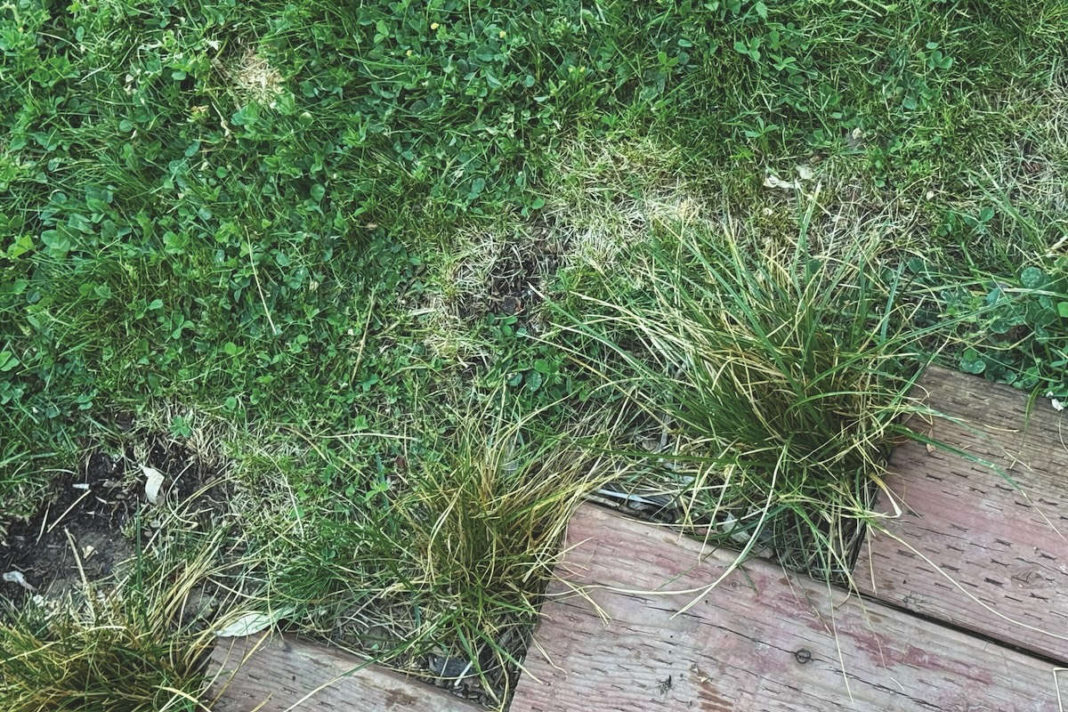
On a quiet corner in a North Berkeley neighborhood sits a house with a front lawn that looks more like a meadow than a yard. Tall grasses spill over onto the sidewalk, bees buzz between wildflowers and the sour tang of compost lingers near a row of potted plants. It’s not the conventional lawn one sees on TV. There’s no lush green carpet, no perfectly edged turf. But it is intentional, and it does make a statement.
Actually, that neighborhood has many houses like this.
A quiet revolution is unfolding across Bay Area suburbs. In cities like Berkeley and San Jose, the meaning of a “nice yard” is being redefined. With water bills rising each summer—by an average of 6.5% in the East Bay and 5.5% in the South Bay, according to East Bay Municipal Utility District and San Jose Water—more residents are putting down the hose and embracing a wilder approach to residential landscaping. These so-called “feral lawns” take many forms. Some are carefully planned native gardens filled with drought-tolerant California flora, while others look like an HOA citation waiting to happen. But one thing is clear: Those who stray from traditional lawn culture often face pushback from nosy neighbors and city officials for their decision to disrupt the suburban status quo.
Many historians argue that the American obsession with manicured lawns didn’t sprout naturally—it was carefully cultivated. As Virginia Scott Jenkins explains in The Lawn: A History of an American Obsession, the aesthetic was inspired by the grand estates of 18th-century England and France, where expansive lawns signaled wealth, order and control. In the United States, this ideal was adopted during the rise of suburbia after World War II.
The postwar housing boom brought mass-produced homes, white picket fences and stretches of uniformly green grass, which became visual markers of respectability. By the 1950s, Jenkins writes, a well-watered, neatly mowed lawn had become not just a matter of aesthetics but of social obligation. “The lawn was a stage for middle-class aspirations,” she writes, “and keeping it trimmed and green was a civic duty.”
This legacy still lingers. Households with more disposable income often hire professional lawn care or have the time to keep their yards pristine themselves. Even in drought-prone California, a messy or “unkempt” yard can trigger social friction and HOA letters. It’s a quiet tug-of-war between personal freedom and neighborhood conformity.
Marco Sciorelli, a resident of San Jose’s Cory neighborhood, is a longtime lawn perfectionist now edging into the lawn-free lifestyle. Having walked on both sides of the fence, he gets the appeal of a neatly manicured yard. For years, he kept his lawn pristine with regular mowing, precise edging and watering on schedule. But now, as he gets older and more budget-conscious, the upkeep no longer feels worth it. Especially the water.
“I always think to myself, ‘Wow, I have to use this much water just to keep my grass green?’” he says.
Sciorelli says his plan is to let his lawn die off naturally and replace it with a “native dry garden”— a grassless landscape made up of drought-tolerant plants, many of which are native to California. Instead of spending the extra $600 more each year trying to maintain the traditional cool-season grass that struggles in the Bay Area’s hot, dry summers, especially in San Jose, he plans to let hardy, climate-adapted plants take over, supported by a drip irrigation system.
Sciorelli’s plan echoes what experts and environmental groups have been saying for years: California’s native plants are better suited to the local climate than traditional lawn grasses. According to the California Native Plant Society, California’s Mediterranean climate—characterized by wet winters and long, dry summers—isn’t naturally suited for the cool-season grasses that dominate traditional lawns. These grasses, such as Kentucky bluegrass or tall fescue, require frequent watering during the hottest months of the year to stay green. In contrast, many of California’s native plants have evolved to thrive with minimal summer irrigation. This makes them a far more climate-appropriate and sustainable choice for residential landscaping.
“Everyone thinks they need to have grass in front of their yard, and I say that’s absurd,” Sciorelli says. “[Lawn] grass was never meant to grow here.”
Still, Sciorelli admits not every lawn-free attempt is a good one. One of his neighbors let their yard go wild, but not in a thoughtful or managed way. Weeds grow two to three feet tall and the wind carries seeds onto nearby lawns, including his.
“It’s a battle of keeping my grass looking good,” he said.
Not everyone sees a wild yard as an improvement. Both Berkeley and San Jose have municipal codes that restrict the height and condition of front yard vegetation. In Berkeley, vegetation becomes a public nuisance if it obstructs sidewalks or presents a fire hazard, according to Berkeley Municipal Code Chapter 12.24. In San Jose, any front yard growth taller than 12 inches may be considered “hazardous” if it appears neglected, according to San Jose’s Code Enforcement Division. Enforcement in both cities is largely complaint-based, meaning it’s often neighbors—not inspectors—who decide when a yard crosses the line.
Other community members echo a similar point: There’s a clear difference between intentional wild yards that are cost-effective and eco-friendly, and those that are simply overgrown from neglect. The key to going ethically feral, they say, is low maintenance, not no maintenance.
That’s the principle Berkeley homeowner Bart Hess lives by. When he bought his house in June 2013, the lawn was already dead. Knowing California’s climate favors native plants over traditional turf, he decided it wasn’t worth the effort to bring it back. Instead, he started building an unconventional yard filled with drought-tolerant natives. Twelve years later, he says he’s happy with how it has filled in. His front yard is now a mix of succulents, buckwheat and other low-maintenance plants that attract bees, butterflies and birds. And the savings have been tremendous. He doesn’t water it at all.
“I do acknowledge that there’s neglect in this community,” he says about the movement of going feral, “but I like to think of my own lawn as a carefully cultivated garden that happens to not need much water.”
While overgrown lawns can pose real community risks, most resident concerns seem rooted in aesthetics. San Jose homeowner Ana Smith says, “Feral lawns tend to make a neighborhood look blighted.” Her worries aren’t unfounded. According to a 2021 study by the National Association of Realtors, properties with poor landscaping can lose up to 30% of their value.
But with ideals of the “perfect lawn” deeply ingrained by media and tradition, the question of what counts as good versus poor landscaping lies at the heart of this movement. That’s why homeowners like Bart Hess receive unwanted opinions from neighbors about how they manage their front yards, even when they follow city guidelines and have never been cited. It’s also why environmental scientists are embracing the movement to educate people about the benefits of native plants and possibly change what it means to have a nice lawn.
Bart O’Brien, botanic garden manager at East Bay Regional Parks District and co-author of California Native Plants for the Garden and Reimagining the California Lawn, is one local expert working to educate people about the beauty and benefits of native plants. O’Brien shares that he’s spoken with many homeowners who initially switch to unconventional lawns to save on water or maintenance costs. Over time, however, these homeowners often develop an appreciation for the additional natural benefits, such as plants that provide food, natural dyes, weaving materials or attract small wildlife that make their yards home.
Aesthetically, O’Brien makes the case for wild gardens by saying that a lawn that is a mosaic of plants can offer more visual interest than the pristine green grass layouts we’re so used to seeing.
“So many people think that’s what they should be doing because everyone else is doing it, but it really is a crazy investment to expect of people,” O’Brien says.
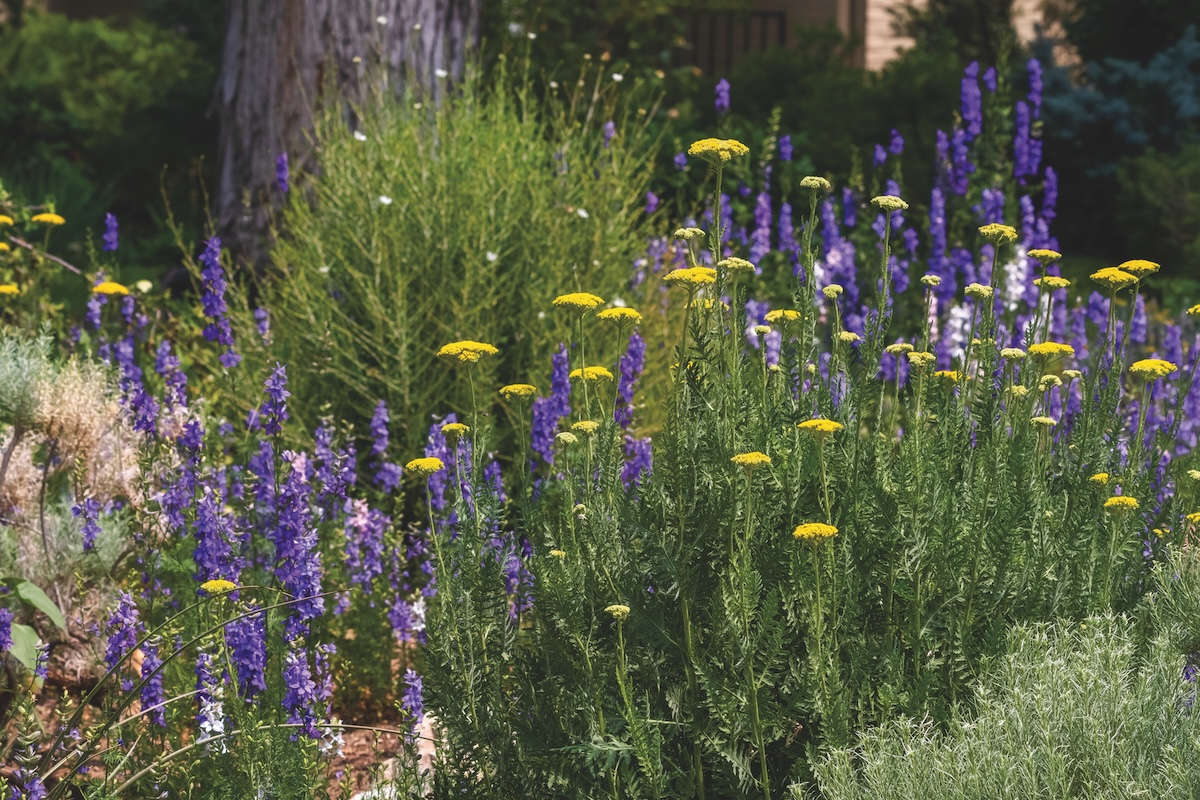
O’Brien wants people to know that with less time, money and water, it’s still possible to have a beautiful yard—one that’s better suited to California’s dry climate and easier to sustain. For those considering going ethically feral, he recommends plants like buckwheats and California fuchsias, which offer vibrant, lasting color well into the summer months, contrasted to common lawn grasses that often turn brown and wither. Many native species, he notes, are not only drought-tolerant but also visually striking, even in the peak of California’s dry season.
With all these benefits, O’Brien says he’s noticing a small but meaningful shift. In many parts of the East Bay, lawns are either getting smaller or people are going unconventional. In his own yard, O’Brien keeps a bunch of native plants that are currently potted and stowed away while workers do construction. But come winter, he says he wants to plant “literally hundreds of native plants” and looks forward to getting his hands in the soil again.
“So I hope all my construction is done by then,” O’Brien says with a laugh.