
What could possibly connect a couple of aspiring real-estate tycoons from Miami, late baseball hero Thurman Munson, and the sudden eviction of 1,200 tenants in Alameda? More than anyone could reasonably expect.
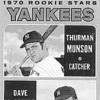
In the 1970s, Miami schoolkids Mark and Ian Sanders idolized Munson, the legendary New York Yankee catcher. The love never really died. In 1992, the brothers started a real-estate company and named it the Fifteen Group, after the number Munson wore on his baseball uniform. They even added a page to their Web site proclaiming their affinity with the player, adding, “Fifteen Group is not shy to reveal this inspiration … whoever wants to know the heart and mind of America had better learn baseball.” CEO Mark Sanders even posed this year with a bat in hand for a trade magazine, trying to look tough and squinty-eyed like Munson himself, despite lacking the player’s trademark 1970s mustache.

“They want a certain type,” tenant Monique Prince says. “Not people like us.” Credits: Chris Duffey Baseball hero Thurman Munson inspired two real-estate tycoons from Miami.

The Fifteen Group specializes in buying and managing “Class C multifamily units,” a real-estate euphemism that roughly translates as “slums.” During a housing recession in 1992, the brothers began buying Class C apartments in working-class and minority neighborhoods at rock-bottom prices. They now own or manage 14,700 units in complexes across the country, which bring in $100 million in revenues annually. One of these is Alameda’s Harbor Island Apartments, which they took over in 1996 and managed into the ground before plastering eviction notices this summer onto the doors that weren’t yet boarded up.
While the evictions have received some press coverage, the daily newspaper reports overlooked a quirky but significant part of the story: how these siblings’ love for Thurman Munson has apparently led them to make life miserable for scores of low-income families.
You’d think Munson would be a good role model, since he was excellence personified on the field. Before his career was cut short by a plane crash in 1979, he batted over .300 for three straight years, won 1970’s Rookie of the Year, 1976’s Most Valuable Player, and Gold Gloves three years in a row. He also played in seven All-Star games.
Off the field, though, Munson had the rep of one mean son of a bitch. When he wasn’t glaring silently at sportswriters, he was berating them for not sufficiently recognizing his talents. He brawled, badmouthed his teammates, and abused autograph-seekers. His wife, by all accounts a kind woman, spent years mortified at Thurman’s treatment of others, apologizing, soothing hurt feelings, and overtipping waitresses to make up for her husband’s boorishness. “Munson’s not moody,” observed a teammate. “Moody means you’re nice some of the time.” And when Munson died, one sportswriter observed, “All that’s changed is that he’s now a dead prick.”
Emulating their hero, the Sanderses say the secret of their success is “aggressive management.” Brother Ian proudly explained the company’s approach to trade magazine Multifamily Executive: No longer could cash-pinched tenants negotiate to pay some of their rent on time and the rest on payday, for instance. “We are collecting more money with lower occupancies because people are paying,” he boasted. “We can’t be in the free housing business. It’s taken several months to change the culture of on-site and senior management people, but we file eviction notices very quickly.”
Munson’s tough-guy stance may play okay in cities like Miami, but it doesn’t get you on base in the East Bay: When the Sanders brothers decided to evict 1,200 people in July for dubious reasons, Alameda wasn’t about to play ball. Most of Harbor Island’s low-income residents are people of color, children, seniors, people with disabilities, and/or Section 8 recipients, all of whom are eligible for special protections. The evictions would also significantly decrease diversity in a city that had only 4,488 black residents as of the last census. Local politicians weren’t about to sit around doing nothing.
During his career, Munson earned dozens of less-than-complimentary nicknames: “Squatty Boy,” “Pigpen,” “Walrus,” “Jelly Belly.” They actually fit him. By contrast, a visit to Harbor Island shows how misleading a name can be. Walk through the sprawling, landlocked complex and you’ll be overwhelmed by stairways reeking of urine, trash in the hallways, paper blowing through the courtyards, graffiti, overflowing Dumpsters, and plywood-covered windows and doors. Despite the neglect, a community has survived here, replete with balcony conversations, cookouts, and children playing baseball on the commons.
Ignore everything else and you might almost be fooled by the swimming pool. The freeform figure eight reflects dozens of sheltering palms in its deep-blue waters. Next to the rest of the 615-unit multibuilding complex, it has a picture-perfect quality. Literally: The brand-new lawn chairs, price tags still dangling from their arms, are mere props for photos shot by the Fifteen Group to display on its homepage. In reality, the pool is locked behind a chain-link fence, where it has long remained closed to tenants. On the Web site, meanwhile, the buildings’ ugly mustard-yellow colors have been Photoshopped a tasteful monochrome, and the photographer managed to avoid recording the transients drinking from paper bags, who are sometimes part of the foreground.
“It didn’t used to look like this,” says tenant Monique Prince, standing with a bag of groceries on the threshold of Building 15. “When I moved here three years ago, this was such a pretty, upkept place. Now, though, our laundry room’s cords have been cut. The elevators are broken, which makes it hard on the old and the disabled. The hallways are a mess. They’re doing it on purpose, because they want everybody out. They want a certain type to live here. Not people like us.”
Alameda’s West End, butted up against the naval base, has long been the poor side of the island community. But with the base closure and opening of the land for new projects, developers have been licking their chops at the idea of gentrification. At the Bayport development across the street, the first of 485 new homes under construction have already sold at market rates of between $657,000 and $815,000. And although 150 of them will be set aside as “affordable” housing, just how affordable remains to be seen.
Meanwhile, the Fifteen Group denies its neglect-and-evict tactic is an attempt to replace the current tenants with a more upscale crowd. Any deferred maintenance, company spokespeople have said, is related to $15 million in upcoming renovations the company claims will transform Harbor Island into “the pre-eminent multifamily community in Alameda” — by evicting everyone, they’re only looking out for the health and safety of the tenants, who might be endangered by the construction.
The remaining tenants aren’t swinging at that pitch. Nor is the city. “What doesn’t make sense is the amount of income they’ll be losing from rents,” says Mike Pucci, executive director of Alameda’s housing authority. “We’re talking about hundreds of thousands of dollars a month for twelve to eighteen months. They say they’ll be spending $24,000 to $25,000 each for the 615 units. If you amortize that out to 6 to 7 percent over thirty years, they’re going to need to charge $200 a month extra in rent just to break even.”
Pucci says the company’s officers swore to him they wouldn’t tear the apartments down or convert them to condos, but would keep them as rental units: “Maybe it’s the truth, or maybe they’re good actors. Have you seen the apartments? No matter what they do to them, they’ll still have the feel of a housing project. I don’t see how many people you’d call ‘gentry’ would want to move into them.”
The Fifteen Group has lately acknowledged it may have made some public-relations errors. Perhaps the tenants should’ve been given more warning, for example. The firm set up a “Housing Fair” one weekend last month to help tenants connect with other landlords, and the Sanders brothers even showed up at one point for a public airing of questions and concerns.
This was Munson’s MO whenever he realized he was in danger of losing something he wanted. For example, he expressed a flicker of humble contrition on the day of being named Yankees team captain. “I’m afraid I’ll be a terrible captain,” he said. “I’m too belligerent. I cuss and swear at people. I yell at umpires, and maybe I’m a little too tough at home. I don’t sign autographs like I should and I haven’t always been very good with writers.” But then he thought for a moment and added, “I should’ve been named long ago.”
So go the Sanders brothers, according to some who have dealt with them. “At the meeting, they came across as very arrogant, disrespectful, and hostile,” says Lorraine Lilley, a representative elected by the tenants. “They didn’t really answer our questions. I think they were just doing it because of a directive from the city.”
And Fifteen Group hasn’t undone the real damage: The eviction notices are still in play for the first week of November. “It is their place, and they have the right to do whatever they want to with it, I guess,” tenant Monique Prince says. “But it doesn’t make it fair. How can they sleep at night?”
Alameda officials met with Fifteen Group reps back in July as soon as word got out about the eviction notices. They couldn’t convince the owners to give up their plans, but did wring some concessions to mitigate a potential homelessness crisis. Under pressure, the company extended the eviction notices to ninety days from the original thirty. The brothers also offered $1,000 and a quick turnaround on security deposits for tenants who agreed to leave. But they steadfastly refused to do what they’ve done in other places such as Wyvernwood Gardens in East Los Angeles — to stagger construction schedules and shift tenants around so most of them could stay. “Since they still have to comply with fair housing laws, all they would say was that former tenants can reapply when the units are up again,” Pucci says ruefully. “But what the buildings will look like, and what the tenants are going to look like, I couldn’t say.”
Last week, with the blessing of Alameda County District Attorney Tom Orloff, the city sued the Fifteen Group in Federal District Court, accusing it of unfair business practices, discriminatory housing practices, misrepresentation, retaliation against tenants for exercising lawful tenancy rights, and deliberately encouraging vacancy with “untreated sewage, unsafe premises and common areas, and inadequate security resulting in increased crime.” A hearing on the city’s injunction to halt the evictions is scheduled for October 14 in San Francisco.
Some tenants don’t care to wait around to see what happens. Ten-year renter Auzalea Godfrey opted to take the thousand bucks and split. “It’s not enough for the cost and the trouble,” she says, “but I didn’t want to put myself or my kids through the worry of trying to stay here. I wanted to move anyway — we need more space. But not like this, not under pressure.” She found a place in Union City and is moving early this month.
Like the Sanders siblings, Thurman Munson invested in real estate. And like Munson, they don’t seem to think it important to curry journalists’ favor. Repeated calls to their office for this article went unanswered. Finally, a receptionist offered a referral to a San Francisco public-relations spokesman who also didn’t return calls.
But perhaps the ultimate lesson of Munson’s life may be found in its denouement: With his real-estate profits, the ballplayer bought a twin-engine Cessna Citation adorned with his team and uniform number, NY 15. More experienced pilots cautioned that the plane was too difficult, too powerful, and too fast for a novice pilot, but he arrogantly waved away their warnings. While practicing takeoffs and landings in Akron, Munson stalled the engine, clipped a tree, and crashed, injuring two bystanders and killing the brothers’ hero.
The Sanderses would do well to heed the moral that karma eventually prevails; that arrogance and callousness will get you in the end; and that a winning strategy on your home field may well bring defeat in an away game.