
Everyone knows that Oakland is diverse. Probably more people from
more races and nationalities live in the city than anywhere west of New
York or north of Los Angeles. But before we celebrate diversity, think
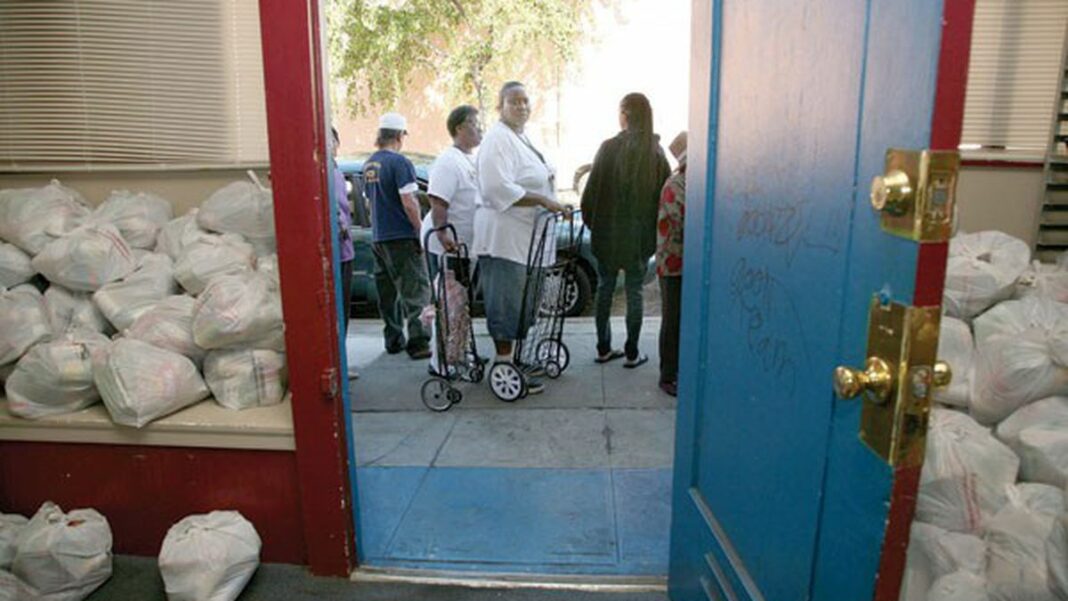
of its most diverse places. Some of them are surely the lines of hungry
people lining up for food.
Oakland has many food pantries — programs run primarily by
churches on a shoestring. Church elders are often found at the Alameda
County Community Food Bank’s huge warehouse out by the airport, buying
as much food as they can for as little money as possible. They worry
that the bags of cans and produce they distribute will run out before
everyone in line gets one.


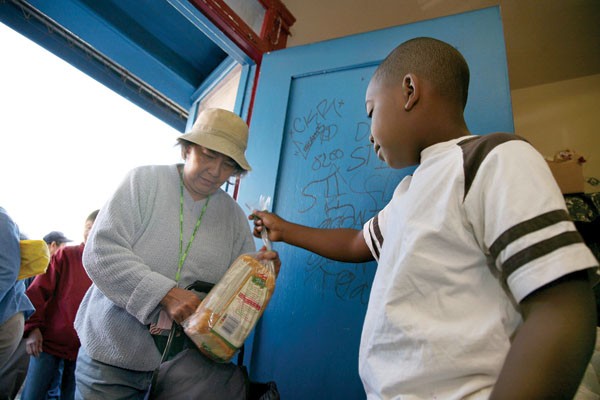

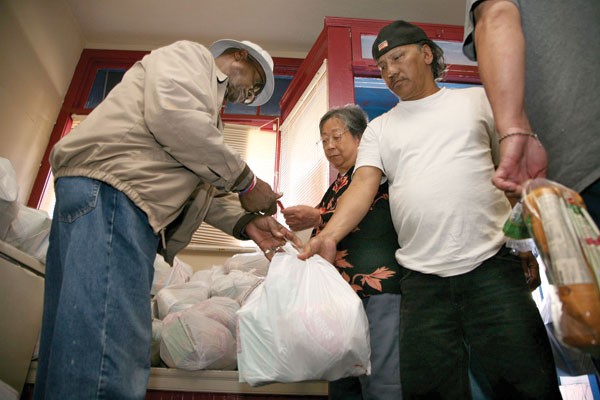


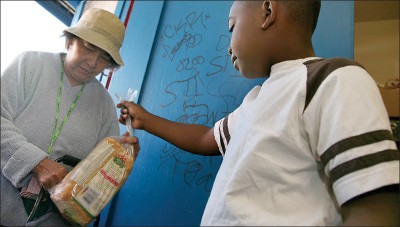
Reverend Lee from the Cornerstone Baptist Church, a food bank
stalwart, fills the small storefront off MacArthur Boulevard with white
plastic bags of cans, dried goods, and bread. Then the people come.
Mostly Chinese-American and African-American families get their food
from the African-American activists from his church.
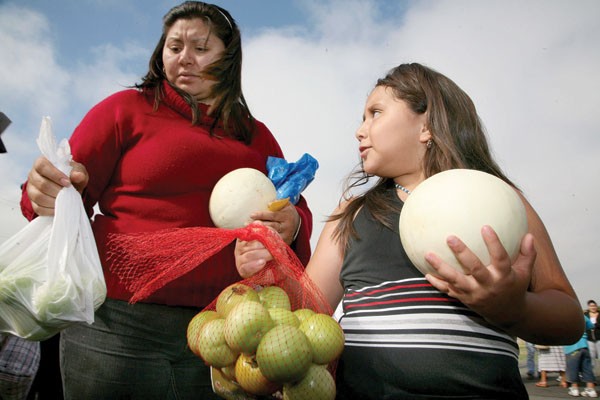
On the other side of the airport, in a park by the freeway sound
wall next to the 98th Avenue exit, a very diverse group of Asian,
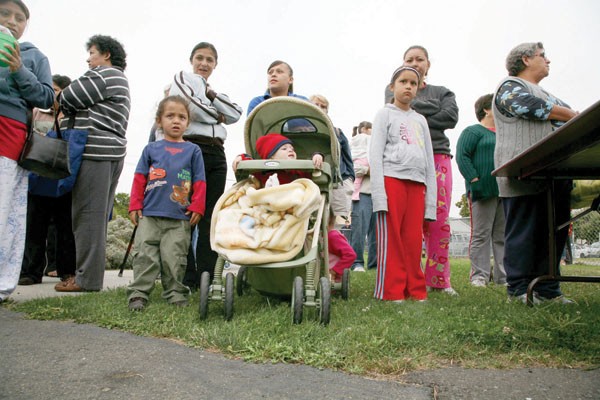
black, Latino, and white folks bag up fruits and vegetables. Early in
the morning, families of primarily Mexican immigrants arrive to get
numbers and wait. After the big food bank truck unloads and the baggers
begin work, Columbian Gardens breathes a sigh of relief as people once
again have food for the coming week.
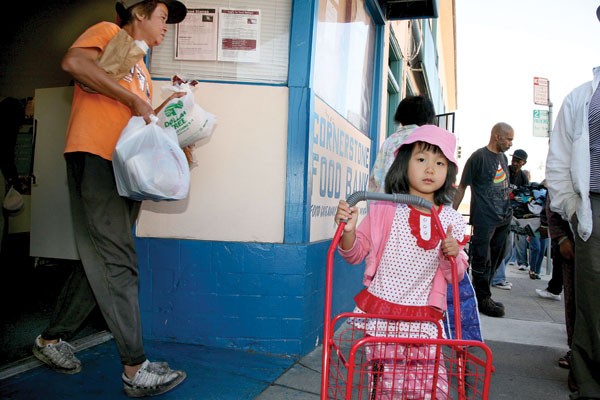
The early morning also is the arrival time for the Good Samaritan
food pantry in the neighborhood of East Oakland some folks call New
Chinatown. Older Chinese women line up their shopping carts and sit or
stand on the sidewalk across the street from a small, ramshackle house
filled with food. Then, joined by African Americans and Latinos, they
trade numbers for bags, and patiently surround huge cardboard bins of
lettuce, cucumbers, and pears.
Later this year, the Food Bank will publish a study that will
estimate the size and depth of Alameda County’s hungry population. We
already know some of the figures. A third of the people in hungry
families are younger than eighteen, and a quarter are older than 50.
With Oakland’s official unemployment rate well over 10 percent, and the
unofficial rate well over that, fewer than one quarter of food-pantry
clients get most of their income from a job, although probably most
work.
We’ll learn more when that report comes out. But a look at the
people in line tells you the basic facts. Oakland has thousands of
families who don’t have enough to eat. They come in all races and
nationalities. And so do the people who care enough to help them find
the food they need to survive.