
The first banana that David Thomson ever saw was in a film,
an American farce in which wide-mouthed Joe E. Brown slipped on a peel.
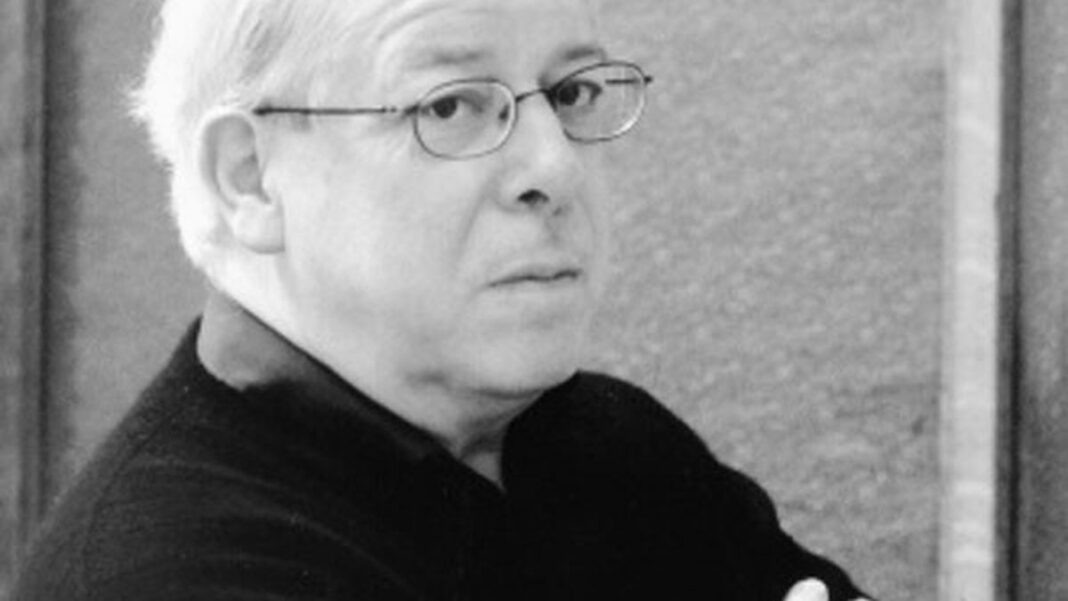
Now living in San Francisco and renowned as one of the world’s most
eloquent film historians, with a passion to match his erudition,
Thomson is the author of many books including Beneath
Mulholland, The Whole Equation, Have You Seen…?,
and The New Biographical Dictionary of Film.
Born in London during World War II, he grew up in its rubble-strewn
aftermath, a time and place when “people were steadily unwell in
ways that made illness seem the norm,” Thomson remembers in his new
memoir Try to Tell the Story, which he will discuss at the
Berkeley City Club (2315 Durant Ave., Berkeley) on February 19.
As a boy, he escaped into the alternate universe of the cinema, where
films — especially American ones — presented
dazzlingly limitless possibilities in a world newly transformed.
“London after the war means a great deal to me,” Thomson reflects now.
“We were so poor, so wiped out, yet so victorious. It was a wonderful,
silly time.” Adored by his mother, who although “not highly educated”
displayed “terrific common sense,” Thomson anguished over the absence
of his father, who abandoned the family but returned on occasional
weekends: “I am still, years after his death, bewildered and pained by
my father, and trying to love him — or find his love for me.” A
father himself, Thomson revisited that pain while writing the memoir.
“I was scared of it at first,” he admits, “so I put it off for a few
years.” Although the narrative ends before Thomson turns twenty, its
coda describes subsequent brushes with that elusive, reclusive figure.
“My father withheld himself all his life, and I have come to hate and
fear that attitude,” Thomson asserts. “It had a big impact on me as a
parent. But I think his mystery or madness went to the grave with him,
and I know there are people like that — who don’t really want to
join in life.”
Having written this very personal book “to leave a record of a
certain time and about being English — which I no longer am,
quite,” Thomson declares that parenthood is a transformative experience
for which some simply aren’t prepared. “Being a parent is the prison
that comes after you’ve dreamed of freedom,” he remarks. “It ties you
but it liberates you too, and helps you see how family life repeats
itself. I think the structures of family and its echoes are the secret
to literature” — and thus, of course, to film as well. 7:30 p.m.,
$10. BerkeleyArts.org